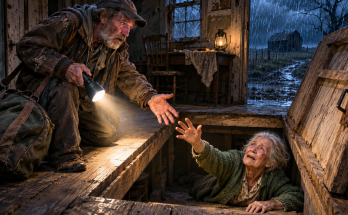
January brought snow.
The wind came across the open ground and found its way through every little opening in my old brown jacket.
There were mornings when I was grateful the farm didn't require me to spend twelve hours sitting in a combine.
I had other work.
Winter was when I examined the things that were easy to postpone during planting and harvest.
Maintenance requirements.
Financial records.
Equipment decisions.
The quiet fields gave me time to think without a warning tone demanding my attention.
I kept working through my notes.
I'd made several columns on the yellow legal pad.
Equipment requirements occupied one page.
Service considerations occupied another.
The costs I'd calculated from three seasons of operating records were on several sheets beneath them.
Margaret's notebook remained beside everything.
I didn't want my recent experience with Aaron to become the only evidence I considered.
He'd helped me enormously.
But appreciating one technician wasn't the same thing as establishing which equipment was best suited to my farm.
I needed to keep those matters separate.
A younger farmer from a neighboring county invited me to look at a Massey Ferguson tractor he'd been operating.
The machine had completed its second season.
I accepted his invitation.
On the morning I visited, the tractor was parked near his workshop.
He greeted me and asked whether I wanted to climb into the cab.
"Wouldn't mind having a look."
I climbed the steps and settled into the seat.
The interior was different from the tractors I was accustomed to operating.
Some of the controls were arranged in places where my hands wouldn't instinctively reach for them.
Other features seemed well thought out.
I spent a little time getting familiar with the layout.
The younger farmer explained the functions he used regularly.
I asked which ones he'd found most useful.
Then I asked whether anything had disappointed him.
He seemed slightly surprised.
"You're interested in the things I don't like?"
"Those are generally worth knowing before you spend money."
He laughed.
"Fair point."
We discussed the adjustments he'd made when he first began operating the tractor.
He explained which differences had required time to become familiar with.
I asked about his fuel consumption.
His experience was useful, although I knew the figures couldn't simply be applied to my own operation.
Different fields.
Different loads.
Different working conditions.
There was more to comparing machinery than placing two numbers beside one another.
I asked about maintenance.
I asked whether he found routine tasks convenient.
I wanted to understand what his experience had been after the initial excitement of owning something new had worn off.
He answered honestly.
There were features he particularly appreciated.
There were things he preferred about other tractors he'd operated.
Nothing he told me suggested that one machine could satisfy every farmer equally well.
That was sensible.
I liked several things about the tractor myself.
The cab was comfortable.
Certain controls seemed convenient once I understood them.
Other arrangements didn't appeal to me as much.
I climbed down after spending a reasonable amount of time looking.
The younger farmer smiled.
"Well, Carl? Are you ready to order one?"
"No."
He laughed.
"That was quick."
"I haven't established that I need one."
"Can't argue with that."
We talked a little longer before I thanked him for his time.
On the drive home, I thought about how differently I'd approached machinery purchases when I was younger.
I'd often begun by looking at a particular machine.
Then I'd considered the reasons I might need it.
That wasn't necessarily a sensible order in which to do things.
The machine could become the answer before I'd adequately established the question.
Margaret had caught me doing exactly that with the second combine.
I could almost hear her asking how much additional work the purchase would actually allow us to complete.
I smiled.
She'd have approved of me returning home without placing an order.
A while later, I attended a machinery auction.
There were used tractors from several manufacturers.
Some were familiar models.
Others were machines I'd never operated.
I walked between them, examining their condition and reading the available information.
I paid attention to operating hours.
I compared prices.
I considered how each machine might fit into my operation.
A few years earlier, I probably would have spent most of my time around the green tractors.
This time, I gave the others a fair look.
There was something pleasant about examining machinery without feeling compelled to choose any of it.
I could appreciate a feature without deciding I needed to own it.
I could acknowledge that another manufacturer had produced a capable machine without feeling I was insulting my own equipment.
Nobody required me to declare a preference before I left.
I watched some of the bidding.
Then I returned to my truck.
I hadn't raised my hand once.
That evening, Emily telephoned.
She asked about the farm before mentioning something she'd apparently heard.
"Tom says you're shopping for Massey Ferguson tractors."
I sighed.
"I've been looking at equipment."
"Red equipment?"
"Among other things."
She laughed.
"I wish Mom could hear this."
"She would've been encouraging it."
"Probably."
Emily knew how strongly I'd defended my equipment choices throughout her childhood.
She'd heard plenty of conversations in which I explained why I was satisfied with John Deere.
She'd also heard Margaret question whether those explanations accounted for every relevant consideration.
The memory seemed to amuse her.
"Have you bought anything?" she asked.
"No."
"Are you planning to?"
"Not unless I find a good reason."
She sounded surprised.
"Then why are you spending so much time looking?"
I turned toward the bookshelf.
Margaret's photograph stood there.
I could see her familiar expression from where I was sitting.
"I'm trying to understand what I'm doing before I do anything."
Emily became quiet.
"Mom would've liked hearing that."
I swallowed.
"She'd probably have asked why it took me this long."
Emily laughed softly.
"That sounds more like her."
I told her about my visit to Dave's dealership.
I explained the possible limited service arrangement.
She asked whether that meant the Massey Ferguson technicians would be servicing all my John Deere equipment.
"No. There are important limitations."
I described the difference between the general activities we were discussing and work that required manufacturer-specific authorization.
I told her that Dave wasn't willing to promise support outside the dealership's capabilities.
"Sounds like he's being careful," she said.
"That's one of the things I appreciate."
We talked about the combine.
I told her I hadn't experienced another rotor warning after the repair.
I also explained that Richard Coleman had apologized when I visited him.
She seemed pleased that the conversation with my regular dealership had gone well.
"So you're not angry with them anymore?"
"Was never interested in staying angry."
"That's good."
I looked at the legal pad on the desk.
"I just don't want to overlook other possibilities because I've always done things a certain way."
Emily took a moment before answering.
"Dad, can I ask you something?"
"Sure."
"Who were you trying to be loyal to all those years?"
I frowned.
"What do you mean?"
"The machinery? The company? Or the people who looked after you?"
I didn't answer immediately.
It seemed like a question with an obvious answer.
Yet when I tried to put that answer into words, I discovered it wasn't as simple as I'd thought.
"I suppose all of them, in different ways."
Emily continued.
"Maybe you've been giving the name on the machinery some of the credit that belonged to the people who helped you."
I looked at the photograph again.
That was worth thinking about.
I'd appreciated the dealership because of the people who worked there.
I'd trusted technicians who had demonstrated their abilities.
I'd returned to salespeople who had understood the requirements of my operation.
Over the years, those relationships had become associated with a particular equipment brand.
I had gradually treated the two things as though they were inseparable.
But Aaron had shown me something different.
The name on his service truck had nothing to do with the machine causing me difficulty.
His conduct had mattered anyway.
"I hadn't quite thought of it like that," I admitted.
Emily didn't push the point.
She simply told me it was something she'd been considering since I first described the wrong-address visit.
We spoke about other things before hanging up.
Afterward, I remained in my chair.
I kept returning to her question.
What exactly had earned my loyalty?
The machines had generally served me well.
That was true.
The dealership had supported the operation through many years.
That was true too.
But neither of those facts required me to assume that every future decision should be made without examining alternatives.
Margaret had understood that.
Emily apparently understood it as well.
I was the fellow who seemed to need a half-million-dollar combine and two damaged wires to make the matter clear.
A week later, my telephone rang in the morning.
It was Richard Coleman.
I hadn't expected to hear from him.
"Morning, Richard."
"How's winter treating you?"
"Keeping me indoors more than usual."
"Probably not a bad thing."
He asked whether I'd experienced any additional difficulty with the combine.
I told him I hadn't.
The harvest had finished without another warning.
The machine was parked, awaiting its next season of work.
"That's good to hear."
There was a brief pause.
Then Richard told me why he'd called.
The dealership had reviewed the information I'd provided about the damaged harness.
He'd discussed the circumstances with the service team.
They'd examined the relationship between the warning and the symptoms I'd described.
Possible wiring damage near the mounting bracket had been included in their discussions about similar faults.
I sat straighter in my chair.
"You went through it with your technicians?"
"We did."
"Well, I'm pleased to hear that."
Richard explained that they wanted the staff to consider additional possibilities when receiving comparable reports.
The sensor could still be responsible for that sort of warning.
But they needed to remember that the electrical path leading to it could also deserve examination.
Particularly when a problem was intermittent and appeared under certain operating conditions.
I felt an unexpected sense of relief.
I'd visited his office hoping the dealership would take my experience seriously.
Richard had done more than apologize.
He'd used the information.
That mattered.
Somebody else might benefit from what had happened to me.
Perhaps another farmer would call during harvest with a similar warning.
Perhaps the person answering would remember the discussion and ask another question.
I liked knowing that possibility existed.
"I appreciate you telling me, Richard."
"Figured you ought to know."
"Means quite a bit."
He acknowledged that their original advice hadn't identified the problem.
He also told me they valued the relationship we'd maintained throughout the years.
"I've never doubted that we were important customers to you," I said.
"We'd like to keep it that way."
"I understand."
Another pause followed.
Then Richard mentioned that he'd heard I'd been spending time at the Massey Ferguson dealership.
I almost laughed.
Word didn't travel slowly in Benton County.
It just took an occasional detour.
"That's true," I replied.
"Are you thinking of replacing your machinery?"
"Not at present."
"What are you considering?"
"Getting a better understanding of the support available to me."
Richard was quiet.
I could imagine that the information wasn't particularly welcome.
No service manager enjoyed hearing that a longstanding customer was exploring other arrangements.
I didn't blame him for feeling uncomfortable.
I'd have felt much the same way in his position.
Eventually, he spoke.
"Well, I'd rather you weren't looking elsewhere."
"I figured as much."
"But you've certainly got the right to decide what's best for your operation."
I appreciated the way he said it.
He wasn't pleased.
He wasn't pretending to be pleased.
Yet he wasn't questioning my right to investigate.
That was fair.
I told him I wasn't looking to discard the relationship we'd established.
He and his technicians remained the appropriate people to handle work requiring their particular qualifications.
Richard reminded me that the dealership remained available whenever I needed its support.
"I know where to find you," I said.
"And we'll be here."
After we said goodbye, I put the telephone down.
The new John Deere calendar was now hanging where the old one had been.
Another year.
Another set of months printed beneath familiar machinery.
I looked at it for a long moment.
A few months earlier, I might have considered my interest in another dealership a rejection of everything that calendar represented.
Now I felt differently.
Richard had responded well to the information I'd brought him.
He'd accepted that something had been overlooked.
He'd discussed it with his team.
And he'd respected my right to consider other options.
Those actions gave me fresh reasons to appreciate the relationship.
Not simply because I'd maintained it for thirty-seven years.
Because the people involved were still demonstrating qualities I valued.
I opened Margaret's notebook.
Good choices withstand honest scrutiny.
The words looked exactly as they had when I'd examined them after harvest.
I rested my hand on the page.
I'd been afraid that questioning an established relationship might weaken it.
Richard's telephone call had shown me that the opposite could happen.
I felt more comfortable with the dealership after hearing what it had done.
I also felt more comfortable continuing my conversations with Dave.
There didn't need to be a winner and a loser.
I wasn't arranging a competition between two colors of machinery.
I was trying to make a responsible decision about the farm.
If I could preserve the useful relationships I'd already established while making room for another one, that seemed worth considering.
I picked up my pen and added a note about Richard's telephone call.
Then I returned to the questions concerning Dave's proposed arrangement.
I still needed to see the details.
I still needed to understand the costs.
But I no longer felt that pursuing the possibility required an apology to anybody.
That was a considerable change for me.