Emily called to tell me they were coming for another weekend.
I was standing in the cottage kitchen, trying to decide what to prepare for dinner.
She asked whether the weather was suitable for spending time outside.
I looked through the window.
The fields were green.
The trees around the farmhouse had filled out considerably since her previous visit.
“Should be lovely.”
She sounded pleased.
“The children haven't stopped asking about the farm.”
I laughed.
“Which part?”
“Noah wants to see the tractor. Sophie wants to pick flowers.”
That sounded exactly like them.
I told her there would be plenty for everybody to do.
After we hung up, I looked around the cottage.
It was reasonably tidy.
The cream-colored walls still looked fresh.
The secondhand furniture was holding up well.
The refrigerator continued making its occasional irritating noise.
But there was food inside it.
I no longer noticed that fact with the same astonishment I had during my first weeks living there.
Sometimes I even forgot how extraordinary it would once have seemed to me.
Then something small would remind me.
Opening a cupboard and finding several things to choose from.
Putting clean clothes away without wondering whether I would have to carry them somewhere else the following morning.
Having enough money to buy something for my grandchildren when they visited.
Ordinary things had become ordinary again.
That was progress.
On Saturday morning, the silver minivan appeared in the driveway.
I recognized it before the children began waving.
This time, Emily didn't rush toward me with the desperate expression she had worn during her visit to the Harpers' house.
She climbed out smiling.
“Hello, Dad.”
I hugged her.
Michael removed several bags from the vehicle.
Noah wanted to know where the barn was.
Sophie was already looking toward the flowers.
I showed them inside the cottage first.
Emily examined the rooms.
She looked at the curtains Margaret had given me and the little dining table.
Then she noticed Helen's photograph beside the bed.
She stood looking at it for several seconds.
“That's a good place for her.”
I nodded.
“I thought so.”
Sophie climbed onto the edge of the bed and looked around the bedroom.
Noah asked where I kept my tools.
Michael laughed.
“Give Grandpa a chance to show us everything.”
I enjoyed that simple confusion of voices.
The cottage had never contained quite so much activity.
I had wondered whether it would feel too small when everybody visited.
Instead, I was pleased by how quickly it began feeling familiar to them.
Emily inspected the kitchen.
She had brought ingredients for a large family meal.
We discussed what still needed preparing.
Then the children asked whether they could go outside.
I accompanied them across the yard.
Ruth was delighted to see them.
Noah immediately became interested in Walter's old green tractor.
It still stood inside the barn.
Ruth explained that it had belonged to her husband.
Noah wanted to know whether it worked.
“Not at the moment.”
“Can Grandpa fix it?”
Ruth looked toward me.
I smiled.
“That's a bigger job than changing a lightbulb.”
Noah continued looking at the machine.
He seemed fascinated by equipment that had been manufactured long before he was born.
Ruth answered some of his questions.
She described how Walter used the tractor and how important it had once been to their work.
I watched her expression while she spoke.
There was affection rather than pain in her voice that morning.
Sophie became interested in the garden.
She wanted flowers of almost every color she could see.
Ruth found a small basket for her.
Then she explained which flowers could be cut without damaging the plants she wanted to preserve.
Sophie listened seriously.
She carried the basket as though Ruth had entrusted her with something extremely important.
I followed Michael toward a section of fence that needed attention.
He offered to help me repair it.
We collected the necessary tools.
There were things I could have handled alone.
But working beside him gave us an opportunity to talk.
We discussed his work and the children's activities.
He asked how things were going with Bill.
I told him I was working full-time now.
“That's great, Frank.”
I explained that I still had some financial matters requiring attention.
He nodded.
“Sounds like you're getting through them.”
There was no suggestion that I should already have everything solved.
I appreciated that.
We finished the repair and returned the tools to the truck.
Emily had been preparing food.
Ruth and Margaret had made contributions of their own.
Tom came over later in the afternoon.
By the time the sun began moving lower, we had everything arranged beneath the maple trees near the farmhouse.
There were hamburgers.
Potato salad.
Corn on the cob.
A homemade strawberry pie.
The children were hungry.
So was everybody else.
I looked around at the people gathering beneath those trees.
Emily and Michael.
Noah and Sophie.
Tom and Margaret.
Ruth.
There had been a time when I couldn't have imagined sitting among them without feeling like somebody who needed looking after.
Now I had helped prepare the place where we were eating.
I had earned the money that paid for my contribution.
I was sitting among people who knew what had happened to me.
And none of them needed me to pretend it hadn't happened.
We ate slowly.
There was laughter.
There were conversations interrupted by the children.
Noah wanted Tom to explain practically everything concerning farming.
Tom answered with considerable patience.
Sophie became interested in the fireflies beginning to appear near the barn.
She moved around the yard, trying to follow their little flashes of light.
Emily sat beside me.
She watched the children for a moment.
Then she looked at me.
“You seem different.”
I smiled.
“In a good way?”
“In a very good way.”
She rested her shoulder against mine.
“You look like you're enjoying yourself again.”
I thought about her observation.
I was.
There hadn't been anything particularly complicated about the day.
Some repairs.
Some cooking.
Children asking questions.
A meal outside.
But I had enjoyed every part of it.
Even the noise.
Especially the noise.
“It's been a good day,” I told her.
Emily looked toward the farmhouse.
“Mom would've liked it here.”
I followed her gaze.
The maple branches moved slightly in the evening breeze.
Ruth was talking to Margaret.
Beyond them stood the barn and the fields.
“She certainly would have.”
Helen and I had often talked about finding somewhere quieter when we retired.
She liked the idea of growing tomatoes.
She wanted somewhere we could sit outside without hearing traffic passing beneath our windows.
We had imagined waking up to birds.
We had discussed having enough room for the grandchildren to visit.
Sometimes we looked at those possibilities seriously.
Other times, they were conversations we had while washing dishes or sitting in our apartment after work.
We always believed we had plenty of time to decide.
There would be another year to put money aside.
Another opportunity to make plans.
Another chance to discuss where we might live.
Retirement had seemed like something waiting for both of us.
Then Helen became ill.
The conversations changed.
Instead of discussing places we might visit, we discussed appointments.
Instead of considering what we might do with our savings, we worried about expenses.
Instead of talking about growing old together, we learned to avoid questions neither of us wanted answered.
I looked across the yard.
There was enough room beside my cottage for a small vegetable garden.
I had thought about planting one.
Helen would have known exactly what she wanted to grow.
I would probably have complained about the amount of work involved.
Then I would have helped her anyway.
Thinking about that made me smile.
For a long time, smiling at memories of Helen had felt strangely uncomfortable.
During the months immediately following her death, I sometimes caught myself enjoying something.
A joke somebody told.
A pleasant afternoon.
A television program we used to watch together.
Then I would remember that she was gone.
The enjoyment would disappear.
Occasionally, I even felt guilty for having experienced it.
I had never consciously decided that grief required me to stop living.
But that was how I behaved.
If Helen couldn't enjoy the years we had planned together, I wasn't sure I was entitled to enjoy anything resembling them.
Sitting beside Emily beneath Walter's maple trees, I began seeing how unreasonable that belief had become.
Helen had loved our daughter.
She had adored Noah and Sophie.
She would have wanted me to spend time with them.
She would have been delighted to know that I could laugh again.
I had spent months treating my unhappiness as proof that I hadn't forgotten her.
But I hadn't forgotten her that evening.
I could picture her beside us so clearly that it almost seemed possible to hear her voice.
And I was happy.
Both things were true.
Emily looked toward me.
“You okay?”
I nodded.
“Just thinking about your mother.”
She smiled.
“Me too.”
We watched Sophie chasing the fireflies.
For a while, we didn't speak.
There was no need to explain why Helen's absence could still be felt during an otherwise wonderful evening.
Later, Ruth went inside the farmhouse.
When she returned, she was carrying a photograph of Walter.
It showed him standing near the barn.
She had chosen one in which he looked particularly content.
I had brought Helen's framed photograph from the cottage.
Ruth placed Walter's picture beside it.
She studied them both.
“They would've had a good time with us.”
I nodded.
Emily reached toward my hand.
There was a brief silence.
Then Ruth began telling a story about Walter and his tractor.
Apparently, he had once managed to get the machine stuck in a muddy field.
He had been unwilling to admit that he needed assistance.
Ruth described his efforts to correct the situation before finally accepting that he couldn't manage it by himself.
Tom laughed.
He could easily imagine Walter behaving exactly that way.
I listened with growing amusement.
Ruth looked at me.
“Some men seem to believe asking for help is more difficult than whatever trouble they've gotten themselves into.”
Emily turned toward me immediately.
I raised both hands.
“All right. I know.”
Everybody laughed.
It was the first time I had been able to laugh comfortably about that particular weakness in myself.
Then I told a story about Helen.
She had once been preparing a birthday cake and accidentally used salt where she intended to use sugar.
The finished cake looked perfectly acceptable.
The problem became apparent only when somebody tasted it.
Emily remembered the incident.
She started laughing before I finished explaining it.
“That was awful.”
I grinned.
“Your mother was determined it couldn't be as bad as we said.”
Emily laughed harder.
“She tasted it again!”
I nodded.
As I remembered Helen's expression, I began laughing too.
For a few moments, we were remembering her not as a person who had suffered through a terrible illness, but as the woman who occasionally made ridiculous mistakes and found them funny afterward.
I had missed that Helen.
The illness had occupied so much of my memory during the months after her death.
Hospital rooms.
Medication.
Appointments.
Conversations conducted in lowered voices.
Sometimes it had become difficult to remember anything else without first passing through those final weeks.
But Helen had lived a whole life before entering that hospital.
She had laughed.
She had complained.
She had made mistakes in the kitchen.
She had raised Emily with me.
She had decorated our apartment every Christmas.
Remembering those things didn't diminish the seriousness of losing her.
It reminded me that I had been fortunate to know her at all.
As the evening continued, the photographs remained beside each other.
Nobody suggested putting them away because they might make us sad.
They belonged there.
Ruth told more stories about Walter.
I told several about Helen.
The children listened to some and became distracted during others.
Michael helped clear the table.
Margaret began gathering the remaining dishes.
Tom carried things toward the house.
Eventually, the light faded.
I looked at Helen's photograph before taking it back to the cottage.
I didn't feel guilty about the happiness I had experienced that day.
I felt grateful.
Several weeks later, as the weather continued growing warmer, Ruth received a letter from Daniel.
It arrived through an approved arrangement consistent with the restrictions established to protect her.
Linda reviewed the circumstances before Ruth decided whether she wanted to read it.
Nobody insisted that she open the envelope.
Nobody suggested that receiving an apology was something she owed him.
The choice belonged to Ruth.
She left the envelope unopened for a while.
Eventually, she decided to read it.
Daniel had written several pages.
He apologized for what had happened.
He described financial difficulties and the pressures he had experienced before his actions against her.
He acknowledged that the decisions he had made had caused Ruth considerable harm.
He expressed regret.
Ruth read the letter twice.
Then she folded it and placed it in a drawer.
She didn't immediately prepare an answer.
When she mentioned the letter to me, several days had passed.
We were sitting in her kitchen.
She looked toward the drawer.
“I don't know what to do with it.”
I waited.
“Part of me wants to write back.”
She looked at her hands.
“Another part doesn't want to hear anything from him ever again.”
I could understand both reactions.
She asked what I thought.
“I think you should take as much time as you need.”
She studied my face.
“Could you forgive him?”
I considered the question.
“I don't think I'm the person who can answer that.”
“Why not?”
“He didn't do those things to me.”
Ruth looked toward the window.
“I keep thinking he might mean what he's written.”
“He might.”
She was quiet.
I continued.
“But you don't need to put yourself in danger to find out.”
Ruth nodded slowly.
I knew she wanted some reassurance that Daniel's apology could eventually repair their relationship.
I couldn't offer that reassurance.
Nor did I believe she needed to make such a promise to him.
He had been given many opportunities to demonstrate that he could be trusted.
The existence of another letter didn't erase what had happened.
Eventually, Ruth decided to send a brief response through the appropriate arrangements.
She told Daniel she hoped he would use his time to examine his decisions and learn to accept responsibility for them.
She hoped he would become a better person.
But she wasn't inviting him back into her private affairs.
She made it clear that any forgiveness she might eventually feel would not restore the access he once possessed.
Her home would remain hers.
Her finances would remain hers.
She would decide what contact, if any, she was comfortable having within the applicable protections.
When she finished dealing with the letter, she seemed somewhat more settled.
Not joyful.
Not suddenly free of everything she remembered.
Simply settled.
She had answered Daniel without giving away another part of herself.
There were still difficult nights.
Sometimes an unfamiliar vehicle entering the driveway made her nervous.
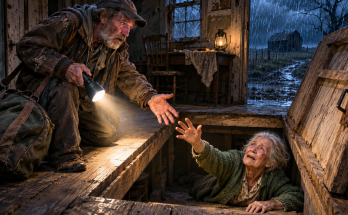
The basement entrance continued to trouble her.
She didn't pretend that a court decision or an apology had removed every consequence of what happened.
But she was learning to live with those consequences without allowing them to determine everything she did.
I was learning something similar.
Helen was still gone.
The financial losses I had experienced hadn't disappeared.
I couldn't change the months during which Emily had worried about me.
I couldn't return to the apartment and recover our nineteen years there.
But I could answer the telephone when my daughter called.
I could invite my grandchildren to the cottage.
I could work.
I could laugh.
And I could remember Helen without treating every pleasant moment as something taken away from her.
That evening, I returned to the cottage.
I placed her photograph back on the bedside table.
Then I opened the window slightly.
The air outside was warm.
Across the yard, Ruth's kitchen light was still burning.
I could hear insects in the grass.
I thought about the dinner beneath the maple trees and the sound of Emily laughing at the story about her mother's terrible birthday cake.
For once, the memory I carried into bed wasn't from a hospital.
It was from a kitchen years earlier, when Helen had made a mistake and everybody had laughed.
I smiled at the photograph.
Then I turned off the lamp.
I had finally begun understanding that continuing to live was not a way of leaving Helen behind.
It was a way of carrying everything she had given me into the years I still had.