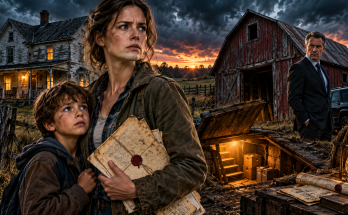
Dana arranged the internal records in chronological order across her conference table. Hannah arrived early, carrying Samuel's index and copies of the dispatch entries. The documents had been produced under a court-approved confidentiality procedure, and Dana reminded her that she could review the relevant materials but could not distribute them freely. The earliest memorandum described discrepancies in disposal descriptions at Q-3. Later correspondence showed that Caldwell commissioned limited internal reviews while continuing preliminary planning for industrial expansion. Hannah studied the dates carefully. The warnings had not appeared suddenly after Samuel died. They had accumulated over years.
One document contained an environmental consultant's recommendation that further sampling be completed before Caldwell relied on its existing disposal records. Another recorded a management decision to postpone certain work while seeking additional information. Dana explained that delaying a study was not automatically unlawful, but the reasons mattered. If the company had sound evidence that no immediate concern existed, the decision might be defensible. If it had reliable indications of a significant risk and deliberately avoided investigation to protect business interests, the circumstances would be different. Hannah understood that the documents still required testimony from the people who made the decisions.
The most troubling material concerned a later groundwater assessment. The consultant had identified anomalies near the quarry and recommended broader monitoring. Caldwell's internal correspondence acknowledged the findings, but the summary prepared for subsequent development planning described environmental conditions as requiring no material adjustment to the proposed investment schedule. Hannah read both documents side by side. The summary did not state that every water sample was clean. It simply omitted the consultant's recommendation for expanded monitoring. The absence was subtle enough that a reader unfamiliar with the underlying report might not notice what had been left out.
Dana pointed toward Evan's name in the routing information. He had received the consultant's assessment as a regional manager and later approved the development-planning summary. The documents did not establish that he personally wrote the environmental section, but they placed both materials within his responsibility. Hannah remembered him standing on her porch, speaking about the farm's poor condition and offering a price he described as generous. He had known the property was strategically useful. Now it appeared that he had also received information raising questions about the land around it. She wanted him to explain both matters.
Caldwell's counsel initially resisted a voluntary interview outside the formal litigation process. Dana proposed a deposition covering the relevant documents, subject to the existing confidentiality arrangements. Before the date was finalized, Evan's attorney contacted her with an unexpected request. Evan wanted a confidential meeting involving counsel for both sides and a discussion of the environmental records. He indicated that he might provide information beyond the documents already produced. Dana told Hannah that such a meeting would require clear boundaries. They would not agree to conceal evidence relevant to regulatory authorities or compromise the preservation of records.
Hannah spent the evening thinking about the request. She did not know whether Evan genuinely wanted to explain his decisions or hoped to avoid sworn testimony. He had approached her twice with financial offers while leaving important questions unanswered. Yet the environmental records now showed that he occupied a position from which he might provide details nobody else could establish. Hannah agreed to attend, provided Dana controlled the discussion and any commitments were documented. She would listen, but she would not negotiate away her rights or the investigation's evidence merely because Evan had decided to speak privately.
The next morning, Eli asked why she was wearing the same dark jacket she had worn to court. Hannah told him she had another meeting about the farm. He looked toward the kitchen ceiling, where the temporary roof repair had finally stopped the dripping. “Are they still trying to buy it?” he asked. Hannah said the company wanted to resolve several disputes, but she had not agreed to sell. Eli considered the answer and returned to fastening his schoolbag. Then he asked whether people would stop arguing when the water was fixed. Hannah wished she could promise him that they would.
After the bus departed, Hannah stood beside the orchard for several minutes. The trees were bare, their branches sharp against the pale sky. She thought about the woman she had been when Patricia Moore stamped the deed: unemployed, nearly out of fuel, and frightened of another night in the minivan. Money had once seemed capable of solving everything that mattered. Now she understood its limits. A large settlement could provide security, but it could not undo Rebecca's betrayal, establish responsibility for contamination, or guarantee that Clara would drink from her well again.
The meeting took place in Dana's office. Evan arrived with his attorney, Michael Reeves, a reserved man in his fifties. Hannah noticed that Evan looked less composed than usual. He had dark circles beneath his eyes and carried a thin folder instead of the polished proposal he brought to the farmhouse months earlier. Everyone exchanged formal greetings before taking their seats. Dana began by confirming that the discussion would not restrict lawful cooperation with regulators or create an agreement to suppress relevant evidence. Michael acknowledged the condition. Evan sat with his hands folded until Dana invited him to speak.
“I knew the Mercer property had value beyond ordinary farmland,” Evan began. Hannah did not respond. He admitted that the company viewed the land as important for possible water access and infrastructure planning. The original offer of one hundred and ten thousand dollars reflected an assessment of what Hannah might accept quickly, rather than a full valuation of every potential commercial advantage. Evan said the property's defects and legal restrictions were genuine, but acknowledged that he had emphasized those disadvantages while avoiding discussion of the company's strategic interest. Hannah felt anger rise, though she had already suspected as much.
“You knew I was living in a van before I came here,” she said. Evan hesitated, then admitted that he had received information about her circumstances from people familiar with her recent arrival and public records. He said he believed a prompt sale might benefit both parties. Hannah looked directly at him. “You decided what would benefit me before you told me what you wanted.” Evan lowered his eyes. He did not try to defend the omission. The admission mattered, but it was not why she had come.
Dana directed the conversation toward the quarry. Evan acknowledged receiving the consultant's report concerning irregular disposal records and groundwater anomalies. At the time, he said, his father still exercised considerable influence over major decisions. Victor argued that the evidence was inconclusive and that additional investigation should be handled internally until the company understood its exposure. Evan accepted that approach. He approved continued development planning and relied on a summary that did not fully convey the consultant's recommendation for broader monitoring. He now believed that decision had been wrong.
Hannah asked whether Evan had known the groundwater might be contaminated when he offered to buy the farm. He answered carefully. He knew the company had historical environmental concerns near the quarry and had received information that warranted further review. He said he did not know the extent of the contamination or whether Mercer Farm's water was affected. Hannah considered the distinction. It was possible for both statements to be true. But he had asked her to sell without disclosing that the company possessed records raising concerns about an area directly connected to its plans.
Dana asked why the environmental review had not been completed. Evan described disagreements between consultants, managers, and legal advisers about the significance of the findings. Some believed the anomalies were limited and might relate to unrelated historical activities. Others recommended additional sampling before major decisions were made. Evan admitted that the company placed greater emphasis on controlling costs and maintaining development schedules than on resolving uncertainty quickly. He had participated in those decisions. Hannah watched his hands as he spoke. The polished certainty he once displayed had disappeared.
Michael cautioned that Evan's statements should not be taken as admissions concerning every allegation against Caldwell. Dana agreed that responsibility would depend on the full evidence and applicable law. Hannah was relieved that the conversation remained precise. She wanted the truth, not a dramatic confession that could collapse under examination. Evan's account established that his department knew about significant unanswered questions and failed to communicate them fully during planning. It did not prove that he personally ordered improper disposal or that Victor had directed every questionable shipment. Those issues still required investigation.
Evan then described a disagreement with Victor after the state began testing the quarry. Victor wanted the company to defend its historical practices and challenge what he considered unreliable interpretations of old records. Evan argued that continuing to minimize the concerns would damage the business and possibly expose residents to prolonged uncertainty. Their discussions became increasingly hostile. Victor believed the company had already spent too much money responding to Samuel's allegations. Evan said he had begun reviewing the original reports himself, including correspondence he previously treated as administrative material.
During that review, Evan discovered that a broader technical assessment had been proposed years earlier but never completed. The consultant had warned that changes in groundwater pumping could affect contaminant movement if the suspected quarry source proved real. The warning was relevant to the company's proposed infrastructure route. Evan admitted he had approved a planning summary that did not include the full caution. Hannah remembered the hydrologist standing in the northern meadow and explaining the same concern. The omission was no longer merely a question of commercial valuation. It touched the safety of neighboring water supplies.
Hannah asked why Evan had come to her instead of immediately providing the records to regulators. He said he had recently retained independent counsel and was preparing to cooperate through appropriate legal procedures. Michael confirmed that arrangements were being discussed for production of additional documents and testimony. Dana asked whether Caldwell's existing counsel had been informed. Evan answered that the company knew he was obtaining separate advice. He understood that his cooperation could affect his position and relationship with his father. Hannah listened without offering sympathy. Those consequences belonged to choices he had made.
Evan opened his folder and produced an inventory of documents he believed relevant. It identified consultant reports, internal emails, meeting notes, and planning summaries that could clarify what company officers knew at different times. The inventory did not contain the records themselves. Michael explained that the materials would be produced through agreed legal and regulatory processes, preserving authenticity and respecting applicable obligations. Dana reviewed the list carefully. Several entries corresponded to questions investigators had been unable to resolve from the documents already obtained.
One item concerned a meeting held after a consultant warned that historic disposal descriptions might be inaccurate. Evan said Victor attended, along with senior managers and legal advisers. The meeting resulted in a decision to retain the existing project timetable while evaluating whether additional environmental work was legally required. Evan had kept notes because the recommendation troubled him. Dana asked whether the notes accurately recorded what was said. Evan replied that they were contemporaneous but incomplete, and that other participants might remember the discussion differently. She marked the item for formal production.
Hannah thought about Mark sitting in Samuel's underground room three years earlier, admitting how he allowed fear and financial dependence to shape his decisions. Evan was younger than Victor and had inherited a complicated business, but he was not a powerless employee. He had authority, access to experts, and opportunities to act. Hannah told him that his father's influence did not erase his own responsibility. Evan nodded. “I know,” he said. She believed he understood the words, though understanding did not yet establish what he would do.
Dana then asked whether Evan intended to withdraw the company's claims concerning the underground archive. Evan said he could not make that decision alone. Caldwell's legal positions remained under corporate control, and he no longer wished to pretend he could speak for everyone involved. He did, however, agree to provide testimony concerning the origins of the documents and his knowledge of the historical transactions. If the evidence showed that certain records were relevant to environmental investigation, he would not oppose their lawful examination merely because they embarrassed the company.
The meeting continued for nearly two hours. By its conclusion, no settlement had been reached and Hannah had received no new promise about the farm's ownership. Evan had provided an account of his involvement and agreed to cooperate with formal requests. Dana emphasized that his statements would need confirmation through documents and sworn testimony. Michael accepted a timetable for the next steps. Hannah appreciated the absence of theatrical apologies. What mattered now was whether Evan would provide evidence even when doing so damaged his interests.
After Evan left, Dana reviewed the meeting notes with Hannah. She said the information could significantly strengthen the environmental investigation if the supporting records confirmed it. The company's internal decisions might help explain why early concerns were not pursued and whether later development planning adequately addressed known uncertainties. The property dispute remained separate, though evidence of how Caldwell obtained and valued access rights could affect that case as well. Hannah asked whether they were finally close to an answer. Dana replied that they were closer to asking the right people questions they could no longer easily avoid.
Hannah returned to Mercer Farm in the late afternoon. Tom had finished repairing a section of fencing near the orchard, and Eli was helping Clara sort apples for storage. The sight of them brought an unexpected wave of relief. For several hours, Hannah had been immersed in corporate decisions, legal consequences, and groundwater studies. Now her son was laughing because one apple had rolled beneath the porch. She joined them without explaining the meeting immediately. The farm still needed repairs, and their future remained unsettled, but ordinary life continued inside the uncertainty.
That evening, she told Eli that someone from the development company had agreed to help investigators understand what happened. He asked whether the man had been lying before. Hannah considered the question. “He didn't tell me everything he knew,” she said. “Now he says he's going to explain it properly.” Eli frowned. “How do you know he will?” Hannah looked toward the files on the table. “I don't,” she answered. “That's why people are checking the records.” Eli nodded, apparently satisfied by an answer that did not pretend certainty.
Before bed, Hannah opened Rebecca's letters again. Her mother had tried to correct the consequences of trusting someone who concealed important information. Samuel had spent years gathering documents without finding a way to bring the truth into public view. Mark had finally admitted his deception, and now Evan was being asked to account for his own decisions. Hannah could not change what the men had done. But she could insist that the evidence be preserved, examined, and acted upon. She folded Rebecca's letter carefully and returned it to its sleeve.
The following morning, Dana called with confirmation that Evan's attorney had begun arranging formal production of the additional records. More importantly, Evan had agreed to provide a sworn statement to environmental investigators concerning the internal reports, the delayed monitoring recommendations, and the development-planning summaries he approved. His cooperation did not establish legal guilt or resolve the property case. It meant that a senior Caldwell official was prepared to place his own decisions under scrutiny rather than leave the company records unexplained.
Hannah stood on the porch after ending the call. Across the yard, the barn leaned beneath its patched roof, still bearing the fading warning that had greeted her arrival. The words had once made her wonder whether she belonged on the land at all. Now she understood that ownership was only part of what she had inherited. Samuel had left evidence of a conflict that reached through her mother's life, her father's abandonment, and the water beneath her neighbors' homes. Evan's decision to testify would bring that evidence into sharper focus. Hannah turned toward the farmhouse, knowing the next stage would test whether those who claimed to want the truth were prepared to accept its consequences.