I carried the blue notebook home in my handbag.
I kept one hand resting over it during the drive.
Daniel noticed.
He didn't say anything.
He understood why I wanted it close.
I had entered Margaret's office hoping to learn what Ruth kept inside the little blue book.
I left knowing far more than I expected.
The financial records were there.
The agreement involving my father was there.
The notes about the farm were there.
But those weren't the pages I kept thinking about.
I thought about Christmas 1985.
Ruth watching Carol and Jeanette laugh.
Me smiling because I didn't want to appear hurt.
And Ruth writing that she hoped I would someday understand I mattered to her.
That entry stayed with me.
I had spent forty years believing I was the one person in the room whose feelings nobody noticed.
Now I knew Ruth had noticed.
Not perfectly.
Not in the way I needed at the time.
But she had seen me.
I watched the road through the car window.
Daniel drove quietly.
Neither of us seemed ready to speak.
I thought about the letter Ruth wrote to her daughters.
She had been disappointed.
That was clear.
But she hadn't stopped loving them.
She wanted them to understand that her property belonged to her.
She wanted them to respect her decisions.
And she didn't want them to blame me.
I wished those words could repair everything.
But I knew they couldn't.
Carol and Jeanette had already challenged the trust.
They had taken steps to question their mother's choices.
And they had spent years believing the farmhouse would eventually belong to them.
A letter couldn't erase all those expectations.
Still, it could explain the truth.
And sometimes that was the most anyone could offer.
When we reached home, Daniel carried the remaining box of jars downstairs.
I took the notebook into the kitchen.
I placed it on the table.
Then I sat beside it.
I didn't open it immediately.
I just looked at the cover.
The blue had faded.
The corners had worn thin.
There were small marks along the edges.
It looked like a book that had been handled for many years.
I thought about Ruth holding it.
Writing dates.
Recording payments.
Adding notes after Christmas.
Perhaps she had kept it in her bedroom writing desk.
Perhaps she had carried it into the kitchen.
I didn't know every place it had been.
But I knew she had protected it.
She had deposited the original with Margaret before her death.
She had left the brass key.
She had warned me about the drawer.
She had arranged for the notebook to reach me only after the trust was acknowledged.
It was all so carefully planned.
I smiled faintly.
Ruth had always been like that.
When she made preserves, she didn't leave the jars scattered across the kitchen.
She lined them up.
She checked the lids.
She made sure everything was properly sealed.
Now I realized she had approached her estate in much the same way.
Every document in its place.
Every instruction written down.
Every important decision preserved.
She had known what might happen after she died.
And she had done what she could to protect the people and things she cared about.
I opened the notebook.
I found the entry about 1995.
Ten years of marriage.
Ten Christmases.
The kitchen after dinner.
I remembered the sound of water running.
The damp dish towel.
Ruth telling me to go home.
I smiled.
Then I turned to 2005.
Her operation.
The telephone calls.
The week her daughters didn't contact her.
I felt sad again.
I wondered whether Carol and Jeanette would ever understand how much those small absences had hurt their mother.
Perhaps they had believed she was fine.
Perhaps they had been busy.
Perhaps they simply assumed there would always be another day to call.
I knew how easily that could happen.
Life became crowded.
Responsibilities grew.
A telephone call could seem unimportant.
Until the person waiting for it was gone.
I thought about Ruth sitting alone.
She had spent so much of her life being strong.
Raising children.
Managing the farm.
Working through financial trouble.
Caring for Arthur during his illness.
After he died, she continued.
She worked.
She saved.
She managed.
She rarely asked for anything.
Perhaps that strength had made her daughters believe she didn't need them.
I couldn't know.
But I knew she had needed love.
Everyone did.
I turned to the entry about 2015.
The porch railing.
I remembered how it moved beneath my hand.
How annoyed Ruth became when I told her it wasn't safe.
How she insisted she could manage.
I laughed softly.
She had been so stubborn.
And I had loved her for it.
The little things came back so clearly.
The smell of her kitchen.
The old cupboards.
The red barn beyond the porch.
The apple tree.
The sound of her shoes on the floor.
I missed her.
More than I had allowed myself to admit.
For weeks after her death, I had been busy with ordinary responsibilities.
There were family conversations.
Belongings to sort.
Funeral arrangements.
Then the final Christmas gift.
The bonds.
The trust.
The legal questions.
There had been so much to understand that I hadn't given myself much time to simply miss Ruth.
Now I sat at the table and cried.
No papers to calculate.
No questions to answer.
No sisters-in-law to confront.
Just grief.
I closed the notebook.
I wiped my face.
Then I heard Daniel enter.
He saw me sitting there.
He came closer.
“Linda?”
I looked up.
“I'm all right.”
He sat beside me.
For a while, we were quiet.
Then I said something that had been troubling me.
“I wish she'd told me.”
Daniel looked at the notebook.
“About the trust?”
“About everything.”
I touched the cover.
“I wish she'd told me she loved me like a daughter.”
He nodded.
“She wasn't good at saying things like that.”
“I know.”
I looked at him.
“But forty years is a long time to wonder.”
He lowered his eyes.
“I know.”
I could see that he felt guilty.
He had known about some of Ruth's plans.
He had remained silent because she asked him to.
And he had allowed his sisters' jokes to continue for years.
I didn't want to punish him forever for those mistakes.
But I needed him to understand them.
I reached for his hand.
“Daniel, I don't want us keeping secrets like that again.”
He nodded.
“We won't.”
I studied his face.
I believed he meant it.
That mattered.
I couldn't change the past.
But I could ask something different of our future.
I looked toward the basement door.
“Your mother really knew me.”
Daniel smiled faintly.
“She did.”
I shook my head.
“Better than I knew she did.”
He looked at the notebook.
“She noticed everything.”
I laughed softly.
“That she did.”
We sat together for a while.
Then Daniel asked whether I wanted to discuss what we should do with the trust.
I shook my head.
“Not yet.”
He nodded.
I wasn't ready to make financial decisions.
Not while Ruth's daughters were challenging her estate.
Not while the final accounting remained unfinished.
And not while I still felt overwhelmed by the amount involved.
One million eight hundred sixty thousand dollars.
I knew the number.
I understood that it represented real security.
But I didn't want to start spending in my imagination before everything had been properly settled.
I had never lived that way.
I wasn't going to begin now.
I looked at Daniel.
“I want to do this carefully.”
He smiled.
“Mom would approve.”
I nodded.
“She would.”
I thought about Margaret's advice.
Don't sign documents without review.
Don't argue with Carol and Jeanette about legal matters.
Let the records establish Ruth's decisions.
I could follow those instructions.
They were clear.
And they were sensible.
But I also needed to decide how I would behave toward my sisters-in-law.
I didn't want to answer cruelty with cruelty.
I didn't want to use the inheritance to embarrass them.
I didn't want to make them feel poor beside me.
I remembered how much it had hurt to be the person receiving the least expensive gift.
I would not deliberately put them in that position.
But I also knew I couldn't protect their feelings by surrendering Ruth's wishes.
That would be wrong.
Ruth had made her decisions freely.
She had documented them.
She had explained them.
And she had chosen me.
I couldn't treat that choice as something shameful.
Daniel looked at me.
“What are you thinking?”
I took a breath.
“That I don't want to become like your sisters.”
He frowned.
“What do you mean?”
“I don't want to spend the rest of my life measuring love by money.”
He nodded slowly.
I continued.
“I don't want to think Ruth loved me more because she left me more.”
Daniel looked at the notebook.
“She loved all of us.”
“I know.”
I pressed my hand over the cover.
“And I don't want Carol and Jeanette thinking the money proves they meant less.”
Daniel sighed.
“They may think that anyway.”
“I know.”
That was the painful part.
I couldn't control how they interpreted Ruth's choices.
I could explain.
I could listen.
I could remain respectful.
But I couldn't make them accept something they didn't want to believe.
For forty years, I had tried to manage the feelings of everyone around me.
I had learned how to smile when embarrassed.
How to change the subject when Carol became sharp.
How to avoid disagreeing with Jeanette.
How to keep Daniel from feeling caught between us.
I had mistaken that effort for keeping the family together.
Now I understood there was a limit.
I could be kind.
I could be patient.
But I didn't have to disappear.
I looked at Ruth's notebook.
She had valued the person I was when nobody was paying attention.
She had never asked me to become someone else.
Why had I spent so many years believing her daughters' approval was the measure of my worth?
The thought made me uncomfortable.
Because the answer was simple.
I had wanted to belong.
I had wanted Daniel's family to accept me.
And I had been afraid that speaking up would cost me that place.
Now I knew my place had been secure with Ruth all along.
Not because of the trust.
Not because of the bonds.
Because of the relationship we had built.
The trust was only the final expression of it.
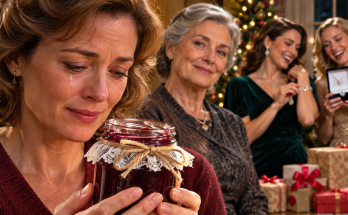
I reached for the first jar, which I had brought upstairs earlier.
Number one.
I turned it slowly.
The lid was empty now.
The bond had been removed.
The jam had been eaten decades ago.
There was nothing valuable left inside.
At least, nothing a bank would recognize.
But I remembered Ruth handing it to me.
I remembered carrying it home.
I remembered placing it beside our wedding photograph.
I remembered thinking it was too special to open immediately.
I smiled.
The jar had mattered before I knew about the money.
That was important.
I wanted to remember it.
Daniel looked at the glass.
“You really kept that one all these years.”
I nodded.
“Every year.”
He smiled.
“Mom knew you would.”
I looked down.
“Yes.”
For a moment, I imagined her standing in our kitchen.
Looking at the shelf.
Seeing the rows of jars.
Knowing what was hidden beneath the lids.
I wondered whether she had smiled to herself.
Whether she had felt pleased that her plan was working.
I would never know.
But I liked thinking she had felt happy.
I placed the jar beside the notebook.
Then I looked at Daniel.
“I don't want to discuss the money with Carol and Jeanette again.”
He nodded.
“Then don't.”
“If they have legal questions, Margaret can handle them.”
“I agree.”
“And if they want to talk about Ruth, I'll listen.”
Daniel squeezed my hand.
“That sounds right.”
I looked at the notebook.
The blue cover was resting beside the empty jar.
Two ordinary objects.
One filled with Ruth's written memories.
The other empty after forty years.
I thought about the jewelry Carol and Jeanette had received.
The gold bracelets.
The earrings.
The family ring.
Beautiful things.
Things Ruth had chosen for them.
I didn't begrudge them any of it.
I never had.
I simply wished they could understand that my jars had been gifts of love, too.
And perhaps, someday, they would.
But I couldn't make that happen.
I could only decide how I would respond now.
I stood and carried the notebook to a safe place.
Then I returned to the kitchen.
Daniel was putting away the cups.
I picked up a dish towel and helped him.
The movement felt familiar.
One person washing.
The other drying.
For a moment, I remembered Ruth standing beside me after Christmas dinner.
I felt a small ache.
Then I smiled.
I had spent years showing love through ordinary things.
A telephone call.
A bag of groceries.
A repaired railing.
A dish washed after dinner.
I wasn't going to stop doing those things because Ruth had left me money.
I wanted to remain the woman she had known.
That evening, I placed jar number one back on the basement shelf.
I checked the others.
Then I returned the fortieth jar beside them.
All forty were together again.
I stood there for a long time.
I had once looked at that shelf and seen proof of how little I received.
Now I saw forty years of attention.
Forty years of planning.
Forty years of a woman quietly remembering me.
I turned off the basement light.
Upstairs, Daniel called from the kitchen.
I answered him.
Then I went back to our ordinary life.
The legal challenge was still unresolved.
Carol and Jeanette were still angry.
Margaret still had work to do.
But I had made my decision.
I would respect Ruth's wishes.
I would allow the documents to speak.
And I would no longer spend my life apologizing for being loved.