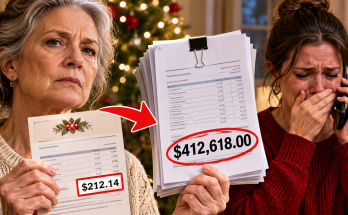
Lauren held me for a long time.
I could feel her crying against my shoulder.
I was crying too.
I had tried not to.
I had wanted to remain calm through the conversation.
But the words had finally come out.
I missed my daughter.
Not the child she had once been.
I knew she could not remain little forever.
I missed the woman who used to call me simply because something reminded her of me.
I missed being part of her life without feeling that I had to earn an invitation.
I missed the way we used to talk.
Before every conversation seemed to be about responsibilities.
Plans.
Appointments.
Money.
The ordinary business of being adults.
I understood that life changed.
I had changed too.
But I had never expected to feel like a visitor who had to prove her usefulness.
Lauren tightened her arms around me.
"I'm sorry, Mom."
I rubbed her back.
"I know."
"I didn't realize."
"I know that too."
She pulled away slightly.
Her face was wet.
She looked embarrassed.
I reached for a napkin.
She took it.
Then she sat in the chair beside me instead of returning to the other side of the table.
That small change meant more to me than I expected.
We were no longer sitting across from each other with eleven pages between us.
We were sitting together.
The documents were still there.
The amount was still there.
But for the first time since Christmas, I did not feel as though I needed to defend myself.
Lauren wiped her eyes.
"I thought I was being practical."
I looked at her.
"About the dinner?"
She nodded.
"I knew you brought food."
"Yes."
"And I knew you helped us clean."
"Yes."
She stared at her hands.
"I knew all of that, Mom."
I waited.
"But when Mark started talking about the costs, I let myself believe the bill was reasonable."
I took a breath.
She had mentioned Mark the night before.
I had been careful not to make assumptions.
Now she was speaking more openly.
"What did he say?"
Lauren looked at the papers.
"He said hosting was expensive."
I nodded.
"It can be."
"He said everybody should contribute."
"That's something people can discuss."
She looked at me.
"He made it sound like we were being taken advantage of."
I frowned.
"By whom?"
She hesitated.
Then she lowered her eyes.
"By you."
I felt a small pain in my chest.
I had suspected it.
But hearing the words was different.
I thought of the ham.
The pies.
The shortbread.
The cleaning I had helped with.
I tried to imagine how any of those things could have looked like taking advantage.
I could not.
Still, I did not want to shout about Mark.
Lauren needed room to tell me what had happened.
So I waited.
She continued.
"He said people don't always realize how much things cost when they're guests."
I nodded slowly.
"That's true sometimes."
She looked surprised.
I continued.
"But I wasn't a guest who arrived expecting to be served without helping."
"I know."
"I brought food."
"I know."
"And I helped after dinner."
She covered her face.
"Mom, I know."
I let the silence settle.
Then I asked the question that had stayed with me since I first opened her invoice.
"Why didn't you ask me before Christmas?"
She looked at me.
"What?"
"If you wanted everyone to share the costs, why didn't you tell us beforehand?"
She opened her mouth.
Then closed it.
I waited.
"You could have said that hosting was expensive and asked whether we wanted to contribute."
She nodded.
"I would have understood."
"I know."
"But you waited until after the dinner."
She looked down.
"Yes."
"After I had already brought things."
"Yes."
"After we had all eaten."
She nodded again.
"And then you sent me a bill."
She began crying quietly.
I did not enjoy repeating it.
But I needed to know whether she understood the difference.
Lauren wiped her eyes.
"I let him convince me it was normal."
I watched her.
"Lauren, you made the decision to send it."
"I know."
"I don't want you blaming someone else for something you did."
She looked directly at me.
"I'm not."
I believed she was trying.
But I could also see that Mark's influence had been stronger than I realized.
She took another napkin.
Then she said something quietly.
"There's something I didn't tell you last night."
I felt myself become still.
"What is it?"
She looked toward the invoice.
I waited.
"Mark didn't just tell me to send it."
I did not interrupt.
"He worked out the charges."
I frowned.
"All of them?"
She nodded.
"He prepared the spreadsheet."
I stared at her.
For a moment, I could not find anything to say.
I had imagined Lauren sitting at her computer and calculating expenses.
I had imagined her deciding how much each person should pay.
I had imagined her sending the result without understanding how it would feel to receive it.
Now I learned that Mark had been the one doing the calculations.
I looked at the pages in front of us.
My own spreadsheet suddenly seemed different.
It had been a response to a document my son-in-law had prepared.
"Mark calculated my Christmas bill?"
Lauren nodded.
"Yes."
I looked at her.
"And you sent it?"
"Yes."
"Without talking to me?"
She swallowed.
"Yes."
I leaned back in my chair.
I needed a moment.
I did not want to say something cruel.
I had been careful throughout the morning.
And I wanted to remain careful now.
Lauren watched me.
I could see that my silence worried her.
"Mom?"
"I'm thinking."
She nodded.
I looked toward the kitchen counter.
The Christmas card was still there.
Lauren and Mark standing outside their house.
I wondered whether he had any idea what that card had meant to me.
Or what his spreadsheet had done afterward.
I turned back.
"Tell me exactly what happened."
Lauren drew a breath.
"After dinner, Mark started going through what we'd spent."
I listened.
"He said we should figure out what everyone owed."
"Everyone?"
She hesitated.
"That's what he said."
I noticed the hesitation.
I did not interrupt.
"He started putting everything into a spreadsheet."
I nodded.
"The food?"
"Yes."
"The linens?"
"Yes."
"The cleaning?"
She closed her eyes.
"Yes."
I looked down at my hands.
It was even more difficult to hear the charges described aloud.
Lauren continued.
"I told him it felt strange to charge you."
I raised my eyes.
"You did?"
She nodded.
"Because you brought the ham."
I waited.
"And the pies."
"Yes."
"And the shortbread."
I almost smiled.
She looked miserable.
"I knew you'd already contributed."
"Then why did you agree?"
She took a breath.
"He said those were things you chose to bring."
I stared at her.
I could not immediately answer.
She continued quietly.
"He said bringing something didn't mean you shouldn't pay your share."
I thought about that.
A person could argue that voluntary contributions did not replace an agreed payment.
That might make sense in certain circumstances.
But we had not agreed to share Christmas expenses.
Nobody had discussed a charge before the meal.
I had been invited.
I had brought food because I wanted to.
And afterward, Mark had decided that my contributions did not count.
I felt anger rising.
I pushed it down.
I wanted to understand the facts before deciding what to say.
"Did you tell him you thought it was unfair?"
Lauren nodded.
"I said it didn't feel right."
"And?"
"He told me his parents were paying their share."
I looked at her carefully.
"His parents?"
"Yes."
I remembered them sitting at the table.
His mother with the bottle of wine.
His father discussing ordinary things.
I had enjoyed their company well enough.
I had never thought of them as people whose contribution needed measuring.
But now I wanted to understand.
"Mark said his parents paid?"
Lauren nodded.
"That's what he told me."
I looked at the invoice again.
"And because his parents were contributing, he said I should contribute too?"
"Yes."
I rested my hands on the table.
Something still did not make sense.
I remembered what she had said about the cleaning.
The linens.
The food I had already provided.
I thought about the difference between contributing to a meal and being charged afterward.
Then I thought about something else.
If Mark had been concerned about fairness, it should have applied to everyone.
Not only to me.
"Lauren, did his mother bring anything?"
She nodded.
"A bottle of wine."
"And his father?"
She looked uncomfortable.
"Nothing."
I nodded.
That did not bother me.
It never had.
I wanted Lauren to understand that.
"I'm not upset that his father came empty-handed."
"I know."
"Or that his mother brought only wine."
She nodded.
"People bring what they want when they visit family."
She looked at me.
"That's what I thought."
I felt another small ache.
She had thought it.
But she had allowed someone else to persuade her otherwise.
I knew how easily that could happen inside a marriage.
People wanted to agree.
They wanted peace.
They sometimes accepted things they would have questioned on their own.
But wanting peace did not remove responsibility.
Lauren had still sent the invoice.
I did not want her to forget that.
I leaned closer.
"Can I ask something?"
"Anything."
"Did Mark's parents receive a bill?"
She became very still.
For a moment, she did not answer.
I felt I already knew.
But I wanted to hear it.
"Lauren?"
She shook her head.
"No."
I looked at her.
"Neither of them?"
"No."
I sat back.
The answer did not surprise me.
But it changed the way I understood everything.
Mark had said his parents paid their share.
Yet they had not received the same kind of invoice.
I wanted to know how the arrangement had worked.
But before I asked more questions, I needed to understand one basic thing.
Had the rule been applied equally?
I looked at Lauren.
"Did Mark charge himself?"
She shook her head.
"No."
"And did you charge yourself?"
She stared at the table.
Then she shook her head again.
"No."
I felt a bitter little smile forming.
Not because it was funny.
Because the answer was so clear.
One person had received a detailed bill after Christmas.
Me.
The woman who had brought food and helped clean.
I looked at my daughter.
She could see what I was thinking.
Her eyes filled again.
"Mom, I'm sorry."
I reached for her hand.
"I believe you."
She squeezed my fingers.
Then I asked the question that had been waiting behind all the others.
"If the same rule didn't apply to everyone, how was it fair?"
Lauren looked down at the eleven pages.
She did not answer.
She didn't need to.