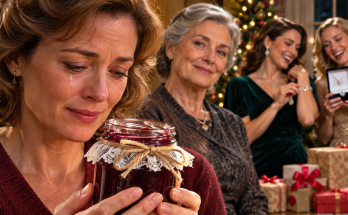
I hadn't expected to return to Ruth's farmhouse.
Not after the sale.
When Margaret first explained that the property had been sold according to Ruth's instructions, I felt as though I was losing the house a second time.
I understood the arrangement.
Ruth had approved it before her death.
The proceeds had been placed in the trust.
Everything had been done according to her plans.
But understanding something didn't make it painless.
For forty years, the farmhouse had been part of my life.
I knew the white porch.
The red barn.
The old apple tree.
I knew how the kitchen cupboards smelled.
I knew which floorboards made noise.
I knew where Ruth liked to sit when she was tired.
And I knew the table where she prepared her Christmas presents.
I missed that place.
More than I expected.
Daniel missed it, too.
He had grown up there.
His memories were older than mine.
He remembered the house before I ever entered it wearing that yellow dress in the summer of 1985.
He remembered Arthur.
His father.
The years when the farm was still home to all three children.
I knew the property meant something different to him.
But we both wanted to preserve a connection to it.
After discussing the possibility, we learned that a small portion of the former farm property could be purchased from the new owners.
It wasn't the entire farm.
We didn't need that.
We weren't trying to reverse Ruth's sale or undo her estate arrangements.
We only wanted a small piece of the place where so much of our family history had happened.
The opportunity became available.
We discussed it.
We considered the practical details.
Then we arranged the purchase.
I remember the relief I felt when everything was settled.
It wasn't about owning valuable land.
I had already received more than enough financial security.
This was about memory.
I wanted Ruth's grandchildren to have somewhere connected to her life.
Somewhere they could visit.
Somewhere Daniel could stand beneath the old apple tree and remember being young.
Somewhere I could look toward the farmhouse and remember the woman who had welcomed me into her family.
I didn't want the land to become another argument about money.
I wanted it to remain a place of affection.
The first anniversary of Ruth's death approached.
I had been thinking about it for weeks.
I knew the date would be difficult.
Even after a year, I still sometimes reached for the telephone before remembering I couldn't call her.
I would see something at the grocery store and think Ruth might like it.
Then I would remember.
I would finish making a meal and imagine asking whether she wanted some.
Then I would remember again.
Grief had become quieter.
But it hadn't disappeared.
It arrived in ordinary moments.
A jar on a shelf.
A familiar recipe.
The smell of fruit cooking.
An old dish towel.
The sound of someone moving around a kitchen.
I had learned to live with those reminders.
Some made me smile.
Others made me cry.
Most did both.
A few days before the anniversary, I went downstairs.
The forty jars were still lined up on the basement shelf.
I had dusted them regularly.
Their lids faced outward.
One through forty.
I stood there looking at them.
I remembered the first time I discovered the hidden bond.
How frightened I had been.
How confused.
How quickly the entire meaning of those jars changed.
I reached for number one.
The glass was cool.
I turned it in my hands.
I thought about Ruth making the jam.
The fruit.
The sugar.
The heat from the stove.
The effort involved.
Every December, she had repeated that work.
For forty years.
I had never properly appreciated how much time she spent preparing those gifts.
I knew she enjoyed making preserves.
But I had taken her effort for granted because it was familiar.
Now I understood that familiarity didn't make something less valuable.
Sometimes it made it more valuable.
I picked up another jar.
Then another.
I began placing them carefully into a basket.
I had an idea.
I wanted to do something on the anniversary.
Not a ceremony.
Not a public event.
Something simple.
Something Ruth would recognize.
I wanted to make plum jam.
I hadn't made it exactly the way she did.
Her kitchen had always been her territory.
She allowed me to wash dishes.
She let me carry groceries.
She accepted help with repairs.
But when it came to preparing her preserves, she preferred doing the work herself.
I used to smile at that.
Now I missed it.
I wanted to try.
Not because I believed I could reproduce her jam perfectly.
Because I wanted to remember the feeling of making something with care.
I wanted to hold a jar and understand the work behind it.
I wanted to give something ordinary the attention Ruth had given it for decades.
I told Daniel.
He looked at the jars.
“All forty?”
I nodded.
“All forty.”
He smiled.
“That's quite a project.”
“I know.”
“Are you sure?”
I looked at the glass in my hands.
“Yes.”
I didn't want to rush.
I wanted to take my time.
We prepared the jars.
I cleaned them carefully.
I checked them.
I thought about how Ruth used to examine every lid before putting preserves away.
I had always considered her particular.
Now I found myself being just as careful.
Daniel noticed.
“You're doing that the way Mom did.”
I smiled.
“I suppose I learned more from her than I realized.”
We made the jam.
The work took time.
It wasn't difficult in the way I had feared.
But it required attention.
I had to watch what I was doing.
I had to be patient.
I couldn't hurry simply because I wanted the result.
I thought about Ruth standing in her kitchen.
Working with fruit she had grown or gathered.
Preparing jars.
Making something her family would eat.
Then setting one aside for me.
I imagined her placing the savings bond beneath the lid.
Making certain it was protected.
Knowing I would probably never look there.
I smiled to myself.
She had been clever.
And stubborn.
And very determined.
I wished I could tell her that.
When the jam was ready, I filled the jars.
The deep purple color reminded me of every Christmas gift I had received from her.
I held up the first one.
Daniel looked at it.
“Looks familiar.”
I laughed softly.
“That's the idea.”
We prepared the rest.
One jar after another.
Forty in all.
I couldn't stop thinking about how long Ruth had kept that tradition.
What I was doing over a short period, she had done across four decades.
Through illness.
Through family changes.
Through ordinary worries.
Through good years and difficult ones.
She had never missed a Christmas.
I understood the devotion behind that more clearly now.
I wanted to mark the jars.
Not with anything elaborate.
Just something that would remind our family whose tradition we were continuing.
I prepared small labels.
Each carried Ruth's name.
And a short description of what the jars represented.
Forty years of love.
I looked at the words for a long time.
I knew Ruth might have considered the sentiment too dramatic.
She was practical.
She wasn't a woman who liked attention.
But I also knew she had spent forty years expressing affection through those jars.
I wanted the family to remember that.
Not the money.
Not the legal dispute.
The love.
On the anniversary of her death, Daniel and I drove back to the property.
I carried a basket.
Inside were the jars.
I looked out the window as we approached.
The road was familiar.
I had traveled it hundreds of times.
For Christmas dinners.
Sunday visits.
Medical appointments.
Ordinary afternoons when Ruth needed groceries.
I remembered driving there as a young bride.
Sitting beside Daniel.
Worrying about whether his mother would like me.
Now I was returning as a woman who knew how deeply she had cared.
The change made me emotional.
When we arrived, I stayed in the car for a moment.
Daniel turned off the engine.
He looked at me.
“Ready?”
I nodded.
Then I shook my head.
He waited.
I looked toward the farmhouse.
The white porch was still there.
The red barn stood nearby.
The old apple tree had survived another year.
For a moment, everything looked so familiar that I almost expected Ruth to come outside.
I imagined her standing on the porch.
Calling out that we were late.
Or telling us not to carry anything because she had enough food already.
I smiled through my tears.
Daniel touched my hand.
We got out.
The porch needed painting.
The garden had become overgrown.
The place wasn't exactly as Ruth had kept it.
But the important things remained.
I walked slowly.
I touched the porch railing.
The one I had repaired years earlier.
I remembered Ruth testing it.
Then nodding as though she had completed an inspection.
I laughed softly.
Daniel looked at me.
“What?”
“The railing.”
He smiled.
“She was proud of that repair.”
“She barely said thank you.”
“That was Mom.”
I nodded.
I could almost hear her.
We continued toward the kitchen.
The old cupboards were still there.
The familiar smell remained faintly in the room.
Wood.
Age.
And something that reminded me of preserves.
I stood near the table.
I had spent so many afternoons there.
Helping Ruth.
Listening to her.
Watching her work.
I placed the basket down.
Then I took out one jar.
The glass caught the light.
The jam inside looked dark and rich.
I set it on the kitchen table.
Daniel came beside me.
He looked at the label.
Then at the jar.
“What are you planning to do with the others?”
I smiled.
“I thought we could share them.”
He nodded.
“With the family?”
“Yes.”
I looked around the kitchen.
“I want her grandchildren to remember this.”
Daniel's eyes filled.
“They will.”
I placed another jar beside the first.
Then I stopped.
I didn't need to arrange all forty on the table.
The basket was enough.
The gesture was enough.
I wanted to remember Ruth, not recreate every Christmas.
Daniel stood behind me and wrapped his arms around my shoulders.
I leaned against him.
We looked toward the old kitchen cupboards.
He spoke softly.
“Mom would have loved this.”
I nodded.
“I hope so.”
He kissed my forehead.
“She knew how much you loved her.”
I looked at the jam.
For years, I had wondered whether Ruth knew.
I had worried that she saw me only as Daniel's wife.
The woman who happened to be present at family gatherings.
Now I knew better.
“She knew I was family,” I said.
Daniel held me a little tighter.
“Yes.”
We stood quietly.
Then I looked toward the window.
The apple tree was visible outside.
I thought about my father.
Thomas Bennett.
The man who had helped save this property in 1985.
The man who never told me about it.
The man who taught me that kindness didn't need an audience.
I wished he could have seen this moment.
I wished Ruth could have been there, too.
But both were gone.
What remained were the choices they had made.
The farm had survived because someone helped.
The trust existed because someone saved.
And the jars remained because someone appreciated a gift that other people dismissed.
I wiped my cheeks.
Then I picked up the basket.
There was something I wanted to do with the jam at Christmas.
Something I hadn't yet discussed with Carol or Jeanette.
I wasn't certain they would accept it.
I wasn't even certain they would come to our house.
But I knew I wanted to try.
Not because the inheritance dispute had never happened.
Not because their words hadn't hurt.
Because Ruth had loved them.
And because I didn't want her final Christmas tradition to end in anger.
I looked at Daniel.
“Would you mind if we invited your sisters this year?”
He studied my face.
“After everything?”
I nodded.
“After everything.”
He was quiet for a moment.
Then he smiled.
“I think Mom would want that.”
I looked at the jar on the table.
I thought so, too.
We left the farmhouse that afternoon with the same quiet sadness we had carried there.
But I also felt something new.
I had returned to the place where Ruth had spent most of her life.
I had remembered her without thinking about the trust's value.
I had stood in the kitchen where she made forty years of Christmas presents.
And I had finally understood why I wanted to keep those jars.
They weren't containers for money.
They were containers for memory.
That was what I wanted to pass on.