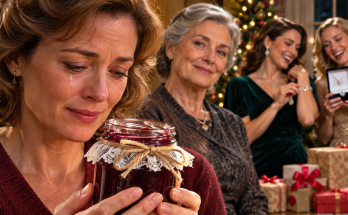
I didn't know whether Carol and Jeanette would come for Christmas.
After everything that happened, I wouldn't have blamed them for staying away.
The legal challenge had ended.
The trust remained intact.
The bonds had been redeemed.
Margaret had completed the remaining paperwork.
But there was still something between us.
Something no attorney could settle.
Forty years of remarks.
Months of accusations.
The memory of Carol standing in my living room demanding to know how much Ruth left me.
The memory of Jeanette saying I was destroying the family.
I hadn't forgotten those things.
I didn't think I ever would.
But I didn't want them to become the only memories we shared.
So Daniel and I invited his sisters.
I kept the invitation simple.
Christmas dinner.
Our house.
No discussion of the estate was required.
No explanation of the trust.
Just a meal together.
I wasn't sure whether they would accept.
But they did.
When Daniel told me, I felt relieved.
Then immediately nervous.
I had spent forty Christmases wondering what Carol and Jeanette thought of me.
I didn't want to return to that feeling.
I reminded myself that I wasn't twenty-four anymore.
I didn't need their permission to belong.
Ruth had already made that clear.
On Christmas morning, I got up early.
The kitchen was quiet.
The renovations were finished.
The cupboards worked properly.
The roof had been repaired.
And our mortgage was paid.
I looked around the room.
So much had changed since the previous Christmas.
I had discovered the bonds.
Learned about the trust.
Heard Ruth's recorded voice.
Found the old agreement involving my father.
Read the blue notebook.
Faced Carol and Jeanette.
And learned that their legal challenge had been withdrawn.
It had been an exhausting year.
But I had also been given a new understanding of my life.
I thought about Ruth.
I wondered whether she had imagined this Christmas.
Whether she hoped we would sit together again.
Whether she believed her daughters might eventually understand why she made her decisions.
I couldn't know.
But I wanted to give the family an opportunity to remember her without fighting.
I prepared the table.
Daniel helped.
We arranged the food.
We checked the chairs.
We made sure there was enough room.
I had done this kind of work for decades.
But the house felt different now.
Not because it was renovated.
Because I no longer felt I had to prove I deserved to be there.
This was my home.
I had invited the people I wanted to see.
And I could welcome them without surrendering my dignity.
I placed four small packages aside.
Each contained a jar of homemade plum jam.
The jars came from the batch Daniel and I had prepared in Ruth's memory.
I had wrapped them carefully.
Nothing expensive.
Nothing elaborate.
Just glass jars filled with something made by hand.
I smiled.
Ruth would have recognized them immediately.
I had also written a short note for each of her daughters.
I had thought about the words for a long time.
I didn't want to accuse them.
I didn't want to remind them of the legal challenge in a way that would embarrass them.
But I wanted them to understand why the jam mattered.
I wanted them to see something I had finally learned.
When everything was ready, I heard a car outside.
My stomach tightened.
Daniel looked toward the window.
“They're here.”
I nodded.
He touched my shoulder.
“It'll be all right.”
I wanted to believe him.
But I knew we couldn't decide in advance how the evening would go.
Carol and Jeanette had to choose how they would behave.
And I had to choose how I would respond.
I opened the door.
Carol stood on the porch.
She was carrying a dessert.
Her expression was uncertain.
“Hello, Linda.”
I smiled.
“Hello, Carol.”
She held out the dish.
“I brought this.”
“Thank you.”
Jeanette stood behind her with a bottle of wine.
She gave me a small smile.
“Happy Christmas.”
I nodded.
“Happy Christmas.”
For a moment, the four of us stood awkwardly in the hallway.
Then Daniel stepped forward.
He greeted his sisters.
They came inside.
I took their coats.
Everything felt careful.
Nobody made a joke.
Nobody raised an uncomfortable subject.
We went into the living room.
I noticed Carol glance toward the coffee table.
The place where the fortieth jar had stood during their last visit.
It wasn't there now.
The jars were in the kitchen.
I wondered whether she remembered the argument.
I certainly did.
But I said nothing.
We began with ordinary conversation.
The weather.
The grandchildren.
Things that had happened during the year.
Carol mentioned her house.
Jeanette spoke about family matters.
Daniel asked questions.
I listened.
At first, every sentence seemed chosen with care.
Nobody wanted to say the wrong thing.
It was uncomfortable.
But not hopeless.
I reminded myself that rebuilding a relationship didn't mean pretending nothing had happened.
Sometimes it meant sitting through an awkward dinner and allowing people to try again.
We moved to the dining table.
The food was ready.
We ate.
I noticed Carol compliment the meal.
Jeanette asked about the kitchen renovations.
I answered.
I didn't mention how the work had been paid for.
They didn't ask.
That was a relief.
For once, the inheritance wasn't sitting openly between us.
It remained part of the history we shared.
But it didn't have to control every conversation.
After dinner, Daniel helped clear the table.
I carried dishes into the kitchen.
For a moment, I remembered Christmas evenings at Ruth's farmhouse.
Carol and Jeanette leaving while I stayed behind to wash plates.
Ruth standing beside the sink.
Her quiet insistence that I should go home and rest.
I smiled.
Then I felt sad.
I missed her more strongly than I expected.
I looked at the four small packages.
I had placed them near the counter.
I knew it was time.
I carried them into the living room.
Carol looked up.
“What are those?”
I smiled.
“Something I made.”
Jeanette looked surprised.
“For us?”
“For everyone.”
I handed out the packages.
One to Carol.
One to Jeanette.
One to Daniel.
And one I kept for myself.
Carol examined the wrapping.
Jeanette turned hers over.
I sat down.
“Go ahead.”
Carol opened hers first.
She removed the paper.
Then she stopped.
A glass jar.
Deep purple jam.
A simple lid.
She stared at it.
Jeanette opened hers.
She looked at Carol.
Then she gave a small laugh.
“Plum jam.”
I smiled.
“Yes.”
For a moment, nobody spoke.
I wondered whether I'd made a mistake.
The old embarrassment began to return.
I could almost hear Carol laughing in Ruth's living room.
I could almost see myself at twenty-four, wearing that secondhand dress.
Holding the first jar.
Trying to look pleased.
But then I remembered that I was sixty-four now.
Forty years had passed.
I didn't need to apologize for giving something made with care.
Carol looked at the jar again.
“Some things really don't change.”
Her voice was quieter than I expected.
I nodded.
“Some things shouldn't.”
Jeanette turned the jar in her hands.
She examined the label.
Then she noticed the folded note.
“What's this?”
“Something I wanted you to read.”
Carol found hers, too.
She unfolded it.
I watched her eyes move across the page.
I had written that Ruth taught me a gift didn't have to be expensive to matter.
I hoped Carol would remember her mother for the care she gave, not simply for what she left behind.
I hadn't written about the trust.
I hadn't mentioned the bonds.
I hadn't accused her of greed.
I only wanted her to remember Ruth.
Carol finished reading.
Then she looked down.
Jeanette unfolded her note.
She read quietly.
I could see her expression change.
For several seconds, nobody spoke.
Daniel sat beside me.
He had opened his jam.
He smiled at the label.
I had written Ruth's name there.
Forty years of love.
The words looked simple.
But I knew what they meant.
I thought about the kitchen at the farmhouse.
The old jars.
The first bond.
The blue notebook.
The recording.
My father's agreement.
All of it had brought us to this Christmas.
Carol finally looked up.
“Linda.”
I turned toward her.
She seemed uncomfortable.
I waited.
“I owe you an apology.”
I hadn't expected those words.
Not from Carol.
Not after everything.
I stayed quiet.
She looked at the jar.
“I was cruel about the jam.”
Her voice was low.
“I thought it was funny.”
I felt tears rise.
Carol continued.
“I never considered that you might actually be hurt.”
I looked down at my hands.
For forty years, I had wanted her to understand that.
I had imagined telling her so many times.
But I never did.
Now she was saying it herself.
I took a breath.
“Thank you.”
She nodded.
Then she looked at me again.
“I shouldn't have questioned Mom's decisions the way I did.”
I felt something loosen inside my chest.
I hadn't realized how much I needed to hear that acknowledgment.
Not because it changed the legal outcome.
The trust was already secure.
But because it meant Carol finally understood that her mother's choices deserved respect.
Jeanette looked at her own jar.
Then she spoke.
“I wasn't kind about it either.”
I turned toward her.
She looked embarrassed.
“I laughed every Christmas.”
I nodded.
“I remember.”
She looked down.
“I know.”
There was a long silence.
Then Carol asked something that surprised me.
“Do you think Mom really loved us?”
I stared at her.
For a moment, I didn't know what to say.
Then I realized how frightened she looked.
Carol had spent years believing expensive presents were proof of affection.
Now she knew Ruth had left me a much larger financial gift.
Perhaps she had begun to wonder whether that meant her mother loved her less.
I felt sad for her.
Not because her behavior had been acceptable.
It hadn't.
But because she was finally asking the question that had troubled me for forty years.
Was I loved enough?
I leaned forward.
“Of course she loved you.”
Carol looked at me.
“Then why did she leave you so much?”
I considered my answer carefully.
I didn't want to make a speech.
I didn't want to sound as though I had won something.
I wanted to tell the truth.
“Because your mother made a decision about what to do with what belonged to her.”
Carol looked down.
I continued.
“She gave you both years of love. She raised you. She shared her life with you.”
Jeanette listened quietly.
“She wasn't trying to punish either of you by leaving me something.”
Carol pressed her lips together.
I looked at her jar.
“She knew I appreciated the jam.”
Carol gave a small, sad smile.
“Yes. She did.”
“She also knew you liked jewelry.”
Jeanette glanced at Carol.
I continued.
“She gave each of us things she thought we would value.”
Carol looked at the note again.
I wanted her to understand one more thing.
“The amount of money she left wasn't a measurement of how much she loved us.”
I watched Carol's face.
She seemed to be thinking.
I didn't rush her.
Then Jeanette spoke.
“I wish I'd understood that while she was alive.”
I felt tears slip down my cheeks.
“So do I.”
I reached across the table and squeezed her hand.
She let me.
For a moment, the years of jokes and awkward dinners seemed very far away.
They hadn't disappeared.
But they no longer filled the whole room.
Carol touched the jar.
“Mom really made you one every Christmas.”
I smiled.
“Every year.”
“Forty years.”
I nodded.
“Forty.”
She looked at Daniel.
“Did you know Linda kept them?”
He smiled.
“I knew she kept the first one.”
I looked at him.
“And the others.”
Carol turned toward me.
“All of them?”
“Yes.”
She shook her head slowly.
I couldn't tell what she was thinking.
Then she smiled.
A small smile.
Not mocking.
Not superior.
Just surprised.
“Mom must have known.”
I looked at the jar.
“She did.”
That was all I said.
I didn't tell her every detail about the hidden bonds.
I didn't explain the trust again.
Those matters had already been handled.
I wanted this evening to be about Ruth.
We began remembering her.
At first, the stories came slowly.
Then one memory led to another.
Carol remembered her terrible singing.
Jeanette laughed.
“She never knew when she was off-key.”
Daniel smiled.
“She didn't care.”
I laughed.
I remembered Ruth singing while working in the kitchen.
She would continue even when someone teased her.
Carol remembered how stubborn she was about shoes.
Ruth refused to buy expensive ones.
If the old pair still worked, she kept wearing them.
Jeanette mentioned the wrapping paper.
Ruth saved it after every Christmas.
She smoothed it carefully.
Folded it.
Put it away.
We all laughed.
I remembered the jars.
Of course.
I told them how Ruth checked every lid.
How she arranged the preserves.
How seriously she took the work.
Then Daniel remembered the old apple tree.
We talked about the farmhouse.
The porch.
The barn.
The kitchen.
For the first time in a long while, we spoke about that property without discussing its financial value.
Nobody mentioned selling parcels.
Nobody argued about who should have inherited it.
We remembered living people.
Ordinary days.
Small moments.
And Ruth.
I cried more than once.
So did Jeanette.
Carol wiped her eyes when Daniel spoke about Arthur.
I watched them.
They were still the women I had known for forty years.
Proud.
Imperfect.
Sometimes difficult.
But they were grieving daughters, too.
I had almost forgotten that during the legal dispute.
Their anger had hurt me.
But their grief was real.
I could acknowledge both.
Later, when the evening ended, Carol stood near the door holding her jar.
She looked at me.
“Thank you for inviting us.”
I smiled.
“I'm glad you came.”
Jeanette stepped forward.
She hugged me.
It was awkward.
But genuine.
I hugged her back.
Then Carol embraced me.
I hadn't expected it.
For a moment, I felt like the young woman who had arrived at Ruth's farmhouse wanting to belong.
But the feeling passed.
I wasn't that woman anymore.
I didn't need to be accepted through silence.
I could be loved without making myself smaller.
After they left, Daniel closed the door.
The house became quiet.
I stood in the hallway for a moment.
Then I looked toward the kitchen.
The remaining jam jars were still there.
Daniel came beside me.
“That went better than I expected.”
I smiled.
“Me too.”
He put his arm around me.
“Mom would have been happy.”
I looked down.
“I hope so.”
He kissed my forehead.
“She knew you loved her.”
I nodded.
I thought about the blue notebook.
The entries.
The way she remembered me staying after Christmas dinner.
The phone calls.
The groceries.
The repaired porch railing.
“She knew I was family,” I said.
Daniel held me closer.
“Yes.”
Later that night, after the house was quiet, I went downstairs.
The basement shelf was exactly as I had left it.
Thirty-nine jars stood in their familiar rows.
The fortieth had been upstairs.
I carried it down.
I held it for a moment.
It was the same jar that had started everything.
The one that contained Ruth's final gift.
The one that led me to the savings bonds.
The letter.
The trust.
The recording.
The old agreement involving my father.
And the blue notebook.
I turned it in my hands.
The number forty faced outward.
I looked at the others.
One through thirty-nine.
For years, I had considered that shelf proof that I received less than Carol and Jeanette.
I thought about their jewelry.
The bracelets.
The pearls.
The family ring.
Beautiful things.
Valuable things.
Things that could be sold or passed down.
But the jars had become something different.
They held the memory of a woman who spent forty years paying attention.
She noticed when I helped.
She remembered when I called.
She understood why I kept her gifts.
And she trusted me with something she wanted to protect.
I placed jar number forty beside the others.
Then I looked beneath its lid.
I had placed a small handwritten note there.
Just one sentence.
A thank-you to Ruth for welcoming me as her daughter.
I touched the lid.
Then I returned the jar to its place.
I stood there for a long time.
I thought about the first Christmas.
December 1985.
The secondhand dress.
The wedding photograph.
The young woman who smiled while other people laughed.
I wished I could speak to her.
I wished I could tell her that she didn't need to feel ashamed.
That a jar of jam wasn't proof she mattered less.
That Ruth had seen her gratitude.
And that one day, she would understand.
But I couldn't return to 1985.
I could only stand in my basement forty years later, surrounded by the gifts I had kept.
I looked at the blue notebook resting safely nearby.
The trust had changed our finances.
The mortgage was gone.
The house was repaired.
Young women would receive help through the Ruth Haddon Opportunity Fund.
And a small piece of the old farm would remain connected to our family.
Those were wonderful things.
But they weren't the whole gift.
The greater gift was knowing that Ruth had loved me without requiring me to become someone else.
She hadn't chosen me because I was wealthy.
She hadn't chosen me because I impressed people.
She hadn't chosen me because I knew how to ask for expensive things.
She had valued the quiet parts of my life.
The parts I sometimes thought nobody noticed.
And she had spent four decades making sure I would eventually understand that.
I wiped my eyes.
Then I turned off the basement light.
As I walked upstairs, I heard Daniel calling from the kitchen.
“Linda, are you coming?”
I smiled.
“Yes.”
I took the last few steps.
For forty years, I had thought of myself as the daughter-in-law who received the smallest present.
Now I knew better.
I had received something that couldn't be measured in dollars.
Forty years of attention.
Forty years of quiet gratitude.
And a place in Ruth's heart that had never depended on what anyone else thought of me.
I joined Daniel in the kitchen.
And for the first time, I stopped wondering whether Ruth had truly considered me her daughter.
I knew she had.
The End
Read more original stories on lastestdrama.