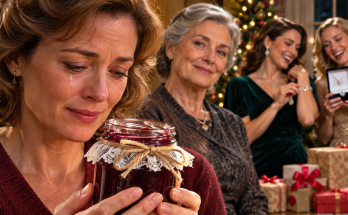
The first thing I wanted to do with the inheritance wasn't exciting.
I wanted to pay off our mortgage.
That probably sounds ordinary.
After receiving news about a trust worth more than I ever expected, perhaps I should have imagined vacations or expensive purchases.
But I didn't.
I thought about our house.
The kitchen that needed work.
The roof we had been putting off repairing.
The monthly payment that had followed us through so much of our married life.
I wanted the house to be ours without that debt hanging over us.
I told Daniel one evening.
We were sitting at the kitchen table.
The same table where I had first spread Ruth's savings bonds.
He looked at me.
“You want to pay the mortgage off completely?”
“Yes.”
He nodded.
“That makes sense.”
I smiled.
“I thought you might want something more exciting.”
He laughed softly.
“Not having a mortgage sounds exciting to me.”
I laughed too.
It felt good.
For months, our conversations had revolved around attorneys, documents, and family disagreements.
Now we were talking about something practical.
Something that would make our everyday lives easier.
I thought Ruth would have approved.
She had spent her life trying to keep the farmhouse secure.
My father had once helped her family avoid losing it.
The idea of using part of her gift to protect our own home felt right.
We completed the necessary arrangements.
When the mortgage was paid, I stared at the confirmation for a long time.
I had expected to feel different.
Perhaps suddenly free.
Perhaps as though the house had become more valuable.
But everything looked the same.
The kitchen cupboards were still worn.
The roof still needed attention.
Daniel's jacket still hung near the door.
My favorite chair was still beside the window.
Nothing had changed in the rooms.
But something had changed in me.
There was one less worry.
One less monthly obligation.
One less reason to lie awake thinking about money.
I put the document away carefully.
Then I made tea.
Daniel smiled when he saw me.
“You're celebrating with tea?”
I nodded.
“It seems appropriate.”
He laughed.
“Mom would have done the same.”
I looked toward the basement door.
“Yes. She would.”
A few weeks later, we began planning the repairs.
The roof came first.
It had needed work for some time.
We had delayed it because other expenses always seemed more urgent.
Now we could do it properly.
I felt relieved watching the repairs move forward.
There was no need to calculate how much longer we could postpone them.
No need to choose between one necessary expense and another.
Ruth's gift had made that possible.
I tried not to take it for granted.
The kitchen came next.
Daniel and I had lived with the old cupboards for years.
Some doors didn't close smoothly.
The surfaces showed decades of use.
There were places we had repaired more than once.
I had always wanted to improve it.
But whenever we discussed the cost, something else needed the money.
Now we could finally renovate.
I didn't want a grand kitchen.
I wanted a comfortable one.
A place where Daniel and I could cook.
A place where family could gather.
A place that still felt like ours.
We chose practical improvements.
Nothing extravagant.
I thought about Ruth's kitchen while making those decisions.
Her wooden cupboards.
The jars of preserves.
The old table.
The way she knew where every item belonged.
I didn't want to copy her house.
But I wanted to remember what made it feel welcoming.
It hadn't been expensive appliances.
It hadn't been perfect furniture.
It had been the feeling that someone had prepared a place for you.
I thought about Christmas dinners at the farmhouse.
Ruth moving around the kitchen.
Me following with dishes.
The smell of food.
The quiet conversations after everyone else left.
Those memories mattered more than the condition of her cupboards.
I wanted our kitchen to hold the same warmth.
When the renovations were finished, I stood in the doorway for a long time.
Daniel came beside me.
“What do you think?”
I smiled.
“It feels like home.”
He laughed.
“It is home.”
“I know.”
I looked around.
“But it feels easier now.”
He put his arm around me.
We stood there quietly.
For the first time, I could look at our house without mentally listing everything we still couldn't afford to repair.
That was a gift I hadn't expected.
But I didn't want the inheritance to stop at our own comfort.
The more I thought about Ruth, the more I remembered the way she earned her money.
She had worked.
Saved.
Kept records.
Made decisions.
She hadn't been a woman who relied on someone else to tell her what her property was worth.
Even when Carol and Jeanette tried to pressure her, she insisted that her choices belonged to her.
I admired that.
I also thought about my father.
He had been a mechanic.
He worked hard and understood what money could do for a family in trouble.
He had helped Ruth and Arthur when their farm was at risk.
He hadn't demanded that the kindness become a debt passed down to the next generation.
Those two people had shaped my life more than I understood.
My father through the way he raised me.
Ruth through the way she welcomed me, even when I didn't realize how deeply she cared.
I wanted to do something that reflected both of them.
One afternoon, I sat with the blue notebook open.
I looked at Ruth's financial entries.
The careful figures.
The dates.
The payments.
The way she followed every amount.
I thought about young women growing up in rural families.
Women who wanted an education but didn't have enough money.
Women who might be capable of managing businesses, farms, or family finances if someone gave them the opportunity.
I remembered being twenty-four.
Wearing a secondhand dress.
Feeling small beside people who had more.
I knew that feeling.
I didn't want anyone to mistake lack of money for lack of ability.
The idea began quietly.
I wanted to establish a scholarship.
Not a huge institution.
Not something designed to impress people.
A small fund that could help young women from rural backgrounds study accounting or finance.
I told Daniel that evening.
He listened.
Then he smiled.
“Mom would have liked that.”
I looked at him.
“Do you think so?”
He nodded.
“She always respected people who knew how to manage money.”
I laughed softly.
“She certainly did.”
I looked down at the notebook.
“She spent years keeping records. She understood what careful planning could do.”
Daniel nodded.
“And she wanted people to have a chance.”
I thought about my father helping save the farm.
That was what he had given Ruth.
A chance.
Not a guarantee.
Not an easy life.
Just enough help to keep going.
I wanted the scholarship to do something similar.
We discussed the idea carefully.
I didn't want to promise more than I could responsibly provide.
The trust had given me security, but that didn't mean every decision should be made quickly.
I had learned from Ruth.
Plan first.
Understand the numbers.
Then act.
Eventually, I established the scholarship.
I named it the Ruth Haddon Opportunity Fund.
The name mattered to me.
I wanted young women receiving assistance to know it came from the memory of someone who valued practical knowledge and hard work.
Someone who understood that financial security could change a person's future.
I didn't tell the recipients every detail about the jam.
They didn't need to know about Carol and Jeanette.
They didn't need to hear about the legal challenge.
Those things weren't the purpose of the fund.
I wanted the help to stand on its own.
Just as my father's help had stood on its own.
I thought about how he had forgiven the remaining portion of his loan.
He hadn't wanted kindness to become an obligation.
That lesson stayed with me.
The scholarship wasn't something the young women needed to repay through gratitude.
It was an opportunity.
What they did with it would belong to them.
When everything was arranged, I sat at the kitchen table and looked at the fund's name.
Ruth Haddon.
I smiled.
For forty years, I had spoken that name with a mixture of affection and uncertainty.
Now I felt something different.
Pride.
I was proud of the woman she had been.
Not because she left me a fortune.
Because she had worked for what she had.
Because she made decisions for herself.
Because she noticed kindness.
And because she believed an ordinary gift could carry extraordinary meaning.
I imagined her reaction to the scholarship.
She might have raised an eyebrow.
She might have asked whether I had checked the financial arrangements carefully.
She would certainly have wanted to know that the money was being managed properly.
Then perhaps she would have smiled.
A small smile.
The kind she gave when something pleased her more than she wanted to admit.
I laughed at the thought.
Daniel looked up.
“What?”
“Nothing.”
He smiled.
“Thinking about Mom?”
I nodded.
“Yes.”
I told him what I had imagined.
He laughed.
“That sounds exactly like her.”
We sat together for a while.
Then he asked whether I had thought about the farmhouse again.
I looked at him.
Of course I had.
The property had been sold under Ruth's approved trust arrangements.
The proceeds were part of the inheritance.
That sale had helped make our new security possible.
I understood that.
But I still missed the place.
The white porch.
The red barn.
The apple tree.
The kitchen where Ruth made jam.
I had visited that property for forty years.
It held memories I couldn't separate from her.
I didn't want to undo the arrangements Ruth had made.
But I wondered whether there might be a way to preserve a small connection to the land.
I told Daniel.
He listened.
Then he nodded.
“If part of it ever becomes available, we could look into it.”
I looked at him.
“You wouldn't mind?”
“Of course not.”
I smiled.
I didn't want the entire farm.
I didn't need to own everything Ruth once owned.
I only wanted a place where the family could remember her.
Somewhere her grandchildren could visit.
Somewhere the apple tree and the old house would still mean something beyond their financial value.
I looked toward the basement.
Forty empty jars remained on the shelf.
Their contents were gone.
The savings bonds had been redeemed.
But I had kept the glass.
I wondered whether Ruth would have laughed at that.
She knew I would.
She had counted on it.
I looked back at Daniel.
“I think she would want us to remember the place.”
He nodded.
“She loved that farm.”
“So did I.”
For a moment, we were quiet.
Then I realized how much had changed.
The legal dispute was behind us.
The mortgage was paid.
The roof was repaired.
Our kitchen was finally comfortable.
The scholarship had been established.
And I was beginning to think about Ruth's inheritance as something more than a surprising amount of money.
It was an opportunity to make choices.
Careful choices.
Useful choices.
Choices that reflected the people who had helped shape my life.
I closed the blue notebook.
Then I placed it in its usual safe place.
I had no desire to become someone different because I had inherited money.
I wanted to remain the woman who appreciated a jar of homemade jam.
The woman who helped wash dishes.
The woman who remembered important dates.
The woman Ruth had known.
But I also wanted to become someone who no longer felt guilty about accepting a gift.
That was the lesson I was still learning.
And for the first time, I had the freedom to learn it without being afraid of what Carol or Jeanette might say.