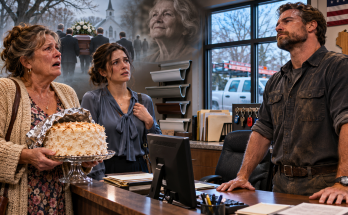
The yellow legal pad stayed in use much longer than I expected.
At first, I thought Paula would need it for a few days.
Perhaps a week.
I figured the sudden attention surrounding our business would eventually disappear, and we would return to the usual number of telephone calls.
The attention did eventually settle down.
The work didn't.
People who had requested estimates began accepting them.
Appointments became actual jobs.
We started filling spaces farther into the winter.
Then we started arranging work for the following spring.
I watched our schedule become something I could scarcely have imagined when I first purchased Milo's old gutter machine.
There had been times during those early years when I would have been delighted to know what I was doing three weeks from now.
Now Paula was keeping track of customers who were willing to wait several months for us.
That was a remarkable thing for a small contractor.
Particularly one whose mother had recently advised people not to hire him.
I thought about the irony occasionally.
Mostly, though, I thought about the practical difficulties associated with having so much work.
We needed enough materials.
We needed to make realistic commitments.
We needed to ensure that the men weren't being asked to accomplish more in a day than they could reasonably manage.
I had no desire to sacrifice the quality of our installations simply because demand had increased.
That would have been foolish.
The people contacting us deserved the same careful attention we'd given customers before anybody started discussing my family.
I wanted them to remember us for the right reasons.
A moving story might persuade somebody to make an initial telephone call.
It wouldn't persuade them to recommend a company whose gutters leaked.
And I wasn't planning to give anybody a reason to complain about ours.
I continued carrying a glass of water when I performed my final checks.
I continued listening.
The men continued finding this mildly amusing.
That was fine.
I would rather have them laugh at me for checking something unnecessarily than have a homeowner discover a problem after we'd gone.
By the time the winter schedule was settled, we had work arranged through April.
April.
I remember looking at the appointments and feeling grateful for the people who had placed that kind of confidence in us.
I thought about the woman in Alaska.
The man from West Salem.
The elderly gentleman in Bangor who initially telephoned because he wanted to talk about his mother.
None of them had been obligated to choose us.
There were other contractors available.
There were other people capable of doing good work.
They had chosen to give us an opportunity.
I intended to make sure that opportunity hadn't been wasted.
Our winter season became the strongest the company had ever experienced.
Eventually, three crews weren't sufficient.
In January, I added a fourth.
That was a decision I didn't make casually.
Taking on more employees meant accepting more responsibility.
It meant additional people would depend on the business remaining financially healthy.
I remembered what nine employees had meant to me on the morning Paula showed me Mom's accusations.
I'd worried about their livelihoods before I'd properly considered the damage to my own reputation.
Now I was accepting responsibility for even more people.
Two men who joined the fourth crew had particularly interesting explanations for how they'd discovered us.
Their mothers had read the discussion about Grandma.
That was how our company had come to their attention.
When I heard that, I shook my head.
My mother had tried making other mothers reluctant to trust their sons to people like me.
Instead, some of them had apparently encouraged their sons to come and work for us.
There was nothing I could add to that.
The situation had become almost too peculiar to explain.
I was simply pleased to find people willing to do the work.
And I hoped their mothers would be satisfied to know that their sons had found steady employment.
By then, the accusations that had brought us so much attention belonged increasingly to the past.
I wasn't receiving regular updates about who had originally supported Sonnie and who had changed their mind.
I wasn't interested in maintaining a record of those things.
I had enough records to manage at work.
Besides, the important thing had already happened.
My employees were busy.
My company was doing well.
And my sister had a place of her own.
There was something else I wanted to do for Erika.
I'd been considering it for a while.
It concerned the recipe tin.
A couple of weeks after she settled into her apartment, I took the old box out at home.
The roses painted on the lid had faded considerably.
The place where Grandma's thumb had opened it thousands of times was still visible.
I ran my own thumb across that worn patch.
I remembered LaVerne putting the shoebox in front of me a week after the funeral.
At the time, I hadn't expected to receive anything.
Then I discovered what was inside.
That tin had been my grandmother's final gift to me.
I'd kept it carefully.
I knew where every card belonged.
The coconut cake recipe was still at the front.
I lifted the lid.
There were the same familiar pieces of paper.
Some were stained.
Some had worn corners.
Some contained pencil writing that had become difficult to distinguish.
Those cards didn't look valuable in the conventional sense.
An ordinary person finding them somewhere might have wondered why anyone bothered keeping them.
But I'd been inside Grandma's kitchen when many of those instructions had become actual meals.
I knew what those cards represented.
There were things she had learned before I was born.
Things she had taught her children.
Things she had taught me.
And there was knowledge inside that little tin that could continue being useful long after the person who wrote it was gone.
I had already made copies of every recipe for myself.
That mattered because I wasn't planning to stop making Grandma's food.
I wanted to keep using the recipes.
I wanted to remember how things were supposed to taste.
But I didn't need to be the only person in our family with access to the original cards.
For years, Mom had described the coconut cake recipe as something she wouldn't share.
A private piece of knowledge that other people weren't entitled to possess.
I didn't like that.
Grandma hadn't behaved that way with me.
She had insisted that I learn certain skills before allowing me to make frosting.
But she hadn't withheld the recipe once I'd learned them.
She wanted me to know how to do it.
That was the difference.
She hadn't protected her importance by keeping everybody else ignorant.
She had enjoyed teaching people.
I thought about Erika standing in my office doorway on Wednesday evening.
She had told me she remembered Grandma making that cake.
She had also admitted how often she'd remained silent while Mom accepted credit for it.
I wondered whether Erika had ever tried making the recipe herself.
I doubted it.
She had spent much of her life allowing our mother to determine which family traditions were acceptable and which relationships she could acknowledge.
Now she had her own kitchen.
There was no reason she couldn't begin making something that belonged to Pearl.
I decided to give her the tin.
It wasn't something I discussed with our mother.
It wasn't something I needed anybody else's approval to do.
Grandma had wanted me to have it.
I had kept it safe.
Now I wanted my sister to have it.
On a Monday morning, I arrived at the office earlier than usual.
Erika hadn't come in yet.
Paula wasn't there.
The reception area was quiet.
I carried the tin inside and placed it on Erika's desk.
For a moment, I stood looking at it.
The roses seemed particularly out of place among the ordinary things associated with her job.
The telephone.
The computer.
The paperwork.
The little collection of objects somebody needed to handle a busy reception desk.
Yet I liked seeing it there.
It was a piece of Grandma's farmhouse kitchen sitting inside the company I had built years after her death.
I took a sticky note.
Then I wrote a short instruction suggesting that Erika begin with the coconut cake.
I attached it to the lid.
There wasn't any need for a lengthy explanation.
She knew what the box meant.
She knew why the cake was important.
And she understood that the recipe belonged to Grandma.
I returned to my office.
I hadn't planned an elaborate moment in which I'd present it to her while everybody watched.
I didn't want to make her feel obligated to produce an emotional response.
I wanted her to discover it when she arrived.
Then she could decide what to do with it.
There was something difficult about giving away the original box.
I won't pretend there wasn't.
I had become accustomed to knowing exactly where it was inside my house.
Opening it gave me a feeling I couldn't entirely explain.
The worn lid was something Grandma had touched throughout her life.
The cards contained writing produced by her own hands.
A photocopy could preserve the instructions.
It couldn't preserve every feeling associated with the original object.
I knew I would occasionally miss having it nearby.
But I also knew that keeping it forever wasn't the only way to honor what Grandma had given me.
Perhaps sharing it was a better way.
I returned to the day's work.
The following Friday, Erika arrived carrying a cake.
It wasn't presented on the glass serving plate Mom had brought to my office.
There was no fancy arrangement.
The cake sat on a cardboard plate.
Its appearance was familiar enough to make me smile.
Coconut frosting.
A generous amount of coconut on top.
An effort to recreate something we both remembered.
Erika looked slightly apprehensive about it.
I could understand why.
Trying to reproduce something you've enjoyed since childhood can be more difficult than making an unfamiliar recipe.
You know what the finished result is supposed to taste like.
You notice every difference.
And sometimes, your memories set a standard that's difficult to achieve on the first attempt.
We took the cake out to the men.
Before long, everybody was gathered around the back of a work truck.
It reminded me of that Monday when Mom's cake disappeared so quickly.
Gandy was particularly enthusiastic.
That was hardly surprising.
The man considered practically any homemade dessert an important occasion.
We cut into Erika's cake.
I took a piece.
It was a little dry.
I noticed that immediately.
It had probably spent around five minutes longer in the oven than it needed.
The frosting was also missing something.
The orange.
I could taste the coconut.
I could taste the sweetness.
But that little flavor Grandma had insisted upon wasn't there.
I thought about telling Erika right away.
Then I decided there was no hurry.
She had made a cake.
Her first attempt at Pearl's recipe.
That deserved to be enjoyed before anybody began examining what she'd done wrong.
The men ate their portions.
Then some of them helped themselves to more.
Gandy announced his opinion with the enthusiasm I had come to expect.
"That might be the finest coconut cake anybody's ever handed me."
I looked at him.
He had made an almost identical declaration about Mom's cake.
He was perfectly capable of making the same declaration about the next one somebody brought.
I doubted his culinary judgments would survive any serious investigation.
But I appreciated his willingness to make somebody feel good about feeding him.
Erika smiled.
Then she took another bite of her own cake.
Her expression changed slightly.
"I've overbaked it."
I shrugged.
"It's the first one you've done."
She examined the piece in her hand.
"It's really dry."
"Not as dry as you're making it sound."
She didn't appear convinced.
I could see that she wanted to make the cake properly.
Not merely produce something the men were willing to eat.
She wanted it to taste the way she remembered.
I understood that.
I had spent years comparing cakes to the ones Grandma made.
The difference was that I'd had the benefit of standing in Pearl's kitchen while she taught me.
Erika was learning from a card.
Grandma wasn't available to tell her when to take the cake out of the oven.
She couldn't reach across the counter and remind her to add the orange zest.
There would be a certain amount of figuring things out.
That was perfectly acceptable.
"I'd bet Grandma's first attempt wasn't perfect either," I told her.
Erika looked at me.
"Really?"
I thought about that.
I had never seen Pearl make a coconut cake that I considered unsuccessful.
But I had known her after she'd spent decades developing the skill.
I hadn't been present when she was a young girl trying to learn the recipe from somebody else.
There was no reason to assume she'd mastered it immediately.
"Couldn't tell you for certain."
Erika laughed.
I continued.
"Although I can't imagine her confessing if she'd burned one."
That made her laugh harder.
We both remembered Grandma well enough to appreciate the possibility.
Pearl could be wonderfully patient when teaching us.
She could also be surprisingly competitive about certain things.
I'd spent enough afternoons allowing her to cheat at rummy to know that.
I imagined her being presented with a slightly dry cake and finding some perfectly reasonable explanation for why it was supposed to taste that way.
I missed her.
But for once, talking about her with Erika didn't immediately make me think about the years we had lost.
We were laughing about her.
We were remembering her habits.
And we were eating something made from her recipe.
There was nothing especially grand about the scene.
A group of workers standing around a truck.
A cardboard plate.
A cake that needed a little more practice.
My sister looked happy.
Not because she'd created something perfect.
Because she'd created something that meant something to her.
I was happy for her.
She hadn't needed to bring a cake to impress her employer.
She hadn't needed to pretend the recipe was hers.
She hadn't needed to conceal where she'd learned it.
She could simply say that it belonged to her grandmother.
And nobody standing around that truck would have thought less of her for acknowledging it.
I looked at the cardboard plate.
It seemed a much more fitting place for Pearl's cake than the polished glass stand Mom had carried through our door.
There was no expectation attached to it.
Nobody was being asked for a favor.
Nobody needed to demonstrate gratitude by changing a decision.
There was only food being shared.
That was what I remembered about Grandma's kitchen.
And that Friday, standing outside my company with Erika and the men, I felt as though a small part of that kitchen had finally returned to our family.