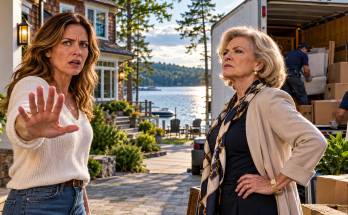
The question came during Daniel’s fourth in-person visit.
Not from Lorraine.
Not from Travis.
From Daniel himself.
We were sitting in a quiet corner of a family restaurant after lunch.
Zia had gone to the restroom with me when Daniel apparently said it.
By the time we returned, Travis’s expression had changed.
Not angry.
Careful.
“What happened?” I asked.
Daniel looked embarrassed.
“I asked something.”
“What?”
He glanced toward Zia.
“Not now.”
That alone told me enough.
After lunch, Zia went to browse a small bookstore next door with Travis.
Daniel and I stayed outside.
“What did you ask?”
He shoved both hands into his jacket pockets.
“If Travis still wants to adopt her.”
My chest tightened.
“What did he say?”
“That it’s not about what he wants.”
Good.
“What did you say?”
“That someday I might be willing.”
I stared at him.
“Might?”
“I’m trying not to make another huge promise because I feel guilty.”
That was surprisingly mature.
“So why bring it up?”
“Because I keep thinking about what happens if something happens to you.”
I went still.
Daniel continued.
“Legally, I’m her father.”
“Yes.”
“But practically…”
He did not finish.
He did not need to.
If I died unexpectedly, the legal structure around Zia could become complicated.
Daniel remained her biological and legal father.
Travis, despite raising her, had no automatic parental status equal to mine.
We had discussed this before.
Then avoided it because everything involving adoption had become contaminated by Lorraine’s manipulation.
Daniel looked through the bookstore window.
“They’re arguing about a book.”
Zia was holding one up.
Travis was shaking his head.
Daniel smiled faintly.
“That’s her dad.”
The words surprised me.
“You’re okay saying that?”
“No.”
Honest.
“But it’s still true.”
I let that settle.
“What are you asking?”
“I think we should talk to lawyers.”
Not decide.
Talk.
That distinction mattered.
“About adoption?”
“Maybe.”
“Daniel, if Travis adopted her, depending on the process, your rights could end.”
“I know.”
“Completely.”
“I know.”
“You don’t get monthly visits because everyone is friendly.”
“I know.”
“You don’t get automatic calls.”
“I know.”
His voice tightened.
“That’s why I said maybe.”
He looked at me.
“I’m not ready to disappear legally.”
“Then we don’t do it.”
“But what if that leaves her unprotected?”
A reasonable concern.
There could be other legal planning options.
Guardianship nominations.
Powers of attorney.
Estate arrangements.
Step-parent rights depending on circumstances.
We needed actual advice.
Not assumptions.
“Then we talk to Maya.”
He nodded.
No argument.
When Travis and Zia returned, neither of us raised it.
The adult conversation remained adult.
Two days later, Maya scheduled a consultation specifically about family structure.
This time Daniel attended with his own lawyer.
That felt almost surreal.
Months earlier, Lorraine had triggered conflict by telling Daniel we intended to adopt secretly.
Now all of us were sitting openly on a video call discussing options.
Maya began with one rule.
“This is not a competition over who is the real father.”
Good.
“No one here benefits from framing it that way.”
Daniel nodded.
Travis too.
She outlined possibilities.
Formal stepparent adoption would likely require Daniel’s consent or legal grounds affecting his parental status.
That was significant.
Other legal arrangements might strengthen Travis’s ability to act for Zia in emergencies without terminating Daniel’s rights.
Documents could authorize medical decisions.
Estate plans could nominate guardians.
Schools could recognize pickup authority.
But none created full legal parenthood.
“What happens if her mother dies?” Daniel asked.
The room tightened.
Maya answered carefully.
Specific outcomes would depend on current orders, legal rights, and a court’s assessment.
Daniel’s existing status would matter strongly.
Travis’s established caregiving relationship could also matter, but it was not the same as legal parentage.
That was the uncomfortable truth.
“What do you want?” Maya asked Daniel.
He looked startled.
“I don’t know.”
“What do you want for Zia?”
He thought longer.
“For her life not to blow up if something happens.”
Good answer.
Maya turned to Travis.
“And you?”
“The same.”
“Do you need adoption now to feel like her father?”
“No.”
Immediate.
That mattered too.
Then Maya asked me.
“What do you want?”
I looked at both men.
“Stability.”
Not symbolism.
Not victory.
Stability.
The meeting ended with homework.
Update wills.
Create guardianship preferences.
Review school and medical authorizations.
Continue Daniel’s relationship-building.
Do not rush adoption.
And at some point, as Zia matured, include her age-appropriately.
That last part mattered most.
The adults had spent years making decisions around her.
Even when trying to protect her.
Eventually her voice had to matter.
That opportunity came sooner than expected.
A week later, Zia overheard Daniel and Travis discussing legal paperwork.
Not specifics.
Just enough.
She appeared in the doorway.
“Are you talking about me?”
Both men froze.
Travis answered first.
“Yes.”
“What?”
Daniel looked at me.
I nodded.
Simple truth.
“We’re making sure if something happens to Mom, the adults know how to take care of you.”
Her face tightened.
“What’s going to happen to Mom?”
“Nothing.”
I crouched.
“This is planning.”
“Like a fire drill?”
“Kind of.”
She looked suspicious.
“Why was Daniel talking about adoption?”
We all froze.
Children’s hearing should be studied by scientists.
Daniel rubbed his face.
“I said the word.”
“Are you giving me away?”
My heart broke.
“No.”
The answer came from all three of us at once.
Zia stepped back.
“Then what?”
We sat together in the living room.
No legal jargon.
No trust history.
No family strategy.
Just basics.
Travis was her stepfather legally.
Daniel was her biological and legal father.
I was her mother.
Adoption was one possible way families sometimes change legal relationships.
No one was doing anything immediately.
Zia looked at Daniel.
“If Dad adopts me, are you not my dad?”
Daniel took a breath.
“Legally, it could change things a lot.”
“That’s not what I asked.”
Of course.
Children find the actual question.
Daniel swallowed.
“I would still be the person who helped make you.”
She made a face.
“That sounds gross.”
Despite everything, we laughed.
He smiled.
“Fair.”
Then his expression softened.
“I would still love you.”
Zia looked toward Travis.
“And you already adopted me?”
“No.”
“Then why are you Dad?”
Travis answered simply.
“Because that’s what we became.”
She nodded.
That made sense to her.
Legal status did not create the emotional fact.
“What do you want?” I asked.
Too big a question.
She frowned.
“I want everyone to stop making weird plans without me.”
Fair.
“We can do that.”
“And I don’t want Daniel to disappear.”
He looked down.
“I’m trying not to.”
“And I don’t want Dad to not be my dad if you die.”
There it was.
Her fear.
Not labels.
Loss.
Travis moved closer.
“That makes sense.”
“So fix that.”
Again.
Children make enormous problems sound like chores.
Maya helped us “fix that” as much as possible without rushing irreversible decisions.
We updated everything.
Emergency authorizations.
Wills.
Guardianship preferences.
Financial plans.
School documents.
Medical consent where legally permissible.
None were perfect substitutes for adoption.
But they created structure.
More importantly, we agreed no one would pursue adoption unless and until Zia wanted it and Daniel had reached a decision independent of Lorraine, guilt, or fear.
That gave the issue room.
No deadlines.
No leverage.
Frank’s trust did not depend on it.
Lorraine no longer controlled it.
Grant was gone from the conversation.
For the first time, adoption could mean only what it should have meant.
Family law.
Not inheritance strategy.
Not emotional victory.
Daniel’s relationship with Zia continued improving.
He began calling every Sunday.
Not always perfectly at six.
Sometimes 6:07.
Once 6:20.
But if late, he texted.
Zia noticed.
“He keeps time now.”
“Mostly.”
“That’s better.”
He attended one school event remotely because travel was impossible.
Watched the whole livestream.
Sent no gift.
Only a message afterward.
You were brave speaking in front of everyone.
Specific.
Not generic.
That mattered.
Lorraine noticed Daniel’s improvement too.
But she did not contact him.
Not once.
Maya confirmed through documented communications that Lorraine had ended all financial transfers.
Daniel signed a written statement refusing future support tied to Zia.
No secret arrangements.
No automatic payments.
No “family help.”
Whatever relationship developed now would belong to him.
The most surprising change came when Daniel called Lorraine himself.
He told us afterward.
“Why?” I asked.
“To tell her to stop apologizing to me.”
I blinked.
“She apologized?”
“For using money.”
“What did you say?”
“That I used it too.”
Good.
“What else?”
“That neither of us gets to pretend we were protecting Zia.”
I looked at him.
“And?”
“She agreed.”
That conversation closed another loop.
Not forgiveness.
Responsibility.
Separate.
Shared.
One afternoon, Zia asked if Daniel could come to Lorraine’s new apartment for dinner.
The request startled everyone.
“Why?” I asked.
“Because Grandma makes lasagna.”
“That doesn’t explain Daniel.”
“She said she owes him an apology.”
I stared.
“Who told you that?”
“Grandma.”
There it was.
A boundary slip.
Small.
But real.
“She shouldn’t have discussed that with you.”
Zia frowned.
“She just said she was sorry she made adult stuff weird.”
Less severe than I feared.
Still.
We called Lorraine.
She understood immediately.
“You’re right.”
No defense.
“Don’t recruit Zia into arranging reconciliation.”
“I didn’t mean to.”
“I know.”
That distinction could finally exist.
Intent versus effect.
She asked whether dinner itself was inappropriate.
After discussion, we decided not necessarily.
But invitations had to come from adults.
Lorraine called Daniel directly.
He accepted.
The dinner happened the following Sunday.
We all attended.
Six adults and one child around a small apartment table.
No assigned seats.
I noticed that immediately.
Apparently so did Zia.
“Where do I sit?”
Lorraine smiled.
“Wherever you want.”
Zia chose between Travis and Daniel.
Of course.
Lorraine served lasagna.
Conversation stayed cautious.
Weather.
Work.
School.
Then, halfway through dinner, she addressed Daniel.
“I owe you an apology.”
He set down his fork.
Zia looked up.
I almost interrupted.
Lorraine glanced at me.
“I’ll keep it simple.”
Good.
She continued.
“I used money to encourage you to stay involved for reasons that were about my fears, not Zia’s needs.”
Daniel nodded.
“I accepted money for reasons that weren’t about her either.”
Lorraine looked down.
“I’m sorry.”
“So am I.”
No hug.
No dramatic absolution.
The conversation returned to lasagna.
That was enough.
Later, Zia whispered to me in the bathroom.
“That was boring.”
I smiled.
“Good.”
“Why?”
“Adult apologies are supposed to be less exciting than adult fights.”
She considered that.
“That makes sense.”
At dessert, Lorraine brought out ice cream.
No candle.
No symbolism.
Daniel helped clear plates.
Travis dried them.
For a moment, the two men stood side by side in Lorraine’s small kitchen doing ordinary work.
She watched from the table.
I wondered what she saw.
A threat?
Competition?
Or finally, two people who could both matter without one erasing the other?
She caught me looking.
Then said quietly, “I understand now.”
“What?”
“What Frank meant.”
I waited.
“Adding someone does not subtract everyone else.”
Simple.
Late.
True.
That night, Zia climbed into bed and asked one final question.
“Mom?”
“Yeah?”
“If Dad adopts me when I’m older, can Daniel still come to my stuff?”
“Yes, if everyone chooses that.”
“So legal family and real family can be different?”
I thought carefully.
“Sometimes legal family describes part of the truth.”
“What describes the rest?”
“What people do.”
She smiled sleepily.
“Grandpa Frank said that?”
“Pretty much.”
“Smart.”
“Yes.”
She closed her eyes.
A few minutes later, she was asleep.
I stood in the doorway thinking about how many adults had spent years trying to make family into a fixed map.
Zia kept turning it back into behavior.
Who calls.
Who comes.
Who keeps promises.
Who apologizes.
Who leaves room.
Maybe that was why she had survived everyone else’s definitions so well.