Lauren was still looking at her husband.
Her question had been simple.
Had he read the entire invoice?
Mark did not answer.
I sat beside my daughter, watching his expression.
He had brought up the money I gave Lauren for her condominium in 2015.
He had spoken as though that gift proved something about fairness.
But I had never asked for that money back.
I had made that clear in the document.
And Lauren knew it.
She had read every page.
Twice.
Mark shifted in his chair.
"Why does that matter?"
Lauren stared at him.
"Because you're talking about something you don't seem to understand."
He frowned.
"I understand perfectly."
She shook her head.
"Then tell me what Mom wrote about the condominium."
I watched him.
He looked toward his parents.
Then at me.
I did not help him.
There was nothing I needed to explain.
The invoice had been very clear.
The condominium contribution was a gift.
It had not been a loan.
It had not come with a repayment schedule.
It had not created an obligation Lauren would be expected to settle someday.
I had given her the money because I wanted to help.
That was all.
Mark rubbed his forehead.
"I know she gave you money."
Lauren nodded.
"Yes."
"And that was a substantial financial contribution."
"Yes."
He looked relieved.
As though she had agreed with his point.
Then she continued.
"But she specifically wrote that it was a gift."
Mark said nothing.
Lauren leaned forward.
"Did you see that?"
He looked away.
I felt a familiar sadness.
The same kind I had felt when I opened the Christmas invoice.
Someone had taken a simple act of generosity and turned it into a financial argument.
I had given Lauren money.
Not lent it.
Not advanced it.
Given it.
Yet here we were, years later, discussing it as though the meaning could be changed by someone who had not been part of that decision.
Lauren looked at me.
"Mom, did you ever tell me I had to repay that money?"
"No."
She nodded.
"Did you ever ask for it back?"
"Never."
She turned toward Mark.
"Then why are you treating it as though she expected something?"
Mark looked irritated.
"I'm not."
"You brought it up."
"Because we're talking about money."
I looked down at my plate.
The roast chicken was getting cold.
The mashed potatoes had been sitting untouched for several minutes.
The green beans were still neatly arranged beside them.
I remembered arriving with empty hands.
I remembered Lauren greeting me at the door.
I remembered how pleased she had been that I brought nothing.
For a little while, the dinner had felt like a new beginning.
Now the same table was holding another argument about money.
I wondered how we had reached this point.
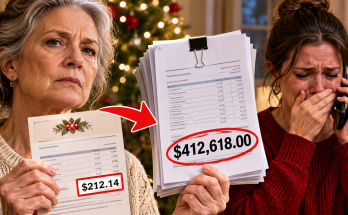
It had started with $212.14.
A small amount compared with the years of expenses I had documented.
But the problem had never been the size of the number.
It was what people believed they were entitled to demand.
Lauren looked at Mark.
"I want you to understand something."
He sighed.
"Lauren."
She did not stop.
"My mother wasn't keeping a secret debt over my head."
I looked at her.
She continued.
"She gave me help when I needed it."
Mark shifted.
"Nobody said otherwise."
"Then why are you making it sound like she was expecting repayment?"
He did not answer.
His mother looked down at her plate.
His father folded his hands.
I could see they were uncomfortable.
I understood why.
They had come for dinner.
Not to listen to their son explain financial arrangements that did not belong to him.
I felt sorry for them.
But I also knew the truth could not be made less important simply because it was embarrassing.
I reached for my water.
My hand was steady.
That surprised me.
I had expected to feel angrier.
Instead, I felt tired.
I had already explained the gift to Lauren.
She understood.
I had not come to debate it with Mark.
I placed the glass down.
"Mark, that money was given to Lauren freely."
He looked toward me.
I continued.
"I never asked her to return it."
He nodded impatiently.
"All right."
"And I don't intend to ask now."
He looked away.
I wanted to leave it there.
The matter was simple.
A gift remained a gift.
But Lauren was still troubled.
She looked at her husband.
"Then why did you bring it up?"
He sighed.
"I was making a point."
"What point?"
He did not answer immediately.
I watched Lauren's face.
She was beginning to look exhausted.
Not the kind of exhaustion that comes from cooking dinner.
Something deeper.
The kind that comes from repeating a question and never receiving an answer.
I remembered that feeling.
I had experienced it when I opened her Christmas invoice.
I had looked at every charge and wondered why nobody had asked me first.
Now she was asking why Mark had treated me differently from his own parents.
And why he had told them I offered to pay.
The answers remained unclear.
Mark leaned back.
"Apparently, nothing I say is going to satisfy anyone."
Lauren shook her head.
"I just want you to be honest."
He gave a short laugh.
"About two hundred dollars?"
She looked at him.
"About what happened."
He opened his mouth.
Then closed it.
I looked at my daughter.
Her eyes were wet, but she did not cry.
I could see she was trying to remain calm.
That mattered.
I had spent years helping her learn that difficult conversations did not have to become shouting matches.
Sometimes the hardest thing was simply staying in the room and asking the same question until someone answered it.
Mark looked toward his father.
"Dad, you understand what I was trying to do."
His father hesitated.
I watched him.
He did not look pleased to be included.
Finally, he spoke.
"I understand that you wanted expenses shared."
Mark nodded.
"Exactly."
His father continued.
"But I don't understand why you told us her mother volunteered."
Mark's expression tightened.
I looked down.
There it was again.
The same unanswered question.
His father spoke quietly.
"If she hadn't agreed, you shouldn't have said she had."
Nobody argued.
Even Mark seemed unable to find a useful response.
His mother looked toward me.
"I'm sorry you were put in that position."
I shook my head gently.
"Thank you."
She looked uncomfortable.
I did not want her to feel responsible.
She had not prepared the spreadsheet.
She had not sent the invoice.
She had simply believed what her son told her.
I could understand that.
I had spent much of my own life believing Lauren.
Parents wanted to trust their children.
Sometimes that trust was justified.
Sometimes it made them overlook things they should have questioned.
Mark shifted in his chair again.
"Fine."
His voice was sharper.
"I should have explained it differently."
Lauren looked at him.
"Explained what differently?"
He sighed.
"The dinner."
She shook her head.
"You didn't just explain it badly."
I watched her carefully.
She continued.
"You told your parents something that wasn't true."
Mark looked away.
"And you convinced me to send Mom a bill when I already thought it felt wrong."
He did not answer.
Lauren swallowed.
"I accepted your reasoning."
Her voice became quieter.
"That was my mistake."
I felt my throat tighten.
She looked toward me.
"I hurt my mother."
I reached for her hand.
She took it.
I did not want her to keep punishing herself.
She had apologized.
She had listened.
She had invited me back.
She was trying to repair what she had done.
But she was also beginning to understand why the mistake had happened.
I could not take that understanding away from her.
Mark looked at our joined hands.
His expression changed.
He seemed frustrated.
"Fine. I'm the bad guy."
Lauren looked back at him.
"Nobody said that."
He shrugged.
"You don't have to."
I felt the room become tense again.
I had heard that kind of answer before.
Not necessarily from Mark.
But from people who wanted an uncomfortable conversation to end without addressing what had been said.
I knew the temptation.
When someone pointed out a mistake, it was easier to become offended than to admit it.
I had done that myself at times.
I was not proud of it.
But I knew how it worked.
Lauren looked tired.
"I'm not trying to make you the bad guy."
Mark stared at her.
"Then what are you doing?"
She took a breath.
"I'm trying to understand why you treated my mother this way."
He looked toward me.
I said nothing.
It was not my question to answer.
Lauren continued.
"If fairness mattered so much, why didn't the same rule apply to your parents?"
He rubbed his forehead.
"We've already discussed this."
"No, we've avoided it."
His mother shifted in her chair.
His father looked toward the hallway.
I wondered whether they were considering leaving.
I would not have blamed them.
The evening had become far more uncomfortable than anyone expected.
Lauren looked at Mark.
"Mom brought food and helped clean."
He stared at the table.
"Your mother brought wine."
His mother nodded slightly.
"Yes."
"And your father brought nothing."
His father looked embarrassed.
I spoke before Lauren could continue.
"That never bothered me."
Everyone looked toward me.
I took a breath.
"I don't want anyone thinking I'm upset about who brought what."
Mark's mother looked relieved.
I continued.
"People contribute in different ways."
I glanced at his father.
"Sometimes people simply come because they were invited."
He nodded.
I looked back at Lauren.
"That should be enough when nobody has agreed to something different."
She squeezed my hand.
I knew she understood.
Mark looked away.
I wanted the conversation to stop there.
I had no desire to continue comparing contributions.
That was exactly the kind of thinking that had caused the problem.
The Christmas dinner should never have become a contest over who brought the most.
I looked at the table.
The food was still there.
The same linens from Christmas were beneath our plates.
I remembered Lauren worrying about whether she should replace them.
I had told her that would be silly.
And now I was sitting at the same table, listening to everyone argue about fairness.
I wondered whether the linens would ever feel ordinary again.
Lauren looked at her husband.
"Mark, I need you to answer one thing honestly."
He sighed.
"What now?"
She held his gaze.
"Did you actually believe Mom owed us money?"
He looked surprised.
"Of course."
My stomach tightened.
Lauren stared at him.
"Even after everything she brought?"
He shrugged.
"Those were her choices."
I closed my eyes for a moment.
The words had not changed.
He was still treating voluntary kindness as something that did not count.
Lauren shook her head.
"Then I don't think you understand what a gift is."
Mark's expression hardened.
I opened my eyes.
She continued.
"Mom gave me money for the condominium."
He looked at her.
"Yes."
"She didn't expect repayment."
I nodded.
"She brought food at Christmas."
Mark looked away.
"She didn't expect payment for that either."
Her voice trembled.
"And she helped clean because she wanted to help us."
Nobody spoke.
Lauren looked at her husband.
"You keep turning those things into calculations."
I watched him.
For a moment, I thought he might finally understand.
Instead, he pushed his chair back slightly.
"I can't have this conversation if everyone has already decided I'm wrong."
I felt the sadness return.
Lauren did not raise her voice.
She simply looked at him.
"I'm asking you to take responsibility."
Mark stared at her.
Then he looked down.
For several seconds, nobody moved.
I could hear the quiet sounds of the house.
I thought about how much I had wanted this dinner to be peaceful.
But I also knew something important.
Lauren was no longer asking me to explain why the invoice hurt.
She was asking her husband to explain why he had believed it was acceptable.
And that was a conversation I could not have for her.