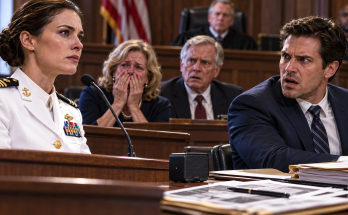
The board's findings arrived on a Friday afternoon while I was reviewing an updated delivery schedule with Maria. William's name appeared on my phone, and I excused myself from the call. His voice was measured, but I could hear the importance of what he was about to say. The independent committee had completed its principal review and delivered a report to the directors. It concluded that the disputed Alder Ground authorizations had not been executed through legitimate channels and that the company's transaction controls had failed in serious ways. The report also identified substantial concerns about executive conduct, including the handling of my objections and the circumstances of my dismissal. William said the board was preparing formal decisions.
I asked whether the report identified who had applied the false signatures. William explained that the technical and documentary evidence strongly linked the signing process to systems controlled through Ethan's executive office. Investigators had established that the special transaction mailbox was created under instructions originating from that office and that the disputed documents were prepared, revised, and circulated through the transaction team. Ethan's credentials were associated with key stages of the process. The committee found that he had provided misleading assurances about the status of landowner consent. However, the report distinguished those findings from a final criminal determination about who physically executed the electronic signature. That question remained subject to further inquiry by appropriate authorities.
I sat down at the kitchen table. For weeks, I had feared that the investigation would end with vague criticism of administrative mistakes, leaving nobody responsible for the false authority created in my name. The findings did not resolve every question, but they established that the authorization process was fundamentally defective. My refusal to recognize the documents had been justified. The company had no legitimate basis to treat them as my consent. William confirmed that the board had formally withdrawn reliance on the disputed authorizations and notified relevant parties, including Meridian and lenders, that the documents were invalid for the purposes claimed. That step mattered more to me than any personal apology.
The report also addressed the seventy-two-million-dollar transaction. It found that the proposed asset package contained inaccurate or insufficiently supported representations concerning rights connected with the headquarters property. Calder Systems legitimately held substantial leasehold interests, but it did not own the seventeen-acre parcel. The disputed documents had been used to suggest broader authorization than Alder Ground Holdings had granted. The committee concluded that the company should not have advanced the transaction on that basis. It recommended correcting affected records, reviewing representations made to counterparties, and strengthening approval controls before pursuing any comparable arrangement. The original Meridian transaction would not proceed on its previous terms.
I asked what the findings said about Thomas. William replied that the report identified serious failures of executive oversight. Thomas had approved the pursuit of the transaction and relied heavily on assurances from Ethan and the transaction team despite written warnings that property approvals remained unresolved. The committee did not conclude that Thomas personally created the false signatures, but it found that his leadership had allowed critical legal and operational concerns to be minimized. The board was considering appropriate consequences. I felt disappointed rather than surprised. Thomas had often treated practical objections as delays that could be managed through presentation. Now that habit had contributed to a crisis affecting the entire company.
The employment findings were harder to hear. The committee concluded that my dismissal had been poorly managed and inadequately supported by the stated restructuring rationale. It found that Ethan had accelerated the termination despite warnings about operational continuity and had made age-related remarks inconsistent with company policy. The timing of the decision, combined with my objections to the renovation and property documentation, raised substantial concerns about retaliation. The report recommended that the board address the employment matter through appropriate legal and governance processes. It did not declare every legal question resolved, but it rejected the idea that my departure had been an ordinary, carefully executed restructuring. I looked at the damaged cardboard box still stored beside the kitchen cabinet and felt the memory of that morning return with unexpected force.
William asked whether I wanted to discuss possible remedies immediately. I told him I needed time. For weeks, I had concentrated on protecting the property and keeping the company functioning. Hearing an independent committee acknowledge the manner of my dismissal brought back feelings I had pushed aside. I remembered Nicole's lowered eyes, Ethan's contemptuous laugh, and the silence of colleagues as I carried my belongings through the hallway. I remembered crying in the parking lot because twenty-six years of work had ended without warning or gratitude. The report could establish facts, but it couldn't recover the dignity of the moment. That loss would have to be addressed differently.
Later that afternoon, Thomas called. He said the board had reviewed the committee's findings and intended to take decisive action. Ethan's employment was being terminated following the internal investigation and the company's assessment of his conduct. The decision was separate from any external inquiry, which would continue according to its own process. Thomas emphasized that the company would cooperate with authorities and preserve relevant records. I listened without interrupting. I had imagined this moment many times, sometimes with anger, sometimes with satisfaction. Now that it had arrived, I felt mostly tired. Ethan had lost the position from which he dismissed me, but his departure did not repair the structural damage, restore investor confidence, or guarantee the company's survival.
Thomas told me the board had also accepted his resignation as chief executive, effective after a short transition period. He said the decision reflected the need for new leadership and accountability for the failures identified in the report. His voice was quiet. I thought of the early days when he had seemed thoughtful and capable, before his enthusiasm for growth became stronger than his willingness to question assumptions. I didn't know whether he regretted every decision that led to the crisis. I hoped he understood at least some of them. Leadership carried responsibility even when a subordinate committed the most direct act. Thomas had created the environment in which Ethan operated, and the board had finally acknowledged that consequence.
I asked who would lead the company during the transition. Thomas said the directors were appointing an interim chief executive with experience in restructuring and operational management. The board would also establish stronger oversight of major transactions and capital projects. He said the company intended to work with employees and advisers to implement the financial recovery plan. I asked whether the new leadership understood the difference between preserving the business and preserving its former executives' decisions. Thomas gave a weary laugh. "I think everyone understands that now," he said. I wasn't certain. Understanding a failure after it becomes public is easier than resisting the same pressure when another attractive opportunity appears.
The company issued a staff announcement the following Monday. It confirmed leadership changes, acknowledged serious deficiencies in transaction controls, and stated that the disputed property authorizations had been withdrawn. It also announced an updated continuity plan and a commitment to protecting employees who cooperated with the review. The language was careful but more candid than anything management had previously published. Several colleagues sent me messages expressing relief. Others worried that the leadership departures would make the financial situation worse. I answered only where I had reliable information. The company had survived the immediate operational crisis, but its financial recovery remained uncertain.
Leonard called during his lunch break. He said the lobby felt strange without Ethan's entourage moving through it. Employees were talking quietly about the findings, and some had begun to question why earlier warnings were ignored. Leonard told me he had received a formal apology for the handling of his administrative leave. He was pleased, though he said he would have preferred not to need one. I asked whether he intended to retire soon. He laughed and said his knee had been trying to persuade him for years. Then his voice softened. "Your husband would be proud that you protected the place," he said. I looked toward Jonathan's photograph and couldn't answer for a moment.
Nicole's situation was also improving. The company confirmed that her cooperation with the investigation would not be treated as misconduct. Her attorney continued reviewing the circumstances of the instructions she received, but the evidence supported her account that she had processed documents without creating the false signatures. She returned to work under a different reporting structure. When we spoke, she sounded cautious but hopeful. She told me she had spent weeks fearing that telling the truth would destroy her career. I said the fear itself showed how much the company needed to change. Nicole apologized again for my dismissal. This time, I told her I accepted the apology, though the memory remained painful.
The interim chief executive, Caroline Mercer, contacted me shortly after taking over. She had spent much of her career guiding troubled companies through financial and operational restructuring. Her manner was direct, and she asked practical questions rather than offering elaborate praise. She wanted to understand the headquarters lease, the engineering remediation, and the continuity arrangements. I appreciated that she had read the documents before calling. She knew Alder Ground Holdings owned the land and that Calder Systems held rights under a long-term lease. She also understood that the disputed authorizations couldn't be used as a basis for new transactions. Our conversation began on firmer ground than my first meetings with Thomas or Ethan.
Caroline asked whether I would continue my temporary advisory role while the company implemented the recovery plan. I told her I would consider a limited extension, but I intended to step back once the operations team could manage without me. She accepted that immediately. She said sustainable organizations couldn't depend on one person's willingness to work indefinitely. I smiled at the irony. The company had spent years relying on my availability, then dismissed me for supposedly being too attached to the past. Now its new leader was explaining a principle Jonathan had urged me to adopt long ago. I told Caroline that Maria and Daniel were ready for greater responsibility and that the board should recognize their contributions.
The financial advisers presented the revised restructuring plan later that week. It proposed negotiating longer repayment schedules with lenders, selling certain nonessential assets, postponing expansion projects, and reducing administrative costs. The plan did not assume proceeds from the original Meridian transaction. Instead, it relied on assets Calder Systems could lawfully control and realistic projections from existing customer contracts. The company would still face difficult months, but the advisers believed it had a credible path forward if operational performance remained stable and lenders accepted the proposals. I asked detailed questions about the effect on staffing and service quality. Caroline answered what she could and acknowledged the uncertainties she couldn't eliminate.
One difficult recommendation involved closing a planned regional expansion project that had not yet become operational. Several employees had been hired in anticipation of the facility opening. Caroline said the board was exploring reassignment opportunities and transition support rather than simply eliminating positions without notice. I appreciated the approach, although no plan could remove all the pain of financial restructuring. Ruth had always understood that employees experienced corporate decisions through rent payments, family obligations, and uncertain futures. I hoped Caroline would remember that as negotiations became harder. I offered to connect the advisers with supervisors who understood the practical consequences of each proposal.
The structural remediation plan was approved after independent engineering review. It required reinforcing areas affected by the unauthorized demolition and restoring elements necessary to maintain the building's designed load distribution. The work would be supervised and inspected before the western corridor reopened. Alder Ground Holdings granted the specific written permissions required for the approved repairs, without waiving claims related to the earlier unauthorized work. William reviewed the documents carefully. I signed them with a pen, in the presence of proper witnesses, after reading every page. The contrast with the disputed electronic signatures was deliberate. This time, nobody had to wonder whether the landowner had actually consented.
On the day the repair work began, I visited the site with the engineers and facilities team. The western corridor looked stripped and unfamiliar, with exposed surfaces and temporary supports where polished walls had once stood. Dust settled on the protective coverings, and the air carried the smell of concrete and fresh-cut materials. I listened as the engineer explained the remediation sequence and the inspections required before the area could be occupied again. He referred to the original soil reports and Jonathan's old annotations. Hearing my husband's careful work discussed in such practical terms moved me more than I expected. His influence remained embedded in the building, not as a memorial but as a set of decisions that still protected people.
After the inspection, Caroline walked with me toward the eastern lobby. She asked whether I would consider speaking to employees at a company meeting once the immediate crisis had eased. She wanted them to hear that the property dispute was being addressed and that the company's future would depend on accurate information and responsible management. I told her I wasn't interested in a ceremonial appearance designed to make the board look good. Caroline said she understood. She suggested that I speak only if I had something I genuinely wanted employees to hear. I thought about Leonard, Nicole, Maria, Daniel, and the younger supervisors who had kept operations functioning. There was much I wanted to say to them, but I wasn't ready yet.
William continued handling my employment matter. The company had acknowledged deficiencies in the termination process and opened discussions about an appropriate resolution. I had no desire to return to my former position. The months of investigation had changed my understanding of what retirement might mean. I wanted recognition of the wrongful treatment, correction of misleading statements, and fair consideration of the legal claims. But I didn't want to spend the rest of my life fighting over a job I no longer needed. William agreed that any settlement should protect my interests without requiring me to surrender the truth. We prepared carefully, aware that the company's financial difficulties made every demand more complicated.
The public statements Ethan had posted remained another issue. Some had been removed, but copies circulated among employees and professional contacts. William advised that any resolution should address the false implications that I had deliberately sabotaged the company or misused resources. The independent findings had shown that my concerns were legitimate and that the disputed authorizations had not been properly executed. I wanted those facts reflected in the company's official record. I didn't need Ethan to deliver a theatrical apology. I needed colleagues and business partners to understand that I had acted to protect people and property, not to punish an employer that dismissed me.
One evening, Grace came over with photographs from a coastal town she thought we might visit. We spread them across the dining table after moving the legal files aside. There were narrow streets, stone cottages, and a small harbor where fishing boats rested against the tide. Grace suggested a week in the spring. I looked at the pictures and felt an unfamiliar lightness. For the first time since the dismissal, I could imagine leaving my phone unanswered for an afternoon without fearing that everything would fall apart. The company had new leadership, a functioning operations team, and advisers responsible for its recovery. My role was becoming what it should have been all along: limited, useful, and no longer the center of my life.
Grace noticed the change. She asked whether I was finally ready to stop working for Calder Systems. I told her I was ready to stop allowing it to define every part of me. That answer seemed to satisfy her. We chose a small guesthouse overlooking the harbor and discussed which places Jonathan would have liked. He had loved quiet mornings, old buildings, and the chance to walk without a schedule. I realized how long it had been since I had enjoyed those things without thinking about unanswered emails. The thought brought grief, but it also brought anticipation. I could honor Jonathan's memory by protecting what we built and by living the life we once imagined sharing.
The following week, Caroline reported that lenders had responded constructively to the revised financial plan. No agreement was final, and the company still faced significant obligations, but the negotiations were moving forward. Several customers had renewed their commitments after receiving clearer information about operational continuity. The board was beginning to regain credibility by acknowledging problems rather than hiding them. I felt cautiously hopeful. Calder Systems might emerge smaller and more disciplined, but survival no longer depended on pretending the land beneath headquarters belonged to someone else. The original ground lease remained in place, and the structural safeguards were being respected.
Then William called with a final development from the employment discussions. The company had agreed in principle to correct its official account of my departure and acknowledge that the manner of termination had been improper. It was also prepared to discuss compensation and other remedies through a formal agreement. William emphasized that the terms still required negotiation and that I shouldn't treat the matter as resolved. I thanked him. The prospect of an apology and fair treatment mattered, but it no longer felt like the only possible measure of justice. The board had removed the executives responsible for major failures, the disputed property documents had been withdrawn, and the company was repairing both the building and its internal controls.
I ended the call and stood beside the kitchen window. The garden was quiet, with late sunlight resting on the trees Jonathan planted. I thought back to the morning Ethan pushed the termination envelope across the conference table. He had believed he was removing an obsolete employee who stood in the way of progress. He hadn't understood the history beneath the building, the ownership arrangement that helped save Calder Systems, or the practical knowledge carried by the people he dismissed. His decisions had exposed far more than he intended. Yet I knew the story wasn't finished. The company still needed to complete its financial recovery, the external inquiry remained open, and my personal claims required resolution. I had reached an important threshold, but the final outcome would depend on what the people now responsible did next.