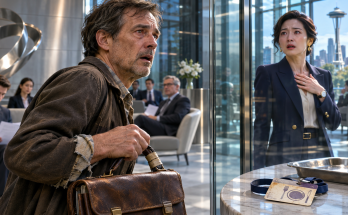
The investigation didn't end when Neil lost his production access.
I learned that gradually.
At first, I assumed Andrea and Simon were examining the unauthorized modification and determining whether Neil had violated other operational policies.
There was enough work in that alone.
An employee with significant administrative privileges had bypassed a safeguard protecting an important customer pilot.
The resulting interruption had affected multiple facilities.
StrataCore needed to know whether it was dealing with an isolated decision or a broader pattern.
I continued following the conditions of my employment agreement.
Every design decision went into the appropriate documentation.
Every contribution remained available for independent review.
I wasn't interested in giving anybody a reason to question those arrangements.
They had already protected me once.
Maya and I continued working through the technical consequences of the incident.
Blue Peak's systems were functioning again, but the customer relationship remained fragile.
Nobody could pretend the restoration of normal operations had automatically restored the client's confidence.
There was still considerable work ahead.
Then I learned that the compliance investigators had uncovered something unrelated to the production change.
Neil had another source of income.
It wasn't an arrangement he had disclosed to StrataCore.
The payments had been routed through an offshore business.
They amounted to thirty-five thousand dollars a year.
That alone raised serious questions about his obligations to his employer.
But the identity of the organization funding the arrangement made those questions considerably more uncomfortable.
Roland Briggs.
When I first heard that name associated with the payments, I felt the muscles in my shoulders tighten.
Roland hadn't simply remained a distant figure from Neil's employment history.
There was an ongoing financial connection.
Neil had been receiving money through an entity Roland funded while holding a senior operational position at StrataCore.
I thought immediately about my interview.
About Neil's expression when he recognized me.
About the question he had asked after my technical presentation.
Why would an innocent person surrender his ownership interest?
At the time, I had assumed he was repeating the version of events he had heard at NexusRoute.
Now I had another reason to wonder.
The investigators found something more specific.
On the day of my interview, Neil had accessed my confidential employment application.
He had exported my contact information without authorization.
Records also established that he had communicated with Roland shortly before the threatening message reached my telephone.
I sat quietly when that information was explained to me.
For weeks, I had been wondering how Roland had learned where I was applying.
I remembered standing beneath the entrance canopy at StrataCore.
The rain.
The conversation with Dad.
The happiness I'd felt before opening that email.
Roland hadn't somehow discovered my employment through ordinary industry conversations.
Information from my confidential application had been taken out of the company.
The sequence was there in the records.
Andrea was careful about what she disclosed.
She contacted Leah before providing material that might be relevant to my previous dispute.
There were legal questions about preservation and disclosure.
Other employees' information needed to remain protected.
StrataCore couldn't simply hand over everything investigators had discovered because some of it concerned me.
I understood.
After what had happened at NexusRoute, I wasn't interested in evidence being handled carelessly.
Simon Pratt documented the origin of the relevant files.
He preserved copies that couldn't be casually modified.
He recorded their digital fingerprints so later reviewers could determine whether the preserved material remained unchanged.
I knew the importance of that process.
The evidence against me six years earlier had looked convincing because people believed the records represented events that had actually occurred.
I wanted anything associated with this new investigation to withstand the kind of scrutiny those earlier records should have received.
Then Simon's examination moved to an archived communications drive.
Neil had retained correspondence from his years at NexusRoute.
Those records included old project communications that predated his employment at StrataCore.
Some of them went back to the period when Roland had accused me of stealing source code.
I hadn't expected anything useful to survive from that time.
Six years was a considerable interval.
People replaced computers.
Projects ended.
Files were moved or deleted.
And the people involved had spent years operating under the assumption that my dispute was finished.
Yet there were records.
Among them was an exchange involving Roland and an outside forensic contractor.
The contractor's name was Simon Miller.
Not Simon Pratt, who was conducting the current investigation.
Two men with the same first name and entirely different roles in what had happened.
Miller had been involved in discussions concerning administrative records at NexusRoute.
Those discussions weren't about examining a suspected transfer of confidential material.
They concerned producing records that would make such a transfer appear to have happened.
I didn't see the material immediately.
Andrea and the independent legal advisers needed to establish what could properly be shared.
Leah examined the situation before arranging for me to review the relevant exhibits.
When I finally sat across from her, there were several printed documents on the conference table.
She didn't begin by offering congratulations.
She didn't suggest that everything was suddenly resolved.
She explained that the archived correspondence had been preserved and subjected to technical examination.
Additional corroborating records were being sought.
Then she placed the first exhibit in front of me.
I recognized Roland's name.
I recognized the period in which the communication had occurred.
I read the message slowly.
Then I read it again.
There were discussions about manipulating administrative timestamps.
There were instructions concerning records that would associate my credentials with a repository transfer.
The purpose was to create the impression that NexusRoute's proprietary material had been sent to another company.
I kept reading.
My hands were resting flat against the table.
One communication described the reason for the operation.
Roland wanted the board to regard my continued presence as an unacceptable risk.
He wanted my twenty-two percent ownership interest recovered at a fraction of its actual worth.
I read that passage three times.
Not because the wording was difficult.
Because I couldn't make myself accept what it meant.
For six years, I had believed Roland knew more about the alleged breach than he was admitting.
I had suspected that he had manipulated the situation to force me out.
But suspicion and knowledge were different things.
I had never possessed the evidence needed to establish the difference.
Now I was looking at instructions that existed before the supposed misconduct had been properly identified.
Instructions to make the misconduct appear real.
Leah remained quiet.
She knew I needed time.
I thought about the original board meeting.
Roland explaining the implications of the alleged transfer.
The way he had spoken about protecting the company and its investors.
The concerned expressions around the conference table.
I remembered asking whether somebody could examine the underlying records independently.
I remembered trying to understand how my administrative account had become associated with a transaction I hadn't performed.
There had been nights when I lay awake going over my own actions.
Which computers had I used?
Which systems had I accessed?
Had I accidentally left a session open somewhere?
I knew I hadn't stolen source code.
But I had wondered whether some ordinary mistake on my part had given Roland an opportunity to construct his accusation.
That uncertainty had become its own punishment.
I had examined my memories so often that eventually they stopped feeling dependable.
I couldn't remember whether I had already considered a particular possibility or whether I was imagining something new.
Meanwhile, Dad was in intensive care.
I was receiving legal invoices.
Roland was offering me four hundred thousand dollars in exchange for an ownership interest he knew I couldn't afford to defend.
I looked at Leah.
"He was planning the accusation before there was anything to investigate."
She nodded.
"That's what the correspondence indicates."
I returned my attention to the document.
It was strange seeing something so devastating printed on ordinary office paper.
No special border.
No warning.
Just lines of text.
Somebody had written those instructions and continued with his working day.
Meanwhile, the man those instructions were about would spend years struggling to find employment.
I felt angry.
Not the sharp, immediate anger I had experienced during the original dispute.
This was heavier.
It included every interview that had ended badly.
Every prescription refill Dad and I had postponed.
Every occasion when somebody I had once considered a colleague stopped answering my messages.
I looked down at my sleeve.
I thought about the security guard examining my frayed cuff.
There was a reason my life had narrowed to those little calculations.
And now I could see somebody discussing that reason as a business objective.
Leah explained the technical findings.
Simon Pratt had examined the archived communications against the metadata that remained available.
Other records supported important aspects of their contents.
But Leah didn't intend to rely solely on retained copies from Neil's archived drive.
She wanted original materials obtained through appropriate legal procedures.
The reviewers also examined the supposed repository transfer itself.
The accusation depended on my workstation having communicated with the alleged destination servers.
The independent analysis found that it hadn't.
There was no corresponding connection on the relevant dates.
I stared at the supporting exhibit.
Something inside me loosened.
I had said that I hadn't made the transfer.
I had said it to Roland.
I had said it to the board.
I had said it to attorneys whose services I eventually couldn't afford.
Now an independent examination supported what I had been saying all along.
I touched the edge of the paper.
"I kept thinking there must have been something I'd forgotten."
Leah looked at me.
"You don't need to supply a missing explanation for records somebody manufactured."
I swallowed.
It was a simple statement.
But it addressed something I hadn't been able to admit.
Part of me had been trying to understand Roland's accusation as though understanding it was my responsibility.
I had spent years looking for an innocent mistake that might explain a dishonest allegation.
There hadn't been such a mistake.
There had been a decision.
Somebody else's decision.
Leah moved the documents aside.
Then she explained what would happen next.
The old settlement remained legally significant.
I had accepted four hundred thousand dollars.
I had transferred my ownership interest.
I had signed a release.
Finding evidence of fraud didn't automatically erase those actions.
We would need to establish that the agreement had been obtained through deception.
An arbitrator would have to consider whether the settlement should be set aside and whether my underlying claims could proceed.
I listened carefully.
There was no guarantee of an immediate outcome.
Roland and the company would have opportunities to respond.
They could challenge the authenticity, significance or interpretation of the evidence.
There would be procedural questions.
Financial questions.
Arguments about the agreement I had signed six years earlier.
Leah wanted me to understand all of that before I decided how to proceed.
She wasn't offering me certainty.
She was offering me a legitimate way to challenge what had happened.
Preservation notices were sent to NexusRoute, its board and the outside contractor.
The relevant records needed to be protected from destruction or alteration.
Leah began preparing claims involving the ownership transfer, breaches of fiduciary responsibilities and the professional harm caused by the fabricated allegations.
I watched her organize the exhibits.
For the first time, I wasn't bringing her another rejection email or asking whether Roland's latest behavior violated the settlement.
We were discussing the original wrong.
The thing I had been unable to afford to challenge properly.
"Julian, this could still be difficult."
"I know."
"There may be uncomfortable questions about the decision you made back then."
"I'm prepared to answer them."
She looked at me.
"You're certain?"
I thought about Dad's hospital room.
The equipment beside his bed.
The papers I had signed while knowing exactly what I was surrendering.
"I want an examination of what Roland did."
Leah nodded.
"Then that's what we'll pursue."
I collected my briefcase.
Near the door, she stopped me.
"There's something else you should understand."
I turned.
She referred to the threatening message Roland had sent after my interview.
By preserving it and forwarding it without responding, I had established a clean record of the new communication.
There was no angry exchange for somebody to misrepresent.
No ambiguity about what Roland had sent first.
"You helped make this easier to investigate," she said.
I hadn't thought of my decision that way.
At the time, I had simply been tired of responding to him.
But I understood what she meant.
I thanked her and left.
Inside my car, I put my briefcase on the passenger seat.
I didn't start the engine.
I took out my telephone and called Dad.
He answered.
"Everything all right?"
"Yes. I need to tell you something."
I explained that an investigation at StrataCore had uncovered records connected to the NexusRoute allegations.
There was evidence indicating that the records against me had been deliberately manufactured.
I was careful not to describe the legal dispute as resolved.
Nobody had awarded me anything.
The old agreement was still in place.
But we finally had evidence that could support a challenge.
Dad remained silent.
I checked whether the call was still connected.
"Dad?"
"I'm here."
His voice sounded different.
"I never thought you did what they said."
"I know."
He took a breath.
"I didn't have to see those papers to believe you."
I pressed my forehead against the steering wheel.
He continued.
"You're my son. I knew what kind of man you were."
I closed my eyes.
For six years, I had wanted important people to believe me.
Investors.
Executives.
Hiring managers.
People who knew how to interpret technical records.
The man whose opinion had mattered longest had never needed any of those documents.
I stayed there until I could speak normally again.
Then I told Dad I would call him later.
I started the car.
There was still a legal fight ahead.
There was still an important customer relationship to repair.
But something had changed in the way I carried those six years.
I no longer needed to search my memory for the mistake that had ruined my life.
I knew where to look.
And it wasn't inside myself.