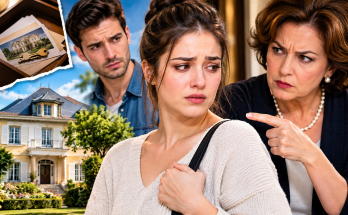
The first thing I noticed when I returned home was that my younger brother was wearing my watch. The second was that my wife was nowhere to be seen. Ricardo stood near the French doors with a champagne glass in his hand, laughing with three men I recognized from our business. On his wrist was the silver watch Elena had given me for our fifth wedding anniversary. I had locked it inside my bedroom drawer before leaving for deployment. Seeing it on him made me stop just inside the entrance.
Ricardo spotted me before anyone else did. His smile faltered for a fraction of a second, then widened so quickly that I almost convinced myself I had imagined the hesitation. He crossed the room with both arms extended. "Look who's finally home!" he announced. "You should have told us you were arriving today." He embraced me tightly enough to make the gesture look affectionate to anyone watching. I remained still for a moment, smelling expensive cologne on his jacket. It was the same fragrance I had bought him two Christmases earlier.
My mother appeared from the garden, where music and conversation drifted through the open doors. Victoria was dressed in an elegant cream-colored outfit, her dark hair arranged perfectly, a gold bracelet resting against her wrist. She looked surprised to see me, although surprise had never kept my mother from controlling a room. "Darling," she said, pressing her cheek against mine. "What a wonderful surprise." She stepped back to examine my face. "You've lost weight. They really don't take care of you properly, do they?"
I asked where Elena was. My mother exchanged a glance with Ricardo. It was brief, almost invisible, but I had grown up in this house and knew the difference between an innocent look and a silent conversation. "She's upstairs," Victoria replied. "Resting, I believe. She's been rather exhausted lately." Ricardo took a swallow of champagne and added that Elena had not been feeling like herself. Neither asked whether I wanted to see her. Instead, my mother suggested that I change clothes before joining their guests.
I had spent the previous eighteen hours traveling, including a miserable stretch in an airport where the heating had failed. My shoulders ached beneath my uniform, and I still had the folded boarding documents in my pocket. Throughout the journey, I had imagined Elena opening the front door, looking startled for a moment, and throwing herself into my arms. We had not held each other for months. Her voice had been the one familiar thing I carried through deployment, even when our conversations became shorter and increasingly difficult to arrange.
"I'll see her first," I told them. Ricardo lifted his glass in a careless salute, but Victoria moved slightly into my path. "Don't upset her," she said. The warning was delivered with the gentle severity she used whenever she wanted obedience to sound like consideration. "She's been emotional. There have been some difficulties with the business, and she hasn't handled the pressure particularly well." I asked what difficulties she meant. My mother touched my sleeve. "Nothing that can't wait until you've had a proper meal."
The house looked almost the same as when I had left it, but small differences seemed to appear wherever I turned. A framed photograph of Elena and me had disappeared from the table beside the stairs. The cabinet that once held our wedding china now displayed unfamiliar crystal. Even the air smelled different: furniture polish, flowers, and the sharp scent of perfume rather than the coffee and cinnamon Elena usually preferred. Someone had been living here according to a routine that no longer seemed to include her.
At the top of the stairs, I found the bedroom door mostly closed. I knocked once before entering. Elena was sitting on the edge of the bed with a blanket wrapped around her shoulders, although the room was warm. Her hair, normally tied back with cheerful disregard for loose strands, hung around her face. She looked thinner. There was a ceramic cup on the bedside table, the tea untouched and dark. For several seconds she stared at me as though she could not decide whether I was actually standing there.
"Elena?" I said. She stood so suddenly that the blanket dropped to the floor. Her hand flew toward her mouth. I crossed the room, expecting her to meet me halfway, but she remained beside the bed. When I reached out, she recoiled. The movement was small and instinctive. She looked ashamed of it immediately. "I'm sorry," she whispered. "I didn't know you were coming today." I could hear the effort it took for her to keep her voice steady.
I lowered my hands. "You don't need to apologize. I wanted to surprise you." She glanced toward the doorway, then back at me. "Did they see you come upstairs?" I nodded, confused by the question. Her expression changed. It was not disappointment or even alarm. It was something closer to resignation. "Of course they did," she murmured. She sat back down and began smoothing the blanket over her knees, pressing the same fold flat again and again.
Only then did I notice the marks on her forearm. They were partly covered by the sleeve of her sweater, but when she reached for the cup, three dark bruises appeared above her wrist. They were not the sort of marks someone gets by brushing against furniture. Their placement reminded me of fingers gripping too tightly. "What happened to your arm?" I asked. Elena pulled the sleeve down. "Nothing serious. I knocked into something." She said it quickly, without looking at me.
I sat in the chair beside the bed rather than crowding her. During deployment, I had learned to recognize the difference between silence that offered comfort and silence that concealed danger. Elena's silence belonged to the second kind. I asked how long she had been feeling unwell. She mentioned sleepless nights, headaches, and trouble eating. When I asked whether she had visited a doctor, her gaze moved again to the door. "Your mother thought it would be better if I stayed home," she said.
I remembered our last video conversation. Elena had appeared in the kitchen, looking pale, while Ricardo's voice could be heard somewhere behind her. She had told me she was busy and ended the call after four minutes. I had been disappointed but told myself she was under pressure from the business. Now I wondered why Ricardo had been standing close enough to overhear us. "When did my brother start spending so much time here?" I asked. She clasped her hands together. "Almost immediately after you left."
Before my deployment, Ricardo had been involved in several smaller operations connected to our company, but Elena and I had maintained responsibility for the central business. My brother could be charming and capable when he wanted to be. He could also be careless with money. More than once, I had covered a debt or negotiated with someone he had disappointed. Our mother called these incidents youthful mistakes, even after he was old enough to know better. I had expected him to assist Elena during my absence, not take over our household.
"What has he been doing?" I asked. Elena stared at the floor. "Managing things." I waited. "Which things?" Her fingers tightened around the blanket. "The company accounts. The property. Some investments. He said you authorized it." I felt a slow pressure build beneath my ribs. I had prepared limited instructions before leaving, and none gave Ricardo broad authority over our assets. Elena knew this. We had reviewed the arrangements together at the dining table on the Sunday before my departure.
"Did he show you something with my name on it?" Her eyes filled, but she did not cry. "Please don't ask me that yet." The words were so unexpected that I had no immediate response. Elena had never been a person who avoided difficult conversations. She would argue about a supplier's invoice until midnight if she believed something was wrong. Watching her shrink from an ordinary question frightened me more than an accusation would have.
A sound came from the hallway. Elena turned sharply toward it, her shoulders tightening. Someone passed the bedroom and continued toward the staircase. Only after the footsteps faded did she exhale. I followed her gaze to the door. It had never occurred to me that my wife might feel unsafe inside our own home. We had chosen this house together, argued about the kitchen tiles, planted roses along the garden fence, and saved for years before we could afford the renovations. It was meant to be the place where she could rest.
I asked whether my mother had hurt her. Elena shook her head, but the refusal came too quickly. "Did Ricardo?" Another shake. I leaned forward, keeping my voice quiet. "I need you to tell me what happened. I'm not going to be angry with you." She rubbed one thumb across the other, a habit she had when calculating something difficult. "They said you'd come home different," she answered. "They said I shouldn't expect you to believe everything I told you."
For a moment I thought I had misunderstood her. "Who said that?" She swallowed. "Your mother." Outside the window, laughter rose from the garden. Someone called Ricardo's name, followed by the dull sound of glasses touching. Elena stared toward the noise with an expression I had never seen before. She looked as though every familiar sound had been given a new meaning.
I tried to understand how my mother could have convinced Elena that our marriage was in danger. I had written whenever I could. I had called on birthdays and anniversaries. I had kept a photograph of Elena tucked inside my notebook, its corners softened from handling. Our conversations had become irregular, but I had assumed the problem was distance and the restrictions of deployment. "I never told anyone I was leaving you," I said. "I never even considered it."
Elena looked at me then. There was pain in her face, but also a cautious effort to believe me. "She told me you wanted a divorce when you got back," she said. "She said you were only keeping things peaceful because you didn't want me interfering with the accounts." I shook my head. "That isn't true." Elena nodded once, as though accepting the answer required more courage than asking the question. "I wanted to believe that," she whispered.
I told her about the watch I had seen on Ricardo's wrist. She gave a faint, humorless smile. "He took it from your drawer." I asked why she had allowed it. The moment the words left my mouth, I wished I could take them back. Elena's expression closed. "I didn't allow it," she said quietly. "I told him to put it back." The distinction struck me hard. I had asked her to account for something someone else had chosen to do.
"I'm sorry," I said. "That was unfair." She seemed surprised by the apology. She looked down at the pale line where her wedding ring rested against her finger. "There are so many things you don't know," she said. Her voice sounded worn, not dramatic. I thought of how much strength it must have taken to sit here waiting for me while the people downstairs celebrated. I wanted answers, but I could see that asking too quickly might cost me the fragile trust she was offering.
I moved to sit on the far edge of the bed, leaving space between us. "You can tell me slowly," I said. "Start wherever you need to." Elena wiped her palms against the blanket. She began describing the weeks after my departure: Ricardo arriving with folders, my mother attending meetings that Elena had arranged, and people at the company suddenly referring decisions to someone other than her. At first they called it assistance. When she objected, they began calling it protection.
"They said the business was too complicated for me to run alone," she continued. "Then they said I was making mistakes. When I asked to see the records, Ricardo told me I was embarrassing myself in front of the staff." She stopped speaking for a moment. "I thought I could straighten everything out before you returned." I remembered how often she had handled problems without complaint. That independence, which I admired, had become something they could exploit.
My mother had always been skilled at making disagreement feel like disloyalty. When I was young, she never ordered Ricardo and me to stop arguing. She reminded us instead of how much our father sacrificed for the family, until neither of us wanted to be the cause of her disappointment. Elena had recognized the pattern long before I did. She used to say that Victoria could make a person apologize for having a question. I had laughed at the observation then.
"Did you sign anything?" I asked. Elena looked away. Her silence answered before her words did. "They brought papers. Sometimes they said they were routine renewals. Sometimes they told me something terrible would happen if I didn't cooperate." Her hand moved involuntarily to her bruised arm. "And when I stopped signing, they found other ways to make me listen." A chill passed over me despite the warmth of the room.
I stood, intending to find Ricardo. Elena caught my wrist with both hands. The sudden strength of her grip startled me. "Please," she said. "Don't go down there and accuse them. Not yet." I looked at her. "He's been taking our money, and someone has been hurting you." She shook her head. "I know. But you have no idea what they've prepared. They'll say I invented everything. They've been telling people for months that I'm unstable."
I remained beside the bed until her breathing steadied. Beneath the anger, a more useful thought began to form. If Ricardo had altered ownership documents, there would be records. If someone had used my signature without permission, there would be evidence. And if Elena had been threatened, I needed to protect her before forcing a confrontation. I had spent months operating under orders that demanded patience when impatience could cost lives. I would need that discipline here, in the place where I had never expected to use it.
I promised her I would not confront anyone without understanding what had happened. "But I need to see whatever they made you sign," I added. Elena looked toward the bedroom door, then reached beneath her pillow. Her fingers searched between the mattress and the wooden frame until they found something small and flat. She drew out a piece of paper folded into a narrow rectangle. Its edges were worn white from being handled.
"I managed to keep one copy," she said. "They think they destroyed everything I had." She placed it in my palm, then closed my fingers around it. For the first time, she reached toward me willingly. I unfolded the paper and recognized the heading of a financial authorization. Beneath it, in dark ink reproduced by a copier, was my signature. It looked nearly perfect until I noticed the last movement of the pen. Whoever had written my name had made the final line curve upward. Mine always fell slightly downward.
I examined the date. The authorization had supposedly been executed three weeks after I departed. I remembered that week clearly. I had been stationed thousands of miles away, without access to the documents or the people named on them. I checked the signature again, hoping there was some explanation I had forgotten. There was none. The document was fraudulent.
I looked at Elena, whose eyes remained fixed on the paper. "I didn't sign this," I told her. She gave a small nod, as though she had been waiting months to hear those words. I asked how many similar documents existed. She covered her mouth, drew a difficult breath, and answered with a single word. "Everything."