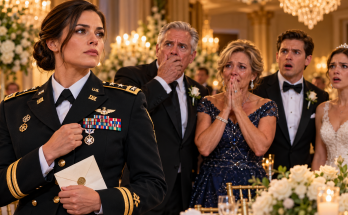
PART 1 TITLE: The Morning My Husband Died, I Learned That Our Marriage Had One Final Secret Waiting to Destroy Everything
The detective called at 7:16 in the morning, while I was standing in my kitchen looking at two coffee cups. One belonged to me. The other had belonged to Julian, although he had not used it in months. I had taken it from the cupboard without thinking, an old habit surviving long after the marriage that created it. When the unfamiliar number appeared on my phone, I almost let it ring. I was expecting a call from my divorce attorney, not the police. Tomorrow, Julian Sterling and I were scheduled to appear in court for what should have been the final hearing of our marriage. Instead, a man with a careful voice asked whether I was Elena Sterling and whether I was somewhere I could sit down.
I put the cup on the counter. “Whatever this is, Detective, please tell me.” There was a short pause, the kind people use when they are deciding which words will cause the least damage. He introduced himself as Detective Marcus, then informed me that my husband had been found unresponsive in a hotel suite during the early morning hours. Emergency personnel had been called, but their attempts to revive him had failed. Julian was dead. For several seconds, I remained perfectly still, my hand resting against the cold granite. Outside, the garbage truck moved slowly along our street, its mechanical arms lifting bins with an ordinary violence. I remember that sound more clearly than the detective’s next few sentences.
“Where was he?” I asked. Marcus gave me the name of the Grand Plaza, a hotel downtown where Julian entertained clients and occasionally hosted extravagant business dinners. I had attended enough events there to know the marble staircase, the polished brass elevators, and the discreet way employees avoided looking directly at wealthy guests. When I asked who had been with him, the detective hesitated. I knew the answer before he spoke. Sabrina Cole. He confirmed it without elaboration, although his silence told me he understood the significance. My husband had died in another woman’s bed, only hours before a judge was supposed to end our marriage. There was something almost indecent about how precisely the timing exposed him.
I did not cry. That detail became important to everyone who spoke to me afterward, as though the absence of immediate tears proved something about my character. The truth was less simple. For three years, I had practiced surviving Julian in small, private ways. I learned to recognize lies without challenging each one, to eat dinner without waiting for him, to hear another woman’s name without allowing my expression to change. When he finally moved his belongings into the guest bedroom, I felt relief before sorrow. Yet none of that prepared me for the official announcement that his life had ended. I was not celebrating. I was trying to understand how a person who had occupied so much of my existence could disappear between one telephone call and the next.
Marcus asked when I had last seen my husband. “Yesterday morning,” I answered. “Here, in the kitchen.” Julian had arrived shortly after eight, carrying a leather document folder beneath one arm. He wore his dark blue suit, the one he favored for court appearances, and he had shaved with unusual care. He seemed pleased with himself. He placed the final divorce papers on the counter, pushed them toward me, and told me there was no reason for further disagreement. I remembered the scent of his cologne and the faint crease beside his mouth when he smiled. “By this time tomorrow,” he had said, “we can both get on with our lives.” I asked whether he intended to spend that freedom with Sabrina. He did not answer directly.
Instead, Julian straightened his cuffs and explained that he would be celebrating that evening. He mentioned friends, colleagues, an expensive room, and the pleasure of finally closing an unpleasant chapter. I had watched him with the tired curiosity of someone studying a familiar stranger. He had once been incapable of hiding excitement from me. When we were newly married, he would come home with good news and search the house until he found me, eager to share it. Now he could look straight into my face while describing the celebration of our separation. Before leaving, he tapped the folder with one finger and warned me not to introduce any last-minute surprises in court. That was the only moment his pleasant expression slipped.
I had a surprise, although Julian did not know its full extent. According to the financial disclosures supplied by his attorneys, he possessed assets worth roughly twenty-three million dollars. Even that amount had seemed difficult to comprehend when I first saw it written in a legal document. But my attorney had discovered discrepancies, movements of money that did not correspond to legitimate business transactions, and ownership interests concealed beneath layers of companies. Certain investments appeared to have vanished from his official accounts while remaining very much alive elsewhere. What Julian considered an orderly financial settlement was beginning to look like a carefully planned deception. The following day’s hearing was intended to force answers about those assets. He thought he had protected himself.
After the call, I sat at the kitchen table and opened the folder Julian had left behind. His signature appeared on the last page, confident and slightly theatrical. Even his handwriting seemed arrogant to me that morning. I tried to recall the last affectionate thing he had said without an audience. Nothing came immediately. Our tenth anniversary gala surfaced instead: a crowded ballroom, silver candles, an expensive dress, and Julian’s fingers pressing painfully into my waist while a photographer arranged us beneath a floral arch. Twenty minutes earlier, I had asked why Sabrina was sending him intimate messages after midnight. He had accused me of making a scene. Then we had smiled for the camera, producing a photograph our friends would admire for years.
At nine, my attorney called. Her voice was controlled, but I could hear papers moving across her desk. She expressed sympathy before explaining that Julian’s death created immediate complications for the divorce proceedings. The hearing would not proceed as expected. Estate lawyers, insurance arrangements, ownership claims, and the unfinished financial disclosures might now become separate disputes. I listened while she described the legal consequences of a marriage ending through death rather than divorce. At one point, she asked whether I needed someone with me. I told her I preferred to be alone. That was not entirely true, but I could not imagine who would sit beside me without demanding a performance of grief.
By late morning, the news had escaped whatever official channels were supposed to contain it. My phone filled with messages from people I barely knew. Some offered condolences so elaborate that they seemed borrowed from greeting cards. Others asked whether the reports were accurate. One person, a former colleague of Julian’s, sent a brief message asking if there would be an announcement from the family. It irritated me that he could not wait until Julian had been dead for half a day before thinking about appearances. I switched off the television after seeing an old photograph of my husband outside the courthouse. The reporter called him a prominent attorney and respected member of the community. I wondered how many people watching had ever met the man who came home after midnight.
At 1:15, Vanessa entered my house with enough force to make the front door strike the wall. Julian’s younger sister had always been more emotional than her brother, although she shared his belief that family problems should remain invisible to outsiders. She wore enormous sunglasses despite the overcast afternoon. Her coat was unbuttoned, and damp strands of hair clung to her cheek. She stopped in the living room when she saw me seated with a cup of tea. “Tell me you didn’t know about Sabrina,” she said. I looked up slowly. There were many things I had imagined Vanessa might say about her brother’s death. That particular accusation had not been among them.
“I knew,” I replied. Vanessa removed her glasses. Her eyelids were swollen, and the skin around her nose was red. She asked how long I had known, whether I had confronted Julian, why I had kept it from his family. Each question carried the suggestion that I had somehow allowed the affair to become more serious by refusing to expose it. I waited until she finished before answering. “Your brother made his choices without consulting me. I don’t know why you believe managing the consequences was my responsibility.” Vanessa flinched. For a moment, I thought she might leave. Instead, she walked to the window and stood with her back to me, breathing hard.
When she turned around, her expression had changed. “Were you with him last night?” The question was quieter than the others, but far more deliberate. I understood at once what she was asking and why. Julian had humiliated me, fought me over money, and announced his intention to celebrate our divorce. I was the wife left behind, and he was the wealthy husband who had died before the law could separate us. “No,” I said. “The last time I saw him was yesterday morning.” Vanessa studied my face as if searching for the movement of a muscle that would reveal dishonesty. “You’re taking this strangely well,” she said. I placed my cup on its saucer before it rattled against my teeth.
“Would you be more comfortable if I fell apart?” I asked. She began to protest, but I continued. I told her about the business trips that had not been business trips, the unexplained withdrawals, the perfume on Julian’s clothes, and the messages he believed he had hidden. Most painfully, I told her about my father’s funeral. Julian had claimed an urgent client matter had taken him to Boston. I had stood beside my father’s coffin alone, defending my absent husband to relatives who had every reason to doubt me. Months later, an expense record revealed a luxury hotel in Miami. Sabrina’s name appeared on the reservation. Vanessa sank into the armchair without removing her coat.
“I never knew,” she whispered. I believed her. Julian had been exceptionally skilled at presenting different versions of himself to different people. His sister received the protective older brother who called on birthdays and arranged expensive gifts. His clients encountered a disciplined strategist who remembered obscure legal details and never missed a deadline. I had lived with the man behind those performances, the one who could make a promise over breakfast and break it before dinner. Vanessa covered her mouth with both hands. When she asked why I had endured it for so long, the answer emerged before I had time to make it respectable. “I loved him,” I said. The words made my throat ache.
Vanessa began crying then, not dramatically, but with the exhausted helplessness of someone discovering that grief could contain anger. I found a box of tissues and placed it beside her. We sat together while the house settled around us. She apologized for the questions, and I admitted that I had not yet understood how I felt. Before leaving, Vanessa hugged me tightly. I hesitated, then returned the embrace. For a few seconds, we were simply two women connected by a man neither of us fully understood. At the door, she asked whether I would attend the funeral. I told her I would. Whatever Julian had done, his death deserved more than the scandal already forming around it.
After Vanessa drove away, I remained beside the front window. A dark sedan was parked across the street, its windshield reflecting the pale afternoon sky. Someone sat behind the steering wheel. I could not see his face clearly, but I knew without much difficulty who he was. Detective Marcus had asked about my whereabouts that morning, and he had listened especially closely when I mentioned being alone overnight. Now he was watching the house. I wondered whether he expected me to make a telephone call, leave suddenly, or collapse once I believed no one could see me. I considered stepping outside to ask whether he wanted coffee. Instead, I closed the curtain and called the precinct.
At four, I arrived for an interview. Marcus met me in a corridor that smelled faintly of disinfectant and burnt coffee. He was a broad-shouldered man in his late fifties, with gray hair near his temples and the reserved expression of someone who had heard too many rehearsed explanations. He led me into a small room containing a metal table, two chairs, and a paper cup of water. There was no attempt to intimidate me, which made the circumstances more uncomfortable rather than less. He explained that deaths occurring outside medical supervision required investigation, even when an initial assessment suggested natural causes. I told him I understood. He opened a folder and began reconstructing Julian’s final evening.
According to hotel records, Julian and Sabrina had checked in shortly after nine. Champagne arrived at 9:26, dinner followed at 10:14, and another bottle was ordered at 11:02. The surveillance cameras showed several visitors entering and leaving the suite during the night. I recognized the description of a party Julian had mentioned to mutual acquaintances. Marcus asked whether that arrangement had offended me. “It did,” I said. He asked whether I had been angry, embarrassed, resentful. I answered yes to each question. Denying those emotions would have been absurd. When he asked whether I had hated Julian enough to wish him dead, I leaned forward. “I wanted a divorce, Detective. I wanted an honest financial settlement. Those are not the same thing as wanting a funeral.”
He moved to the subject of money. I explained the disputed assets, although his questions revealed that he already knew much of the background. The original estimate of Julian’s fortune was only a starting point. My legal team suspected additional holdings concealed through offshore transfers and business structures that made the ownership difficult to trace. Marcus asked how much I expected to receive when the divorce was finalized. I told him that the figure depended on discovering what actually existed. He wrote something in his notebook. I asked whether he had decided Julian’s death was suspicious. “I’m deciding what I can prove,” he said. It was the first answer he gave that afternoon that I considered entirely straightforward.
Next came the questions about my movements. Between ten in the evening and four in the morning, I had been home. Alone. Marcus observed that no person could confirm my account. I mentioned the exterior security cameras covering the driveway, entrance, and rear garden. The system recorded movement continuously, and Julian had always insisted on the best equipment. Marcus asked who could access it. “Both of us,” I answered. His pen stopped briefly. I agreed to provide the footage and access records. Then he placed a photograph on the table. It showed a partly used blister pack of tablets recovered from the hotel room. I had never seen them. Marcus asked about cardiac conditions, blood pressure medication, and stimulants. Julian had no known serious heart problem.
“Sabrina told us he took something voluntarily,” Marcus explained. His tone remained even, but I could tell he was studying me. I asked whether she had stayed with Julian after he became ill. He described a sudden episode involving chest discomfort, sweating, confusion, and difficulty breathing. Sabrina had eventually sought help, although her movements around that time remained unclear. I pictured Julian in the hotel room, frightened for perhaps the first time in years, with all his expensive possessions unable to protect him. The image did not bring satisfaction. It brought a strange, unwelcome sadness. Whatever I had thought of him yesterday morning, he had once been the young man who held my hand beneath a restaurant table and promised we would grow old together.
Marcus closed his folder and told me I could leave. I stood, relieved that the interview had ended without an accusation. My hand was already on the door when he spoke again. He said Julian had received an anonymous message at 12:47 that morning, sent from a prepaid number with no identifiable subscriber. I turned back. Marcus opened his notebook and read the message aloud: “Enjoy your celebration, Julian. Tomorrow everything changes.” The words were ordinary enough to belong to several different conversations, yet their timing made them impossible to dismiss. I felt my pulse strike hard against my throat. Marcus noticed. He asked whether I recognized the number or knew who might have sent it. I said I did not.
He watched me for a long moment. “Someone knew tomorrow mattered to him,” he said. “Someone wanted him thinking about what was coming.” I gripped the door handle, conscious of how carefully my face needed to remain still. The divorce hearing had been public knowledge among our attorneys and certain friends, but the financial disclosures were another matter. Julian had hidden enough secrets to attract enemies I had never met. I asked whether the message changed the investigation. Marcus replied that it changed his questions. As I walked toward the corridor, he called after me with a final observation: events that fit together too conveniently were rarely as straightforward as they seemed. I left the precinct knowing that my husband’s death had opened a door neither of us had intended to unlock.
END PART 1
PART 2 TITLE: At My Husband’s Funeral, a Quiet Family Ritual Brought the Detective Back With Evidence That Changed the Entire Investigation
The first funeral arrangement I approved was the removal of our anniversary photograph from the memorial display. Vanessa had chosen it from the dozens of images Julian’s office supplied: the two of us standing together beneath crystal chandeliers, his arm around my waist, my smile bright enough to suggest uncomplicated happiness. I had spent the previous evening staring at that photograph on my phone, remembering how he had belittled me immediately before the camera flashed. Now his family wanted the same image enlarged and displayed beside his coffin. I told Vanessa to choose one from an earlier year. She protested that everyone recognized the anniversary portrait. “That’s precisely why I don’t want it there,” I said.
The funeral took place three days after Julian’s death. Rain began before dawn and continued with almost deliberate persistence, darkening the church steps and soaking the coats of mourners who stood beneath crowded umbrellas. I arrived in a black dress I had purchased for my father’s funeral, a detail that would have amused Julian because he considered repeating formal clothing a sign of carelessness. Outside the church, a line of expensive vehicles occupied both sides of the street. The parking attendants moved quickly, recognizing people whose names appeared regularly in business journals and political invitations. I stood under the entrance canopy while Vanessa adjusted the flowers pinned to her coat. Neither of us spoke about Sabrina.
Inside, the church was full. Judges sat beside corporate executives. Former clients greeted one another in murmured voices. Attorneys who had spent years competing against Julian bowed their heads solemnly when his coffin was brought forward. I recognized men who had praised him publicly while describing him as ruthless in private. The contradictions might once have surprised me. Now they seemed entirely consistent with the life he had built. Julian understood reputation better than affection. He could intimidate an opponent during a negotiation and invite the same man to dinner afterward, confident that neither would mention what had happened. Watching the mourners, I wondered how many were grieving him and how many were calculating the effects of his absence.
The priest described Julian as a devoted family man whose accomplishments reflected discipline, generosity, and a remarkable commitment to those he loved. Vanessa began crying beside me. I kept my eyes lowered, not because I agreed with the tribute, but because correcting the dead in public would have been cruel to those who genuinely mourned him. I remembered a winter evening during the first year of our marriage when Julian had driven through a snowstorm to bring soup to my mother after she fractured her ankle. He had been thoughtful then. Or perhaps he had been capable of thoughtfulness when doing so cost him nothing important. I could not decide which interpretation was fair, and the uncertainty troubled me more than I expected.
During the final prayers, my attention drifted toward the rear doors. Sabrina Cole was not among the mourners. Someone had mentioned that she was on medical leave, a phrase broad enough to conceal almost anything. I had met her only a handful of times before understanding the nature of her relationship with Julian. She was younger than I was, professionally polished, with a quick laugh that appeared whenever Julian addressed her. For a long time, I had mistaken her attentiveness for ambition. Julian encouraged that mistake. He introduced her at gatherings as a valuable business associate and made a point of praising her intelligence. I wondered whether she was sitting somewhere alone, frightened by what had happened, or relieved that the man who controlled so much of her life could no longer call.
At the cemetery, rain collected on the polished handles of the coffin. Vanessa stood close enough that our sleeves touched. I watched the burial workers move with practiced dignity, their expressions neither indifferent nor excessively solemn. They had performed this task for strangers many times, and that ordinary professionalism steadied me. When the coffin was lowered, something tightened inside my chest. Julian had once promised that nothing would separate us. Even after I discovered the affair, part of me expected another argument, another document, another chance to hear him admit something he had concealed. The lowering coffin made that impossible. I had wanted him accountable before a living audience. Death had taken away the opportunity to ask questions he could not escape.
An elderly relative approached me afterward. She held both my hands and spoke about divine judgment, suggesting that cruel behavior eventually returned to its author. Her words were meant as consolation. I thanked her without agreeing. I had spent too many years watching dishonest people prosper to find comfort in the idea that the universe maintained an orderly ledger. Julian’s fortune had expanded while his marriage deteriorated. People admired his professional success without asking what funded it. If he had lived another twenty years, he might have remained celebrated. I did not believe a sudden death proved the existence of cosmic fairness. What it proved was that a human heart could stop in a hotel room, leaving everyone else to interpret the silence.
The reception was held at the Sterling family house, a sprawling property Julian had always regarded as evidence of the family’s importance. Portraits lined the hallway. The dining room contained an antique table long enough to seat twenty people, although the relatives sitting around it appeared incapable of discussing anything honestly. I accepted condolences, thanked distant acquaintances, and endured several conversations that began with sympathy and ended with questions about Julian’s estate. One of his former partners mentioned the unfinished divorce almost casually. I looked at him until he lowered his eyes. Another guest expressed admiration for the way I was handling everything. I wanted to ask what, exactly, he had expected me to do.
Near the library, I overheard two women discussing the hotel. One claimed Julian had suffered a heart attack after drinking too much. The other had heard rumors about medication found beside the bed. Their voices softened when I entered, but they did not apologize. I took a glass of water and remained long enough to make them uncomfortable. That was the strange quality of the day: everyone knew the circumstances of Julian’s death, but no one wanted to acknowledge them in my presence. Their embarrassment required more attention than my grief. I found myself missing my father’s blunt honesty. He would have called the entire gathering a theater performance, then handed me a plate of food and told me to eat.
Vanessa found me in the kitchen late that afternoon. Her face looked younger without makeup, almost like the girl I remembered from our early family holidays. She asked whether Detective Marcus had contacted me again. I told her about the interview but not every question he had asked. She knew about the tablets found in the room and wanted to believe they explained the death. “Julian did foolish things,” she said, staring into her coffee. “But he wasn’t a criminal.” I did not respond immediately. The missing financial records, hidden accounts, and questionable transactions suggested otherwise, although I had no desire to dismantle her brother’s reputation while his funeral flowers were still fresh.
“Did he ever discuss money with you?” I asked. Vanessa shook her head. She described the occasional investment advice he offered and the warnings he gave her about trusting strangers. Julian had encouraged her to keep her finances orderly and had frequently offered to review contracts before she signed them. She seemed proud of this evidence of his concern. I remembered how carefully he had avoided showing me certain documents during our divorce negotiations. The contradiction felt sharper than ever. Perhaps he had been genuinely protective of his sister. Perhaps he enjoyed advising someone who never questioned his motives. Vanessa noticed my silence and asked what I was thinking. “That I knew your brother for a long time,” I said, “and still don’t know everything he did.”
We spoke about his childhood then, a safer subject. Vanessa recalled their grandmother, a small woman with strong hands who had brought family traditions from China and insisted upon observing them despite Julian’s jokes. Every year, she burned paper offerings for deceased relatives, carefully arranging the sheets in a metal basin. As a child, Vanessa had been fascinated by the flames. Julian had teased their grandmother for sending imaginary wealth to people who could no longer spend it. I remembered meeting the older woman during our engagement. She had welcomed me warmly and explained the ritual with a seriousness that made it meaningful even to someone outside the tradition. When Vanessa mentioned it, I knew how I wanted to mark Julian’s passing privately.
I returned home after dark. My coat smelled of damp wool and lilies, and my feet ached from standing. The house seemed larger without Julian’s occasional footsteps overhead. I removed my shoes in the hallway and carried them upstairs, passing the bedroom we had once shared. His clothes still occupied part of the closet. There were shirts I had purchased for him, ties he had received from clients, and a travel bag packed for a trip he would never take. I touched the sleeve of a gray jacket, remembering how he used to complain when I rearranged his belongings. Then I closed the closet. I could not begin sorting his possessions while the circumstances of his death remained unresolved.
By eleven, the rain had stopped. I carried a small metal basin into the backyard, along with several folded sheets of joss paper I had purchased that afternoon. The grass was wet enough to soak the edges of my slippers. I positioned the basin on a patch of stone near the garden wall and lit the first offering. Fire crept along the gold surface, curling the paper inward until its shape disappeared. I did not ask for forgiveness or attempt to summon a memory of our happiest years. I simply watched the flames. Julian had spent so much of his life measuring worth in money that the ritual struck me as an unexpectedly appropriate farewell.
I remembered the first apartment we shared, a cramped place with unreliable heating and windows that rattled in strong wind. We could barely afford its rent while Julian established his legal career. He worked long hours, and I prepared dinners that sat cooling on the stove until he arrived. When he won an important case, he brought home an inexpensive bottle of wine and insisted we drink it from our mismatched mugs. He had been delighted, almost disbelieving, that his work was finally being recognized. I missed that young man with a force that startled me. Somewhere between the apartment and the mansion, the pleasure of achievement had become an appetite that nothing could satisfy.
A sound came from the gravel path behind me. I did not turn immediately. The fire was low enough that I could see a shadow stretching across the patio. “You’re out late, Detective,” I said. Marcus stepped into the weak light near the back door. His coat was unbuttoned, and he carried a narrow folder beneath his arm. He looked mildly surprised that I had identified him. I told him I had heard the gravel shift beneath his shoes. He glanced at the burning paper and asked whether I was conducting a memorial. “Something of the sort,” I replied. He did not interrupt while I added another folded sheet to the basin.
I asked whether he had come to question me again. Marcus remained beside the garden wall, maintaining a respectful distance from the flames. “We’ve received information that changes the nature of the case,” he said. The formal phrasing caught my attention. He had not referred to new details or additional testimony. He was telling me the investigation had moved into a different category. I stood slowly, brushing a little ash from my hands. “The laboratory results?” Marcus nodded. The tablets recovered beside Julian’s bed had initially encouraged the theory of a drug-related cardiac event, but the toxicology report revealed another substance in his body. It belonged to a class of compounds capable of dangerously disrupting the heart’s rhythm.
I waited for him to explain the implications. Marcus described the laboratory finding in measured language, careful not to claim more than the evidence established. Julian’s condition had not been caused simply by the stimulant tablets. A cardiac glycoside had entered his system in a concentration the medical examiner considered lethal. The investigation was now treating his death as deliberate poisoning. I stared at the detective, listening to the small crackle of fire behind me. Several emotions arrived together: alarm, confusion, and a grim recognition that Julian had surrounded himself with people whose loyalty could be purchased or lost. “Are you telling me someone murdered him?” I asked. Marcus answered with a single, unequivocal yes.
I stepped toward the patio table and leaned against it. A few drops of water remained on the glass surface from the earlier rain. Murder transformed everything. The hotel room was no longer merely the embarrassing setting of a natural death. Sabrina’s movements mattered. The visitors mattered. So did Julian’s hidden financial dealings and the hearing that would never take place. I asked whether the police had identified the person responsible. Marcus did not answer directly. Instead, he removed a photograph from his folder and held it beneath the patio light. It showed the interior of Julian’s suite: a table crowded with dishes, champagne glasses, flowers, and personal belongings. Near the edge of the arrangement stood a small glass bottle.
I took the photograph and examined it closely. The bottle was plain, with a narrow neck and a dark cap. Its proportions seemed familiar, although hundreds of personal-care products came in similar containers. Marcus asked whether I recognized it. I said I could not identify it from the photograph. He pointed toward the cap, then mentioned that his colleagues had recovered another container of the same design from my bathroom cabinet. I felt the first genuine spark of anger since he arrived. The police had searched the house with my cooperation, but I had not expected my private belongings to become objects of suspicion. “Those are drops I use when I have trouble sleeping,” I explained. “They’re sold commercially. Julian knew I kept them.”
Marcus acknowledged that my bottle contained an ordinary herbal preparation and had tested negative for the poison. For a moment, I thought the comparison had been resolved. Then he explained that the hotel bottle had contained the lethal substance. I took another look at the photograph, trying to understand how an object associated with my nightly routine had found its way into the suite where Julian died. “Where exactly was it discovered?” I asked. Marcus said it had been photographed among the items near the bed. Sabrina denied owning it, and investigators had not established who brought it into the room. I asked whether anyone had seen Julian use it. He said that remained uncertain.
The resemblance disturbed me more than I wanted to admit. Julian had entered our bathroom countless times. He knew the arrangement of my cosmetics, my medication, and the inexpensive little bottle I sometimes carried while traveling. A stranger could have encountered a similar product by chance. Someone close to us could have selected it deliberately. I told Marcus that neither possibility proved my involvement. “Agreed,” he replied. His readiness to acknowledge the limitation made me more cautious. He was not interested in an argument he could not win. He wanted to know how I reacted when he placed two nearly identical objects side by side, one harmless and one connected to murder.
He asked whether I felt endangered now that Julian had been killed. I considered the question. There were moments during our marriage when I had feared Julian’s temper, but I had never believed he would physically harm me. His preferred weapons were subtler: financial pressure, social humiliation, legal maneuvering, and the patient erosion of my confidence. I told Marcus I did not know what to fear because I did not know who had poisoned Julian. He watched my face carefully. “You seem less frightened than most people in your position,” he observed. I reminded him that I had spent years anticipating a different kind of disaster. The fact that my husband was dead did not mean I had discovered how to feel safe.
Marcus looked toward the dark windows of the house. He asked what Julian had taken from me that I could never recover through a divorce settlement. The question was unexpectedly personal. I thought of the years spent examining my own reactions, wondering whether I had misunderstood something obvious, whether my anger was unreasonable, whether the suspicions Julian dismissed were the product of jealousy. He had lied so confidently that I eventually began distrusting evidence I had seen with my own eyes. “He made me question my judgment,” I said. “That was worse than losing the marriage.” Marcus listened without writing anything down. For a short while, we stood beside the fire without speaking.
Then his phone rang. He glanced at the screen and moved a few steps away. The conversation lasted less than a minute, but his posture changed before it ended. His shoulders straightened, and his voice became clipped and professional. He asked for a location, repeated it, and instructed the caller to preserve whatever had been found. When he turned back toward me, the expression on his face had lost its earlier reserve. I asked what had happened. He slipped the phone into his pocket and said Sabrina Cole could no longer be located. Investigators had attempted to contact her and discovered she had disappeared. Her absence was no longer merely an unanswered question about the night Julian died. It had become the next urgent part of the murder investigation.
I looked down at the photograph still in my hand. The bottle on the hotel table seemed insignificant among the expensive flowers and unfinished champagne. Yet Marcus had traveled to my home near midnight to compare it with something from my bathroom. Someone had poisoned Julian, someone had left an object that resembled my sleep medication beside his bed, and the woman who had been with him was now missing. Marcus held out his hand for the photograph. I returned it reluctantly. He thanked me for speaking with him, then hurried toward the side gate. I remained outside until his car started. Only after the sound faded did I understand that the danger had not necessarily ended with Julian’s death.
END PART 2
PART 3 TITLE: When Julian’s Mistress Disappeared, the Money He Had Hidden Began Leading Police Toward Someone I Had Trusted Completely
Sabrina’s car was discovered in an airport parking facility, but the woman herself was nowhere to be found. By the time Detective Marcus confirmed the discovery, reporters had already supplied their own explanation. Her passport was missing, her phone had been abandoned beneath the driver’s seat, and she had left without informing anyone who was prepared to admit speaking with her. To the public, those details formed a tidy story about a frightened mistress escaping the consequences of poisoning her wealthy lover. To the police, they were evidence that required verification. To me, they meant the last person known to have been beside Julian while he was alive might never answer the questions I needed to ask.
I learned the details the following morning, after spending most of the night awake. The little bottle on the hotel table kept returning to my thoughts. I examined my own container under the bathroom light, studying its label and the faint residue around the cap. It was an unremarkable object, purchased because I had grown tired of lying awake while Julian came and went without explanation. I remembered him once making a mocking comment about my dependence on sleeping remedies, although he had never shown much interest in what they contained. Now I wondered whether that apparent indifference had been misleading. The resemblance between the two bottles might have been coincidental, but Julian’s life had taught me to treat convenient coincidences cautiously.
The morning newspapers featured his photograph beside headlines suggesting an elaborate scandal. The articles emphasized his fortune, his professional reputation, and the humiliating circumstances of his death. Sabrina’s disappearance provided the narrative they needed. One columnist described her as the obvious suspect before the police had even announced a charge. I read enough to understand the public mood, then closed my laptop. There was something deeply familiar about watching strangers become certain of a person’s guilt from a handful of facts. Julian had done the same thing during our marriage, selecting details that supported his version of events while dismissing everything that challenged it. I had no affection for Sabrina, but I did not consider public certainty a substitute for evidence.
Vanessa called shortly before noon. She was distraught about the headlines and furious that our family’s private tragedy had become entertainment. “They’re making Julian sound like a criminal,” she said. I considered telling her that the financial inquiry might eventually establish precisely that, but I could hear how close she was to breaking. Instead, I asked whether she had eaten. She ignored the question and demanded to know whether I believed Sabrina had killed him. I told her I did not have enough information. Vanessa was dissatisfied. She wanted an answer that would make the world understandable again: a guilty outsider, an innocent brother, and an explanation for his death that did not require examining the rest of his life.
After we ended the call, I went through the financial documents stored in my study. The files had accumulated over eight months of legal preparation. There were account statements, copies of corporate registrations, property valuations, correspondence between attorneys, and spreadsheets containing figures I had once believed belonged exclusively to Julian’s business affairs. As his wife, I had signed papers without reading every line, trusting his assurance that they concerned routine tax matters or administrative requirements. During the divorce, I discovered how dangerous that trust had been. Some investments bore unfamiliar company names. Others appeared to move between jurisdictions without any clear commercial purpose. My attorney suspected that the official disclosures represented only the visible portion of his wealth.
The scale of the discrepancy had become apparent after I engaged Daniel Cho, a forensic accountant recommended through my legal team. Daniel was meticulous, soft-spoken, and almost unnervingly patient with documents that made me impatient after ten minutes. During our first meeting, he spread bank records across a conference table and explained that money rarely vanished completely. It changed names, traveled through intermediaries, and reappeared in places where the original owner hoped no one would look. He spoke without drama, tracing financial relationships with a pencil as if he were solving a complicated puzzle. I trusted him because he seemed interested in evidence rather than emotion. Unlike Julian, Daniel never mocked me for asking a question twice.
I remembered a meeting three weeks before the scheduled hearing. Daniel had identified several companies whose records suggested connections to accounts Julian had not disclosed. He told me the transactions might indicate concealed marital assets, but he cautioned against assuming that every irregular transfer was illegal. I appreciated his restraint. My attorney had begun preparing requests for additional records, and the hearing was supposed to address Julian’s failure to provide complete information. I had imagined him sitting across from us in court, unable to explain the missing assets without contradicting documents he had signed. That prospect had sustained me through the final months of negotiations. I wanted his authority challenged by something he could not bully into silence.
Late that afternoon, I telephoned Daniel’s office. His assistant answered and said he was unavailable. She could not tell me when he would return. I explained that Julian had died and that I needed to discuss the consequences for our financial investigation. She already knew about the death. Her voice became cautious when I asked whether Daniel had been in contact with the police. She said she was not authorized to discuss his schedule. I left a message requesting a call as soon as possible. The exchange seemed peculiar, but I reminded myself that everyone connected to Julian’s finances might now be consulting attorneys. I had no reason yet to doubt Daniel’s professional loyalty.
Two days after Sabrina vanished, Marcus arrived at my house with a thin envelope and an expression that told me he had stopped considering the affair the center of the case. I invited him into the kitchen. He declined coffee, as he had during his earlier visit, and placed the envelope on the table where Julian had delivered our divorce papers. The coincidence was uncomfortable. Marcus explained that investigators had obtained financial records connected to the divorce litigation through legal process. My attorney had complied with a warrant for material relevant to the inquiry. I asked whether police now believed the murder had been motivated by money. “We’re following the people who had reason to fear the records,” he answered.
He removed several pages from the envelope. They showed transfers between companies, dates, account identifiers, and amounts large enough to make me look twice even after months spent examining Julian’s fortune. Some entities were familiar from Daniel’s reports. Others were not. Marcus pointed to a series of transactions involving an intermediary company that appeared repeatedly in the records. Beneath one entry was a name I recognized immediately: Sabrina Cole. I stared at it, then looked back at him. Her involvement in Julian’s business had always been presented to me as administrative and professional. I had suspected she benefited financially from their affair, but the documents suggested a more significant role.
Marcus asked whether I knew Sabrina had helped move funds between accounts. I told him I had suspected it, based on information Daniel uncovered while tracing Julian’s holdings. He leaned back slightly. “You hired someone to investigate your husband’s financial arrangements?” I corrected him. I had hired an accountant to analyze records connected to a lawful divorce dispute. Those were different descriptions of the same underlying work, and the distinction mattered. Marcus asked for Daniel’s full name. When I gave it, his pen remained motionless for an instant. He repeated the name to make certain he had heard correctly. I asked whether there was a problem. He said he needed to verify something.
I explained how Daniel had entered the case, the months we had worked together, and the records he had identified. Julian’s original settlement proposal would have left me with the house and a payment that represented only a small fraction of what I believed the marriage had accumulated. The undisclosed holdings were not minor bookkeeping errors. They affected the fundamental fairness of the settlement. Daniel’s analysis had helped establish that Julian was moving money through structures he did not intend to reveal. Marcus listened carefully. Then he asked a question that changed the direction of our conversation. “Did Julian know exactly how much you had discovered?” I told him the hearing would have made that impossible to conceal.
Marcus glanced toward the window. I recognized the calculation behind his expression. The anonymous message sent to Julian shortly before he died referred to a change coming the following day. Our scheduled hearing had threatened to expose the financial arrangements. If the sender knew what was about to be presented, the message might not have been a vague threat at all. It might have been a reference to evidence. Marcus asked whether I had sent it. I denied doing so. He asked whether Daniel might have sent it to pressure Julian. I said I could not speak for Daniel, but I had never authorized anyone to contact my husband anonymously. Marcus made a note and promised to speak with him.
I walked to the coffee machine, partly because I wanted to break the intensity of his attention. I offered him a cup. He declined again, explaining that he preferred not to accept food or drink during interviews involving potential suspects. The remark sounded almost casual, but I turned to face him. “Are you calling me a suspect?” He said I was someone whose circumstances required careful examination. I asked him to stop hiding behind that phrasing. Marcus met my eyes. He explained that my husband had been on the verge of losing a significant portion of his assets, facing possible financial investigations, and exposing relationships he had concealed for years. Those facts gave several people possible motives. I was one of them.
The accusation angered me more than I expected. I had cooperated with the police, provided access to my security system, answered intimate questions, and endured public speculation about a marriage that had already cost me years of dignity. Now Marcus was measuring my desire for a fair settlement against the death of a man I had once loved. “If Julian had lived until tomorrow,” I said, “he would have had to answer questions in court. His death prevented that. How does murder serve my interests?” Marcus replied that people did not always act in their own interests. It was a reasonable observation, which made it infuriating. I folded my arms and asked whether he had anything beyond speculation.
Instead of answering immediately, Marcus reached back into the envelope. He removed a photograph taken from airport surveillance footage. Sabrina stood near the international departure area, dressed in casual clothing and carrying a small bag. Her face was partly turned away from the camera. A man stood beside her, holding what appeared to be a travel document. I recognized his posture before I recognized his face. There was something familiar about the slight forward angle of his shoulders and the precise way he held his papers. I moved closer. The man accompanying Sabrina was Daniel Cho. My accountant. The person I had trusted to help uncover Julian’s concealed fortune.
I felt suddenly cold. Daniel had told me he was unavailable, yet he had apparently been at the airport with the woman investigators were searching for. Marcus watched me examine the photograph. He explained that Daniel had purchased Sabrina’s ticket and accompanied her through part of the terminal. The identification had been confirmed through transaction records and additional footage. I asked whether he could be mistaken. Marcus turned the photograph toward himself, then back to me. “We’ve checked more than the image,” he said. I stared at Daniel’s face. He looked neither hurried nor frightened. He looked like the same composed professional who had sat in my attorney’s office discussing financial structures and hidden assets.
My immediate assumption was that Sabrina had turned to Daniel for assistance because he knew about Julian’s money. Perhaps she feared being accused of the murder. Perhaps Daniel believed helping her leave would protect information relevant to the case. Neither possibility explained why he had kept the trip secret from me. I asked where he was now. Marcus said investigators had been unable to locate him. His office had received no reliable explanation for his absence, and the contact information police possessed was no longer producing answers. I remembered the carefully worded response from Daniel’s assistant. What I had mistaken for professional caution now looked like an attempt to conceal a departure already underway.
Marcus let me absorb that information before revealing something worse. Daniel had not entered Julian’s financial world when I hired him. Two years earlier, Julian had engaged him to help restructure companies and offshore holdings. Daniel’s work had involved some of the very entities he later examined on my behalf. Eight months before the divorce hearing, he had approached my attorney and offered his services, presenting himself as someone capable of locating undisclosed assets. I tried to remember whether he had explained his previous connection to Julian. He had discussed professional experience and the general methods used to conceal wealth, but I could not recall a clear admission that he had personally worked for my husband.
“Why would he help me expose transactions he arranged?” I asked. Marcus said that was among the questions investigators wanted to put to him. Daniel might have changed allegiances. He might have intended to control how much I discovered. He might have been protecting himself from consequences that grew more serious as the hearing approached. None of those possibilities required him to be the murderer, but his connection to Sabrina made his disappearance impossible to dismiss. I thought of every report Daniel had prepared, every assurance he had given, and every occasion when he had asked for additional time to confirm a suspicious transaction. Had those delays been necessary, or had I been trusting the very person who helped construct Julian’s deception?
I sat down because my legs no longer felt steady. Marcus remained standing, giving me space to think. I asked whether Daniel and Sabrina had left the country together. He said the available records confirmed that Daniel helped arrange her travel, but his own subsequent movements were still being investigated. A man who understood international financial systems might possess resources that made him difficult to trace. I remembered the amount of money Julian had concealed and wondered how much Daniel could access. Until that moment, I had imagined hidden wealth as the thing Julian refused to share. Now it seemed possible that other people had been using those accounts for purposes I could not understand.
“Then they killed him,” I said. The conclusion emerged from fear as much as logic. Sabrina had been beside Julian when he fell ill. Daniel had access to his private affairs, knew the financial threat approaching, and helped Sabrina disappear. Together, they had opportunity, motive, and an apparent willingness to evade investigators. Marcus shook his head. He was unwilling to accept a conclusion that merely arranged suspicious facts into a convenient pattern. He asked me to recall the hotel timeline. Food had arrived at 10:14, the second bottle of champagne had been ordered after eleven, and several people had visited the suite. The poisoning was believed to have occurred during that crowded portion of the evening.
Investigators had identified Daniel entering the Grand Plaza at 11:43, then leaving eleven minutes later. That confirmed he had visited Julian’s room, but the current medical estimate suggested the fatal substance had been ingested earlier, between approximately 10:30 and eleven. I looked at Marcus with mounting frustration. “If he came afterward, what was he doing there?” Marcus said the visit was still unexplained. Perhaps Sabrina had summoned him. Perhaps he had arrived to intervene in a dispute. The fact that he came after the likely ingestion window complicated the simplest theory of his involvement. Marcus had not eliminated him, but he refused to place the poison in Daniel’s hand without evidence.
I began reconstructing the night from the information available. Julian had checked into the suite with Sabrina, arranged an extravagant celebration, entertained visitors, consumed champagne, and received food from hotel staff. A small bottle resembling my sleep drops appeared near the bed. A threatening message arrived shortly before one in the morning. Hours later, he became seriously ill and died. Afterward, Sabrina ran, and Daniel helped her leave the country. The sequence seemed absurdly crowded with people who had reasons to deceive one another. I asked Marcus whether the hotel had verified everyone entering the room. He said investigators were still reviewing service records, access logs, and surveillance footage.
Marcus leaned forward and lowered his voice. He believed someone might have deliberately arranged the circumstances to direct suspicion toward Sabrina. The affair supplied a motive of jealousy or anger. The stimulant tablets suggested reckless behavior. The bottle could create uncertainty about who had introduced the poison. Sabrina’s disappearance made the entire picture look complete before investigators had tested its foundation. I found myself wondering whether Julian’s murderer understood precisely how attractive a simple explanation would be to the public. A disgraced attorney dies in his mistress’s room; the mistress vanishes. Most people would not feel the need to investigate beyond those facts.
I asked whether I remained under suspicion. Marcus did not soften his answer. He said the investigation still included everyone with a plausible connection to Julian’s death, and the financial records made the circle larger rather than smaller. He gathered the photographs, but he did not put away the envelope. Instead, he said there was one additional document I needed to see. He looked almost reluctant to show it, which frightened me more than any of his earlier questions. I stared at the envelope on the kitchen table. Daniel’s betrayal had already undermined my trust in the person who helped prepare the divorce case. I could not imagine what further information would make the situation worse.
Marcus drew out a document bearing the name of an insurance company. I recognized Julian’s full legal name and a policy number, but nothing else about it was familiar. As the detective placed it in front of me, I saw the coverage amount: twenty million dollars. Then I saw the designated beneficiary. My own name appeared beneath Julian’s, unchanged despite years of marital conflict and a divorce almost complete. I read the figure a second time, unable to understand why he had maintained such an enormous benefit in my favor. Julian examined every financial detail that affected his wealth. He did not overlook documents worth millions. Marcus waited while I studied the page, and I realized he was watching for the moment I understood that my husband had left me something I had never known existed.
END PART 3
PART 4 TITLE: A Twenty Million Dollar Policy Revealed That My Dead Husband Had Been Preparing a Trap I Never Knew Existed
The insurance document lay between us, its polished corporate formatting absurdly calm considering what it implied. Twenty million dollars. Julian had purchased the policy three years earlier, around the time our marriage began its final decline, and he had never replaced me as beneficiary. I read the dates carefully, hoping I had misunderstood the arrangement. Marcus confirmed that the policy remained active when Julian died. Its existence did not establish that the money would be paid, particularly while the death was investigated as homicide, but it gave investigators another reason to examine my position. I had spent months fighting to recover assets Julian concealed. Now his death appeared to place an extraordinary financial benefit within my reach.
“I didn’t know about this,” I said. Marcus nodded. What unsettled me was the absence of skepticism in his expression. Throughout our conversations, he had challenged my answers and watched my reactions as though each sentence might contain a hidden qualification. This time, he appeared to accept my surprise. I asked whether the insurance company had contacted him before I learned about the policy. He explained that investigators had identified it while reviewing Julian’s financial arrangements. I looked at the signature near the bottom of the page. It was unquestionably Julian’s, the same sharp handwriting that appeared on the divorce papers still lying in my study. He had made a deliberate financial decision and left me outside it.
Marcus asked whether Julian had ever mentioned life insurance during the divorce negotiations. I shook my head. We had discussed properties, investments, retirement accounts, business holdings, and obligations that might affect the division of marital assets. I could not recall a single conversation about a policy of this size. My attorney would have been interested in it, particularly because Julian’s financial disclosures were already incomplete. I reached for my phone, then stopped. I wanted to call her immediately, but Marcus had not finished explaining why he considered the document important. He was looking at it with the same concentration he had given the photograph of the poisoned bottle.
“Could he simply have forgotten to update it?” I asked. Marcus did not dismiss the possibility. People neglected insurance paperwork all the time, particularly when personal relationships became complicated. Yet Julian was not careless about money. He maintained detailed records, challenged small billing errors, and treated financial arrangements as instruments of control. During our divorce, he had ordered updated valuations of assets whose existence I barely remembered. He had also made a point of telling me that nothing I received would exceed what the law required. Forgetting a twenty-million-dollar policy seemed inconsistent with every financial habit he had developed over two decades. The longer I considered it, the less convincing the ordinary explanation became.
Marcus folded his hands on the table. “Suppose your husband wanted investigators to think you benefited from his death,” he said. I looked at him. The idea seemed grotesque. Julian was dead, and we were discussing whether he had arranged for suspicion to fall on me. Marcus reminded me of the matching bottles, the dispute over concealed assets, and the anonymous message referring to the following day’s hearing. Each fact could be explained separately. Together, they suggested someone had prepared a narrative in which I appeared to possess both motive and opportunity. I asked why Julian would prepare such a story if he did not expect to die. Marcus said he might have believed his life was in danger.
The possibility struck me as unlikely at first. Julian had been arrogant, but he had not been foolish about threats. He knew how to use legal pressure and private influence to protect his interests. If he had received a credible warning, I would have expected him to contact an attorney, hire security, or arrange some form of protection. Yet I remembered his behavior during our final meeting. He had been unusually cheerful, almost insistent upon making me understand that he intended to enjoy the evening. Beneath that cheerfulness had been the warning not to surprise him in court. I had assumed he was merely trying to intimidate me. Now I wondered whether his confidence concealed fear he refused to acknowledge.
“Would he really try to destroy me if he believed someone might kill him?” I asked. Marcus said the investigation had not established that explanation, but he could not ignore evidence suggesting deliberate preparation. Julian’s financial conduct indicated that he had spent considerable effort protecting himself against exposure. Someone in that position might try to create leverage even against people who had done nothing wrong. The detective did not ask me to forgive my husband or accept the theory as fact. He asked whether it was consistent with the man I knew. I thought of how Julian responded when he lost control of a negotiation. He rarely became openly furious. Instead, he searched for information he could use to make the other person vulnerable.
I remembered an argument during our first year of separation. I had confronted Julian with evidence that a business account was paying expenses connected to Sabrina. He had listened without interrupting, then asked whether I was certain I understood the records. When I insisted that I did, he reminded me that some corporate documents bore my signature. The implication was unmistakable. If I pursued the matter aggressively, he could attempt to involve me in questions about transactions I had barely understood. I had left the room shaken, not because I believed I had committed fraud, but because he knew enough about legal procedure to make innocence expensive to establish. Marcus listened as I described the incident.
“Did you tell your attorney?” he asked. I said I had. She had instructed me to preserve every relevant document and stop signing anything Julian supplied without independent review. That advice had changed the course of the divorce. Instead of accepting his explanations, we began asking for records. Daniel entered the case months later, and the search for concealed assets intensified. Julian responded with delays, objections, and increasingly hostile letters. I told Marcus that the hostility never became an explicit threat to kill me or have me arrested. It was subtler. Julian wanted me to believe that fighting him would destroy my finances and reputation. He had been accustomed to winning by making resistance feel pointless.
The insurance policy fit that pattern too well for comfort. If Julian had expected a dispute about his safety, my financial interest in his death would have supplied a motive investigators could understand immediately. A bottle resembling my sleep medication could reinforce suspicion. Copies of our legal correspondence might establish the hostility of the divorce. I imagined those elements displayed before a judge, stripped of the circumstances that explained them. Julian had spent years making my ordinary behavior appear unreasonable to people who did not know the whole story. Had he tried to extend that strategy beyond his own life? I looked at Marcus and asked whether he believed Julian had known the identity of someone who wanted him dead.
He admitted that the answer remained uncertain. The anonymous message complicated the picture because it reached Julian after the likely poisoning window. It could have increased his fear without warning him in time to prevent exposure. But the timing also meant the message itself did not establish the murderer’s involvement. Marcus returned to the larger question of who benefited from Julian’s death and who stood to suffer if the financial hearing proceeded. Julian’s hidden assets represented millions of dollars and possible criminal liability. The people managing those accounts might have had far more to lose than I did. His death had prevented testimony, interrupted discovery, and scattered the attention of everyone connected to the case.
I asked Marcus what he intended to do about Daniel. He said investigators were examining financial transactions and travel records while attempting to establish his current location. Daniel’s association with Sabrina created serious questions, but it did not prove he had administered the poison. The estimated ingestion time placed him outside the simplest sequence investigators had reconstructed from his identified hotel visit. Marcus emphasized that the surveillance review was not complete. I listened carefully to that qualification. It was a reminder that the facts we considered settled might depend on a camera angle, an incomplete access log, or the testimony of a person who had already disappeared.
When Marcus left, I remained at the kitchen table with a copy of the insurance information he had allowed me to retain. The house was quiet except for the hum of the refrigerator. I called my attorney and told her what he had revealed. She asked me to read the policy details twice, then instructed me not to contact the insurance company independently until we had reviewed the legal implications. I could hear the familiar sound of her keyboard as she made notes. We discussed the postponed divorce proceedings, the disputed financial records, and the possibility that Julian’s estate would face claims arising from conduct unrelated to our marriage. She did not offer reassurance she could not support.
I asked whether Julian could have arranged to implicate me in a crime he had not committed. My attorney paused. She reminded me that an accusation required evidence and that a suspicious pattern could be interpreted in more than one way. She also warned that Julian’s death might encourage interested parties to make assertions he could no longer confirm or deny. I found little comfort in that. Throughout our marriage, Julian had been skilled at leaving other people to carry the consequences of his decisions. If he had prepared documents designed to incriminate me, those papers might now remain available without anyone alive who could explain his intentions. I asked her to preserve every file Daniel had supplied, including correspondence and preliminary reports.
After the call, I opened the cabinet in my study and removed a folder of financial records I had not examined since the week before Julian died. Daniel’s handwriting appeared on several pages. His notes were precise, with references to corporate filings and numbered accounts. One report included a diagram connecting three entities that appeared unrelated until their transfers were traced through an intermediary. I remembered how patiently he had walked me through the structure. Now I wondered whether he had been explaining a scheme he understood because he helped create it. I could no longer distinguish professional expertise from inside knowledge. Both had produced the same convincing performance.
Near the bottom of the folder, I found a copy of a letter Julian’s attorneys sent during the final negotiations. It asserted that the disputed assets were outside the marital estate and criticized our requests as unnecessarily broad. I remembered my attorney’s irritation when she received it. Julian had tried to end the argument by making further inquiry seem frivolous. But the underlying records contradicted his confidence. Somewhere among the transfers was the truth about money he insisted did not exist. I gathered the files into a separate stack, deciding that every document Daniel handled would need independent verification. Trust had become a luxury the circumstances no longer allowed.
That evening, Vanessa arrived with a bag of food from a restaurant we had visited as a family for years. She said she worried I was forgetting to eat. I thanked her and placed the containers on the counter. She looked tired, and I suspected she had spent much of the day arguing with relatives about the funeral, the estate, and the reports about Sabrina. We ate at the kitchen table without discussing the police until she noticed the insurance document beside my plate. She reached toward it, then stopped. “What is that?” she asked. I considered putting it away, but concealing it would only create another difficulty when the information became public.
I explained the policy and its value. Vanessa stared at me as though I had delivered news she could not reconcile with the brother she remembered. She knew Julian was wealthy, but twenty million dollars represented a different scale of financial decision. She asked whether the policy made me the principal beneficiary of his estate. I explained that insurance proceeds and estate assets were distinct matters, and the legal consequences were not yet clear. Then I told her why the detective was interested in the arrangement. Vanessa’s expression hardened. “You think Julian meant to make you look guilty?” she asked. I said I did not know what he intended. The answer was true, but it sounded inadequate even to me.
Vanessa pushed her food aside. “He wouldn’t have wanted you accused of murder,” she insisted. I wanted to believe her. I asked whether she could explain the policy, the concealed financial accounts, or the bottle resembling my sleep drops. She had no answer. Her loyalty to Julian was built on memories that did not include the private humiliations he inflicted on me. Mine was shaped by experiences she had never witnessed. Neither of us possessed the whole man. Vanessa wiped her eyes and admitted that she was exhausted from defending someone who could no longer tell her what happened. I reached across the table and touched her hand. For once, she did not withdraw.
We talked until the food grew cold. Vanessa remembered Julian becoming increasingly guarded during the months before his death. He had taken calls in private, canceled family engagements, and reacted sharply when she asked about work. She had attributed it to the divorce. Now she was uncertain. She mentioned that he had once warned her not to discuss certain investments with anyone, even relatives. I asked whether she remembered names, companies, or specific transactions. She shook her head. He had spoken vaguely about people who depended on his discretion. At the time, she assumed he meant clients. I listened without interrupting, recognizing how easily a confident man could convert secrecy into an appearance of professional responsibility.
Before she left, Vanessa asked a question that caught me unprepared. “If he had survived that night, what would you have wanted him to say tomorrow?” I looked toward the kitchen counter where Julian had stood during our final conversation. I had imagined the hearing repeatedly, but mostly in terms of documents, numbers, and legal obligations. I wanted him confronted with evidence he could not dismiss. I wanted him to acknowledge that I was not foolish for trusting him and not vindictive for demanding honesty. Above all, I wanted the truth spoken aloud in a room where he could not interrupt or manipulate the person asking questions. I told Vanessa I had wanted an answer from him, not an obituary.
After she drove away, I went upstairs and checked the security system records from the night Julian died. Marcus had already received copies, and the footage confirmed that I remained on the property. The exterior cameras showed the driveway, front entrance, and backyard without evidence of my departure. I watched the familiar views for several minutes, struck by the dullness of the images. Trees moved in the wind. A neighborhood cat crossed the driveway. The porch light illuminated an empty step. While Julian was dying, my house had continued behaving like an ordinary house. I closed the recording and sat in the dark, thinking about how little physical evidence revealed about a person’s intentions.
The next morning, my attorney called again. She had begun arranging an independent review of Daniel’s reports, but new information suggested investigators were examining a wider network of financial transactions. I asked whether the police had learned anything about Sabrina. She had heard no reliable update. I was frustrated by how many questions remained open: why Sabrina fled, what Daniel wanted, who delivered the poison, and why Julian preserved an insurance arrangement that made my position so dangerous. My attorney advised me not to discuss speculative theories outside the legal team. I agreed. It was good advice, although silence had never prevented other people from inventing their own explanations of my life.
Two days later, Detective Marcus contacted me with news that required another conversation. Sabrina Cole had presented herself at an American consulate overseas and was prepared to cooperate with investigators. Her disappearance had not been the clean escape described by reporters. She had fled because she was frightened, and her account of Julian’s last evening contained details the hotel evidence alone could not explain. Marcus did not provide the full statement over the telephone. He said Sabrina had described a leather briefcase Julian opened during the celebration, showing her documents he believed could ruin me. Among them were financial records, copies of private correspondence, images of my bathroom medication, and the insurance policy I had only just learned existed.
I stood beside the kitchen window while Marcus explained what could be disclosed. Sabrina had described Julian as agitated beneath his celebratory manner. He had spoken repeatedly about the following day’s hearing and seemed determined that I would suffer if his financial arrangements were exposed. According to her, his briefcase contained the pieces of a damaging accusation he was preparing to use against me. Daniel had been summoned to the hotel that evening, and his arrival was connected to the dangerous financial situation surrounding Julian’s accounts. The information supported the possibility that my husband had deliberately prepared to implicate me if his affairs collapsed. But it also raised another question: what had he known about the danger to himself?
Marcus said the investigators were still comparing Sabrina’s account with hotel access records and surveillance footage. He did not pretend that her statement solved the murder. She had been frightened, had fled the country, and had relied on Daniel to arrange her departure. Her reasons for cooperating might be complicated. Nevertheless, her description of the briefcase connected details that had previously appeared unrelated. The photographs of my sleep drops, the insurance policy, and the documents from the divorce were not simply random objects. Julian had gathered them deliberately. I gripped the edge of the countertop, remembering how he had told me not to spring surprises on him in court. It seemed he had been preparing something far more destructive than another legal objection.
After the call, I opened Julian’s final divorce folder and removed the first page. His name appeared in precise black lettering, followed by mine. I had once believed the hearing would allow us to divide our possessions and walk away from each other. I now understood that Julian had been preparing to fight even beyond the boundaries of our marriage, perhaps beyond the limits of his own survival. His hidden finances threatened Daniel. His deception had frightened Sabrina. His final documents threatened me. But someone had gone further than preparing an accusation. Someone had put poison into the champagne served at his celebration. And the person who knew how to turn Julian’s own secrets into a weapon was still missing.
END PART 4
PART 5 TITLE: The Woman Who Shared My Husband’s Final Night Returned With a Warning That Made His Hidden Fortune Look Dangerous
The first thing Detective Marcus told me was that Sabrina Cole had asked to speak with me. Not through a lawyer, not in the presence of reporters, and not in the strange half-public manner in which Julian’s death had become a subject of conversation among strangers. She wanted to look me in the eye. Marcus made it clear that arranging such a meeting would require caution. Sabrina had not been cleared of involvement in the poisoning, and her sudden departure from the country remained unexplained in several important respects. Yet she possessed information about Julian’s final evening that could change the investigation. I stood in my kitchen with the telephone pressed against my ear, trying to decide whether I wanted answers badly enough to sit across from the woman who had helped destroy my marriage.
I agreed on one condition. My attorney would attend, and the meeting would take place somewhere the police could control. Marcus accepted without argument. That willingness made me suspect he had anticipated the request. He told me Sabrina had already returned to the country under arrangements made through her legal representative. Investigators were reviewing her account against the hotel records, the toxicology findings, and the financial documents Julian had concealed. He warned me that Sabrina might contradict things I believed I knew. I almost laughed. For years, I had lived with a husband who made contradiction part of our daily life. The possibility of discovering another lie no longer frightened me as much as the thought of never knowing which version had been true.
The meeting was scheduled for the following afternoon in a conference room at the police department. I arrived early with my attorney, Margaret Hale, who carried a narrow leather portfolio containing copies of the most important records from the divorce. Margaret had been working long hours since Julian’s death. Her ordinarily immaculate hair was pulled back rather hastily, and there were shadows beneath her eyes. She warned me not to confuse Sabrina’s apparent cooperation with innocence. People who feared prosecution often told partial truths because partial truths were easier to defend than complete lies. I told her I understood. What I did not say was that I had spent the previous night imagining Julian alive, packing the leather briefcase that Sabrina had described, selecting documents that might ruin me.
Marcus appeared shortly after two and led us upstairs. The conference room had a rectangular table, a water dispenser, and windows overlooking the rear parking lot. Sabrina was already seated beside her attorney. She looked nothing like the confident young woman who had once stood beside Julian at charity events. Her hair was tied carelessly behind her head, and she wore a plain gray cardigan over a white shirt. Her hands rested on the table, fingers pressed together so tightly that the knuckles appeared pale. When she saw me, her expression shifted from apprehension to something that might have been shame. She started to rise, then sat again. I took the chair opposite her without offering a greeting.
For several seconds, neither of us spoke. I had imagined confronting Sabrina many times during my marriage, usually in the privacy of sleepless nights when anger made every word sound eloquent. Now, with her sitting only a few feet away, those imagined speeches seemed childish. She was a real woman, frightened and exhausted, not merely the symbol of everything Julian had taken from me. That recognition did not lessen what she had done. It simply made the conversation more difficult. Sabrina looked toward Marcus, apparently seeking permission to begin. He reminded everyone that the meeting was voluntary and that the investigation remained active. Margaret opened her portfolio and placed a notebook beside it.
Sabrina began with an apology. Her voice trembled, and she cleared her throat before continuing. She said she knew an apology could not undo the affair, the lies, or the humiliation I had endured. I watched her carefully. The words were not especially original, but she did not try to make herself sound innocent. “I knew he was married,” she said. “I knew you were trying to get out. He told me things about you that made it easier to believe I wasn’t hurting someone who deserved better.” I asked what those things were. She looked down. Julian had described me as unstable, vindictive, financially dependent, and incapable of accepting the end of our marriage. I felt a familiar chill. Those accusations were not new. Hearing them repeated by the woman who believed them was another matter.
“He said you were going to destroy him because he wanted to leave,” Sabrina continued. “He told me you were threatening his business and trying to take everything.” Margaret shifted beside me, but I kept my attention on Sabrina. I asked whether she had ever questioned why Julian needed to hide assets if his financial dealings were legitimate. Sabrina hesitated. She admitted that she had performed administrative work involving companies she did not fully understand. Julian supplied instructions, Daniel prepared the supporting documents, and she arranged signatures, transfers, and appointments. Whenever she asked about the complexity, Julian told her confidentiality was essential because clients and partners relied on discretion. She had accepted that explanation until the final months.
I asked what changed. Sabrina rubbed her thumb along the edge of her water glass. She said certain accounts began receiving unusually large transfers, followed by withdrawals that seemed unrelated to any legitimate business expense. Daniel became increasingly concerned about missing documentation. Julian dismissed his objections, insisting that the arrangements were legal and temporary. Sabrina had witnessed arguments between them, sometimes behind closed doors, sometimes during telephone calls Julian believed no one else could hear. Daniel wanted the transactions reconciled before the divorce hearing. Julian wanted the records moved beyond the reach of any court order. The disagreements grew serious enough that Sabrina feared both men were concealing something from her.
I looked at Marcus. He was listening without interrupting, although his notebook lay open. He had clearly heard much of the account already. Sabrina continued, describing the afternoon before Julian died. He had arrived at her apartment carrying the leather briefcase and announced that the hearing no longer worried him. He seemed exhilarated, almost reckless. When Sabrina asked whether his attorneys had reached a settlement, he laughed. He said he had found a way to make sure I would never receive the money I believed was mine. Then he opened the briefcase and showed her several folders. One contained copies of our legal correspondence. Another contained photographs taken inside our house, including close views of my bathroom cabinet.
The detail made my stomach contract. I asked whether Sabrina had seen the photographs clearly. She nodded. Julian had pointed to the little bottle of sleep drops and made a remark about how ordinary household objects could become convincing evidence when placed in the proper context. Sabrina said she had not understood what he meant. He also showed her the insurance policy, drawing attention to the enormous benefit payable to me after his death. At the time, she assumed he intended to use it during negotiations to argue that I had already received substantial financial protection. But Julian’s comments were stranger than that. He spoke about making sure the police would know exactly where to look if anything happened to him.
Margaret leaned forward. “Did he actually say he expected someone to kill him?” Sabrina shook her head. He had not spoken in those terms. He seemed more interested in the effect of an accusation than in the possibility of his own death. He said he possessed enough material to make my life miserable if I continued pursuing his financial records. I listened while she described his satisfaction, and I felt the old mixture of anger and disbelief. Even at the end, Julian had been preparing to use my private habits against me. The photographed bottle had not been an accidental detail. Someone had deliberately recorded it, preserved its appearance, and connected it to a financial arrangement that could make me appear greedy.
I asked why Sabrina had not warned me. She looked as though I had struck her. “Because I was afraid of him,” she answered. I wanted to dismiss that explanation, but I knew too much about Julian’s methods to do so. He could be charming when he needed cooperation and devastating when someone resisted. Sabrina said he controlled portions of her income, had helped arrange her apartment lease, and repeatedly reminded her that questionable paperwork bore her signature. When she suggested ending their relationship, he warned that investigators might become interested in her involvement with his companies. She had believed herself fortunate to be loved by him. By the time she understood the danger, leaving felt less like a choice than a threat to her survival.
Marcus asked her to return to the evening of the hotel celebration. Sabrina described the suite filling gradually with guests, most of them colleagues or business acquaintances Julian had invited to mark the impending divorce. He was generous with champagne and performed confidence for everyone who entered. He told jokes about starting a new life and made elaborate toasts to freedom. Yet Sabrina noticed that he checked his phone constantly. Several messages seemed to irritate him. Once, while standing near the windows, he answered a call and spoke in a low, angry voice. She heard him say that the documents would not leave his possession until he received what he had been promised.
The party began thinning shortly after ten. A few guests remained while room service delivered dinner. Sabrina remembered Julian opening the second bottle of champagne himself, although she could not recall whether he had poured every glass. Marcus asked her to describe the arrangement of the table. She closed her eyes briefly, concentrating. The food had been placed beside a tray of glasses, flowers, and the first empty bottle. Julian’s leather briefcase lay on a chair near the writing desk. Several people moved around the room, including a hotel employee who collected dishes and a guest who went to the bathroom before leaving. Sabrina’s recollection was precise in some places and uncertain in others, a distinction I found more persuasive than a perfectly polished account.
She remembered Julian becoming uncomfortable before midnight. At first, he complained of a strange taste in his mouth and blamed the champagne. He seemed irritated rather than frightened. Then he began sweating despite the cool room. Sabrina suggested calling a doctor, but he refused, insisting that he had simply drunk too much. His condition worsened after Daniel arrived. The accountant entered the suite carrying a small envelope and immediately noticed Julian’s appearance. According to Sabrina, Daniel asked whether he had taken anything unusual. Julian cursed at him and demanded the documents. Their exchange was brief and hostile. Daniel left within minutes, taking the envelope with him after Julian refused to sign something.
“What was in the envelope?” I asked. Sabrina said she did not know. Daniel had brought it because Julian had summoned him earlier that evening. He seemed reluctant to hand it over, and their argument ended without either man appearing satisfied. Sabrina believed the disagreement concerned financial records, but she could not identify which accounts. She remembered Julian telling Daniel that the next day’s hearing would be meaningless because he intended to prevent the relevant evidence from reaching the court. Daniel replied that he was making a mistake. Before leaving, he looked directly at Sabrina and told her to be careful. At the time, she interpreted the warning as concern about Julian’s temper.
I asked why she fled after Julian died. Sabrina’s eyes filled with tears, but she continued speaking. When emergency personnel arrived, she had been terrified and confused. The police questioned her, and reporters began calling before she had slept. Daniel contacted her later, saying Julian’s death would expose financial transactions that could place her under investigation. He claimed powerful people were searching for documents Julian had kept in the briefcase. If she remained in the country, she might be accused of acts she did not understand. Daniel offered to arrange travel while she sought legal advice. She accepted because she trusted him more than anyone else connected to Julian’s business.
“Where is Daniel now?” Margaret asked. Sabrina shook her head. She had lost contact with him after arriving overseas. He had arranged her ticket, provided instructions, and promised to help her find an attorney. Then he stopped answering. She eventually realized that remaining hidden made her look guilty. Her lawyer advised her to approach the consulate and cooperate with investigators. Sabrina said she returned because she could no longer tolerate the uncertainty. She insisted she had not poisoned Julian, had never handled the bottle recovered beside the bed, and did not know who sent the anonymous message. Marcus listened without revealing whether evidence supported every part of her account.
I studied Sabrina’s face. She was frightened, but fear could arise from guilt as easily as innocence. I asked one final question. Had she seen Julian’s briefcase after he became ill? Her expression changed immediately. She said the briefcase had been open on the writing desk while emergency personnel attended to him. Later, when detectives searched the room, it was gone. I looked toward Marcus. He confirmed that investigators had recovered several loose documents but not the briefcase itself. Hotel surveillance showed multiple people entering the corridor during the confusion, and the police were still working to determine who had access to the suite before it was secured.
That missing briefcase seemed suddenly more important than the expensive champagne, the tablets, or the humiliating location of Julian’s death. It contained photographs of my belongings, evidence of his financial preparations, and perhaps records that could identify the people moving money through his hidden accounts. If someone removed it during the emergency, the act required both opportunity and knowledge of its value. I asked whether Daniel might have returned. Marcus said the surveillance footage did not currently establish a second visit. I wanted a more definite answer, but he refused to speculate. Sabrina sat motionless, watching us discuss an object she had seen only hours before Julian died.
The meeting ended shortly after four. Sabrina rose slowly and looked at me as though she wanted to say something else. I stood too. She apologized again, this time without elaboration. I told her I did not forgive what she had done to my marriage, but I was grateful she had returned to tell the police what she knew. Her eyes lowered. For a moment, I saw how much Julian had manipulated both of us by supplying different versions of the same life. That recognition did not make us friends. It did, however, remove the satisfaction I might once have imagined finding in her humiliation. We had both believed a man who treated information as property.
In the corridor, Margaret asked whether I wanted to go home. I said I needed air. We walked outside to the small courtyard beside the building, where a few benches stood beneath trees beginning to lose their leaves. Margaret remained quiet while I tried to organize what I had learned. Julian had planned to use my private habits and the insurance policy against me. Daniel knew about the hidden accounts and had quarreled with him shortly before his death. Sabrina had fled because she feared becoming entangled in financial crimes. The briefcase containing the most damaging documents had disappeared during the emergency. Each revelation answered one question while making the surrounding events more difficult to explain.
I asked Margaret whether Julian could have falsified evidence in advance to threaten me with criminal charges. She said such conduct was possible, but proving his intention would require more than Sabrina’s testimony. We needed the photographs, correspondence, and financial records that established who created the documents and why. She warned me that the insurance policy might attract attention from both investigators and the company’s legal representatives. The existence of a large benefit did not make me guilty, but it provided a powerful narrative to anyone determined to suspect me. I felt an old anger returning, not only toward Julian but toward the ease with which his deception continued shaping my life.
That evening, I reviewed the files Daniel had prepared. I no longer trusted his conclusions, but the underlying records remained valuable. Near the end of one report, I found a reference to a company named Meridian Holdings, listed as an intermediary for several transfers. Daniel had described it as an administrative vehicle associated with offshore investments. Yet the company appeared repeatedly at moments when money moved beyond the accounts disclosed in the divorce. I compared dates and discovered a pattern I had overlooked. Payments entered Meridian shortly before funds vanished from Julian’s visible holdings. The amounts varied, but several were large enough to matter independently.
I called Margaret and described what I had found. She asked me to send copies securely and promised to review the transactions with an accountant who had no connection to Julian or Daniel. While we spoke, I noticed a handwritten notation in the margin of one page. Daniel had written a date beside a transfer and circled the initials V.S. I stared at them. Vanessa Sterling. Julian’s sister. The initials could have referred to someone else, and I knew better than to mistake a possibility for proof. Nevertheless, the connection troubled me. Vanessa had insisted Julian rarely discussed financial matters with her. She had seemed genuinely bewildered by his hidden accounts and the insurance policy.
After ending the call, I searched through the remaining records. The initials appeared twice more, always beside transactions associated with Meridian Holdings. There was no explanation, no signature, and no document directly identifying Vanessa. But Daniel had been meticulous about abbreviations, and most of his notes corresponded to names or entities listed elsewhere in the file. I remembered Vanessa describing Julian’s occasional investment advice. I remembered her remark that he had warned her not to discuss certain investments, even with relatives. I also remembered how quickly she had accepted my account of his financial secrecy once she understood how he treated me. Had she known more than she admitted?
I refused to accuse her on the strength of initials. Julian’s financial world contained enough overlapping relationships to make careless conclusions dangerous. Still, I copied the pages and added them to the material for Margaret. Then I called Vanessa. She answered on the second ring, sounding tired but pleased to hear from me. I asked whether she could come by the following morning because I had discovered something important in Julian’s records. She immediately agreed. Her willingness should have reassured me. Instead, I found myself listening to every hesitation in her voice, searching for a sign of knowledge she might be concealing.
After we ended the call, I returned to the study and examined the dates again. The largest transfer associated with the V.S. notation had occurred six days before Julian died. Its amount was four million dollars. The destination account was hidden behind an intermediary whose records Daniel had not fully explained. I sat motionless, staring at the number. If Vanessa had been involved, her grief might coexist with financial secrets she had not dared reveal. If the initials belonged to someone else, the discrepancy still represented another concealed movement of money immediately before the hearing. Either way, it brought Julian’s hidden fortune closer to home than I had expected.
My phone vibrated shortly before midnight. The message came from an unfamiliar number and contained no greeting. It read, “Stop asking about Meridian. Your husband wasn’t the only person who knew what was in that briefcase.” I read it twice, then photographed the screen with my tablet in case the message disappeared. My first impulse was to call Marcus. Before I could, a second message arrived. “If you want to know why Julian died, look at what happened six days before the hearing. Don’t tell Vanessa.” I stared at her name, suddenly aware of the dark windows surrounding my study. Whoever sent the warning knew what I was examining and understood that I had arranged to see Julian’s sister.
END PART 5
PART 6 TITLE: The Warning About Vanessa Forced Me to Investigate My Closest Ally Before Another Missing Document Could Put Us Both in Danger
I called Detective Marcus at 12:19 in the morning. He answered with the exhausted alertness of someone accustomed to being awakened by bad news. I read both anonymous messages aloud, including the reference to Meridian Holdings and the instruction not to tell Vanessa. He asked me to preserve the original messages, avoid replying, and make no attempt to trace the sender myself. I told him I had already photographed the screen and copied the account details connected to the suspicious transfers. Marcus became quiet when I mentioned the handwritten initials. Then he asked whether anyone knew I was reviewing Daniel’s files that night. I said Margaret did, but she had no reason to contact me anonymously.
The detective asked whether Vanessa was still expected the following morning. I said yes. He did not instruct me to cancel the meeting. Instead, he recommended keeping the conversation ordinary and avoiding accusations until investigators could examine the financial records. I understood the logic, but I disliked being asked to sit across from a woman I had embraced at her brother’s funeral while silently wondering whether she knew something about his murder. Marcus reminded me that the messages themselves could be intended to create distrust. Someone might be using Vanessa’s name to redirect attention from the actual culprit. That possibility was reasonable. It also meant I could no longer take any apparent clue at face value.
After the call, I checked the doors and windows, then returned to the study. The message about six days before the hearing had brought my attention to the four-million-dollar transfer. I compared it against the timeline of Julian’s final week. Six days earlier, Daniel had emailed Margaret requesting an extension to complete his analysis. He claimed a foreign institution had delayed releasing necessary records. On the same day, Julian had canceled a meeting with his attorneys and traveled unexpectedly to the city where Vanessa maintained a small investment office. I remembered the trip because he had told me it concerned a client acquisition. At the time, I had no reason to question the explanation beyond my ordinary distrust of him.
I searched my correspondence for references to that date. Julian had sent one brief message asking whether I still intended to pursue the offshore accounts. I answered that all questions should go through our attorneys. He replied with a single sentence: “You have no idea what you’re interfering with.” I had considered it another attempt at intimidation. Now, placed beside the transfer and the anonymous warning, the words seemed more specific. Julian might have been protecting a financial arrangement involving people other than himself. I printed the message and placed it beside Daniel’s notation. The documents did not establish a crime, but they formed a timeline that deserved closer examination.
I slept little. At dawn, I went downstairs and made coffee strong enough to taste bitter even after adding milk. The house felt exposed despite its locks and cameras. I had lived alone during much of the separation, yet the anonymous messages made ordinary sounds seem unfamiliar. A branch scraped the roof. The heating system clicked behind the walls. Somewhere outside, a delivery truck stopped and started again. I tried to imagine who could have known what I was reading. Margaret knew about the files, Marcus had access to the financial investigation, and whoever sent the messages understood the connection between Meridian, Vanessa, and the missing briefcase. That person possessed information I did not.
Vanessa arrived shortly after ten carrying a paper bag of pastries. She looked less exhausted than she had during our previous meeting, although her eyes remained red around the edges. She embraced me and asked whether I had slept. I told her not much. We moved into the kitchen, where I set out plates and tried to behave normally. It was harder than I expected. Every movement seemed deliberate. When she placed her handbag on the chair beside her, I noticed that she kept it closed and within reach. I immediately criticized myself for treating such an ordinary gesture as suspicious. If fear could transform a handbag into evidence, I needed to be careful about what conclusions I allowed it to create.
I began by asking about Julian’s investments. Vanessa repeated that he had occasionally advised her but rarely discussed the details of his own finances. I asked whether she had ever heard of Meridian Holdings. Her reaction was subtle but unmistakable. She stopped tearing a pastry in half and looked up. “Why?” she asked. I told her the company appeared in records Daniel had prepared for the divorce. Vanessa lowered the pastry onto her plate. For several seconds, she said nothing. Then she admitted that she had heard the name before. Julian had introduced Meridian as a holding company used for certain investments, and he had encouraged her to participate in a transaction involving property and commercial interests.
I kept my voice steady. “How much did you invest?” Vanessa frowned. She said the arrangement had been complicated. At first, she contributed only a modest amount from her personal savings. Later, Julian asked her to assist with temporary transfers between accounts, assuring her that the transactions were legal and necessary for tax planning. She insisted she had never managed the money herself. Documents arrived for her signature, and Julian explained which sections mattered. I felt a painful recognition. He had used the same approach with me. Vanessa saw the change in my expression and asked whether I believed she had done something wrong. I told her I was trying to understand the arrangement before forming an opinion.
She described the meeting six days before the scheduled hearing. Julian had visited her office unexpectedly and asked her to authorize a transfer involving Meridian. He seemed unusually tense, insisting the funds needed to be moved before a deadline. Vanessa hesitated because the amount exceeded anything she had handled. Julian became impatient and reminded her that he had helped establish her business. He said the money belonged to legitimate investors and that the transfer merely consolidated accounts temporarily. She signed because she trusted him. As she spoke, I remembered Daniel’s notation beside the four-million-dollar transaction. The initials almost certainly referred to her. My chest tightened, not with anger toward Vanessa but with dread at how precisely Julian had extended his financial control through the family.
“Did he explain where the money went?” I asked. Vanessa shook her head. She had requested confirmation afterward, but Julian told her the paperwork would be completed following the divorce hearing. When she called him again, he dismissed her concerns and accused her of panicking over routine business. His death occurred before she received the documents. She looked embarrassed as she admitted that she had not mentioned the transaction to investigators. She believed it was unrelated to the poisoning and feared that discussing it would make Julian look dishonest. I understood her impulse to protect him, but the concealment could create serious problems. I told her she needed independent legal advice immediately.
Vanessa began crying quietly. She said she had spent the past week defending Julian while discovering that he might have used her accounts to hide money from his wife. “He was my brother,” she whispered. “I thought he was protecting me.” I reached across the table and took her hand. I knew how difficult it was to surrender the version of Julian one had loved. For years, I had defended his intentions long after his actions became indefensible. Vanessa was beginning the same painful adjustment in a matter of days. I wanted to reassure her that she had done nothing wrong, but the signed documents might carry consequences neither of us understood. I told her the truth: we needed evidence, not promises, to establish what had happened.
I did not mention the anonymous warning. Marcus had advised caution, and I could not yet determine whether the sender intended to help or manipulate me. Instead, I asked Vanessa whether Julian had carried a leather briefcase when he visited her office. She nodded. It was the same dark brown case he used for important negotiations, its metal clasp scratched near the handle. He had opened it during their meeting and removed several documents, but she had not examined the remaining contents. I asked whether he seemed worried someone might take it. She considered the question. Julian had kept the case close to him throughout the visit, even carrying it when he stepped outside to answer a telephone call. That was unusual. Normally, he left his belongings unattended around family.
Vanessa remembered one additional detail. Before leaving, Julian received a message that visibly upset him. He read it, closed the briefcase, and told her not to contact Daniel Cho without speaking to him first. She had found the warning strange because Daniel’s name meant little to her beyond his involvement in the investments. Julian said Daniel had become unreliable and might attempt to blame others for financial decisions he had made himself. Vanessa asked whether Daniel was in trouble. Julian answered that Daniel had forgotten who paid him. The phrase sounded painfully familiar. Julian treated professional loyalty as something purchased permanently through money and favors. I wondered whether Daniel’s decision to assist my divorce investigation had been an attempt to escape that relationship.
After Vanessa left, I contacted Marcus and told him everything she had disclosed. He listened carefully, then asked whether she had mentioned the anonymous messages. I said I had kept them confidential, as he suggested. He thanked me and said investigators would need to obtain the Meridian records directly rather than rely on either woman’s recollection. I asked whether Vanessa was in danger. Marcus did not dismiss the possibility. Anyone whose name appeared in disputed transfers might become a target of pressure, particularly if the missing briefcase contained documentation that could expose a larger financial scheme. He recommended that Vanessa preserve her records and avoid communicating with anyone who claimed to represent Julian’s business interests without consulting a lawyer.
I called Margaret next. She immediately arranged for Vanessa to speak with an attorney outside her own firm to avoid conflicts arising from my divorce representation. I was grateful for the distinction. However closely Vanessa and I had become connected through grief, our legal interests might not always align. Margaret also confirmed that an independent accountant had begun reviewing Daniel’s work. The first findings suggested the Meridian transactions were more complicated than ordinary concealment of marital assets. Some transfers appeared connected to entities that did not belong to Julian alone. That possibility changed the stakes. The money he hid from me might also belong, legally or illegally, to people who had reasons to prevent its exposure.
Margaret warned me not to assume Julian was the only person directing the scheme. His reputation and legal expertise might have made him a useful intermediary for others. Daniel’s role could have involved arranging transactions, keeping records, or attempting to recover control of funds as relationships deteriorated. Sabrina’s administrative work placed her near documents whose significance she did not understand. Vanessa’s signatures might have provided another layer of apparent legitimacy. I listened while Margaret described the structure, realizing that our divorce had threatened to expose more than one man’s dishonesty. The planned hearing might have forced records into court that endangered people with far greater resources than I had imagined.
Late that afternoon, Marcus called with a development concerning the missing briefcase. Investigators had identified a service corridor used by hotel employees during the medical emergency. The main hallway cameras showed emergency personnel entering and leaving the suite, but a secondary camera captured someone carrying a dark object through the service area approximately fifteen minutes after the first emergency call. The image was grainy, and the person’s face remained partly obscured. Marcus said the object’s size and shape were consistent with the briefcase Sabrina described. I asked whether the person wore a hotel uniform. He said the clothing was difficult to identify, but there was no obvious indication of an employee badge.
I asked to see the footage. Marcus refused to release evidence from an active investigation, but he described enough for me to understand the uncertainty. The person moved confidently through the service corridor, suggesting familiarity with the hotel’s layout or prior knowledge of the exit. A cap covered much of the head, and the individual carried the object close to the body. The camera recorded the movement for only a few seconds before the figure disappeared through a door leading toward the loading area. Marcus did not claim that the object was definitely Julian’s briefcase. Yet the timing was significant. Someone had removed something from the suite while emergency personnel were occupied with a dying man.
That evening, I received another anonymous message. “Vanessa signed because Julian lied. The danger is the account behind Meridian.” There was no explanation of who sent it or why the sender trusted me with that statement. I forwarded the message to Marcus and Margaret. Then I examined the account records again, focusing on the intermediary behind the four-million-dollar transfer. The documents contained abbreviated banking references, dates, and transaction numbers. One identifier appeared repeatedly, attached to a destination that Daniel had labeled only as a private investment account. I had previously assumed the secrecy was intended to conceal marital assets. Now I wondered whether the account represented money Julian was holding for someone else.
I made a list of questions for the independent accountant. Where had the funds originated? Who controlled the destination account? Why had Vanessa’s signature been required? Did Daniel possess authority to move the money? And most importantly, what would happen if the funds were frozen or exposed during the divorce hearing? I sent the list to Margaret through the secure channel she had established. She replied later that evening, confirming the questions were appropriate and adding one of her own: whether Julian had recently attempted to withdraw money that was not legally his. That possibility disturbed me. A man hiding marital assets might resist disclosure. A man taking another person’s money might have reason to fear more immediate consequences.
I thought about Julian’s final behavior. His celebration, his warnings, his agitation, and his insistence that Daniel deliver documents to the hotel could all be interpreted as signs of someone trying to maintain control over a collapsing arrangement. Perhaps the party had been a performance intended to reassure business associates. Perhaps Julian believed he could use the divorce hearing to pressure people who wanted him silent. The anonymous message sent shortly before one in the morning might have been less about our marriage than about the financial reckoning approaching. I began to understand why Marcus resisted a simple theory centered on Sabrina. The affair explained where Julian died. It did not necessarily explain why someone wanted him dead.
The following morning, the independent accountant sent Margaret a preliminary report. She called me immediately. A significant portion of the money routed through Meridian appeared to have originated from accounts associated with a private investment partnership. The partnership’s ownership structure was deliberately opaque, but several transfers suggested that Julian had moved funds into accounts he could control without obtaining the authorization ordinarily required. Margaret cautioned that the findings were preliminary and did not prove theft. Nevertheless, the amounts were substantial enough to create possible criminal exposure. If the money belonged to investors or business partners, Julian’s attempt to conceal it during the divorce might have endangered more than his personal fortune.
I asked whether the records identified the people behind the partnership. Margaret said the accountant had located references to several intermediaries but was still verifying beneficial ownership. One name, however, appeared repeatedly in correspondence associated with the transfers: Richard Vale. I knew the name. Vale was a wealthy businessman and longtime client of Julian’s, frequently present at charity dinners and legal fundraisers. He was polished, cautious, and famous for keeping his private life out of newspapers. Julian had once described him as a man who disliked surprises more than losses. I remembered meeting Vale at our anniversary gala. He had congratulated us warmly, then spent much of the evening speaking to Julian in a corner of the ballroom.
Margaret advised against drawing conclusions from Vale’s name alone. Business relationships could be legitimate even when associated transactions appeared suspicious. Yet the timing troubled me. The disputed funds moved shortly before the divorce hearing, Julian became increasingly anxious, and the anonymous warnings emphasized the account behind Meridian. If Vale had a substantial financial interest, the hearing might have exposed arrangements he preferred to keep private. I asked whether Marcus knew about the connection. Margaret said she would provide the findings through proper channels. I ended the call feeling the investigation had expanded beyond the family, the affair, and the missing accountant into a financial world Julian had deliberately kept out of my sight.
That afternoon, a courier delivered a small padded envelope to my house. There was no return address. Inside lay a brass key attached to a numbered plastic tag and a folded sheet of paper. The note contained a single sentence: “He kept the original records where nobody would connect them to his office.” Beneath it was the name of a private storage facility on the outskirts of the city. I stared at the key for several minutes before touching it again. The handwriting was printed in block letters, offering no obvious clue to the sender. The tag carried a storage unit number. I photographed everything, then called Marcus.
He arrived within the hour and examined the package without allowing me to handle it further. He agreed that the key might lead to evidence, but he warned that anonymous deliveries could also be traps. Investigators would verify the facility, identify who rented the unit, and obtain lawful access. I asked whether I could accompany them. Marcus initially refused, then said he would consider it if my presence became necessary to identify personal documents. I watched him seal the envelope in an evidence bag. For the first time since Julian’s death, I felt something approaching determination rather than helpless confusion. Someone was directing us toward records they believed mattered enough to conceal.
As Marcus prepared to leave, his phone rang. He listened, asked two questions, and looked toward me. When the call ended, he explained that investigators had confirmed the storage unit existed and was rented under a company name connected to Meridian Holdings. Its billing account had been paid through a financial intermediary associated with Daniel Cho. The key was genuine enough to justify further investigation. I asked whether Daniel had sent it. Marcus said there was no evidence identifying the sender. Then he added that the unit’s electronic access records showed someone had entered it on the morning Julian died, only hours after the poisoning. Whoever possessed the records had not necessarily waited for the police to find them.
END PART 6
PART 7 TITLE: Inside the Storage Unit, We Found the Records Julian Hid and a Photograph That Exposed the Most Dangerous Lie of All
The storage facility stood beyond a row of warehouses near the eastern highway, surrounded by chain-link fencing and security cameras mounted on tall steel poles. I arrived shortly after Detective Marcus, who had obtained authorization for a search and arranged for an evidence technician to accompany us. Margaret came with me. The morning was cold enough that my breath briefly showed when I stepped out of the car. Trucks passed on the road beyond the fence, their engines rattling against the metal buildings. The place looked ordinary, almost disappointingly so. I had expected somewhere secretive or elaborate. Instead, Julian had hidden important records among abandoned furniture, seasonal decorations, and forgotten household possessions.
Marcus explained that the rental documents listed Meridian Holdings as the tenant, with Daniel Cho named as an authorized contact. The facility manager had confirmed that access to the unit was controlled through an electronic gate and individual keypad codes. Several codes had been used during the preceding month. Investigators were still determining who possessed them. The access recorded on the morning of Julian’s death had occurred at 8:41, roughly an hour and a half after the first telephone call informing me he was dead. The timing made my skin prickle. While I stood in my kitchen trying to understand the news, someone had already been searching a storage unit connected to his concealed finances.
The unit was located in a long interior corridor illuminated by fluorescent lights. Marcus opened the metal door with assistance from the facility manager. It rolled upward with a grinding noise that echoed through the hallway. Inside were filing cabinets, cardboard boxes, a compact safe, and several pieces of office furniture covered in plastic sheeting. There were no dramatic signs of a struggle or hurried destruction. The arrangement suggested careful planning. Each box carried a label identifying a year, company, or account category. Julian’s world of secrets had been organized with the same precision he applied to his wardrobe and professional calendar. I felt a flash of bitter amusement. Even deception had to be neatly filed in his presence.
Marcus instructed everyone to remain near the entrance while technicians photographed the space. Margaret stood beside me, her hands folded over her portfolio. I watched the camera flash illuminate rows of boxes. The labels included Meridian Holdings, several unfamiliar companies, and abbreviations I recognized from Daniel’s reports. One cabinet drawer was partly open. Papers protruded from it, suggesting someone had searched the contents recently. The compact safe stood against the back wall, its keypad dark. Marcus examined the surrounding floor before allowing the technicians to proceed. I asked whether there were signs of forced entry. He said the lock showed no obvious damage, but the access records suggested the visitor used a valid code.
When the initial photographs were complete, investigators began examining the boxes. They found bank statements, corporate agreements, correspondence, and copies of identification documents associated with numerous business entities. Some papers bore Julian’s signature. Others carried Daniel’s initials or Sabrina’s administrative notes. The volume was overwhelming. I had spent months fighting to obtain complete financial disclosures, and here were shelves of records Julian had never mentioned. Margaret examined one document through a protective sleeve and quietly said that several accounts listed in the storage files were absent from the divorce disclosures. Her voice remained professional, but I could hear anger beneath it. Julian had not merely forgotten information. He had constructed a system designed to keep it away from me and the court.
One box contained copies of transactions involving Vanessa’s office. The four-million-dollar transfer appeared alongside authorization forms and correspondence instructing her to sign without retaining unnecessary copies. I felt sick reading the language. Julian had made his sister part of an arrangement she did not understand and then reassured her that everything was routine. Margaret photographed the relevant documents and confirmed that Vanessa’s independent attorney would need access to them. I asked whether the records proved she had knowingly participated in wrongdoing. Margaret shook her head. A signature established participation in a transaction, not necessarily awareness of its purpose. That distinction mattered enormously. I wanted the truth, but I did not want another innocent person destroyed by Julian’s manipulation.
Near the rear of the unit, a technician opened a box labeled PRIVATE CORRESPONDENCE. Inside were sealed envelopes, printed emails, and a small collection of photographs. Marcus examined the contents carefully before allowing me to look. The first photograph showed Julian standing beside Richard Vale at a business reception several years earlier. Both men wore dark suits and displayed the restrained smiles of people accustomed to being photographed. The second showed them entering an office building together. The third was more unsettling. It depicted Daniel Cho, Sabrina Cole, and Vale seated around a conference table, with Julian standing behind them. The photograph appeared to have been taken during a private meeting rather than a public event.
I studied the image, trying to understand why Julian had kept it. Sabrina looked tense, her shoulders drawn back. Daniel’s expression was serious. Vale sat at the center of the table, one hand resting on a document. Julian stood slightly apart, his face turned toward the camera. I remembered the businessman’s polite conversation at our anniversary gala and wondered whether he had been more deeply involved in my marriage’s financial collapse than I realized. Marcus asked whether I could identify everyone. I named them and explained the circumstances in which I knew Vale. The detective wrote down my answers, then placed the photograph with the other evidence. He did not yet know whether it depicted an ordinary business meeting or something more significant.
The compact safe became the next problem. Its electronic lock required a code, and investigators were reluctant to damage it before examining possible records of use. Marcus asked whether Julian had favored particular numbers or dates. I thought of birthdays, anniversaries, addresses, and combinations he used on luggage. Julian was cautious about security, but he sometimes relied on sequences connected to professional milestones. I mentioned the date he opened his law practice and the numerical code he once used for our home alarm. Marcus recorded the possibilities but did not attempt random entries. A specialist would handle the safe. I was relieved. I had no desire to watch another piece of evidence destroyed because someone became impatient.
While technicians continued working, Margaret and I stepped into the corridor. She asked how I was managing the discoveries. I told her I felt as though my marriage had been a building whose walls were being removed one at a time. Every new document revealed another room I had never been allowed to enter. She said she understood, but reminded me that the purpose of the investigation was not to establish every personal betrayal. We needed to determine which records explained the financial scheme and how it connected to Julian’s murder. I nodded. Still, the distinction was difficult. Julian’s professional deception and private cruelty had been intertwined for so long that separating them felt almost artificial.
Marcus joined us carrying a sealed evidence sleeve. Inside was a handwritten note discovered beneath the photographs. The writing was Julian’s. It listed three dates, two monetary amounts, and the initials R.V. Beside the final date, six days before the hearing, Julian had written: “Transfer completed. No further access without my approval.” The note appeared connected to the four-million-dollar movement through Meridian. Marcus asked whether Julian had ever discussed Vale’s investments with me. I said only in general terms. He admired Vale’s wealth and influence, but their relationship had become strained during the final year of our marriage. I remembered several telephone calls that ended with Julian pacing the study and refusing to explain what had upset him.
One argument remained vivid. It occurred late one evening after a charity dinner. Julian returned home furious, loosened his tie, and poured himself a large drink. When I asked what happened, he said Vale had forgotten who made his financial arrangements possible. I assumed it concerned a professional fee. Julian laughed bitterly and said wealthy men expected absolute loyalty while offering none in return. I had not pressed him because our marriage was already deteriorating. Now I repeated the exchange to Marcus. He asked whether Julian mentioned any specific documents or accounts. I could not remember. I hated that my indifference, entirely understandable at the time, had erased details that might now matter.
By midday, technicians had opened several filing cabinets and cataloged a large portion of the contents. One drawer contained records relating to the twenty-million-dollar insurance policy. I watched Margaret examine the documents. Among them was a letter from the insurer acknowledging an amendment request submitted months earlier. The requested change did not remove me as beneficiary. Instead, it addressed the policy’s ownership and premium payments through a company associated with Julian’s private investments. Margaret’s expression tightened. She asked the technician to preserve the entire file for detailed analysis. When I questioned her, she explained that complicated ownership arrangements could affect who controlled a policy and who ultimately benefited from it. The beneficiary designation was only part of the picture.
I felt the familiar frustration of discovering that a document I thought I understood concealed another layer. Marcus had emphasized the twenty-million-dollar benefit because it supplied an obvious financial motive. But the storage records suggested the policy might also be connected to the same corporate network moving money through Meridian. I asked whether Julian had used insurance to secure loans or financial obligations. Margaret said the documents might support that possibility, but the terms required careful review. She would not speculate until an insurance specialist examined them. Her caution was sensible, yet it left me wondering whether the policy had been designed to protect Julian, threaten me, or satisfy someone whose money he controlled.
Late in the afternoon, the safe specialist arrived. We waited near the entrance while he inspected the lock and worked through approved procedures. The process took longer than I expected. I watched the corridor clock move steadily toward four, conscious of how much evidence remained uncataloged. Eventually, the specialist opened the safe without visibly damaging its contents. Marcus approached first. Inside were several sealed folders, a portable digital storage device, and a small black notebook. There was also a thick envelope bearing my name. I felt my breath catch when I saw it. Julian had placed the envelope where only someone with access to the safe could retrieve it. Its presence seemed deliberate, almost theatrical.
Marcus examined the envelope before handing it to an evidence technician. I asked whether I could read it. He said investigators needed to document and preserve it first. I waited while the technician photographed the front, opened it carefully, and removed the contents. The envelope held a letter in Julian’s handwriting and several pages of printed financial records. Marcus read the letter silently. His expression became difficult to interpret. He looked at Margaret, then at me, and asked whether I was prepared to hear what Julian had written. I told him I had spent years waiting for my husband to tell the truth. Whatever the letter contained, I wanted to know.
Marcus began reading. Julian addressed me with a formality he had never used in private conversation. He wrote that if I received the letter, events had probably moved beyond his control. He claimed people involved in Meridian had begun threatening him after he attempted to protect certain assets. He said Daniel had betrayed confidential arrangements and that Sabrina knew more about the accounts than she admitted. Then the letter shifted toward me. Julian accused me of provoking the crisis through the divorce investigation, insisting that my demands had forced dangerous information toward public disclosure. I felt my face grow hot. Even in a letter hidden inside a safe, he found a way to blame me for the consequences of his own conduct.
Margaret asked Marcus to continue. Julian wrote that the insurance policy would provide for me if something happened, but only if I understood the necessity of remaining silent about the financial records. He warned that exposing Meridian could endanger people beyond our marriage. The language was vague, almost deliberately so. He did not identify the threatened individuals or specify what danger he feared. Instead, he presented silence as an obligation I owed him after his death. I stared at the letter, recognizing the manipulation. Julian had offered money and implied protection while withholding the information necessary for an informed choice. It was the same arrangement he had imposed throughout our marriage, translated into a document.
The final paragraph changed everything. Julian wrote that he had copied the original transaction records because he no longer trusted the people managing the accounts. If anyone attempted to blame me for his death, I should examine the digital files and identify who had authorized the disputed transfers. He added that Daniel possessed part of the information but not the complete record. The statement contradicted the earlier accusation that I had caused the crisis. Julian seemed to be preparing several incompatible narratives at once, each designed to preserve some advantage. I asked Marcus whether the letter was genuine. He said handwriting and document analysis would be required, but the writing appeared consistent with known samples.
The portable device was taken for forensic examination. Investigators would not simply connect it to an ordinary computer, and Marcus explained that extracting and authenticating digital evidence required careful procedures. I understood the need, though impatience gnawed at me. The answer to Julian’s death might be contained within a few small files, yet we could not know until technicians recovered them safely. The black notebook was also preserved. Its pages contained account references, dates, and abbreviated notes. Several entries appeared to correspond to Meridian transfers. Others were unfamiliar. I noticed one phrase repeated beside three transactions: “Vale approval pending.” The words made Richard Vale’s role more difficult to dismiss.
As the search concluded, Marcus told us the storage unit contained enough material to justify a broader financial investigation. He did not yet know whether the records identified the murderer, but they established that Julian had concealed a substantial archive of transactions and correspondence. Margaret arranged to obtain legally appropriate copies for the estate and divorce-related proceedings. I stood outside the unit while the door was lowered again, listening to the metal rattle against its frame. Julian had believed he could control information by deciding where it was stored and who could access it. Now those decisions were being reconstructed by people he would never have chosen.
On the drive home, Margaret remained quiet for several miles. Then she asked whether I believed Julian had written the letter because he wanted to protect me. I considered the question. Some lines suggested concern; others were calculated to preserve his reputation and frighten me into silence. I could not separate one motive from the other. Julian had often mixed affection with control until the two became difficult to distinguish. I told Margaret I believed he wanted me alive and obedient. That was not the same as wanting me free. She nodded, understanding more than I had explained. Outside the car, the city moved through its afternoon routines, indifferent to the fact that a dead man’s secret records were beginning to expose a network of deception.
When we reached my house, a police vehicle was parked near the entrance. Marcus had arrived ahead of us. He stepped out as Margaret pulled into the driveway, his phone in one hand. The forensic team had already begun reviewing the digital device recovered from the safe. They had found an encrypted directory whose title matched a phrase in Julian’s notebook. The directory contained several financial files and one video recording. Marcus said the recording had been made in Julian’s office shortly before his death. Its timestamp placed it two days before the final divorce hearing. I asked whether Julian appeared in it. Marcus nodded. Then he said something that made me forget the cold air around us.
“Your husband recorded a conversation with Richard Vale,” he explained. “And in that conversation, Vale told him what would happen if the Meridian records reached court.” I waited for him to continue. Marcus looked toward Margaret, then back at me. “He didn’t merely threaten financial ruin. He told Julian that people had died for less.” I stared at the detective, trying to imagine the polished businessman I remembered speaking those words. The murder investigation had acquired a new center of gravity. Julian’s hidden fortune was no longer just evidence of financial deception. It had become the possible motive for someone powerful enough to make a threat sound like a business decision.
END PART 7
PART 8 TITLE: The Recording of Richard Vale Exposed a Threat Against Julian and Forced Me to Choose Between Safety and the Truth
The recording began with the sound of a door closing. I sat beside Margaret in a secure viewing room at the police department while Detective Marcus prepared the video. Its image showed Julian’s private office, the same room where he had spent years conducting telephone calls I was expected not to overhear. The camera angle came from somewhere near a bookshelf, slightly above the seating area. Julian sat behind his desk. Richard Vale occupied the chair opposite him, his back straight and his hands resting on the arms as though he were attending an ordinary business meeting. The room looked familiar enough to make the scene uncomfortable. I had brought coffee into that office, argued with Julian there, and once fallen asleep on the sofa while waiting for him to finish work.
At first, the conversation concerned documents. Vale accused Julian of failing to honor an agreement regarding Meridian Holdings. Julian responded that the arrangements had changed because the divorce investigation was threatening to expose records that should have remained confidential. Vale leaned forward and asked why Julian had allowed the problem to develop. My husband answered with irritation. He said he had controlled the proceedings until Daniel began cooperating with my attorneys. Vale’s expression barely changed. He reminded Julian that the funds were not solely his to move or protect. Julian replied that he had been responsible for managing them and was entitled to compensation for the risks he assumed.
I watched the exchange with growing disbelief. Julian spoke with the confidence I remembered from countless arguments, but there was an unfamiliar tension beneath his words. He interrupted Vale twice, then stopped when the older man raised one hand. Vale did not shout. He explained that certain investors expected the money to remain accessible and that the disputed transfers had created problems for people who could not afford public scrutiny. He referred to the impending hearing as a threat requiring immediate resolution. Julian insisted he could prevent disclosure by challenging the documents and pressuring me to settle. He said he had prepared evidence that would make me reconsider whether continued litigation was worth the consequences.
Margaret’s pen stopped moving. On the screen, Vale asked what kind of evidence Julian had prepared. My husband smiled without warmth. He described the insurance policy, photographs from our home, and records that could be presented as evidence of my resentment. He did not explicitly say he intended to accuse me of murder. Instead, he spoke of creating doubt about my judgment and motives. Vale seemed unimpressed. He told Julian that manipulating his wife would not solve the larger problem. The financial records already existed, and Daniel knew where to find them. If the court ordered disclosure, the truth could emerge regardless of what Julian said about me.
Julian’s expression hardened. He warned Vale that attempting to remove him from the arrangement would be a mistake. He controlled documents that could implicate everyone involved. Vale responded by asking whether Julian understood the consequences of making threats against people who had supported him for years. Their voices remained low, but the hostility was unmistakable. I leaned forward, feeling the same dread I experienced when Julian returned home after a disastrous meeting and began searching for someone to blame. On the screen, he reached into a drawer and placed a folder on the desk. Vale did not touch it. He looked at the folder as though it represented something unpleasant but familiar.
Julian said he had made copies of the original transaction records and stored them beyond Vale’s reach. If anything happened to him, he claimed, those records would become available to the authorities. Vale leaned back slowly. For several seconds, neither man spoke. Then Vale said, “You should be careful about turning a financial disagreement into a threat against people who have much more to lose than you do.” Julian replied that caution worked both ways. He was not afraid of Vale, and he would not surrender control of the accounts. The confidence in his voice sounded rehearsed. I had heard him use that tone before, usually when he wanted to convince himself as much as the person across from him.
Vale stood. He adjusted his jacket and looked down at Julian. Then came the warning Marcus had described. He said that men had been killed over smaller amounts of money and that Julian should not assume his professional reputation would protect him if the records became public. The words were delivered without anger. Their calmness made them more disturbing. Julian remained seated, but his fingers tightened around the edge of the desk. Vale moved toward the door, paused, and added that the divorce hearing must not expose Meridian. He expected Julian to resolve the problem before the court convened. Then he left, and the office became silent except for the faint hum of the recording equipment.
Julian remained motionless for almost a minute. He looked toward the door, then at the folder on his desk. Finally, he rubbed both hands over his face and spoke aloud to himself. “You don’t get to take everything from me.” I could not tell whether he meant Vale, Daniel, or me. The sentence contained the possessiveness that had defined so much of his life. Even when threatened by someone potentially dangerous, he appeared most offended by the possibility of losing control. The video ended when he reached toward the camera’s location, apparently aware of the recording. The screen went black, leaving the reflection of my own face faintly visible against it.
Marcus turned on the room’s overhead lights. Neither Margaret nor I spoke immediately. The recording established a serious threat, but it did not prove Vale had arranged the poisoning. Marcus acknowledged that before I could ask. The video showed a confrontation two days before Julian died, and it gave investigators reason to examine Vale’s activities and associates. It did not identify who placed the cardiac poison in the champagne or who removed the briefcase from the hotel. The distinction mattered. I had lived too long with Julian’s habit of treating suspicion as proof. Still, hearing Vale speak about death with such composure made it difficult to believe the threat was merely rhetorical.
Margaret asked whether investigators had interviewed Vale. Marcus said they had requested a formal conversation through his attorneys. Vale’s representatives maintained that his business relationship with Julian was legitimate and that the recorded remarks had been taken out of context. The company denied involvement in any unlawful transactions. Marcus did not reveal how much evidence had been obtained independently of Julian’s records. I understood his caution. The investigation now involved wealthy individuals, complex financial arrangements, and a murder that attracted intense public attention. An accusation made too early could give potential suspects time to destroy evidence or coordinate explanations.
I asked whether Daniel had known about the threats. Marcus said the digital records suggested Daniel was aware of growing conflict between Julian and Vale. Several emails showed Daniel warning that certain transfers lacked proper authorization. Julian responded by accusing him of disloyalty and threatening professional consequences. The accountant later approached Margaret’s firm, offering assistance in tracing hidden assets. His decision might have reflected remorse, self-protection, or an effort to control what emerged. Marcus was unwilling to choose among those explanations without questioning Daniel directly. His disappearance remained one of the investigation’s most serious obstacles.
Sabrina’s account now appeared in a different light. Julian had not merely been celebrating his divorce. He had spent the evening trying to convince associates that he remained powerful while knowing his financial arrangements were under threat. The leather briefcase contained documents he believed could protect him or damage others. Daniel’s brief visit suggested an unresolved dispute over records. Vale had warned him against disclosure. Someone had taken the briefcase during the confusion surrounding his death. The events formed a pattern of escalating pressure, though the precise mechanism of the murder remained hidden. I asked whether investigators had determined exactly how the poison entered Julian’s body.
Marcus explained that laboratory analysis continued to focus on the drinking vessels and containers recovered from the suite. The cardiac glycoside had been identified in Julian’s system and in residue associated with one of the items near the bed, but the route of administration required careful reconstruction. The hotel had served multiple bottles of champagne, and several people had handled the glasses. Sabrina remembered Julian opening one bottle, yet her recollection did not establish who prepared his drink before he swallowed the poison. Marcus emphasized that forensic results could narrow possibilities without necessarily identifying a person. I appreciated his refusal to manufacture certainty. The truth was complicated enough without pretending it had become simple.
We then discussed the insurance policy. Margaret had reviewed the preliminary ownership documents found in storage and discovered that the arrangement was connected to financial obligations involving Meridian. The twenty-million-dollar death benefit remained payable to me under the designation Julian had maintained, subject to policy terms and the investigation. However, separate agreements appeared to reference the policy as part of a broader financial security arrangement. Those documents might create disputes over control, proceeds, or obligations associated with the insured value. Margaret warned that the legal position was far from settled. Julian had created an instrument that could benefit me while simultaneously making me a target of suspicion and potential litigation.
I found the arrangement grotesquely consistent with his character. Julian had liked to offer gifts that carried conditions no one mentioned aloud. He once bought me a car, then criticized every journey he considered unnecessary. He paid for my mother’s medical expenses, then reminded me of the cost during arguments. The insurance policy might have been another attempt to bind generosity to obedience. If I received the money, he could claim he had provided for me. If I challenged his financial conduct, others might point to the benefit as evidence of greed. I wondered whether he had considered what would happen if someone actually killed him. Perhaps he believed his threats and documents would keep everyone afraid enough to leave him untouched.
After the meeting, Margaret suggested we request additional security for my home. I resisted at first. I did not want to transform the house into another reminder of Julian’s power. She pointed out that the anonymous messages proved someone possessed information about my investigation and was willing to contact me directly. The storage key had led to genuine evidence, but the sender remained unidentified. We could not assume the person wanted to protect me. I agreed to additional precautions, including a review of camera access and changes to the alarm credentials. Julian had once controlled those systems. I wanted to ensure no one connected to his business retained access.
That evening, Vanessa called. She had met with her attorney and learned that the Meridian transfer could expose her to questions about financial authorization. She was frightened but determined to cooperate. I told her about the storage records documenting Julian’s instructions, and she sounded relieved that the papers supported her account of being pressured. I did not share every detail of the video, but I explained that investigators were examining a serious dispute involving Richard Vale. Vanessa remembered him from family gatherings. She said Julian admired Vale’s wealth while privately resenting his influence. Their relationship had always seemed unequal, though Julian disliked acknowledging it.
Vanessa asked whether the police believed Vale murdered her brother. I told her the recording showed a threat, not proof of murder. She was silent for a long time. Then she said she had once overheard Julian telling someone that Vale could not afford another investigation. When she asked what he meant, he dismissed it as business gossip. She had forgotten the remark until I mentioned the recording. I asked when the conversation occurred. She believed it was several months before the separation became public. I wrote down the approximate date and promised to pass it to Marcus. The detail might prove insignificant, but it suggested Julian had possessed leverage over Vale long before the final hearing.
After the call, I walked through the house checking the rooms. The additional security technician had changed the alarm credentials, and Marcus had arranged for periodic patrols near the property. Yet the precautions did little to quiet my thoughts. I had spent years believing the central conflict of my life was the struggle to leave an unfaithful husband without surrendering my dignity or financial rights. His death revealed that our marriage had been connected to something far more dangerous. Julian’s lies had protected transactions involving powerful people, and my attempt to uncover them had threatened interests I did not know existed. The divorce hearing had become the point at which several carefully maintained deceptions might collapse.
I returned to the study and examined the insurance document once more. The figure looked no less extraordinary than before. Twenty million dollars could change a person’s life, but it could also turn that person into a convenient suspect. I wondered whether Vale knew about the policy and whether Daniel had helped structure its ownership. If the arrangement was connected to Meridian, its significance might extend beyond Julian’s estate. I added those questions to my notes. For the first time, I felt less interested in what the insurance might pay than in what its existence could reveal about the people who had arranged it.
Near ten, Marcus called again. His voice carried the restrained urgency I had learned to recognize. Investigators had recovered additional metadata from the digital device, including records showing that Julian accessed the video shortly before leaving for the hotel. He also copied several financial files to another device. The missing briefcase might have contained that second copy. Marcus believed someone at the hotel had been searching specifically for those records. He could not yet identify the person, but the service corridor footage had yielded a clearer frame. The individual carrying the dark object was wearing a distinctive watch with a broad metal band.
I asked why the watch mattered. Marcus explained that investigators were comparing it with photographs and surveillance recordings from the hotel celebration. Several guests wore expensive watches, but one visible in the clearer frame resembled a model associated with a person already connected to Meridian. He refused to name the individual until the comparison was verified. I understood, though impatience made me grip the telephone tightly. The missing briefcase might contain the same records Julian had threatened to release, and the person who removed it could be the murderer or someone protecting the murderer. Either possibility brought the investigation closer to the center of the financial scheme.
Before ending the call, Marcus asked whether I had received any further anonymous messages. I told him no. He advised me to contact him immediately if another arrived and reminded me not to confront anyone connected to the financial records. I agreed. After hanging up, I stood beside the window overlooking the driveway. The street was quiet. A patrol car moved slowly past the house, its headlights sweeping briefly across the hedges. I thought of Richard Vale leaving Julian’s office after his warning, of Daniel disappearing with Sabrina, and of someone entering the storage unit while I was learning my husband had died. Too many people had been moving to protect themselves before I understood there was anything to fear.
At 11:37, the unknown number appeared again. This time, the message contained an image rather than words. It showed the dark leather briefcase resting on a wooden table, its scratched metal clasp unmistakable. Beside it lay a folded newspaper dated that morning. Whoever possessed the case wanted me to know it remained intact and close enough to be photographed. A second message followed: “The recording was only his insurance. The real evidence is what Vale paid Daniel to hide.” I forwarded both messages to Marcus immediately. Then I looked back at the photograph, realizing the sender had offered something more dangerous than a warning. They had shown me that the missing briefcase still existed, and that someone was prepared to use it.
END PART 8
PART 9 TITLE: The Photograph of Julian’s Missing Briefcase Led Us to a Payment That Connected His Accountant to the Man Who Threatened Him
The photograph arrived while I was still standing beside the study window, watching the patrol car disappear around the corner. I had forwarded it to Detective Marcus, but I could not stop examining the image on my phone. Julian’s dark leather briefcase sat on a wooden table, its familiar scratched clasp facing the camera. A newspaper lay beside it, the date plainly visible. Whoever had taken the photograph wanted us to understand that the case had survived the confusion at the hotel and remained in someone’s possession. The second message was more disturbing. It claimed that Richard Vale had paid Daniel Cho to conceal evidence. If that was true, the accountant I had trusted to expose Julian’s hidden assets had been working for the very people he appeared to threaten.
Marcus called within three minutes. He asked whether I had opened the image anywhere besides my phone, whether the sender had contacted me through the same number as before, and whether I recognized the table. I answered each question carefully. The surface was dark, polished, and marked by a narrow pale scratch near one corner. It might have belonged to a hundred offices or apartments. Marcus instructed me to preserve the conversation and avoid replying. He said investigators would examine the image for technical details, though he cautioned that photographs could be altered and that a visible newspaper date did not prove when a picture was taken. I appreciated his precision even as frustration tightened my throat.
After the call, I sat at Julian’s desk and looked around the room. He had chosen every piece of furniture, from the leather chair to the brass lamp beside the bookshelves. The shelves held legal volumes, expensive biographies, and awards from organizations that admired his public generosity. I wondered how many of those admirers would defend him if they heard the recording of his conversation with Vale. My husband had planned to use photographs of my sleep medication and a twenty-million-dollar insurance policy to threaten me into abandoning the divorce investigation. Yet he had also gathered evidence against his business associates. He had prepared to destroy me while trying to protect himself from men who might be more dangerous than he was.
I opened the financial documents Margaret had provided and searched for payments associated with Daniel. His professional invoices were straightforward enough. They listed accounting services, document reviews, and advisory work. Several had been paid through companies connected to Julian’s law practice. But the anonymous message suggested another arrangement, one concealed behind Meridian Holdings or one of its intermediaries. I could not access the underlying bank records myself. I could, however, identify the dates when Daniel’s position appeared to change. He had begun assisting my legal team eight months before the hearing. He had also continued communicating with Julian afterward. His apparent loyalty to me had never required him to sever the relationships that gave him access to the records.
At breakfast, I called Margaret. She listened while I described the photograph and warning, then asked whether Marcus had received everything. I assured her he had. Margaret said the independent accountant was already reviewing Daniel’s financial relationships and could prioritize payments originating from Vale’s business network. She warned me against assuming the anonymous sender was truthful. Someone with the briefcase might be trying to sell information, manipulate the investigation, or frighten me into taking action the police would later interpret as suspicious. I knew she was right. Still, the message identified a concrete financial relationship that could be verified. It was more useful than the vague threats Julian had relied upon during our marriage.
Shortly before noon, Vanessa called. She had received a notice requesting additional documentation concerning the four-million-dollar Meridian transfer. Her attorney was helping her respond. She sounded exhausted but steadier than before. I told her that the records found in storage supported her account of Julian pressuring her to sign. She thanked me, then asked whether anything new had emerged about Daniel. I hesitated. The anonymous message did not establish a fact, and repeating it could expose Vanessa to another round of fear. I told her investigators were examining Daniel’s role more closely. She said she hoped they found him. “He was there when Julian was dying,” she whispered. “He must know something.”
I thought about Daniel entering the hotel suite at 11:43, carrying the small envelope Sabrina remembered. The estimated poisoning window began earlier, yet Julian had already shown signs of illness by the time Daniel arrived. He had argued with him, demanded documents, and refused to sign something. Daniel left eleven minutes later. If he had been paid by Vale, the envelope might have contained an agreement designed to settle their dispute, transfer control of the accounts, or protect someone from the consequences of the hearing. I asked Vanessa whether Julian ever mentioned a final settlement with Vale. She remembered him saying he intended to recover what belonged to him. He had not explained what that meant.
The afternoon brought a visit from Marcus and a financial investigator named Leah Bennett. Bennett was younger than Marcus, with a precise manner and a habit of arranging documents in straight lines before speaking. She introduced herself as a specialist in complex financial crimes. They sat opposite me at the kitchen table while she explained that the records recovered from the storage unit had revealed payments not included in Daniel’s reports to Margaret. Several companies connected to Vale had transferred money to an intermediary that eventually paid a consulting entity controlled by Daniel. The payments occurred while Daniel was supposedly working independently for my divorce team.
I looked at the transaction schedule Bennett placed before me. Three payments stood out. The first preceded Daniel’s decision to assist Margaret. The second arrived during the months when he identified concealed assets. The third had been made shortly before Julian’s death. Each payment was substantial, but the final one was large enough to alter the meaning of the relationship. Daniel had received nearly half a million dollars through a company that appeared nowhere in his engagement agreement with my attorney. Bennett emphasized that the transfers were suspicious, not automatically criminal. Daniel might claim legitimate consulting work. But he had not disclosed the relationship to my legal team, and the timing raised serious concerns.
“Was he feeding us information Vale wanted us to see?” I asked. Bennett said that was one possibility. Another was that Daniel had been attempting to manage the exposure of records he helped create. By assisting my divorce investigation, he could learn exactly which accounts we had located and which remained hidden. He could then report that knowledge to people whose interests were threatened. The thought made my hands cold. I remembered Daniel’s patience, his careful diagrams, and the reassuring way he answered my questions. Every meeting might have provided him with information about our strategy. I had not merely trusted the wrong person. I might have invited him into the one place where Julian’s financial deception could have been challenged effectively.
Marcus asked whether Daniel ever discouraged us from examining particular accounts. I considered the question. He had repeatedly said Meridian was difficult to trace because its records were fragmented across jurisdictions. He also urged caution about Richard Vale, describing him as a legitimate investor whose name appeared in many transactions without necessarily indicating wrongdoing. At the time, those explanations sounded professional. Now they resembled boundaries he wanted us to respect. I told Marcus everything I remembered, including a meeting when Daniel advised Margaret not to pursue an account until additional documentation became available. He claimed an aggressive request might alert Julian and cause records to disappear.
Bennett made notes. She explained that Daniel’s recommendations might have delayed the discovery of transactions involving Vale’s money. The independent accountant had already identified discrepancies between the records Daniel supplied and those recovered from storage. Some account summaries omitted intermediary transfers. Others grouped payments in ways that concealed their ultimate recipients. The underlying documents remained authentic, but the presentation could have directed our attention away from the most dangerous relationships. I felt an almost physical sense of betrayal. Julian had lied openly enough that I learned to recognize his methods. Daniel had earned my trust through apparent honesty and then used that trust to decide what I was allowed to understand.
I asked whether the anonymous photograph had helped locate the briefcase. Marcus said investigators had extracted several technical clues but could not yet identify the room. The image contained no reliable location metadata. However, the wooden table had a distinctive edge profile, and the newspaper was a local edition distributed primarily in the metropolitan area. The photograph therefore suggested the briefcase might still be nearby, despite Daniel and Sabrina’s earlier international movements. Marcus had asked investigators to compare the table with interiors associated with Julian’s associates. He cautioned that the photograph might have been taken elsewhere or staged with an old newspaper. Nothing about it was conclusive.
Bennett then showed me a second set of records. These concerned an account Daniel had repeatedly described as inaccessible. It belonged to an entity called Northbridge Advisory, which appeared to provide administrative services for Vale’s investment partnership. The company received money from Meridian before distributing it among several recipients. One payment went to Daniel’s consulting entity. Another went to a private security firm. A third had been transferred to an account investigators had not yet linked to a known person. Bennett asked whether Julian had ever mentioned Northbridge. I shook my head. He had been careful to keep professional details out of our conversations whenever they might expose something important.
The private security payment caught my attention. Julian had occasionally hired guards for public events, but he preferred discreet arrangements. I asked whether the security firm had provided personnel at the Grand Plaza on the night he died. Bennett said investigators were checking. The payment was dated several weeks earlier, and its description was vague. Marcus added that the hotel maintained its own security staff, but private guests could arrange additional protection. I remembered the surveillance image of someone carrying the briefcase through a service corridor. The person moved with confidence, as though familiar with the building. A professional accustomed to private security work might have understood how to avoid the main lobby cameras.
I asked whether Richard Vale had been at the hotel. Marcus said the available evidence did not place him there during the poisoning window. His representatives maintained that he attended a private dinner elsewhere and later returned home. Investigators were examining that account. The absence of Vale from the suite did not eliminate the possibility that someone acted on his behalf, but it also did not prove he ordered a murder. I thought of the recording in Julian’s office. Vale’s threat had been calm, almost bureaucratic. It was difficult to imagine him personally slipping poison into a glass. It was easier to imagine him arranging for someone else to solve a problem, then returning to his ordinary life.
After Bennett and Marcus left, I sat with the documents spread across the table. The consulting payments suggested Daniel had been financially connected to Vale throughout the divorce investigation. But one question continued troubling me. If Daniel was protecting Vale, why help Sabrina flee after Julian died? Perhaps he feared she possessed information that could expose him. Perhaps he wanted to prevent police from questioning her before he could control her account. Or perhaps he had helped her escape because he knew the real murderer remained dangerous. Each explanation required assumptions I could not verify. I hated the uncertainty, but I was learning that rushing toward the most satisfying answer only made me easier to manipulate.
That evening, Margaret called with news from the independent accountant. A newly identified transfer connected to Northbridge had occurred on the day of Julian’s death. The amount was $250,000. The payment description referenced “document recovery and risk mitigation.” Margaret said the phrase could encompass legitimate services, but its timing demanded explanation. The recipient was the same private security firm Bennett had mentioned earlier. I felt my stomach tighten. Someone had paid a quarter of a million dollars for a service described as recovering documents on the very day Julian died and his briefcase disappeared.
I asked for the firm’s name. Margaret gave it: Blackthorn Risk Management. The company provided executive security, investigations, and confidential asset recovery services. Its public materials emphasized discretion and experience handling sensitive corporate matters. I wrote the name beside the photograph of the missing briefcase. The connection was not proof that Blackthorn personnel entered Julian’s suite, but it was more than a vague coincidence. If someone had been hired to recover documents, the briefcase containing financial evidence would have been an obvious target. The question was whether the assignment involved theft, legitimate retrieval, or something that escalated into murder.
I called Marcus and shared the information, although he already knew about the payment. He said investigators had identified the Blackthorn employee responsible for the account, a former law-enforcement officer named Owen Price. Price had previously worked security details for Richard Vale and several companies in his investment network. Marcus confirmed that they were reviewing his movements on the night Julian died. I asked whether he resembled the person in the service corridor footage. Marcus would not answer directly. He said the comparison was underway and that the watch visible in the image might become important. I remembered the broad metal band and felt the pieces beginning to move toward one another.
Before ending the call, Marcus asked whether I recognized Owen Price’s name. I did not. He described Price as a man in his forties with dark hair and a noticeable scar near his left eyebrow. I searched my memory for encounters at Julian’s business events. Faces blurred together: security staff standing near entrances, men waiting beside cars, people whose job was to remain unnoticed. Then I remembered a reception at the Sterling family house the previous winter. A man matching the description had accompanied Vale, standing near the library while the businessman spoke privately with Julian. I could not be certain it was Price, but the memory was strong enough to report.
Marcus asked me to describe the reception. I told him Vale arrived late and remained for less than an hour. Julian had been irritated before the visit and unusually quiet afterward. At one point, I passed the library and heard Vale say that an arrangement could not continue indefinitely. Julian responded that he needed more time. A security man stood outside the door, preventing guests from wandering inside. I remembered the scar because the man had looked directly at me when I approached, then politely suggested the library was occupied. I had been annoyed at being excluded from a room in my own home. Marcus thanked me and said investigators would seek photographs from the event.
After the call, I searched our archived event photographs. Julian had employed professional photographers for nearly every gathering, preserving images that presented our marriage as prosperous and harmonious. I found the reception folder and began examining the pictures. There were dozens of smiling guests, arrangements of white flowers, and photographs of Julian shaking hands with people I barely remembered. Near the end, I found Richard Vale standing beside the fireplace. Behind him, partly obscured by another guest, stood a dark-haired man with a faint scar near his eyebrow. On his wrist was a broad metal watch. I enlarged the image until the pixels blurred. The watch resembled the one visible in the hotel corridor footage.
I sent the photograph to Marcus immediately. He called back and asked whether I could provide the original file rather than the enlarged image. I located it in our archive and sent it securely. His voice became more focused as he confirmed receipt. He did not say the image proved anything, but I could tell it mattered. If the same man had attended Vale’s meetings, received money through Blackthorn, and carried Julian’s briefcase from the hotel, investigators would have a concrete link between the threatened financial records and the person who removed them. The connection would not establish who administered the poison. Still, it would undermine the idea that the briefcase disappeared by chance.
The next morning, Marcus called with a request that made me uneasy. Investigators wanted me to review a controlled selection of photographs to determine whether I could identify the security man from the reception. He emphasized that the procedure would be conducted carefully to avoid influencing my memory. I agreed. During the identification process, I recognized Owen Price as the man who had stood outside Julian’s library. I told the officer that I was reasonably confident but could not claim absolute certainty. The officer recorded my statement without praise or disappointment. I appreciated that. My role was not to make their case stronger. It was to describe what I genuinely remembered.
Later that day, Marcus confirmed that the watch comparison and hotel access evidence had produced significant new leads. Investigators believed Price had entered the Grand Plaza during Julian’s celebration and had used a service route after emergency personnel arrived. They were seeking additional records to establish his exact movements. I asked whether Price had been arrested. Marcus said he had been located and was being questioned through counsel. The private security payment remained under investigation. I pressed him about the briefcase. He said they had not recovered it, but the photograph sent to me suggested someone might be trying to pressure both the police and the people who hired Price.
I wondered whether Price himself had sent the anonymous messages. If he possessed the briefcase, he might be using its contents to bargain with Vale or Daniel. If someone else had taken it from him, the messages could represent an attempt to expose the arrangement without appearing publicly. Either possibility made the sender dangerous. I had been following the anonymous clues because they led to genuine evidence, but the person directing me had never explained their motives. I began to suspect that I was being used as a channel through which information could reach investigators while the sender remained hidden. Perhaps that was safer for them. It was not necessarily safer for me.
That night, another message appeared. It contained a scanned page from what looked like a Blackthorn service agreement. The document listed Northbridge Advisory as the client and described an assignment involving recovery of confidential materials from Julian Sterling. A handwritten amendment added two words beside the service description: “before disclosure.” The authorization line bore a signature resembling Daniel Cho’s. Beneath the image, the sender wrote, “Daniel knew they were coming for the briefcase. Ask why he went to the hotel anyway.” I read the message slowly. The implication was unmistakable. Daniel had not merely been caught between Julian and Vale. He might have helped arrange the operation that removed Julian’s evidence.
I forwarded the image to Marcus and Margaret, then placed my phone facedown on the desk. For several minutes, I could hear only the ticking of the small clock Julian had given me during our first Christmas together. I remembered Daniel’s calm expression at our meetings, the careful way he explained hidden transfers, and the trust I had placed in his work. If the signature was genuine, he had helped hire the people who took the records he was supposedly helping me uncover. Yet he had also gone to the hotel while Julian was visibly ill and later helped Sabrina escape. His actions seemed contradictory until I considered a possibility I had resisted: Daniel might have been trying to survive a scheme he helped create, serving different interests at different moments as the danger grew.
At 6:40 the following morning, Marcus called. Investigators had confirmed that the scanned agreement was consistent with documents obtained from Blackthorn, although they were still examining the handwritten amendment. More importantly, Owen Price had admitted that he entered the hotel through a service corridor and removed Julian’s briefcase during the medical emergency. He claimed he was following instructions to recover corporate property, not participating in a murder. The briefcase, he said, had been delivered to a location specified by Daniel Cho. Marcus would not tell me where. He did, however, confirm that Price’s account placed Daniel at the center of the document recovery operation.
I asked whether Price knew who poisoned Julian. Marcus said he denied any involvement and claimed he never entered the suite before the emergency call. Investigators were testing that statement against surveillance, access records, and forensic evidence. The admission resolved one important question: the briefcase had not vanished through random theft. It had been deliberately removed by a professional hired through the financial network Julian feared. But the person who ordered its recovery might not have ordered the poisoning. I understood the distinction, yet it offered little comfort. The people surrounding Julian had been prepared to steal his records while he lay dying. Someone among them had gone further.
Before we ended the call, Marcus added that Price had provided the address where he delivered the case. Investigators were preparing to search it. I asked whether it belonged to Daniel. Marcus said the property was rented through a company connected to Northbridge Advisory. He would not disclose more until the search was complete. I thanked him and hung up, feeling an unfamiliar mixture of relief and dread. The missing briefcase might finally be recovered. Its contents could explain the payments, the threats, and the preparation of evidence against me. But if Daniel had arranged its removal, he had known more about Julian’s final night than he had admitted to anyone.
END PART 9
PART 10 TITLE: The Recovered Briefcase Contained a Secret Agreement That Made Julian’s Death Look Less Like Revenge and More Like a Failed Bargain
The search began before dawn at a modest office building on the north side of the city. Detective Marcus did not invite me to attend, and I was grateful. I had already seen enough police operations to understand that my presence would provide little practical help. Instead, I waited at home while Margaret reviewed the latest financial records. The building was leased through a company associated with Northbridge Advisory, and Owen Price had identified it as the location where he delivered Julian’s briefcase after removing it from the Grand Plaza. Investigators entered with a warrant, expecting to find documents or storage equipment. What they discovered would eventually explain why so many people had been willing to risk their reputations to control a single leather case.
Marcus called shortly after ten. The briefcase had been recovered from a locked cabinet inside the office. Its scratched clasp, interior compartments, and identifying marks matched Sabrina’s description and the photographs from my home. The case contained several folders, a portable storage device, and a packet of handwritten notes. Some documents were missing when compared with the inventory Sabrina remembered seeing, but enough remained to establish that it belonged to Julian. Marcus told me the contents were being photographed and examined before anyone attempted to draw conclusions. His caution sounded reasonable, yet I could hear urgency beneath it. The case was no longer merely an object associated with the murder scene. It was a record of the struggle that preceded Julian’s death.
I asked whether Daniel had been found. Marcus said no. The office contained evidence of recent activity, but investigators had not established who used it after Price delivered the briefcase. Several computers had been removed, and a filing cabinet stood empty. The absence of those items suggested someone had attempted to limit what the police could recover. However, the briefcase itself remained locked in the cabinet, apparently because its contents were too valuable to destroy casually. I wondered whether Daniel had expected to return for it or whether another person had taken control. The anonymous photograph indicated that someone possessed the case after Julian died. Now it had been recovered in a property connected to Vale’s financial network.
By midday, Margaret arrived with copies of an agreement found among the documents. The paper carried Julian’s signature, Daniel’s initials, and references to several companies connected with Richard Vale. It appeared to establish an arrangement under which Julian would transfer control of certain Meridian assets in exchange for a substantial payment and a release from future obligations. The language was dense, but Margaret guided me through its practical meaning. Julian had been negotiating to surrender access to funds he previously controlled. In return, he expected money and protection from claims arising out of the disputed transfers. The agreement had not been fully executed. Several required signatures were missing.
I stared at the figures. Julian had demanded eight million dollars to relinquish control of accounts that may not have belonged to him in the first place. The amount was separate from the marital assets he concealed from me. He had apparently used his position as manager of the transactions to create leverage over the people whose money he handled. I asked Margaret whether that amounted to extortion. She said the legal characterization would depend on ownership, authorization, and the circumstances surrounding the demand. But the document suggested a serious dispute. Julian was not merely protecting his fortune. He was attempting to extract a payment from people who feared what he could reveal.
The agreement explained part of his confidence before the hearing. If Vale accepted the terms, Julian might have received enough money to settle the divorce while preserving the appearance of legitimacy. If Vale refused, Julian could threaten to expose the financial network. The hearing provided a deadline that neither side could ignore. I remembered Julian’s cheerful announcement that he intended to celebrate our separation. Perhaps he believed he had forced Vale into a corner. Perhaps he imagined that possessing copies of the original records made him untouchable. His confidence had always been strongest when he thought other people had no acceptable alternative to doing what he wanted.
Margaret pointed to a clause near the end of the agreement. It required Julian to deliver all original records, electronic copies, and related correspondence upon receipt of the payment. He would also certify that no undisclosed duplicates remained. I almost laughed at the absurdity. Julian had hidden documents in a storage unit, recorded his meeting with Vale, and copied financial files onto multiple devices. He had no intention of surrendering every piece of evidence. Margaret agreed that the storage archive contradicted the proposed certification. If Vale knew about those copies, he might have considered the agreement meaningless. A payment would not eliminate the threat because Julian could continue using the records.
I asked whether Daniel had drafted the agreement. The document’s metadata suggested he had prepared several versions, although investigators were still verifying the source files. His initials appeared beside revisions involving the transfer amount and document delivery requirements. That placed him in an uncomfortable position. He knew Julian possessed incriminating records, knew Vale wanted them removed, and knew the divorce hearing threatened disclosure. He also knew I was relying on his analysis to challenge Julian’s financial statements. Daniel had been standing at the intersection of every conflicting interest. No wonder he appeared nervous in Sabrina’s account of the hotel meeting. He had helped construct a bargain that might never have satisfied anyone.
The most troubling detail concerned the envelope Daniel carried into the Grand Plaza. Among the recovered papers was a draft acknowledgment dated the night Julian died. It required Julian to confirm receipt of a preliminary payment and authorize the transfer of certain records to Northbridge Advisory. The document had been prepared for signature but remained unsigned. Margaret believed it might be the paper Daniel presented during his brief visit. Sabrina had heard Julian demand documents and refuse to sign something. If this was the same agreement, their argument was part of the financial struggle rather than an unrelated personal dispute. Julian may have been ill already, but he remained determined to control the terms.
I remembered Sabrina describing how Daniel looked at Julian and asked whether he had taken anything unusual. That detail had puzzled me from the beginning. A person entering a room and seeing someone pale and sweating might naturally ask about alcohol or medication. But Daniel’s question sounded more specific when placed beside the threats and document recovery operation. I wondered whether he knew someone intended to harm Julian. Perhaps he recognized symptoms of poisoning. Perhaps he was simply concerned because the man holding valuable records appeared unexpectedly unwell. The distinction could decide whether Daniel was a witness, an accomplice, or another person attempting to survive a dangerous arrangement.
Marcus arrived in the afternoon to discuss the agreement. He confirmed that investigators had interviewed Owen Price extensively. Price admitted receiving instructions to recover Julian’s briefcase if an opportunity arose. He claimed the assignment was limited to retrieving documents that Northbridge considered corporate property. He denied being told to harm Julian. According to Price, Daniel supplied the location and described the case, while Northbridge authorized the payment. Price entered the hotel through a service route after learning emergency personnel had been called. He removed the briefcase during the confusion and delivered it to the office. His account explained the service corridor footage and the payment labeled document recovery.
I asked why Price had not simply approached Julian and demanded the case. Marcus said Price claimed the instructions emphasized avoiding confrontation. The assignment appeared designed to recover the documents without attracting attention, though investigators were examining whether it crossed into unlawful theft. I found the explanation troubling. Someone had prepared a plan to take Julian’s records regardless of his wishes. The medical emergency merely created an opportunity. That suggested the operation might have proceeded even if Julian survived. The murder and the document recovery could have been separate acts connected by the same financial dispute. Alternatively, the emergency might have been deliberately created to make the theft possible.
Marcus acknowledged both possibilities. He explained that investigators were comparing the timing of Price’s communications with Northbridge against Julian’s symptoms and the hotel’s emergency calls. If Price received instructions before anyone knew Julian was ill, the operation had been planned independently of the medical emergency. If he received a message after the poisoning began, someone might have been coordinating the theft with knowledge of Julian’s condition. The distinction required precise records. I asked whether the police had obtained Price’s phone. Marcus said they had seized relevant devices under warrant and were reviewing communications. He would not disclose the contents yet.
The recovered briefcase also contained a list of names Julian had written beside several account numbers. Some were familiar: Vale, Daniel, Sabrina, and Vanessa. Others belonged to executives and intermediaries whose roles remained unclear. My own name appeared near the bottom, beside the insurance policy number and a notation about the divorce settlement. The placement disturbed me. I had been treated as another variable in a financial calculation, not as the woman Julian married. Margaret reminded me that the list might represent people connected to legal obligations rather than participants in wrongdoing. I understood, but the emotional effect remained. Julian had reduced our marriage to figures and leverage.
One folder contained draft letters intended for my attorney. They threatened to challenge my credibility if I continued pursuing financial disclosures. The language described me as emotionally unstable, vindictive, and motivated by a desire to punish Julian for his relationship with Sabrina. Margaret read the drafts with visible irritation. They resembled accusations Julian had made privately for years, now prepared for formal use. Attached photographs showed my sleep drops, portions of our home, and copies of messages in which I expressed anger about the affair. None proved wrongdoing. Together, however, they could be arranged to create a misleading picture of a woman obsessed with revenge.
I felt a familiar tightness in my chest as I examined the documents. Julian had preserved my worst moments without the circumstances that produced them. A message sent after discovering another lie became evidence of instability. A photograph of medication became a suggestion of dangerous knowledge. An insurance policy became a motive. He had been preparing to turn ordinary consequences of betrayal into a case against the person he betrayed. I asked Margaret whether the drafts could still be used to damage me. She said they might appear in litigation, but their context and purpose were now open to challenge. The recovered records showed deliberate preparation, which could undermine their credibility.
Marcus then revealed that investigators had identified a discrepancy in the hotel room timeline. A room-service employee initially reported delivering champagne directly to the suite shortly after nine. Further review showed that one bottle had been prepared separately before delivery, at the request of a person claiming to represent Julian’s event arrangements. The employee could not identify the caller. The hotel had a record of the request, but the contact information led to a business line associated with a temporary event service. Marcus said investigators were determining who controlled that service and whether it was connected to Northbridge or Blackthorn.
The detail changed the apparent opportunity for poisoning. Until then, I had imagined someone placing the substance into Julian’s glass during the party. But if a bottle had been handled before reaching the suite, the killer might never have entered the room. The cardiac glycoside could have been introduced earlier, leaving the murderer with an apparent alibi. Marcus cautioned that the laboratory evidence had not yet established the bottle as the route of administration. Still, the special preparation request was suspicious. I asked whether Julian had arranged the celebration himself. Sabrina said he had chosen the hotel and invited guests, but administrative details were handled by others.
One of those people was Daniel. The recovered documents included an email in which Julian instructed him to coordinate certain arrangements for the evening. Daniel forwarded the task to an assistant at Northbridge, describing the celebration as a private business event requiring discretion. I stared at the message. Daniel might have delegated ordinary logistics without knowing anyone intended to tamper with the champagne. But the arrangement placed Northbridge in a position to influence what entered the hotel suite. The same network that wanted Julian’s records had access to the celebration’s preparations. The possibility that the poisoning had been planned before the party now seemed more plausible.
I asked Marcus whether the temporary event service had been located. He said investigators were examining payment records and interviewing the people involved. The service had been contracted through an intermediary, and the person who handled the champagne order used a name that did not match any verified employee. The complexity felt deliberate. I had learned from the financial investigation how easily money could move through layers of companies until its source became difficult to trace. Now similar methods appeared in the arrangements surrounding Julian’s death. The people responsible might have used ordinary commercial systems to conceal their involvement.
That evening, Vanessa came by after meeting with her attorney. I told her that the recovered records contained Julian’s instructions concerning the Meridian transfer. She looked relieved, then embarrassed by her relief. She said she had begun remembering small incidents that once seemed harmless. Julian had asked her to sign documents late at night, discouraged her from retaining copies, and treated questions as signs of disloyalty. I told her I understood. He had relied on affection and obligation to keep both of us compliant. Vanessa asked whether the police were close to identifying his murderer. I said they had recovered the briefcase and were investigating people connected to Vale’s financial network. I avoided describing the poisoning details, which remained sensitive.
We ate dinner together, a simple meal neither of us had much appetite for. Vanessa asked whether I still hated Julian. I considered the question. My anger had not disappeared, but hatred seemed too narrow for what remained. I mourned the man I once loved, resented the years he took from me, and felt horrified by the danger his choices created. His death did not erase his betrayals, but neither did those betrayals make murder acceptable. I told Vanessa I wanted the truth, even if it destroyed the last respectable version of her brother. She nodded slowly. “I think I need that too,” she said. It was the first time she had spoken about him without trying to defend him.
After Vanessa left, I reviewed the timeline again. The special champagne request occurred before Julian checked into the hotel. The estimated poisoning window was between 10:30 and eleven. Daniel arrived at 11:43. The anonymous message reached Julian at 12:47. Owen Price removed the briefcase after emergency personnel arrived. The sequence suggested several coordinated actions, but not necessarily a single plan. Someone arranged the celebration logistics. Someone introduced the poison. Someone sent the threatening message. Someone recovered the records. Those actions might belong to one conspiracy or to several people acting independently amid a collapsing financial dispute.
At 9:18, Marcus called. Investigators had identified the temporary event service used for the champagne arrangements. Its payment account was connected to Northbridge Advisory. More significantly, the person who placed the special request had used an internal authorization code assigned to an assistant who worked directly for Richard Vale. The assistant had not yet been interviewed. Marcus emphasized that authorization codes could be shared or misused, but the connection strengthened the basis for further investigation. I asked whether Vale had been informed. Marcus said his attorneys were aware of the inquiry. I could hear the restraint in his voice. He was approaching someone whose influence could complicate every step.
Before ending the call, Marcus told me the recovered briefcase contained another document, one he had not yet discussed. It was a handwritten note from Julian addressed to Daniel. The note referred to a private meeting arranged for the morning after the celebration, before the scheduled hearing. Julian wrote that he would release the original records only after receiving confirmation that the promised payment had cleared. The note ended with a warning that he had prepared instructions for the records to be disclosed if he disappeared. I stared at the telephone. Julian had expected to be alive the following morning, negotiating from a position he believed secure.
That realization unsettled me more than I anticipated. Julian had not planned his own death as part of an elaborate scheme. He had prepared threats, insurance arrangements, and hidden evidence because he believed he could control the danger. He intended to attend the hearing, receive money, and continue bargaining. Someone ended that plan before he could see whether it would work. The murder was not simply an extension of his manipulation. It was an intervention by another person with a decisive motive. I asked Marcus whether the note changed his theory. He said it strengthened the possibility that Julian was killed to prevent the next day’s events.
The following morning, Margaret called with an urgent update. A forensic review of the recovered agreement had identified a revised version created less than twenty-four hours before Julian died. The revision altered the payment recipient and inserted a clause granting Daniel temporary control over certain records if Julian failed to complete the transaction. The change had not been approved by Julian. Someone had prepared a document that would give Daniel authority if the principal negotiator became unavailable. Margaret could not say whether it was a contingency plan or evidence of preparation for murder. But the timing was impossible to ignore.
I ended the call and looked toward the framed photograph of Julian on the bookshelf. It showed him at a professional awards ceremony, smiling with the confidence of a man who believed success protected him from consequences. I had once accepted that expression as proof of strength. Now I understood how much fear he had concealed beneath it. He had been surrounded by people who wanted his records, his money, or his silence. He had tried to threaten them all while keeping me under his control. The revised agreement suggested someone had anticipated the possibility that he would not be available to complete the bargain. I wondered whether Daniel had prepared it because he feared Julian’s death or because he already knew it was coming.
END PART 10
PART 11 TITLE: A Secret Meeting Before the Divorce Hearing Revealed Why Daniel Feared Julian’s Survival More Than His Death
Daniel Cho was found in a rented apartment two cities away, living under his own name but avoiding the offices, accounts, and telephone numbers investigators had been monitoring. Detective Marcus called me shortly after the arrest. Daniel had not attempted to leave the country, though he had arranged several temporary residences through intermediaries. Investigators recovered electronic devices, financial records, and correspondence connected to Meridian Holdings. Marcus would not disclose the charges immediately, but he said Daniel had agreed to speak through his attorney. The news brought relief without comfort. I had wanted him located because he knew too much to remain missing. Now I feared what he might say about the months when I trusted him with my divorce case.
Margaret arrived that afternoon carrying copies of Daniel’s engagement agreement and the independent accountant’s preliminary findings. She wanted to reconstruct exactly what he had been authorized to do for us. We sat in the study, where Julian’s legal books still lined the walls. The irony was impossible to ignore. I had hired Daniel to help expose my husband’s deception, and we were now examining whether the accountant had used that access to protect himself. Margaret explained that his undisclosed consulting payments created serious professional and legal questions. They also complicated the evidentiary value of his reports. Every conclusion needed independent verification, not because the underlying bank records were necessarily false, but because Daniel might have selected or omitted information strategically.
I asked whether Daniel could have manipulated the divorce investigation to create pressure on Julian. Margaret said he had certainly possessed the opportunity. By controlling which accounts we discovered, Daniel could influence the pace of disclosure and the demands made in court. But his motives remained unclear. He might have hoped to force Julian into a settlement that protected him from exposure. He might have been working for Vale while pretending to assist us. Or he might have changed his position as the financial scheme became increasingly dangerous. Margaret warned me against assuming his actions followed a single consistent plan. People under pressure often made contradictory decisions, especially when money and criminal liability were involved.
Marcus later confirmed that Daniel’s attorney had arranged a recorded interview. Daniel admitted receiving payments from entities connected to Vale, but claimed the funds compensated him for legitimate advisory work. He also admitted helping prepare the agreement Julian refused to sign at the hotel. According to Daniel, the agreement was intended to resolve the Meridian dispute before the divorce hearing exposed the transactions. He said Julian had become increasingly unreasonable, demanding more money and threatening to release records that would implicate everyone involved. Daniel claimed he tried to persuade Julian to accept the settlement because he feared the consequences of continued confrontation.
I listened carefully as Marcus summarized the account. Daniel said he had initially approached Margaret’s firm because he believed Julian was concealing assets improperly. He claimed he wanted to correct financial wrongdoing before it became criminal. Yet he continued accepting payments from Vale’s network during that period. When investigators challenged the contradiction, Daniel described himself as an intermediary trying to prevent both sides from destroying one another. The explanation sounded convenient. He had enjoyed the benefits of several relationships while presenting each party with a different version of his loyalty. I recognized the pattern because Julian had practiced it throughout our marriage. Daniel’s calm professionalism had concealed a similar willingness to occupy incompatible positions.
The most important portion of the interview concerned the hotel. Daniel acknowledged arriving at 11:43 with documents Julian had requested. He said the accountant’s purpose was to obtain Julian’s signature on a preliminary authorization that would allow the transfer of records and release a payment. When he entered, Julian appeared unwell. His skin was pale, his forehead damp, and his speech unusually sharp. Daniel asked whether he had taken medication or drugs. Julian responded angrily, accusing him of attempting to frighten him into signing. Daniel denied knowing about any poison. He claimed he left because Julian refused the agreement and ordered him out.
Marcus said Daniel’s account matched parts of Sabrina’s testimony but differed in significant details. Sabrina remembered Daniel carrying a small envelope and arguing about documents. She did not recall him mentioning a payment that would be released immediately. Daniel also claimed he warned Sabrina to seek medical help before leaving, while she remembered only a general warning to be careful. The differences might reflect stress and imperfect memory, but investigators were examining them closely. I asked whether Daniel had called anyone after leaving the suite. Marcus said his phone records showed several communications during the following hour, including contact with a number associated with Blackthorn Risk Management.
That connection made my pulse quicken. Daniel had been in the room while Julian was visibly ill, then communicated with the security company that later removed the briefcase. Marcus explained that the timing did not automatically establish coordination of murder. Daniel might have informed Blackthorn that Julian remained unwilling to surrender the documents, and the company might have acted independently when the emergency created an opportunity. But the communications demanded explanation. Daniel claimed he contacted Blackthorn because he feared Julian would attempt to destroy or distribute the records. He said he wanted the documents secured before the dispute escalated. I asked Marcus whether that sounded like an admission of theft. He said the legal implications were being evaluated.
Daniel also admitted arranging Sabrina’s departure after Julian died. He claimed she had been frightened by the police investigation and by threats from people connected to Meridian. He said he believed she would be safer overseas while retaining legal counsel. Investigators asked why he had not encouraged her to cooperate immediately. Daniel answered that he did not trust anyone involved in the financial scheme, including the authorities who might receive information from Vale’s influential associates. The explanation sounded self-serving, but I could not dismiss the possibility that Sabrina had genuinely feared retaliation. She had returned voluntarily after receiving legal advice. Daniel, by contrast, had continued hiding.
I asked Marcus whether Daniel knew who sent the anonymous messages to me. He said Daniel denied responsibility. Investigators were comparing communication records and examining devices recovered from his apartment. Daniel also denied possessing the briefcase after Price delivered it to the Northbridge office. He claimed he intended to collect it but discovered it had already been moved into a secured cabinet controlled by another company representative. That statement contradicted the appearance of the anonymous photograph, which showed the case outside its original hotel setting. Marcus said the person who took the photograph remained unidentified. The sender might be someone inside Northbridge attempting to protect themselves or negotiate with investigators.
The revised agreement discovered in the briefcase became a central subject of Daniel’s interview. He acknowledged preparing the document but insisted the contingency clause was standard business planning. It granted temporary authority if Julian became unavailable because of illness, absence, or refusal to complete the settlement. He denied anticipating Julian’s death. Investigators challenged him about the timing. The revision was created shortly before the hotel celebration, after Vale had threatened Julian and while the financial hearing approached. Daniel said he had been instructed to prepare multiple scenarios because Julian’s cooperation was uncertain. His explanation was plausible enough to resist easy rejection, which made it more troubling.
I asked Margaret whether a contingency clause could be ordinary in such an agreement. She said it could, but the specific wording mattered. Granting Daniel authority over sensitive records if Julian failed to act might have created a legal mechanism for bypassing him. Whether the clause was enforceable was another question. Julian had not approved the revision, and the agreement remained unsigned. Still, someone had been preparing for a future in which Julian no longer controlled the documents. Margaret said investigators would focus on who requested the change and what communications accompanied it. A draft could reveal intent even if it never became binding.
The following day, Marcus invited Margaret and me to review a limited portion of Daniel’s recorded interview. The arrangement was unusual, but investigators believed my knowledge of Julian’s behavior might help clarify several references. I watched Daniel on a monitor in a police interview room. He wore a plain shirt and looked older than I remembered. His hands rested on the table, fingers loosely interlaced. He answered questions in the same careful tone he had used during our financial meetings. The familiarity unsettled me. I had trusted that voice because it seemed incapable of exaggeration. Now I understood that precision could serve deception as effectively as honesty.
In the recording, Daniel described a meeting with Julian six days before the hearing, the same day Vanessa authorized the four-million-dollar transfer. Julian had demanded that Daniel move funds through Meridian and prepare documents supporting his control. Daniel refused, saying the transfer lacked proper authorization. Julian threatened to expose Daniel’s previous role in structuring the accounts. The argument escalated until Daniel agreed to draft temporary paperwork while seeking a way to limit the damage. Investigators asked whether Vale had ordered the transfer. Daniel said the money belonged to a partnership connected to Vale, but Julian had moved it without the required approval. That admission supported the theory that Julian had seized control of funds beyond his legitimate authority.
Daniel then described a second meeting, held privately the day before Julian died. Vale’s representatives wanted the documents returned, and Julian demanded eight million dollars in exchange. Daniel attempted to mediate, but Julian refused to reduce the amount. According to Daniel, Julian believed the approaching hearing made his leverage stronger. If the records were disclosed, Vale and his associates would face scrutiny. If they paid, Julian would settle quietly and preserve enough wealth to dominate the divorce negotiations. Daniel said he warned Julian that the people involved were becoming desperate. Julian replied that desperation was precisely what made them willing to pay.
I watched Daniel lower his eyes in the recording. For the first time, his composure seemed strained. He told investigators that Julian had misunderstood the danger. Vale was not a man who accepted humiliation easily, and the financial network included people whose interests extended beyond ordinary business. Daniel said he feared that someone would attempt to silence Julian before the hearing. When asked why he did not contact police, he admitted he was afraid of implicating himself in the underlying transactions. His answer was selfish, but it sounded less rehearsed than the rest of his account. He had chosen his own protection over warning a man he believed might be killed.
Margaret paused the recording and looked at me. I understood the question before she asked it. Did I believe Daniel? I said I believed he had been frightened. Whether that fear explained his actions or merely excused them remained uncertain. Daniel’s knowledge of the financial scheme gave him motive to prevent disclosure. His payments from Vale created a conflict. His role in arranging the hotel event and document recovery placed him close to the circumstances of the murder. Yet he also possessed information that could expose the people behind the transactions. He had helped Sabrina flee rather than leave her alone with investigators. His behavior suggested a man trying to avoid consequences, not necessarily one willing to kill.
We resumed the recording. Investigators asked Daniel about the champagne arrangements. He admitted forwarding Julian’s event instructions to a Northbridge administrative contact, but denied handling the bottles personally. He said the event service had been recommended by Vale’s assistant because Julian wanted discretion. When shown the authorization code used for the special preparation request, Daniel appeared genuinely surprised. He said the code belonged to Eleanor Ward, Vale’s longtime executive assistant. He knew her professionally and had communicated with her frequently about Meridian. Daniel insisted he had not authorized any unusual treatment of the champagne. Investigators asked whether Ward had access to the hotel arrangements. He said she did.
The name meant little to me at first. I had met Eleanor Ward at several business events, but she was the kind of person who worked efficiently without attracting attention. She managed Vale’s schedule, handled confidential correspondence, and seemed capable of remembering every detail of a meeting. I recalled a charity dinner when she quietly corrected an error in the seating arrangements before anyone noticed. Julian had described her as indispensable to Vale. If she controlled the authorization code and event service, she might have had access to the champagne before delivery. But access did not establish intent. I reminded myself that assistants often carried out instructions without knowing why they mattered.
Daniel’s interview ended with a question about the missing briefcase. Investigators asked whether he knew who possessed it after Price delivered it to the Northbridge office. Daniel hesitated longer than he had during earlier answers. He said he believed Eleanor Ward had access to the cabinet where the case was stored. He had expected her to arrange its transfer to Vale’s legal team. When he later tried to retrieve it, the office was closed and his authorization had been revoked. He claimed that was when he realized the financial network intended to make him responsible for the entire scheme. I watched his face carefully. He looked frightened, but he also looked like a man selecting his words to avoid admitting too much.
After the recording, Marcus told us investigators had requested an interview with Ward. Her attorney said she would cooperate but needed time to review the scope of questioning. Marcus appeared unsurprised. He explained that Ward had worked for Vale for more than fifteen years and controlled many of his administrative arrangements. She handled travel, meetings, event services, and confidential communications. Her position gave her access to information that even senior executives might not possess. If the champagne order had been manipulated, she was a person investigators needed to question. But Marcus cautioned that she might have used her authorization code for routine purposes while someone else introduced the poison.
I asked whether the police had examined Ward’s finances. Marcus said Bennett was reviewing transactions associated with her and with companies she managed on Vale’s behalf. He would not disclose preliminary findings. I understood the need for discretion, but the pattern was becoming difficult to ignore. The special champagne order used Ward’s code. The document recovery operation involved Northbridge, where she controlled access. Daniel claimed she knew where the briefcase was stored. Vale had threatened Julian, and Ward managed many of his confidential affairs. She might have been a loyal employee following instructions. She might also have possessed enough independent authority to act without Vale’s direct knowledge.
That evening, I searched photographs from past business events for Eleanor Ward. She appeared in the background of several images, usually holding a tablet or speaking quietly with staff. At our anniversary gala, she stood near the entrance while Vale greeted guests. In another photograph, she was beside Julian and Daniel during a charity auction. Her expression was composed, almost unreadable. I remembered speaking with her once about the difficulty of managing wealthy people’s schedules. She had smiled and said the real work was preventing their mistakes from becoming public. At the time, I considered it a clever professional observation. Now the sentence sounded like a philosophy.
I sent the photographs to Marcus, explaining that Ward had attended several events involving Julian and Vale. He thanked me but said investigators already knew about those connections. Then he asked whether I remembered seeing her at the Sterling family house during the final months of the marriage. I searched my memory. She had visited once with Vale, carrying a folder and a small gift basket. Julian seemed irritated by the visit. After they left, he told me Vale was sending his assistant to handle matters that should have been discussed directly. I remembered his contemptuous tone. He considered it an insult to negotiate through someone he regarded as an employee.
Marcus asked for the approximate date. I located it by checking an old calendar entry and sent the information. He said it matched a period when Meridian transactions became particularly contentious. Before ending the call, he mentioned that investigators had identified several communications between Ward and Blackthorn around the time of Julian’s death. The content remained under review. I asked whether she had contacted Owen Price directly. Marcus said the records suggested coordination of security services but did not yet establish the purpose. His restraint was familiar now. Each new fact narrowed the possibilities without eliminating uncertainty.
The next morning, Marcus called with a development that made the uncertainty more frightening. Laboratory examination of the recovered champagne-related evidence had identified traces of the same cardiac glycoside in residue associated with one bottle delivered to the suite. The findings supported the theory that Julian consumed the poison through a drink rather than through the stimulant tablets or the small bottle found beside the bed. Investigators were still determining when the substance entered the bottle and who handled it. The special preparation request, placed through an authorization code assigned to Eleanor Ward, had become central to the case.
I stood beside the kitchen counter, remembering the first telephone call announcing Julian’s death. For days, the small bottle resembling my sleep medication had been treated as a possible source of poison and a clue pointing toward me. Now the evidence suggested it might have been planted to mislead investigators. Someone had known enough about my private belongings to create suspicion while directing attention away from the champagne. Julian himself had gathered photographs of those belongings. The killer might have used his preparations against him, turning his attempt to frame me into a convenient distraction. I told Marcus that possibility frightened me more than the idea of an impulsive murder.
Marcus agreed it required examination. The recovered briefcase contained photographs of my bathroom cabinet, and several people may have had access to those images through Julian’s records. The person who placed the bottle in the suite could have been trying to implicate me, conceal the true delivery method, or reinforce a misleading story about medication. The evidence did not yet identify who handled it. I asked whether Ward had seen the photographs. Marcus said investigators were reviewing electronic access records to determine who opened the relevant files. Then he told me Eleanor Ward had agreed to an interview the following morning.
I ended the call and sat at the kitchen table. The case had moved from an affair and a suspicious death into a struggle among people who controlled money, records, and access. Julian had prepared a trap for me, but someone appeared to have used that trap as part of a larger plan. Daniel had concealed conflicts of interest while trying to mediate a dangerous bargain. Vale had threatened Julian. Ward had access to the arrangements through which the poison may have reached him. Price had removed the briefcase. Sabrina had fled because she feared the consequences of what she knew. Every person held part of the story, and none had yet supplied the whole truth.
That night, I received another anonymous message. It contained no photograph, only a sentence: “Eleanor did not act alone, but she knows who approved the bottle.” Beneath it was a time and location for a meeting the following evening. The place was a public café near the courthouse. I stared at the message, knowing Marcus would forbid me from attending without police involvement. I forwarded it immediately. Within minutes, he called and told me not to make any independent arrangements. He said investigators would evaluate the location and attempt to identify the sender. I agreed. But the message had changed something. Whoever possessed the information was no longer content to guide us through documents. They wanted direct contact.
END PART 11
PART 12 TITLE: The Meeting Near the Courthouse Brought a Witness Out of Hiding and Revealed Who Had Been Preparing Julian’s Final Drink
The café was nearly empty when the police surveillance team arrived. I was not permitted to sit inside as an ordinary customer, although the anonymous message had been addressed to me. Detective Marcus insisted that the meeting could expose me to danger, particularly because the sender appeared to know details from an active murder investigation. After a long discussion with Margaret, we agreed that I would remain nearby under police supervision while an officer occupied the designated table. The arrangement frustrated me, but I understood why it mattered. Whoever controlled the messages had information about Julian’s briefcase, Meridian’s hidden accounts, and the special champagne order. A careless confrontation could destroy the chance of identifying them.
The courthouse stood two blocks away, its stone facade washed pale by the afternoon light. I had expected to enter that building with Julian for our final divorce hearing. Instead, I waited in an unmarked vehicle while investigators watched a café where an unknown person had promised to reveal something about his murder. The contrast was so strange that I almost felt detached from it. For months, I had measured time by legal deadlines and financial disclosures. Now each day brought evidence of another concealed transaction or another person who might have wanted Julian dead. The future I had imagined after the divorce remained suspended somewhere beyond the investigation.
Marcus sat in the front passenger seat, communicating quietly with the surveillance team. He had explained that the meeting might be a trap, a genuine attempt to cooperate, or an effort to test whether I involved the police. The sender had used several temporary numbers and had shown knowledge that was difficult to obtain from public reporting. Investigators believed the information came from someone connected to Vale’s business network, but they had not identified the person. I asked whether Eleanor Ward might be behind the messages. Marcus said her name remained one possibility, though the warnings sometimes appeared to direct attention toward her rather than away from her. That distinction complicated the theory.
At the appointed time, a woman entered the café carrying a canvas bag. She wore a dark coat and kept her hair beneath a knitted hat. The surveillance officer reported that she appeared nervous and looked toward the windows before approaching the designated table. Marcus listened to the radio, then told me the woman had asked whether Elena Sterling was present. The officer explained that I was nearby and that police wanted to ensure everyone’s safety. According to the report, the woman seemed disappointed but not surprised. She sat down and placed a small envelope on the table. Then she asked for a lawyer before saying anything further.
The woman identified herself as Nora Ellis, a former administrative employee of Northbridge Advisory. Marcus arranged for her to be brought to the police department, where she could speak with investigators and legal counsel. I remained in the vehicle until the team confirmed the area was secure. When Marcus returned, he looked more hopeful than I had seen him in days. Nora had provided enough information to establish that she worked closely with Eleanor Ward on event arrangements and confidential transactions. She also claimed to have retained copies of communications relating to Julian’s final evening. The envelope contained a storage device and a written statement explaining why she had contacted me anonymously.
I asked why she had chosen me rather than the police. Marcus said Nora feared that people connected to Vale might learn she was cooperating. She believed my position as Julian’s widow would make the information difficult to ignore, especially because I had already been publicly associated with the case. She also knew that investigators were examining Meridian’s financial network. By sending clues gradually, she hoped to confirm that the evidence would reach people capable of protecting it. I understood the logic, though I resented being used without consent. Nora’s messages had frightened me, strained my trust in Vanessa, and pushed me toward conclusions I could not verify. If she possessed genuine evidence, I wanted her to explain why she had chosen such a dangerous method.
The formal interview began that evening. Nora was a slender woman in her early thirties, with tired eyes and a controlled manner that sometimes broke when she described specific events. She had worked at Northbridge for four years, assisting Ward with schedules, confidential correspondence, and payments for private services. She said the company’s operations became increasingly secretive during the months before Julian’s death. Certain invoices were processed outside ordinary approval procedures, and employees were discouraged from asking questions about the purpose of transfers. Nora initially believed the secrecy reflected the privacy preferences of wealthy clients. She began to worry when Ward instructed her to delete communications relating to Meridian Holdings.
Nora described the conflict between Julian and Vale as something everyone near the executive offices could sense without fully understanding. Meetings were arranged on short notice, documents were delivered by private couriers, and Daniel Cho frequently appeared carrying folders that Ward handled personally. Julian’s name was rarely spoken in ordinary correspondence. Instead, employees used references to a legal matter or a confidential settlement. Nora said Ward became especially tense after the divorce hearing was scheduled. She warned staff that any accidental disclosure could cause serious damage to the firm. Several employees were reassigned away from Meridian-related work, leaving Ward and a small group responsible for the sensitive arrangements.
I listened through a monitored connection with Margaret beside me. Marcus had allowed us to hear portions of the interview because Nora’s evidence directly concerned documents Julian prepared against me. We could not interrupt or question her independently. That limitation was frustrating, but I understood the need to preserve a clean investigative record. Nora described receiving instructions to arrange champagne for Julian’s hotel celebration. The request came from Ward, who specified a particular service provider and insisted the delivery be handled without reference to Northbridge. Nora entered the authorization code because Ward told her to do so. She did not believe anything unusual was happening until she later reviewed the correspondence.
The key detail concerned a small package sent to the event service shortly before the hotel celebration. Nora said Ward instructed her to prepare a courier label for a sealed container described as a private gift. The package was delivered to the service provider responsible for the special champagne arrangement. Nora did not open it, and she could not say what it contained. However, the delivery instructions required the package to remain with the champagne service materials rather than be placed separately in the suite. At the time, Nora assumed it contained a decorative accessory or personal message. After Julian died and the police announced poisoning, she began to fear the package had carried something more dangerous.
Marcus asked whether she had seen anyone open the container. Nora said no. She had only prepared the label and witnessed Ward hand the package to a courier. Investigators would need to establish what happened afterward. The distinction mattered. Nora’s account connected Ward to an unusual delivery, but it did not prove the package contained poison. Marcus asked why Nora had not immediately reported the information. She explained that Ward had access to confidential personnel records and had previously warned employees that disloyalty could damage their careers. Nora feared being accused of participating in the scheme because her authorization code appeared in the event records. She had spent days deciding whether to come forward.
The storage device Nora supplied contained copies of emails, invoices, and internal messages. Some were routine, but others showed that Ward personally authorized the champagne arrangement and instructed staff to avoid identifying Northbridge as the client. One message referred to the need for the service to be completed before Julian’s guests arrived. Another instructed the provider to confirm that the designated bottle had been prepared according to the special request. The wording was vague enough to support innocent explanations, but the secrecy surrounding it was unusual. Marcus said the documents would be authenticated and compared with records obtained directly from the service provider.
Nora then described a conversation she overheard between Ward and Daniel two days before Julian died. They argued in a conference room whose door had been left partly open. Daniel insisted that no one should interfere with the hotel arrangements beyond ordinary logistics. Ward replied that the situation had progressed beyond his ability to manage it. Nora remembered Daniel saying, “If anything happens to Julian, everyone will come looking for us.” Ward answered that he should have considered that before helping Julian move the money. Nora did not hear the remainder of the conversation. She left because she feared being noticed. The exchange suggested that Daniel understood the danger, but it did not establish whether he knew a poisoning was planned.
I felt a surge of anger. Daniel had sat across from me for months, presenting himself as a professional helping an injured spouse recover concealed assets. Meanwhile, he had been involved in a financial struggle serious enough that people discussed Julian’s possible death. He could have warned me. He could have told Margaret about his conflicts. Instead, he continued collecting payments and controlling information. Nora’s testimony did not prove he helped kill Julian, but it exposed the moral emptiness of his neutrality. He had treated the crisis as a problem to manage while other people faced risks they did not understand.
Marcus asked Nora about the anonymous photograph of the briefcase. She admitted taking it. After Price delivered the case to the Northbridge office, Ward placed it in a secured cabinet. Nora later accessed the room while preparing documents and photographed the briefcase with a newspaper to establish that it remained there. She said she did not open it. The photograph was intended to prove to me and eventually to investigators that Julian’s records had been taken deliberately. Nora also admitted sending the messages about Meridian, Vanessa, and Daniel’s payments. She claimed she had obtained those details from internal correspondence and wanted to guide attention toward the financial network.
I was relieved to know who sent the messages, but anger remained. Nora had used Vanessa’s name to frighten me because she believed the four-million-dollar transfer would expose the account behind Meridian. She had not known whether Vanessa was involved knowingly. I wanted to ask why she had treated my family relationships as tools for an investigation she was unwilling to conduct openly. Margaret touched my arm, sensing my reaction. She reminded me that Nora had now placed herself at considerable risk by cooperating. Both things could be true. Her methods had been reckless, and her evidence might be essential.
The interview continued with questions about Richard Vale. Nora said Ward frequently acted without requiring his direct approval for routine matters, but major financial decisions still passed through his office. She had never heard Vale order Julian’s murder. She did, however, see messages indicating he demanded the Meridian problem be resolved before the divorce hearing. Ward interpreted those instructions aggressively, telling staff that failure was not acceptable. Nora believed Ward was intensely loyal to Vale and feared losing her position if the financial scheme became public. Whether that loyalty extended to murder remained unknown. The evidence showed pressure, access, and secrecy, but not yet the decisive instruction.
Marcus asked whether Nora knew anything about the small bottle found beside Julian’s bed. Her expression changed. She said Ward had received copies of photographs from Julian’s briefcase before the hotel celebration. Daniel had provided an electronic folder containing documents Julian intended to use against me. Among those files were images of my bathroom cabinet and the sleep drops. Nora remembered Ward remarking that Julian had prepared a convincing story about his wife’s instability. Later, she saw a small glass bottle on Ward’s desk, similar in shape to the one in the photographs. Nora did not know what it contained or whether it was the same bottle recovered from the suite. She had not understood its significance until investigators disclosed the poisoning.
The connection made my hands tremble. Julian had created a set of misleading documents to intimidate me, and Ward might have used those same materials to direct suspicion toward me after his death. If the bottle was planted, someone needed access to the photographs and to the hotel suite. Ward had access to the photographs. The event arrangements gave her a possible route into the suite’s preparations. Price had entered later to recover the briefcase. Daniel had moved between the financial network and the hotel. The pieces were fitting together, but I remained aware that several people could have shared the same information. A coherent theory was not yet proof.
Nora’s final disclosure concerned a scheduled payment. She had seen an internal instruction authorizing a large transfer to a private account after the hotel event. The payment was separate from the Blackthorn document recovery fee and did not appear in ordinary service records. Ward had marked it urgent and instructed accounting staff to process it only after receiving confirmation that a particular delivery had been completed. Nora did not know the recipient’s identity. She preserved the instruction because its timing frightened her after Julian died. Bennett would now trace the account. If the payment went to someone who handled the champagne, it might establish a direct financial link to the poisoning.
The interview ended shortly before midnight. Marcus called me afterward and said Nora would remain under protection while investigators verified her evidence. I asked whether Ward had been arrested. He said not yet. The new testimony supplied important leads, but prosecutors needed to establish what Nora had witnessed directly and what could be corroborated. Ward’s attorney had been informed of the expanded inquiry. Marcus expected the next interviews to be difficult. I could hear exhaustion in his voice, but also determination. For the first time, the investigation had a witness who could describe the administrative steps leading to the suspicious champagne delivery.
I returned home with Margaret shortly after one. The house seemed unusually quiet. I placed my bag beside the kitchen table and poured a glass of water, then stood looking at the empty chair Julian used to occupy. I had imagined confronting him in court, forcing him to acknowledge hidden accounts and years of deception. Instead, I was helping reconstruct how another person may have used those secrets to kill him. The irony was painful. Julian’s attempt to frame me had provided the murderer with a ready-made distraction. His effort to control Vale through hidden records had made him a target. He had prepared traps for everyone around him and walked into one he did not recognize.
Margaret sat at the table and opened her notebook. She said Nora’s evidence might alter the legal consequences of Julian’s death, especially if the insurance arrangement was connected to the financial scheme. But she warned that the investigation still needed to establish who introduced the poison, who authorized the act, and whether the people involved shared a common plan. I nodded. I no longer wanted a convenient villain. Sabrina had been guilty of betrayal but might be innocent of murder. Daniel had concealed conflicts and facilitated document recovery, yet his role in the poisoning remained uncertain. Vale had issued threats, but threats alone did not establish an order to kill. Ward had access and apparent involvement, but the decisive evidence was still missing.
At dawn, Marcus called again. Bennett had traced the urgent payment Nora described. The recipient account belonged to a small consulting company controlled by an individual who had worked as a contractor for the temporary event service. Investigators had located the contractor and were arranging an interview. The person had handled the champagne order before it reached the Grand Plaza. Marcus said laboratory evidence and delivery records now made that contact critical. I asked whether the contractor had been paid to introduce the poison. He refused to answer before the interview. Then he told me something else: the contractor had already contacted an attorney and indicated a willingness to cooperate.
I stood beside the window, watching the first light spread across the garden. The investigation had finally reached someone who might explain how the poison entered Julian’s drink. The anonymous messages, the recovered briefcase, the financial payments, and Nora’s testimony had led to a person who physically handled the champagne before the celebration. If the contractor confirmed the instructions, investigators might identify who arranged the murder. But I knew the next answer would not necessarily end the case. A person who carried out a task could be acting under pressure, ignorance, or deliberate agreement. The deeper question remained who decided Julian must die before the hearing.
Later that morning, Margaret received a formal notice concerning the insurance policy. The company had suspended any payment decision pending the homicide investigation and further review of the policy’s ownership arrangements. I read the notice without surprise. Twenty million dollars had once seemed like an unimaginable benefit. Now it represented another reason strangers might suspect me and another legal problem Julian had left behind. I placed the letter with the other documents and told Margaret I did not want to discuss the money until the murder investigation progressed. She agreed. The truth mattered more than any payment, particularly while Julian’s financial arrangements remained disputed.
At 11:22, Marcus called with the first result of the contractor’s interview. The man admitted receiving instructions to prepare a particular champagne bottle separately and deliver it through the hotel service arrangement. He claimed he had been told the bottle required a private ceremonial addition supplied by the client. He did not know the substance was poisonous, and investigators were testing his account. He identified the person who gave him the sealed container and explained how it was introduced into the service process. Marcus paused before naming her. “It was Eleanor Ward,” he said. I closed my eyes. The woman who managed Vale’s confidential affairs had personally supplied the material that may have killed Julian.
Marcus continued carefully. Ward’s involvement in the preparation was now supported by the contractor’s statement, Nora’s records, and the payment trail. Investigators still needed to establish what she knew about the substance and whether anyone instructed her to use it. The contractor claimed he received a substantial payment for maintaining discretion and following unusual instructions. He had not questioned the contents because the package was presented as part of a private celebration. Marcus said the account would be scrutinized against laboratory findings and other evidence. I listened, aware that the case had reached a point where denial would become increasingly difficult for the people involved.
After the call, I sat alone in the kitchen for a long time. I remembered Eleanor Ward standing quietly behind Richard Vale at our anniversary gala, managing his schedule and smiling politely at guests. She had seemed almost invisible beside the powerful men she served. Now her actions might explain the central mechanism of Julian’s death. Yet I could not shake the question of authority. Had Vale ordered the poisoning? Had Ward acted to protect him without explicit instructions? Had Daniel helped prepare the operation and then panicked when Julian became ill? The next stage would require investigators to separate loyalty, fear, and deliberate criminal intent.
That afternoon, Marcus sent word that Eleanor Ward had been taken into custody for questioning in connection with the poisoning investigation. Her attorney denied that she knowingly supplied a lethal substance. Vale’s representatives issued a statement expressing confidence that their client’s business activities were lawful and rejecting any suggestion of involvement in Julian’s death. Daniel remained under investigation for financial misconduct and possible obstruction. Owen Price’s account of removing the briefcase was being evaluated separately. The public would soon learn that the affair was no longer the central explanation for the murder. But I knew the most consequential truth had not yet emerged. Someone had decided that stopping Julian’s financial disclosure was worth a life, and the evidence was finally approaching the person who made that decision.
END PART 12
PART 13 TITLE: Eleanor Ward Finally Revealed Why She Prepared the Champagne, but Her Explanation Pointed Toward a Betrayal Nobody Had Expected
Eleanor Ward did not deny arranging the champagne delivery. That was the first detail Detective Marcus shared when he called the morning after her arrest. She acknowledged selecting the temporary event service, authorizing the special preparation request, and supplying the sealed container that investigators believed held the substance responsible for Julian’s death. What she denied was knowing that the container contained poison. According to Marcus, she presented the entire arrangement as an unusual but legitimate assignment from Richard Vale’s office. She claimed the bottle was intended as a private ceremonial gift and that the secrecy surrounding its preparation reflected the client’s preference for discretion. I listened without interrupting, remembering how often Julian had used the word confidential to discourage questions about transactions he had no right to conceal.
Marcus warned me that Ward’s admission did not resolve the murder. The laboratory findings linked the contaminated champagne to the substance recovered from Julian’s body, and the contractor’s account connected Ward to the bottle’s preparation. But investigators still had to determine who obtained the poison, who placed it in the sealed container, and whether Ward understood what would happen when Julian drank it. The distinction was more than a technicality. A person could arrange a delivery without realizing its contents were lethal. Another could deliberately conceal poison inside an ordinary-looking package. Ward’s knowledge at the moment she handed over the container would determine whether she was a participant in the murder or another person manipulated by someone more powerful.
Margaret arrived at my house shortly after lunch. She carried a folder containing updated information about the insurance policy and a preliminary analysis of the Meridian transactions. The financial investigation had become increasingly complicated as records recovered from Julian’s storage unit were compared with those found in the missing briefcase. Several transfers appeared designed to conceal unauthorized movements of partnership funds, while others suggested efforts to secure repayment through assets Julian controlled personally. Margaret explained that the twenty-million-dollar policy was referenced in agreements connected to Meridian, but its legal effect remained disputed. The insurer had not determined whether those documents created enforceable obligations. For now, the policy remained suspended, and my position as named beneficiary did not guarantee payment.
I told Margaret what Marcus had said about Ward. She listened carefully, then asked whether I believed the assistant was lying. I considered the question. Ward had managed Vale’s confidential affairs for more than fifteen years. She understood complicated arrangements and had access to information that senior executives might never see. It seemed difficult to believe she would arrange an unusually secretive delivery without asking what the package contained. Yet I remembered how Julian had persuaded Vanessa to authorize a four-million-dollar transfer by presenting it as routine financial administration. People who worked closely with powerful men sometimes learned to follow instructions without examining their moral consequences. That habit could be exploited, but it could also become a convenient excuse after something terrible happened.
The afternoon brought another call from Marcus. Investigators had found evidence that the sealed container was prepared several days before the celebration, not assembled hurriedly on the night Julian died. A supplier’s records documented the purchase of a small decorative vessel matching the description Nora Ellis had provided. The order was placed through an intermediary linked to Northbridge Advisory. The purchase itself was not suspicious, but its timing suggested deliberate planning. Someone had arranged the container before Julian announced the final details of his hotel celebration. The killer, if the container was prepared for poisoning, had not merely taken advantage of an unexpected opportunity. They had anticipated where Julian would be and how the substance could reach him.
I asked whether Richard Vale had known about the arrangements. Marcus said Ward claimed he approved a private gift but did not discuss its contents. Vale’s attorneys confirmed that his office occasionally sent elaborate gifts to business associates, including customized bottles of wine or champagne. They denied any knowledge of poison or instructions to tamper with Julian’s drink. The explanation was plausible enough to require careful examination. Wealthy clients often delegated details to assistants. Yet the recording from Julian’s office established that Vale had threatened him over the financial records. I found it difficult to separate the threat from the secretive gift. Marcus cautioned me not to confuse an apparent motive with proof of a particular act.
Later that evening, Vanessa came by with dinner. She had learned about Ward’s arrest from a news report and wanted to know whether the police finally understood what happened. I told her the investigation was progressing but remained incomplete. Vanessa placed the food containers on the kitchen counter without opening them. Her face was drawn, and she seemed to have aged during the weeks since Julian’s death. She asked whether I believed Vale had ordered her brother killed. I said I could not know. The evidence showed threats, financial pressure, and a contaminated bottle delivered through his business network. But the person who arranged those circumstances might have acted independently. Vanessa looked frustrated. “Someone made a decision,” she said. “Julian didn’t poison himself.”
Her words brought back the image of Julian lying in the hotel suite while Sabrina tried to understand what was happening. He had been arrogant, manipulative, and deeply dishonest, but he had expected to live. The recovered note arranging a meeting before the divorce hearing made that clear. He intended to continue bargaining, threatening, and controlling the people around him. Someone had interrupted those plans permanently. I told Vanessa that identifying the person who made that decision mattered more to me than protecting Julian’s reputation. She nodded, then began unpacking dinner with the distracted movements of someone trying to give her hands a task. We ate quietly, each of us searching for a way to mourn a man whose actions had placed us in danger.
The following morning, Marcus requested another meeting. When Margaret and I arrived at the precinct, he introduced us to Leah Bennett, who had been tracing the financial transactions connected to Ward. Bennett spread several documents across the conference table and explained that a newly identified payment had moved through Northbridge shortly before the murder. It was separate from the money paid to the event contractor and the fee for Blackthorn’s document recovery operation. The transfer originated from an account controlled by a private investment entity associated with Vale, then passed through two intermediaries before reaching a small consulting company. The final beneficiary was not Eleanor Ward.
Bennett pointed to the recipient’s name. Daniel Cho. I stared at it, feeling the familiar coldness return. Daniel had received another substantial payment only three days before Julian died. Its description referred to settlement preparation and risk management, language broad enough to conceal almost anything. The payment did not prove Daniel ordered or participated in the poisoning, but it placed him even closer to the arrangement. He had helped prepare the disputed agreement, coordinated hotel logistics, communicated with Blackthorn, and received money from Vale’s network immediately before the murder. His claim that he merely attempted to mediate a dangerous dispute now seemed increasingly difficult to accept.
Marcus explained that Daniel’s attorney had been confronted with the new transfer. Daniel acknowledged receiving it but insisted it represented compensation for preparing the settlement documents and managing the complex financial restructuring. He denied knowing that the champagne would be contaminated. According to his account, Vale’s office handled the event service independently after Daniel forwarded Julian’s instructions. Daniel said he had no reason to examine the details. I remembered his warning to Nora, overheard two days before the murder: if anything happened to Julian, everyone would come looking for them. The statement suggested he understood the danger, even if he did not know the method.
I asked whether investigators believed Daniel was lying. Marcus answered cautiously. They had identified inconsistencies between Daniel’s statements and the communication records, particularly concerning how closely he worked with Ward during the final week. Some messages showed Daniel requesting updates on the hotel arrangements after he claimed to have delegated them entirely. Others revealed discussions about when Julian would receive the champagne. Those communications could reflect ordinary coordination, but their timing was troubling. Marcus said investigators were seeking additional records that might establish whether Daniel knew about the sealed container. I felt anger rising. Daniel had been close enough to the plan to ask questions, and yet he had chosen not to.
Bennett then described a discrepancy in the insurance-related documents. Julian’s policy was referenced in a proposed financial arrangement that would have redirected part of its value toward obligations connected with Meridian. But the paperwork was incomplete and had not been approved by the insurer. The arrangement could not simply transfer the death benefit to Vale’s network. Someone had nevertheless prepared documents assuming that money might become available after Julian’s death. Margaret leaned forward, studying the dates. The drafts were created before the hotel celebration. That timing raised an ugly possibility: someone had considered the financial consequences of Julian’s death before it happened.
I asked whether the policy could have supplied a motive beyond making me look guilty. Bennett said the financial network had several reasons to care about the insurance. If Julian died, disputes over his control of the accounts might change. Certain obligations could become claims against his estate. The insurance benefit might affect negotiations among creditors, beneficiaries, and business partners, even if the proposed agreements were ultimately unenforceable. But the documents did not establish that anyone would automatically receive the twenty million dollars. The legal structure was too complicated for that conclusion. What mattered was that someone had been planning around the possibility of Julian’s death while publicly treating his survival as expected.
The room felt suddenly smaller. Julian had prepared evidence that could implicate me if something happened to him. Vale had threatened that men had died over smaller amounts. Daniel had drafted contingency documents and received payments from the financial network. Ward had arranged the contaminated champagne. The pieces pointed toward a coordinated effort, yet no single document identified who approved the killing. I asked Marcus whether the investigation had reached a stage where prosecutors could charge someone with murder. He said they were evaluating the evidence against Ward and the others, but establishing intent remained essential. The police could show how the poison likely reached Julian. They still needed to prove who knowingly caused it to happen.
Marcus then revealed that Ward had changed part of her account. During a second interview, she admitted that she had been told the sealed container required special handling because its contents could be harmful if misused. She claimed Daniel supplied that warning, describing the substance as a concentrated botanical preparation intended for a private ritual associated with the celebration. Investigators challenged the explanation because the container was later connected to the fatal poisoning. Ward insisted she believed the preparation was harmless when used as directed. The admission weakened her claim of complete ignorance, but it also shifted attention toward Daniel as the person who explained the substance.
I felt a sharp flash of recognition. The small bottle found beside Julian’s bed resembled my sleep drops, and those photographs had been available to Ward through the files Daniel supplied. If Daniel had introduced the idea of a botanical preparation, he might have been linking the champagne arrangement to the misleading evidence Julian originally created against me. The murderer could have used my own private habits as camouflage. I asked Marcus whether Daniel had access to the physical poison. He said investigators were tracing its source through suppliers and financial records, but he could not yet disclose results. The laboratory had identified the substance, not the person who obtained it.
Margaret asked whether Ward had explained why she followed Daniel’s instructions despite the unusual warning. Marcus said she claimed Vale expected the settlement to be completed quietly and that Daniel was responsible for ensuring the evening proceeded without disruption. She believed the special gift would encourage Julian to accept the agreement. That explanation struck me as absurd. A lethal substance concealed within a champagne arrangement was not a negotiating tool. But Ward insisted she had not known the concentration or its intended effect. Her attorney argued that the evidence showed negligence and misplaced trust, not murder. Marcus made no attempt to endorse or reject that position.
After the meeting, Margaret and I walked through the courthouse district. The sidewalks were crowded with people carrying briefcases, files, and paper cups of coffee. I watched them move toward hearings and appointments, their lives organized around deadlines that still meant something. Mine had been reorganized around a death that seemed to grow more complicated each day. I told Margaret I was tired of hearing that everyone had trusted someone else. Vanessa trusted Julian. Sabrina trusted Julian. Ward trusted Daniel. Daniel claimed he trusted Vale’s office. Each explanation transferred responsibility one step farther away from the person speaking. Margaret said the investigation had to identify where obedience ended and deliberate wrongdoing began.
That evening, I returned to the study and examined the correspondence recovered from Julian’s storage unit. One document continued troubling me: the letter he had addressed to me and hidden inside the safe. He wrote that if anything happened to him, I should examine the digital files to identify who authorized the disputed transfers. He also warned that Daniel possessed only part of the information. At the time, I interpreted the letter as another attempt to control me. Now I wondered whether Julian had known Daniel was involved in something more serious than financial deception. He might have suspected the accountant was serving competing interests, but he had continued relying on him because Daniel understood the accounts.
I searched the notebook for references to Ward. Her initials appeared beside several appointments, but one entry stood out. Two weeks before Julian died, he had written, “E.W. wants final instructions in writing. D.C. says unnecessary.” The note was followed by a date and a short sequence of numbers. I copied it and sent it to Marcus. If Ward insisted on written authorization while Daniel discouraged it, their disagreement might reveal who wanted the arrangements documented and who preferred ambiguity. The detail seemed small, but the murder investigation had taught me that seemingly administrative decisions could determine whether responsibility could be traced.
Marcus called the next morning. The sequence of numbers matched a transaction reference associated with a payment to the event service. More importantly, investigators had recovered an email from Ward to Daniel requesting written confirmation of the special champagne instructions. Daniel replied that the arrangement had already been approved and that further correspondence was unnecessary. Ward responded that she would proceed on his assurance. The exchange occurred before the sealed container was delivered. It suggested Daniel had exercised authority over the preparation and had discouraged creating a record of the decision. Marcus said the email was significant but still did not prove he knew the contents were lethal.
I asked whether Vale was copied on the correspondence. Marcus said no. That absence could mean Vale delegated the arrangement or never knew its details. It could also reflect an effort to shield him from written evidence. The investigators were examining communications that might establish whether Daniel acted independently or under instructions. I remembered Vale’s recording, his calm warning that men had died over smaller sums, and his insistence that the divorce hearing must not expose Meridian. He had created the pressure surrounding the dispute. Whether he crossed from threat to murder remained the central question.
Near noon, Marcus told me Eleanor Ward had requested another interview. Her attorney had advised her to provide additional information after reviewing the new evidence. Ward now claimed that Daniel contacted her privately the day before Julian died and described the champagne arrangement as necessary to ensure the settlement would proceed. She said he told her Vale had approved the plan but wanted no further written discussion. Ward admitted she never verified that approval directly. She feared questioning Daniel would be interpreted as undermining Vale’s authority. I listened with growing unease. The woman who managed a powerful man’s confidential affairs had apparently accepted a dangerous instruction because someone invoked his name.
Ward’s new statement included a detail that changed the atmosphere of the investigation. She remembered Daniel telling her that Julian would be incapable of causing further trouble after the celebration. At the time, she believed he meant Julian would sign the agreement or become too intoxicated to argue. After the poisoning, the phrase took on a far more sinister meaning. Marcus said investigators were examining whether anyone else heard the remark. Ward’s credibility was complicated by her own exposure, but the statement suggested Daniel anticipated an outcome beyond ordinary negotiation. I asked whether she had recorded the conversation. Marcus said no.
That afternoon, Bennett discovered another transfer connected to Daniel’s consulting company. The payment had been scheduled to clear only after Julian’s death was confirmed. Its instructions were created before the hotel celebration, though the bank had not executed the transfer until several days later because of compliance questions. The amount was two million dollars. Marcus told me the transaction was under urgent review. Daniel’s attorney described it as a contingent success fee for resolving the Meridian dispute, but the condition attached to the payment was ambiguous. It referred to completion of the settlement event rather than a signed agreement. Julian had died without signing, yet the payment process had begun.
I stood beside the kitchen table after the call, staring at the notes I had accumulated. The money changed everything. Daniel had received substantial payments while helping both sides. He had prepared agreements that would grant him authority if Julian became unavailable. He discouraged written confirmation of the champagne instructions. He arrived at the hotel after Julian began showing symptoms and then contacted Blackthorn. Now a two-million-dollar payment appeared tied to the outcome of the evening. None of those facts alone proved he ordered the poisoning, but together they suggested more than a frightened accountant caught between powerful men.
I called Margaret and told her I wanted every financial record Daniel had prepared for my divorce independently examined, even if doing so delayed the estate proceedings. She agreed. The investigation could no longer rely on his interpretations. We needed to know which accounts he had hidden, which documents he had altered, and whether he had used my legal case to pressure Julian into accepting a settlement that benefited Daniel personally. Margaret warned that the process could be expensive and prolonged. I told her the cost no longer mattered in the way it once had. Julian’s money had become inseparable from the danger surrounding his death. I would rather understand what happened than inherit another arrangement built on deception.
That evening, Vanessa called with a simple question: had the police found the person who killed her brother? I told her Daniel was now under closer scrutiny, but the investigation remained open. She was quiet for a moment. Then she said Julian had always considered Daniel useful because he understood how to make difficult transactions appear ordinary. She remembered her brother once describing the accountant as a man who could turn a problem into paperwork. At the time, she thought it was praise. Now she wondered whether Julian had been warning her without realizing it. I asked whether Daniel ever contacted her directly. She said he had, shortly after the four-million-dollar transfer, but the conversation was brief.
Vanessa recalled Daniel asking whether she had retained copies of the authorization forms. When she said no, he appeared relieved. He told her Julian would provide everything necessary after the divorce hearing. I asked why she had not mentioned the conversation earlier. She said she had forgotten it amid the shock of Julian’s death and the discovery that her accounts were involved. I believed her. The detail fit Daniel’s apparent interest in controlling documentation. He wanted to know which records existed and who possessed them. If Vanessa had kept copies, she might have complicated the effort to conceal the transfer.
I passed the information to Marcus. He thanked me, then said investigators were preparing to confront Daniel with the new payment records and Ward’s revised testimony. His attorney had requested a meeting to discuss possible cooperation. That did not necessarily mean Daniel intended to confess. He might be seeking to reduce his exposure by providing evidence against Vale or Ward. Marcus said the next interview would be decisive in determining whether Daniel remained a financial suspect or faced more serious allegations connected to the murder. I asked whether the police believed he could have obtained the poison. Marcus said they were following a procurement trail that might answer that question.
The following morning, the laboratory and financial investigators produced a connection Marcus described as substantial. A company associated with Daniel had purchased a small quantity of a cardiac glycoside-containing preparation through a specialty supplier several weeks before Julian died. The purchase was recorded as material for analytical research. Investigators had not yet established whether that exact material was used in the poisoning, but its chemical profile was consistent with the substance identified in the contaminated champagne. Daniel’s company had no documented research project requiring it. The purchase was authorized through an account he controlled.
I felt the room tilt slightly as Marcus explained. Daniel had access to a substance capable of causing Julian’s death. He had connections to the champagne arrangement, financial incentives tied to the settlement, and knowledge of the misleading evidence Julian prepared against me. The trail no longer consisted solely of suspicious conversations and payments. It reached toward the physical means of murder. Marcus emphasized that chemical similarity did not automatically establish identity, and investigators were seeking stronger forensic confirmation. But he no longer sounded as uncertain about Daniel’s involvement.
Before ending the call, Marcus told me Daniel had agreed to another interview that afternoon. His attorney had indicated he was prepared to discuss the procurement and the champagne arrangements. I asked whether he would finally tell the truth. Marcus said he expected Daniel to tell the version of events most useful to himself. It would be the investigators’ responsibility to determine which parts could be supported independently. I looked toward Julian’s photograph on the bookshelf and thought of the months I had spent trusting Daniel’s careful voice. The next conversation might reveal whether the accountant I hired to protect my interests had helped orchestrate the murder that nearly made me a suspect.
END PART 13
PART 14 TITLE: Daniel’s Confession Explained the Poisoned Champagne, Yet One Missing Authorization Left Richard Vale’s Role More Dangerous Than Ever
Daniel Cho entered the interview room with his attorney and a thick folder of documents. Detective Marcus later described the scene to me without embellishment. The accountant appeared exhausted, but he remained composed enough to arrange his papers in neat stacks before answering questions. He had reviewed the evidence linking his company to the cardiac glycoside-containing preparation, the champagne arrangements, and the contingent payment scheduled after Julian’s death. He understood that denying every connection would no longer be credible. Instead, he offered to explain how the plan developed. His attorney made it clear that Daniel intended to cooperate, though the scope and legal consequences of that cooperation remained subject to negotiation.
The first admission concerned the preparation. Daniel acknowledged authorizing its purchase through his consulting company. He claimed the substance had initially been obtained for a legitimate analytical purpose connected to an investment project, but investigators challenged that explanation because no supporting research records existed. After further questioning, Daniel admitted he had arranged the purchase at the request of a person within Vale’s business network. He said the instruction was presented as part of a plan to incapacitate Julian temporarily, preventing him from attending the divorce hearing and forcing a delay in disclosure. Daniel insisted he had not been told the substance would be administered in a lethal concentration.
I listened to the recording later that evening with Margaret and Marcus present. Daniel’s voice was low and controlled. He described the financial dispute as a crisis that had grown beyond anyone’s ability to manage. Julian demanded eight million dollars and threatened to release the original records if Vale refused. Daniel believed the hearing would expose unauthorized transfers and destroy several careers, including his own. According to his account, the people involved began discussing ways to delay the hearing without attracting suspicion. At first, the proposals concerned legal motions and negotiated settlements. When Julian rejected them, the conversation shifted toward creating a medical emergency that would keep him away from court.
The words made my stomach turn. Daniel spoke about incapacitating a person as though he were describing an inconvenient scheduling problem. He claimed the intention was to make Julian ill enough to require observation, not to kill him. The distinction mattered legally, but it did not erase the recklessness of the plan. A substance capable of disrupting the heart’s rhythm was never a harmless tool for postponing a hearing. Marcus pressed Daniel on that point. The accountant admitted he knew the preparation was dangerous if improperly used. He said he relied on others to determine the amount and method of administration. I watched him lower his eyes, recognizing the same habit of transferring responsibility that had characterized every stage of the scheme.
Daniel named Eleanor Ward as the person responsible for coordinating the special champagne delivery. He said she received instructions through Vale’s office and believed the arrangement had been approved at a senior level. Daniel acknowledged telling Ward that further written confirmation was unnecessary. When Marcus asked why he discouraged documentation, Daniel hesitated. Then he admitted he feared the plan would be difficult to justify if examined later. That answer was more revealing than his earlier claims of ignorance. He understood that the arrangement involved conduct no one wanted recorded. Yet he continued participating because he believed delaying the hearing would protect the financial network and preserve his own position.
I looked at Margaret. She was watching the recording with her jaw set. For months, Daniel had sat in her conference room discussing the importance of accurate financial disclosures. He had encouraged us to trust his analysis while helping plan an act intended to prevent those disclosures from reaching court. The betrayal was not merely personal. It undermined the legal process he was supposedly assisting. Margaret wrote a note, then returned her attention to the screen. I wondered whether she was thinking about professional consequences or the clients who might have relied on Daniel in other disputes. His calm manner had made him appear dependable. That quality now seemed like one of his most effective disguises.
Marcus asked who proposed using the champagne. Daniel said the idea emerged during discussions with Ward about the hotel celebration. He claimed she suggested a discreet delivery because Julian had personally arranged the party and would be unlikely to question a gift associated with Vale’s office. Daniel supplied the preparation and told Ward it should be handled carefully. He insisted he did not personally place anything into the bottle. The event contractor’s testimony supported the delivery sequence, but investigators were still determining who prepared the final container. Daniel said he expected the substance to be diluted according to instructions supplied separately. He denied selecting the lethal concentration.
The explanation sounded designed to avoid the most serious responsibility. Daniel admitted purchasing the dangerous preparation, coordinating the plan, and concealing its purpose, but he insisted the fatal outcome resulted from someone else’s error. Marcus asked who supplied the instructions for the amount to be used. Daniel said he received them through an intermediary associated with Vale’s office. He claimed the instructions were not in writing. When pressed for a name, he identified Eleanor Ward. Yet Ward had already said Daniel instructed her about the substance. Their accounts contradicted one another at the precise point where responsibility for the lethal dose would be established.
The detective paused the recording and explained that investigators were examining the chain of custody for the preparation. The supplier’s records documented the purchase, but the container passed through several hands before reaching the event contractor. A sealed package was delivered to Ward. Ward gave it to the courier. The contractor incorporated its contents into the special champagne arrangement. Each person claimed limited knowledge. Marcus said the forensic analysis might establish whether the preparation had been concentrated or altered before delivery, but physical evidence alone might not identify who made that decision. The case required communications, testimony, and financial records to determine intent.
We resumed the interview. Daniel described the night Julian died. He arrived at the hotel expecting to secure Julian’s signature on the settlement acknowledgment. By then, he believed the medical-delay plan had been set in motion. When he entered the suite and saw Julian sweating and struggling to speak, he realized the substance might have taken effect sooner and more severely than expected. He asked whether Julian had taken anything unusual because he wanted to determine whether the symptoms were connected to the preparation. Julian reacted angrily, assuming Daniel was trying to frighten him into signing. Daniel admitted he did not tell Sabrina about the possibility of poisoning.
I felt anger rise so sharply that I had to look away from the screen. Daniel had seen Julian becoming seriously ill. He knew a dangerous substance had been introduced into the celebration. Yet he left without warning anyone about the risk. His silence might have cost Julian the chance to receive appropriate medical treatment earlier. Daniel insisted he believed the symptoms would remain temporary and that Sabrina would call for help if necessary. Marcus asked why he did not call emergency services himself. Daniel said he feared exposing the plan and implicating himself. The answer was painfully simple. He chose secrecy over another person’s life.
The detective asked about his communications with Blackthorn after leaving the suite. Daniel admitted contacting Owen Price and confirming that Julian was unwell. He said the original document recovery assignment had been arranged independently, but he knew the medical emergency created an opportunity to retrieve the briefcase without confrontation. He instructed Price to proceed through the service corridor once emergency personnel arrived. Daniel claimed the purpose was to prevent the financial records from disappearing or being released by someone else. Marcus challenged him about the timing. Daniel had used the crisis he helped create to secure documents that could incriminate him. The accountant did not deny that the recovery benefited him.
I remembered the anonymous photograph Nora had taken of the briefcase after Price delivered it to Northbridge. The case had passed from Julian’s hotel suite into a secured office while he lay dead, its contents becoming bargaining material among the people responsible for the financial scheme. Daniel had later helped Sabrina flee, presenting himself as a protector. I now understood that he might have been trying to prevent her from describing his visit and the symptoms he witnessed. His assistance was not necessarily kindness. It could have been another attempt to manage information. That recognition hurt because Sabrina had trusted him as I once had.
Marcus asked Daniel why he arranged Sabrina’s departure. Daniel said he feared she would be blamed for the poisoning because she had been in the room when Julian died. He also admitted that her testimony could expose his own involvement in the hotel arrangements. He wanted time to assess the situation before she spoke publicly. He claimed he intended to help her obtain legal counsel, but his actions left her isolated overseas. The police confronted him with travel records and communications showing he discouraged her from contacting investigators immediately. Daniel acknowledged those messages. He said he had panicked. I wondered how many deliberate choices a person could excuse as panic before the word lost meaning.
The interview then moved to Richard Vale. Marcus asked whether Vale knew about the plan to make Julian ill. Daniel hesitated for nearly a minute. His attorney intervened, and they spoke privately before the recording resumed. Daniel said Vale had approved efforts to prevent the hearing from exposing Meridian, but he denied receiving a direct instruction from Vale to use poison. According to Daniel, Vale repeatedly demanded a solution and warned that failure would have serious consequences. Ward interpreted those demands as authorization for aggressive measures. Daniel claimed he believed Vale understood the medical-delay plan, but he could not identify a conversation in which Vale explicitly approved it.
I felt the disappointment before Marcus explained the significance. Daniel’s testimony established his own involvement and implicated Ward, but it did not conclusively connect Vale to the poisoning. The businessman had created the pressure and threatened Julian, yet he might have insulated himself from operational details. If he deliberately used intermediaries to avoid responsibility, proving his intent would require more than Daniel’s assumptions. If Ward and Daniel acted independently to protect their positions, Vale could be morally implicated without being legally responsible for the murder. The difference mattered, however unsatisfying it felt.
Daniel then described the two-million-dollar contingent payment. He claimed it was intended as compensation for completing the Meridian settlement and resolving the document dispute. Investigators pointed out that the payment process began after Julian died without signing the agreement. Daniel said the financial network considered the matter effectively resolved once Julian could no longer threaten disclosure. The statement was chilling. A man’s death had been treated as completion of a business objective. Marcus asked who authorized the payment. Daniel said the instruction came through Ward’s office, but the underlying account required approval from Vale’s investment partnership. He insisted he did not know which individual gave the final authorization.
Bennett later explained that the payment trail was being reconstructed from banking records. The two-million-dollar transfer had not cleared, but the instruction existed and could reveal who benefited from Julian’s death. Investigators were seeking the original authorization rather than relying on copies supplied by the suspects. The records might identify Vale, Ward, Daniel, or another person with authority over the partnership account. I understood why the evidence mattered. Whoever approved payment after Julian’s death may have known that the intended outcome had been achieved. But payment alone would not prove prior intent to kill. The investigators still needed to connect the decision to the poisoning plan.
Daniel’s attorney requested a break. When the interview resumed, the accountant appeared shaken. He acknowledged that he had helped arrange a dangerous act and failed to prevent its consequences. He said he never intended Julian to die. Marcus asked whether he understood that deliberately causing a medical emergency could be fatal. Daniel closed his eyes and answered yes. For the first time, he seemed unable to hide behind technical language. He had known the risk and proceeded anyway. I felt no satisfaction watching him struggle. His admission did not bring Julian back or restore the months of trust I had placed in him. It merely clarified the depth of his betrayal.
After the recording ended, Margaret asked Marcus what charges Daniel might face. He said prosecutors would evaluate homicide-related offenses, conspiracy, obstruction, and financial crimes based on the full evidence and applicable law. Ward’s role would also be reassessed in light of Daniel’s admissions. The investigation remained open concerning Vale and anyone else who authorized or facilitated the plan. Marcus emphasized that Daniel’s cooperation did not guarantee leniency. His testimony would need corroboration, especially where it shifted responsibility toward others. I appreciated the warning. Daniel had already demonstrated his ability to present himself as helpful while concealing facts that endangered everyone around him.
I asked whether the small bottle resembling my sleep drops had been planted as part of the same plan. Daniel admitted knowing Julian possessed photographs of my medication, but he denied arranging for the bottle to appear in the hotel room. He claimed Ward had access to the images and might have used them to create a misleading explanation for Julian’s illness. Ward denied that accusation. Investigators were still examining fingerprints, trace evidence, and communications connected to the bottle. The question remained important because it could establish an intention not merely to delay the hearing but to frame me for the consequences. If someone deliberately placed the bottle, the plan had included a scapegoat.
That evening, I returned home feeling older than I had that morning. The house was quiet, but the silence no longer felt empty in the same way. Julian’s death had become less mysterious in its immediate mechanism. Daniel had helped procure a dangerous preparation, Ward had arranged its delivery, and the substance entered the champagne Julian consumed. The accountant’s failure to warn anyone when Julian became ill was a devastating moral fact. Yet the larger question remained unresolved. Who decided the plan should proceed, and did that person intend a temporary illness or a permanent silence?
I stood before the photograph of Julian in the study. It showed him smiling at a professional awards ceremony, confident and immaculate. I had spent years resenting that confidence because it allowed him to dismiss my questions and manipulate everyone around him. Now I saw another side of it. He had believed he could threaten powerful people without suffering consequences. He had assumed possessing incriminating records gave him control. His arrogance had placed him in danger, but it did not justify what happened. I wanted the investigation to distinguish his wrongdoing from the crime committed against him. Justice could not depend on whether the victim had been admirable.
Vanessa called shortly after nine. She had heard that Daniel was cooperating and wanted to know whether the police finally understood her brother’s death. I told her the evidence suggested a plan to make Julian ill before the hearing, but the consequences had been fatal. She was silent for so long that I thought the call had disconnected. Then she asked whether anyone had tried to save him. I remembered Sabrina’s account, Daniel’s visit, and the delay before emergency help arrived. I told her Sabrina had eventually called for assistance, but Daniel admitted he knew more than he revealed. Vanessa began crying quietly. “He was surrounded by people,” she said. “And none of them told the truth.”
I could not answer. I thought of the first apartment Julian and I shared, the mismatched mugs, and the young man who once drove through a snowstorm to help my mother. He had changed, or perhaps success had revealed qualities I failed to recognize earlier. But the memory of his better moments remained real. I told Vanessa I was sorry. We stayed on the phone without speaking for several minutes. Grief had become more complicated as the truth emerged, not less. Knowing how Julian died did not erase what he had done to us. It made the finality of his death harder to ignore.
The next morning, Marcus called with another development. Investigators had recovered an internal Northbridge memorandum created three days before the murder. It summarized the Meridian dispute and listed several possible outcomes if Julian refused the settlement. One option involved delaying the hearing through a medical incident. Another involved securing the original records and preventing disclosure. The memorandum did not explicitly call for murder, but its language suggested deliberate planning around Julian’s incapacitation. More importantly, the document had been circulated for approval. One recipient was Eleanor Ward. Another was Daniel Cho. The third was Richard Vale.
I asked whether Vale had opened the memorandum. Marcus said the electronic records showed the document was delivered to his account and accessed from a device associated with his office. That was not the same as proving he personally read it, but it weakened his claim that he knew nothing about the medical-delay plan. Investigators were seeking the original approval chain. I felt a quiet surge of determination. Vale had threatened Julian, benefited from the suppression of financial records, and now appeared connected to a memorandum describing the strategy that led to his death. The final authorization might establish whether he had deliberately directed the operation or merely allowed subordinates to act recklessly.
Before ending the call, Marcus told me the investigators had identified another version of the memorandum. This copy contained handwritten comments in the margin, including a short instruction beside the medical-delay option: “No public hearing. Resolve permanently.” The handwriting had not yet been authenticated. The phrase could be interpreted in more than one way, but its placement was ominous. Marcus said the document had been recovered from Ward’s files and would be compared with known writing samples. I asked whether Vale had written it. He would not speculate. Still, the possibility settled over me like a weight. Someone had transformed a financial dispute into a plan that ended a life, and the original authorization might finally reveal who crossed that line.
END PART 14
PART 15 TITLE: A Handwritten Order Turned Richard Vale’s Denials Into Evidence, While Julian’s Final Recording Revealed the Price of His Silence
The handwriting analysis did not produce an immediate answer. Detective Marcus warned me that comparing a short notation with known writing samples could be difficult, particularly when the words were written quickly or deliberately altered. The phrase recovered from Eleanor Ward’s files—“No public hearing. Resolve permanently.”—remained the most disturbing piece of the memorandum, but investigators would not treat it as a confession. I understood their caution. Julian had been skilled at twisting ambiguous words into accusations, and I did not want the case against Richard Vale built on the same kind of distortion. Yet the phrase followed a proposal to create a medical incident, and its timing placed it only days before my husband died.
Margaret arrived with an update concerning the financial records. The independent accountant had completed a preliminary reconstruction of the four-million-dollar transfer Vanessa authorized. The funds had originated from an investment partnership associated with Vale and were moved through Meridian into an account Julian controlled. The transfer lacked the approval required under the partnership’s governing documents. Julian then used the money as leverage during settlement negotiations. His demand for eight million dollars was not simply a request for compensation. It was part of an attempt to exchange control of disputed funds and incriminating records for a payment that would protect him from further scrutiny. The hearing threatened to expose both the unauthorized transfer and the broader financial network.
I listened while Margaret explained how Julian’s actions affected the people around him. Vanessa’s signature had supplied an appearance of legitimacy, though the evidence suggested she did not understand the transaction’s true purpose. Sabrina handled administrative paperwork without full knowledge of the accounts. Daniel prepared structures that obscured ownership while later pretending to investigate them independently. Vale’s partnership supplied much of the money. Julian stood at the center, using his legal expertise to move funds and then threatening to reveal the arrangement if his demands were not met. The scheme was less like a single act of theft than a series of bargains in which every participant concealed something from someone else.
I asked whether the financial investigation could continue despite Julian’s death. Margaret said it could and likely would. The recovered documents provided evidence independent of his testimony, and the authorities were examining possible fraud, money laundering, and related offenses. The estate proceedings would become complicated, but death did not erase financial records or the rights of people harmed by unlawful transactions. I felt an unexpected sense of relief. For months, I had believed the divorce hearing was our only chance to expose Julian’s deception. His death had prevented that confrontation, but the truth was not buried with him. The records he hid were now in the hands of investigators who could examine them without accepting his explanations.
That afternoon, Marcus asked me to return to the precinct. A forensic review of the storage device recovered from Julian’s safe had produced another recording. Unlike the video of Vale threatening him, this file appeared to have been made privately by Julian himself. The timestamp placed it on the afternoon before the hotel celebration. Marcus believed it might explain why Julian continued negotiating despite the danger. I agreed to watch it with Margaret present. The thought of hearing Julian speak directly to a camera unsettled me more than I expected. He had been dead for weeks, but his recorded voice could still alter my understanding of the life we shared.
The video opened with Julian seated at his office desk. He wore the dark blue suit I remembered from our final conversation in the kitchen. His tie was loosened, and there were shadows beneath his eyes. He looked tired in a way I had rarely seen. For several seconds, he stared at the camera without speaking. Then he said he was recording the statement because he no longer trusted the people involved in Meridian Holdings. He described the dispute over unauthorized transfers, the pressure from Vale’s partnership, and Daniel’s role in preparing the accounts. He said the divorce hearing created a deadline that made everyone nervous. He intended to use that pressure to secure a settlement.
I felt my jaw tighten. Even in a private recording, Julian described the approaching hearing as a tool he could use for financial advantage. He did not mention the humiliation or uncertainty I had endured. He spoke about documents, leverage, and the consequences of disclosure. Then his expression changed. He admitted that he had moved money without proper authorization and concealed assets during the divorce. He justified those actions as necessary to protect his professional interests, but the admission was unmistakable. Margaret leaned forward, recognizing its evidentiary significance. Julian had recorded himself acknowledging conduct he denied in court documents.
The recording continued. Julian said Vale had threatened him and that Daniel could no longer be trusted. He believed the accountant was working both sides of the dispute, accepting payments while controlling which records each party received. Julian claimed he had discovered inconsistencies in Daniel’s reports and suspected that some transactions concealed payments to people outside the partnership. He intended to demand complete records before surrendering the originals. His voice became sharper as he described the planned meeting after the hotel celebration. He expected the settlement payment to clear, then intended to decide which documents to release. He had no intention of giving up all copies.
I watched him with a mixture of anger and sadness. Julian still believed he could manage the crisis through superior calculation. He had recorded evidence because he feared betrayal, yet he planned to attend a celebration arranged through the same network he distrusted. He had threatened Vale, manipulated Daniel, and prepared damaging material against me. Every choice increased the number of people who might benefit from his silence. The recording showed intelligence without wisdom, caution without humility. He understood the financial risks but underestimated the human danger. I wanted to reach through the screen and tell him to abandon the bargain, call the police, and stop treating everyone around him as an opponent to be controlled.
Then Julian mentioned the insurance policy. He said he had maintained me as beneficiary because removing my name during the divorce would attract attention and complicate negotiations. He also believed the policy could provide financial security if the situation became dangerous. But he acknowledged that its existence might create suspicion if he died. He had considered that possibility carefully enough to preserve photographs and correspondence that could be interpreted against me. He described the material as protection against what he called unreasonable demands. I felt the old wound reopen. Even while acknowledging danger from his business associates, he had prepared to make me appear responsible if his life ended.
Margaret reached for my hand beneath the table. I did not look away from the screen. Julian continued speaking, his face increasingly strained. He said he did not believe I would kill him, but he wanted investigators to examine every possibility if something happened. The statement was almost more cruel than an outright accusation. He knew I was not dangerous, yet he had gathered evidence that could make me appear so. His need for control had overwhelmed whatever affection remained. I felt tears rise, not because I missed him in that moment, but because the recording confirmed how little my innocence mattered to him when weighed against his own advantage.
The final portion of the video contained a warning. Julian said that if he disappeared or died before the hearing, the original Meridian records should be released to authorities. He had arranged copies in several locations and left instructions for their recovery. He named Vale, Daniel, and several companies involved in the transfers. He did not accuse anyone directly of planning murder, but he said the financial dispute had become dangerous enough that he feared retaliation. He ended by stating that no settlement was worth his life. Then he looked toward the camera, hesitated, and switched it off. The screen went black before I could prepare myself for the silence.
I remained seated for several minutes. Hearing Julian acknowledge fear changed something in me. For years, he had presented certainty as strength and treated vulnerability as weakness. The recording showed a man who knew his control was failing but could not abandon the strategies that brought him there. He had been afraid, and he had been right to be afraid. Yet even in fear, he used me as a potential shield. I could mourn the frightened man without excusing the one who prepared to destroy my credibility. The two were not separate people. They were Julian, and I had loved him long enough to recognize both.
Marcus asked whether anything in the recording surprised me. I told him the admission that Julian did not believe I would harm him. It established that his preparation of evidence against me was not based on genuine fear of my violence. It was another tactic. Marcus nodded. He said the recording would help investigators understand Julian’s intentions, though it did not identify the person who administered the poison. It also supported the financial inquiry by confirming unauthorized transfers and deliberate concealment. Margaret added that the admissions could affect estate disputes and claims arising from the marriage. I barely heard the legal implications. I was still hearing Julian say that no settlement was worth his life.
After the viewing, Bennett joined us with new information about the memorandum. Investigators had compared the handwritten notation with samples from Vale’s office. The analysis was not conclusive, but certain features were consistent with writing attributed to Vale. More importantly, electronic records showed the memorandum had been printed from his office shortly before a meeting with Ward and Daniel. A scanned copy containing the notation appeared in Ward’s files afterward. That sequence suggested the comment originated during the approval process, though it did not establish who wrote it. Bennett said investigators were seeking testimony from anyone present at the meeting.
I asked whether Nora Ellis had attended. Bennett said Nora had not been in the room, but she remembered preparing documents for Ward that afternoon. She also recalled Vale leaving the conference room visibly irritated, while Daniel remained behind speaking with Ward. Nora heard Ward say that the matter needed to be handled without further delays. She did not hear Vale give a direct instruction to harm Julian. The evidence placed the key participants together while the medical-delay plan was under discussion, but the precise decision remained hidden. I felt the familiar frustration of standing one step away from an answer that might never be documented.
The investigators then showed us a payment authorization recovered from Northbridge’s banking records. It concerned the two-million-dollar contingent transfer to Daniel. The document required approval from two authorized officers of the investment partnership. One signature belonged to a finance executive who had already been interviewed. The second authorization was recorded electronically through Vale’s account. His attorneys argued that assistants sometimes processed transactions using delegated access. Bennett said investigators were examining whether Vale personally approved the payment. The authorization occurred before Julian died, but the transfer was scheduled to proceed after the settlement event. Its timing supported the possibility that someone expected the event to remove Julian as an obstacle.
I asked whether the payment instructions specified illness or death. Bennett said the wording referred to completion of the settlement contingency, not a medical outcome. That ambiguity had protected the people who drafted it. Yet the account records showed the payment was initiated after confirmation that Julian had died, despite the absence of a signed settlement. Someone treated his death as satisfying the condition. Marcus said investigators were tracing who ordered the release. The answer could establish whether Vale’s office considered the killing an intended result or an unforeseen disaster. I felt a grim certainty that the financial language had been chosen deliberately to avoid saying what everyone understood.
That evening, Vanessa came to my house. I told her about Julian’s final recording, including his admission that he concealed assets and feared retaliation. She listened without interrupting. When I explained that he had preserved evidence against me despite not believing I would harm him, her eyes filled with tears. “He knew,” she whispered. “He knew what he was doing to you.” I nodded. Vanessa looked toward the framed photograph of her brother and said she no longer knew how to reconcile the man who taught her to ride a bicycle with the man who manipulated her into signing financial documents. I told her she did not have to reconcile them neatly. People could be loving in one moment and cruel in another. The contradiction was part of the truth.
We spoke about his childhood again, but without the protective nostalgia that had shaped our earlier conversations. Vanessa remembered Julian taking responsibility for family problems even when he had caused them. He liked being the person everyone depended on, but he resented anyone who questioned his decisions. Their grandmother had once told him that a man who could not admit fear would eventually become ruled by it. Vanessa had forgotten the remark until hearing about the recording. I wondered whether Julian remembered it. His final weeks suggested he had become trapped by the need to appear powerful even as his options narrowed.
After Vanessa left, I sat in the study with Julian’s notebook open before me. The entries were terse, full of initials and account references. One phrase appeared repeatedly near the end: “Originals remain mine.” I had interpreted it as another expression of possessiveness. Now I understood it also represented his belief that documents could protect him from people willing to use violence. He had placed his faith in records because records could be copied, hidden, and released. But evidence could not protect a person who ignored the danger of the people standing beside him. Julian possessed enough information to threaten Vale, yet not enough wisdom to leave the dispute before it became fatal.
The next morning, Marcus called with news that could finally establish Vale’s knowledge. Investigators had recovered an audio file from a deleted backup associated with Ward’s office. The recording appeared to capture part of the meeting where the memorandum was discussed. Its quality was poor, and technicians were still working to authenticate and clarify the voices. But the preliminary review identified Daniel, Ward, and a third speaker believed to be Vale. The conversation concerned the medical-delay option and the urgency of preventing the hearing. Marcus said the recording might contain the authorization investigators had been seeking.
I asked when I could hear it. Marcus said not until the forensic team completed its examination and prosecutors reviewed the material. He warned me that poor-quality recordings could mislead listeners, especially when they expected particular words. I agreed to wait for verified findings, though impatience made the promise difficult. The recording from Julian’s office had already shown Vale threatening him. This second file might reveal whether he approved the plan that led to the poisoned champagne. If it did, the case would move beyond circumstantial connections. If it did not, investigators might still have to rely on the testimony of people who had every reason to protect themselves.
That afternoon, Margaret called with a development concerning the estate. The court had authorized further preservation of Julian’s financial records, and several disputed accounts were subject to restrictions while the investigation continued. The insurance company maintained its suspension pending resolution of the homicide inquiry and ownership questions. I felt little disappointment. The money had become almost abstract, a figure surrounded by documents and competing claims. What mattered was that the records were no longer controlled by Julian or the people who had helped him conceal them. The legal process he feared was finally examining his affairs, though not in the way any of us had expected.
At dusk, I walked into the garden where I had burned joss paper after the funeral. The metal basin still stood near the stone wall, cleaned and empty. I remembered Marcus arriving that night to tell me Julian had been poisoned. At the time, the revelation felt like an impossible complication. Now the investigation had traced the substance through a supplier, Daniel’s company, Ward’s arrangements, and the champagne delivered to the hotel. The path was becoming clearer. What remained uncertain was the decision behind it. I stood beside the basin and thought about how many people had chosen secrecy when a single honest warning might have saved Julian’s life.
My phone rang as darkness settled. Marcus sounded unusually direct. The audio file had been authenticated sufficiently for investigators to rely on it as evidence, and the voices were being matched against known recordings. The conversation included Vale discussing the medical-delay proposal. He did not use the word murder, but he acknowledged that the plan involved making Julian unable to attend the hearing. More importantly, after Daniel warned that the substance could cause serious harm, the third speaker responded that Julian had already created enough danger for everyone and that the problem needed to end. Marcus said investigators believed the voice was Vale’s, though the identification process was still underway.
I gripped the phone. The words were not an explicit command to kill, but they showed awareness of the risk. Vale had been warned the plan could seriously harm Julian and had not stopped it. I asked whether prosecutors would act. Marcus said they were reviewing the evidence urgently. The recording, payment authorizations, threats, and witness testimony could establish a broader conspiracy. Yet he warned me that intent remained contested. Vale might argue he meant only to delay the hearing and did not authorize a lethal dose. I understood the legal difficulty. Still, the moral distinction was shrinking. A man who knowingly approved a dangerous poisoning to silence another person could not dismiss the death as an administrative mistake.
Before ending the call, Marcus added that investigators had identified another voice in the recording, one not previously recognized. The speaker made a brief comment about ensuring the bottle would not be traced back to the partnership. The voice belonged to someone with direct knowledge of the event arrangements. Marcus would not disclose the identity until the comparison was complete. I looked toward the dark garden, feeling the case shift again. The recording might not only implicate Vale. It could reveal a participant who had remained outside the main investigation, someone who understood both the financial scheme and the practical details of the poisoning.
END PART 15
PART 16 TITLE: The Last Voice on the Recording Exposed a Hidden Partner, and the Evidence Against Vale Finally Crossed a Point of No Return
The unidentified voice belonged to a man named Martin Kessler, a senior operations executive at Northbridge Advisory whom I had never met. Detective Marcus told me the identification had been supported by multiple voice samples and employment records, though the forensic report remained subject to review. Kessler had supervised confidential logistics for Vale’s investment network, including private events, document transfers, and arrangements handled through outside contractors. He was not a public figure like Vale, nor a familiar intermediary like Daniel. His role was to make difficult instructions happen without requiring senior executives to involve themselves in the details. The discovery explained why the investigation had repeatedly encountered companies, authorization codes, and service providers without identifying a person who coordinated them all.
Marcus invited Margaret and me to the precinct that morning. He said investigators were preparing to confront Kessler with evidence from the audio recording, financial records, and champagne delivery. The meeting was not intended as an opportunity for us to question him. Instead, Marcus wanted to explain how the new identification affected the case and why I might soon be contacted by reporters or attorneys representing the suspects. The investigation had reached people whose reputations and financial interests were substantial. Public accusations would follow, and someone might attempt to discredit me by reviving Julian’s allegations about my instability or supposed financial motives. I felt a weary recognition. Even after death, my husband had supplied others with material they could use against me.
Leah Bennett joined us with a diagram showing the relationships among Meridian, Northbridge, Blackthorn, and the temporary event service. The arrangement was more coherent than it had seemed when the first suspicious transfers emerged. Julian controlled certain accounts and original records. Vale’s partnership supplied funds and feared disclosure. Daniel structured transactions and attempted to negotiate a settlement while secretly serving competing interests. Ward managed confidential administrative arrangements. Kessler coordinated outside services and payments. Price recovered the briefcase. The event contractor handled the champagne. Each person occupied a different position in a system designed to separate decisions from actions, making it difficult to trace responsibility when something went wrong.
Bennett explained that Kessler had authorized several payments related to the hotel celebration, including the unusual champagne service and the separate fee to Blackthorn. He also approved the urgent transfer Nora Ellis had described, using a company account that concealed the recipient’s identity behind an intermediary. The payment ultimately reached the event contractor who prepared the bottle. Kessler’s involvement suggested that the champagne arrangement and document recovery operation were not entirely independent. Both passed through his office, even though the people carrying out the tasks received limited information. I asked whether that made him the organizer of the murder. Bennett said it established coordination, but investigators still needed to determine what he knew about the poison.
Marcus played a short authenticated excerpt from the recovered meeting recording. The sound was imperfect, but the voices were distinguishable. Daniel warned that the proposed substance could cause serious harm. Ward asked whether the arrangements had been approved. Vale’s voice responded that the hearing could not proceed with the Meridian records exposed. Then Kessler spoke, saying the bottle would be handled through an outside service and that the transaction trail would not lead directly to the partnership. His tone was practical, almost bored. I felt sick hearing the casual way he discussed concealing the arrangement. The recording did not describe every step of the poisoning, but it showed that several people understood the need to hide their involvement.
Margaret asked whether Vale had explicitly authorized Kessler’s plan. Marcus replayed the relevant section. After Kessler described the arrangement, Vale said they needed the matter resolved before the hearing and did not want another discussion about delays. Daniel asked whether everyone understood the risks. Vale replied that Julian had chosen to make himself a problem and that the consequences were no longer his concern. The words were ugly, but still indirect. A defense attorney could argue that Vale approved aggressive negotiations or a temporary medical delay without intending death. Marcus acknowledged that possibility. The prosecution would need to establish that the participants knowingly agreed to conduct likely to cause serious harm, not merely that they spoke recklessly.
I asked whether Kessler had been located. Marcus said he was under investigation and had retained counsel. His office records showed he traveled out of the city shortly after Julian’s death, but he had since returned. Investigators were seeking additional evidence before deciding which charges to pursue. The financial trail gave them leverage. Kessler had approved payments that others attempted to conceal, and the audio recording placed him in discussions about the dangerous plan. If he cooperated, he might identify who selected the lethal concentration and whether Vale knew the intended result. I wondered whether Kessler would tell the truth or simply choose the version that placed responsibility above or below him.
The investigation’s progress brought little peace. I had once imagined that identifying the killer would produce a clear emotional release. Instead, each new name expanded the number of people who had treated Julian’s life as a problem to solve. Daniel wanted to protect himself from financial exposure. Ward wanted to preserve her position and satisfy the demands of powerful employers. Kessler organized services designed to conceal responsibility. Vale wanted the hearing stopped. Julian wanted money and control. The poisoning emerged from that web of self-interest, not from a single moment of rage. I found the calculation more frightening than an impulsive act because it suggested several people had time to reconsider and chose not to.
That afternoon, Vanessa came to my house after reading reports that investigators were examining senior executives connected to Vale. She looked frightened by the expanding scandal. Her attorney had warned that the financial inquiry might require testimony about the four-million-dollar transfer and Julian’s instructions. Vanessa said she was prepared to cooperate, but she worried about being blamed for decisions she did not understand. I reassured her that the storage records documented Julian’s pressure and that her attorney could explain her role. She asked whether the people who poisoned him would be punished. I told her the evidence was stronger than before, but no outcome was guaranteed. She nodded, then sat quietly, looking at her hands.
We spoke about the funeral. Vanessa admitted she had been angry at me that day because my composure seemed like indifference. She now understood that I had spent years grieving the marriage before Julian died. I told her I had been angry too, though not in the way she imagined. I resented the affair, the financial deception, and the humiliation. Yet I also mourned the man who once loved me. Vanessa said she had begun reading old letters Julian sent during college. They were affectionate, funny, and full of plans. She struggled to reconcile them with the documents now appearing in the investigation. I told her memory did not have to be erased to make room for truth.
After Vanessa left, I received a call from Sabrina. She had asked Marcus for permission to contact me and had been told the choice was mine. I hesitated before answering, but curiosity overcame reluctance. Sabrina’s voice sounded steadier than during our first meeting. She said she wanted to tell me something she had remembered about Julian’s final evening. After Daniel left the suite, Julian became increasingly agitated and asked her to bring his briefcase. He opened it and searched for a document, then muttered that someone had changed the settlement terms without his approval. He said he would make them regret it when the hearing began.
I asked whether she remembered the document. Sabrina said it appeared to be a printed agreement with handwritten revisions. Julian became angry when he saw a clause giving Daniel temporary authority over records if he became unavailable. He accused Daniel of trying to take control of the evidence. Sabrina had assumed the dispute concerned money, but the clause frightened Julian enough that he checked his phone and attempted to call someone. The call did not connect. Shortly afterward, his symptoms worsened. Sabrina remembered him saying that Daniel had better not believe the agreement would protect him. She had not understood the significance until hearing that investigators recovered the revised document.
I thanked her and asked why she had waited to mention it. Sabrina said the memory returned after her attorney reviewed her earlier statement and asked about Julian’s behavior following Daniel’s visit. She did not want to speculate or add details she could not honestly recall. I appreciated the caution. We spoke briefly about her return to ordinary life. She said she had moved from the apartment Julian arranged and was cooperating with investigators while trying to rebuild her independence. I did not offer friendship, but I no longer felt the need to punish her with silence. Our relationship had been shaped by Julian’s deception. The murder investigation had forced us to recognize how much he concealed from both of us.
After the call, I contacted Marcus and described Sabrina’s recollection. He said investigators would obtain a formal supplemental statement. The detail supported Julian’s concern about the revised agreement and Daniel’s attempt to gain control if he became unavailable. It also strengthened the possibility that Julian realized someone was maneuvering around him before he collapsed. I asked whether the agreement’s existence could show premeditation. Marcus said it was evidence of planning for his incapacity or absence, but its legal meaning depended on context. A contingency clause was not automatically a murder plan. However, combined with the poisoned champagne and the meeting recording, it became more significant.
The next morning, Marcus called with news that Kessler had agreed to speak. His attorney had reviewed the evidence and requested a formal interview. Kessler admitted coordinating the champagne arrangement and the Blackthorn recovery assignment. He claimed he believed the plan was intended to produce a temporary medical emergency that would delay the hearing, not kill Julian. He said Daniel supplied the preparation and Ward managed the event service. Kessler authorized payments because Vale’s office expected the dispute resolved quickly. When asked whether he knew the substance could be fatal, he acknowledged hearing Daniel’s warning during the meeting. He insisted he believed the amount would be controlled safely.
I listened with growing disgust. Kessler’s defense resembled Daniel’s: he knew the substance was dangerous but trusted someone else to manage the risk. He organized the operation, concealed the payments, and arranged document recovery, yet claimed the fatal consequence lay outside his intentions. Marcus said investigators were examining whether the participants’ knowledge and actions supported homicide charges regardless of their stated desire for a temporary illness. I understood the distinction. A person could be criminally responsible for a death even without openly wishing for it, depending on the law and evidence. What mattered was the foreseeable danger they knowingly created.
Kessler also admitted that the briefcase recovery was planned before the poisoning. He said Vale wanted the original records secured because Julian might release them after the hearing. Blackthorn was hired to retrieve the case discreetly if an opportunity arose. Kessler claimed the medical emergency and recovery operation were discussed together only because the planned illness would make Julian unavailable to resist. That admission brought the two operations closer than investigators had previously established. The poison was not merely intended to delay a hearing. It also created a window in which Julian’s records could be taken. The plan combined physical incapacitation with control of evidence.
I asked whether Kessler identified who decided the amount of substance used. Marcus said he claimed Daniel provided the preparation already measured for the intended purpose. Ward passed it through the delivery chain without altering it. The contractor incorporated it into the champagne arrangement according to the supplied instructions. Daniel disputed that account, saying he had provided a concentrated preparation with warnings that others ignored. The disagreement remained central. If Daniel deliberately supplied a lethal amount, his claim of unintended death would collapse. If Ward or Kessler altered the preparation, responsibility might shift. Investigators were comparing packaging, laboratory residues, and communications to establish what happened.
Bennett then revealed that financial records showed Kessler received a substantial bonus shortly after Julian died. The payment was described as compensation for completing a confidential risk-management assignment. Kessler claimed it was routine and unrelated to the fatal outcome. However, the amount was unusually large compared with his previous bonuses, and the authorization came from Vale’s office. The timing suggested the operation had been considered successful despite Julian’s death. I asked whether Vale personally approved the bonus. Bennett said the approval was recorded through his account, but delegated access remained an issue. The same ambiguity appeared again: Vale benefited, his office paid, and his subordinates acted, yet direct responsibility remained contested.
I returned home and examined the notes from Julian’s final recording. He had feared Vale, distrusted Daniel, and prepared evidence against me. He planned to demand payment and release documents if threatened. I wondered whether he had known about Kessler. The name did not appear in the notebook entries I had reviewed, but his role in the financial network might have been concealed beneath company abbreviations. I searched the copied records for references to operations services and risk management. Several payments appeared, but I could not identify their recipients without the underlying account data. I sent the questions to Margaret and asked her to include them in the independent review.
That evening, Margaret called with an update concerning the twenty-million-dollar policy. Investigators had found no evidence that I participated in its creation for any unlawful purpose. The policy remained legally complicated because of its connection to Meridian’s financial obligations, but the recovered correspondence suggested Julian maintained my beneficiary designation as part of his own strategy. Margaret said the insurer’s investigation was continuing and warned against assuming payment would follow automatically. I felt relief at the clarification, though the money itself remained distant from my concerns. The policy had been used to make me appear suspicious. Establishing that I had not arranged it removed one piece of Julian’s final trap.
I asked Margaret whether the records could prove Julian intended to frame me. She said his drafts and recorded statements supported that interpretation, especially his admission that he did not believe I would harm him while preserving material designed to suggest otherwise. The evidence might protect me from accusations based on those documents. Yet she reminded me that the murder investigation was separate from the financial disputes. I understood. Julian’s cruelty toward me did not identify his killer. But it explained why the small bottle and insurance policy initially pointed police in my direction. Someone had used his manipulative preparations to obscure the real operation.
The following morning, Marcus requested another meeting. Prosecutors had reviewed the evidence against Daniel, Ward, and Kessler and were preparing formal charges connected to Julian’s death and the related financial misconduct. Richard Vale remained under active investigation. His attorneys continued denying that he authorized poisoning or knew the champagne would be contaminated. Marcus said the case against the operational participants was stronger than the case against the businessman whose demands created the pressure. However, investigators had obtained a new witness statement that might establish Vale’s direct knowledge. The witness was a former Northbridge finance executive who had approved part of the contingent payment.
I arrived at the precinct with Margaret shortly after noon. Bennett explained that the executive, Thomas Reed, had retained copies of internal communications because he feared being blamed if the Meridian settlement failed. Reed said Vale personally reviewed the payment arrangements and insisted that Daniel and Kessler receive compensation once the hearing was prevented from proceeding. According to Reed, Vale understood that a medical incident was being arranged. Reed claimed he warned Vale that the plan carried serious risk. Vale responded that the people handling it were professionals and that the outcome was no longer negotiable. The statement placed Vale closer to the operational decision, though it still required corroboration.
Reed also described a meeting held after Julian died. Vale was informed that the poisoning had been fatal and that the briefcase had been recovered. According to Reed, Vale did not express surprise at the death. Instead, he asked whether the original records were secured and whether the police had connected the champagne to Northbridge. Reed remembered the questions because they seemed shockingly practical under the circumstances. Vale then instructed his staff to suspend certain payments and preserve only documents necessary for the firm’s legal defense. Reed interpreted the direction as an attempt to conceal the operation. Investigators were examining whether records had been deleted or altered afterward.
I felt a cold anger settle over me. If Reed was truthful, Vale had responded to Julian’s death not as a tragic outcome but as a problem of exposure. That did not prove he intended murder from the beginning, but it suggested he knew enough to fear the evidence. Marcus said prosecutors were considering whether the cumulative record established an agreement to cause serious harm and a deliberate effort to conceal the consequences. I asked whether Vale would be arrested. Marcus said the decision required careful coordination because of the complexity of the evidence and the likelihood of extensive legal challenges. He would not promise an outcome before it occurred.
That evening, Vanessa called again. She had heard rumors of impending charges and wanted to know whether I felt relieved. I told her relief was not the word I would choose. The investigation was approaching accountability, but every revelation reminded me how many people had chosen self-protection over Julian’s life. Vanessa said she had finally stopped reading the news reports. She preferred to wait for verified information from her attorney. I told her that was sensible. We spoke about ordinary things for a few minutes, including the garden and a family recipe she wanted to try. The conversation felt strange but necessary. Life continued even while the case remained unresolved.
After we hung up, I stood in the kitchen where Julian had delivered the divorce papers on our final morning together. I remembered his confidence, the warning not to surprise him, and the expensive suit he wore. He had believed he was preparing to win. The people around him had been preparing a different outcome. I felt sadness for the young man he once was and anger toward the man he became. Both emotions could exist without canceling each other. I no longer needed to defend him, and I no longer needed to deny that his death hurt. What I wanted was a truthful account of how his life ended and who had chosen to end it.
At 8:46 the next morning, Marcus called. Thomas Reed’s statement had been corroborated by a recovered internal message from Vale’s office. The message instructed Kessler to proceed with the medical-delay plan despite Daniel’s warning about the substance’s danger. It also directed that the briefcase be secured before the hearing and that communications about the arrangement remain outside ordinary company records. The authorization was traced to a device assigned to Vale, and investigators had evidence placing him in possession of it at the relevant time. Marcus said prosecutors were reviewing the final package for charges. The connection was no longer merely an assistant’s interpretation or an ambiguous approval code.
I asked whether the message used the word poison. Marcus said it referred to the prepared substance and the planned medical incident, demonstrating awareness that Julian would be made ill. It did not explicitly instruct anyone to administer a lethal amount. But the evidence showed Vale approved the operation after being warned of serious harm. The legal significance would be determined by prosecutors and, ultimately, the court. I understood the careful distinction. Still, the moral picture was becoming unmistakable. Vale had known that dangerous measures were being used to silence Julian and had insisted the plan proceed.
Later that day, the district attorney’s office announced charges against Daniel Cho, Eleanor Ward, and Martin Kessler in connection with Julian’s death, subject to the specific counts and further court proceedings. Vale was named as a central figure in the continuing investigation, though no public charging decision concerning him had yet been announced. Reporters gathered outside the courthouse, asking whether the businessman would be next. I watched the coverage briefly, then turned off the television. The public wanted a final villain. I wanted evidence strong enough to survive challenge, because anything less might allow the people responsible to escape through the same legal sophistication Julian had once used against me.
Before evening, Marcus called once more. Prosecutors had approved a warrant for Richard Vale’s arrest on charges arising from the conspiracy surrounding the poisoning and the effort to suppress the financial records. The warrant would be executed under controlled arrangements, and Marcus asked me not to discuss the information publicly until the authorities made an announcement. I thanked him and ended the call. For a long time, I remained seated, unable to decide what I felt. The man who threatened Julian in the recording was finally facing the consequences of the operation his office organized. But an arrest would not answer every question or undo the damage.
I went outside and stood beside the garden wall where I had burned paper offerings after the funeral. The air was cool, and the last light had faded behind the trees. I thought of Julian’s final recording, of his fear, his manipulation, and his refusal to surrender control. I thought of Sabrina calling for help, Daniel leaving without warning anyone, Ward passing along a dangerous package, Kessler arranging the logistics, and Vale insisting the hearing be stopped. So many choices had led to one irreversible moment. The investigation had finally reached the man whose power made those choices possible. Yet I knew the next stage would be fought in court, where documents could be challenged and witnesses discredited. The truth had emerged far enough to demand accountability. Whether justice would follow remained the question waiting beyond the arrest.
END PART 16