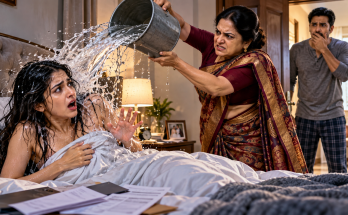
By noon, Andrew had turned our dining table into an investigation board.
He would have denied that description because there were no colored strings or photographs pinned to walls. Just stacks of documents separated by year, a legal pad filled with dates, two laptops, three mugs of cold coffee, and Kayla’s increasingly frantic handwriting.
But it was an investigation.
The first pattern appeared almost immediately.
Every large transfer from our childhood account happened within days of a deposit into an account connected to Uncle Graham.
Ryan found business records showing that Graham had owned three companies over two decades.
Two failed.
One still existed on paper.
None explained the transfers.
“We need to call him,” Kayla said.
I looked at her.
“You haven’t spoken to him in years.”
“Neither have you.”
“That’s my point.”
Andrew turned his laptop around.
“I found an address.”
Graham lived forty minutes away.
Closer than I expected.
My mother had always spoken about him as though he had disappeared into another state.
Kayla stood.
“Let’s go.”
Ryan looked at me.
“You sure?”
“No.”
But certainty had become an impossible luxury.
We went anyway.
Andrew drove.
Kayla sat beside me in the back seat, staring through the window. Ryan had gone home because he needed to work, though I suspected he also understood that four people arriving at Graham’s house might feel like an ambush.
The neighborhood was modest and quiet.
Graham answered after our third knock.
I barely recognized him.
He had lost most of his hair, and his shoulders had rounded with age. He wore jeans and a faded sweatshirt with paint across one sleeve.
“Maya?”
His surprise looked genuine.
Then he saw Kayla.
“Oh.”
Not surprise.
Recognition.
“You knew she might come,” I said.
He rubbed one hand over his mouth.
“Your mother called.”
Of course she had.
“When?”
“This morning.”
“What did she say?”
“That you girls were upset.”
“About what?”
Graham looked toward Andrew.
“Maybe we should talk inside.”
His living room smelled faintly of sawdust.
A half-restored chair sat near the window beside woodworking tools.
There were no signs of wealth.
No expensive furniture.
No evidence of someone who had received tens of thousands of dollars from his nieces’ accounts.
We sat.
Graham remained standing.
“I’m going to ask one question,” I said.
He waited.
“Did Mom transfer money from accounts belonging to Kayla and me into yours?”
His shoulders dropped.
“Yes.”
Kayla inhaled sharply.
I had expected denial.
His immediate admission frightened me more.
“How much?”
“I don’t know exactly.”
“Try.”
“Over the years?”
“Yes.”
“Maybe sixty thousand.”
The room seemed to tilt.
“Sixty?”
“I paid some back.”
“How much?”
“Not enough.”
Kayla stood.
“That was ours.”
“I know.”
“You knew?”
“Yes.”
“And you let her do it?”
Graham’s face tightened.
“I was an addict.”
“To gambling?”
“Yes.”
Mom had spent our childhood describing addiction as weakness.
She rarely drank.
Never gambled.
Never tolerated debt.
Apparently she had built that morality while secretly financing her brother’s addiction.
“How long?” I asked.
“Off and on for years.”
“Dad knew?”
“He found out.”
“Is that why their marriage ended?”
Graham looked down.
“It was part of it.”
“What’s the rest?”
He walked toward the window.
“I’m not proud of any of this.”
“That stopped mattering twenty-three years ago.”
He flinched.
I immediately heard Mom’s sharpness in my own voice and hated it.
I lowered my tone.
“Please.”
Graham sat.
“Your mother and I grew up protecting each other.”
“From what?”
“Our father.”
I frowned.
Grandpa had died when I was six.
I remembered a stern man who smelled like tobacco and kept peppermints in his pockets.
“He drank,” Graham said. “Not socially.”
Mom had never mentioned that.
“When he drank, he became cruel. Sometimes violent.”
Kayla sat again.
“To Grandma?”
“To everybody.”
A different family history opened.
Not an excuse.
A layer.
“Your mom learned young that protecting family meant hiding things,” Graham continued. “Bad report cards. Broken dishes. Bruises. Debt. Whatever kept the house calm.”
“And you?”
“I learned someone would rescue me.”
The bluntness silenced us.
Graham looked at Kayla.
“You probably understand that better than anyone.”
Her face changed.
I knew exactly what he meant.
Kayla looked away.
Graham continued.
“When I started gambling, your mother covered small losses. Then bigger ones. I promised to stop every time.”
“How did Dad get involved?”
“Robert noticed money missing.”
“From their account.”
“At first.”
“And then ours.”
“Later.”
I leaned forward.
“Tell me the order.”
Graham nodded.
The first transfer had come from Mom’s personal savings.
Then joint funds.
When Dad began checking statements, Mom started using other accounts.
One belonged to our grandmother.
Another was the custodial account created for Kayla and me.
“She told herself she was borrowing,” Graham said.
“Did she tell you that?”
“Constantly.”
“Did she intend to repay it?”
“At the beginning, probably.”
“And later?”
He didn’t answer.
Andrew spoke.
“What about the forged loan?”
Graham looked at him.
“You know about that.”
“Yes.”
“That was for me.”
I felt physically sick.
“Forty-five thousand dollars.”
Graham nodded.
“What did you need forty-five thousand dollars for?”
“To pay people.”
“What people?”
His expression darkened.
“Men I owed.”
I realized gambling debt in real life did not always look like casino markers and dramatic loan sharks.
Sometimes it looked like your sister forging her husband’s name because she was afraid someone would hurt her brother.
“Were you threatened?”
“Yes.”
“Did Mom know?”
“Yes.”
“Dad?”
“Eventually.”
“What happened when he found out?”
“He wanted me gone.”
“From the family?”
“From their finances. Their house. Their lives.”
“That sounds reasonable.”
“It was.”
The admission stunned me.
Graham looked at his hands.
“I hated him for it at the time. Thought he was arrogant. Thought he didn’t understand loyalty.”
“And now?”
“Now I know he was the only adult in that mess willing to let me face consequences.”
Kayla started crying quietly.
The parallel was obvious.
Mom rescued Graham.
I rescued Kayla.
Ryan questioned it.
Andrew set boundaries.
And all of us had been taught to interpret boundaries as abandonment.
“Did Dad cheat?” I asked.
Graham looked at me.
“No.”
The answer was immediate.
“You know that?”
“Yes.”
“How?”
“Because I was there when your mother decided to say he did.”
My heart began pounding.
“What do you mean decided?”
“They were fighting over the loan. Robert threatened legal action. Your mother said if he humiliated her publicly, she would make sure everybody knew what he had done too.”
“What had he done?”
“Nothing.”
“So she invented an affair.”
Graham’s eyes filled.
“I think she believed he was going to.”
“That isn’t the same thing.”
“I know.”
“What made her think that?”
“There was a woman at his office. Denise.”
I closed my eyes.
Of course there was a real person.
There usually was.
“She liked him?”
“I don’t know.”
“Did he like her?”
“Probably. Later.”
“But they weren’t together.”
“Not then.”
“So Mom accused him first.”
“Yes.”
“And after the separation, he eventually dated Denise.”
“Yes.”
Which gave Mom exactly what she needed.
Future evidence retroactively validating an earlier lie.
“Why didn’t you tell us?”
Graham looked devastated.
“Because your mother saved my life.”
“By stealing from children.”
“I know.”
“She used our money.”
“I know.”
“And you protected her.”
“Yes.”
His voice cracked.
“I told myself you were better off with one stable parent than two destroyed ones.”
I laughed bitterly.
“Stable.”
“I was wrong.”
Kayla suddenly spoke.
“Did Mom ask you to lie about Dad?”
Graham looked at her.
“Yes.”
“What did you say?”
“That he was seeing someone.”
“To us?”
“No. To your grandmother. Two friends. An attorney once.”
My skin went cold.
“You gave a statement?”
“Yes.”
“A false statement?”
“Yes.”
Andrew leaned forward.
“Do you still have it?”
“No.”
“But the attorney might.”
Graham nodded.
I stood.
“Why are you telling us now?”
“Because I’m tired.”
“That’s not enough.”
“No.”
“Then why?”
He looked at Kayla.
“Your mother called this morning and asked me to tell you Robert threatened me.”
“Did he?”
“No.”
“She’s still doing it.”
“Yes.”
“Right now.”
“Yes.”
Not twenty-three years ago.
Not a mistake made during a terrible divorce.
Today.
Mom was still manufacturing evidence.
“What exactly did she ask you to say?”
“That Robert threatened me if I supported her in court. That he controlled the money. That she protected the girls from him.”
Kayla wiped her face.
“And what did you tell her?”
“That I wouldn’t.”
My anger shifted.
Not gone.
Changed.
“What did she say?”
“She said I owed her.”
Graham’s mouth twisted.
“She’s right.”
“No,” I said.
He looked up.
“You owe us the truth. That doesn’t mean she owns you.”
The sentence surprised me.
It sounded like something Dad might have said.
Or Andrew.
Certainly not Mom.
Graham walked to a desk and unlocked the bottom drawer.
From inside he removed a thick envelope.
“I was going to burn this years ago.”
“What is it?”
“Copies of repayment records.”
“For the stolen money?”
“Some.”
I took the envelope.
Inside were bank slips, checks, and handwritten totals.
One name appeared repeatedly.
Evelyn Ellison.
Mom.
But so did another name.
Graham.
“What are these later payments?”
“I got sober from gambling fourteen years ago.”
“You repaid her?”
“I started to.”
“Where did the money go?”
“I thought back to you.”
My stomach tightened.
“You thought.”
“That’s what she told me.”
I examined the records.
Over fourteen years, Graham had repaid nearly forty-one thousand dollars.
If that money had gone back into our accounts, there should have been evidence.
There wasn’t.
“Mom kept it.”
His face fell.
“I didn’t know.”
Forty-one thousand.
Plus whatever remained from the original accounts.
Plus Dad’s continuing deposits.
The amount was no longer about a desperate sister rescuing her brother.
Somewhere along the way, Mom had become the person benefiting.
“Does she know you kept these?”
“No.”
I put everything back into the envelope.
“She will soon.”
Graham looked afraid.
“Are you confronting her?”
“Yes.”
“Don’t go angry.”
I stared at him.
“You don’t get to tell me how to feel.”
“No.”
He nodded.
“But your mother hears anger as proof that she’s being attacked. Once she feels attacked, she stops hearing facts.”
That sounded painfully plausible.
We left twenty minutes later.
In the car, nobody spoke until Andrew turned onto the highway.
Then Kayla said, “We became exactly what she raised us to become.”
I looked at her.
“What?”
“You rescuing me. Me distrusting everybody. Both of us thinking family loyalty meant never questioning the person who taught us what happened.”
Her voice trembled.
“She didn’t just lie about Dad.”
“No.”
“She built us around the lie.”
I looked out at the road.
That was the part I hadn’t been ready to say.
Money could be repaid.
Documents could be corrected.
Even contact with Dad might be rebuilt slowly.
But our personalities had formed around a false history.
Mom had not simply hidden events.
She had given those events meaning.
Andrew’s phone rang through the car speakers.
Mom.
We all stared at the dashboard.
He glanced at me.
“Your call.”
I pressed Answer.
“Hi, Mom.”
Silence.
Then her voice.
“You went to Graham.”
Not a question.
“Yes.”
Another pause.
“Maya, there are things you don’t understand.”
“Then explain them.”
“I won’t do this with Andrew listening.”
My eyes met his.
“He’s listening.”
Mom exhaled sharply.
“This is exactly what I was afraid of.”
“What?”
“You letting your husband turn you against your family.”
Kayla closed her eyes.
I felt strangely calm.
“No, Mom.”
“You don’t see it because you’re inside it.”
“No.”
“Maya—”
“Andrew didn’t take me to Graham.”
Silence.
“I took him.”
Her voice changed.
“What has Robert told you?”
There.
Not What happened?
Not Are you okay?
“What are you afraid he told me?”
Mom was silent.
I continued.
“We found the letters.”
Nothing.
“The bank statements.”
Still nothing.
“Graham told us about the loan.”
A small sound escaped her.
“And the affair accusation.”
She finally spoke.
“You have no idea what I survived.”
“You’re right.”
My voice shook.
“So I’m coming over tomorrow, and you’re going to tell me.”
“No.”
“Yes.”
“I won’t be interrogated in my own home.”
“Then we can meet somewhere else.”
“I said no.”
For twenty-three years, Mom’s refusal had ended conversations.
Not anymore.
“Then I’ll go through the documents without you.”
Her breathing sharpened.
“What documents?”
“Dad kept everything.”
Silence.
It lasted so long I checked whether the call had dropped.
Then Mom whispered, “You called him.”
“Yes.”
Her next words were not anger.
They were fear.
“Maya, please don’t believe him.”
I closed my eyes.
“I’m not choosing who to believe anymore.”
“What does that mean?”
“It means I’m checking dates.”
And for once, my mother had no story ready.