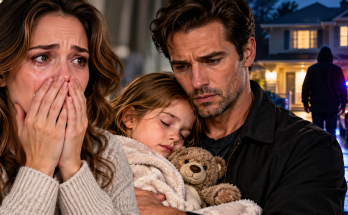
For a moment, nobody in Thomas Avery’s kitchen seemed to breathe.
Evan had just told me that my father recognized his voice before the ambulance arrived.
Not after Thomas came to our house.
Not seven months later in the garage.
That night.
While I was still unconscious inside the wrecked car.
I stared at him. “Because he spoke to you that afternoon.”
Evan nodded.
“Yes.”
“And he remembered your voice.”
“Yes.”
“What did he say?”
Evan’s eyes dropped to the pager on the table.
“At first he just said your name. He was shouting. I told him there’d been an accident.”
“I know that part.”
“I told him you were breathing.”
“I know.”
“Then he asked who I was.”
My hands curled against the edge of the table.
“And?”
“I said Evan.”
“That was enough?”
“No.”
Evan swallowed.
“I said, ‘It’s Evan Avery.’”
Thomas leaned back as if the surname itself had struck him.
Evan continued.
“Your father went silent.”
“How long?”
“I don’t know. Maybe two seconds.”
Two seconds can be enormous when somebody you love may be dying.
“What did he say after that?”
Evan looked directly at me.
“He said, ‘I told you not to go get him.’”
The sentence entered the room and stayed there.
I could almost hear Dad saying it.
Not confused.
Not asking questions.
Already understanding.
He had spoken to a seventeen-year-old that afternoon while trying to find Thomas.
Evan had volunteered to pick me up.
Dad had rejected the idea.
Then hours later, the same boy answered my phone at the site of my crash.
Dad had connected everything instantly.
I pushed my chair away from the table.
“So he knew why you were there.”
“Yes.”
“He knew you weren’t just randomly driving through that intersection.”
“Yes.”
Thomas shook his head.
“Richard never told me any of this.”
“I know.”
Thomas looked at his son.
“You were going to Marcus’s?”
Evan’s face tightened.
“That was the plan.”
“You never said that.”
“I told you I took the truck.”
“That isn’t the same thing.”
“No.”
“Why didn’t you tell me?”
“Because by the time I got home, I knew how insane it sounded.”
Thomas stood.
“You were seventeen. You had leukemia. You’d been drinking. Richard Mercer told you not to drive anywhere, and you decided to prove something by taking my truck?”
“Yes.”
Thomas turned away, both hands braced against the counter.
Fourteen years later, the anger still found him.
Evan looked down.
“I wasn’t trying to help Daniel anymore by the time I took the truck.”
That made me look at him.
“What?”
He rubbed his palms together.
“At first, when your father called, I thought I could help. Dad wasn’t home. Richard needed somebody to get you and bring the car back.”
“But Dad told you no.”
“Yes.”
“Then why go?”
“Because he told me no.”
The honesty landed harder than an excuse.
Evan gave a miserable little laugh.
“I was seventeen. I’d just been told I had cancer. Everyone had spent three days telling me what I couldn’t do. Don’t drive yourself to appointments. Don’t go to school until we talk to the doctors. Don’t read things online. Don’t panic. Don’t make plans.”
Thomas closed his eyes.
Evan continued.
“Then Richard called and asked for Dad. I offered to help, and he heard my age and told me absolutely not.”
“So you decided to prove him wrong.”
“Yes.”
“You got drunk first.”
“Yes.”
“And somehow still thought driving would prove maturity.”
“I didn’t say it made sense.”
“No. It really didn’t.”
“I know.”
Claire had said almost nothing since Evan arrived.
Now she asked quietly, “Did Richard know you’d been drinking when he recognized you?”
“No.”
That mattered.
“At first,” Evan said, “he only knew I was the boy he had spoken to earlier.”
“What happened when you told him you’d been driving?”
“He asked where the truck was.”
“And?”
“I told him.”
“What else?”
“He asked if I’d been drinking.”
“You said yes.”
“Yes.”
I waited.
Evan’s jaw tightened.
“He called me a stupid son of a bitch.”
Despite myself, I laughed.
Not because anything was funny.
Because that was Dad.
Thomas almost laughed too.
“He told me to stay where I was,” Evan said. “He said police and an ambulance were coming.”
“But you left.”
“Yes.”
“After calling 911.”
“Yes.”
“After Dad told you to stay.”
“Yes.”
“That’s the second time you ran.”
Evan looked at me.
“Yes.”
No explanation.
No leukemia.
No panic.
Just yes.
Something about that made my anger cleaner.
I could be angry at a fact he was not trying to disguise.
“What happened when Dad called again?”
Evan rubbed the scar near his jaw.
“I had already told the dispatcher where we were. I was sitting partly inside your car because I’d unlocked the door.”
“You wrote that.”
“Your phone rang again. I answered.”
“And Dad?”
“He asked if the ambulance had arrived.”
“Not yet.”
“No.”
“Then?”
Evan’s gaze drifted toward the window.
“He asked whether I was still there.”
“You said yes.”
“I lied.”
My stomach tightened.
“You were already leaving?”
“I was standing outside the car.”
“What did Dad say?”
“He told me he was about ten minutes away.”
I frowned.
“Ten?”
“He was driving to the intersection.”
Thomas whispered, “So he did go.”
“Yes.”
Dad had driven toward me while the ambulance was also coming.
Another detail he had never told Mom.
“What else?”
Evan’s voice lowered.
“He said something I didn’t understand at the time.”
“What?”
“He said, ‘This is my fault too.’”
I stared at him.
Claire’s fingers found mine.
Dad had already started blaming himself.
Not hours later.
Not at the hospital.
Within minutes.
“He said that to you?”
“Yes.”
“Why?”
“I asked him the same thing.”
Evan swallowed.
“He said, ‘Because I called your house.’”
Thomas sat down again.
The logic was absurd.
But grief and fear rarely cared about logic.
Dad had needed the car.
Dad had called Thomas.
Evan answered.
Dad explained enough for Evan to know where I was.
Dad told Evan not to go.
Evan went anyway.
Dad still saw his phone call as the first domino.
“He thought he sent you toward me.”
“Yes.”
“But he told you not to go.”
“I know.”
“So it wasn’t his fault.”
“I know.”
“Did he?”
Evan shook his head.
“No.”
There it was.
One of the reasons Dad had hesitated when Thomas came the next morning.
Reporting Evan would also force Dad to explain his own irrational sense of involvement.
Maybe he had feared I would see the chain the way he did.
Maybe he feared Mom would.
Maybe admitting Evan’s identity required admitting that Dad believed his own actions had helped place him on that road.
Thomas looked sick.
“I spent fourteen years believing Richard agreed to wait because Evan was ill.”
“He did,” I said.
Claire nodded.
“That can still be true.”
Thomas looked at her.
“But it wasn’t the only reason.”
“No.”
I thought of Dad’s letter.
I kept quiet because I loved you, because I was afraid, because I felt guilty, and because each year I became more embarrassed that I had not spoken the year before.
Dad had already told me.
I just hadn’t understood the full shape of the guilt.
I turned back to Evan.
“You said after Dad died you found something in Thomas’s things.”
Thomas looked sharply at his son.
“Yes,” Evan said.
“Not the pager?”
“No.”
“Then what?”
Evan hesitated.
For the first time since he arrived, he looked genuinely unwilling to continue.
That made me want the answer immediately.
“What did you find?”
Thomas said, “Evan.”
“I was going to tell him.”
“Tell me what?”
Evan looked at his father.
“Do you remember the old metal document box from the plant?”
Thomas frowned.
“The gray one?”
“Yes.”
“That thing’s in the garage.”
“Not anymore.”
Thomas stared.
“What do you mean?”
“I took it years ago.”
“Why?”
“Because Richard’s name was on something inside.”
My pulse rose again.
“What?”
Evan reached into the inside pocket of his jacket.
This time he removed a clear plastic sleeve.
Inside it was a sheet of paper folded once.
He placed it on the table.
Thomas recognized the page before I did.
“That’s my handwriting.”
Evan nodded.
The paper appeared to be an old shift log.
Employee names.
Times.
Equipment numbers.
Most of it meant nothing to me.
Then I saw Dad’s name.
R. Mercer.
Beside it was Thomas’s.
T. Avery.
A handwritten note occupied the margin.
Richard left pager in truck. Return tomorrow.
Thomas stared.
“I wrote that?”
“Yes.”
“I don’t remember.”
“It was fourteen years ago.”
Thomas took the page.
“So?”
Evan said, “Look at the next line.”
Thomas did.
His face went blank.
I reached across and took the sheet.
Beneath the note about Dad’s pager was another entry.
Truck 18 — brake light reported intermittent. DO NOT USE until maintenance check.
I looked up.
Thomas had gone pale.
“What was Truck 18?”
He did not answer.
Evan did.
“The truck I took.”
The kitchen fell silent.
My memory returned to the accident.
A dark pickup entering the intersection.
No warning.
No clear image of brake lights.
Nothing.
I stared at Thomas.
“You knew there was a problem with the truck?”
“No.”
“Your handwriting is on the page.”
“I wrote shift notes all day. I don’t remember that specific entry.”
Evan said, “The report was made that afternoon.”
Thomas pressed both hands against his temples.
“I must have planned to look at it the next morning.”
“But you didn’t.”
“No, because the truck was gone.”
Evan had stolen a vehicle that had been marked not to use.
That did not change his drinking.
Did not change the red light.
But it changed something else.
“What was wrong with the brake light?”
Thomas shook his head.
“Not the brakes themselves. The rear brake lamps. Maybe wiring.”
Claire asked, “Could that have contributed to the accident?”
“No.”
Thomas answered firmly.
“Daniel was coming from the side. Rear brake lamps wouldn’t matter.”
“Then why does this matter?” I asked.
Evan looked at me.
“Because that isn’t the part I wanted you to see.”
He took the page back.
His finger moved lower.
There was another handwritten line.
Shorter.
Richard took spare shop key — locker 214.
My skin prickled.
Claire looked at me immediately.
Neither Thomas nor Evan understood why.
I stood so fast the chair legs scraped against the floor.
“What did you say?”
Evan frowned.
“Richard took the spare shop key.”
“No. The number.”
“Two-fourteen.”
I reached for the small wooden box from Dad’s package.
My fingers fumbled with the lid.
Inside, beside the watch and photograph, lay the silver key.
Stamped into the metal:
214.
Thomas stared at it.
“Oh my God.”
Claire picked it up carefully.
“What locker?”
Thomas seemed to travel backward in memory.
“The plant had employee storage lockers in the old maintenance building.”
“Had?”
“The building closed years ago.”
My stomach dropped.
“Is it gone?”
“No.”
“Then where?”
“The company sold the property.”
“To who?”
Thomas shook his head.
“I don’t know.”
Evan stared at the key.
“Richard kept it all those years.”
“Yes.”
“Why?”
Nobody had an answer.
I looked at Dad’s letter again.
The apology.
The watch.
The photograph.
And one key he had not explained.
For the first time, I wondered whether Dad’s package had not been created only to confess.
Maybe it was also a map.