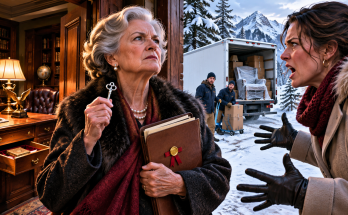
1. Fifteen minutes
The first thing my mother asked after I hit the kitchen floor was whether they still had time to make their appointment.
I heard her from the hall. She had one hand on a glossy burgundy folder and the other on the wall, where my father had hung our school pictures in order of height. I could see my senior portrait above her shoulder. The photographer had tilted my chin up and told me to look like someone had just said something nice about me.
I tried to say Mom. What came out sounded like somebody pulling a chair across the tile.
My sister stepped over both my legs. She was careful to clear my ankle with the heel of her shoe.
I remember that care. For a long time afterward, I could recall it more easily than I could recall my own phone number.
Three weeks earlier, I would have described us as close. We had dinner on Sundays, usually at my parents’ house outside Mesa. My father, Warren Fenwick, liked his steak cooked until the edges curled. My mother, Maribel, claimed she could taste when vegetables had been cut with a knife that had touched an onion. Kelsey, who was twenty-eight and always on the verge of a new career, brought dessert on the Sundays she remembered.
I brought whatever Mom asked for. If she forgot to ask, I brought ice. In Arizona, there’s always a use for ice.
The Sunday I announced my promotion, I’d even bought a bottle of sparkling wine. I put it in the fridge to get cold while Dad grilled. I’d been working at a medical supply distribution center outside Mesa, where we shipped everything from exam gloves to replacement parts for blood pressure cuffs. For two weeks, I’d sat with a clipboard by a loading bay and watched the same mistake happen on second shift. A case of supplies would come back with a damaged label. Somebody would print a fresh one. The software would count both. Every morning, the system promised supplies we physically didn’t have.
My supervisor, Hector Vale, took my notes into a meeting I figured I’d never hear about. The following Friday, he invited me into his office and offered me the operations coordinator job.
“They’re going to ask you for another solution by Wednesday,” he warned me. Then he grinned. “Take the weekend anyway.”
I spent Saturday looking at townhouses. My favorite had a little back patio, barely wide enough for a table and two chairs. The listing pictures caught the afternoon sun coming in over the block wall. I saved a picture of that patio to my phone.
At dinner, I made it through the job title before Mom set down her fork.
“So what does the raise mean for what you send us?”
Dad drew his steak knife through a strip of gristle.
“I’m already sending four hundred eighty dollars a month,” I said. “I need to start saving for myself.”
Kelsey laughed softly. “God, being an adult is expensive.”
She had a little bottle of blackberry nail polish beside her plate. She’d picked a shade for the sign at the dog-grooming studio she wanted to open. The studio had a waiting list of exactly three people, all of whom were already paying her to do their dogs in our parents’ garage. I’d helped her make the price list.
“Your father and I sacrificed plenty raising two girls,” Mom said.
She could say that sentence in such a calm voice that the burden of making a scene landed entirely on whoever answered.
I’d begun sending money five years earlier, after two of Dad’s construction clients pulled out in the same month. Mom said she’d opened a separate account for taxes and repairs. She knew when the taxes were due down to the day, and the first time I sent money, Dad called to thank me from his truck. He sounded embarrassed. I mistook that embarrassment for a guarantee that he’d tell me when they were back on their feet.
When I asked once what Kelsey contributed, Mom said she was still finding her direction.
“So am I,” I said that Sunday.
Mom passed Dad the potatoes. I took the sparkling wine home unopened.
A week before I collapsed, she called about the washing machine. It had quit draining. The replacement was scheduled for Monday afternoon, and the delivery crew needed the old one out of the laundry alcove. Dad had borrowed an appliance dolly from Nadine Ellis, next door.
“I work that morning,” I told her. “And I’m supposed to avoid heavy lifting.”
I’d had some spells of dizziness, little blips that felt like missing a stair in the dark. I’d seen someone about them. I was scheduled to follow up on Thursday.
“Fifteen minutes,” Mom said. “Your dad will take the weight.”
I came after work. I still had on my navy shirt and steel-toed shoes, and I’d brought a change of clothes in a canvas grocery bag because in my family fifteen minutes could turn into dinner. I parked beside Nadine’s house. She was on her porch, wrapping the cord of an old radio around its handle.
“You staying a while?” she called.
“Fifteen minutes, allegedly.”
Her mouth twitched. “Come by after, if you’ve got time. I made too much peach cobbler.”
Nadine had been our neighbor since I was twelve. She seemed to make too much cobbler every year around my birthday. Once, when I was fourteen, she’d left one on our porch with a note about how she liked hers cold for breakfast. Mom said people could get the wrong idea if you took everything they offered. I’d eaten that one cold at six in the morning, standing over the sink in my socks.
“Save me a corner,” I said.
Inside, the coffee had been on the burner long enough to smell burned. Kelsey sat at the table with her phone. Dad had the washer on the dolly already, which made me think I might get away in fifteen minutes after all.
Mom came down the hall with the burgundy folder tucked against her chest.
“What’s the rush?” I asked.
“We have an appointment across town.”
“All three of you?”
Kelsey looked up. Mom answered for her.
“We’re already cutting it close, Audra.”
I put my bag on a chair and my phone on the table. Then I went to help my dad.
2. Six feet
One wheel of the dolly caught on the raised threshold between the laundry alcove and the kitchen. Dad gave the machine a shove. The handle jumped in my hands, and a hot little flutter started behind my breastbone.
I held still. I knew this feeling well enough to wait a few seconds. Usually I’d get a breath in and the room would settle.
This time the cabinets seemed to lean over me.
“Hold it steady,” I said.
“I am holding it. You going to finish?”
“Something’s wrong with my heart. I need to sit down.”
Kelsey looked up. “Audra, seriously? We’re almost finished.”
The counter was just to my right. I remember aiming for a yellow dish towel that hung over the edge. My fingers touched it and pulled it down with me. By the time my knees hit the tile I’d already lost the sense of which way I was falling.
I tried to push up. My arms shook so hard I put my cheek back down to rest them.
Dad looked at me. “You always make everything harder than it needs to be.”
Mom asked about the time. Dad let out a thin, irritated laugh.
“She always wants everyone’s attention.”
Something hit the tile and rattled under the table. My phone. Kelsey’s chair scraped back. I could smell her coconut lotion when she stepped over me. I took a breath that hurt and tried to say the numbers.
“Call nine…” The last two came out in little pieces.
“Just leave her there,” Kelsey told Mom. “She’ll be fine. Traffic’s going to get worse.”
My mother stood in the doorway looking directly at me. She stayed there long enough that I had time to imagine her kneeling down. I could practically feel her hand on the back of my neck. She’d put it there once while we waited for an X-ray after I fell off the monkey bars. Her hand had been warm and unexpectedly heavy. I’d kept very still because I wanted her to leave it there.
Then she walked out with the folder.
I heard the front door close. I heard Dad’s truck start, and I waited for it to go quiet again. Even with my face against the floor, I thought one of them would make it to the end of the driveway and realize what they’d just done.
The engine faded.
My phone was six feet away. I could see the thin blue edge of the case. I tried bargaining with my body. An inch, then another one. My fingers went as far as the leg of the table, and after that I couldn’t lift my head enough to see where I was reaching.
The room went dark for a while. When it came back, somebody was knocking.
“Warren? You still got my dolly?”
Nadine. A different neighbor needed it that evening, she told me later. She’d seen Dad’s truck leave and figured Kelsey or I would still be inside. She knocked at the front, got no answer, and walked around to the kitchen door. Through the lower pane she saw one of my shoes. Something about the angle made her put her face right up against the glass.
The kitchen door was unlocked. Mom always kept it that way when she expected a delivery.
I remember Nadine arriving on her knees, making a soft little sound when the tile caught them. She had her phone next to my ear, and her free hand cupped the back of my head.
“I’m right here, honey,” she said.
I’d heard her call me Audra, Miss Audra when she was teasing me, and Ms. Fenwick the day she asked me to hold a ladder while she hung a porch light. I had never heard her call me honey.
Somewhere in the noise I heard her tell the dispatcher that I’d been speaking a minute earlier. I heard her say my name twice. Then, just as things dimmed again, I heard her say something I’d spend weeks thinking I’d imagined.
“I should’ve knocked sooner.”
By the time I was able to hold an entire conversation, I had adhesive marks all over my chest and a bruise on my left hip the color of a plum. My doctors had caught the rhythm trouble and wanted me where they could keep an eye on it. The scare bought me a longer stay than I’d expected, and the first few days went by in tiny, unreliable stretches. I’d wake and see a glass of water I couldn’t remember asking for. I’d fall asleep with the cup in my hand and wake to find it on the tray.
Nadine brought my phone and canvas bag. The phone had run down. In the bag, tucked between a clean shirt and a pair of jeans, was a piece of cobbler in a plastic container.
“Figured I ought to save you the part you asked for,” she said.
I asked whether she’d talked to my parents.
“I knocked Tuesday,” she said. “Kelsey came to the door. I told her you were in the hospital. She asked if I’d seen the envelope from the delivery guys.”
I waited for the rest.
“I said which hospital. I told her to write it down.”
“Did she?”
Nadine looked at the window. “She said she knew where it was.”
The nurse that afternoon asked whom I wanted listed as my emergency contact. Warren Fenwick was already there from an old visit. I knew his number without looking. I knew Kelsey’s, Mom’s, the mechanic Dad preferred, and the woman Mom called whenever she got her hair cut and decided she hated it.
I couldn’t tell you Nadine’s.
“Can I put you?” I asked her.
She folded the top of the grocery bag twice before she answered. “Yes.”
That Thursday, Hector called my room after Nadine offered to get my work number for me. He said he’d reassigned the Friday trucks and had threatened to put my desk chair in storage if anyone else tried to claim it. Then his voice changed.
“A woman from a title company called the warehouse. Claire Bell. She left a message for you.”
“A title company?”
“She mentioned a property on your parents’ street. I took her number. That’s all she gave me.”
I copied the number onto the back of the hospital menu. The pen had a little rubber flower taped to its end so people wouldn’t walk away with it. My hand was still shaky enough to make the petals bounce.
That night, I dialed Mom’s number from memory on the room phone. I got as far as the last digit. Then I put the receiver down.
It was the first time I let myself wonder what would happen if I waited for her to call me.
3. The woman across town
Claire Bell returned my message on Friday. She asked whether I’d been involved in a sale of the house on Jornada Lane, then waited while I figured out what she meant.
“Which house on Jornada?”
She read the number. It was my parents’ address.
“My dad’s been there since I was little. He always said they were going to carry him out of it.”
“A buyer is under contract. I have your name on one of the documents.”
I tried to sit up straighter. “Why?”
“That’s what I’d like to talk to you about.”
She came to see me the next Monday morning. She was younger than I’d expected from her voice, a woman in her early forties with a silver streak at her temple and a cloudy spot on one lens of her glasses. She carried the burgundy folder. There was a white nick along one corner where the shiny coating had peeled.
I recognized it before I recognized her.
“Your mother left this in my office,” she said. “She told me to keep the papers together.”
“What did she say about me?”
Claire pulled the chair nearer my bed. “That you were waiting out in the truck. She said you’d signed electronically from there and had a headache. She volunteered the headache before I asked.”
“She does that,” I said. “Gives you the reason before you have time to ask for one.”
Claire had requested a call with me before moving ahead. Mom made a show of taking out her phone, according to Claire. Then she put it away and said she’d rather let me sleep. My phone, I now knew, was either under the table or already in Nadine’s hand.
The next seven days, she never tried my number on her own.
Claire said the buyers had been pressing for confirmation. That morning, she’d told my parents that she had reached me and would be reviewing the document with me in person. Dad had wanted to know whether I could talk.
“What did you say?” I asked.
“That they should ask you.”
I’d just switched my phone on. It came to life with grocery coupons, work notifications, and a missed reminder for the follow-up appointment I’d never made it to. There was one text from Kelsey, sent Sunday night.
Are you still at Nadine’s?
I was in a hospital room with a view of a parking garage. Kelsey had been told exactly where to find me. I wondered if she’d decided the room would be empty if she came, and what she’d have said if it was.
Then my phone rang.
Mom. Seven days after she’d left me on the floor.
I had thought for a week about what I would say. For some reason the thing I wanted most was for her to hear the rattle of the bed rails. I wanted her to know where I was without making me explain it.
I handed the phone to Claire.
She put it on speaker. “Hello?”
A pause. “Who is this?”
Claire looked at me. I nodded once.
“Where is my daughter?” Mom demanded.
“Before I tell you where Audra is, I need you to tell me why you left her on the kitchen floor.”
There was a silence so complete that I checked whether the call had dropped. Later Dad told me he’d been pouring coffee. He said he set the pot down and turned, and my mother was staring at the place under the table where my phone had been. Her mouth was open.
The first thing I heard her say was, “She was awake when we left.”
Dad’s voice came from farther off. “She got up, though. Right?”
“Nadine Ellis found her,” Claire said. “She came over to get her dolly back.”
“Who is this?” Mom asked again. She sounded less angry now.
“Claire Bell. You had an appointment with me last Monday.”
Something clattered, and Dad said, “For Christ’s sake, Maribel,” away from the phone. A minute later, he told her he’d get a towel. She’d backed into him and knocked his coffee mug into the sink.
“You told me Audra was waiting in the car,” Claire continued. “You said she’d already signed and didn’t want to come inside.”
She opened the folder and slid a page toward me. It showed my parents’ address near the top. At the bottom was a signature with the long tail I put on the last letter of Fenwick whenever I signed delivery paperwork at work.
Beside it was a time.
Monday, 3:42 p.m.
Only that morning, Nadine had shown me her call log because the hospital social worker had asked what time she found me. At 3:42 p.m. on Monday, her phone had been connected to 911. At 3:42, somebody who loved me in some ordinary neighborly way had been kneeling on the tile, trying to tell a stranger whether I was still breathing.
At the same minute, I had supposedly signed away something my parents were selling.
“Mom,” I said.
The faucet was dripping at the other end. I counted three drops, maybe four.
“Did you even come back and look for me?”
I heard my father start to say something. I waited for my mother to speak.
The call ended. She’d hung up so gently the phone hardly made a sound.
4. What was mine
I asked Claire what would have happened if she’d believed my mother.
She went back through the folder and found a sheet covered in numbers. The house was under contract for five hundred ninety-four thousand dollars. A company was buying two lots nearby and wanted my parents’ place for the same development. The funds would go first to the mortgage and the usual costs. Then there was an unusual line item. Claire turned the sheet so I could read it.
Ocotillo Family Trust — $198,000.
“There’s an old debt attached to the property,” she said. “The trust helped your parents buy the house. Your parents agreed to pay the trust a third of what the house eventually sold for. That’s the amount.”
“I’ve never heard of that trust.”
“You’re named as the beneficiary. Under the terms of the agreement, now that you’re an adult, your parents need your approval to settle the debt for less than they owe. The document with your signature instructed the trustee to accept one dollar and release the property.”
I thought I’d misheard her.
“A dollar?”
“One dollar.”
I had given my parents four hundred eighty dollars a month for five years. I could work out how much that was in my head, but I reached for the hospital menu anyway. On the back, beneath Claire’s telephone number, I wrote down sixty times four hundred eighty.
Twenty-eight thousand eight hundred dollars. I put a box around it so I’d keep looking at the answer. Some months I’d eaten the bruised clearance peaches from the grocery store and put off replacing my shoes. One month I’d apologized to Mom for sending the money after dinner. My water heater had needed a new part. I could remember the part number.
“Did they say what they planned to do with it?” I asked.
“They’d get the money that would otherwise go to the trust. I can’t tell you what they’d spend it on.”
I pictured the blackberry nail polish. Then I pictured Dad in his truck the first time he’d thanked me, embarrassed enough to sound like somebody I could trust.
Claire told me she’d put a stop on the file as soon as she’d spoken to me Friday. She asked if I was comfortable confirming in writing that I’d never signed. She gave me the trustee’s contact information and let me make my own arrangements to learn what the trust held and what rights I had. I understood most of what she said. The word beneficiary kept making me look at the closed door as if the real beneficiary might walk in and straighten us both out.
She packed her glasses into a battered case.
“I do this all day,” she said. “People ask me to hurry. They leave the person I need to speak to out in the car. They tell me she has a headache. You can go a long time in this business assuming people mean the innocent version of the thing they say.”
“Why did you call my work?”
“It was listed on the form. And your mother got angry when I asked her to bring you in. I’d asked if Wednesday would be better. She said, ‘You just spent fifteen minutes with her parents.’”
I let out a laugh that turned into a cough. Mom had found another use for fifteen minutes.
After Claire left, I canceled the monthly transfer. The banking app wanted to know if I was canceling once or canceling the series. It took four taps to stop five years.
Then I called the trustee from my own phone.
He was a man named Glen Rocha, who sounded as if he answered calls while holding a pencil between his teeth. When he heard my name, I could hear him set something down.
“I’ve sent you letters,” he said.
“Where?”
He read me my parents’ address.
“I moved out eleven years ago.”
“Your mother told us she forwarded your mail.”
“What kind of letters?”
“Statements. A request for you to come in and verify your identity after I took over the file.” He paused. “There’s a personal packet here, too. It’s been with the file longer than I have.”
I asked what was in it. He said it was sealed and addressed to me. I gave him my address, my phone number, and a date when I could come to the office. Before we hung up, I asked one more thing.
“Did my parents know I was supposed to receive these?”
“Your mother used to call around your birthday to make sure we had the address right.”
That afternoon I lay in bed watching the patch of sun on the parking garage creep down one floor at a time. The nurse asked if the pain had gotten worse. I told her it was about the same.
I thought of all the ordinary Mondays when I’d gone out to get the mail. I remembered walking back to the house with an electric bill or a flyer she could have gotten herself. I’d always left it in a neat pile on the table for her.
5. The things we knew
I went home on Wednesday. Nadine brought me a bag of groceries I hadn’t asked for and made me tell her what I wanted before she put anything away.
“Eggs in the door?” she asked.
“Middle shelf.”
“Good. I hate it when people keep them in the door.”
I knew she would’ve put them there if I’d asked. For some reason that made me cry harder than anything else she could have said. I sat down at my own kitchen table, embarrassed, and spent a long time trying to get a napkin out of its holder.
Nadine put the eggs away. She sat down across from me and waited until I found a napkin.
“Do you know anything about the Ocotillo Family Trust?” I asked.
She stopped running her thumb over a chip in my tabletop.
“I know where Glen’s office is,” she said.
“That’s a strange answer.”
“It is.” She kept her eyes on the table. “I know the trust, too. I wanted you to get the paperwork from him. Once you have it, I’ll answer whatever you ask me.”
She looked up then, and I had the strongest feeling I’d asked her a question she’d been waiting for and dreaded in equal measure.
“Why can’t you just tell me now?”
“Because I’ve had years to think about how I’d tell it. You should get to see what I’d be leaving out.”
I wanted to push. Some part of me still expected the whole world to tell me what I was owed and then walk away with it. But she’d said whatever you ask without making me promise to be nice about the answers. That was enough for that afternoon.
Dad called as she was getting ready to leave. My car was still at the house on Jornada. The keys were in the canvas bag, but he said he’d drive it to me with the spare. He showed up two hours later. Kelsey followed in her little hatchback to give him a ride home.
Dad handed me the keys on the front walk. “I took it through the wash.”
“Thanks.”
“And filled it up.”
I waited.
“I owe you an apology,” he said at last. “I thought you were going to get up.”
The previous Christmas, Dad and I had spent an hour on our hands and knees in their living room looking for the back of one of Mom’s earrings. We never found it. He’d come in after dark with a flashlight from the truck to check again. I used to recount that story when I wanted to explain him to people.
“Did you hear me trying to say 911?” I asked.
He hooked his thumb in his belt loop. There was sawdust in the seam of his boot.
“Yes.”
I had gone over the kitchen in my head so many times. Every version where I managed to say the numbers clearly ended with Dad taking his phone out. I’d been blaming the tiny part of my voice I could no longer control.
He’d heard me just fine.
“I did think you were going to get up,” he said again. Then he looked at me properly. “I knew you’d asked me to stay, and I left anyway.”
“Kelsey knew I was in the hospital by Tuesday.”
“She told us.” He looked past me at the front door. “I decided you must’ve walked out and gotten a ride from Nadine. I went a whole week without asking anybody.”
I pressed the key ring into my palm.
“I don’t know what you want me to say to that.”
He looked down. “I don’t either.”
It was the first honest conversation I’d had with him in years. I wished it had been about anything else.
Kelsey honked once. Dad turned to go, then stopped.
“Your mother thinks we can work out the house. She says she can explain it if you come Sunday.”
I went back inside.
Kelsey came alone the next evening. She stood in my doorway in the same pale green shirt she’d worn that Monday, holding a paper cup from the drive-through place where I’d taught her how to order iced coffee without looking at the menu.
“They did cinnamon,” she said. “I asked for it.”
I took the coffee. I was angry that she remembered.
She asked if she could sit. I pointed to a chair. Neither of us moved.
“I signed the thing,” she said.
I had expected another person to have done it. For a second I even thought she meant she’d signed a document about her own role in the sale.
“I wrote your name at 3:42,” she said. “I was in the truck.”
Mom had opened the signature page on her phone before she went in. She’d told Kelsey to get it done while Dad finished a call. They had planned to ask me to sign at the house under the pretense that it was a washer delivery form. Kelsey said Mom had practiced explaining which line to point to. When I fell, they discussed it on the way over. Mom said they’d already promised the buyer everything was ready.
“Did you know how much?” I asked.
Kelsey looked at my coffee instead of my face. “I knew there was enough for the studio.”
“How much?”
“Sixty thousand. That was what she said I could have.”
She said it so quietly I almost made her repeat it. Sixty thousand dollars. Back in the garage we’d spent most of a Saturday comparing used grooming tables. She wanted the one with a blue base. I’d slipped the seller fifty extra dollars because Kelsey had washed and dried six dogs that week and I wanted her to get one thing she liked.
“When Nadine told you where I was,” I said, “what did you do?”
“I looked it up. I got all the way to the parking garage on Tuesday night.”
“And?”
“I sat in my car.”
I could see that parking garage from my bed. I’d watched people drive up the ramps all week, brake lights washing the walls red. Some evenings I’d watched until the sky went black and my own reflection appeared over it.
“I thought you’d ask me if I had left you,” she said.
“I already knew you left me.”
Kelsey put the heels of her hands over her eyes. I had comforted her so many times in that exact posture that I caught myself taking a step toward her.
I set the coffee down and let her finish.
“I did it,” she said. “Mom asked, and I did it. That’s what I came to say.”
“Tell Claire.”
Her hands came away from her face. “What happens if I do?”
“I don’t know.” It was the first answer I gave her that night without needing time to think. “There’s her number. I’ll write it down.”
She took the slip of paper. On her way out she picked up the coffee she’d brought me as though she’d been doing a bit of housework, then set it back down when she realized it was mine.
6. The blue cup
Glen’s office shared a courtyard with a dentist and a shop that sold hearing aids. The chairs in the waiting room were upholstered in something scratchy. They felt like chairs chosen by a person who couldn’t imagine anybody sitting in them for long.
I’d asked Nadine to come with me. She arrived before I did. She had on a blue blouse I’d only ever seen at funerals.
“Do you want me inside?” she asked.
“After I’ve read it.”
She nodded. I thought she might walk around the courtyard. Instead, she sat where I left her, both feet flat on the floor.
Glen took me into an office with family pictures on the filing cabinet. He showed me the old agreement first. My parents’ signatures really were on it. Dad’s was so large it crowded the next line. There was a drawing of the lot, a rectangle and a couple of little boxes. I recognized the angle of the back wall because it had always made the patio furniture look crooked.
A trust had put eighty-four thousand dollars into the house when my parents bought it. The money had come from the sale of a little home outside Globe. Part of the agreement gave my parents a way to buy out the trust’s interest when they were ready. They had elected to leave it in place. I could see why. It was money nobody was asking them for as long as they stayed there.
I asked how old I’d been when it was signed.
“Three,” he said.
He gave me a brown envelope. My full name was typed onto a label. The edge of the paper underneath it showed a different last name in blue ink. I rubbed my thumb over the corner until it lifted.
Audra Ellis.
I said it aloud. I’d had lunch with Nadine Ellis once at a place that put cinnamon in the butter. We had both scraped it off our knives with our teeth when we thought the other wasn’t looking.
“What’s in here?” I asked.
“I’ve never opened it,” Glen said. “I can give you the room.”
The first thing out was a photograph with a date printed down the side. A toddler sat in a high chair clutching a little blue plastic cup in both hands. On the right was a woman with dark, loose hair, her face half in frame. The toddler was laughing, and the woman’s mouth was wide open because she was laughing, too.
I recognized my own front teeth. The left one used to cross the right one until I wore braces. I recognized the woman’s eyebrows. They still lifted differently over each eye whenever a joke caught her off guard.
On the back, in Nadine’s handwriting, it said, First time she called me Mama where somebody else could hear it.
I turned the picture over again. There was a kitchen doorway behind her. The paint at the bottom was worn in a patch I knew. Our old dog, Roscoe, used to scratch at exactly that height. I thought I must be confused until I saw the funny triangular window over the sink.
I’d spent the first three years of my life in that kitchen. Nadine had rented the house before Maribel and Warren bought it. What fixed that fact in my head was the window. I’d leaned against that sink the morning I ate the cobbler. It was where my mother looked out when she hoped somebody who’d come to the door would give up and leave.
In the envelope there was also a copy of an adoption order and a small, folded sheet of notebook paper. The order had my name twice. There it was under the name I’d always known, and there it was under the one on the envelope.
The woman who’d found me on the kitchen floor was my birth mother.
I folded the notebook paper without reading it. I walked into the waiting room holding the photo by the edges.
Nadine stood. She saw what I was holding and sat back down again.
“Did you have other children?” I asked. I’d meant to say a lot of different things first, but that was the one that came out.
“No.”
“Did you want them?”
“Sometimes.” She swallowed. “I always wanted you.”
I sat one chair away from her. Through the wall I could hear somebody dropping tools onto a tray at the dentist’s office.
“Then how did this happen?”
She told me about a wreck on the way home from work when she was twenty-four. She’d been in the passenger seat. I’d been with a sitter. She spent a long time recovering, then a longer time trying to make enough to pay the sitter and the rent. Maribel was her cousin. They’d grown up close, close enough to share clothes and tell each other what their own mothers couldn’t hear. Maribel and Warren offered to take me for a few months.
“You loved Warren,” she said. “He could roll a washcloth into a rabbit and make its ears move. The first day I could take you out in my car again, you wanted him to come, too.”
I could see the rabbit. I’d grown up thinking he’d invented it for Kelsey.
Nadine said by the time they sat down to discuss adoption, I was sleeping in a room Maribel had painted yellow. Nadine still needed help getting up a flight of stairs. She listened while people talked about permanence and believed the right thing was to give me as much of it as she could. Her father had left her the house outside Globe. She agreed to put the money into the arrangement that let Maribel and Warren buy the place on Jornada. She thought I would always have a place there. She made sure there’d be something for me whenever the house was sold.
“We wrote down that they’d tell you when you were old enough,” she said. “I wanted you to grow up knowing. Maribel wanted to wait. I gave in on eighteen. I thought you’d have your own ideas then and I could live with whatever they were.”
“You moved next door when I was twelve.”
“I took a job dispatching for the county bus service. The rental came up. My cousin said she didn’t like it and Warren said he hoped I knew how to keep a yard. I figured that was close enough to permission.”
“How did you stand it?”
She looked at me. “You used to ride your bike to the corner and back five times every day. You’d ring the bell outside my house.” She gave a small, breathy laugh. “I stood it pretty well some days.”
I moved one seat over. For a while we sat without touching. Then I held the picture between us.
“Was that my cup?” I asked.
“The blue one was yours. You’d throw the red one straight at me.”
A laugh came out of me before I could stop it. Nadine looked at me the way she looked at the little girl in the picture. Then I understood that I’d seen that look on her face before. I’d been catching pieces of it for twenty-one years.
7. Dear Nadine
We went to Nadine’s afterward. She made coffee she had to heat up twice because we kept forgetting to drink it. I asked what she remembered about the day I was born. She told me she kept dropping the ice chips down the front of her gown. She said my father had been a line cook named Ray, good with unhappy dogs, bad about turning up when he said he would. He left town when I was two. When she mentioned him again half an hour later, she called him Raymond. I liked the way she let both names be true.
She went to get a box of pictures. While she was gone, I unfolded the notebook paper from the envelope.
At the top someone had written Dear Nadine in blue ink. The next line had that tilted lowercase a I’d taught myself in ninth grade. There was a tiny star next to my name. I used to practice drawing them without lifting my pen.
The date was two days after my eighteenth birthday.
Mom told me everything. I appreciate what you did for me, and I hope we can still be neighbors. I’m happy with my family the way it is. I don’t want you to think I’ll change my mind if you give me a little time. If you want to help me, the money would be good for school. You can keep giving it to Mom.
The room was quiet enough to hear the coffee maker clock click over. I read the note again, every sentence, though I knew by the first few words that I’d never written it.
Nadine came back holding a white shoebox with a picture of a dress shoe on the side. She saw the paper in my hands and put the box down.
“You kept this with my adoption papers?”
“I gave it to Glen’s predecessor. I thought if you ever wanted the photographs, you should have the reason I went quiet, too.”
“You thought I knew?”
“Your mother came over the night of your birthday.” She put her hands together, then took them apart again. “She said you’d gone upstairs after they told you. She said opening the gifts was all you could manage. Two days later she brought the note.”
On my eighteenth birthday I’d had a vanilla grocery-store cake with an icing flower nobody wanted. Kelsey and I divided the flower in half, and I gave her both pieces when it turned out she could eat straight buttercream. Mom had given me a card with a hundred dollars inside and made me write a thank-you to Aunt Cheryl for splitting the cost of my gift. I wrote it at the kitchen table. At the bottom I drew a crooked little star.
Years before Kelsey signed a document in my name, somebody had used my handwriting to tell Nadine I didn’t want her.
I got up. I walked to her window. From where I stood I could see my old bedroom, where I’d played the same CD for three months after my first boyfriend broke up with me. I tried to think of all the times I’d stood at that window while Nadine was doing dishes or making coffee or reading whatever I’d supposedly written. It made me want to put my fist through something. I carried my mug to her sink because I could trust myself to do that.
“What money?” I asked.
Nadine went to a little desk and came back with a black check register. She turned to a page and moved her finger down the entries. Water. Gas. Tire repair. Maribel.
Next to my mother’s name was the familiar figure.
Four hundred eighty dollars.
Nadine had been sending that amount since I was three. At first she’d made the checks out to Maribel for shoes, school clothes, and whatever else a growing kid needed. Once I was eighteen, Maribel told her I was putting it toward community college. Later it was for a dependable car, then for savings. Nadine’s pay at the bus depot had gone up twice in a good year and once over three bad ones. The figure had stayed the same.
“A few days before your promotion,” she said, “I told her I wanted to start sending the money straight to you. I figured you were old enough to decide where it went. She said you wouldn’t take a check from me.”
I remembered how Mom had set down her fork. She’d asked for a bigger transfer while trying to keep Nadine’s from going away.
“She told me that exact amount was my share of their taxes and upkeep,” I said. “I’ve been paying it, too.”
Nadine pulled out a chair and sat down carefully.
“Did you ever think to ask me?” I said.
The words came out sharper than I’d intended. I left them as they were.
“I did. A hundred times.” She opened the register to a clean page and closed it again. “It was easier to think I was respecting your choice than to hear you make it in person. I let that piece of paper do a lot of work for me.”
I stayed at the sink for a while. She seemed to understand that if she offered to make more coffee or show me more pictures, I might get in my car and disappear.
Finally I brought my mug to the table. I put the letter between us.
“I’ve never called her Mom with a capital M in a letter,” I said. “If I’m talking about her with somebody else, I always write my mom.”
Nadine pulled the paper toward her. We read it together this time. I watched her stop on each imitation of something I might have said.
There was a whole house next door full of people I knew. I wanted to see my mother’s face when I asked her which one of them had decided to write those words.
8. Sunday dinner
I told Dad I’d come Sunday at four. I had hired a lawyer named Iris Moreno by then. She helped me get the trust agreement and checked the sale figures. She knew where I was going that afternoon. Nadine knew, too. I said I’d call when I left. There was a part of me that still felt foolish making arrangements for a visit to my parents’ house. I made them anyway.
There were steaks on the grill when I pulled up. Dad always started early if he thought an important conversation was coming. He was turning them with the short kitchen tongs because the long ones had gone missing at a Fourth of July cookout. I went through the front door, where I could avoid the laundry alcove. I still heard the new washer change cycles.
My body stopped before I told it to. The spin cycle started with a fast, uneven thump. For a second I felt it behind my ribs, the way I had when the wheel of the dolly caught.
Kelsey got up and switched off the new one. She came back, took her seat, and kept both hands on her knees.
Mom had set four places. She’d put out the good salt and pepper shakers. A stack of mail was wedged into the space between her plate and the wall.
“You look good, honey,” she said.
Ever since leaving the hospital I’d been wearing shirts with high necklines so I wouldn’t have to look at the last patches of sticky glue on my chest. I sat down in mine. I set my own papers on the table.
“Do you recognize this?” I asked.
Mom looked at the letter without touching it. “Where’d you find that?”
“Nadine kept it.”
Dad came in carrying the platter. He glanced over my shoulder, and I felt him go still.
“I bought you a card that year,” Mom said. “Did she tell you that? She wanted me to give you a letter with it. I said I’d handle it.”
“Did you write this one?”
She took a breath. I thought she might accuse Nadine of making it up. She looked at the little star first.
“I wrote it after you went upstairs.”
Dad set the platter down too close to the edge of a cork mat. Juice sloshed over the rim and ran into the grooves in the wood.
“I knew there was a letter from Nadine,” he said. “I thought you’d given it to her.”
Mom turned to him. “Then you can say you asked.”
He sat down. “I didn’t ask.”
I had come prepared to make her say it twice. Once was enough. My eyes were on the star and the extra little line where she’d tried to make the pen meet its starting point. I wondered how many times she’d practiced it while the rest of us slept.
“What did you think would happen if I read the letter Nadine wrote?”
Mom looked toward the laundry alcove. “I thought you’d go next door and meet her, and you’d come back looking at me differently.”
“I already knew her.”
“There’s knowing somebody and there’s hearing she had you first.”
I remembered the first day of high school. Mom let me sit in the parked car outside for ten minutes because I’d gotten a bad haircut and couldn’t bear to go in. She talked about her own bad haircut at sixteen until I could laugh. Then she surprised me by walking me all the way to the front doors. She’d been good at knowing what frightened me when she had room in herself to pay attention.
“What happened to the letter she wanted to give me?”
Mom pushed away from the table. For a few seconds I thought she was going to do whatever she had done seven days after the collapse, end the conversation quietly and leave me to fill in the silence. Instead, she went down the hall. I heard a drawer stick and then give. When she came back, she had a bundle of envelopes tied with green curling ribbon.
My name was on every one.
The top letter had a pressed crease down the middle. I untied the ribbon and opened it. Nadine had written two pages in the same blue ink she used on the back of the photograph. Near the end of the first page she wrote that she knew I might need some time. She would be home that Sunday, and every Sunday, if I wanted to come over.
I counted eight letters. Some were birthday cards addressed to me. One had a picture of a townhouse clipped out of a real estate flyer. Two had never been opened.
“I saved them,” Mom said.
I looked up. There was a small, desperate hope in her face. She wanted me to tell her that keeping them meant something.
“You had eight chances to give them to me,” I said.
Kelsey squeezed her eyes shut. “I told Claire I did the signature,” she said.
Mom turned her head. “You called her?”
“Friday. I gave her a written statement. I told her what you said and what I did.”
For the first time since I’d walked in, Mom seemed to notice all the people in the room. Her eyes went to each of us. She’d been counting on us to behave as we usually did, Dad at the grill and Kelsey somewhere close enough to be protected. I knew the old parts by heart. I could’ve stepped right in and made her dinner go smoothly.
“I stopped the transfers,” I said. “I gave Iris the bank records and the statement about the signature. The next time you discuss the house with me, she’ll be there.”
“We can pay you back some of it.”
“My payments were twenty-eight thousand eight hundred dollars. The trust is owed a hundred ninety-eight thousand. Those are different things.”
“We were going to lose the house,” Mom said.
Dad looked at her. “There’s enough in the sale to pay the mortgage and everything tied to the house. Claire showed us before you brought Audra into it.”
“You said you wanted a new shop,” she said.
“I did.” He looked down at his plate. “That was what I wanted. The house was already going.”
I asked about the deliveries, the appointment, the laundry alcove. I’d promised myself I could leave without an answer, and I knew I could. I asked anyway.
“When you looked at me in the doorway, did you know why I was trying to reach my phone?”
Mom held her napkin in a fist. Outside, a pigeon knocked around on the top of the grill cover. Dad started to get up and then sat back down.
“Yes,” she said.
“Why’d you leave?”
Her mouth moved once. “I was more afraid of what you’d tell Claire if you got up than I was of what might happen if you didn’t.”
The room got very still. I had waited a week in the hospital for her to ask how I was. I had thought one decent answer would let me feel like her daughter again. Here it was, the most truthful thing she’d said since I’d been on the floor. It hurt all the way down.
I put Nadine’s letters in my bag.
Mom’s eyes followed the bundle. “Are you going over there now?”
“Yes.”
She looked at the door as if she could see what I’d see from the other side. I waited one breath before I stood. I wanted to be sure I stood using my own legs, at my own speed.
9. The knock
Nadine was on her porch when I came out, sorting screws into an old muffin tin. At the sound of the front door, she picked up a screw, put it in the wrong compartment, moved it again, and looked up.
“You hungry?”
“Starving.”
She put everything down.
We ate scrambled eggs and burnt toast that afternoon. She cut a tomato into wedges and put salt on hers until I could see the crystals. I asked if I’d liked tomatoes when I was little. She said I’d liked to eat around the seeds. I still do that when nobody’s looking.
After we ate, I pulled her letters from my bag. She rested her hand on the one I’d opened. For the first time since I’d found out, she asked me a question about my life that she could only have asked if she knew I wanted her in it.
“Will you tell me what happened when you were eighteen?”
I told her about the cake. My first job washing breakfast dishes, the hundred dollars that disappeared into a textbook, the time my muffler came off on the freeway and I drove the rest of the way to school with everybody looking. She laughed at the muffler. She asked what I wore to graduation, whether I’d had somebody to take pictures. It was dark before I got as far as nineteen.
The house on Jornada eventually sold. It took months. The first buyer walked when the closing got held up, and Dad and Maribel hired an agent and put the place on the market. Iris fielded the calls that tried to make the mortgage and Dad’s shop and my money into one giant problem for me to solve. I signed exactly what I agreed to, in person, with time to read it. The new buyer paid six thousand dollars more, and the trust got its full third. My parents repaid my transfers out of their proceeds under a separate written agreement. Nadine decided how to pursue her own money. I gave her the records she asked for and drove her to a meeting when she asked for a ride.
I handed over my messages and gave a statement about the forged signature. Kelsey dealt with what she’d done, including a long stretch of paying for a lawyer with the money she’d earned grooming dogs. She stayed in the garage until the sale, then rented a grooming table two days a week at somebody else’s place. The first photo she sent me from there was of an old white dog asleep on a towel. Her message said, He hates the dryer. I waited until the next day, then asked what his name was.
Dad moved his tools into a storage unit and got a smaller place with Maribel. He called me about ten days after the sale. His fingers were stiff that morning, and he was wrapping them around his coffee mug as he talked. He always supplied that sort of detail when what he wanted to say was hard.
“There’s a nick in the spare key I gave you,” he said. “I put it there when I took it out of my set. Figured you might like to know which one was yours.”
“They’re both mine,” I said.
He went quiet.
“They are,” he said at last. “I knew that.”
We talked a little longer. He told me he’d wanted to call on Tuesday of that first week and was afraid I’d hand the phone to somebody who’d ask why he’d waited even a day. I told him I would probably have asked him myself. We held the silence after that. Before we hung up he said, “I’d like to try again next month, if you want.” I said he could ask next month.
At work, Hector gave me a clipboard and let me settle back in. I made it through half a morning before I got dizzy. A coworker found me gripping the edge of my desk waiting for the room to settle. Her name was Diya. She pulled up the chair Hector had held for me and asked, “Want me to get somebody or just sit for a minute?”
“Sit for a minute,” I said.
We sat right there in the middle of the shipping office. People kept walking past, needing packing slips and shipment numbers. I caught myself getting ready to stand so Diya could be on her way.
Then I let somebody stay with me until I was ready.
I found a townhouse six months later. Different listing. There was a water stain on the back wall, and the real estate pictures made the patio look bigger than it was. I went back on my own just before sunset and saw why the owner had held on to the place so long. The block wall went gold for maybe ten minutes. If you wanted to catch it, you had to sit down and be there already.
On my first Sunday in the new place, I was unpacking mugs when someone knocked. Through a narrow window beside the door I could see Nadine with a cloth draped over a baking dish. Behind her was the chair she’d brought from her back porch, the one with the woven seat. I’d told her I had one chair outside and room for a second.
“You want this in the fridge?” she asked when I opened the door.
“You can put it on the counter. I’ll get plates.”
My phone lit up beside the sink. It was Maribel. She’d left one voicemail since the sale. She said she’d found my old school pictures and wanted to know if I’d like them. I hadn’t answered yet. I wanted them. I needed time to decide whether I wanted her to bring them.
I watched the phone ring. For a second I could see how easy it would be to pick it up and get halfway through an apology before I even knew what I was apologizing for.
Nadine set the dish down. “Do you need a minute?”
I thought about the day she’d knocked and nobody answered. She’d walked around the house and put her face to the kitchen glass. For twenty-one years I’d thought she came by on my birthday because her peaches ripened around then.
“I’m good,” I told her.
My phone stopped ringing. It was six inches from my hand. I left it there.
Outside, the brick was beginning to turn gold. Nadine had dragged her chair up close to mine. I carried both plates out, and when I set one down in front of her, she looked up like she was surprised I’d remembered she liked the corner.
I moved my chair closer. We were going to need room on the table for coffee.