I used to believe that if I tried hard enough, my husband would eventually be happy with me.
That belief kept me married to Derek Henderson for five years.
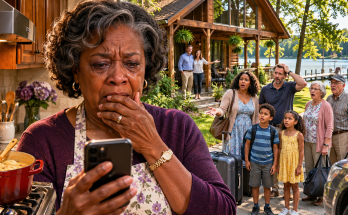
It also left me sitting at a bus stop one Tuesday afternoon, crying into my sleeves because I had no money, no phone, and no idea how to get home.
The worst part wasn't that Derek had forgotten me somewhere.
He knew exactly where he'd left me.
He had chosen the place himself.
And before he drove away, he'd looked straight at me and told me I needed to learn something.
I was thirty-four years old, and my husband had decided to punish me like a child.
I wish I could say that was the first time he'd made me feel small.
It wasn't.
My name is Olivia Henderson.
Before I married Derek, I thought I understood what a loving marriage should look like.
I thought two people were supposed to help each other.
Make decisions together.
Share the hard days.
I didn't expect everything to be easy.
I only expected to be treated like an equal.
When Derek and I first met, he seemed to believe in those same things.
He remembered details from our conversations.
He noticed when I was tired.
He would bring me coffee without asking how much it had cost.
I still remembered the way he used to smile when I talked about my work at the public library.
He said he liked that I cared about people.
Especially people who needed help.
Back then, I believed him.
Our first year together was full of small kindnesses.
He opened doors for me.
He called to make sure I'd arrived home safely.
He listened when I talked about the adult reading programs at the library.
Sometimes he even asked questions.
I mistook his attention for the kind of care that would last.
When we got married, I felt fortunate.
I remember standing beside him, believing I had chosen someone who would stand beside me no matter what happened.
For a while, I kept telling myself that was true.
Even after things began changing.
The changes didn't happen all at once.
That was part of what made them so difficult to recognize.
Derek didn't wake up one morning and announce that he wanted control of my life.
He began with little comments.
He questioned why I'd bought a particular brand of cereal.
He wanted to know whether I'd compared prices before buying dish soap.
He asked why I'd stopped for coffee when we already had coffee at home.
At first, I thought he was simply careful with money.
There was nothing wrong with wanting to save.
I believed that.
So I started paying closer attention to prices.
I clipped coupons.
I checked store advertisements before shopping.
I stopped buying lunch during my library shifts.
I brought food from home instead.
I told myself these were ordinary compromises.
Marriage required compromise.
That was what I kept repeating.
But the comments never stopped.
If I spent too much, he was angry.
If I bought something cheaper, he questioned its quality.
If I avoided buying something altogether, he sometimes complained that I hadn't planned properly.
There was always something.
Eventually, I stopped feeling comfortable making even simple decisions.
I would stand in a grocery aisle holding two packages of the same product.
One cost a little more.
One cost less.
And instead of thinking about which one we needed, I'd imagine Derek examining the receipt later.
That was what shopping became for me.
Not choosing food.
Avoiding an argument.
I worked part-time at the public library.
It wasn't a high-paying position, but I cared about it.
I loved the quiet rooms.
The sound of books being returned.
The way a nervous adult would begin smiling after reading a difficult sentence without help.
Those moments mattered to me.
Derek used to understand that.
After we married, he gradually began treating my work as something insignificant.
He earned more than I did at the car dealership.
He reminded me of that often.
Whenever we argued about money, his salary somehow became the only salary that counted.
My earnings went directly into our joint account.
Every paycheck.
Every dollar.
I didn't keep a separate fund for myself.
At the time, I thought that was what married people did.
I trusted him with our finances.
I trusted him when he said he was better at managing money.
Looking back, I wish I'd asked more questions.
But I'd been taught that trust meant not constantly doubting the person you loved.
And Derek had a way of making questions sound like accusations.
If I asked about a withdrawal, he'd become irritated.
If I wanted to know how much we had saved, he'd tell me not to worry.
If I asked again, he'd say I was questioning his judgment.
Eventually, I stopped asking.
It seemed easier.
Easier became a dangerous word in my marriage.
It was easier to agree.
Easier to apologize.
Easier to let him decide.
And every time I chose the easier path, I surrendered another small part of myself.
I didn't understand that until much later.
That Tuesday began like an ordinary morning.
I was in our bedroom getting ready when Derek appeared in the doorway.
He had a credit card statement in his hand.
I recognized the expression on his face immediately.
His jaw was tight.
His shoulders were stiff.
He hadn't even said anything, and I already knew we were going to argue.
He held the paper toward me.
"Tell me why these charges are here."
I took the statement.
My stomach tightened while I looked down the page.
There was a grocery purchase for one hundred forty dollars.
A gasoline charge.
And an eighty-dollar purchase from a store where I'd bought my mother's birthday present.
I knew exactly what had upset him.
The gift.
My mother had recently undergone surgery.
She'd been recovering at home for weeks.
She couldn't move around comfortably, and most days she had very little energy.
I wanted to give her something that might make those long afternoons a little easier.
So I'd bought her a soft blanket and several books.
Nothing extravagant.
Nothing that seemed unreasonable to me.
I'd actually spent time comparing prices before making the purchase.
I hadn't wanted to cause trouble.
That thought alone should have told me something.
But I stood there holding the statement and tried to explain.
"The groceries were for the house. We needed gas, and the other purchase was Mom's birthday gift."
Derek stared at me.
"You spent eighty dollars on her?"
I nodded.
"She hasn't been feeling well."
He gave a short, humorless laugh.
"That doesn't answer my question."
I looked down at the statement again.
I wasn't sure what answer he wanted.
"She needed something to keep her comfortable. I bought a blanket and some reading material."
"With our money."
I swallowed.
"Yes."
He stepped farther into the room.
"Do you ever think before spending?"
There it was.
The familiar question.
The one that made every purchase feel like evidence of some personal failure.
"I did think about it."
"Clearly not enough."
I wanted to say that I worked too.
I wanted to remind him that some of the money in our account came from my own paycheck.
I wanted to tell him that my mother deserved a birthday gift without being treated like a financial emergency.
But I'd learned what happened when I said things like that.
His anger grew.
The conversation became longer.
And somehow, by the end, I was apologizing for something completely different.
So I chose the familiar response.
"I'm sorry."
Derek looked at me for several seconds.
I hoped the apology would settle things.
Usually, it did.
Not because he forgave me.
Because I had accepted the blame.
That morning, however, he remained standing in the doorway.
"You're always sorry."
I didn't answer.
"You say it, and then you go right back to doing whatever you want."
I folded the statement carefully.
"I'll be more careful."
He shook his head.
"No. You keep saying that."
I noticed he was holding his car keys.
The metal caught the bedroom light when he moved his hand.
"Get ready. We're leaving."
I looked at him.
"Where are we going?"
He said we were visiting my mother.
That surprised me.
Derek rarely wanted to visit her.
He usually complained about the drive.
Sometimes he said she depended on me too much.
I'd gradually stopped telling him how often she asked me to come over.
But that morning, when he said we were going to see her, I felt a small amount of relief.
Maybe he'd thought about the argument.
Maybe he'd realized the gift wasn't unreasonable.
Maybe seeing my mother recovering from surgery would help him understand.
I wanted that to be true.
So badly that I ignored the coldness in his voice.
I finished getting dressed and followed him outside.
The morning air felt ordinary.
Cars passed along our street.
Someone nearby was mowing a lawn.
Nothing about the world suggested that my life was about to change.
Derek unlocked the car.
I climbed into the passenger seat.
I put my purse beside me and fastened my seat belt.
He started the engine without looking at me.
For the first several minutes, neither of us spoke.
I watched familiar houses pass.
Then the grocery store where I'd made the purchase that had upset him.
Then the road that normally led toward my mother's neighborhood.
Except Derek didn't turn.
He kept driving straight.
I waited a moment.
There were other ways to reach her house.
Perhaps he was avoiding traffic.
But when we passed another familiar intersection, I began feeling uneasy.
"Derek, I think we missed the turn."
"I know."
His answer was flat.
I looked at him.
"Are we stopping somewhere first?"
He kept his eyes on the road.
No answer.
I watched the houses become farther apart.
The businesses changed.
There were fewer restaurants and small shops.
More industrial buildings.
Warehouses with large loading doors.
Empty parking lots.
Some buildings appeared abandoned.
I didn't recognize the streets.
My fingers tightened around the strap of my purse.
"Where are we going?"
Derek didn't respond immediately.
When he finally spoke, he sounded almost calm.
"Somewhere you might understand a few things."
I felt cold despite the warmth inside the car.
"What does that mean?"
He turned onto another street.
A long stretch of pavement ran between old commercial buildings.
There were very few people around.
I saw a bus shelter ahead.
Its roof looked worn.
The bench beneath it was empty.
Derek slowed down.
At first, I thought he'd taken a wrong turn and needed to check directions.
Then he pulled over.
He put the car in park.
"Get out."
I turned toward him.
"What?"
"You heard me."
I stared at his face.
He wasn't smiling.
He wasn't joking.
"Derek, why would I get out here?"
He leaned back in his seat.
"Because you need to find out what happens when you don't have me paying for everything."
For a moment, I honestly couldn't understand what he meant.
I looked through the windshield.
There were no familiar shops.
No relatives nearby.
No place I recognized.
"What are you talking about?"
He turned toward me.
"You act like money just appears whenever you want something. Maybe spending a little time without it will change your attitude."
I could feel my heartbeat in my throat.
"You're not serious."
He reached toward my purse.
I pulled it closer instinctively.
"Derek."
"Give it here."
I hesitated.
He grabbed the purse and opened it.
I watched him take out my wallet.
My debit card.
My credit cards.
Then the thirty-two dollars I'd been keeping in cash.
I'd saved that money a little at a time.
It wasn't much.
But it was mine.
He put everything away from me.
I stared at his hands.
"Please give those back."
He didn't.
Instead, he reached for my phone.
I tried to hold on to it.
"Derek, I need that."
He took it anyway.
My mouth went dry.
I looked from the phone to the empty street outside.
I finally understood that he intended to leave me there.
Not for a few minutes.
Not as a joke.
He wanted me frightened.
He wanted me helpless.
And he wanted to be the person I would eventually beg for help.
"Please don't do this."
He pointed toward the passenger door.
"Get out, Olivia."
I shook my head.
"I don't know this area."
"You can work that out."
"How am I supposed to call someone?"
He looked at the phone in his hand.
Then back at me.
"That's something you should've considered before wasting money."
I couldn't believe what I was hearing.
I tried one more time.
"Derek, I'm sorry about the gift. We can talk about it at home."
He gave me a look I had come to know too well.
The look that said I'd failed another test.
"Now you want to apologize."
"I already apologized."
"Then maybe you'll mean it when you're ready to come home."
I felt tears begin gathering.
He opened my door from the inside.
The outside air rushed into the car.
I stared at the pavement.
There was a crack running along the curb.
A flattened paper cup lay near the gutter.
I remember those things more clearly than I remember what I said next.
Because some part of me was still convinced he would stop.
That he'd look at my face and realize he'd gone too far.
Instead, he repeated himself.
"Out."
I unfastened my seat belt.
My hands were shaking.
I stepped onto the sidewalk.
For one brief second, I turned toward him.
"Derek, please."
He didn't answer.
He pulled the door shut.
Then he drove away.
I stood on the curb watching the car disappear.
I waited for the brake lights.
For him to stop.
For the car to turn around.
It didn't.
Eventually, the street was empty again.
I looked at my hands.
No wallet.
No phone.
No money.
I still had the clothes I was wearing and the purse he'd emptied.
That was all.
I walked toward the bus shelter because I didn't know where else to go.
I sat on the bench.
Its metal surface was cold.
For a few minutes, I just stared at the road.
I kept thinking Derek would come back.
He had to.
He was my husband.
Then a bus appeared in the distance.
It slowed as it approached the stop.
I looked toward the driver.
I had no fare.
No card.
Nothing.
The doors opened.
I stayed seated.
After a moment, the bus pulled away.
I watched it disappear down the road.
That was when I began to cry.
Not loudly.
I covered my mouth because I didn't want anyone to hear.
And for the first time that day, I stopped wondering how to make Derek forgive me.
I started wondering what kind of man could leave his wife sitting there and drive away without looking back.