Lorraine remained in remission for nearly four years.
Long enough that everyone stopped counting months.
Doctor visits became routine.
Scans became less frequent.
The family returned to complaining about ordinary things.
Zia finished her undergraduate degree.
The trust helped.
Scholarships helped.
Work helped.
So did stubbornness.
Veterinary school acceptance arrived on a Tuesday.
Zia called us screaming.
No words at first.
Just noise.
I almost dropped the phone.
“What happened?”
“I GOT IN.”
Travis ran into the room.
“What?”
“She got in.”
He grabbed the phone.
“Where?”
She told him.
Her first choice.
He sat down.
Not because he needed to.
Because his knees apparently stopped cooperating.
Daniel cried when she called.
Nina screamed louder than Zia.
Lorraine remained silent for so long that Zia asked whether the call dropped.
“I’m here.”
“Grandma?”
“I’m just trying not to make this about me.”
Zia laughed.
“You can cry.”
Lorraine did.
That evening she delivered no check.
No grand gift.
She arrived carrying Frank’s old photograph from the county fair.
The blurry one with Zia on his shoulders.
“I thought you should have this now.”
Zia took it.
“Why?”
“Because he wrote veterinarian in your trust notes before you even knew what school was.”
“That’s creepy.”
“It is.”
They laughed.
On the back, Frank’s joke about cheating at ring toss remained.
Zia framed the photo for her apartment near veterinary school.
Grandpa at her desk.
Not as moral saint.
As grandfather.
That balance mattered.
Lorraine’s health remained steady through Zia’s first year.
Then a scan changed.
A small lesion.
More tests.
Recurrence.
This time treatment options were narrower.
The family knew immediately that the old instinct toward rescue might return.
They discussed it openly.
Lorraine chose quality of life over the most aggressive available treatment after consulting her doctors.
Some relatives struggled.
Aaron especially.
“Why not fight everything?”
Lorraine answered calmly.
“I already fought everything once.”
Different meaning.
She was tired.
Not giving up.
Choosing.
Travis accepted faster than he expected.
Maybe because he finally understood respecting choice was not abandonment.
Zia struggled most.
Medical training had given her more knowledge.
Not more control.
She researched.
Asked questions.
Requested second opinions.
Lorraine agreed to two.
The recommendations remained similar.
Then Lorraine told her:
“You are becoming a doctor for animals, not me.”
“I know.”
“You’re doing the face.”
“What face?”
“The Travis face.”
Everyone laughed.
Even Zia.
She sat beside Lorraine’s bed in the apartment.
“I hate this.”
“I know.”
“I know what the scans mean.”
“I know.”
“That makes it worse.”
“Yes.”
Lorraine reached for her hand.
This time Zia let her.
Illness progressed slowly at first.
Lorraine remained independent.
Then less so.
The apartment filled with medical equipment.
But unlike the old house, nobody treated the space as sacred.
Furniture moved.
Rugs disappeared to prevent falls.
The dining table shifted.
Adaptation.
Not preservation.
Lorraine noticed.
“Frank would hate what we did to the layout.”
Travis smiled.
“He’s dead.”
“I know.”
“He has lost voting rights.”
“Good.”
Humor remained.
One afternoon, when Zia was twenty-four and midway through veterinary training, Lorraine asked her to visit alone.
Not unusual.
Still, something in the request felt deliberate.
Zia went.
Hours later, she came to our house.
Her expression was complicated.
“What happened?” I asked.
“Grandma asked me something.”
Travis stood.
“What?”
“She wants me to speak at her funeral.”
The word silenced the room.
“How did you answer?”
“I said I don’t know.”
Good.
“What does she want you to say?”
“Nothing specific.”
Zia sat down.
“She said I can tell the truth.”
That was very Lorraine-now.
Not Lorraine-before.
“What truth?” Travis asked.
“She said if I speak, I shouldn’t turn her into a nice dead lady.”
I almost laughed through the ache.
“That sounds like her therapist.”
“Probably.”
Zia rubbed her palms together.
“She said I can talk about Christmas.”
Travis’s face changed.
“The candle?”
“Yes.”
“The card?”
“Yes.”
“Why?”
“Because she said pretending it didn’t happen would be another way of asking me to protect her.”
That sentence hurt.
It was also right.
“What are you worried about?”
I asked.
Zia looked toward the floor.
“If I tell the truth at her funeral, people will think I’m cruel.”
“Maybe some.”
“If I don’t, it feels fake.”
“Yes.”
“And if I talk about how she changed, it sounds like everything she did was necessary for some lesson.”
There it was.
The problem with redemptive stories.
They can accidentally make harm feel useful.
It was not.
Zia did not need Lorraine’s cruelty in order to become strong.
Travis did not need the crisis to become a better father.
The family did not need years of pain to learn boundaries.
They learned because the harm happened.
That did not make the harm necessary.
“You don’t owe anyone a neat story,” I said.
Zia nodded slowly.
“What did you tell Grandma?”
“That.”
I smiled.
“How did she react?”
“She said good.”
Of course.
Then Zia added, “She asked one more thing.”
“What?”
“She asked if I forgive her.”
Travis went still.
For years Lorraine had carefully avoided demanding that word.
“What did you say?”
“No.”
The answer surprised us.
Not because we expected automatic forgiveness.
Because their relationship had clearly repaired.
Zia continued before anyone spoke.
“I told her I love her.”
“Yes.”
“I trust her now.”
“Yes.”
“I think she changed.”
“Yes.”
“But I don’t know what forgive is supposed to mean.”
Exactly.
“Does it mean I’m not angry anymore?”
“Not necessarily.”
“Does it mean what she did doesn’t hurt?”
“No.”
“Does it mean I would choose the same relationship if she had never changed?”
“No.”
Zia leaned back.
“So I said I don’t know if I forgive her.”
“How did she react?”
“She cried.”
My heart tightened.
“Then she said okay.”
That was the answer Lorraine once could not give.
Okay.
Not accusation.
Not guilt.
Not argument.
“Did she ask you to reconsider?”
“No.”
“Did she say she needs forgiveness?”
“No.”
“What did she say?”
Zia’s eyes filled.
“She said loving me now doesn’t entitle her to a different answer about then.”
Nobody spoke.
Years of therapy.
Consequences.
Loss.
Work.
All inside that sentence.
Zia wiped her face.
“And then I got mad because she’s dying and suddenly she knows how to say everything.”
Travis sat beside her.
“Yeah.”
“That’s unfair.”
“Yes.”
“I told her that too.”
“What did she say?”
“That she wishes she had learned faster.”
No defense.
Nothing to fight.
That sometimes makes grief harder.
A few weeks later, Lorraine’s condition worsened.
Hospice entered the conversation.
She chose home hospice in the apartment.
Her friends rotated visits.
Melissa stayed nights twice a week.
Aaron handled pharmacy runs.
Travis visited most afternoons.
I came when Lorraine wanted company.
Daniel visited once.
That surprised everyone.
He sat beside her bed.
No old score to settle.
Lorraine apologized again.
Briefly.
Daniel stopped her.
“We already did that.”
She smiled.
“Good.”
Then they talked about Zia.
Mostly good things.
No ownership.
No strategy.
Two adults acknowledging the person they once used as the center of their own fear.
Zia came as often as school allowed.
Sometimes she studied beside Lorraine’s bed.
Veterinary pharmacology flashcards scattered across the blanket.
Lorraine would wake.
Quiz her badly.
Mispronounce drug names.
Fall asleep again.
Those hours mattered more than speeches.
One evening, Lorraine asked Travis to bring the red velvet box.
He did.
No one understood why.
She opened it.
Held the brass key.
Then handed it to Zia.
“What am I supposed to do with this?”
“Whatever you want.”
“Why me?”
“Because you were the person carrying it when everything changed.”
Technically true.
Seven-year-old Zia had walked across the dining room with that box.
Not knowing what it meant.
Lorraine continued.
“I used to think that key meant your father was taking something from me.”
Travis looked down.
“Later I thought it meant he stopped loving me.”
She shook her head.
“It meant I had to live with my own choices.”
Zia turned the key in her fingers.
“It doesn’t open anything.”
“I know.”
“Then it’s useless.”
Lorraine smiled.
“Exactly.”
Everyone laughed.
Then she said, “Throw it away if you want.”
Old Lorraine would never have allowed that.
A symbol gone?
History uncontrolled?
Unthinkable.
Zia closed her fingers around it.
“I’ll decide later.”
“Good.”
That night, she took the key home.
Not the box.
Only the key.
The red velvet box remained with Travis.
Another separation.
One object became two histories.
Lorraine lived three more months.
Longer than doctors initially predicted.
Shorter than everyone wanted.
Her final week came quietly.
Less speech.
More sleep.
One afternoon, she woke while Zia was beside her.
Just the two of them.
Zia later told us Lorraine whispered:
“Did you ever decide?”
“About what?”
“Forgiveness.”
Zia said no.
Then added:
“I don’t think I need to.”
Lorraine smiled.
“Good.”
Zia asked:
“Does that hurt?”
Lorraine answered:
“A little.”
The truth.
Then:
“But I’m glad you don’t need to give me something before I go.”
That was the final boundary Lorraine respected.
She did not turn death into leverage.
She died two days later.
Melissa was holding one hand.
Travis the other.
Zia was on her way from school and did not arrive in time.
That devastated her.
“I should’ve left earlier.”
“No.”
“I knew.”
“No.”
“I was studying.”
“Yes.”
“She died while I was studying.”
Travis held her.
“She would have liked that.”
“I don’t care.”
“I know.”
Grief made every missed minute feel like a moral failure.
Frank’s Saturday.
Lorraine’s final hours.
The family recognized the pattern.
This time they refused to feed it.
“You were living,” I told Zia.
“She knew.”
The funeral was four days later.
Zia had not decided whether to speak.
No one pressured her.
The program listed no eulogy from her.
At the service, Lorraine’s friends spoke.
Melissa.
Aaron.
Travis.
He talked about his mother as she was.
Loving.
Difficult.
Funny.
Afraid.
Capable of growth.
No sainthood.
Then the officiant moved toward closing.
Zia stood.
Unplanned.
She walked to the front.
No paper.
No speech prepared.
For a moment, she looked at Lorraine’s photograph.
Then at the room.
She began:
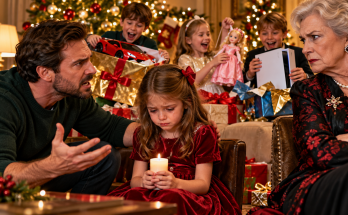
“My grandmother once gave me a candle for Christmas.”
The room went completely still.