Part 1 — The Morning My Son Forgot Whose House It Was
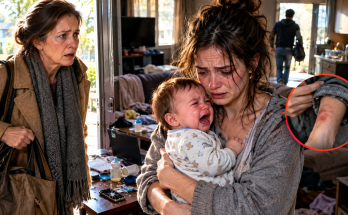
“Move your things into the smaller bedroom,” my daughter-in-law announced. “We need the master suite, and I expect it to be empty before eleven.”
Sarah stood in my kitchen wearing a cream-colored silk robe, holding an iced latte, and looking at me as though I were an employee who had failed to complete an assignment.
My son, David, stood behind her.
He didn’t look embarrassed. He didn’t tell her she was being unreasonable.
Instead, he cleared his throat and said, “Mom, please don’t make this difficult. Sarah needs more room for her work, and you’re not using all that space anyway.”
I stared at him.
My name is Kimberly Porter. I was sixty-four years old, widowed, and living in the house my late husband, Michael, and I had spent decades paying for.
Three days earlier, I had welcomed David and Sarah into my home after they complained that their apartment had become too expensive. I had offered them the guest bedroom for eight weeks, giving them time to save money and find somewhere affordable.
Eight weeks.
That was the agreement.
Yet on the third morning, my daughter-in-law had decided that my bedroom, my bathroom, and apparently my entire house were now available for her personal use.
“David,” I said quietly, “did you agree to this?”
He shifted his weight.
“It’s just a bedroom, Mom.”
Those six words hurt more than Sarah’s demand.
Just a bedroom.
The room where Michael had built our window seat with his own hands. The room where we had spent countless nights talking about our future. The room where I had held my husband’s hand during his final days, promising him that I would be all right.
And now my son was telling me it was just a bedroom.
Sarah glanced at her watch.
“The movers will be here soon. We have furniture arriving this afternoon, so please don’t make us reschedule everything.”
I looked from her to David.
Then I did something neither of them expected.
I smiled.
“Of course,” I replied. “I’ll have everything ready.”
Sarah’s expression relaxed immediately.
“See? That wasn’t so difficult.”
She picked up her latte and walked away.
David followed her without another word.
I stood alone in my kitchen, listening to their footsteps disappear upstairs.
Then I went to the guest room and began packing their belongings.
Not mine.
Theirs.
I carefully folded Sarah’s expensive clothes, packed David’s shoes into their boxes, and placed their toiletries into a waterproof bag. I even wrapped the framed photograph of their wedding so it wouldn’t break.
By ten-thirty, everything they had brought into my house was packed.
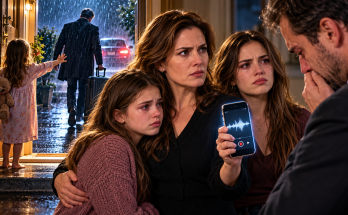
I carried the suitcases downstairs and placed them beside the front door.
Then I called a locksmith to arrange a consultation for later that afternoon and contacted my attorney to ask about the appropriate steps for ending their stay.
I wasn’t going to argue.
I wasn’t going to beg my own child to respect me.
And I certainly wasn’t going to surrender the home I had built my life around.
At 10:55, their silver SUV turned into the driveway.
A moving truck followed.
Sarah stepped out, laughing at something on her phone. Her smile disappeared when she noticed the suitcases lined up on the porch.
“What is this?”
I opened the front door.
“Your belongings.”
David looked at the bags, then at me.
“Mom, are you serious?”
“Completely.”
Sarah’s face reddened.
“You can’t throw us out!”
“I offered you eight weeks in my guest room. You decided you wanted my bedroom instead. I decided the arrangement wasn’t working.”
She pointed toward the moving truck.
“We’ve already paid these people!”
“That sounds like something you should have considered before ordering me out of my own room.”
David lowered his voice.
“Can we please discuss this privately?”
“No. You had a private conversation with your wife about taking my bedroom. You can explain your decision here.”
The movers stood awkwardly beside their truck.
Sarah turned toward them.
“Just bring the furniture inside!”
One of the men looked at me.
“Are we authorized to enter the house, ma’am?”
“No,” I answered.
He nodded and remained where he was.
Sarah stared at me as though she had never seen me before.
“You’re really going to do this over a bedroom?”
I looked directly at her.
“No, Sarah. I’m doing this because you mistook my kindness for permission to control my life.”
Then I turned to my son.
“And you allowed it.”
For the first time that morning, David had nothing to say.
Part 2 — The Farm Nobody Knew About
What David and Sarah didn’t know was that their argument had come at a particularly important moment in my life.
Three days earlier, I had finalized the sale of my family’s farm for thirty-nine million dollars.
I hadn’t told my son.
I hadn’t told my neighbors.
I hadn’t even told the few distant relatives who occasionally called to ask whether I was planning to sell.
The farm had belonged to my husband’s family for generations. It was located in a rural valley where the land had become extraordinarily valuable after developers discovered that the surrounding area was ideal for a major commercial and residential project.
For years, companies had approached us with offers.
We had refused them all.
Michael loved that land. He knew every fence post, every old oak tree, every bend in the creek. When he became ill, he made me promise that I wouldn’t sell it simply because someone arrived with a large check.
I kept that promise for five years after his death.
But eventually, the farm became more than I could manage alone.
The taxes increased. The equipment required maintenance. The farmhouse needed repairs, and the long drive between my house and the property grew more difficult as I got older.
Most importantly, I began to understand something Michael had tried to teach me.
Honoring the past didn’t mean refusing to live in the future.
So I hired an attorney, reviewed the offers, negotiated the terms, and accepted a proposal from a development group that agreed to preserve a section of the property as protected green space.
The final agreement was worth $39 million.
The money had been transferred according to the closing documents, with taxes, professional fees, and other obligations to be handled appropriately.
I had spent the previous weeks quietly arranging my next chapter.
I planned to establish a charitable foundation in Michael’s name, support agricultural scholarships, and protect the old cemetery where his parents were buried.
I also planned to travel.
For the first time in my adult life, I wanted to see places without worrying about livestock, harvests, repairs, or someone else’s schedule.
I wanted to take a train across the country.
I wanted to visit the coast where Michael and I had spent our honeymoon.
And I wanted to wake up each morning without feeling obligated to solve everyone else’s problems.
David had no idea.
He still thought of me as the widow who clipped coupons, drove an old sedan, and saved leftovers in glass containers.
He didn’t know how much the farm was worth.
He didn’t know about the negotiations.
And he certainly didn’t know that I had just become a multimillionaire.
I had deliberately kept the sale private because I wanted time to make thoughtful decisions before money changed the way people treated me.
I had watched enough families fall apart over inheritances to understand how quickly wealth could turn affection into expectation.
My own son had just given me a painful demonstration.
When Sarah called her mother that afternoon to complain about being forced to leave my house, I was sitting in my study reviewing the documents my attorney had sent.
I heard Sarah’s voice through the open window.
“She thinks she can control everything because it’s her house!”
I continued reading.
Then I heard another sentence.
“She has plenty of money. She could easily help us buy somewhere.”
I stopped turning the pages.
Plenty of money.
Interesting.
Sarah had no evidence that I possessed a fortune. She was simply assuming that because I was older, owned a house, and had once owned a farm, my resources were available to her.
A few minutes later, David came into the study.
“Mom, Sarah’s upset.”
I closed the folder.
“I imagine she is.”
“We need somewhere to stay.”
“You can stay with her mother while you arrange your next step.”
He rubbed his forehead.
“That’s an hour away.”
“Then perhaps you should have thought about that before deciding my home belonged to you.”
He sat down heavily.
“I know we handled things badly.”
“Do you?”
He nodded.
“Sarah gets carried away sometimes.”
I looked at him for a long moment.
“And you?”
He frowned.
“What do you mean?”
“You’re a grown man, David. Your wife doesn’t make your decisions for you. You chose to support her.”
He stared at the floor.
I wanted to believe he understood.
But before he left the room, he asked the question that revealed how little he had changed.
“Could you at least help us with a deposit on another house?”
I felt something inside me go very still.
Three days ago, he had asked for a place to sleep.
Now, after being told no, he was asking for money.
“Not today,” I answered.
He stood up, disappointed.
“Fine.”
When he walked away, I returned to my paperwork.
I had no intention of telling him about the farm.
Not until I knew whether he could love his mother without calculating what she might eventually leave him.
Part 3 — The Phone Call That Changed Everything
The next morning, Sarah called me.
Her voice was sweeter than it had been the previous day.
“Kimberly, I think we should start over.”
I said nothing.
“We were all stressed. David and I have a lot going on, and I know the bedroom issue became bigger than it needed to be.”
“The bedroom wasn’t the only issue.”
“I understand.”
She paused.
Then she continued.
“Actually, my mother suggested that we all sit down together. Maybe we can discuss a better arrangement.”
I glanced at the clock.
“I’m busy this afternoon.”
“What about dinner?”
“I’ll let you know.”
She sighed.
“Please don’t make this harder than it has to be. We’re family.”
Family.
The word had become a convenient tool in Sarah’s hands.
When she wanted my guest room, we were family.
When she wanted my master bedroom, we were family.
When she wanted me to ignore the agreement we had made, we were family.
But when I asked for respect, suddenly I was selfish.
After the call, I contacted my attorney, Eleanor Brooks.
Eleanor had handled Michael’s estate and the farm negotiations. She was a practical woman in her early sixties who had little patience for people who confused emotional pressure with legal entitlement.
I explained what had happened.
“Have you given David any ownership interest in the house?” she asked.
“No.”
“Is there any written agreement promising him a future interest?”
“No.”
“Good. We’ll review the relevant documents and make sure everything is properly recorded. As for his stay, we’ll follow the applicable local rules rather than assume that a family member can be removed immediately.”
She paused.
“Kimberly, is there something else you’re worried about?”
I told her about David’s request for money.
Then I told her about the farm sale.
There was silence on the other end.
“You sold it?”
“Three days ago.”
“For thirty-nine million?”
“Yes.”
Eleanor exhaled slowly.
“I assume you have a plan for the proceeds.”
“I do. But I haven’t told David.”
“Then don’t rush into telling him. Let’s make sure your estate plan reflects your wishes, and that any charitable commitments are documented properly. You don’t need to make financial decisions because someone is pressuring you.”
That afternoon, I met Eleanor at her office.
We reviewed my accounts, the closing documents, my will, and the plans for Michael’s foundation. We discussed protecting my privacy, maintaining appropriate liquidity, and making sure that any gifts I chose to give would be made deliberately rather than under pressure.
I also asked her to help me create a written family loan policy.
If I ever decided to help a relative financially, there would be clear terms. No vague promises. No assumptions about inheritance. No money handed over simply because someone raised their voice.
When I returned home, David’s car was parked in my driveway.
He was sitting on the front steps.
“Where have you been?” he asked.
“Out.”
“With whom?”
I studied him.
“Why do you need to know?”
He looked uncomfortable.
“Sarah thinks you’re seeing a lawyer.”
“I am.”
His expression changed.
“Why?”
“Because I have legal matters to handle.”
“Is this about us?”
“Partly.”
He stood up.
“Mom, you don’t need a lawyer to solve a family disagreement.”
“Perhaps not. But I do need one to make sure my affairs are in order.”
He stared at me.
For a moment, I thought he might apologize again.
Instead, he asked, “Are you changing your will?”
The question landed between us like a dropped glass.
I hadn’t mentioned my will.
I hadn’t said anything about an inheritance.
Yet his first concern was whether he might lose something he had apparently begun to expect.
“Why would you ask that?”
He looked away.
“Sarah said that if you’re angry with us, you might do something drastic.”
“I’m not angry enough to make drastic decisions. I’m calm enough to make sensible ones.”
He swallowed.
“I’m your only son.”
“Yes, David. You are.”
“Dad would want you to look after me.”
I felt a sharp ache in my chest.
His father had spent his final months worrying about whether David would become a man who could stand on his own feet.
Michael had never wanted his son to be wealthy.
He had wanted him to be decent.
“Your father wanted you to become responsible,” I said. “He wanted you to build a life you could be proud of.”
David’s face tightened.
“So you’re not going to help us?”
“I didn’t say that.”
“Then what are you saying?”
“I’m saying that help is not the same thing as surrendering control of my life.”
He left without answering.
That evening, I sat beside Michael’s old reading chair and looked at the photograph on the mantel.
“I hope I’m doing the right thing,” I whispered.
The room was silent.
But for the first time in years, I didn’t feel guilty about protecting myself.
Part 4 — The Dinner Invitation
Two days later, David arrived with Sarah and her mother, Linda.
They brought a pie.
Linda carried it into my kitchen as though the gesture entitled her to enter every room in the house.
“Kimberly, darling,” she said, “we really need to put this unpleasantness behind us.”
I took the pie and placed it on the counter.
“Then perhaps we should begin by acknowledging what happened.”
Sarah crossed her arms.
“We’ve already apologized.”
“No,” I replied. “You explained why you thought you were entitled to my bedroom. That’s different.”
Linda smiled tightly.
“Sarah can be outspoken. We all know that. But families make compromises.”
“Compromise requires everyone to give something up voluntarily. I wasn’t asked to compromise. I was ordered to move.”
David shifted in his chair.
“Mom, please.”
I turned to him.
“I’m listening.”
He took a breath.
“We need a stable place to live. Sarah’s business is growing, and our current situation is difficult. We thought staying here would give us the chance to save for a down payment.”
“That’s what you told me.”
“And we appreciate it.”
“Then why did you demand my bedroom?”
Sarah answered before he could.
“Because we need space to work. We thought you’d understand.”
I looked at Linda.
“Would you give up your bedroom if your daughter demanded it after living in your house for three days?”
Linda’s smile vanished.
“That’s not a fair comparison.”
“Why not?”
She didn’t answer.
Sarah reached for her glass of water.
“Look, if you have money sitting around, you could help us buy a place. Then none of this would be necessary.”
There it was again.
Not an apology.
Not an acknowledgment.
A request.
I folded my hands on the table.
“How much money do you think I have?”
Sarah blinked.
“I don’t know exactly.”
“Then how can you decide what I should give you?”
Linda interrupted.
“Kimberly, nobody is asking you to impoverish yourself. We’re simply talking about helping your son get established.”
“And what would happen if I said no?”
Nobody answered.
I nodded slowly.
“That is the problem. You believe my refusal would be a betrayal, even though you have no idea what my financial situation is.”
David leaned forward.
“Mom, if you have savings, why wouldn’t you want to help us?”
“Because I have a right to decide how I use my savings.”
“But we’re your family.”
“And I am your family too.”
The room went quiet.
For a moment, I saw something resembling shame on David’s face.
Then Sarah spoke.
“My mother thinks we should have a written agreement. If we stay here, we should know where we stand.”
I almost smiled.
“A written agreement is a good idea.”
Sarah looked surprised.
I continued.
“It will state how long you may stay, which room you may use, what expenses you will contribute toward, and that my property remains mine. It will also make clear that any extension must be agreed upon by everyone.”
David rubbed his forehead.
“That sounds so formal.”
“Then you should have thought about that before treating my home like a property you had already inherited.”
Linda set her napkin down.
“That is an awful thing to say.”
“Is it? Have I died without noticing?”
Sarah stared at me.
For the first time, she seemed to realize that her usual tactics were not working.
“We came here to make peace,” she said.
“Then make peace. Respect the boundaries I set.”
David looked at his wife.
Sarah looked at her mother.
Neither offered an answer.
Finally, Linda stood.
“This conversation is going nowhere.”
“Perhaps,” I said. “But at least we’re finally being honest.”
They left the pie.
They also left without an agreement.
After the door closed, I called Eleanor and asked her to prepare the appropriate documents.
Then I went upstairs and opened the small wooden box containing Michael’s letters.
I found one written during our first year on the farm.
In it, he had described the life he hoped we would build: a home filled with laughter, a family that helped one another, and enough security that neither of us would ever have to beg for dignity.
I read the letter twice.
Then I put it away.
The farm was gone.
But the values Michael had planted there were still mine to protect.
Part 5 — The News They Heard From Someone Else
The secret might have remained private for months if not for a small newspaper announcement.
The development company issued a statement about acquiring a large parcel of agricultural land for a future conservation-centered project. The announcement mentioned the purchase price and praised the former owner for negotiating permanent protection for a portion of the property.
My name wasn’t printed in the first paragraph.
But it appeared near the bottom.
By lunchtime, an old neighbor had called me.
By dinner, two distant cousins had sent messages.
And by the following morning, David was standing at my front door with a face so pale that I thought someone had died.
“Mom,” he said. “Is it true?”
I opened the door wider.
“Is what true?”
He held up his phone.
“The farm. The thirty-nine million dollars.”
I didn’t answer immediately.
He stared at me.
“You sold it?”
“Yes.”
“When?”
“Three days before you and Sarah decided you needed my bedroom.”
He stepped inside, then stopped as if he had suddenly remembered that he no longer had permission to treat the house as his own.
“Why didn’t you tell me?”
“Because I wanted to make the decision privately.”
“But I’m your son!”
“Yes.”
“Thirty-nine million dollars, Mom!”
His voice rose on the number.
I remained seated.
“I can hear you, David.”
He lowered his voice.
“Do you understand what this means for our family?”
I studied him.
“What does it mean?”
He began pacing.
“We could pay off our debts. We could buy a house. Sarah could expand her business. I could leave my job and start my own company. We could invest. We could help everyone.”
Everyone.
I had spent years working for every dollar I owned.
Michael had spent years working for every acre of the farm.
And within seconds of learning the sale price, David had divided the money into pieces and assigned each one a purpose.
None of those purposes had come from me.
“Have you considered what I want?” I asked.
He stopped pacing.
“Of course.”
“What do I want?”
He opened his mouth.
Then closed it.
I waited.
Finally, he said, “You probably want to travel.”
“I do.”
“And enjoy retirement.”
“Yes.”
“So we’ll make sure you have enough for that.”
I looked at him in disbelief.
“You’ll make sure?”
He shifted uneasily.
“I mean, obviously the money needs to be managed properly.”
“David, I have managed my own affairs for decades.”
“I know, but this is different.”
“Why?”
“Because it’s a lot of money!”
I nodded.
“It’s certainly more than I have ever managed before. That’s why I have professionals advising me.”
His expression hardened.
“You hired a financial adviser?”
“And an attorney.”
He looked genuinely offended.
“Without telling me?”
I stood.
“Why would I need your permission?”
He stared at me.
Then came the question that told me everything I needed to know.
“Am I even in your will anymore?”
For several seconds, I couldn’t speak.
I thought of the boy who used to bring me dandelions from the edge of the farm.
I thought of the teenager who had cried at his father’s funeral.
I thought of the man who had stood beside his wife and told his grieving mother to surrender her bedroom.
And now he was asking about his inheritance before asking whether I was happy.
“David,” I said quietly, “when you learned I had sold the farm, was your first thought that I might finally have the freedom to enjoy my life?”
He looked uncomfortable.
“That’s not fair.”
“Was it?”
He didn’t answer.
I walked to the door and opened it.
“I think you should go home.”
“Where am I supposed to go?”
“That is something you and Sarah need to decide together.”
He stood there for a long moment.
Then he left.
I watched his car disappear down the street.
For the first time since Michael’s death, I cried.
Not because of the money.
Not because of the farm.
I cried because I had finally understood how easily a mother could spend a lifetime giving to her child and still become invisible the moment she stopped giving.
Part 6 — Sarah’s Real Plan
Three days later, Sarah came alone.
She wore a navy-blue suit and carried a folder.
“Kimberly,” she said, “I think we should talk about a business opportunity.”
I invited her into the living room but did not offer her coffee.
She sat opposite me and opened the folder.
“My company has been looking at a new project. We have a chance to expand into commercial property management, but we need additional capital.”
I glanced at the papers.
“How much?”
“Two million dollars would allow us to secure the first properties.”
I slowly closed the folder.
“Sarah, I am not investing two million dollars in your business.”
She blinked.
“You haven’t even reviewed the proposal.”
“I don’t need to. I have no interest in making that investment.”
Her face tightened.
“David said you were considering helping us.”
“David doesn’t make financial decisions for me.”
“He’s your son.”
“And you are his wife. Neither fact makes you my financial adviser.”
Sarah leaned back.
“You know, this is exactly why David worries about you.”
“Why?”
“You’ve become isolated. You don’t trust anyone. You’re sitting on a fortune and refusing to share it with the people who care about you.”
I almost laughed.
“People who care about me don’t demand my bedroom, question my will, and arrive with a business proposal three days after discovering my bank balance.”
She stood abruptly.
“So that’s how you see us?”
“I’m beginning to see you more clearly.”
Her eyes filled with angry tears.
“You have no idea how hard we’ve worked to build our lives.”
“Then continue working.”
“We could achieve so much with your help.”
“Perhaps. But you have not explained why your ambitions should become my responsibility.”
She grabbed the folder.
“You’ll regret treating us this way.”
I remained seated.
“No, Sarah. I regret allowing you to believe that being related to me gives you authority over me.”
She stormed out.
That evening, David called.
He didn’t ask how I was doing.
He wanted to know why I had rejected Sarah’s proposal.
I explained that I was not interested.
He became angry.
“Mom, you could have at least listened.”
“I did listen.”
“Then why not help?”
“Because I don’t want to invest in the company.”
“You haven’t even seen the potential!”
“David, the answer is no.”
He fell silent.
Then he said something I will never forget.
“If Dad were alive, he wouldn’t treat us like strangers.”
I closed my eyes.
“Your father would have expected you to respect your mother.”
David hung up.
For the rest of the night, I sat in Michael’s reading chair and listened to the rain.
I had spent years believing that if I loved my son enough, he would eventually understand what love meant.
Now I was beginning to understand that love without boundaries could become an invitation to take.
Part 7 — The Letter From My Husband
The following week, Eleanor visited my house to discuss the foundation.
She brought a small envelope she had found among Michael’s estate papers while reviewing an old file.
“Your husband asked me to keep this with his personal documents,” she explained. “It was addressed to you, but it wasn’t included in the documents delivered to you after his death.”
I recognized Michael’s handwriting immediately.
My hands trembled as I opened it.
Kimberly,
If you are reading this, I am probably no longer beside you. I hope you have found a way to laugh again. I hope the house is warm and that the farm is still filled with birds.
There is something I want you to remember.
You have always believed that being a good mother means making sure David never struggles. I understand why. You want to protect him from the disappointments that shaped us.
But struggle is not always an enemy. Sometimes it teaches a person to become dependable. Sometimes it reveals whether they are grateful for help or simply accustomed to receiving it.
If we are fortunate enough to leave David something, let it be an opportunity to build a good life. Do not let our money become a substitute for his character.
And please, my love, do not spend the rest of your life apologizing for surviving me.
You deserve happiness that belongs to you.
Michael.
I pressed the letter against my chest.
For five years, I had carried an invisible responsibility to preserve everything Michael had left behind.
The farm.
The house.
The family.
The memories.
Somewhere along the way, I had confused preservation with sacrifice.
I looked at Eleanor.
“I think I know what I want to do.”
She listened while I explained the foundation I hoped to create.
It would provide scholarships for students pursuing agricultural science, fund practical training for young farmers, and help preserve historic rural cemeteries and community land.
I wanted the farm sale to support something that reflected the life Michael and I had built.
I also wanted to establish a separate estate plan that protected my future needs and made any eventual inheritance conditional on clear, lawful provisions that respected my wishes.
Eleanor helped me understand the options without making promises about what the law could guarantee.
We documented my intentions and arranged for independent professional review.
I was careful not to disinherit anyone out of anger.
I was equally careful not to reward pressure.
My decisions would be made because they reflected my values, not because someone had frightened me into compliance.
When Eleanor left, I put Michael’s letter in a frame.
I placed it beside his photograph on the mantel.
Then I went into the garden and planted three white rose bushes.
One for Michael.
One for the life we had shared.
And one for the woman I was finally allowing myself to become.
Part 8 — The Family Meeting
Two weeks after the farm sale became public, David requested a family meeting.
He arrived with Sarah and Linda.
This time, I had invited Eleanor to attend as my legal adviser.
David looked irritated when he saw her.
“Why is your lawyer here?”
“Because we’re discussing my property and financial boundaries.”
Sarah exchanged a glance with her mother.
Linda began immediately.
“This situation has gone far beyond what is reasonable. Kimberly, we understand that you’re upset, but family relationships should not be handled like business transactions.”
I looked at her.
“Then why did Sarah bring me a business proposal?”
Linda flushed.
David sat forward.
“Mom, we want to fix things.”
“Good. What do you think needs fixing?”
He hesitated.
“The misunderstanding about the house.”
“Was it a misunderstanding?”
He looked at Sarah.
She folded her arms.
“I admit that I shouldn’t have demanded the bedroom,” she said. “But I still think you overreacted.”
Eleanor made a note.
I kept my voice calm.
“You are entitled to your opinion. But the question is whether you understand that I decide who stays in my house and under what conditions, subject to the law.”
Sarah said nothing.
David took a deep breath.
“Fine. We understand.”
“Then what are you asking for?”
He looked at his hands.
“We were hoping you might help us financially.”
There it was.
I nodded.
“Thank you for finally saying it plainly.”
David looked up.
“We need help with the house deposit. Sarah’s business needs capital, and I want to start a consulting company. If you gave us five million dollars, we could establish ourselves properly.”
Linda nodded as though the number were perfectly ordinary.
Five million.
Not a small loan.
Not assistance with rent.
Five million dollars.
I took a breath.
“I will not give you five million dollars.”
David’s face changed.
“Why not?”
“Because I don’t want to.”
He stared at me.
“You have thirty-nine million!”
“Before taxes, fees, and the obligations associated with the sale. And even if I had thirty-nine million dollars sitting untouched in a bank account, that would not make it yours.”
Sarah stood.
“This is unbelievable!”
Eleanor spoke for the first time.
“Kimberly is entitled to make her own financial decisions. Nobody here has an automatic right to receive her assets.”
Linda turned toward her.
“We’re not trying to take anything.”
“Then there should be no difficulty respecting her answer,” Eleanor replied.
David’s voice became strained.
“Mom, we’re not asking for ourselves. We’re thinking about the family.”
I looked at him for a long moment.
“Then let me tell you what I am willing to offer.”
Everyone became quiet.
“I will pay for a session with an independent financial planner if you want help making a realistic plan for your future. I will consider a modest, documented loan for a genuine emergency, subject to terms I can afford and agree to. I will not finance a lifestyle, guarantee a business, purchase a house for you, or promise you an inheritance.”
David shook his head.
“So that’s it?”
“No. There is one more thing.”
I looked at Sarah.
“If you ever stay in my home again, it will be under a written agreement. My bedroom remains mine. My possessions will not be moved without permission. And my financial affairs are not open for discussion unless I choose to discuss them.”
Sarah looked toward the window.
David stood abruptly.
“You’re choosing money over your son.”
I felt the old instinct rise inside me—the urge to soothe him, apologize, and make the discomfort disappear.
But I let the feeling pass.
“No, David. I’m choosing to stop letting money determine whether you treat me with respect.”
He walked out.
Sarah followed.
Linda lingered at the door.
“You may find yourself very lonely, Kimberly.”
I met her gaze.
“I have been lonely in a room full of people who only wanted something from me. I would rather learn to enjoy my own company.”
She left without another word.
Eleanor gathered her papers.
“You handled that well.”
I looked at the closed door.
“I don’t feel as though I’ve won anything.”
“You haven’t won a contest,” she said. “You’ve established a boundary. What they do with it is up to them.”
For the first time, I understood the difference.
Part 9 — When the Money Stopped Being a Secret
News of the farm sale continued to spread.
A local business journal published an interview with the development company’s director, who praised the former owner for negotiating conservation protections into the agreement.
A reporter contacted me, but I declined an interview.
I didn’t want to become a public personality.
I wanted to build the foundation quietly.
I rented a small office for its administrative work and hired an experienced professional to help evaluate scholarship applications and charitable projects. I established a budget that accounted for taxes, operating costs, and long-term sustainability.
I also booked my first real vacation in years.
I would spend two weeks on the coast, staying in a small hotel overlooking the water.
For the first time, I bought the train ticket without calculating whether the money might be needed for a fence repair or a medical bill.
Then something unexpected happened.
David called me on a Sunday afternoon.
His voice sounded tired.
“Mom, can we talk?”
“Of course.”
“Not about money.”
I waited.
He took a breath.
“Sarah and I are having problems.”
I didn’t interrupt.
“She thinks we should have received more help from you. She says I should keep pushing because you’re eventually going to give in.”
I closed my eyes.
“And what do you think?”
“I don’t know anymore.”
It was the first honest answer I had heard from him in weeks.
He explained that Sarah had already begun discussing expensive properties with real estate agents. She had also told several friends that her family was about to become wealthy.
David had assumed she would be satisfied once they found a home.
Instead, each conversation seemed to create another expectation.
“She says that if I don’t secure our future now, I’ll regret it later,” he said.
“And what do you want?”
He was quiet for so long that I thought the call had dropped.
Finally, he answered.
“I want to stop feeling as though I’m failing everyone.”
I felt compassion for him.
But compassion didn’t require me to solve his problems.
“David, you are allowed to build a life that doesn’t impress everyone. You are allowed to make a modest living, buy a modest house, and take your time.”
“Sarah doesn’t want modest.”
“Then you need to decide what kind of life you want.”
He sighed.
“I know.”
We spoke for another twenty minutes.
For once, he didn’t ask about the farm, the foundation, or my will.
Before hanging up, he said, “I’m sorry about the bedroom.”
I looked toward Michael’s reading chair.
“Thank you.”
“I really am.”
“I hope you mean it.”
“I do.”
After the call, I felt cautiously hopeful.
But I had learned not to confuse an apology with lasting change.
Time would tell me whether David understood what he had done.
And I was no longer willing to pay for the privilege of finding out.
Part 10 — The Price of Entitlement
A month later, Sarah sent me a long email.
She wrote about her ambitions, her business, the pressure she felt to build a secure future, and her belief that families should support one another.
Some of what she said was reasonable.
But the email ended with a demand that I reconsider my refusal to help them financially.
She suggested that I could give them money now and simply deduct it from David’s future inheritance.
I forwarded the email to Eleanor.
Then I wrote a brief reply.
Sarah,
I understand that you and David have financial goals. I respect your right to pursue them. I have made my own financial decisions after consulting independent professionals, and I will not be providing the funding you requested.
I hope you and David find a plan that works for both of you.
Kimberly.
I sent it.
For once, I didn’t add a paragraph explaining myself.
That evening, Sarah posted a vague message on social media about people who became wealthy and forgot their families.
Several relatives contacted me to ask what had happened.
I didn’t defend myself publicly.
I didn’t publish screenshots.
I didn’t reveal the details of my finances.
I simply told those who asked that the disagreement was private and that I hoped everyone involved would find a peaceful resolution.
A few people took Sarah’s side.
Others supported me.
I realized I could spend the rest of my life trying to convince every person that I was reasonable.
Or I could live according to my own values and accept that not everyone would understand.
I chose the second option.
The following week, I boarded the train for my coastal vacation.
As the countryside slipped past the window, I thought about the farm.
I remembered Michael driving the tractor across the fields.
I remembered David as a little boy, chasing fireflies beside the barn.
I remembered the long evenings when we worried about paying the bills.
And I remembered the woman I had been before grief taught me to cling to familiar things.
I had lost my husband.
I had sold the land we loved.
I had discovered an uncomfortable truth about my son.
But I had not lost the right to begin again.
For the first time in years, I felt the future opening in front of me rather than closing behind me.
Part 11 — The Apology I Had Waited For
When I returned home, David was waiting on my porch.
He wasn’t carrying a folder.
He wasn’t holding a property brochure.
He wasn’t asking for a check.
He was holding a small wooden box.
“I found this in Dad’s garage,” he said.
I invited him inside.
He placed the box on the table and opened it.
Inside were several of Michael’s old tools, a photograph of David as a child, and a small brass key.
“Dad told me this opened the cabinet in the old farmhouse,” he said. “I thought you might want it.”
I picked up the key.
The farmhouse had been part of the sale, and the buyer had agreed to let me collect certain personal belongings before redevelopment began. I had already arranged to retrieve what remained of Michael’s workshop.
“Thank you,” I said.
David sat down.
“Mom, I need to tell you something.”
I waited.
“When you sold the farm, I started thinking about what I could do with the money. I told myself I was thinking about our future. But I wasn’t thinking about you.”
His eyes were red.
“I knew Dad had worked hard for that land. I knew you had taken care of it after he died. But the moment I heard the number, I started treating it like something I had lost the chance to control.”
I said nothing.
“I also knew Sarah was wrong about the bedroom. I knew it the moment she asked. But I didn’t want an argument with her, so I made you carry the burden instead.”
He looked down.
“That was cowardly.”
The word hung between us.
I had heard him apologize before.
This time, he wasn’t blaming stress, his wife, or a misunderstanding.
He was naming his own decision.
“I can’t promise that I’ll never make another mistake,” he continued. “But I don’t want to become someone who only remembers his mother when he needs something.”
I felt tears gather in my eyes.
“David, I never needed you to become rich.”
He nodded.
“I know.”
“I never needed you to give me anything.”
“I know.”
“I needed you to remember that I am a person, not a resource.”
He began to cry.
So did I.
For a long time, we sat at the kitchen table without speaking.
Eventually, he asked, “Can we start over?”
I took his hand.
“We can start again. But we can’t pretend nothing happened.”
He nodded.
“I understand.”
“Trust will take time.”
“I understand that too.”
I believed he meant it.
But I didn’t immediately offer him money.
I didn’t promise him an inheritance.
I didn’t invite him to move back into my house.
Instead, I asked whether he wanted to help me sort through Michael’s tools before the remaining belongings were collected.
He smiled faintly.
“I’d like that.”
For the next two hours, we opened boxes and told stories.
We remembered Michael’s terrible singing, his habit of losing his glasses, and the way he always insisted he could repair something that was clearly beyond saving.
For the first time in months, David laughed without asking for anything afterward.
It wasn’t a perfect reconciliation.
It was a beginning.
And that was enough.
Part 12 — Sarah’s Decision
Sarah didn’t come with David that afternoon.
For several weeks, she remained distant.
Eventually, David told me that their marriage was under strain. They had begun seeing a counselor, and they were trying to determine whether their expectations for the future were compatible.
I didn’t offer opinions about their marriage.
I had learned that if I wanted a relationship with my son, I needed to let him make his own decisions.
One evening, Sarah called me.
“I think I owe you an apology,” she said.
I sat down.
“All right.”
“I was wrong to demand your bedroom.”
“Yes.”
“I was wrong to assume that because you had money, you should use it to solve our problems.”
“Yes.”
She took a shaky breath.
“I think I became obsessed with the idea that we had to get ahead. My friends were buying bigger houses, starting businesses, taking expensive vacations. I felt as though we were falling behind.”
“That’s a difficult feeling,” I said.
“It is. But I made it your problem.”
I didn’t rush to comfort her.
She continued.
“I don’t expect you to forget what happened. I just wanted you to know that I understand why you were hurt.”
I believed that she was trying.
But I also knew that an apology was only the first step.
“Thank you for saying that, Sarah.”
“Do you think we can ever have a normal relationship?”
“I think we can have an honest one. Normal will depend on what we build from here.”
She was quiet.
Then she said, “I understand.”
We ended the call without discussing money.
It was a small change.
But sometimes the most important changes begin when a conversation finally stops revolving around what one person wants to receive.
Part 13 — What I Did With the Thirty-Nine Million
Over the following year, my life changed in ways I had never imagined.
The foundation began awarding scholarships to students who wanted to study sustainable agriculture, soil science, and rural business management.
We supported a small program that helped young farmers develop practical financial plans before taking on large loans.
We also contributed to the preservation of historic rural cemeteries, including the one where Michael’s parents were buried.
I worked with advisers to manage the proceeds of the farm sale responsibly. I maintained reserves for my own needs, accounted for taxes and charitable commitments, and avoided making large financial promises to anyone without careful review.
I bought a smaller house near the coast.
It had two bedrooms, a sunlit kitchen, and a garden that was easy to maintain.
I kept Michael’s reading chair.
I kept the photograph from the farm.
And I kept the brass key David had returned to me.
The key no longer opened a door.
But it reminded me of something more important.
A home was not valuable because of the number of rooms it contained.
It was valuable because the people inside respected one another.
David and Sarah eventually found a modest house they could afford without my financial support.
David remained in his job while building a small consulting business on the side. Sarah adjusted her business plans and learned to work within a more realistic budget.
They still had disagreements.
They still made mistakes.
But I began to see signs that David was learning to take responsibility for his own decisions.
He called me on my birthday and asked what I wanted to do.
“Nothing elaborate,” I told him. “I’d like lunch by the water.”
He arrived with flowers and a handwritten card.
There was no mention of money.
No hint about the will.
No suggestion that I should help pay for their next project.
We ate lunch, watched the waves, and talked about ordinary things.
When he left, he hugged me tightly.
“Thank you for giving me another chance,” he said.
I hugged him back.
“Thank you for trying to deserve it.”
He laughed softly.
For the first time, I felt that our relationship might become something healthier than it had been before.
Not because I had paid for it.
Because we were both learning to respect it.
Part 14 — The Last Visit to the Farm
Before the development project began, I returned to the farm one final time.
The buyer had arranged access so I could collect a few remaining personal items.
The fields looked different in the autumn light.
The old barn still stood beside the road. The creek continued to wind through the lower pasture. The oak tree where Michael used to sit after long days of work had lost most of its leaves.
I walked slowly through the grass.
I remembered the years when we struggled to keep the farm running.
I remembered the winter the water pipes froze.
I remembered David learning to drive a tractor under his father’s supervision.
I remembered Michael sitting on the porch after his diagnosis, watching the sunset and pretending he wasn’t frightened.
For a moment, I regretted selling the land.
Then I remembered why I had done it.
The sale would preserve part of the property, support agricultural education, and allow me to live without the constant burden of managing a large farm alone.
I had not sold my memories.
I had simply accepted that the land’s future would be different from its past.
I walked to the old oak tree and placed my hand against its rough bark.
“Thank you,” I whispered.
Then I took one last look at the farmhouse.
I left with a box of photographs, Michael’s remaining letters, and a small tin of old brass nails he had collected during repairs.
On the drive away, I cried.
But this time, the tears were not only about loss.
They were about gratitude.
I had loved a man who taught me how to work, how to persevere, and how to build a life.
Now I was learning how to let that life change.
Part 15 — The Test That Really Mattered
Six months later, David called with a problem.
His consulting business had lost a major client, and he was worried about covering his expenses.
He didn’t ask for money.
He simply told me what had happened.
“I may need to take a temporary second job,” he said. “It’s embarrassing, but I think I can get through it.”
I listened.
Then I asked, “Would you like advice, or would you like me simply to listen?”
He laughed quietly.
“Just listen for a minute.”
So I did.
He explained his concerns, the mistakes he believed he had made, and the changes he intended to make to his budget.
When he finished, I said, “It sounds as though you’ve already identified the next steps.”
“I think so.”
“Then trust yourself enough to take them.”
He was silent for a moment.
“You know, a year ago I would have asked you to fix everything.”
“I remember.”
“I thought that was what family was supposed to do.”
“And what do you think now?”
He took a breath.
“I think family should help each other when it can. But I also think I need to take responsibility for my own life.”
I smiled.
“That sounds like a good place to start.”
He recovered from the setback gradually.
He reduced unnecessary expenses, accepted temporary work, and rebuilt his client list.
It wasn’t glamorous.
It wasn’t fast.
But he did it himself.
A few months later, he called to tell me that his business was stable again.
I congratulated him.
He said, “I’m proud of myself.”
Those four words meant more to me than any request for money ever could.
Because my son was finally learning that his worth did not depend on what he could extract from his mother.
It depended on the person he chose to become.
Part 16 — The Room That Remained Mine
On the anniversary of the farm sale, I invited David and Sarah to my coastal home for dinner.
They arrived carrying food, flowers, and a bottle of sparkling cider.
Sarah helped set the table.
David repaired a loose cabinet handle without being asked.
Neither of them wandered through the house as though they owned it.
After dinner, we sat in the garden and watched the sun disappear over the water.
David turned toward me.
“Mom, can I ask you something?”
“Of course.”
“Do you ever regret selling the farm?”
I thought about the question.
“Sometimes I miss it,” I said. “But I don’t regret making the decision.”
“Even after everything that happened?”
“Especially after everything that happened.”
He frowned slightly.
“Why?”
“Because I learned that I could survive losing something important without losing myself.”
He looked toward the water.
“I wish I had understood that sooner.”
“So do I.”
Sarah reached for his hand.
Then she looked at me.
“I think we both needed to learn that your life belongs to you.”
I nodded.
“Yes. It does.”
We sat quietly for a while.
Eventually, David stood and walked toward the house to retrieve our coats.
Sarah remained beside me.
“I used to think that having more space would make me feel successful,” she said. “A bigger bedroom, a bigger house, more money. I thought those things would prove that we were doing well.”
“And now?”
She smiled faintly.
“Now I think I was trying to make other people believe I was happy before I had figured out how to be happy myself.”
I appreciated her honesty.
“That’s a difficult thing to learn.”
“It is.”
When David returned, we walked together along the garden path.
At the front door, he hugged me.
“I love you, Mom.”
I held him for a moment.
“I love you too.”
After they left, I walked through my quiet house.
I turned off the kitchen lights, checked the back door, and went upstairs.
My bedroom was small compared with the master suite in my old home.
But it was mine.
The bed was made with fresh white sheets. Michael’s reading chair stood beside the window. His photograph rested on the bedside table, and the evening breeze moved the curtains gently.
I sat on the edge of the bed and thought about everything that had happened since the morning Sarah had ordered me to surrender my room.
I had sold the farm.
I had discovered the limits of my son’s gratitude.
I had learned to say no without apologizing.
I had built a foundation.
I had traveled, made new friends, and found a home that suited the life I wanted to live.
Most importantly, I had learned that loving someone did not mean allowing them to decide what I was worth.
The thirty-nine million dollars had changed my circumstances.
But it was not the money that saved me.
It was the moment I stopped believing that I had to earn my family’s respect by making myself smaller.
I switched off the lamp and lay down.
For the first time in years, I felt completely at peace.
And as I drifted toward sleep, I remembered the words Michael had written in his letter:
You deserve happiness that belongs to you.
He had been right.
My son could build his own life.
My daughter-in-law could pursue her own ambitions.
My family could love me, disappoint me, apologize, and learn.
But none of them would ever again be allowed to make me feel like a guest in my own home.
Because the greatest thing I had gained from selling the farm wasn’t the fortune.
It was the freedom to decide what happened next.
And that was something no one—not even the people I loved most—would ever take away from me again.