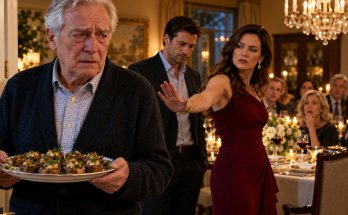
The doors to the Grand Bellmont ballroom were closed when I reached the corridor outside. Through the polished wood, I could hear the low conversation of guests settling into their seats. A violinist was playing something gentle and familiar. The scent of white roses drifted through the entrance, mingling with perfume and the faint smell of freshly polished floors. I stood beside Emily, waiting for the coordinator's signal, and felt an unexpected heaviness in my chest. Beyond those doors were people who had traveled across the country because they believed they were about to witness the happiest moment of my life.
I had imagined this entrance many times. I knew exactly where the light would fall, how the silk of my gown would move across the carpet, and where Carter would stand beneath the floral arch. I had once pictured his expression when he saw me. In those imagined moments, he looked overwhelmed and grateful, perhaps even a little nervous. Now I knew he was probably wondering whether I had obeyed his instructions. The thought hardened my resolve, although my hands remained cold. I clasped them together until the shaking stopped.
Margaret stood several feet behind us with my grandfather's longtime accountant. He was a quiet man named Robert Ellis, who had worked with the family for decades and had agreed to attend the ceremony at Margaret's request. Their presence was not accidental. Margaret wanted an independent professional familiar with the trust's records available if the financial situation became disputed. Robert had never cared much for ceremonial occasions. He wore a dark gray suit that had probably served him through hundreds of difficult meetings. When our eyes met, he gave me a small nod, the same gesture he had used whenever I asked a sensible question during financial reviews.
The coordinator approached and asked whether I was ready. Her eyes moved briefly toward my shaved head. She was too professional to comment, but I saw the surprise she could not quite hide. I told her to open the doors. The musicians adjusted their tempo. Emily squeezed my arm once, then moved into position with the bridesmaids. For a moment, I considered turning around. I could still leave through the service corridor and allow Margaret to handle everything by letter. Then I remembered Carter's voice on the recording, the casual confidence with which he had described his mother's assistance. I stepped forward.
The doors opened, and the room changed. Conversation stopped in uneven waves as the guests turned toward me. At first, their expressions followed the familiar pattern of delight and curiosity. Then people noticed my hair. A woman near the aisle raised her hand to her mouth. Two men exchanged a look. Someone whispered a question too softly for me to understand. I could feel attention gathering around my scalp, but I kept walking. The silk brushed against my legs, and my grandmother's earrings moved slightly with each step.
Carter stood beneath the arch in a beautifully fitted tuxedo. His blond hair was combed back, and a small white rose rested in his lapel. He had rehearsed his appearance as carefully as he rehearsed his confidence. When he first saw me, his smile faltered. His gaze moved immediately to my head, searching for the wig he had demanded. A flicker of alarm crossed his face. Then he recovered, straightened his shoulders, and resumed smiling as though my arrival proved that nothing serious had occurred. I recognized that expression. It was the look he wore whenever he believed an argument had ended because I had stopped resisting.
Diane sat in the front row, dressed in cream silk and pearls. She had insisted that the color was sufficiently different from my wedding gown to be appropriate. The distinction no longer interested me. When she noticed my uncovered scalp, her lips curved slightly, although the smile disappeared when she saw how many guests were staring. She shifted in her seat and adjusted her necklace. I wondered whether she regretted helping Carter. Her expression suggested that she regretted the exposure far more than the act.
I reached the altar and stopped beside Carter. He leaned toward me, careful to keep his lips in the shape of a pleasant smile. He murmured that he had not expected me to show my head. I looked at him for a moment before answering that I had no reason to pretend it was different. His jaw tightened. He glanced toward the guests, then toward the officiant, and whispered that we would discuss my behavior afterward. The old threat was familiar enough that I almost felt sorry for the man I had been three days earlier, the woman who might have apologized simply to avoid his anger.
The officiant began with a brief welcome. His voice carried through the ballroom, supported by speakers hidden near the floral arrangements. I heard the familiar language about two people joining their lives, but the words seemed detached from the people standing beneath the arch. Carter reached for my hand. I allowed him to take it, feeling the warmth of his palm and remembering how often that same hand had once reassured me. Now it seemed like part of a performance. He squeezed my fingers harder than necessary. I withdrew them gently, and his smile sharpened.
Before the officiant could continue, I asked for a moment to address the guests. A murmur moved through the room. Carter turned toward me, clearly surprised. I told the officiant that I had something important to say before any vows were exchanged. He hesitated, then stepped aside. There was no microphone directly in front of me, so one of the hotel technicians moved a standing microphone closer to the altar. I had arranged the possibility with the coordinator in advance, explaining that an important family announcement might need to be made. She had not asked for details.
I looked across the first rows. I recognized relatives, business associates, old friends, and people whose names I barely remembered. Some were smiling uncertainly. Others had already begun watching Carter rather than me. I told them I knew they had come expecting a wedding and that I was grateful for the trouble they had taken to be there. I said there was something they needed to understand before any ceremony could continue. Carter shifted beside me. He whispered that I was embarrassing myself. I turned slightly toward him and told him that the truth would be simpler if he allowed me to finish.
I announced that I had intended to make a substantial financial gift as part of our marriage. Carter's expression changed immediately. The tension around his mouth eased, and he looked toward Diane with visible relief. She straightened in her chair, apparently reassured that the morning was returning to the purpose she had expected. I felt a brief, painful recognition of what mattered most to them. I had not yet mentioned love, commitment, or the damage to my body. The first sign of money was enough to restore their confidence.
I said that fifteen million dollars had been prepared for transfer into a shared investment account after our marriage. The ballroom grew quiet. Even people who knew my grandfather had been wealthy seemed surprised by the amount. Carter stared at me, his relief giving way to a more cautious expression. Diane brought her hands together in a small, delighted gesture before noticing that other guests were watching her. I explained that I had considered the transfer a wedding gift because I believed financial partnership should be based on mutual respect and informed consent.
Then I said there would be no transfer that day. Carter's fingers closed around my arm. His grip was firm enough to hurt. He asked what I thought I was doing, his voice low and urgent. I pulled away and stepped closer to the microphone. Several guests saw the movement. Emily rose slightly from her chair before I signaled that I was all right. Carter's face flushed. He glanced toward the exits, then toward Margaret, who had taken a seat near the aisle with Robert. I saw him recognize her and understand that she was not merely attending as a family friend.
I removed the envelope from my hand and held up the note Carter had left on my pillow. I told the guests that I had awakened that morning to discover my hair had been shaved away while I was unconscious. I explained that I had not consented, that the act had left injuries on my scalp, and that Carter had subsequently instructed me to hide the result. I did not raise my voice. I knew the statement sounded extraordinary, and I wanted every word to be clear. A woman near the front began crying quietly. Another guest turned to examine Carter's expression.
Diane stood so quickly that her chair scraped against the floor. She accused me of inventing a malicious story to humiliate her son. Her voice carried even without a microphone. She insisted that I was emotional, that the wedding pressure had overwhelmed me, and that private misunderstandings should not be displayed before respectable guests. The language was familiar. I had heard versions of it whenever I challenged Carter's behavior. I waited until she stopped speaking, then asked whether she would prefer that the guests hear what Carter himself had said about the incident.
Diane's expression changed. She looked toward her son, then toward the audio equipment at the rear of the room. Carter stepped forward and demanded that I stop. I told him I had asked a straightforward question. Had he shaved my head because I refused to give him control of my inheritance? He began denying that I understood the situation. Then he tried to explain that our disagreement had been about trust and the responsibilities of marriage. He was speaking quickly now, shifting between irritation and an attempt at injured dignity. I listened long enough for the guests to hear how little concern he expressed for what had happened to me.
I signaled to the technician. The recording began with Carter asking whether I intended to wear a wig. His voice filled the ballroom, startling several guests who had been whispering. Then came his explanation that my resistance concerning money had required correction. The recording continued with his insistence that a husband should direct the marriage and his warning about what would happen if I refused. I watched faces change as people realized they were hearing the groom's own words. His friends looked down at their shoes. One of Diane's acquaintances slowly lowered the program she had been holding.
Then Carter's voice identified his mother as the person who had assisted him with a flashlight. The reaction was immediate. A sharp murmur passed through the guests. Someone near the rear uttered an exclamation. Diane sank back into her chair, her face pale beneath carefully applied makeup. Vanessa rose halfway from her seat, staring at her brother with an expression of disbelief. Her earlier message had suggested that she knew about the shaving, but the recording made the details impossible to treat as gossip or an exaggerated family disagreement. She asked Carter how he could have done something so cruel.
Carter moved toward the sound booth. Two hotel security officers stepped into his path. They had been briefed earlier that a confrontation might occur and that any attempt to interfere with the equipment or intimidate me should be addressed according to hotel security procedures. Carter stopped when he saw them. He turned back toward me and demanded to know whether I had recorded our conversation. I said I had. His face twisted with anger. He shouted an insult so vicious that several guests recoiled. The officers moved closer, and the officiant stepped away from the arch.
The room no longer resembled a wedding. People were standing, whispering, or moving toward the aisle. I asked them to remain for a few more minutes, explaining that the financial arrangements Carter had pursued were connected to his behavior. I did not intend to force anyone to listen, but I wanted the people responsible for Whitmore Development to understand why the expected financing would not arrive. Margaret stood and opened her leather case. Carter watched her with growing alarm. He had believed the most damaging part of the morning would be my uncovered head. Now he was beginning to understand that the evidence extended beyond the assault.
Margaret distributed a small number of document packets to Carter's father and the relevant senior company officials. She did not scatter confidential financial records among unrelated guests. The packets contained the correspondence concerning anticipated access to my inheritance, the proposed management provisions, and a summary of Whitmore Development's financial obligations. I told the room that Carter had sought authority over investments I intended to establish after marriage, and that available correspondence connected those plans to his family's struggling business. Carter interrupted repeatedly, claiming I misunderstood private financing discussions. Margaret calmly identified the documents and dates that supported my account.
Carter's father read in silence. His expression grew more severe with each page. Eventually he looked at his son and asked whether the financing he had promised the company was dependent on my inheritance. Carter began answering, stopped, and tried again. He claimed that the money would have become part of our shared financial future, as though that settled the question. His father asked whether I had ever authorized its use for Whitmore Development. Carter looked toward me. I said I had not. The older man closed the packet slowly, and I could see that the answer had struck him more deeply than Carter expected.
Diane rose again, accusing me of trying to destroy the family's reputation. I told her that the reputation of Whitmore Development was not the same thing as the conduct of the people who happened to bear its name. The company's contractors deserved payment. Its employees deserved competent management. Its creditors deserved accurate information. Carter had approached my inheritance as though it were a private reserve he could claim through marriage. I would not accept responsibility for repairing a financial crisis under conditions that denied me an informed choice.
Margaret then announced that the trust administered through my grandfather's investment arrangements held Whitmore Development's senior secured debt. She explained that the loan had been acquired months earlier and that the company had recently breached important obligations. Her statement was precise and restrained. She did not claim that we owned the company or could seize its assets without legal process. She explained that the trust possessed enforceable rights under the financing agreements and that those rights created an opportunity to negotiate a responsible restructuring. Carter stood motionless. I had never seen him unable to find words.
His father asked Margaret whether she was prepared to discuss a restructuring proposal immediately. She said she was, but only with authorized representatives of the company and its board. Carter attempted to interrupt, insisting that his position in management entitled him to participate. His father turned toward him and told him to remain quiet. The command was delivered without shouting, which made its effect more striking. Carter looked from his father to Diane, searching for support. Diane appeared too shaken to offer any. For the first time since I had known him, Carter could not rely on one of them to make his conduct disappear.
I told the guests that I did not intend to proceed with the marriage. The words were simpler than I had expected. I had spent hours rehearsing explanations, preparing evidence, and imagining confrontation, but the actual decision required only a sentence. Carter stared at me as though he had not understood. Then he approached carefully, his anger replaced by an expression I recognized from earlier arguments. He said we could discuss everything privately, that the day had become unnecessarily difficult, and that I should remember how much we had invested in building our future together.
I looked at the flowers behind him. They were beautiful, exactly as I had wanted them. The candles were lit, the musicians were waiting, and my friends stood nearby in dresses chosen months before. None of those things could make the person in front of me trustworthy. I told Carter that the arrangements were not a marriage and that his behavior had made any vows meaningless. He reached toward my hand, but I moved it away. For a moment, his face showed something close to fear. Then his eyes shifted toward Margaret's case, and I understood that even now he was calculating what he might lose.
Margaret approached the microphone once more. She said that a formal proposal concerning the company's debts and management would be delivered to the appropriate decision-makers. The trust was prepared to consider a restructuring that protected legitimate creditors and employees, provided the company adopted independent oversight and addressed the failures that had brought it to the brink. Carter demanded to know whether he would retain his executive position. Margaret said decisions about management would have to be made by the proper corporate authorities, but that the trust would not support a plan that left compromised leadership in control.
Carter's father studied the proposal for several moments. He looked older than he had at the start of the ceremony. Then he asked Carter whether he had withheld material information about the company's financing. Carter insisted he had been trying to save the business. His father answered that trying to save a company did not authorize him to misrepresent the source of its capital or coerce another person into providing it. He directed Carter to step away from management pending immediate board action. The public rebuke seemed to stun him more than the financial documents themselves.
I removed the engagement ring from my finger. The diamond caught the light from the chandeliers, throwing a small reflection across my palm. I remembered the afternoon Carter had proposed, how happy I had been, and how eagerly I had believed that happiness would continue if I worked hard enough to deserve it. I placed the ring on the altar. Carter watched my hand as though he expected me to change my mind. I told him he had mistaken my willingness to share my life for permission to control it. Then I stepped away from the floral arch and walked toward Emily.
Before I reached her, Margaret touched my elbow. She had received an update from one of the professionals reviewing the Whitmore debt. The preliminary figures suggested that several imminent obligations would require urgent negotiations, and the company's directors would need to respond quickly if they wanted to avoid enforcement proceedings. I looked back toward Carter's father, who was already speaking quietly with another executive. The financial crisis had not ended simply because the wedding had. It had only become visible to the people responsible for addressing it.
Emily placed an arm around my shoulders as we left the ballroom. Behind us, chairs scraped and voices rose. I could hear Diane asking someone to stop taking photographs. Carter shouted my name once, but I did not turn. The corridor outside was cooler, and the sudden quiet made my ears ring. I had expected relief, perhaps even triumph. Instead, I felt exhaustion and an aching sense of loss. The morning had taken away the future I thought I wanted, and exposing Carter had not restored it. Still, when Margaret joined us and asked whether I was prepared to proceed with a formal report and the next steps to protect the trust, I answered without hesitation. The wedding was over. The consequences had only begun.