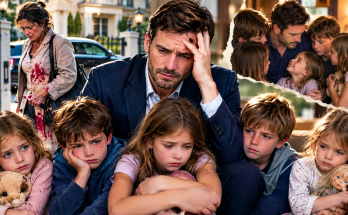
Nora stood beside the kitchen counter with her hands wrapped around a warm mug, watching me study the calendar. Outside, rain had begun falling across the marshes, softening the outline of the reeds and turning the afternoon sky a uniform gray. Theo's Thanksgiving invitation was still open on my telephone. He and Khloe wanted us to celebrate together, and they had offered to travel to Newport rather than expect me to return to Maple Oak. It was a thoughtful gesture, and I wanted to appreciate it without allowing gratitude to make the decision for me. Nearly a year earlier, the same holiday had become the setting for the argument that sent me out of their home. I could not pretend that accepting another invitation was as simple as choosing a date.
Nora set down her mug and asked what would make the holiday comfortable for me. It was the sort of question she had asked repeatedly since I arrived in Oregon, yet I still found it difficult to answer. For years, I had organized celebrations around everyone else's preferences. I remembered cooking early in the morning, preparing dishes the children liked, and making certain Theo and Khloe had enough time to enjoy themselves. My own pleasure had come from watching the family gather. There was nothing wrong with that, but I had gradually begun believing that a successful holiday depended upon how much work I performed. Now I needed to imagine celebrating without making myself indispensable.
“I want to see the children,” I told Nora. “And I want Theo and Khloe to feel welcome. But I don't want to spend the entire day wondering whether everyone is waiting for me to start cooking.” Nora smiled faintly. She suggested that we make the arrangements explicit before anyone booked a journey. If Theo and Khloe came to Newport, they could stay nearby as they had during their earlier visit. We could arrange a meal somewhere suitable or divide the preparations in a way that did not require me to stand in a kitchen for hours. I liked the practicality of her suggestion. It left room for affection without relying upon unspoken expectations.
We also discussed the possibility of inviting a few of Nora's friends. She had developed a warm circle of acquaintances through community activities, and some were planning quiet holidays without large family gatherings. I liked the idea of introducing Theo and the children to people who had become part of my new life. Yet I wondered whether including others would make the occasion too complicated. Nora reminded me that Thanksgiving did not have to resemble the celebrations we had organized in Maple Oak. We could choose a smaller gathering, a different menu, and a shorter day. The purpose was to enjoy one another, not reproduce a tradition that had become burdensome.
Later that evening, I called Theo. He answered quickly and asked whether I had considered the invitation. I told him Nora and I would be happy to celebrate with them in Newport, provided we planned the day together. He sounded delighted. Then I explained the practical details: they would arrange their own accommodation, the children would remain their responsibility, and we would choose a meal that did not require me to spend the day cooking. Theo listened without interrupting. When I finished, he said the conditions sounded reasonable and that he and Khloe would be glad to handle the food. I felt a small release of tension. He had not treated my limits as an obstacle to overcome.
I asked whether Khloe had genuinely agreed with the idea of traveling. Theo said she had suggested it herself. She wanted the children to spend Thanksgiving with me and thought returning to the scene of the previous year's argument might be unnecessarily painful. I appreciated her consideration, though I wondered whether she was also uncomfortable remembering her own behavior. Theo admitted that both of them had been thinking about the anniversary of that evening. They wanted the coming holiday to be different, but they did not intend to pretend nothing had happened. I told him I would prefer an ordinary, peaceful gathering to any elaborate attempt to make amends.
After we discussed possible dates, Theo asked whether I wanted to speak with the children. Hugo appeared first, filling the screen with his face before moving backward at his father's request. He asked whether I had decided to spend Thanksgiving with them. I told him we were making plans and that I looked forward to seeing him. Cheyenne leaned into the picture and wanted to know whether there would be pumpkin pie. I laughed and said I hoped so. Then Hugo asked a question that silenced me for a moment. “Are we all going to be happy this time, Grandma?” His voice was hopeful but cautious, as though he remembered more of the previous year than the adults wished.
I told him we would do our best to make the day pleasant and that everyone had learned important things about speaking kindly. I did not promise that nobody would ever disagree. Children deserved honesty, even when the truth was less comforting than certainty. I explained that adults sometimes made mistakes, but they could work to repair them. Hugo considered that before nodding. Cheyenne asked whether she could bring her watercolor supplies so we could paint together again. I said I would enjoy that, provided we found time when I was feeling well. She accepted the answer without disappointment. Their growing ease with my limitations encouraged me more than any adult promise.
Over the following weeks, preparations unfolded gradually. Theo and Khloe reserved accommodation near Nora's property. They offered to order the main meal from a local restaurant, allowing us to enjoy traditional food without making anyone responsible for hours of cooking. Nora volunteered to prepare a salad and a simple dessert because she enjoyed those tasks. I agreed to arrange flowers for the table and provide a few drinks. The division of work felt almost embarrassingly straightforward. I wondered why our previous celebrations had required so much effort from me when a little planning could distribute responsibilities more fairly.
One afternoon, while arranging details with Khloe, I noticed that I was becoming unusually careful about every word. I worried that suggesting a different time might sound controlling or that asking about the menu might revive her old resentment. After the call, I sat quietly and considered whether I was now moving too far in the opposite direction. Respecting her authority as a parent did not require me to abandon ordinary conversation. I could have preferences without issuing instructions. I could ask questions without assuming I knew best. The challenge was to communicate openly rather than either directing everyone or remaining silent until resentment accumulated.
At my next watercolor class, I mentioned the holiday plans to a woman named Marianne, who often sat beside me. We had become friendly over several months, exchanging stories about our families while struggling with paint that rarely behaved as we intended. Marianne listened as I described the coming visit. She said she had experienced something similar when her adult daughter began raising children. She had offered more help than she could sustain and later found it difficult to reduce her involvement. What finally helped, she said, was learning to distinguish a request from an obligation. I recognized the importance of that distinction. A request invited a choice. An obligation implied that refusal required justification.
Marianne also reminded me that family relationships could be repaired without returning to their previous form. She spoke about how her relationship with her daughter had become warmer once they stopped sharing every practical responsibility. They still disagreed sometimes, but the disagreements no longer threatened their affection. I thought about Theo and Khloe. Our conversations had become less frequent than before, yet more thoughtful. They were beginning to ask how I felt rather than assuming that my availability was unlimited. I missed certain aspects of our old closeness, particularly the spontaneous moments with the children, but I no longer missed the exhaustion attached to it.
As Thanksgiving drew nearer, I attended a medical appointment and discussed the anticipated visit with my physician. I explained that the family would travel to Newport and that I wanted to participate without overexerting myself. He encouraged me to maintain my treatment routine, take breaks when needed, and avoid prolonged standing or lifting. His advice was familiar, but I listened with more respect than I had shown a year earlier. I no longer viewed rest as something that could be postponed indefinitely. I wrote the recommendations in my notebook and made sure the holiday plans left enough room for a quiet afternoon if I needed one.
Nora helped me prepare the guesthouse for the children's visit without turning the task into a major project. We placed the watercolors where Cheyenne could find them and set aside the bird book Hugo had enjoyed. I chose a few photographs from their earlier visit and arranged them on a shelf. The work took less than an hour, and afterward we sat on the porch drinking tea. I realized that the guesthouse now felt unmistakably mine. It contained Sebastian's photograph, the children's letters, my paintings, and ordinary objects I had selected because I liked them. The space was small, but it represented a life I had actively chosen rather than one I was maintaining out of habit.
A few days before Thanksgiving, Theo called with a practical question about the meal. The restaurant had offered a choice of pickup times, and he wanted to know what would suit my schedule. I checked my calendar and suggested early afternoon. He agreed, then asked whether I wanted to contribute a favorite dish. I considered preparing Sebastian's preferred roasted vegetables, something I had made at holidays for years. The recipe was simple, and the memory was pleasant. I said I would enjoy doing that if I felt well enough. Theo told me not to worry if I changed my mind. The absence of pressure made me more enthusiastic about contributing.
The night before the family arrived, I dreamed about Maple Oak. In the dream, I was standing in my old kitchen preparing dinner while Sebastian sat at the table reading. I could hear Theo speaking in another room, but when I turned toward the doorway, nobody was there. I woke with tears on my cheeks. For a moment, I felt the familiar ache of widowhood as sharply as I had during the first year after Sebastian's death. I sat up carefully, reached for the photograph beside the window, and allowed myself to remember him. I wished he could see the children growing and know that Theo and I were trying to repair what had been damaged.
In the morning, I told Nora about the dream. She listened while preparing coffee. Then she suggested that we include a small remembrance of Sebastian during the holiday, perhaps by sharing a story about him rather than turning the meal into a solemn occasion. I liked the idea. Hugo and Cheyenne had been young when their grandfather died, and their memories were incomplete. I wanted them to know him as more than a photograph. He had been patient, mischievous, and sometimes stubborn. He loved gardening and disliked wasting food. He could repair almost anything but was hopeless at choosing gifts without asking me for advice. Those ordinary details deserved to be remembered.
Theo and his family arrived late Wednesday afternoon. The children greeted me with the same enthusiasm they had shown during their previous visit. Hugo immediately wanted to know whether the birds were still near the marsh. Cheyenne carried a folder containing new drawings and a small painting she had made for me. Theo hugged me gently, then helped Khloe unload the few things they had brought for our gathering. Their manner was relaxed. Nobody seemed to be waiting for instructions from me. We spent an hour together before they went to their accommodation, and I returned to the guesthouse feeling pleasantly tired rather than overwhelmed.
Thanksgiving morning dawned clear and cold. I opened the curtains to find sunlight touching the marsh grass. Nora came over early with flowers she had gathered from a local market, and we arranged them together. I prepared Sebastian's vegetables slowly, sitting when my knees began to ache. The simple act brought back years of holiday memories, but this time I did not feel compelled to prepare every dish myself. When the vegetables were ready, I covered them and rested with a book. There was still time before the family arrived, and I enjoyed the unusual luxury of a quiet morning before a celebration.
Theo and Khloe came shortly before the agreed time, carrying the ordered meal and a few additional dishes. Hugo helped arrange napkins while Cheyenne placed small decorations beside the plates. Nora welcomed everyone into her dining room, which was large enough for us to sit comfortably together. I noticed that Theo had remembered to bring a cushion for my chair after hearing me mention that certain seats could make my back uncomfortable. He placed it without drawing attention to the gesture. I thanked him quietly. The consideration mattered because it required no reminder and involved no dramatic apology.
We began the meal with ordinary conversation. Hugo described a school project, Cheyenne talked about an upcoming performance, and Nora told a story about a difficult customer she had once encountered during her working years. Theo laughed, and Khloe joined in. I watched the children passing food and asking questions, grateful that nobody seemed anxious about saying the wrong thing. The atmosphere was different from the previous Thanksgiving season, when resentment had been allowed to build beneath the surface until an innocent question exposed it. This year, the adults had discussed their expectations before gathering. The result was not perfect harmony, but it was comfortable.
Before dessert, Nora suggested we share a memory of Sebastian. Theo looked surprised, then smiled. He told Hugo and Cheyenne about the time their grandfather attempted to repair a kitchen appliance and accidentally filled the room with smoke. I protested that the story had grown more dramatic over the years, but Theo insisted every detail was accurate. The children laughed, and I found myself laughing with them. Then I described Sebastian's patience in the garden and how he could spend an entire afternoon coaxing a struggling plant back to health. For a few minutes, he seemed present through the stories we shared.
Cheyenne asked whether Grandpa would have liked Newport. I told her I believed he would. Hugo wanted to know whether Sebastian had ever painted. I explained that he had preferred practical work and would probably have teased me gently about my crooked bridges. Theo smiled and said his father would have been pleased to see me trying something new. The remark touched me. I had sometimes worried that changing my life meant leaving Sebastian behind. Hearing Theo imagine his father approving of my new interests made the transition feel less like a separation and more like a continuation.
After the meal, I began gathering plates without thinking. Khloe noticed and asked me to leave them. She and Theo would handle the cleanup. I hesitated, then returned to my chair. Hugo and Cheyenne helped carry napkins and small dishes to the kitchen. Nora brought coffee, and I sat by the window watching the family work together. The scene was ordinary, but it held more meaning than any elaborate speech could have conveyed. A year earlier, I had been expected to make the holiday possible through labor and compliance. Now I was being allowed to enjoy it as a member of the family.
Later, Theo asked whether we could speak privately for a few minutes. We stepped onto the porch, where the air was cool enough that I pulled my cardigan close. He looked out toward the marshes before speaking. He said he had been thinking about the previous year's dinner all morning. He remembered pointing toward the door and telling me to leave. He remembered Hugo's frightened expression and the way I had gathered my handbag without arguing. He said the memory had become more painful as he began to understand what I had done for the family and how carelessly he had treated me.
I listened without interrupting. Theo said he did not expect me to forget that evening, but he wanted to acknowledge it on the same holiday when the conflict began. He apologized again, this time not only for the words he had used but for the assumption that I would always return and smooth things over. He admitted that he had mistaken my willingness to forgive for an obligation to endure whatever was said. I felt tears gather in my eyes. I told him I had made mistakes too, particularly by concealing my health problems and allowing resentment to build instead of speaking honestly. But his responsibility for ordering me out remained his own.
Theo nodded. Then he said he was grateful I had allowed him another opportunity to be my son. The words affected me deeply because they recognized that our relationship had survived by choice, not by entitlement. I told him I had never stopped loving him, even when I was hurt and angry. I had needed distance because continuing as we had would have destroyed whatever affection remained beneath the resentment. He took my hand carefully. We stood together for a moment, watching the marshes in silence. I did not feel that everything had been repaired, but I felt the distance between us becoming less threatening.
When we returned inside, Cheyenne was arranging her watercolors on the table. She asked whether I would paint with her before they left. I agreed to a short session. Hugo joined us, and together we painted the view through Nora's window. Theo sat nearby, helping Hugo mix colors, while Khloe talked with Nora in the kitchen. The afternoon moved gently toward evening. When I grew tired, I said I needed to stop, and nobody objected. Cheyenne finished her painting while I watched. I realized that the holiday had become exactly what I hoped for: time together without the old demand that I keep giving until I had nothing left.
As the family prepared to leave for their accommodation, Hugo hugged me and said it had been his favorite Thanksgiving. I smiled and told him I had enjoyed it too. Cheyenne asked whether we could make painting together part of future visits. I said that sounded lovely, provided we continued choosing times that worked for everyone. Theo thanked Nora for welcoming them, and Khloe embraced me warmly. After they left, I helped Nora put away a few small things, then returned to the guesthouse and rested. My knees ached mildly, but the discomfort was manageable. More importantly, I did not feel emotionally drained.
That night, while I was preparing for bed, my telephone lit up with a message from Theo. He had sent a photograph taken during dinner. In it, I was laughing at something Hugo had said, with Cheyenne leaning toward me and Nora smiling in the background. Theo wrote that he was grateful we had found our way back to one another. I looked at the photograph for a long time. The image did not erase the painful memory of the previous year's table, but it offered another memory to place beside it. I saved the photograph and set the telephone down.
Before turning out the light, I opened the notebook where I had written my questions about generosity and boundaries. I read them again, then added a sentence of my own: love should make room for everyone involved, including the person who gives. I closed the notebook and placed it beside Sebastian's photograph. Thanksgiving had not solved every problem, and I knew future challenges would test the changes we had made. But for the first time since the argument, I could imagine family gatherings without fear. I had chosen to attend because I wanted to, and I had been welcomed without conditions. That was enough for the night.