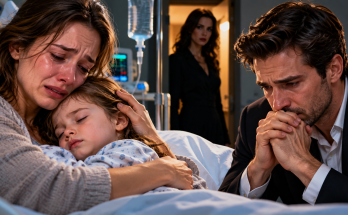
The independent forensic report arrived on a Monday morning, three weeks after Lily's emergency admission. Miriam called before sending me a copy and warned that the findings were technical, detailed, and likely to be distressing. I told her I wanted to read them. I had spent years helping healthcare organizations assess complicated software systems. I understood the difference between a marketing claim and a validated result. If LittleLight had misrepresented that difference, I needed to see precisely how.
I settled at Dad's study desk while Lily slept downstairs under his watchful eye. The report was more than eighty pages long, with supporting exhibits, comparisons, file histories, and explanations of the methods used. The examiner had reviewed authenticated Blue Lantern archives supplied by Nora, material LittleLight submitted during Aster's due-diligence process, and additional records lawfully preserved during the investigation.
The first significant conclusion concerned ownership. Substantial portions of LittleLight's software documentation and certain code structures appeared to derive from Blue Lantern. The report did not suggest that every feature of the commercial platform belonged to Nora and me. LittleLight's engineers had developed additional functions, interfaces, and integrations. But the underlying overlap was extensive and distinctive enough that independent development was not a credible explanation for every similarity.
I read the relevant passages slowly. There were descriptions of error-handling routines that Nora and I had written during graduate school. There were data structures reflecting decisions we had debated for weeks. There were unusual conventions that made sense only when viewed through the history of our original project. Ethan had once called the research an academic exercise. Yet those same ideas appeared throughout the system he was trying to sell to major healthcare organizations.
The report's next section concerned the synthetic datasets. Blue Lantern had used deliberately constructed records to test how software responded when sensor information was inconsistent, corrupted, or impossible. Such datasets were entirely legitimate within a properly described engineering process. They helped researchers identify weaknesses without exposing real patients to unnecessary risk.
The problem was how LittleLight had represented some of those records.
The investigators identified multiple sequences from the Blue Lantern archive within a validation package described to Aster as supporting clinical performance. The report carefully distinguished files whose labels were ambiguous from those incorporated into summary tables. In several cases, records originating from simulated testing appeared in analyses that the company's presentation characterized as evidence of monitoring accuracy in real-world infant populations.
I stopped reading and looked toward the study window. The maple tree in Dad's backyard had lost most of its leaves. Its branches moved gently in the wind. I tried to imagine a hospital administrator approving equipment based on results that appeared to come from clinical studies but actually included artificial combinations of measurements.
The implications were serious. A synthetic dataset could establish that software behaved in a particular way under simulated conditions. It could not establish how reliably a monitoring device performed on real infants in unpredictable home environments. Presenting one as the other could create confidence unsupported by evidence.
I returned to the report.
There, on page thirty-seven, was the marker MARGARET_LANTERN_17.
The examiner had traced the sequence to an authenticated Blue Lantern archive created years before LittleLight existed. The sequence contained intentionally impossible combinations of readings. Those anomalies were not incidental. Nora and I had placed them in the dataset specifically to test whether the software recognized unreliable input and refused to present a reassuring result.
The report showed that corresponding records appeared in LittleLight's material. Some had been reformatted, and certain labels had changed. But the pattern of values remained distinctive. The examiner concluded that the similarities strongly supported direct reuse of the original synthetic material.
I thought of my mother standing in a pediatric ward, telling a young student nurse that a monitor should never replace the judgment of someone who could see that a child was ill. I had built Blue Lantern around that principle. The marker bearing her name had survived into a system that appeared to violate it.
I called Nora.
She answered immediately, and I told her I had reached the section containing our old testing sequence. For a moment neither of us spoke. Then Nora said she had read the same passage the previous evening.
“I kept hoping there would be some innocent explanation,” she admitted.
“So did I.”
“There may still be questions about who made particular decisions,” she said. “But the records weren't accurately described. That's the part I can't get past.”
I leaned back in my chair. Nora had always been the more skeptical of us when it came to commercial promises. She believed that software should be evaluated by what it actually did, not what investors wanted it to do. Hearing her speak with such disappointment made the findings feel more personal.
We talked about our graduate-school years, the long nights spent correcting errors, and the excitement of discovering a reliable way to identify certain corrupted inputs. Neither of us had expected the project to remain commercially important. We had simply wanted to build something useful.
“I don't want Blue Lantern remembered for this,” I told her.
“Then we make sure the record distinguishes our work from what they did with it,” she replied.
After the call, I continued reading.
The report's most disturbing section concerned the alert-suppression configuration. Investigators had reconstructed the relevant software behavior using preserved code, development documentation, and device logs. The demonstration setting could prevent certain warnings from reaching the ordinary user interface while retaining underlying measurements in internal records.
There were legitimate reasons to simulate a quiet demonstration environment when testing with synthetic data. The danger arose when the same configuration was available on a device used by an actual child without clear disclosure or appropriate safeguards.
Daniel Price's internal warning appeared in the report's exhibits. It had been sent before Lily's monitor was issued. He cautioned that demonstration settings should never be allowed to silently suppress alerts in ordinary home use. He recommended additional restrictions and clearer separation between testing configurations and devices used outside controlled environments.
The warning had been addressed to Ethan and several members of the management team.
Ethan's response acknowledged the concern and indicated that demonstration configurations would be managed appropriately. The investigators did not find evidence that the recommended restrictions had been fully implemented before Lily received her band.
I read the correspondence twice. Ethan had told me he didn't believe the settings could affect anything important. But Daniel had described the exact risk in plain language. Even someone without engineering expertise should have understood that suppressing alerts could prevent a parent from receiving information about a sick child.
The report then turned to Lily's device.
Its records showed that elevated temperatures had been registered before I brought her to the hospital. At ten-seventeen that night, the system recorded a measurement consistent with the fever I had detected using our household thermometer. An administrative action associated with Ethan's account altered the alert configuration shortly afterward. Another elevated reading appeared at eleven-oh-six, yet the ordinary application continued presenting a reassuring status.
The investigators had examined access records and associated communications. They concluded that Ethan's account was used to make the change and that the available evidence strongly connected the activity to a device under his control. However, the report stopped short of declaring that no other person could possibly have used the credentials.
I appreciated the distinction. The evidence was serious enough without exaggeration.
There was also a communication from Ethan's phone during the relevant period. It concerned maintaining a stable demonstration environment before the morning presentation. The message was not a direct admission that he had intentionally concealed Lily's fever. But when considered alongside the administrative activity and Daniel's warning, it supported the conclusion that demonstration concerns had influenced the handling of the device.
I remembered the green light blinking against Lily's ankle. I remembered Ethan asking whether our thermometer worked. I remembered his refusal to remain at the hospital because he needed sleep before the presentation.
My hands began shaking.
For days I had tried to separate the possibility of technical error from the question of parental responsibility. The report did not prove that Ethan intended to make Lily ill, and there was no evidence that the device caused her infection. But it showed that he had been warned about suppressed alerts, placed the device on our daughter, and relied on its reassuring display while she was visibly unwell.
He had allowed the needs of a demonstration to become entangled with the safety of his own child.
I closed the document and went downstairs.
Dad sat in the living room with Lily on his lap, supporting her carefully while she examined the sleeve of his sweater. When he looked up, he immediately understood that I had read something painful.
He didn't ask for the details. He shifted Lily toward me, and I took her into my arms. She smelled faintly of baby lotion and the clean cotton blanket tucked around her. I held her close enough to feel the steady movement of her breathing.
“She was right in front of him,” I whispered.
Dad looked at me.
“He could see she was sick. He didn't need a computer to tell him.”
I sat on the sofa and cried quietly while Lily rested against my shoulder. Dad remained nearby, saying nothing until I was ready to speak.
Later that afternoon, Miriam called to explain the legal significance of the report. The technical findings supported claims concerning unauthorized use of research and serious questions about LittleLight's validation disclosures. The disputed assignment and financial transactions remained separate issues requiring documentary and testimonial evidence. Potential regulatory concerns had been referred to the appropriate authorities.
Aster's independent board committee would consider the report as part of its decision-making. Miriam expected the proposed contract to remain suspended and said the company might choose to terminate negotiations entirely. She cautioned that the report did not automatically establish criminal liability or determine the outcome of any civil proceeding.
I asked whether Ethan had received the findings.
His counsel had been informed of the principal conclusions and was expected to respond through established procedures. Miriam said the company would have an opportunity to contest interpretations and present additional evidence. That was appropriate, even though the thought of Ethan explaining the logs made my stomach tighten.
The next day, the board announced that Aster would not proceed with LittleLight's proposed agreement. The decision cited unresolved concerns about data integrity, validation, intellectual-property rights, and the company's ability to meet the standards required for a healthcare partnership.
Dad did not celebrate. He told me the decision had been difficult because LittleLight employed people who had no apparent involvement in the disputed conduct. Some engineers and administrative staff had worked honestly on products they believed could help families. The collapse of a major contract might affect their livelihoods.
I understood. Ethan's choices had consequences beyond our marriage. That made the situation more painful, not less. But approving a medical technology agreement despite serious doubts would have placed other families at risk and rewarded unreliable practices.
That evening, Ethan called from his attorney's office.
He sounded composed at first. He said the forensic report had been written by people who did not appreciate the distinction between research and commercialization. He insisted that LittleLight's engineers had transformed Blue Lantern into a substantially different product and that the company's validation records had been misunderstood.
I asked whether he disputed that synthetic Blue Lantern data appeared in the clinical-performance material submitted to Aster.
He hesitated.
Then he said the records had passed through several engineering and presentation stages, and that he could not personally verify every label applied by the technical team.
I asked whether he disputed Daniel's warning about alert suppression.
He said he had received many technical emails and relied on specialists to manage engineering risks.
I asked why he had placed a demonstration-configured device on Lily.
He grew quiet.
Finally, he said he wanted to help advance the product and believed the device was safe.
I thought about how often he had used belief as a substitute for evidence. He believed a contract would solve our financial problems. He believed I would eventually agree to transfer my research. He believed the monitor was safe despite a specific warning from the engineer responsible for the feature.
“Did you know her temperature was rising before I came to your office?” I asked.
There was a long pause.
“I saw some abnormal information,” he said.
The room seemed to contract around me.
“When?”
“I don't remember exactly.”
“Before I told you she was sick?”
He didn't answer.
I felt a pressure in my chest, but my voice remained steady.
“Ethan, tell me the truth.”
He inhaled slowly.
“I thought it was a sensor error. We were still calibrating the system. I didn't think she was actually that sick.”
I closed my eyes.
“You saw an abnormal reading and told me my thermometer was wrong.”
“I was trying to keep everyone calm.”
“No,” I said. “You were trying to keep your presentation on schedule.”
He began arguing, but I stopped him.
“You knew there was a warning. You knew the device could suppress alerts. You saw abnormal information. And when I told you our daughter was feverish, you treated me like I was inconveniencing you.”
He said he had made a mistake.
For the first time, I heard something resembling genuine shame in his voice. But he quickly followed it by asking whether I would reconsider the divorce if he accepted responsibility and cooperated with the investigation.
I looked toward Lily's bassinet.
“I hope you take responsibility,” I said. “Not because it will save our marriage, but because it's the right thing to do.”
He was silent.
Then he asked whether I still loved him.
The question hurt more than I expected. I had loved him for years. Some of that feeling remained tangled with grief, disappointment, and memories of the person I thought he was. But love did not answer the questions that mattered now.
“I don't trust you,” I replied. “And I can't build a marriage without trust.”
We ended the conversation shortly afterward.
The next morning, Miriam told me Ethan's attorneys had requested formal settlement discussions concerning the Blue Lantern ownership dispute. They also wanted to address the disputed assignment and financial compensation entries. I agreed to participate through counsel, but only if the process began with a full accounting and did not require me to conceal or misrepresent the evidence.
I had no interest in a private payment that would leave the false records intact.
By the end of the week, Aster's decision had become known within the healthcare technology industry. LittleLight issued a statement saying it was reviewing questions about its validation procedures and intellectual-property documentation. The statement did not mention Lily, and I was relieved. I wanted her medical history kept private.
Reporters contacted the company and several people associated with the review. I declined interviews. Dad followed his counsel's advice and limited his public comments to Aster's formal position. Nora refused to discuss the investigation publicly while the technical and legal processes remained active.
On Friday afternoon, Miriam sent me another update.
A forensic review of the alleged seventy-five-thousand-dollar compensation payment had confirmed that the funds moved through an account bearing my name and then into Mercer Holdings. The account-opening materials contained identity information linked to me, but the investigators had found no reliable evidence that I personally authorized the account or received the money.
Additional records connected Sylvia's company to the account's administration.
Miriam said the findings significantly strengthened our position in the civil dispute and had been shared with the appropriate investigators.
I read the message while sitting beside the window in Dad's study. Outside, the last leaves were falling from the maple tree. The house was quiet, and Lily slept upstairs.
For the first time, the different parts of the deception were beginning to align. The forged assignment gave LittleLight apparent rights to Blue Lantern. The supposed compensation created a paper trail suggesting I had been paid. The money moved through an account I had not opened and ended at a company controlled by Sylvia. The product built around disputed technology was then promoted using validation material that included improperly characterized synthetic data.
It was not a single careless mistake.
It was a pattern of decisions, made over time, that depended on my remaining uninformed.
The following Monday, Miriam called with a message from the authorities handling the financial and document investigation. They had requested interviews with several people involved in preparing the assignment, processing the payment, and administering the relevant accounts.
Sylvia was among them.
So was Ethan.
I placed the phone down and looked at the photograph of my mother on the desk.
The truth was no longer contained in family conversations or private legal letters. It had entered a process neither Ethan nor Sylvia could control merely by demanding silence.