The new petition arrived on a Thursday morning, attached to an email from Rebecca with a warning that I should read it somewhere private. I was sitting in the workshop reviewing the preliminary safety assessment for Project Second Chance. Outside, Samuel was repairing a section of damaged guttering, and the ordinary scrape of his ladder against the wall made the room feel reassuringly familiar. Then I opened the document. Ethan's attorneys were seeking emergency intervention concerning my authority over certain Hartwell assets, arguing that my decisions since my father's death demonstrated instability, poor judgment, and an inability to manage responsibilities involving substantial financial interests.
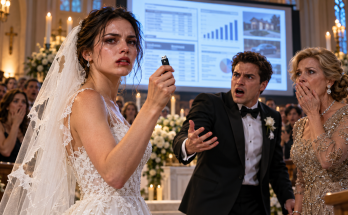
The petition referred to my grief, the public confrontation at the chapel, and my recent decision to pursue Arthur's unfinished research. It described the wedding as an emotional outburst in which I had made damaging accusations against a family with longstanding business connections. It suggested that my interest in Project Second Chance was impulsive and financially irresponsible. One paragraph referred to the visible injuries I had sustained before the ceremony, presenting them as part of a personal dispute rather than acknowledging how they occurred. I read that section three times before setting the papers down.
Ethan was attempting to use the consequences of his own conduct to undermine my credibility. The injuries had been examined by a clinician, the financial allegations were supported by records under formal investigation, and the research project was proceeding through independent review. Yet the petition rearranged those facts into a portrait of a grieving woman acting without restraint. It relied on the same language Ethan had used throughout our engagement. Whenever I questioned him, he described my questions as evidence that I needed guidance. Whenever I disagreed, he treated the disagreement as proof that I could not make decisions safely.
I called Rebecca. She had already begun preparing our response and sounded more irritated than alarmed. She explained that Ethan could file allegations, but filing them did not make them true. His request faced significant legal obstacles, particularly because I was an adult with no finding of incapacity and because his own financial conduct was under investigation. The court would examine whether he possessed any valid basis for the relief he requested. Rebecca emphasized that we should answer the actual claims with documented evidence rather than allowing the matter to become another argument about my personality.
I wanted to know whether the petition could interfere with Hartwell's operations. Rebecca said the company had functioning governance arrangements and independent directors who could testify about my decisions. The board had approved protective measures through established procedures. Daily operations were being managed by experienced executives. My decision to explore Project Second Chance had not involved transferring corporate assets without authorization or conducting unapproved clinical testing. Those facts mattered. Ethan's petition might create uncertainty, but it could also expose how little factual support existed for his accusations.
After the call, I walked into the yard. Samuel was standing beneath the gutter, examining a bent metal bracket. He climbed down when he saw my expression. I told him about the petition and showed him the section describing my emotional condition. Samuel read it carefully, then handed the phone back. He said Arthur had once faced an investor who claimed that refusing an unfavorable deal demonstrated irrational stubbornness. My father answered by producing a financial analysis showing exactly why the proposal was poor. Samuel suggested I do the same now: present the decisions, the evidence, and the reasons behind them.
His advice helped, but I could not ignore the personal cruelty of the petition. Ethan had seen me at my most vulnerable after Arthur's death. He knew how difficult ordinary tasks had been during those early months. He had watched me struggle to sleep, forget meals, and become overwhelmed by condolences from people I barely knew. Now he was turning those memories into allegations that I could not manage my own affairs. The betrayal felt different from the stolen money. Financial records could establish amounts and dates. There was no comparable accounting system for the damage caused when someone used private grief as a weapon.
Rebecca arranged for me to meet with an independent clinical professional who could provide appropriate documentation concerning my current functioning if it became relevant. She also advised me to continue receiving support for the effects of the assault and the prolonged coercive relationship. I agreed, although I initially resented the idea that I might have to demonstrate my stability because Ethan had accused me of lacking it. During the appointment, I described the fear I experienced when someone moved suddenly near me, the difficulty sleeping, and the moments when I questioned decisions I would previously have made without hesitation.
The clinician listened without treating those experiences as proof that I was incapable of managing my life. She explained that distress after a threatening or violent experience did not automatically determine a person's ability to make legal or financial decisions. Any assessment would need to address specific functional questions rather than rely on stereotypes about grief or emotional responses. I left the appointment feeling less defensive. I did not have to pretend I was unaffected by what happened in order to demonstrate that I could exercise judgment. Seeking help was compatible with making responsible choices.
Meanwhile, Rebecca's team assembled evidence concerning the chapel incident. The venue had retained recordings from cameras covering portions of the ceremony, and several guests had independently preserved video of Ethan's remarks and his attempts to approach the podium. The footage did not capture what happened inside the bridal suite, but it documented my visible injuries and the way Ethan responded to my objections. Medical records established the injuries shortly afterward. Messages from Ethan before the ceremony showed pressure to sign the disputed agreement. Rebecca was careful to distinguish direct evidence from recollection, and she advised me to prepare a detailed statement while the events remained clear.
Writing the statement was harder than I expected. I began with Ethan entering the hotel suite carrying the folder. I described the agreement, my refusal, his grip on my arm, and the impact against the marble vanity. I recorded the torn veil, the blood, and his instructions to continue with the wedding. I avoided speculation about what he intended beyond his words and actions. Several times, I had to stop because my hands were shaking. When I finished, I read the account aloud. It was factual, restrained, and far more disturbing than any dramatic description I might have attempted.
The criminal complaint concerning the assault was proceeding separately from the corporate investigation. I understood that different allegations required different evidence and legal standards. Rebecca kept me informed without promising outcomes. Ethan's attorneys denied that he had intentionally injured me and characterized the incident as an accident during an argument. I knew what had happened. I also knew the process would require patience. The existence of a legal challenge did not change my decision to protect myself or cooperate with investigators.
The Hartwell board responded to Ethan's petition through formal declarations. Several independent directors described meetings in which I had identified financial concerns, requested professional investigation, and refrained from interfering with technical decisions beyond my expertise. The interim chief executive provided records of the company's operational safeguards. The finance committee confirmed that disputed accounts had been reviewed by outside specialists and that protective measures were approved through established procedures. Their statements were not character testimonials. They addressed the actual business decisions Ethan had tried to portray as reckless.
Dr. Adrian Foster also prepared a declaration concerning Project Second Chance. He explained that the prototype remained an experimental research system and that I had not authorized human testing or made unsupported claims of clinical effectiveness. Instead, I had requested an independent engineering assessment and agreed to preserve the equipment while ownership and safety issues were reviewed. Dr. Hayes supplied a separate statement describing the preliminary nature of the proposed collaboration and the safeguards required before any formal clinical work could begin. Together, their accounts showed that the project was being approached cautiously rather than impulsively.
I was reviewing those materials when Eleanor Brooks called. She had heard about the petition and wanted to know whether her testimony would be useful. I told her Rebecca would contact her. Eleanor then asked whether I had eaten lunch. The question nearly made me laugh. After everything that had happened, she still noticed the ordinary things I neglected when worried. I admitted that I had been working through the afternoon. She told me Arthur had made the same mistake and that she had spent thirty years reminding him that important decisions were rarely improved by an empty stomach.
The following day, Eleanor delivered a carefully organized account of Ethan's increasing involvement in Hartwell after my father's death. She had preserved meeting schedules, correspondence, and instructions directing employees to route information through Mercer Capital advisers rather than through the company's established leadership. Several executives had expressed concerns privately but hesitated to challenge Ethan because he claimed to be acting with my approval. Eleanor's records established that I had begun questioning those arrangements months before the chapel confrontation. They also showed that some decisions attributed to me had been made without my knowledge.
One particular exchange caught Rebecca's attention. In an email sent to Hartwell's accounting department, Ethan instructed staff to delay providing information I had requested because he believed additional financial details would aggravate my emotional condition. The message contained no medical basis for the restriction. It was simply an assertion of authority by someone who did not possess the right to control my access to corporate records. Rebecca included it among the materials addressing Ethan's claim that he had been protecting the company from my judgment. The email demonstrated that he had attempted to prevent me from exercising that judgment at all.
Other employees began contacting Rebecca after learning that Eleanor was prepared to testify. A senior accountant supplied correspondence documenting unexplained changes to vendor information. A former administrative assistant described instructions to conceal certain meetings from Hartwell executives. An information-security specialist provided records showing when monitoring systems had been disabled and which accounts requested the changes. Rebecca handled each contact carefully, ensuring that potential witnesses were not pressured and that their documents were preserved through appropriate procedures. Some people admitted they had suspected wrongdoing but remained silent because they feared losing their jobs.
Their testimony affected me deeply. For months, I had believed that I was the only person who noticed the gap between Ethan's public kindness and private control. Now I learned that employees throughout the company had experienced versions of the same pattern. Requests were redirected. Questions were dismissed. People who challenged instructions were told they did not understand the larger strategy. The consequences differed, but the method was familiar. Ethan used confidence and institutional authority to make reasonable objections appear disloyal or incompetent.
Gregory Shaw's cooperation also advanced. Through his attorney, he supplied additional financial records and communications connecting several disputed transfers to senior Mercer Capital personnel. Investigators were examining whether Ethan, Vivian, Charles, and others had participated in different aspects of the scheme. Gregory's records did not make him an innocent observer. He had approved or facilitated transactions that required explanation. But his cooperation gave investigators access to information that might otherwise have remained concealed. Rebecca reminded me that determining each person's responsibility would take time and could produce outcomes I did not expect.
The court hearing on Ethan's emergency petition took place several weeks after it was filed. I attended with Rebecca, carrying a slim folder containing my statement and the documents I might need to reference. Ethan sat across the courtroom with his attorneys. He looked thinner than he had at the wedding, but his expression remained controlled. He did not attempt to speak to me. Vivian sat behind him, her hands clasped tightly over a dark handbag. Charles was absent. I had been told his attorneys were coordinating separately with investigators and civil counsel.
The hearing was less dramatic than the chapel confrontation and far more important in practical terms. Ethan's counsel argued that my recent decisions justified intervention to protect valuable corporate assets. Rebecca responded that the petition lacked a sound basis, relied on misleading descriptions of documented events, and sought to interfere with governance arrangements properly established under applicable law. She presented the board records, independent assessments, and evidence concerning Ethan's own conduct. The judge questioned both sides closely, focusing on legal authority and actual evidence rather than personal accusations.
When the discussion turned to Project Second Chance, Rebecca explained the distinction between preserving an experimental research asset and committing a company to unapproved development. No clinical testing had begun. No disputed intellectual property had been transferred. A feasibility assessment was being prepared by qualified professionals. The judge asked whether any board action had been taken without required approval. Ethan's counsel could not identify a specific unauthorized transaction supporting the broad relief requested. Watching that exchange, I felt some of the tension leave my shoulders.
Ethan's lawyers also referred to the chapel presentation. Rebecca acknowledged that the event had been public and unusual but argued that its dramatic character did not establish incapacity. She explained that financial records had been preserved and submitted to authorities independently of the ceremony. The assault allegations were being handled through separate proceedings. The judge cautioned both sides against using inflammatory descriptions in place of relevant evidence. I appreciated the distinction. I did not need the court to approve of every decision I had made that morning. I needed it to apply the law to the claims before it.
By the end of the hearing, the request for emergency intervention had been denied. The judge found insufficient grounds for the extraordinary restrictions Ethan sought, while leaving other legal questions to be addressed through the appropriate proceedings. The decision did not declare me incapable of making mistakes, nor did it resolve the financial investigation. It meant that Ethan had failed to establish a legal basis for the immediate control he demanded. Rebecca touched my arm as we stood. I looked toward Ethan, who was speaking sharply to his attorney. He did not look at me.
Outside the courthouse, reporters waited behind a barrier. Rebecca advised me that I could decline questions, and I did. She issued a brief statement confirming the decision and reaffirming our cooperation with the ongoing investigations. We walked to the car without stopping for photographs. I expected the relief to arrive immediately, but my body remained tense until we were several streets away. Only then did I realize how strongly I had feared being forced once again to defend the basic right to make decisions about my own life.
That evening, the Hartwell board held a scheduled meeting to consider the next phase of Project Second Chance. The independent technical assessment had identified a plausible basis for further research, provided that the project addressed substantial engineering, regulatory, and financial challenges. The intellectual-property review was continuing, but the recovered storage unit and Arthur's documents had clarified important aspects of the project's history. Rebecca advised that a carefully structured research initiative could be established without prejudging disputed legal rights, as long as the agreements contained appropriate safeguards.
I presented a proposal prepared with Dr. Hayes, Adrian, Samuel, and the company's finance committee. It called for a limited feasibility program, independent scientific oversight, and an advisory group including people with relevant disabilities and rehabilitation experience. Funding would be released in stages according to documented progress rather than publicity milestones. The program would maintain a transparent record of safety concerns and unsuccessful tests. Any future clinical work would require proper approvals. If the technology eventually proved useful, affordability and accessibility would be considered from the earliest development stages.
The discussion lasted nearly three hours. Directors asked difficult questions about costs, staffing, intellectual-property risks, and potential conflicts with Hartwell's existing obligations. I answered where I could and referred technical matters to the specialists. I did not attempt to conceal uncertainty. Some directors were skeptical about whether the project would ever produce a viable product. Others believed the preliminary work justified further investigation. When the vote finally came, the board approved the limited research program under the proposed safeguards.
I called Samuel afterward. He was at the workshop, sorting through a cabinet of old tools. When I told him the decision, he remained silent for several seconds. Then he asked whether Arthur's original notebook would remain available to the engineering team. I assured him it would, with the originals preserved and verified copies used for daily research. Samuel laughed softly. He said my father would probably have argued about the budget for another hour before agreeing that the work should continue.
A week later, the first formal meeting of the Project Second Chance research team took place in a conference room at Hartwell. Dr. Hayes attended with her clinical colleagues. Adrian brought the updated engineering assessment. Daniel Price joined as an adviser, and Samuel sat near the end of the table with Arthur's notebook beside him. I opened the meeting by explaining why the project mattered and why its future would depend on evidence rather than personal ambition. There was no announcement of a breakthrough. There were no investors demanding a demonstration. We began by examining the unresolved safety questions.
During a break, Daniel approached me. He said Arthur would have appreciated the seriousness of the discussion. I told him I hoped so. Daniel looked through the glass wall toward the engineers arguing over a diagram and said that if the team could eventually make even one ordinary task safer or easier for someone, the effort might be worthwhile. I agreed, though I reminded him that we had a long way to go. He smiled and said he preferred a difficult truth to an easy promise.
When I returned to my office that afternoon, Rebecca had left a message asking me to call as soon as possible. I expected another development in Ethan's civil case. Instead, she told me that investigators had completed an important stage of the financial inquiry and that formal action concerning several Mercer Capital executives was approaching. The recovery effort had also identified additional funds that might be returned to Hartwell, although substantial losses remained uncertain.
I asked whether Ethan would be among those facing action. Rebecca said the authorities had not authorized her to disclose every detail, but the evidence concerning his role had become considerably stronger. She wanted me prepared for renewed media attention and possible requests for testimony. She also reminded me that the assault proceedings remained separate and that I could choose how much personal involvement I wanted in public reporting.
I looked through my office window at the Hartwell research buildings. Employees crossed the courtyard carrying coffee cups, technical drawings, and ordinary afternoon concerns. The company was still functioning. My father's unfinished work had a path forward. Ethan had failed to take control through marriage, litigation, or accusations about my judgment. Yet none of those developments meant the consequences of his actions had ended.
I told Rebecca I would cooperate with lawful requests and continue protecting the company's interests. I would not make the investigation my entire life, but I would not retreat from the facts either. After ending the call, I opened the next meeting agenda for Project Second Chance. The first item concerned a mechanical safety issue identified in the prototype's support frame. I began reading.
A few minutes later, Rebecca sent the formal notice she had been permitted to share. Ethan Mercer and several associates were now facing significant legal action connected to the suspected financial scheme. The notice identified proceedings that would require witnesses, documentary evidence, and months of further work. It was the first clear indication that the consequences of the fraud would extend beyond damaged reputations and frozen business relationships.
I placed the notice beside my father's notebook. The next stage would demand patience, and the eventual legal outcomes were not mine to control. What I could control was whether I answered questions truthfully, protected the people who depended on Hartwell, and allowed my father's research to be evaluated on its merits.
For the first time since the chapel doors opened, I felt that my life was moving toward something rather than merely away from Ethan. But the final accounting of what he had done—and what it had cost everyone involved—was still ahead.