PART 1 — THE BOY THEY LEFT BEHIND
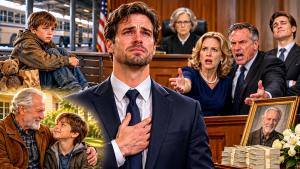
The courtroom was so quiet I could hear the clerk’s pen scratching against her notepad.
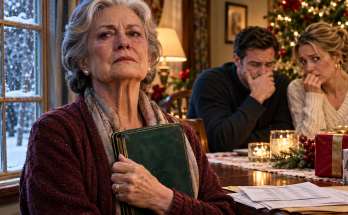
My mother sat in the second row wearing a navy dress that looked as though she had chosen it specifically to make herself appear innocent.
My father sat beside her, his jaw clenched, his eyes fixed on the judge.
Behind them was my younger brother, Wyatt, leaning back in an expensive suit, smirking like the money was already in his bank account.
They had not seen me in twenty-two years.
Not once.
Not a birthday card. Not a phone call. Not a knock on my door. Not even a weak apology sent through some distant relative.
But when they heard that the man who raised me had left me $3.8 million, suddenly I was family again.
The bailiff called the room to order.
“All rise.”
Everyone stood.
Judge Patricia Wynn entered, took her seat, and began flipping through the case file.
Her eyes moved from the plaintiffs’ table to mine.
“Mr. Marsh,” she said. “I do not see your counsel present. Are we waiting on someone?”
My mother’s mouth curled into a smile.
Wyatt actually laughed under his breath.
They thought I had come unprepared.
They thought I was still the frightened little boy they had abandoned at a bus station with a crushed granola bar in his hand.
I stood slowly, buttoned my jacket, and looked straight at the judge.
“No, Your Honor,” I said.
“I’ll be representing myself.”
That was the first time my mother stopped smiling.
My name is Matthew Marsh.
But that was not the name I was born with.
I was eight years old when Arthur and Evelyn drove me to a Greyhound station on the east side of Dayton, Ohio, one freezing February afternoon in 1994.
I remember the sky being gray.
Not storm gray.
Not soft winter gray.
Dead gray.
The kind of gray that made everything feel colder than it already was.
My father’s station wagon barely had heat.
My coat was too thin.
My mother pulled me through the glass doors by the wrist and pointed to a wooden bench near the lockers.
“Sit here,” she said.
I asked where we were going.
“Your father has to buy tickets,” she told me. “I’ll help him. Ten minutes.”
Then she shoved a granola bar into my hand.
“Do not move.”
So I didn’t.
For four hours, I sat on that bench.
I watched families drag suitcases past me.
I watched buses come and go.
I watched the sliding doors every time they opened, hoping my parents would walk back in with some normal explanation.
The terminal smelled like wet coats, cigarette smoke, floor cleaner, and diesel from outside.
A woman from the information desk came over more than once.
“Sweetie, where are your parents?”
“They’re buying tickets,” I said the first time.
“They’re coming back,” I said the second time.
By the third time, I had stopped answering.
When night came, the station emptied out.
The lights buzzed overhead.
My feet were numb.
My throat hurt from holding back tears.
That was the first time I understood that silence could be louder than screaming.
My parents did not come back.
The police came instead.
Then child services.
Then waiting rooms with plastic chairs and cartoon shows playing without sound.
Adults asked me questions in soft voices.
I kept looking at the door, still believing Arthur and Evelyn would rush in and say it had all been a terrible mistake.
But nobody came.
Then a man named Elijah Marsh walked into the wrong room.
He was not supposed to be there.
He volunteered at a community center and had taken a wrong turn while looking for an elevator.
He was fifty-three, wearing a brown corduroy jacket with worn elbows, and he looked completely ordinary.
But he saw me.
Not as a case number.
Not as a burden.
Not as some kid nobody wanted.
He sat down beside me and asked:
“Do you know how to play chess?”
I shook my head.
He opened a tiny magnetic chess set between us and said:
“That’s fine. I can teach you.”
That was how my real life began.
Elijah came back the next week.
Then the week after that.
Then every week after that.
When I stopped talking, he didn’t force me.
He just sat beside me and moved chess pieces across the board.
When I forgot how the knight moved, he explained it again like it was the first time.
Months later, he asked if I wanted to live with him.
He did not say I owed him gratitude.
He did not tell me I should feel lucky.
He said trust had to be earned, and if he had not earned mine yet, he understood.
I said yes before he finished the sentence.
Elijah raised me in a small cream-colored house in Centerville that smelled like cedarwood, old books, and fresh bread.
He drove an old Subaru.
He wore patched jackets.
He clipped coupons.
He fixed leaky pipes himself.
I thought he was just a modest man living a modest life.
I was wrong.
He paid for college.
Then law school.
Quietly.
Without making me feel small for needing help.
I became a family law attorney because I knew what it felt like to be a child sitting in a room full of adults making decisions about your life.
Elijah sat in the third row at my graduation and clapped like he had done nothing extraordinary.
When he died in March, I lost the only father I had ever truly had.
A week later, his estate attorney called me.
I expected a small savings account.
Maybe the house.
Maybe the old Subaru.
Instead, the attorney slid a folder across a polished desk and explained that Elijah had inherited money decades earlier, invested carefully, held commercial real estate, and never touched the principal.
The final number was $3.8 million.
I cried in that office.
Not because of the money.
Because Elijah had trusted me with his entire legacy.
Six weeks later, the estate became public record.
That was when Arthur and Evelyn returned.
A courier delivered the lawsuit to my house on a Tuesday evening.
My biological parents were suing me for the full inheritance, claiming that as my “real family,” they had a rightful claim to the money Elijah left behind.
For twenty-two years, they lived twenty minutes away.
Twenty minutes.
They never looked for me.
They never cared whether I was alive.
But when there was money, they found my address just fine.
At first, I thought the lawsuit was just greed.
Then I hired a private investigator.
What she found changed everything.
My parents had not simply abandoned me.
They had planned it.
There was a police report from the exact night they left me at the bus station.
They had told authorities I was a troubled runaway.
They described me as violent, unstable, prone to hiding.
I was eight.
Then came the insurance policy.
Taken out eighteen months before they left me.
On my life.
With a clause for payout if I disappeared long enough to be presumed dead.
Two years after they abandoned me, Arthur and Evelyn collected $62,000.
That was the moment the last little piece of me that still wanted answers finally died.
They had not lost a son.
They had cashed one in.
So when I walked into that courtroom and saw them sitting there dressed like grieving parents, I did not feel fear.
I felt ready.
Their attorney stood first and gave a dramatic speech about blood, family, and injustice.
He painted Arthur and Evelyn as heartbroken parents robbed by a flawed system.
Wyatt sat behind them smiling.
Then it was my turn.
I stood and dismantled their claim piece by piece.
I showed the adoption decree.
I cited the termination of parental rights.
I explained that under Ohio law, Arthur and Evelyn were legal strangers to me.
The judge listened carefully.
Their attorney began to sweat.
My mother’s hands tightened in her lap.
And then I said:
“Your Honor, I’m not finished.”
The courtroom went still.
I reached down to the floor beside my chair and lifted three sealed binders onto the table.
My father leaned forward.
My mother’s face went pale.
Wyatt’s smirk disappeared.
I handed the first binder to the bailiff.
“Your Honor,” I said, “this case is not only frivolous. It is an attempt by the plaintiffs to steal from the estate of the man who saved me after they abandoned me. And before this court makes any decision today, I believe it should understand exactly what Arthur and Evelyn did the night they left their eight-year-old son at a bus station.”
The bailiff placed the binder in front of the judge.
I opened my copy.
And for the first time in twenty-two years, my parents were about to hear the truth read aloud in a courtroom.
PART 2 — THE LETTER THAT DESTROYED THEIR LIES
The first document I placed before Judge Patricia Wynn was not the insurance policy.
It was something much worse.
A handwritten letter.
A letter written by my father, Arthur Marsh, dated January 12, 1994.
Exactly one month before he left me at the Greyhound station.
I watched the judge open the folder.
She adjusted her glasses and began reading.
At first, her expression remained neutral.
Then her eyebrows drew together.
She read the first paragraph again, slower this time.
Finally, she looked up.
“Mr. Marsh, where did you obtain this document?”
“From a storage unit registered under my father’s name, Your Honor. The private investigator located it after discovering that my parents had kept several boxes of personal records.”
My father shifted in his chair.
The judge continued reading.
The letter was addressed to a man named Richard Hale.
A name I had never heard before.
The first paragraph read:
Richard, I need you to understand that Evelyn and I have reached the end of our patience. Matthew has become an expense we cannot afford, and we have already discussed the arrangements. We need to make sure that when he disappears, no one connects it to us.
The courtroom went completely silent.
My mother whispered something to her attorney.
He leaned toward her, but she pushed his hand away.
Judge Wynn turned the page.
The next paragraph was even worse.
The policy has been active long enough. If we can establish that he ran away, we can avoid the questions. We will tell the police he has been difficult and that we tried everything.
My father stood abruptly.
“This is ridiculous! That letter is out of context!”
Judge Wynn raised her hand.
“Mr. Marsh, you will sit down.”
He sat.
But I could see the sweat forming on his forehead.
The letter continued:
Wyatt is the future of this family. We cannot keep sacrificing everything for a child who was never meant to be part of our plans.
My mother began crying.
Not the quiet kind.
The dramatic kind.
The kind that made people turn around.
“Matthew,” she said, her voice trembling. “Please. You don’t understand what we were going through.”
I looked at her.
For twenty-two years, I had imagined hearing those words.
I had imagined my mother apologizing.
I had imagined my father saying he had made a terrible mistake.
I had imagined them explaining that they had been poor, desperate, frightened, and foolish.
But I never imagined they would say it in a courtroom while trying to take the money from the man who had raised me.
I turned back to the judge.
“Your Honor, I would like to submit the second document.”
The bailiff handed her another folder.
Inside was a bank statement.
A wire transfer.
$62,000.
The recipient was Arthur Marsh.
The date was two years after my disappearance.
My father’s attorney rose.
“Objection. The relevance of this transaction has not been established.”
I answered before the judge could.
“The transaction is the insurance payout. The policy was issued on my life. The plaintiffs reported me missing, claimed I had run away, and eventually received the benefit after the required period.”
Judge Wynn looked at the attorney.
“Counsel, I will allow the document for the limited purpose of determining the plaintiffs’ credibility and the factual basis of their claims.”
My father stared at the bank statement.
Then he looked at me.
For the first time that morning, I saw something in his eyes I had never seen before.
Fear.
But it wasn’t fear of losing me.
It was fear of being exposed.
And then my younger brother Wyatt stood up.
“That’s enough!” he shouted.
The judge struck her gavel.
“Mr. Marsh, sit down immediately or I will have you removed.”
Wyatt dropped into his chair.
His face had turned red.
My mother was still crying.
My father had stopped looking at the judge.
He was looking at the letter.
And I knew then that there was something else.
Something they had not expected me to find.
I reached for the third binder.
“Your Honor,” I said, “there is one more document.”
The judge looked at me.
“What is it?”
I took a breath.
“A letter from Richard Hale.”
The name again.
The man my father had written to one month before abandoning me.
I opened the binder.
And began reading.
Arthur, I have told you this before. The arrangement is too dangerous. If anything happens to the boy, the money will not be worth what you are risking. You need to reconsider.
My mother stopped crying.
My father closed his eyes.
I continued.
You said you would take care of the matter yourself. I will not be involved in anything that could be interpreted as harming a child. If you decide to go through with this, do not contact me again.
The letter was dated January 19, 1994.
Three weeks before the bus station.
The courtroom erupted in whispers.
Judge Wynn raised her hand.
“Order.”
Then she looked directly at my parents.
“Mr. and Mrs. Marsh, I strongly suggest you speak with your attorney before making any further statements.”
My mother leaned toward her lawyer.
My father whispered something to Wyatt.
And Wyatt…
Wyatt was no longer smirking.
He was staring at the letter like he had seen a ghost.
Because Richard Hale wasn’t just some stranger.
He was Wyatt’s godfather.
And he was the man who had helped my parents obtain the insurance policy.
The judge called for a recess.
As the courtroom emptied, my mother approached me.
“Matthew,” she whispered.
I kept walking.
“Matthew, please.”
I stopped.
She reached for my arm.
I stepped back.
“Don’t.”
She looked at me with tears running down her cheeks.
“We never wanted things to go this far.”
I looked at her.
“Then why did you leave me?”
She opened her mouth.
Nothing came out.
I walked away.
Behind me, I heard my father say something.
Something that made my blood turn cold.
“He should have stayed missing.”
I stopped.
Turned around.
And looked straight at him.
“Don’t worry, Dad,” I said quietly.
“I won’t disappear again.”
PART 3 — THE SECRET MY BROTHER HAD BEEN HIDING
The courtroom reconvened after lunch.
Judge Wynn had ordered both sides to remain present.
My parents sat at the plaintiff’s table, but something had changed.
Their attorney no longer looked confident.
He had spent the recess speaking urgently with them.
Wyatt sat between my parents, staring at his phone.
When the judge entered, everyone rose.
“Please be seated.”
Judge Wynn looked through the documents.
“Mr. Marsh,” she said, addressing my father, “the evidence presented today raises serious questions about the circumstances surrounding your son’s disappearance and the subsequent insurance claim.”
My father’s attorney stood.
“Your Honor, my clients dispute the authenticity and interpretation of these documents.”
The judge nodded.
“Then you may address that during the appropriate proceedings. However, this hearing concerns the plaintiffs’ claim to the estate. I will not ignore evidence that directly contradicts their sworn statements.”
She turned to me.
“Mr. Marsh, you indicated there was additional evidence?”
“Yes, Your Honor.”
I opened the third binder.
This time, it was not a letter.
It was a photograph.
A photograph taken outside the Greyhound station on February 12, 1994.
My father’s station wagon was parked near the entrance.
My mother stood beside it.
My father was holding a folder.
And behind them, partially visible through the glass doors, was the wooden bench where I had waited.
The photograph had been found in an old envelope belonging to Richard Hale.
On the back, someone had written:
The day the boy disappeared.
Judge Wynn studied it.
“Who took this photograph?”
“Richard Hale, Your Honor.”
“And why did he take it?”
I looked at my parents.
“Because he knew what they were planning.”
My father stood again.
“That is a lie!”
The judge’s voice sharpened.
“Mr. Marsh, sit down.”
He sat.
I continued.
“Your Honor, Richard Hale was not only my father’s business associate. He was the person who arranged the policy and helped my parents create the appearance that I had run away.”
My mother’s face went white.
Wyatt leaned forward.
Then I handed the judge another document.
A handwritten note from Richard Hale.
Arthur, I have been told the boy is safe with an older man who took him in. You need to stop searching for ways to recover the money. The child is alive.
The judge looked up.
“Who was the older man?”
“Elijah Marsh,” I said.
The courtroom fell silent.
For the first time, my parents seemed to understand what the evidence meant.
Elijah had known.
He had known that I had been abandoned.
He had known that someone had tried to turn my disappearance into money.
And he had protected me.
But the next document was the one that changed everything.
It was a bank record.
A transfer of $18,000 from Richard Hale to Wyatt Marsh.
The date was June 1996.
Wyatt was only ten years old.
I stared at the document.
I had known my brother had been favored.
I had known my parents had built their lives around him.
But I had never known they had used the insurance money to fund his future.
Judge Wynn looked at Wyatt.
“Mr. Marsh, do you know anything about this transaction?”
Wyatt shook his head.
“No.”
I looked at him.
“Then why did you tell the private investigator you remembered the money?”
His head snapped toward me.
The judge’s expression changed.
“Mr. Marsh, what investigator?”
I handed her the transcript of Wyatt’s interview.
He had been interviewed two weeks earlier.
At first, he claimed he knew nothing about the insurance policy.
But later, he admitted that his parents had told him the money had come from a “family settlement.”
He also admitted that he had seen the letter from Richard Hale.
And he had known I was alive.
For years.
Wyatt’s face twisted.
“You don’t know what you’re talking about!”
I looked at him.
“Then tell the judge.”
He opened his mouth.
Closed it.
And sat down.
My mother began sobbing again.
This time, she wasn’t looking at me.
She was looking at Wyatt.
Because the truth was no longer just about what they had done to me.
It was about what they had taught him.
They had taught him that people could be abandoned.
That money could replace a child.
That family meant whoever was useful.
And now, twenty-two years later, he was sitting in court trying to take the fortune of the man who had saved his brother.
Judge Wynn ordered a brief recess.
But before the bailiff could lead us out, my father’s attorney approached the bench.
“Your Honor, given the new evidence, my clients request time to review the materials.”
The judge nodded.
“Granted. But I want to make one thing clear. This court will not permit the estate of Mr. Elijah Marsh to become the subject of a fraudulent claim.”
I looked at the judge.
Then at my parents.
And for the first time, I felt something I had not felt since I was eight years old.
I felt safe.
Because the truth was finally in the room.
And nobody could send me back to that bench.
PART 4 — THE MAN WHO KNEW I WAS ALIVE
That evening, I returned to Elijah’s house.
I sat in the kitchen where he had taught me to make pancakes.
The house was quiet.
Too quiet.
I opened the drawer beside the stove and found the old chess set.
The same magnetic chess set he had brought into the child services office twenty-two years earlier.
I held it in my hands.
And for the first time since the lawsuit began, I cried.
Not because I was afraid of losing the money.
Not because I was angry at my parents.
But because I wished Elijah were still alive.
I wished he could sit across from me and tell me that everything would be okay.
I wished he could see the courtroom.
I wished he could hear the truth.
Then my phone rang.
It was the estate attorney.
“Matthew,” he said, “there is something you need to know.”
I sat up.
“What is it?”
“Elijah left a sealed letter. He instructed me to deliver it only if someone challenged his will.”
I closed my eyes.
“Can you send it to me?”
“I can bring it tomorrow morning.”
The next day, the attorney arrived with a small envelope.
My name was written on the front.
In Elijah’s handwriting.
I opened it.
Matthew,
If you are reading this, someone has decided that the money I left you is more important than the life we built together.
I want you to remember something.
I did not raise you because I wanted a son who would owe me.
I raised you because you deserved a home.
I know you have spent much of your life wondering why your parents left you. I know you have wondered whether there was something wrong with you.
There wasn’t.
You were a child.
You deserved to be loved.
If anyone comes after what I leave you, do not let them turn my final gift into another wound.
The money is yours.
But the life you built is worth more than every dollar.
You do not need to prove that you are worthy of it.
You already were.
Love,
Elijah.
I read the letter three times.
Then I folded it carefully and placed it inside my jacket.
That was when I understood something.
My parents had spent twenty-two years trying to erase me.
Elijah had spent twenty-two years making sure I knew I mattered.
And now I had to decide what to do with the truth.
The next morning, I called my private investigator.
“Did you ever find Richard Hale?”
“Yes,” she said.
“Where is he?”
“He’s living in Indiana. He’s retired. But there’s something else.”
“What?”
“He agreed to speak with you.”
I stared at the wall.
“Why?”
“Because he says he wants to tell the truth before he dies.”
I closed my eyes.
“Set it up.”
Two days later, I sat across from Richard Hale in a small assisted-living facility.
He was seventy-nine.
His hands trembled.
His hair was thin and white.
He looked at me for a long time before speaking.
“You look like your mother,” he said.
I said nothing.
He swallowed.
“I was there when your father bought the policy.”
I leaned forward.
“Why?”
Richard looked down.
“Because Arthur was in debt. Your mother had been spending money they didn’t have. They were desperate.”
“And I was the solution?”
He closed his eyes.
“I told them not to do it.”
“But you helped them.”
“Yes.”
The word came out quietly.
I felt my jaw tighten.
“Why?”
He looked at me.
“Because I was afraid of losing my business. Your father threatened to expose some things I had done. I thought I could control the situation.”
I stared at him.
“You knew they were leaving me.”
He nodded.
“And you did nothing.”
His eyes filled with tears.
“I thought someone would find you. I thought it would be temporary.”
I stood.
“Temporary?”
He looked up.
“I was eight years old.”
He lowered his head.
“I know.”
I wanted to scream.
I wanted to ask him how he had slept.
How he had gone to work.
How he had eaten dinner.
How he had lived his life knowing a child was sitting alone in a bus station.
But then he said something that made me stop.
“Your father came to me two years after you disappeared.”
I turned back.
“What?”
“He told me you were presumed dead. He said the insurance money had been paid. He said the family had moved on.”
I felt cold.
“Did you believe him?”
Richard shook his head.
“No.”
“Then why didn’t you tell anyone?”
He reached into a drawer beside his bed.
And pulled out a photograph.
It was me.
Eight years old.
Standing beside Elijah outside the community center.
Richard had taken it from a local newspaper article about a foster-care fundraiser.
He had known I was alive.
He had known where I was.
And he had done nothing.
I stared at the photograph.
Then I looked at him.
“Did you ever think about what would happen if I found out?”
He nodded.
“Every day.”
I walked toward the door.
“Then you should have thought about that before you helped them.”
I left.
And I never saw Richard Hale again.
But before I went, I asked my investigator to preserve every document he had given us.
Because the truth was not finished.
Not yet.
PART 5 — THE BROTHER WHO CHOSE THE MONEY
The second hearing began three weeks later.
By then, my parents had changed attorneys.
Their new lawyer was a polished man with silver hair and a voice that sounded like it belonged on television.
He stood before Judge Wynn and argued that the estate should be divided among the surviving members of Elijah’s extended family.
He called it “a matter of fairness.”
I almost laughed.
Fairness.
The word my parents had avoided for twenty-two years.
Judge Wynn asked him to explain the legal basis for the claim.
He spoke about blood relationships.
About biological connections.
About the importance of family.
Then he said something that made me sit up.
“Mr. Marsh was a minor when he was adopted. His biological parents were deprived of the opportunity to maintain a relationship with him. It would be unjust for the estate to disregard them entirely.”
I stood.
“Your Honor, may I respond?”
The judge nodded.
I walked to the podium.
“Counsel has suggested that my biological parents were deprived of a relationship with me. But they were the ones who abandoned me. They were the ones who terminated that relationship. They were the ones who signed the documents. They were the ones who collected the insurance money.”
I paused.
“And now they want to be rewarded for it.”
The courtroom went silent.
I continued.
“The man who raised me did not inherit my childhood. He earned my trust. He earned my love. He earned the right to be called my father.”
I looked at my parents.
“Arthur and Evelyn Marsh did not lose me because of a mistake. They chose to leave me.”
My mother lowered her head.
My father stared at the table.
Wyatt stood suddenly.
“That’s not true!”
The judge looked at him.
“Mr. Marsh, you will remain seated.”
But Wyatt was already speaking.
“You think you’re better than us because some old man gave you money?”
I turned toward him.
“No.”
I took a breath.
“I think I’m better off because he gave me a home.”
Wyatt’s face twisted.
“You always got everything!”
I stared at him.
“Everything?”
He laughed bitterly.
“You got the house. You got the education. You got the money. You got the life.”
I shook my head.
“You got the parents.”
He stopped.
I continued.
“You got the family that left me behind. You got the childhood I never had. You got the holidays. You got the birthdays. You got the photographs. You got the years.”
My voice cracked.
“And you still think I got everything?”
Wyatt looked away.
For the first time, he had no answer.
Then the judge called for order.
And my parents’ attorney asked for a recess.
But I knew something was coming.
Because Wyatt had been acting strangely.
He had been making phone calls.
He had been meeting with my parents privately.
And the investigator had discovered that he had recently transferred money from an account connected to the insurance payout.
The next document I submitted was a bank statement.
It showed that Wyatt had received $18,000 from his parents in 1996.
Then another $27,000 in 2001.
Then another $41,000 in 2007.
The money had paid for his education.
His first car.
His wedding.
His house.
His business.
I looked at him.
“Do you still want to tell the court you know nothing about the insurance money?”
Wyatt stared at the document.
Then he looked at my parents.
My mother shook her head.
My father whispered something.
But Wyatt stood.
And this time, he spoke.
“I knew.”
The courtroom froze.
Judge Wynn leaned forward.
“Mr. Marsh, what did you say?”
Wyatt swallowed.
“I knew Matthew was alive.”
My mother gasped.
My father turned toward him.
“Wyatt!”
But Wyatt continued.
“I knew because my father told me. I was sixteen. He said Matthew had been found by some old man and that we weren’t supposed to contact him.”
I felt my stomach turn.
Sixteen.
Wyatt had been sixteen years old.
He had known I was alive.
And he had said nothing.
He looked at me.
“I was scared.”
I stared at him.
“Of what?”
He shook his head.
“Of losing everything.”
I almost laughed.
“Everything?”
He looked down.
Then he said the words that changed the case.
“My father told me that if Matthew ever came back, he would take the money away from us.”
I looked at the judge.
“Your Honor, I would like to submit the final document.”
The bailiff brought forward a sealed envelope.
Inside was a recorded statement from Wyatt.
He had given it to the investigator voluntarily.
In it, he admitted that Arthur had told him the insurance money was being used to support the family.
He admitted that he had known I was alive.
He admitted that he had helped his parents prepare the lawsuit.
And he admitted that the entire claim had been built around the idea that I would be too frightened to fight.
The judge read the statement.
Then she looked at my parents.
“Mr. and Mrs. Marsh,” she said, “do you have anything to say?”
My mother stood.
Her face was wet.
Her hands were shaking.
“Matthew,” she whispered.
I looked at her.
“Please.”
She took a breath.
“We made mistakes.”
I waited.
“We were young.”
I waited.
“We were struggling.”
I waited.
Then she said:
“But we never stopped loving you.”
The courtroom went silent.
I stared at her.
And I asked the question I had carried for twenty-two years.
“Then why didn’t you come back?”
She opened her mouth.
Nothing came out.
I nodded.
“That’s what I thought.”
And I sat down.
PART 6 — THE JUDGE’S DECISION
Judge Patricia Wynn took nearly forty minutes to review the final submissions.
Forty minutes.
I sat at my table with my hands folded.
My parents sat across from me.
My mother was staring at the floor.
My father had stopped trying to look confident.
Wyatt sat alone at the end of their table.
For the first time in his life, he looked like a child who had been told that the world was not going to give him everything he wanted.
The judge returned.
“All rise.”
We stood.
She looked through her notes.
Then she began.
“This court has reviewed the plaintiffs’ claims, the estate documents, the adoption records, the evidence concerning the insurance policy, and the testimony presented during these proceedings.”
She paused.
“The plaintiffs argue that biological relationships should entitle them to a portion of the estate of Elijah Marsh.”
My father nodded slightly.
The judge continued.
“However, this court cannot disregard the legal history of this case.”
She looked at my parents.
“The plaintiffs voluntarily relinquished their parental rights to Matthew Marsh. They did not maintain a relationship with him. They did not provide support. They did not participate in his upbringing.”
My mother began crying.
Judge Wynn continued.
“Furthermore, the evidence presented raises serious concerns about the circumstances surrounding the child’s disappearance and the subsequent insurance claim.”
My father stood.
“Your Honor—”
“Sit down, Mr. Marsh.”
He sat.
The judge turned a page.
“The estate of Elijah Marsh was created through lawful means. The decedent executed a valid will, and the beneficiary was clearly identified.”
She looked at me.
“Matthew Marsh.”
My heart began pounding.
The judge took a breath.
“This court finds no legal basis for the plaintiffs’ claim to the inheritance.”
She paused.
“The claim is dismissed.”
My mother let out a small cry.
My father stared at the judge.
Wyatt lowered his head.
Then the judge said something else.
“Given the evidence presented, the court is referring the relevant documents concerning the insurance claim and the plaintiffs’ sworn statements to the appropriate authorities for review.”
My father’s face turned white.
My mother grabbed his arm.
The judge continued.
“This court also finds that the plaintiffs’ conduct in pursuing this claim, in light of the evidence available to them, warrants consideration of sanctions and reimbursement of the defendant’s reasonable legal expenses.”
I closed my eyes.
Not because I was relieved.
Because I was exhausted.
Twenty-two years of questions.
Twenty-two years of imagining what I had done wrong.
Twenty-two years of wondering whether I had been worth coming back for.
And now, finally, the court had said what I had needed to hear.
They had no claim to me.
They had no claim to Elijah’s money.
They had no claim to the life I had built.
The judge struck her gavel.
“Court is adjourned.”
Everyone stood.
I gathered my documents.
Then I heard my mother.
“Matthew.”
I stopped.
She was standing behind me.
Her eyes were red.
Her voice was barely audible.
“Can we talk?”
I turned.
For a moment, I saw the woman who had held my hand when I was little.
The woman who had kissed my forehead.
The woman who had told me bedtime stories.
The woman who had promised that she would never leave me.
And then I remembered the wooden bench.
The cold floor.
The empty station.
The sliding doors.
The hours.
The night.
I looked at her.
“What do you want to talk about?”
She swallowed.
“I want to explain.”
I shook my head.
“No.”
Her face crumpled.
“Please.”
I looked at her.
“You had twenty-two years.”
She began to cry.
I continued.
“You had twenty-two years to explain.”
I walked away.
And this time, I did not look back.
PART 7 — THE LAST LETTER
Three months later, I returned to Elijah’s house.
The lawsuit was over.
The estate was settled.
The authorities were reviewing the insurance documents.
My parents had lost their claim.
Wyatt had stopped calling.
And for the first time in years, I could breathe.
I sat in the kitchen.
The old chess set was on the table.
I opened the window.
A soft breeze moved through the curtains.
The house smelled like cedarwood and fresh bread.
I had spent the past few months thinking about what to do with the money.
At first, I thought I should keep it all.
It was mine.
Elijah had left it to me.
But then I remembered the letter.
The money is yours.
But the life you built is worth more than every dollar.
I opened the drawer beside the stove.
Inside was another envelope.
I had not seen it before.
It was addressed:
For Matthew, when he is ready.
I opened it.
The handwriting was unmistakable.
Matthew,
I know you have spent much of your life trying to understand why your parents left you.
I cannot answer that question.
I do not know what was in their hearts.
But I know what was in yours.
You were a little boy who wanted to be loved.
And you deserved it.
I hope you never spend your life trying to earn the love of people who were unwilling to give it.
I hope you build a life full of kindness.
I hope you become the kind of person who helps others without expecting anything in return.
And I hope, when you are older, you understand that family is not always the people who share your blood.
Sometimes family is the person who sits beside you when you are afraid.
Sometimes family is the person who comes back.
Sometimes family is the person who stays.
I stayed because I wanted to.
And I would choose you again.
Love,
Elijah.
I held the letter against my chest.
Then I cried.
For the first time, I cried without feeling abandoned.
Because I knew.
I knew that I had been loved.
I knew that I had been wanted.
I knew that I had been chosen.
And I knew that the man who had raised me had given me something no court could ever award.
A home.
A childhood.
A future.
The next morning, I called the estate attorney.
“I want to create a fund.”
“What kind of fund?”
“For children who are abandoned. Children who are waiting for someone to take them home.”
The attorney was quiet.
Then he said:
“Elijah would have liked that.”
I smiled.
“I know.”
We established the Elijah Marsh Foundation.
It funded emergency housing, legal support, education, and counseling for children who had been abandoned or were navigating the foster-care system.
The first program was called The Wooden Bench Project.
It provided support for children who had been left alone, just as I had been.
I wanted every child who walked into a waiting room to know that someone was looking for them.
That someone cared.
That someone would come.
A year later, I visited a community center in Dayton.
A little boy sat on a wooden bench near the entrance.
He was seven years old.
His mother had left him with a relative who could no longer care for him.
He had been waiting for hours.
I sat beside him.
He looked at me.
“Are you here to take me somewhere?”
I smiled.
“I’m here to help.”
He looked down.
“Are you coming back?”
I felt my throat tighten.
I reached into my pocket and pulled out the old magnetic chess set.
“Do you know how to play chess?”
He shook his head.
I opened the set.
“That’s fine,” I said.
“I can teach you.”
And as I moved the pieces across the board, I remembered the man who had done the same for me.
The man who had walked into the wrong room.
The man who had sat beside a frightened little boy.
The man who had given him a second chance.
And I understood.
The greatest inheritance Elijah had left me was not $3.8 million.
It was the ability to make sure another child would never have to sit alone and wonder whether anyone was coming back.
EPILOGUE — TWENTY-TWO YEARS LATER, THEY CAME BACK FOR THE MONEY
My parents had abandoned me when I was eight.
They returned when I was thirty.
They came to court dressed like grieving parents.
They spoke about blood.
They spoke about family.
They spoke about fairness.
But they never spoke about the wooden bench.
They never spoke about the cold.
They never spoke about the hours I waited.
They never spoke about the insurance policy.
They never spoke about the money they collected.
They never spoke about the man who found me.
And they never spoke about the fact that I had spent twenty-two years building a life without them.
They thought the inheritance would bring me back to them.
They thought money could erase what they had done.
They thought I would be too frightened to stand up.
But when Judge Wynn asked whether I had counsel, I stood.
And I said:
“Your Honor, I’ll be representing myself.”
Because the boy they left behind had finally found his voice.
And the man who raised him had taught him how to use it.
The court dismissed their claim.
The inheritance remained Matthew’s.
And the family that had abandoned him lost the one thing they had come back to take.
Not the money.
Not the house.
Not the estate.
They lost the illusion that they could still call themselves his family.
Because a real parent is not the person who gives you life and walks away.
A real parent is the person who stays when life becomes difficult.
The person who chooses you.
The person who protects you.
The person who sits beside you when you are afraid.
And sometimes, the person who teaches you how to play chess on a cold afternoon and changes your life forever.
Matthew never forgot the wooden bench.
But he never sat on it alone again.
The End.