After Kyle left, I stayed in the quiet house for a while.
I didn't turn on the television.
I didn't immediately clear the kitchen.
I didn't reach for my telephone.
I simply stood there.
The remains of Christmas dinner were still on the table.
The cookies Kyle had made sat nearby.
A few crumbs had scattered across the counter.
Nothing looked important.
Yet I knew I would remember that room for years.
Not because anything dramatic had happened.
Because something ordinary had finally become possible.
My brother and I had spent Christmas together.
We had cooked.
We had disagreed about music.
We had laughed until we cried.
And we had talked honestly about the things that had kept us apart.
For the first time in years, I didn't feel the need to examine every sentence afterward.
I wasn't wondering whether I had offended him.
I wasn't preparing an explanation for Mom.
I wasn't trying to decide whether I had been too emotional.
I had been myself.
Kyle had been himself.
And neither of us had needed to diminish the other.
I looked toward the plate of cookies.
I smiled.
They were still awful.
I remembered how confidently he had insisted he could make them.
The way he stared at the results.
The expression on his face when he realized I was trying not to laugh.
Then the two of us losing control completely.
It was such a small memory.
But I understood why it mattered.
For years, family gatherings had left me feeling exhausted.
I returned home replaying insults.
Questions.
Mom's disapproving expressions.
Kyle's dismissive jokes.
I often wondered what I could have done differently.
Whether I should have spoken less.
Or explained more.
Or simply stayed away.
That Christmas, I didn't feel any of those things.
I felt tired in the ordinary way a person feels tired after a good evening.
And I felt grateful.
I walked toward the photograph from the Norfolk swimming pool.
Kyle had returned it a month after his graduation.
I had placed it where I could see it.
The repair was still visible if I looked closely.
The edges weren't perfect.
But the picture was whole enough to show what mattered.
Kyle at nine.
His towel.
His wet hair.
That enormous smile.
And me, holding him above the water.
I remembered the afternoon clearly.
He had been afraid to jump.
I had stood below him.
I had told him I would catch him.
He had hesitated.
Then he trusted me.
That memory had followed me through much of my life.
When Kyle joined the Navy, I thought about it.
When he began demanding training, I thought about it.
And when his craft disappeared during the April exercise, I thought about it again.
That night had frightened me more than I admitted to anyone.
I was in Washington reviewing a readiness report when the notification arrived.
Six personnel aboard a training craft had temporarily lost contact with the control network.
Mechanical trouble.
Worsening visibility.
Navigation difficulties.
I understood the seriousness before I knew who was aboard.
Then the manifest was confirmed.
Kyle's name appeared.
My little brother.
The boy from the pool.
I remembered sitting very still.
I couldn't allow fear to interfere with the response.
I had responsibilities.
I needed to make sure the correct coordination channels were functioning.
The search teams needed accurate information.
The participating commands needed a shared operational picture.
That was why Pacific Shield existed.
Years of work had gone into that readiness framework.
Not mine alone.
Hundreds of people had helped develop and implement it.
Different commands had contributed their expertise.
People had tested procedures.
Discovered weaknesses.
Corrected problems.
And tested again.
I had insisted that the work be done before an emergency made the weaknesses dangerous.
That night, the preparation mattered.
The participating commands were able to coordinate the search.
The teams on the water found the missing personnel.
All six were recovered.
Kyle came home.
I had never forgotten the relief of receiving that news.
But I had also never considered it a personal victory.
The search teams deserved the credit for the recovery.
Pacific Shield supported their coordination.
I was proud of that.
Proud of the people who made the framework work.
Proud that preparation had helped during a real emergency.
But most of all, I was grateful that six families didn't have to receive the worst possible news.
One of those families was mine.
That was what mattered.
I looked down at the swimming-pool photograph again.
After the accident, I had visited Kyle at the medical center.
He was sleeping after treatment.
I sat beside his bed.
I didn't wake him.
I didn't tell anyone I needed recognition for being there.
I simply wanted to see him breathing.
Safe.
Alive.
I brought the photograph because I thought it might make him smile when he woke.
I left a note.
Then I trusted our mother to give both things to him.
She didn't.
For months, Kyle believed I never came.
He believed I was too important to visit.
He believed the refusal written on his graduation letter came from me.
And I believed he no longer wanted his older sister in his life.
We were both wrong.
But the truth wasn't hidden by accident.
That was what made it so painful.
Mom had known.
She knew I was a rear admiral.
She had received the promotion announcement I mailed the previous year.
She knew I visited the medical center.
She knew I brought the photograph.
She knew Kyle had written to me.
And she had deliberately kept those things from reaching the people who needed them.
I thought about her standing in the reception room at Coronado.
Her hands trembling.
Her face wet with tears.
She had admitted that she wanted Kyle to be the center of attention.
She had convinced herself that protecting his pride meant reducing mine.
I still couldn't understand how she reached that conclusion.
I had never asked her to choose.
I had never wanted to compete with him.
I had never believed my service made his less important.
Yet she had treated pride like something the family possessed in limited supply.
If Kyle received it, I had to go without.
If I received it, he somehow lost.
That belief had hurt both of us.
I looked at the photograph.
There was no competition in it.
No rank.
No Trident.
No applause.
Just a brother and sister.
I wished Mom had been able to see us that way.
I wished she had been proud of both of us without turning our achievements into a contest.
I wished she had given Kyle the picture when he woke at the medical center.
I wished she had delivered his letter.
I wished she had asked me about my promotion instead of putting the announcement away.
But wishes couldn't change what happened.
I had spent years living inside those wishes.
Waiting for the next conversation to be different.
Waiting for Mom to ask the right question.
Waiting for her to recognize something she had deliberately ignored.
I was finished arranging my life around that hope.
I didn't hate her.
That was important to me.
She was still my mother.
I remembered the woman who had taught me ordinary childhood things.
The familiar voice.
The moments when she had been kind.
Those memories were real.
But so was the harm.
I no longer believed that remembering the good required me to excuse the bad.
I could love her and still maintain distance.
I could keep her letter without answering immediately.
I could hope she changed without pretending she already had.
And I could refuse to continue sending money while accepting humiliation.
I had told her those things in Coronado.
I intended to stand by them.
Not as punishment.
As a boundary.
I looked toward the table where I kept her letter.
I had read it.
She acknowledged hiding the visit.
The photograph.
The promotion announcement.
And the message she wrote on Kyle's envelope.
She apologized.
I had kept the letter.
But I had not responded.
I still wasn't ready.
Perhaps one day I would be.
Perhaps she would demonstrate through her actions that she understood what she had done.
Perhaps we would find a different kind of relationship.
I couldn't know.
And for the first time, I accepted that uncertainty without feeling responsible for fixing it.
I had spent thirty years serving in a profession where the consequences of a decision mattered.
I had learned that people needed reliable information.
That errors had to be acknowledged.
That trust depended on more than rank.
It depended on conduct.
I had applied those lessons to operational readiness.
Now I needed to apply them to my own life.
An apology mattered.
But actions mattered more.
Kyle had shown me that.
He didn't simply say he was sorry in the reception room.
He named what he had done.
He admitted that he grabbed my wrist.
That he pushed his garment bag against me.
That he laughed when our mother damaged my Navy identification card.
He acknowledged that he had chosen to believe her without asking me.
And when I told him I didn't deserve that treatment, he agreed.
He didn't demand that I make him feel better.
He didn't explain the cruelty away.
He accepted it.
Then he began acting differently.
He took his own bag.
He walked beside me.
He asked me to stand with him at the reception.
He sent the repaired photograph directly to my home.
He wrote about the fear he had experienced during the accident.
And he admitted that he wanted to know who his sister really was.
Those were not enormous gestures.
They didn't require a stage.
They didn't involve applause.
But they mattered.
They showed me he was trying.
Christmas showed me something else.
We could enjoy one another again.
Without Mom interpreting our conversations.
Without a family audience.
Without the old competition.
We could argue about music and laugh over bad cookies.
We could ask difficult questions.
We could admit regret.
We could sit quietly without wondering whether the silence meant rejection.
I hadn't realized how much I missed that kind of closeness.
I looked toward the framed Navy photograph.
Kyle had stood beside it earlier.
He asked whether it bothered me that people didn't know what I had accomplished.
I had thought carefully before answering.
There had been a time when it bothered me terribly.
Especially when Mom dismissed my service.
I wanted her to recognize that thirty years in the Navy meant something.
I wanted her to understand the responsibility I carried.
I wanted her to know that work done behind a desk could matter just as much as work performed where everyone could see it.
I had wanted to explain that a plan could save time.
That communication could prevent confusion.
That careful preparation could help bring people home.
I had spent years trying to make her listen.
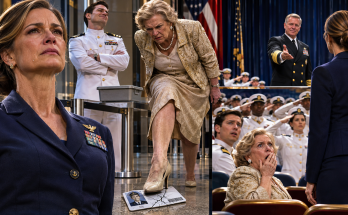
Then Vice Admiral Rourke stood before two hundred fifty uniformed sailors, operators, and officers.
He called my name.
He asked them to turn toward me.
And they rendered a salute at his direction.
For a brief moment, the truth about my professional life became impossible for my family to dismiss.
I remembered standing at the back wall.
My identification card cracked in my pocket.
My brother's garment bag beside me.
My mother staring.
I had returned the salute.
Then Rourke explained Pacific Shield.
And he told Kyle how the framework helped the coordination of the search for his training craft.
The announcement changed the way my brother saw me.
But it didn't create the value of my service.
That value had existed before anyone stood.
Before anyone applauded.
Before my mother knew what a rear admiral did.
I understood that now.
The salute was meaningful.
The recognition was deserved by everyone who contributed to the work.
But it wasn't the thing that finally brought me peace.
That happened later.
In my kitchen.
On Christmas.
When my brother looked at my photograph and asked a question without mocking the answer.
When he listened.
When he told me he finally understood.
When he said he knew who his sister was.
I smiled at the memory.
The people who needed Pacific Shield knew why it mattered.
The search teams understood the coordination that supported their work.
The commanders responsible for readiness knew what had been accomplished.
And the six personnel recovered that April night had come home.
I no longer needed every person in my family to understand every part of my service.
I wanted respect.
I wanted honesty.
I wanted the people close to me to believe that my life mattered.
Kyle was beginning to give me those things.
Mom had not yet earned my trust again.
I could accept both truths.
I looked at the old swimming-pool photograph once more.
I thought about the little boy standing at the edge.
Afraid to jump.
Waiting for me to promise that I would catch him.
I had kept that promise.
Years later, when his training boat disappeared, I couldn't reach into the water and lift him out myself.
That wasn't my role.
But the work I had helped lead supported the people who could find him.
And when he was safe, I went to sit beside his bed.
I had been there.
Even when he didn't know it.
Now he did.
I touched the repaired edge of the photograph.
For years, I had believed the most painful part of my relationship with Kyle was that he didn't care.
I had been wrong.
He had cared enough to write a letter.
Enough to keep the envelope after believing I rejected him.
Enough to admit his mistakes when he learned the truth.
Enough to return the photograph.
And enough to come to Alexandria for Christmas.
We couldn't recover the years we had lost.
But we could stop wasting the ones ahead.
That mattered more than another apology.
More than another public recognition.
More than proving my mother wrong.
I moved away from the photograph.
The house was still quiet.
I could hear nothing except the ordinary sounds of home.
I thought about clearing the kitchen.
Then I saw the plate of cookies.
I laughed again.
Kyle would never hear the end of those cookies.
Not because I wanted to embarrass him.
Because teasing him about something harmless felt like getting a piece of our childhood back.
I imagined him defending his baking.
Insisting the recipe was the problem.
Pretending the cookies had turned out exactly as intended.
I smiled.
There would be other Christmases, I hoped.
Other dinners.
Other conversations.
There would probably be disagreements too.
We were still ourselves.
Neither of us had become perfect.
But we were learning to speak directly.
To ask questions.
To believe what the other said.
And to recognize that love didn't require one person to become smaller.
I looked toward the Navy photograph for the last time that evening.
For thirty years, I had worked to become the officer standing in that picture.
I was proud of her.
I was proud of the responsibilities she had accepted.
Proud of the people she had served beside.
Proud of the work that helped bring six sailors home.
And I was proud of the older sister in the swimming-pool photograph too.
The woman who stood beneath a frightened boy and promised he wouldn't fall alone.
I didn't need to choose between those versions of myself.
I never had.
My mother had treated my career as something that took me away from being a good sister.
But the truth was more complicated.
My service had caused absences.
It had demanded sacrifices.
And it had also placed me in a position to contribute to the readiness framework that helped during Kyle's emergency.
Both things were true.
I could acknowledge the missed years without apologizing for a life of service.
I could love my brother without carrying his burdens for him.
And I could respect my mother without allowing her to decide what I was worth.
I walked back into the kitchen.
I began putting away the remains of dinner.
There was nothing dramatic about the movement.
No announcement.
No command.
No audience standing at attention.
Just me, cleaning up after Christmas.
And feeling something I hadn't felt in a long time.
Peace.
Not because every problem had been solved.
Mom's letter still waited.
The years of lost trust still mattered.
Kyle and I still had more to learn about each other.
But the central lie had been broken.
My brother knew I had not abandoned him.
I knew he had wanted me at his graduation.
We both knew what our mother had hidden.
And we no longer needed her permission to have a relationship.
I thought about the question Kyle had asked before leaving.
Whether we could ever be like we were when he was little.
I had told him probably not exactly.
I meant it.
We couldn't become those two people again.
He wasn't a frightened nine-year-old.
I wasn't the young woman standing beneath the diving board.
We had grown.
We had been hurt.
We had made mistakes.
But we still had time to become a brother and sister who knew each other honestly.
That was enough for me.
I finished clearing the table.
Then I picked up one of Kyle's terrible cookies.
I considered taking another bite.
I decided against it.
Some things didn't need a second chance.
I laughed at my own thought.
Then I placed the cookie down.
My mother had once told me to pick up my brother's bags because I was embarrassing the family.
She had crushed my identification card and sent me to the back wall.
That morning, I had stood quietly while she treated me as though I didn't matter.
Then a three-star admiral recognized my work before an entire auditorium.
For a few minutes, everyone knew my name.
But the moment I treasured most came months later.
My brother had stood in my home.
Looked at my Navy photograph.
And told me he finally understood who I was.
No crowd.
No salute.
No grand announcement.
Just Kyle.
The little boy I once caught in the water.
The man who had earned his Trident.
My brother.
And this time, when he looked at me, he didn't see a rival.
He saw his sister.
I had spent years wanting my family to understand my worth.
I finally understood that I didn't need their recognition to possess it.
And I no longer needed to disappear so someone else could shine.
The End
Read more original stories on lastestdrama.