My Son Threatened to Cut Me Off Unless I Accepted His Fiancée—So I Canceled Their $94,000 Wedding
PART 1 TITLE: I Was Paying for My Son’s Dream Wedding When I Finally Realized His Fiancée Expected Me to Give Up More Than Money
I never imagined I would have to choose between keeping my son close and protecting the life his father and I had built.
For a long time, I believed those two things belonged together.
Then my son gave me a choice.
Accept the way he and his fiancée treated me, or lose him.
I was sixty-three years old when it happened.
My name is Margaret Whitfield.
I had been a widow for twelve years, and my only son, Ben, was the person I had spent most of those years trying to keep happy.
I thought I understood what being a good mother required.
I was willing to give him my time.
I was willing to give him my savings.
What I had never considered was that he might eventually expect me to give up my own home.
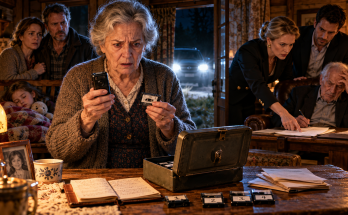
The morning I began canceling his wedding, I sat at my kitchen table with a telephone in one hand and a folder of contracts in front of me.
My fingers were shaking.
Not enough to stop me.
Just enough to remind me that I was about to do something I had spent my whole life avoiding.
I was going to disappoint my son.
And I was going to let him be disappointed.
The wedding was supposed to cost ninety-four thousand dollars.
Even now, saying that figure makes me uncomfortable.
Arthur and I had never been people who spent money easily.
We had worked for what we owned.
We had saved.
We had made choices that were sensible rather than impressive.
And after Arthur died, I continued doing those things because I knew how quickly security could disappear.
But Ben was getting married.
At least, that was what I kept telling myself.
He was my only child.
His father would never see him standing at the front of a wedding ceremony.
I wanted to give him something beautiful.
Something he would remember.
Something Arthur might have been proud to help provide.
Looking back, I can see how easily that wish became an excuse for ignoring what was happening around me.
Ben’s fiancée was named Sloane.
When they first began planning their wedding, I told them I would help with the expenses.
I expected a conversation about what was necessary and what could reasonably be afforded.
Instead, the plans grew larger every time we spoke.
There was the venue.
Then the catering.
Then the flowers.
Then the photographer.
Every decision seemed to require another payment.
And every payment came with an explanation about why the wedding had to be exactly as Sloane imagined it.
At first, I accepted those explanations.
I didn’t want to appear difficult.
I didn’t want Ben to think I was judging his future wife.
Most of all, I didn’t want a disagreement over money to become a disagreement over family.
That was my mistake.
I kept paying because I believed I was preserving peace.
But peace was becoming something I had to purchase again and again.
I kept a folder for the wedding arrangements.
Inside were the contracts, receipts, payment dates, and copies of the agreements.
I had signed most of them myself.
I had also paid the major deposits directly.
At the time, I thought that was simply the easiest way to keep everything organized.
Later, I would be grateful that I had done it.
There was another account as well.
I had placed sixteen thousand dollars into a shared account intended for wedding expenses.
Ben and Sloane were supposed to use it for things connected to the celebration.
I trusted them with that money.
I didn’t ask for explanations after every purchase.
I didn’t examine every receipt.
I believed they understood what the money was for.
That belief lasted until I finally checked the balance.
By then, there was less than a thousand dollars left.
Nine hundred and forty-two dollars.
I remember staring at the figure.
I read it twice because I thought I had misunderstood something.
But there it was.
I had deposited sixteen thousand dollars.
Only nine hundred and forty-two remained.
The missing amount was fifteen thousand and fifty-eight dollars.
I checked the transactions.
Some of the charges had nothing to do with a wedding.
There were hotel expenses.
Clothing purchases.
Spa treatments.
A gym membership.
I sat there with the statement in front of me, trying to find an explanation that would make those charges reasonable.
I couldn’t.
And still, I did not immediately confront Ben.
That is difficult for me to admit now.
I was so accustomed to avoiding conflict that I treated my own doubts as something to be ashamed of.
I thought perhaps there was a misunderstanding.
Perhaps they intended to replace the money.
Perhaps I was being too strict.
I kept making excuses for them because I didn’t like what the alternative suggested.
Meanwhile, Sloane had begun behaving as though my home was already partly hers.
I had given her a spare key.
It seemed harmless when I did it.
She was going to marry my son, and I wanted her to feel welcome.
But having a key soon became an excuse to enter without arranging a visit.
There were times when people came into my house without my permission.
Furniture was moved.
Wedding decorations appeared in the guest bedroom.
Things I had chosen carefully over the years were treated as though they were temporary obstacles.
Sloane had opinions about almost everything.
My cooking was too old-fashioned.
My furniture needed replacing.
The way I kept my rooms was apparently inconvenient.
I had lived in that house for thirty years.
Yet I began feeling as though I needed to justify what I did inside it.
The photograph on the living room shelf bothered her most.
It showed Arthur and me at Lake Louise.
We had been happy when it was taken.
Arthur had his arm around me, and I was smiling in a way I rarely managed after he died.
I kept that photograph where I could see it every day.
One Sunday, Sloane wanted it removed.
I remember looking at the shelf.
Then at her.
It seemed such a small thing to argue about.
A photograph.
A few inches of space.
But there are things that stop being small when someone repeatedly asks you to surrender them.
I didn’t remove it.
Not that day.
Not ever.
Still, I tried to keep the peace.
I told myself she was young.
I told myself she wanted everything to look perfect.
I told myself she would become more considerate after the wedding.
Those explanations sound foolish to me now.
But I wanted to believe them.
Ben had begun siding with her whenever we disagreed.
Sometimes he acted annoyed before I had even finished explaining what bothered me.
He seemed to regard every concern I raised as an attack on his relationship.
And Sloane knew it.
She could say something hurtful, then turn toward Ben as though I had upset her.
The conversation would become about her feelings.
Not about what she had done.
I would end up apologizing simply to stop the argument.
That happened more than once.
Eventually, I began avoiding certain subjects altogether.
I stopped mentioning the visitors.
I stopped questioning the decorations.
I stopped asking why she felt entitled to rearrange my home.
Then came the argument that changed everything.
Ben wanted me to accept the situation without further objections.
He spoke as though supporting his marriage meant agreeing to every demand Sloane made.
I tried to tell him that I could love him and welcome his future wife without giving them control over my life.
He wasn’t interested in hearing it.
His frustration had been building for some time.
That day, he finally made it clear.
If I couldn’t accept Sloane and stop causing problems, he would distance himself from me.
He made our relationship conditional.
I remember how quiet I became.
There are words a parent prepares to hear from a child.
Angry words.
Careless words.
Even unkind words.
But I had never prepared myself to hear my own son use the possibility of losing him to make me obey.
I looked at Ben and waited for him to soften what he had said.
He didn’t.
Sloane stood beside him.
She didn’t seem surprised.
I think that was when I began to understand how much the two of them had already decided without me.
They expected me to pay.
They expected me to agree.
And if I resisted, they expected me to be frightened enough to surrender.
For the first time, I saw the arrangement clearly.
I wasn’t being treated as the mother of the groom.
I was being treated as the person responsible for making their wishes possible.
My feelings were inconvenient.
My boundaries were an obstacle.
My money, however, was still very welcome.
After they left, I sat alone in the living room.
Arthur’s photograph was on the shelf.
I could see the lake behind us, the mountains, and the expression on his face.
He had always believed that helping someone was different from allowing that person to take advantage of you.
I had heard him say it many times.
But I had forgotten how to apply that lesson to our son.
I thought about the wedding.
Ninety-four thousand dollars.
I thought about the bank account.
Fifteen thousand and fifty-eight dollars spent.
I thought about the strangers who had entered my house and the furniture I had found moved without being asked.
And then I thought about Ben’s ultimatum.
For years, I had been afraid that saying no would make him love me less.
Now he had told me that might happen anyway.
Even if I kept paying.
Even if I kept apologizing.
Even if I made my own home smaller and smaller to accommodate his future wife.
That realization hurt more than the argument itself.
I wanted to call him.
I wanted to ask whether he understood what he had said.
I wanted to give him another opportunity to take it back.
But I knew what would happen.
We would talk.
Sloane would become upset.
Ben would ask me to compromise.
And I would be expected to prove my love with another concession.
I was tired.
Not simply tired of wedding arrangements.
Tired of having to earn a place in my son’s life through obedience.
That evening, I took the wedding folder from the drawer.
I spread the documents across the kitchen table.
There were contracts bearing my signature.
Receipts for deposits I had paid.
Schedules of charges that had not yet been collected.
I studied each page carefully.
I hadn’t made promises blindly.
I had signed agreements.
And those agreements told me who was responsible for what.
I began to see something I had missed while trying so hard to be generous.
I had choices.
Not painless choices.
Not choices that would keep everyone happy.
But choices that belonged to me.
I was still the person who had signed those contracts.
I was still the person being asked to supply the money.
And I was still allowed to decide what I would pay for.
I placed the documents back into their folder.
Then I checked the list of wedding vendors.
The venue was at the top.
I looked at its telephone number for a long time.
I imagined Ben’s reaction.
Sloane’s anger.
The guests who had made travel arrangements.
I knew none of this would be simple.
I also knew that if I continued paying after Ben’s threat, I would be teaching him that threatening our relationship worked.
That was the part I could no longer accept.
The next morning, I sat at the same kitchen table.
I had the folder beside me.
My telephone was in front of me.
I did not feel brave.
I felt frightened.
But I had spent so much time worrying about how my decisions would affect Ben that I had almost forgotten my decisions affected me as well.
I picked up the telephone.
I found the venue’s number.
And I made the call.
END PART 1
PART 2 TITLE: After I Stopped Paying for the Wedding, My Son Arrived at My Door and Revealed What Had Happened to My Savings
The woman at the wedding venue sounded perfectly cheerful when she answered.
I almost ended the call.
There was something strange about hearing an ordinary greeting on a morning when I knew I was about to turn my family’s life upside down.
I gave her my name.
I explained that I was calling about the wedding reservation.
She checked the details.
Then she asked whether I could remain on the line while she connected me with the person responsible for the event.
I said yes.
While I waited, I looked around my kitchen.
Everything was exactly where it had been the day before.
The table.
The chairs.
The wedding folder.
A clean cup beside the sink.
Nothing in the room suggested that I was about to cancel an event costing ninety-four thousand dollars.
The events manager came on the line.
I explained that I was the person named on the contract and that I wanted to discuss canceling the reservation.
She was careful with her response.
There were deposits to consider.
Dates mattered.
Some payments were not refundable.
Other charges had not yet been collected.
She went through the terms with me, one at a time.
I wrote down what she said.
I asked questions when I didn’t understand.
I was determined not to make an expensive mistake out of anger.
After about twenty minutes, I knew what could be stopped and what might already have been lost.
I asked her not to authorize any further charges.
I also asked for written confirmation of the cancellation process and the status of the payments.
She agreed.
When the call ended, I placed my pen beside the folder.
I stared at the telephone.
For a moment, I felt sick.
There was no satisfaction in what I had done.
I knew my son would be furious.
I knew Sloane would accuse me of destroying her wedding.
But I also knew I could not continue financing an event under those conditions.
I picked up the telephone again.
The caterer was next.
Then the florist.
After that, I contacted the photographer.
Each conversation was uncomfortable in its own way.
I repeated the same information.
I confirmed my identity.
I asked about contractual obligations.
I requested written records.
By noon, I had spoken to every major vendor involved in the wedding.
Some of the conversations were brief.
Others required more explanation.
I accepted that certain amounts might not be returned.
That was unpleasant.
But continuing to spend tens of thousands of dollars simply because I had already spent money would have been worse.
I did not feel as though I had won anything.
I felt as though I had finally stopped something I could no longer control.
There was still the shared wedding account.
I had been avoiding that problem because discussing the missing money meant confronting what Ben and Sloane had done.
Now I couldn’t avoid it.
I called the bank.
I explained that the account had been established for wedding expenses and that I needed a review of its ownership, access arrangements, and transactions.
I asked for further withdrawals to be restricted while the matter was examined.
I also revoked the permissions I had personally provided to Ben and Sloane.
The representative asked me to confirm that I wanted to proceed.
I did.
I asked what documents the bank needed.
She explained the next steps.
I wrote everything down.
The account was no longer something I was willing to leave unexamined.
After that, I called a locksmith.
That decision had nothing to do with the wedding contracts.
It concerned my house.
Sloane still had a key.
I had given it to her willingly because I believed she would respect my home.
But I had already discovered that she considered my permission unnecessary in too many situations.
I didn’t want another argument about who could enter and when.
I wanted to know that my front door would stay locked unless I chose to open it.
The locksmith arrived that afternoon.
He replaced the exterior locks.
I watched him work.
There was nothing dramatic about the sound of a screwdriver or the way he tested each new lock.
But I found myself paying close attention.
For months, I had been uncomfortable in my own house.
By three o’clock, I had new keys.
I placed them in the kitchen drawer.
Only I had access to them.
Then I went upstairs.
The guest bedroom was still filled with wedding decorations.
Boxes had been opened.
Some items had been placed on the furniture.
Others were stacked against the wall.
I looked at everything for a long moment.
Then I began packing.
I didn’t damage anything.
I didn’t throw anything into the rubbish.
I put the decorations away carefully, separating fragile pieces and closing the boxes.
I made arrangements for Ben to collect his belongings.
I didn’t want accusations about missing or damaged property.
I wanted everything handled properly.
By late afternoon, the guest room looked like a bedroom again.
I stood in the doorway.
It had been so long since that room felt like part of my house.
I went downstairs and made tea.
Then I sat in Arthur’s old chair.
The photograph from Lake Louise was still on the shelf.
I looked at his face.
I wondered whether he would have been disappointed in me for allowing matters to reach this point.
Then I wondered whether he might simply have been relieved that I had finally acted.
I whispered that I hoped he would understand.
At about twenty minutes to six, my telephone rang.
Ben.
I watched his name appear on the screen.
I didn’t answer.
The ringing stopped.
A message arrived.
He had heard from the venue.
He wanted to know why everything was being canceled.
I read the message.
Then another appeared.
Sloane was crying.
According to Ben, I had no right to do this to them.
A third message came soon afterward.
They had guests traveling for the wedding.
He insisted I needed to reverse what I had done.
I placed the telephone facedown.
I knew he was upset.
I wasn’t pleased about the disruption.
But he had spent months ignoring my objections while expecting me to keep paying.
Now, suddenly, he wanted an immediate conversation.
I finished my tea.
The house was quiet.
It was the first peaceful evening I could remember in a long time.
That peace lasted approximately thirty-five minutes.
At a quarter past six, someone began striking the front door.
Hard.
Repeatedly.
I stood up.
Through the window, I saw Ben on the porch.
His face was flushed.
Sloane stood beside him with her telephone in her hand.
She was speaking angrily and pointing toward the house.
I opened the door, leaving the security chain in place.
Ben demanded to know what I had done.
I told him I had spoken with the venue and the vendors.
He raised his voice.
He said their wedding had been canceled.
I told him I knew.
Sloane pushed closer to the doorway.
She said I wasn’t entitled to interfere.
I looked at her.
For months, she had behaved as though my money and my home were available for her use.
Now she was telling me I had no authority over agreements I had signed myself.
I explained that I was responsible for the contracts and had paid the deposits.
I had agreed to fund the celebration.
I had not agreed to continue under any circumstances, regardless of how they treated me.
Sloane accused me of humiliating them.
I remember looking at her face and feeling oddly calm.
She had never seemed concerned about humiliating me.
Not when she criticized my home.
Not when she dismissed my cooking.
Not when she asked me to remove Arthur’s photograph.
But losing a costly wedding venue was apparently an unforgivable embarrassment.
Ben put his hands against the door.
He wanted me to let them inside.
I refused while he was shouting.
He reminded me that he was my son.
That hurt.
Not because I had forgotten.
Because I had spent the previous twelve years making sure he never forgot he had a mother who loved him.
I told him that being my son did not make his earlier threat acceptable.
He frowned.
He insisted I had misunderstood him.
I asked him to remember the choice he had given me.
Accept everything, or lose contact with him.
He looked away.
Sloane interrupted before he could answer.
She said we could settle our disagreement later.
What mattered now was obtaining enough money to arrange another venue.
I didn’t understand at first.
Then she told me how much they still needed.
Thirty-eight thousand dollars.
I stared at her.
She was standing outside my house after I had canceled the wedding because of their behavior.
And she was still asking me to pay.
I told her there would be no more money.
Ben looked startled.
He accused me of leaving them without support.
That was when I decided the conversation could no longer remain only about the canceled ceremony.
I asked him about the wedding account.
His expression changed.
I told him I had deposited sixteen thousand dollars.
I told him the remaining balance was nine hundred and forty-two.
Then I asked where the rest had gone.
Neither of them answered immediately.
Sloane glanced at Ben.
Ben looked away.
He said they intended to tell me.
I asked why they hadn’t.
He began talking about unexpected expenses.
He described the spending as temporary.
I asked whether spa visits counted as temporary wedding expenses.
Silence.
I mentioned the expensive clothing.
The hotel charges.
The gym membership.
Sloane crossed her arms.
She wanted to know why I was examining their spending so closely.
I couldn’t believe she was asking.
I told her I had every reason to review how my money had been used.
She reminded me that I had offered to help.
I said I had offered assistance with a wedding.
Not unlimited access to my savings.
Ben rubbed his forehead.
He wanted to come inside and discuss everything privately.
I said no.
It was only one word.
I had spent so many years explaining every refusal that I almost expected another sentence to follow it.
But there wasn’t one.
I didn’t need to justify why two angry people could not enter my home.
Ben looked at me as though he no longer recognized me.
Then he said they would remember how I had treated them.
I told him he was free to make his own decisions.
I closed the door.
I remained beside it for a moment.
I could hear their voices outside.
They were arguing.
I couldn’t make out every word, but neither sounded willing to accept responsibility.
Eventually, the voices stopped.
A car door closed.
The engine started.
Then the car drove away.
I leaned against the door.
My hands were shaking again.
I had just refused my only son.
I had watched him leave angry.
And although I knew why I had done it, part of me still wanted to open the door and call him back.
That was how deeply I had become accustomed to surrendering.
I forced myself to walk away.
I put the telephone on the kitchen table.
I checked that the new locks were secure.
Then I went upstairs.
I thought the worst part was over.
I thought the money and the wedding were the entire problem.
The following morning, I opened my email.
There was a message from Richard.
Richard was Sloane’s father.
We had never been particularly close.
He had always been civil to me, but he had mostly stayed out of the wedding arrangements.
Sloane sometimes made remarks about how traditional he was.
She seemed to find his opinions embarrassing.
His email was brief.
He wanted to speak with me before I made any further decisions.
He said he had information concerning the wedding expenses.
I read the message again.
Something about the way he had written it troubled me.
Richard had never interfered before.
I couldn’t imagine him contacting me unless he believed the matter was serious.
I called him.
He answered quickly.
I asked what he wanted to tell me.
He sounded tired.
He said he should have spoken to me much sooner.
I asked what he meant.
He began talking about money.
Not the fifteen thousand dollars missing from the wedding account.
Not the remaining vendor payments.
A different amount.
One hundred and fifty thousand dollars.
According to Richard, Sloane had told her parents that I had agreed to give her and Ben that sum.
The wedding was supposedly only one part of the arrangement.
There was also a house.
I sat down.
I had never promised Ben and Sloane a house.
I had never offered one hundred and fifty thousand dollars.
I had never agreed to finance their future beyond the wedding assistance I had already provided.
I told Richard that clearly.
He said he had begun suspecting something was wrong.
After hearing about the cancellation, he had gone back through information Sloane had previously given him.
She had sent her parents a financial proposal.
It included a statement indicating that I had committed to providing money for a house purchase.
I gripped the telephone.
Then Richard told me something worse.
Sloane had been telling people I was having difficulty remembering things.
She had claimed Ben was helping manage my financial affairs because I could no longer do everything myself.
I looked across the kitchen.
At the folder.
At my bank statements.
At the telephone I had used to cancel the wedding without anyone’s assistance.
I was sixty-three.
I was capable of handling my own finances.
I had never appointed Ben to manage them.
Yet Sloane had apparently been describing me as someone whose decisions could not be trusted.
For the first time, I understood why she had become so comfortable making plans inside my home.
It wasn’t only that she wanted me to be generous.
She seemed to believe my independence was something she could gradually replace with her own decisions.
I asked Richard whether he would meet me.
He agreed.
I told him to bring every document he had.
When we ended the call, I remained seated at the table.
The wedding folder was still beside me.
The same contracts that had seemed so overwhelming the previous morning suddenly felt like the smallest part of my problem.
I had believed my son and his fiancée wanted my money.
Now I had to consider whether they had been making plans for property I had never offered to give them.
END PART 2
PART 3 TITLE: Sloane’s Father Showed Me Documents About My House, and I Discovered Someone Had Been Making Plans Under My Name Without Permission
Richard was already at the restaurant when I arrived the following afternoon.
He was sitting in a booth near the back.
There was a large envelope on the table beside him.
When he saw me, he stood.
He looked uncomfortable.
I could tell he had been thinking about what he was going to say.
I sat opposite him.
He apologized before I had even taken off my coat.
I told him I appreciated his concern, but I wanted to see the documents.
He nodded.
Then he opened the envelope.
The first pages were financial calculations.
There was a proposal explaining how Ben and Sloane expected to fund their future.
I recognized the wedding figure.
Ninety-four thousand dollars.
Seeing that amount written beside other proposed expenses made me feel as though I had been reduced to a number in someone else’s plans.
The next document concerned a house purchase.
There were estimates and figures.
And there was the assumption that I would provide financial support.
I looked at Richard.
He seemed embarrassed.
He said Sloane had presented the arrangement as something already settled between me and the couple.
I told him it wasn’t settled.
It had never even been discussed with me.
He turned another page.
This one was a draft message to a real estate agent.
It appeared to have been written by Sloane.
I began reading.
At first, the language seemed ordinary.
It concerned property arrangements and the possibility of obtaining a different home.
Then I reached the section about me.
Sloane had written as though Ben and she could eventually persuade me to hand over my house.
She suggested that I would become more cooperative once I recognized how dependent I was on them as my remaining family.
She wanted preparations made before I had an opportunity to refuse.
I stopped reading.
For a moment, I just looked at the paper.
It was one thing to argue about wedding expenses.
It was another to discover that someone had been discussing how to obtain my home.
I thought about the guest bedroom.
The moved furniture.
The comments about my age.
The photograph of Arthur.
All those things suddenly felt different.
I had been treating them as separate incidents.
Sloane had been rude.
Ben had been selfish.
They had spent wedding money carelessly.
But the documents suggested something larger.
They were thinking about what they could take next.
Richard said he had not understood what his daughter was planning.
He looked genuinely upset.
I believed he was disturbed by what he had found.
But I also knew believing someone was not the same as having proof.
I continued reading.
Richard reached into the envelope again.
He had another document.
This one was a record of a bank transfer.
The payment came from the wedding account.
The recipient was a real estate brokerage.
I leaned closer.
The transfer had not gone to a florist or a caterer.
It concerned my property.
The description identified a Whitfield property assessment.
I read those words more than once.
My surname.
My property.
My wedding money.
I looked at Richard.
I asked him what the couple had intended to do with my house.
He didn’t answer immediately.
Instead, he took out another page.
It was a request for a property valuation.
My name appeared on it.
There was also a signature.
At first glance, it looked like mine.
I leaned closer.
The shape of the letters was familiar.
But I knew I had not signed that document.
I had never requested a valuation.
I had never asked a brokerage to assess my home for a sale.
I had never told Ben or Sloane they could do so.
I felt cold.
I didn’t know who had written the signature.
I didn’t know exactly how the paperwork had been submitted.
But I knew one thing.
Someone had apparently used my name to authorize an action I had never approved.
I placed the document carefully into my handbag.
I told Richard that the matter had become far more serious than a canceled wedding.
He agreed.
We continued looking through the papers.
I asked him to explain where each one had come from.
I wanted to know which documents Sloane had provided and what he had learned afterward.
I wasn’t interested in rumors.
I needed a record.
When we finished, I thanked him.
He apologized again.
I told him I wished he had contacted me earlier.
He said he wished the same.
I left the restaurant with the papers secured in my bag.
Outside, people were going about their ordinary afternoon.
Cars passed.
Someone was laughing near the entrance.
I remember feeling strange that everything around me could continue so normally.
I had spent thirty years building a home with my husband.
Now I was carrying a document that suggested someone had tried to make arrangements concerning that home without my consent.
I drove back carefully.
When I arrived, I checked the front door.
The new lock worked.
I went inside and placed Richard’s documents on the kitchen table.
I studied the disputed signature again.
I wanted to call Ben.
I wanted him to explain it immediately.
But I knew how our conversations had been going.
He would accuse me of misunderstanding.
He would tell me they were only trying to help.
Sloane would say I was overreacting.
And the discussion would become another argument about my feelings rather than their actions.
I decided not to give them that opportunity.
I spent much of the night awake.
The house was quiet.
I could hear the small sounds I had lived with for years.
The ordinary creaks.
The occasional movement outside.
Nothing had changed.
Yet I felt differently about every room.
Before, I had worried that Sloane wanted to redecorate.
Now I wondered whether she intended for me to live somewhere else entirely.
At seven the next morning, I telephoned Helen Crawford.
Helen was my solicitor.
She had handled Arthur’s estate twelve years earlier.
I trusted her because she was careful.
She didn’t make promises before examining the facts.
She also didn’t confuse a person’s confidence with proof that they were telling the truth.
I explained what had happened.
I told her about the wedding.
The account.
The missing money.
The false statements about my ability to manage my affairs.
Then I described the property valuation request.
Helen listened.
She didn’t interrupt.
When I finished, she told me not to confront Ben or Sloane about the document.
She wanted me to bring everything to her office.
I agreed.
I gathered the wedding folder, account statements, correspondence, and the papers Richard had shown me.
I checked that I had the relevant copies.
Then I left.
Helen was waiting when I arrived.
She spread the documents across her desk.
I watched her read.
She took her time.
Sometimes she returned to a previous page.
Sometimes she made a note.
I found it difficult to sit still.
I wanted an immediate answer.
I wanted someone to tell me whether my house was safe.
But Helen wasn’t willing to guess.
After reviewing the papers, she asked whether I had ever given Ben power of attorney over my affairs.
I told her I had not.
She asked whether I had appointed him to make property decisions for me.
No.
She asked whether I had authorized a real estate agent to act on my behalf.
Again, no.
She looked at the valuation request.
Then she explained that we needed to establish what had happened.
She didn’t declare that someone had committed a crime.
She didn’t tell me to assume the worst.
She said the authorization was disputed and should be investigated.
She also wanted my banking and property records protected.
I agreed.
I was grateful she remained calm.
I didn’t need someone to increase my fear.
I needed someone to help me act correctly.
Helen contacted the brokerage named in the documents.
The agent involved was Peter Lawson.
He agreed to speak with us.
When we arrived at his office, he looked uneasy.
I don’t think he expected to see the woman whose property had been discussed.
He greeted me politely.
Then he said he had believed the request was authorized.
I asked who had approached him.
He said Ben and Sloane.
Hearing their names made my chest tighten.
I had suspected it.
Still, suspicion and confirmation felt different.
I asked what they had told him.
Peter opened his computer and reviewed the correspondence.
According to him, Ben and Sloane had explained that I was considering moving out of my current house.
They said I wanted something smaller.
They had presented the valuation as part of preparing for a possible sale.
I told him I had no intention of selling.
He looked uncomfortable.
Then he mentioned a retirement property.
I stared at him.
Apparently, Ben and Sloane had discussed the possibility of my moving into a smaller place suitable for retirement.
I was sixty-three.
I had not asked anyone to find me a retirement home.
I had not complained that my house was too large.
I had not told my son I wanted to move.
I had built my life in that house.
Arthur had planted the roses outside.
We had raised Ben there.
Every room held memories I wasn’t prepared to surrender.
Yet my son had apparently spoken to a stranger about moving me somewhere else.
I asked Peter whether he had received written permission.
He said he had.
The authorization had arrived by email.
It bore a signature.
Helen asked for the records through the proper procedure.
Peter agreed to cooperate.
I could see he was beginning to understand that the situation was not an ordinary family arrangement.
Before we left, he told us something else.
Ben had asked whether the property might eventually be transferred directly into his name.
I looked at Helen.
She didn’t speak immediately.
I didn’t either.
For a few moments, I could only think about the boy who had grown up in that house.
I had taught him how to respect other people’s belongings.
Arthur had taught him to take responsibility for his choices.
And now that same boy, grown into a man, had apparently been exploring ways to obtain the house his parents had worked for.
We left the brokerage.
Helen said we would need copies of the correspondence and a careful review of the authorization.
She arranged for a formal notice disputing it.
She also explained the steps available to protect my property while the matter was examined.
I listened.
I asked questions.
I wanted to understand each action before it was taken.
That afternoon, I changed my banking passwords.
I checked my credit reports.
I instructed my bank to watch for unusual requests.
I reviewed the access I had previously given anyone to financial information.
Each small action helped.
But none of them erased what I had learned.
I kept thinking about the word retirement.
I wondered when Ben had decided that I was old enough for my home to become part of his future.
I wondered whether Sloane had encouraged the idea or whether he had been willing from the beginning.
I didn’t know.
That was the hardest part.
I could no longer tell which decisions belonged to Sloane and which belonged to my son.
Later that day, Ben called.
I saw his name on the telephone.
I considered ignoring it.
Then I remembered Helen’s advice about preserving relevant communications.
I answered.
He said we needed to talk.
I asked what about.
The wedding, he told me.
I said my decision had been made.
He began explaining how stressed he and Sloane had been.
He said wedding expenses had become difficult.
He admitted they had handled parts of the shared account badly.
Then he accused me of punishing them too harshly.
I asked where the money had gone.
He avoided the question.
He said there were more important things than money.
I looked at the papers on my table.
Then I asked him about the property valuation.
The silence was immediate.
For several seconds, I heard nothing.
I wondered whether the call had ended.
Then Ben asked how I had found out.
I closed my eyes.
He hadn’t asked what valuation I meant.
He hadn’t expressed confusion.
He wanted to know who had told me.
That answer was more revealing than I think he realized.
I told him I knew someone had submitted paperwork concerning my house without my approval.
He described it as preliminary planning.
He said they had only been considering possibilities.
I asked what possibilities.
He told me the house was large for someone living alone.
He reminded me that I was getting older.
He suggested that selling it might allow him and Sloane to establish themselves financially.
I asked him why he believed my property was available to solve his problems.
He became irritated.
He said I was making the situation sound worse than it was.
I asked whether he had ever considered simply asking me what I wanted.
He didn’t answer directly.
Instead, he said Sloane believed I would eventually understand their reasoning.
I looked toward the garden.
I could see the roses Arthur had planted.
Then I asked Ben to explain why his fiancée’s expectations mattered more than my permission.
He tried to correct what he had said.
I asked him again.
He ended the call.
Just like that.
I stood in the kitchen with the telephone still in my hand.
I thought about how many times I had made excuses for him.
He was stressed.
He was young.
He wanted a good beginning to his marriage.
Those explanations had helped me avoid asking a more painful question.
When had he stopped seeing me as a person with a life of my own?
I sat at the table.
It was the same table where Ben had done his homework as a child.
The same place where we had celebrated his achievements.
The same place where Arthur had sat with us before illness took him away.
I could remember Ben talking about the man he wanted to become.
He had wanted to make his father proud.
He had wanted to protect his family.
I wondered what had happened to those intentions.
Then I looked at the documents beside me.
I knew I could no longer protect Ben from the consequences of his decisions by pretending they were harmless.
If he had been involved in submitting unauthorized paperwork, he would have to answer for that involvement.
I would not decide his guilt myself.
But I would not hide what I had found.
For the first time, I was prepared to let the evidence matter more than my fear of losing him.
END PART 3
PART 4 TITLE: When Sloane’s Mother Came to Defend Her Daughter, I Learned the Wedding Money Was Only Part of What They Had Been Hiding
Three days after my conversation with Ben, Sloane’s mother came to see me.
Her name was Patricia.
I saw her through the front window before I opened the door.
She was carrying a small handbag.
Her expression suggested she expected an unpleasant conversation, but not a serious one.
I wondered what Sloane had told her.
Probably that I was angry.
Probably that I had overreacted.
Possibly that I was confused.
I opened the door.
Patricia greeted me politely.
I invited her into the living room.
She glanced at the furniture as she entered.
I noticed that her eyes briefly passed over Arthur’s photograph.
For some reason, that small movement made me tense.
I was tired of wondering what people thought of my home.
We sat opposite each other.
I didn’t offer tea.
I wasn’t trying to be rude.
I simply wanted to hear why she had come.
Patricia began by saying the conflict had become unreasonable.
I asked which part she meant.
She spoke about the wedding.
Ben was upset.
Sloane had been crying.
The cancellation had created difficulties for both families.
She believed we should find a way to repair the situation.
I listened.
Then I told her I was sorry they were distressed.
She seemed to expect something more.
An apology.
An offer to reconsider.
Perhaps another payment.
When I didn’t continue, she suggested that I restore the wedding arrangements.
I asked whether she understood what that would involve.
She said the ceremony was very important to the young couple.
I looked at her.
I thought about all the evenings I had spent worrying over invoices.
All the things I had accepted because I believed I was helping my son.
And all the disrespect that had continued while I paid.
I told Patricia that a wedding could be important without making my savings available without limits.
She looked surprised.
I asked whether Sloane had told her about the financial arrangement.
Patricia said she knew I had been generous.
I asked whether she had heard anything about one hundred and fifty thousand dollars.
Her expression changed.
She said Sloane had mentioned substantial help from me.
I told her I had agreed to finance a wedding costing ninety-four thousand dollars.
I had never promised the couple a house deposit.
I had never agreed to give them another large sum.
Patricia looked at her handbag.
I continued.
I asked whether she knew that a valuation had been requested for my property without my permission.
She looked up sharply.
She said she knew nothing about that.
I asked whether Sloane had explained how money from the wedding account had been spent.
Patricia was quiet.
I watched her carefully.
I didn’t want to turn the conversation into an argument about whose child was responsible.
I wanted to know what she knew.
I explained that I had documents.
Not simply suspicions.
Bank statements.
Correspondence.
A disputed property authorization.
Patricia seemed uncomfortable.
Then she said Sloane had described me as increasingly difficult to deal with.
She said Ben was worried about my memory.
According to Sloane, he had been trying to assist me with important decisions because I was becoming less reliable.
I felt my face grow warm.
I was beginning to understand that this story had been repeated to several people.
It wasn’t an isolated remark.
It was an explanation Sloane could use whenever someone questioned why she and Ben were making decisions involving my money.
If I objected, I was difficult.
If I denied giving permission, I was forgetful.
If I refused to pay, I was unreasonable.
I asked Patricia whether she had believed those claims.
She hesitated.
Then she admitted she hadn’t known what to think.
I appreciated the answer more than I expected.
At least she wasn’t pretending she had known the truth all along.
I asked whether she would look at the documents.
She agreed.
I retrieved the folder from the kitchen.
I showed her the wedding account statements.
I pointed out the opening amount.
Sixteen thousand dollars.
Then the remaining balance.
Nine hundred and forty-two.
I showed her the transactions that did not appear connected to wedding arrangements.
She read them quietly.
Then I showed her the valuation request.
I explained that the signature resembled mine, but I had not signed it.
I told her what Peter Lawson had said about Ben and Sloane’s conversations with the brokerage.
Patricia stopped reading.
Her hands were trembling slightly.
She looked at me.
For the first time since arriving, she seemed unsure what to say.
I asked whether she now understood why I couldn’t simply restore the wedding.
She nodded slowly.
Then she opened her handbag.
She took out her telephone.
She said there was something she should tell me.
About a month earlier, Sloane had asked her parents for twenty thousand dollars toward the wedding.
Patricia and Richard had refused.
They couldn’t afford it.
Sloane had told them not to be concerned because I had already agreed to cover the expenses.
I listened.
That part didn’t surprise me.
What came next did.
Patricia said Sloane had contacted her again the previous day.
This time, she wanted another fifteen thousand dollars.
I stared at Patricia.
I asked when the request had been made.
She repeated that it had been yesterday.
I reminded her that the wedding venue had already confirmed the cancellation.
Patricia looked confused.
Then she told me Sloane had claimed I was going to change my mind.
According to her daughter, the disagreement with Ben was temporary.
The wedding would proceed.
They only needed help getting through the immediate financial problem.
I sat back.
I couldn’t believe Sloane was still asking people for money while presenting the wedding as though it had been rescued.
I had given no indication that I would reverse my decision.
The contracts were being canceled.
The bank account was under review.
Helen was examining the property paperwork.
Yet Sloane was telling her mother that everything would return to normal.
I asked Patricia whether she had promised the money.
She said no.
I was relieved.
Not because I believed Patricia was responsible for her daughter’s actions.
But because I didn’t want another person drawn into the same situation through false promises.
For a while, we sat quietly.
Patricia looked exhausted.
I knew she loved her daughter.
I understood that love.
It had caused me to ignore warning signs for months.
I told her I wasn’t asking her to stop loving Sloane.
I wasn’t asking her to choose between our families.
I only wanted her to understand why I had to protect myself.
She said she understood more than she had when she arrived.
Before leaving, she apologized.
I thanked her for coming.
When I closed the door, I stood still for a moment.
The conversation had been difficult.
But at least Patricia had been willing to examine the facts.
I wished Ben had shown the same willingness.
That evening, another message arrived.
This one wasn’t from my son.
It came from an email address I didn’t recognize.
The subject asked me not to disregard the message.
I almost deleted it.
I had received enough unpleasant correspondence since the wedding cancellation.
But something made me open it.
The sender introduced herself as Emily.
She had been one of Sloane’s bridesmaids.
I remembered her.
She had attended the gathering at my house when Sloane wanted Arthur’s photograph removed.
Emily wrote that she was sorry to contact me unexpectedly.
She said I ought to know what Sloane had been telling people about me.
There were screenshots attached.
They came from a private group conversation.
I opened the first image.
I recognized Sloane’s name.
The message concerned the house.
Sloane had told her friends that once the wedding was finished, she and Ben intended to obtain more financial assistance from me.
She believed I would be reluctant to jeopardize my relationship with Ben after paying so much for the celebration.
I stared at the screen.
Then I opened another screenshot.
In it, Sloane discussed how much I disliked arguments.
She believed Ben could pressure me by threatening to withdraw from my life.
I stopped reading.
For months, I had told myself that Ben’s ultimatum had come from frustration.
I had wanted to believe he had spoken without thinking.
Now I was looking at a conversation in which that threat appeared to have been considered useful.
I felt ashamed.
Not because I had trusted my son.
But because I had ignored how often my fear of losing him determined my decisions.
There was another message.
Sloane suggested I would not need such a large home indefinitely.
She wanted arrangements started before I had an opportunity to object.
I looked across the room at Arthur’s photograph.
The house had never seemed excessive to me.
It was where my life had happened.
Where Ben had grown up.
Where Arthur had spent his final years.
The idea that someone had reduced it to unused space made me angry.
I continued reading.
One of the other women had asked whether Ben understood what Sloane was doing.
Sloane’s response made me stop.
She indicated that Ben knew a substantial part of the plan, although he didn’t like discussing it.
I put the telephone down.
Then I picked it up again.
I read the message once more.
I had spent so much time wondering whether Sloane had manipulated Ben that I had almost ignored the possibility he was cooperating willingly.
I didn’t know how much he had understood.
I didn’t know whether he had seen every document.
But the messages suggested he wasn’t merely an innocent person being misled.
I called Emily.
She answered quickly.
I thanked her for the screenshots.
Then I asked why she had decided to send them.
She was quiet for a moment.
She said she had felt uncomfortable about what happened at my house that Sunday.
She remembered Sloane asking me to remove Arthur’s photograph.
She had been there.
She had watched.
And she had said nothing.
I told her she wasn’t responsible for Sloane’s behavior.
Emily said she knew, but she had regretted remaining silent.
She had also heard conversations about my money.
At first, she hadn’t understood how serious they were.
After the wedding was canceled, she began to see those conversations differently.
That was why she had contacted me.
I thanked her again.
I asked her to preserve the original messages.
Then I ended the call.
I sat at the kitchen table and forwarded the screenshots to Helen.
I included Emily’s email.
I explained when I had received them.
I didn’t add accusations.
I wanted Helen to examine the information without my anger becoming part of the evidence.
The following morning, Helen called.
She had received further correspondence from the real estate brokerage.
The documents showed that Ben and Sloane had discussed acquiring another property.
Their financial assumptions depended on money they expected to receive from the sale of mine.
I asked whether anyone had authorized them to make those arrangements.
Helen said there was no permission from me.
She explained that we would continue establishing the facts and reviewing the disputed documents.
We would also consider the proper steps concerning the money removed from the wedding account.
I asked whether I needed to do anything else immediately.
She told me to preserve the records and avoid confronting Ben or Sloane about the investigation.
I agreed.
After we ended the call, I went into the garden.
Arthur’s roses were growing along the same part of the yard where he had planted them years earlier.
Some of those plants were older than Ben had been when we first moved into the house.
I used to imagine leaving everything to my son one day.
The house.
The garden.
The furniture Arthur had chosen.
It had never occurred to me that Ben might try to claim those things while I was still living there.
I stood looking at the roses.
For the first time, I questioned whether leaving him the house would be the right decision at all.
Two days later, Ben came to see me.
He was alone.
I noticed that immediately.
His shirt was wrinkled.
His eyes looked tired.
He stood on the porch without the anger I had seen during his previous visit.
I opened the door.
He asked whether we could talk.
I told him we could speak where we were.
He glanced past me into the hallway.
I didn’t move.
He said he and Sloane were having problems.
Her parents were angry.
Some of her friends had stopped speaking to her.
The wedding venue was gone.
Sloane was blaming him.
I listened.
He seemed to expect me to comfort him.
A part of me wanted to.
He was my child.
Seeing him exhausted still hurt.
But I had learned how easily comforting him could become another way of avoiding the truth.
I told him I was sorry the situation had become difficult.
He looked disappointed by my response.
Then he said he had made mistakes.
I waited.
He apologized for allowing Sloane to speak to me disrespectfully.
He admitted that his own words had been hurtful.
It was the first time he had acknowledged those things without immediately blaming me.
I wanted to believe him.
I wanted that apology to mean the worst was over.
But there was a question I needed answered.
I asked whether he had known about the plans involving my house.
He looked toward the garden.
I repeated the question.
He didn’t answer.
My heart sank.
I told him that remaining silent was not helping him.
He insisted they hadn’t intended to cause me harm.
I asked why they hadn’t sought my permission.
He looked down.
Then he admitted something.
He knew I would have refused.
I stood there looking at him.
There was nothing complicated about that answer.
He had known my wishes.
He had chosen not to respect them.
After a long silence, he said Sloane believed they would never have the life they wanted without immediate financial help.
I thought about that sentence.
The life they wanted.
A large wedding.
An expensive home.
Everything arranged before they had earned the means to provide it.
I asked Ben what he thought should happen to the life his father and I had spent thirty years building.
He couldn’t answer.
I told him Arthur and I had worked hard to give him opportunities.
We had wanted him to have choices.
We had not wanted him to regard our savings as something he was automatically entitled to spend.
His eyes filled with tears.
He said he understood.
I wasn’t sure he did.
I told him understanding would require more than regret over losing the wedding.
He would have to recognize why his decisions were wrong.
Not simply why they had failed.
He stood quietly.
I could see he wanted me to invite him inside.
I didn’t.
I loved him.
That had not changed.
But I could no longer allow love to become a reason for ignoring what he had done.
I closed the door gently.
Ben remained on the porch for a short time.
Then he walked to his car.
I watched him leave through the window.
Afterward, I cried.
I cried because I missed him.
I cried because I was angry.
And I cried because I finally understood that I could love my son without agreeing to whatever he demanded.
The next call from Helen came when I thought I had begun to settle into that understanding.
She told me the disputed property papers had been referred for further investigation.
Then she explained that another document had been found.
It suggested that Ben and Sloane’s plans concerning my home might have begun earlier than I had realized.
Earlier than the wedding invitations.
The document included a date and a financial amount.
But it was the name connected to it that unsettled me.
Arthur Whitfield.
My late husband.
I asked Helen why Arthur’s name appeared in records involving Ben and Sloane’s plans.
She didn’t try to explain over the telephone.
She said we needed to review something in Arthur’s estate file.
I looked toward the photograph on the shelf.
Arthur had been gone for twelve years.
His estate had been settled long ago.
I couldn’t imagine why those records had become relevant to a wedding dispute.
I told Helen I would come to her office.
After the call, I stood beside the shelf.
I touched the edge of Arthur’s photograph.
I had spent weeks worrying about what Ben and Sloane might do with my future.
Now I needed to understand what Arthur had already arranged for me in the past.
END PART 4
PART 5 TITLE: My Solicitor Opened My Late Husband’s Estate File, and a Letter He Had Left Behind Changed How I Saw Everything
I had spent twelve years wishing I could ask Arthur what he thought about the decisions I made for Ben.
The morning I returned to Helen Crawford’s office, I learned that my husband had already left me an answer.
I arrived shortly after nine.
Helen was sitting behind her desk, with several documents arranged in front of her.
There was a folder I recognized.
Arthur’s estate file.
I hadn’t seen it in years.
I stopped beside the chair and looked at it.
For a moment, I was no longer thinking about Ben or Sloane.
I was remembering the terrible months after Arthur died.
The paperwork.
The quiet house.
The strange feeling of signing documents while still expecting my husband to walk through the door.
Helen stood and greeted me.
I sat down slowly.
“Before we go through these records, Margaret, I want to be careful about something.”
I looked at her.
“What is it?”
“Nothing we’ve discovered should make us jump to conclusions about criminal conduct. We still have to establish who prepared the disputed documents and what was actually done.”
I nodded.
She continued.
“But there are matters in Arthur’s estate records that should help you understand your legal position.”
I looked at the folder again.
“Why is his name involved?”
Helen rested her hand on the papers.
“Let me show you what he left.”
She opened the file.
The first document she handed me wasn’t an official form.
It was a letter.
The paper had aged slightly.
I recognized Arthur’s handwriting before I read a single word.
He had always formed his capital letters in a particular way.
I used to tease him about how slowly he wrote.
He said a letter worth keeping deserved the time it took to write it properly.
Seeing those letters again made my throat tighten.
I held the page with both hands.
Helen didn’t interrupt.
I began reading.
Arthur had addressed the letter to me.
He wrote as someone who understood that he might not be there to help me raise our son.
He hoped I would have many good years after his death.
He acknowledged that caring for Ben without him would be difficult.
Then he wrote about the home we had built.
Our savings.
The work we had done together.
He wanted me to understand that those things belonged to me.
He didn’t want me to feel that becoming a widow meant I had to surrender what we had earned.
He specifically mentioned Ben.
Arthur knew I would want to help our son.
He knew I would probably give more than anyone asked.
But he wanted me to make those decisions freely.
Not out of guilt.
Not because Ben demanded something.
Not because anyone convinced me that refusing made me a bad mother.
By the time I reached the end, I was crying.
Arthur had wanted me to enjoy the years we had worked to make possible.
He had wanted me to live.
Not simply continue paying bills and worrying about our son.
Live.
I couldn’t remember the last time I had thought seriously about what I wanted.
For months, every decision had concerned the wedding.
Before that, most of my important choices had concerned Ben.
Arthur’s letter made me realize how completely I had placed myself at the bottom of my own list.
I folded the page carefully.
Then I unfolded it again.
I wanted to read it once more.
Helen passed me a tissue.
I thanked her.
For a while, neither of us spoke.
I thought about the way Arthur used to sit in his favorite chair.
He had always been patient with Ben.
But patience had never meant surrendering his judgment.
When Ben was little, Arthur encouraged him to solve problems rather than expect someone else to solve them.
If something broke because Ben had been careless, Arthur helped him repair it.
He didn’t simply replace it and pretend nothing had happened.
I had admired that about him.
After his death, I became afraid of being too strict.
Ben had already lost his father.
I didn’t want him to feel deprived of anything else.
So I compensated.
I gave more.
I argued less.
I tried to make every disappointment smaller.
I told myself I was helping him through his grief.
But I had continued long after he was grown.
I had turned generosity into a habit I was frightened to change.
Arthur had seen that possibility before I did.
That was what hurt.
He had trusted me to raise our son.
But he had also understood how easily I might forget to protect myself.
I looked up at Helen.
“I think I’ve been ignoring what Arthur tried to tell me.”
She shook her head gently.
“You’ve had difficult decisions to make. What matters now is that you understand the choices available to you.”
I looked down at the letter.
“I wish I’d read this more often.”
Helen allowed me a moment.
Then she reached for another document.
“This is his will.”
I had seen the will when his estate was settled.
At the time, everything had seemed complicated.
I remembered signatures and meetings.
I remembered Helen explaining the distribution of his property.
But grief had made those months difficult to recall clearly.
Helen showed me the relevant provisions.
Arthur had left the family home entirely to me.
Ben had not been given a current ownership interest.
He had no authority under that will to sell the property while I was alive.
He couldn’t use it as security for a loan.
He couldn’t instruct an agent to list it.
He couldn’t decide where I should live.
The house belonged to me.
I had understood that in an ordinary way for years.
I paid the expenses.
I maintained the property.
I made the decisions.
But I had never needed to defend that ownership against my own son.
Until now.
I read the relevant pages again.
There was no arrangement granting Ben the right to take over.
No instruction requiring me to transfer the property when he married.
No condition saying I had to help him buy a house.
I looked at Helen.
“So nothing in Arthur’s estate gave Ben permission to do any of this?”
“Nothing we’ve reviewed gives him that authority.”
I leaned back.
For the first time since Richard had shown me the valuation request, I felt some of the pressure leave my chest.
The disputed paperwork still concerned me.
The money still needed to be examined.
But my son had no legal entitlement to treat my home as his.
I thought about the conversations at the brokerage.
Ben had discussed selling my property.
He had apparently asked about transferring it into his own name.
He had done those things while knowing I hadn’t agreed.
I couldn’t understand how he had convinced himself that was acceptable.
Then I remembered what he had admitted on my porch.
He hadn’t asked because he expected me to refuse.
That sentence returned to me as I sat in Helen’s office.
It was so simple.
And so revealing.
Ben had known I had wishes of my own.
He had simply decided they were less important than his.
Helen gathered the documents into a neat pile.
“We still need to address the disputed authorization.”
I nodded.
“And the account?”
“The bank is reviewing the transactions. We need to preserve the statements and follow the appropriate process.”
I asked whether the real estate brokerage could continue acting on the request.
Helen explained that formal notice had been given disputing the authorization.
The relevant parties were being asked to examine their records carefully.
She also reminded me that we were establishing facts, not making assumptions about outcomes.
I appreciated that.
I didn’t want to accuse Ben of something we couldn’t prove.
But I wasn’t going to ignore documents that had been submitted using my name.
I asked what I should say if Sloane contacted me.
Helen advised against discussing the investigation with either of them.
She wanted those communications handled through the proper channels.
I agreed.
That didn’t mean I stopped wanting answers.
I wanted to know who had written my name.
I wanted to know whether Ben had seen the valuation form before it was sent.
I wanted to know why Sloane had been telling people I couldn’t manage my finances.
But wanting answers didn’t mean I had to obtain them through another shouting match.
That was new for me.
I had spent years thinking family problems needed to be settled immediately, preferably before anyone went to bed angry.
I no longer believed that.
Some problems required patience.
Others required records.
And some required admitting that the person you loved might not be telling you the truth.
Helen asked whether I wanted a copy of Arthur’s letter.
I told her I did.
I also asked whether I could keep the original with me for a while.
She explained how it could be preserved without disturbing the estate file.
We made the necessary arrangements.
I placed the letter in my handbag.
It felt strange to carry something Arthur had written so many years before.
The handwriting was familiar.
The advice was familiar.
Yet I felt as though I was meeting a part of my husband I had not fully appreciated when he was alive.
I thanked Helen.
She told me we would continue with the financial review and the investigation of the authorization.
I promised to send her any relevant messages I received.
Then I stood to leave.
Before reaching the door, I turned back.
“Helen, can I ask you something that isn’t really a legal question?”
She smiled faintly.
“Of course.”
“Do you think Arthur knew I would have trouble saying no to Ben?”
She considered the question.
“I think he knew how much you loved your son.”
I looked down.
“Maybe too much.”
“I wouldn’t measure it that way, Margaret. But loving someone doesn’t require giving them control over your decisions.”
I nodded.
That was exactly what I needed to hear.
Outside, I sat in my car for several minutes.
I took Arthur’s letter from my handbag.
I didn’t read the entire thing again.
I just looked at his handwriting.
For years, I had wondered whether he would have approved of the way I had helped Ben.
The wedding.
The money.
The compromises.
I had imagined Arthur might tell me to be understanding.
I had imagined he might remind me that Ben had no father to guide him.
But Arthur’s actual words were different.
He had wanted me to help because I chose to.
Not because I was afraid.
I placed the letter back in its envelope.
Then I drove home.
When I entered the house, everything was quiet.
I walked into the living room and looked at the photograph from Lake Louise.
I had almost allowed Sloane to remove it.
The thought embarrassed me now.
Not because moving a photograph was important by itself.
Because I had considered doing it to avoid upsetting someone who showed very little concern for upsetting me.
I sat in Arthur’s chair.
The cushion was worn in the place where he used to rest his arm.
I had never wanted to replace it.
Sloane thought the chair was outdated.
She had made that clear more than once.
I ran my hand along the armrest.
Then I looked around the room.
The furniture was ours.
The books were ours.
The photographs belonged to our life together.
I could change any of it if I wanted.
I could repaint.
I could rearrange the rooms.
I could even sell the house one day.
But those decisions were mine.
That afternoon, I went into the garden.
Arthur’s roses needed attention.
I worked carefully around them.
Some of the stems were older and thick.
Others were new.
Arthur had always loved watching the garden change through the seasons.
He used to say the roses needed regular care, but they couldn’t be forced to grow exactly the way you wanted.
I thought about Ben.
I had tried to give him every opportunity.
I had tried to protect him from pain.
But I couldn’t force him to become the man his father had hoped he would be.
That was something Ben had to decide.
When I returned inside, I checked my telephone.
There were no new messages from him.
I felt relieved.
Then guilty for feeling relieved.
Then tired of feeling guilty.
I made tea and sat at the kitchen table.
For the first time in weeks, I didn’t open the wedding folder.
I opened Arthur’s letter instead.
I read it slowly.
Then I placed it in the drawer where I kept important personal papers.
Not because I intended to forget it again.
Because I wanted it somewhere I could find it whenever I began doubting myself.
The wedding had been canceled.
The house was still mine.
The financial questions were being examined.
None of that meant the pain had disappeared.
I still missed Ben.
I still wanted to hear him apologize without excuses.
I still hoped he would eventually understand how much he had hurt me.
But I no longer believed I had to sacrifice my home or my savings to make that happen.
Arthur had given me something I had forgotten I possessed.
Permission to make my own decisions.
I looked out toward the garden.
The roses moved slightly in the afternoon air.
I didn’t know what Ben would do next.
I didn’t know what the investigation would establish.
But I knew I would no longer sign another agreement, transfer another payment, or surrender another part of my home simply to keep my son from becoming angry.
For that day, it was enough.
END PART 5
PART 6 TITLE: Three Weeks After I Protected My House, the Financial Records Arrived and My Son’s Perfect Relationship Began Coming Apart
Three weeks passed without my life returning to anything I would have called normal.
The wedding was no longer taking place.
The vendors had been contacted.
The bank was examining the shared account.
And Helen was still handling the disputed property paperwork.
I had hoped that putting practical matters into the hands of professionals would quiet my thoughts.
It helped.
But it didn’t stop me from looking at my telephone whenever it rang.
Sometimes I hoped Ben was calling.
Other times, I hoped he wasn’t.
I found that contradiction difficult to explain, even to myself.
I loved him.
I wanted to know he was safe.
But each conversation carried the possibility of another accusation, another demand, or another reminder that he believed I had disappointed him.
His messages continued to arrive.
Some were apologetic.
He said he regretted what had happened.
He said the situation had gone too far.
He said he wished we could speak normally again.
I wanted to answer those messages.
Sometimes I picked up the telephone and began typing.
Then I remembered the conversation at my front door.
He had admitted knowing I would refuse to sell the house.
That was why he hadn’t asked.
An apology that ignored that decision didn’t feel complete.
I deleted my unfinished replies.
Other messages were different.
Ben complained that I had embarrassed him.
He said canceling the wedding had damaged his relationship.
He suggested I could have handled things privately.
I stared at those messages for longer than I should have.
There had been months of opportunities to handle matters privately.
I had raised concerns.
He had dismissed them.
I had questioned expenses.
He had avoided giving answers.
I had objected to Sloane’s treatment of my home.
He had told me to accept it.
Now he seemed to believe the problem was that I had finally acted.
I kept the messages.
Helen had asked me to preserve relevant communications.
I forwarded anything that concerned the finances or property arrangements.
For the rest, I simply kept a record.
Sloane sent one email that particularly upset me.
She accused me of destroying the future she and Ben had planned.
The message was full of anger.
She described the loss of the wedding as though I had taken something that belonged to her.
I read it once.
Then again.
I wondered whether she understood how much of that future had depended on money I had never promised.
The wedding alone was ninety-four thousand dollars.
She had expected more money for a different venue after I canceled it.
She had told her parents I was giving the couple one hundred and fifty thousand dollars.
She had also discussed obtaining my house.
Yet she wrote as though I was the person who had behaved unfairly.
I didn’t reply.
That was difficult for me.
I had always wanted to explain myself when someone misunderstood me.
If a neighbor thought I had been unkind, I wanted to clear the air.
If a friend was offended, I wanted to understand why.
With Sloane, explanations had become useless.
She didn’t seem interested in understanding what I had actually agreed to.
She wanted the arrangement restored.
I wasn’t going to restore it.
I kept the email and sent the relevant information to Helen.
Then I closed my computer.
One morning, the bank’s review produced the records we had been waiting for.
The transactions from the wedding account had been documented.
The balance and spending history could now be examined properly.
I studied the papers at my kitchen table.
Sixteen thousand dollars had gone into that account.
Nine hundred and forty-two dollars remained when I first checked.
Fifteen thousand and fifty-eight dollars had been spent.
That figure was not a guess.
It was the difference shown by the records.
I knew that not every transaction necessarily carried the same legal implications.
I also understood that recovering money could involve a separate process.
Helen had explained the importance of distinguishing what I believed was improper from what the evidence could establish.
But seeing the spending recorded in black and white mattered.
For weeks, Ben had described the missing money vaguely.
Temporary expenses.
Unexpected needs.
Wedding pressure.
The statements didn’t depend on his explanations.
They showed where the payments had gone.
I spread the papers across the table.
I remembered how proud I had felt when I first offered to help with the wedding.
I imagined Arthur standing beside me, pleased that we could give our son something special.
Now I was examining purchases that had never been part of the arrangement.
I felt foolish.
Then I stopped myself.
I had made a generous offer.
Ben and Sloane were responsible for how they used it.
I could regret trusting them without accepting responsibility for their choices.
That distinction took me time to learn.
I gathered the statements and placed them in the folder.
The same folder had once represented a wedding I was helping create.
Now it contained the records needed to explain why I had stopped.
Helen also provided updates concerning the property.
The real estate agent had not completed a sale.
My house had not been listed for sale.
No transfer of ownership had taken place.
When I heard that, I felt my shoulders relax.
It was the first time in weeks I could look at my home without immediately wondering whether someone had tried to take another step behind my back.
The disputed authorization still required examination.
The correspondence still needed to be preserved.
The matter had not simply disappeared.
But my ownership remained intact.
That was important.
I went upstairs after speaking with Helen.
I opened the guest bedroom door.
The wedding decorations were gone.
Ben had been given arrangements for collecting his belongings.
The room was quiet again.
I stood there for a moment.
I remembered how uncomfortable it had felt when Sloane treated that space as though it were hers to organize.
Now the furniture was where I wanted it.
The room belonged to my home again.
I went downstairs and checked the new front-door lock.
I had begun doing that out of habit.
It worked perfectly.
I no longer needed to worry about unexpected visitors entering with a spare key.
It seemed like such a small improvement.
But after months of feeling as though other people controlled what happened around me, small improvements mattered.
Richard kept in occasional contact.
I appreciated that he didn’t use those conversations to pressure me into restoring the wedding.
He seemed deeply troubled by what he had learned.
He also knew his daughter was suffering the consequences of her own decisions.
One afternoon, he told me Ben and Sloane were arguing.
I didn’t ask for details immediately.
I wasn’t interested in celebrating their unhappiness.
Whatever they had done, I had once expected Sloane to become part of my family.
I knew the relationship ending badly would hurt people on both sides.
Richard explained that Sloane blamed Ben for failing to obtain the money she had expected.
She had believed he could persuade me to keep paying.
When that failed, she became angry with him.
Ben, in turn, accused Sloane of pushing him to manipulate me.
I listened.
There it was again.
Both of them knew something about what had happened.
Both had participated in decisions they hadn’t disclosed to me.
Yet now that the wedding was gone, they were arguing over whose fault it was.
I asked Richard whether they were still planning to marry.
He said he didn’t know.
That answer surprised me.
Only weeks earlier, the wedding had seemed more important to them than anything else.
They had chosen expensive arrangements.
They had demanded payments.
They had insisted the celebration had to proceed even after I withdrew my support.
Now, without the venue and the money, they couldn’t seem to agree about their future.
I thought about how often Sloane had spoken about the appearance of the wedding.
The decorations.
The venue.
The photographs.
She had wanted everything impressive.
Ben had wanted the same things.
But I wondered whether they had spent enough time thinking about what marriage would require after the celebration ended.
I didn’t say that to Richard.
It wasn’t my place to judge whether they loved each other.
I only knew they had been willing to damage my life to finance the one they imagined.
That was enough for me.
After the call, I made lunch.
I ate at the kitchen table.
I could see the garden through the window.
Arthur’s roses had begun showing new growth.
I found myself thinking about Ben as a child.
He had once been so pleased with small things.
A wooden toy.
A football match.
A family meal.
I knew people changed as they grew older.
I had changed too.
But I struggled to understand how expensive possessions had become so important to him.
I remembered his admission.
He wanted the life Sloane had described.
He thought money from my house could help them reach it.
And he had been willing to ignore my wishes.
That was the part I couldn’t excuse.
It wasn’t wrong for him to want a home.
It wasn’t wrong to want a beautiful wedding.
But wanting something didn’t make another person’s property available.
Even when that person was your mother.
I had to remind myself of that whenever I began feeling guilty.
The guilt came at unexpected moments.
When I saw families shopping together.
When I passed a bakery where I used to buy Ben’s favorite cakes.
When I sat down for Sunday dinner and noticed the empty chair.
I had spent so much of my life making sure there was always room for him.
Now he was absent because he didn’t like the boundaries I had set.
I missed him.
I didn’t miss the demands.
Those were different things.
One evening, I took Arthur’s letter from the drawer.
I read it while sitting in his chair.
The words were familiar now.
They no longer surprised me.
But they still helped.
He had wanted me to understand that assistance was something I could choose.
Not something I owed without limit.
I folded the letter and looked at his photograph.
I wondered whether Ben remembered the lessons his father had taught him.
Arthur had been a quiet man in many ways.
He didn’t need expensive things to feel successful.
He cared about whether the bills were paid.
Whether the people he loved were safe.
Whether he had done the right thing when it was difficult.
Ben had grown up hearing those values.
Yet somewhere along the way, he had begun measuring success differently.
I thought about the wedding that would never happen.
Ninety-four thousand dollars.
The figure had once seemed to represent generosity.
Now it represented how far I had been willing to go to avoid disappointing my son.
I didn’t want to become bitter.
That worried me.
I didn’t want to spend the rest of my life looking at Ben and remembering only what he had done.
He was still my child.
There were still years of good memories.
There were still reasons to hope he might change.
But I had to accept that change wasn’t something I could buy.
For years, I had tried to solve problems by giving more.
More time.
More attention.
More money.
More forgiveness.
I had expected gratitude to follow naturally.
Instead, my willingness had become something Ben relied on.
He had begun to treat my help as a certainty.
When I stopped giving, he acted as though I had taken something away from him.
I was beginning to understand how that happened.
I hadn’t created his choices.
But I had helped him avoid consequences often enough that he no longer expected them.
That realization was painful.
It also made me more determined not to repeat the mistake.
Over the next several days, the house became quieter.
There were fewer messages.
I completed ordinary chores.
I reviewed household expenses.
I attended to the garden.
I found myself enjoying small routines I had neglected while the wedding consumed every conversation.
I made meals I liked.
I stopped worrying whether Sloane would criticize the furniture.
I left Arthur’s photograph exactly where it belonged.
Sometimes I sat in his chair without doing anything at all.
That would once have made me feel unproductive.
Now I enjoyed the silence.
I wasn’t entirely happy.
There was too much unresolved between Ben and me.
But I had begun to feel safe in my own home again.
And safety, I was discovering, could be quiet.
It didn’t need to announce itself.
One Saturday afternoon, someone knocked on the front door.
I was in the living room.
For a moment, I considered ignoring it.
Then I looked through the window.
Ben was standing on the porch.
He was holding a small cardboard box.
He wasn’t shouting.
He wasn’t accompanied by Sloane.
He looked tired.
I stood beside the door for a few seconds before opening it.
He looked at me.
“Mom, could I come inside for a little while?”
I studied his face.
Then I stepped aside.
For the first time since the wedding cancellation, I was willing to hear what my son had come to tell me.
END PART 6
PART 7 TITLE: My Son Returned Carrying a Box of Childhood Memories, but What He Finally Admitted Hurt More Than Losing the Wedding
Ben entered my house carefully.
That was the first thing I noticed.
He didn’t walk through the hallway as though he expected everything to accommodate him.
He stopped just inside the door and waited.
I closed it behind him.
He was still holding the cardboard box.
It wasn’t large.
The bottom had been folded and taped.
He carried it with both hands.
For a moment, I wondered whether he had brought more wedding belongings.
I wasn’t prepared to discuss decorations or deposits again.
But I didn’t ask.
I led him into the living room.
He looked around.
His eyes moved from the furniture to the shelves.
Then he saw Arthur’s photograph.
He stopped.
The picture from Lake Louise was still in its usual place.
Ben stared at it.
“Dad really liked that one.”
I nodded.
“He did.”
Ben stepped closer.
I watched him look at his father’s face.
For several seconds, neither of us spoke.
I wondered what he remembered about the day the photograph had been taken.
He had been young when Arthur was alive.
Twelve years was a long time.
Sometimes I worried that the details of his father’s voice and habits were becoming difficult for him to recall.
I had tried to keep those memories alive.
Sunday dinners.
Stories about Arthur.
The little things he used to say.
But lately, Ben had seemed impatient whenever I mentioned the past.
Sloane wanted changes.
Ben wanted a different future.
There hadn’t been much room for remembering.
Now he was standing in front of the photograph without anyone asking him to look.
He placed the cardboard box on the coffee table.
I sat in Arthur’s chair.
Ben sat opposite me.
He didn’t immediately explain why he had come.
Instead, he opened the box.
Inside were several things from his childhood.
School photographs.
An old football trophy.
A small wooden car Arthur had made.
I leaned forward when I saw the car.
I hadn’t thought about it in years.
Arthur had spent hours working on that little toy.
He had enjoyed making things with his hands.
Ben used to carry the car around the house.
I remembered finding it under the dining table.
I remembered stepping around it when he left it in the hallway.
Such ordinary memories.
At the time, I had never imagined how much I would miss them.
Ben lifted the car.
“Dad made this.”
“Yes.”
He turned it over in his hands.
“I’d forgotten I still had it.”
I looked at the box.
“Where did you find everything?”
“I’ve been packing.”
He said it quietly.
I waited.
He put the car back.
Then he looked at me.
“Sloane and I aren’t together anymore.”
I felt my chest tighten.
I had suspected their relationship was in trouble.
Richard had told me about the arguments.
But hearing Ben say they had separated was different.
I didn’t know whether to feel relieved or sad.
I settled for listening.
He said Sloane had moved out the previous week.
Her parents were helping her find somewhere else to live.
I thought about Patricia and Richard.
They had been placed in a painful position.
They loved their daughter.
They had also learned that she had told them things about me that weren’t true.
I wondered how they were managing it.
But Ben was sitting in front of me, and I needed to keep my attention on him.
“I’m sorry it ended so badly,” I said.
He shook his head.
“I’m not sure I’m sorry.”
I didn’t answer.
He looked down at his hands.
Then he said he needed to explain something.
I felt myself become tense.
I had heard explanations before.
Expenses had been unexpected.
The wedding had caused stress.
Sloane had been upset.
My house was too large.
They had only been considering options.
Every explanation seemed to make their choices sound less deliberate.
I wasn’t interested in another version of those excuses.
But Ben looked different.
He wasn’t angry.
He wasn’t asking for money.
He seemed frightened of what he was about to say.
I waited.
He took a breath.
He admitted that he had known Sloane wanted financial help for a house.
He had also known she was discussing my property.
He said he hadn’t seen every document.
He didn’t know all the details of the paperwork.
But he understood enough to know I had never agreed.
I looked at him.
There it was.
The answer I had been waiting for.
Not an answer I wanted.
But an honest one.
I asked why he hadn’t stopped her.
His face changed.
He began crying.
I had seen Ben cry before.
As a child.
After Arthur died.
During difficult moments when he was younger.
But I hadn’t seen him like that in years.
I wanted to reach for him.
I kept my hands in my lap.
He said he had wanted the house.
He had wanted the money.
He had convinced himself I would eventually agree to help them.
I stared at him.
He wasn’t describing a misunderstanding.
He was admitting that he had made a selfish decision.
He knew I hadn’t offered those things.
He simply wanted them badly enough to treat my consent as a problem that could be solved later.
I asked whether he had ever considered what I wanted.
He shook his head.
Then he said something that hurt more than I expected.
He had believed I already had enough.
I looked around the living room.
The furniture Arthur and I had chosen.
The photographs.
The walls we had painted.
The home we had maintained for thirty years.
Ben had looked at everything I owned and decided there was more than I needed.
I tried to understand that.
I couldn’t.
How could someone measure what another person deserved to keep?
Who had given him the right to decide my life was sufficiently comfortable that I should finance his?
I leaned back in the chair.
I told him his father and I hadn’t saved money because we wanted to accumulate things we would never use.
We had saved because we understood the importance of security.
We had wanted to live without constantly worrying about bills.
We had wanted to remain independent.
We had wanted choices when we grew older.
And after Arthur died, those savings had become even more important.
I wasn’t simply holding money for Ben to collect whenever he needed it.
I was living on what my husband and I had worked to build.
Ben wiped his face.
He said he understood.
I looked at him carefully.
I wanted to believe him.
But I had learned that regret sometimes arrived only after a plan failed.
I told him that losing access to the money might have forced him to think differently.
But I hoped he would eventually recognize why his actions were wrong even if he had gotten what he wanted.
He looked down.
For a while, he didn’t speak.
I could hear the faint sound of movement outside.
A car passing.
The ordinary noises of our street.
Inside, the room was very still.
Then Ben looked at Arthur’s photograph again.
He told me he had read his father’s letter.
I sat forward.
“What letter?”
“The one in his estate records.”
He explained that he had asked Helen about the house.
During that process, he had been shown the relevant documents and had read Arthur’s words.
I thought about the morning Helen had placed that letter in front of me.
The handwriting.
The reminder that I was entitled to keep what we had built.
The way I had cried.
I wondered how Ben had felt reading it.
He was quiet for a moment.
Then he said he had forgotten what Arthur taught him.
I didn’t interrupt.
He looked at the wooden car.
“Dad always wanted me to take care of the people I loved.”
I nodded.
“He did.”
Ben rubbed his eyes.
He said he had started believing success meant having expensive things.
A large home.
An impressive wedding.
A life that looked perfect to other people.
He had become so focused on obtaining those things that he treated me as someone standing in his way.
I felt tears filling my eyes.
I wanted to tell him it was all right.
That everyone made mistakes.
That the important thing was that he was here.
But I knew those words would be too easy.
This wasn’t a careless remark he could simply take back.
He had used money intended for the wedding for other purposes.
He had allowed Sloane to spread false claims about my ability to manage my affairs.
He had participated in discussions about selling my property without my permission.
He had threatened our relationship when I resisted.
Those things couldn’t be undone by one afternoon of tears.
I reached across the table and put my hand over his.
His fingers were cold.
I told him I loved him.
I would always love him.
But our relationship couldn’t return to the way it had been.
He nodded.
He didn’t argue.
That surprised me.
I had become so accustomed to Ben treating boundaries as insults that I had expected him to resist.
Instead, he waited.
I explained what needed to change.
He would not have access to my financial accounts.
He would not make decisions about my property.
He would not involve himself in my affairs unless I specifically asked him to.
And I would not provide money simply because he wanted a particular lifestyle.
I watched his face as I spoke.
He listened.
He said he wouldn’t ask for that kind of help again.
I told him the financial and property matters still had to be dealt with properly.
His apology didn’t erase the records.
It didn’t cancel the investigation.
It didn’t automatically settle the money that had been spent.
He said he understood.
I wanted to believe that too.
Then I told him something else.
If we were going to rebuild our relationship, it would require honesty.
Not just when the truth was convenient.
Not just when someone had already discovered what happened.
He would need to respect my decisions even when he disagreed with them.
He nodded again.
“I want us to be a family, Mom.”
I looked at him.
“We are a family. But that doesn’t mean either of us can ignore the other’s rights.”
He squeezed my hand.
I let him.
I didn’t promise to forgive everything immediately.
I couldn’t.
Trust had been damaged over months.
Possibly longer.
I knew it would take time to rebuild.
But I was willing to find out whether Ben could become someone I trusted again.
We sat together for a while.
Neither of us spoke about the wedding.
The box remained open on the coffee table.
I picked up one of his school photographs.
He had been smiling.
His hair was untidy.
I remembered the day it was taken.
I remembered worrying about whether his shirt was clean enough.
Such a small concern.
I looked at the grown man sitting opposite me.
He had caused me more pain than I ever imagined that little boy could.
Yet I still loved him.
I realized I didn’t need to deny either truth.
He could be my son.
And he could be responsible for what he had done.
Both things could exist at once.
After a while, I asked whether he had eaten.
He said he hadn’t had much.
I looked toward the kitchen.
It was getting late.
I asked whether he wanted to stay for dinner.
He seemed surprised.
Then he nodded.
We moved into the kitchen.
I prepared a simple meal.
Ben sat at the old dining table.
For months, every meal we had shared seemed to lead back to wedding plans.
There were always invoices to discuss.
Decisions to approve.
Complaints from Sloane.
That evening was different.
We talked about Arthur.
Ben remembered some of his father’s jokes.
The ones that had made me roll my eyes.
The ones Arthur repeated even after everyone knew the ending.
I laughed.
It surprised me.
I hadn’t expected to laugh with Ben that evening.
He smiled when he heard it.
For a few minutes, the house felt familiar.
Not exactly as it had been.
But familiar enough to remind me that good memories had not disappeared simply because painful ones had followed.
After dinner, we cleared the table.
Ben helped without being asked.
I noticed.
I didn’t comment.
I wanted his actions to become ordinary rather than something requiring praise.
He gathered his box.
I walked him to the front door.
The new lock was still there.
He looked at it briefly.
I wondered what he thought.
He didn’t ask for a key.
He didn’t mention the change.
I appreciated his silence.
Before leaving, he hugged me.
I held him for a moment.
He was taller than Arthur had been.
Sometimes that still surprised me.
“Goodnight, Mom.”
“Goodnight, Ben.”
He stepped away.
I watched him walk to his car.
He turned once before getting inside.
I raised my hand.
Then he drove away.
I closed the door and checked the lock.
Not because I distrusted him in that moment.
Because securing my home had become an ordinary part of taking care of myself.
I returned to the living room.
The cardboard box was gone.
Arthur’s photograph was still on the shelf.
I sat in his chair.
I thought about everything Ben had admitted.
I was grateful for the truth.
I was hurt by it.
I was hopeful.
I was cautious.
Those feelings sat together, and I didn’t try to choose only one.
I had wanted my son back for weeks.
Now I understood that I couldn’t have him back by pretending nothing had happened.
If our relationship survived, it would be because we had finally stopped avoiding the truth.
That evening, for the first time in a long while, I believed such a relationship might be possible.
END PART 7
PART 8 TITLE: Six Months After the Wedding Fell Apart, I Finally Chose My Own Future and Discovered What My Son Could Offer Without Money
Six months after I canceled Ben and Sloane’s wedding, I was standing in my kitchen looking at freshly painted walls.
They were a warm cream color.
Nothing dramatic.
Nothing expensive or fashionable.
Just a color I liked.
I remember smiling when I looked at them.
For years, I had kept the kitchen much the same.
Arthur and I had chosen the original colors together.
After he died, I hesitated to change anything.
I felt guilty whenever I considered replacing something he had known.
Then Sloane came into our lives and began telling me what needed updating.
Suddenly, every suggestion about my home felt like another demand.
Now I had chosen to repaint because I wanted to.
No one had pressured me.
No one had told me the old color was embarrassing.
I had simply decided I would enjoy something different.
That was why the change mattered.
The wedding had never taken place.
Ben and Sloane remained separated.
The disputed property paperwork had been addressed through the appropriate legal procedures, and I continued cooperating with the investigation.
I wasn’t interested in pretending the matter had never happened.
I wanted the records examined properly.
I also wanted the truth established without relying on family accusations.
The money from the shared wedding account had been documented.
I pursued the available process for recovering what had been taken.
I knew that documenting a loss did not automatically mean I would recover every dollar.
I had learned to separate what I hoped would happen from what the process could actually establish.
That lesson had been difficult.
But it was necessary.
For years, I had believed that being a mother meant I should be able to solve the problems affecting my son.
Now I understood that some problems needed to be handled outside the family.
With records.
With professional advice.
With patience.
Ben’s apology mattered to me.
It didn’t replace any of those things.
Sloane was no longer someone I spent much time thinking about.
That surprised me.
For months, she had occupied so much space in my mind.
What she might say.
What she wanted changed.
Whether she would be offended.
How Ben would react if I disagreed with her.
I had planned entire conversations around avoiding her anger.
Now I could go days without remembering the last unpleasant email she had sent.
I didn’t need to know where she was going or how she was spending her time.
I didn’t need to defend myself to her friends.
I didn’t need her approval.
That freedom felt unfamiliar at first.
Then it became ordinary.
I began inviting old friends to dinner again.
We sat around the dining table on Sundays.
Sometimes we laughed so much that I forgot how quiet the house had been.
I bought flowers for the table.
Not elaborate arrangements.
Just fresh flowers I enjoyed looking at.
I stopped treating every purchase for myself as something I needed to justify.
I had always been careful with money.
That hadn’t changed.
But I was beginning to understand that saving for the future was not the same as refusing to enjoy the present.
Arthur and I had worked hard.
We had made sensible decisions.
We had planned for a comfortable retirement.
He hadn’t lived long enough to enjoy all the things we imagined.
I was still here.
I didn’t want to spend every remaining year worrying about what Ben might need next.
One afternoon, I took Arthur’s photograph from the shelf.
I wiped the glass.
I looked at Lake Louise behind us.
I remembered how excited we had been to see the mountains.
Arthur had loved Canada.
We had talked for years about returning to explore more of the Rockies.
There had always been a reason to postpone it.
Work.
House expenses.
Ben’s needs.
Then Arthur became ill.
After he died, I stopped thinking about the trip.
It seemed wrong to go without him.
But as I held the photograph, I remembered something from his letter.
He had wanted me to enjoy my life.
Not simply preserve the evidence that we had shared one.
I put the photograph back.
Then I went to my computer.
I began looking into the trip we had always discussed.
For the first time, I wasn’t checking whether Ben needed money before making a plan for myself.
I wasn’t calculating how much I could leave untouched in case someone demanded another payment.
I considered what I could comfortably afford.
I made the arrangements.
And I booked the trip.
I sat looking at the confirmation for a long time.
I felt excited.
Then I felt sad.
I wished Arthur could have gone with me.
I wished he could have teased me about packing too much.
I wished he could have stood beside me and looked at the mountains.
But I also felt that I was finally doing something he had wanted for me.
Before leaving, I visited the cemetery.
Arthur was buried in a small, peaceful place I had visited many times.
I brought white roses.
I had always liked white roses for him.
I placed them beside his headstone.
Then I stood quietly.
For years, I had visited that grave with worries about Ben.
Was I raising him correctly?
Was I helping enough?
Would Arthur think I had failed him?
That day, my thoughts were different.
I told Arthur I had finally begun to understand what he wanted for me.
I told him I had spent too much time believing that giving Ben everything was the same as loving him.
I told him I was learning to have a life that belonged to me.
The wind moved gently through the trees.
I looked at his name.
I knew a headstone couldn’t answer.
I didn’t expect it to.
But I felt closer to him than I had in a long time.
I thought about his letter.
The care he had taken to write it.
The way he had reminded me that our home and savings were mine to protect.
I wished I had understood sooner.
Then I reminded myself that I understood now.
I stayed a little longer.
I told him about the trip.
I said I thought he would be pleased.
Then I left the cemetery.
For once, I didn’t feel that returning home meant returning to a life I had simply been enduring.
I had things to look forward to.
The Canadian Rockies.
Sunday dinners with friends.
A quiet house.
A garden that still needed care.
Those things were enough.
A few weeks later, Ben called.
I was at home when his name appeared on the screen.
I answered.
He sounded different from the man who had shouted outside my front door.
Not because his voice had changed.
Because he no longer seemed to be preparing an argument before I had even spoken.
He asked how I was.
I told him about the house.
The kitchen.
The garden.
He listened.
Then he told me about his life.
He had moved into a modest apartment.
He had been working extra hours to pay his expenses.
He was learning to live within what he earned.
I didn’t ask whether he wanted help.
That had always been my first instinct.
If Ben mentioned a problem, I offered money.
If he seemed tired, I offered to make something easier.
This time, I listened without trying to solve anything.
He didn’t ask for money.
He told me he was managing.
I was glad.
Not because I wanted him to struggle.
Because I wanted him to know he could take care of himself.
After a while, he asked whether he could come for Sunday dinner.
I felt pleased.
But I didn’t allow myself to rush ahead.
I still remembered everything that had happened.
I still knew trust required time.
I told him he was welcome.
He thanked me.
When the call ended, I looked around the kitchen.
I thought about the last time he had been there.
The cardboard box.
The childhood photographs.
The wooden car Arthur made.
His confession.
His tears.
I didn’t know whether our relationship would ever feel uncomplicated again.
Perhaps it wouldn’t.
But I had begun to accept that love didn’t require pretending the past had disappeared.
Sunday arrived.
I prepared dinner.
Nothing extravagant.
I set the table and put fresh flowers in the center.
Arthur’s photograph remained in the living room.
The cream kitchen walls looked warm in the afternoon light.
I checked the clock once or twice.
Then I heard a car outside.
Ben came to the door carrying a homemade apple pie.
I looked at it.
The crust was darker than it should have been.
Some of the filling had escaped around the edge.
He looked slightly embarrassed.
“I made it myself.”
I smiled.
“I can see that.”
He laughed.
I stepped aside and invited him in.
He put the pie on the kitchen counter.
I didn’t ask whether he had bought anything expensive.
I didn’t wonder what he expected in return.
He had brought something he made with his own hands.
It wasn’t perfect.
But I was touched.
We ate dinner together.
We talked about ordinary things.
His work.
The apartment.
The garden.
He asked about my trip.
I told him how much I had enjoyed finally making plans for myself.
He listened.
There was no suggestion that the money should have been used differently.
No complaint about what I had spent.
No expectation that I should explain why I deserved the experience.
I noticed that.
Then we cut the pie.
The crust was slightly burnt.
The filling was too sweet.
I took another bite anyway.
Ben looked worried.
“Is it terrible?”
I shook my head.
“It’s lovely.”
He laughed.
“You’re only saying that because I’m your son.”
“That may have something to do with it.”
We both laughed.
It was such a small moment.
But I remembered how many meals had been ruined by wedding arguments.
How many conversations had ended with someone demanding money.
How long it had been since Ben and I could sit at the table without discussing what I was expected to provide.
I looked at the pie.
It wasn’t worth much money.
That was part of what made it special.
Ben had made an effort.
He hadn’t asked me to pay for it.
He hadn’t expected me to admire something expensive.
He had simply brought dessert to dinner.
Later, he looked around the dining room.
He said he had never really appreciated how beautiful the house was.
I looked at him.
I thought about all the times he and Sloane had discussed changing things.
The furniture.
The rooms.
The decorations.
The photograph.
I told him he had spent so much time thinking about improvements that he had stopped noticing what was already there.
He smiled sadly.
Then he became serious.
He apologized again.
This time, he didn’t mention Sloane.
He didn’t blame wedding stress.
He didn’t suggest I had misunderstood.
He said he was sorry for treating me as though I mattered less than the things he wanted.
I looked at him for a long moment.
I wanted him to understand something clearly.
Not simply for my sake.
For his.
I reached across the table and took his hand.
I told him he never needed to purchase my affection.
And I didn’t need to finance his life to deserve his.
He nodded.
I could see he understood the difference.
At least, he was beginning to.
I didn’t pretend that one dinner settled everything.
There were still consequences from the wedding account.
There were still legal matters that had required attention.
And there were months of hurt that could not be erased by an apple pie.
But I could see a change in how Ben approached me.
He was no longer arriving with demands.
He was beginning to show up as a son.
That mattered.
After dinner, he helped clear the table.
We put the dishes away.
He thanked me for the meal.
Then he gathered his things and prepared to leave.
At the front door, he hugged me.
I held him.
For a moment, I remembered holding him when he was small.
I remembered the years after Arthur died.
I remembered how frightened I had been of losing the only child we had raised together.
Now I understood something I hadn’t understood then.
Keeping Ben close at any cost would never guarantee a healthy relationship.
It would only teach him that I had no limits.
I didn’t want that for either of us.
He stepped outside.
I watched him walk toward his car.
The evening sky was changing color.
The garden was quiet.
The roses were blooming.
When Ben drove away, I remained in the doorway.
I didn’t feel abandoned.
I didn’t feel frightened that refusing his demands might make him disappear.
I knew I couldn’t control every choice he would make.
But I also knew our relationship no longer had to depend on my willingness to pay.
I closed the door.
Then I walked back into the living room.
Arthur’s photograph was on the shelf.
Exactly where it belonged.
I stood looking at it.
I thought about the woman I had been when the wedding plans began.
I had wanted to give Ben something wonderful.
I had been so afraid of disappointing him that I ignored what was happening to me.
I had allowed another person to criticize my home.
I had allowed money meant for the wedding to be spent without proper accountability.
I had almost accepted the idea that keeping my son’s affection required surrendering my judgment.
Then Ben threatened to cut me off.
And something changed.
I had lost money.
Fifteen thousand and fifty-eight dollars had been spent from the wedding account.
I had lost the celebration I once imagined helping my son enjoy.
I had also lost my old certainty about the kind of man he was.
That hurt more than the financial loss.
But I hadn’t lost everything.
My house was still mine.
My memories of Arthur remained.
My savings and property were no longer being treated as available for someone else’s plans.
And my relationship with Ben, although changed, had begun again with clearer boundaries.
I looked toward the dining room.
The pie was still on the counter.
There was a little left.
I smiled.
For so long, I had believed that love needed to be proven through sacrifice.
Now I knew there was another way.
A son could bring a pie.
A mother could make dinner.
They could speak honestly.
They could care about one another without turning affection into a financial obligation.
I went upstairs later that evening.
I paused beside Arthur’s photograph before turning off the light.
I told him goodnight.
Then I looked around my home one last time.
The rooms were peaceful.
The locks were secure.
The roses outside would need tending again soon.
I had friends to invite.
A son who was beginning to take responsibility for his own life.
And plans that belonged to me.
I was Margaret Whitfield.
Sixty-three years old.
A widow.
A mother.
A woman who had spent thirty years helping build a life worth protecting.
For the first time in many years, I wasn’t measuring my worth by how much I could give someone else.
I went to bed knowing that my love for Ben was still there.
So was my love for Arthur.
But I had finally made room for myself.
And I intended to keep it that way.
END PART 8
PART 9 TITLE: After My Son Left That Sunday Evening, I Realized Forgiving Him Would Never Mean Returning to the Mother I Had Been Before
I used to think a family problem was finished once everyone stopped arguing.
That Sunday evening, after Ben drove away, I understood how wrong I had been.
The house was quiet again.
There were dishes drying beside the sink.
A small piece of his homemade apple pie remained on the kitchen counter.
The flowers on the dining table were beginning to lean toward the window.
Nothing looked especially important.
But I stood in the kitchen for a long time.
I had spent months believing that the distance between Ben and me could only end in one of two ways.
Either I would give him what he wanted.
Or I would lose him.
Now he had come to dinner without asking for money.
He had apologized.
He had talked about his work and his small apartment.
He had brought something he made himself.
And he had left without demanding anything.
I wanted to be happy.
I was happy.
But I was cautious too.
That surprised me.
For most of my life, I had been quick to forgive Ben.
Sometimes I forgave him before he apologized.
Sometimes I pretended not to notice when he had hurt my feelings.
I told myself that a mother shouldn’t hold grudges.
That children made mistakes.
That keeping the family together was more important than proving a point.
But the events surrounding the wedding had taught me that forgiveness and trust were not the same thing.
I could forgive Ben for speaking cruelly.
I could accept that he regretted following Sloane’s plans.
I could even believe he was beginning to understand how badly he had treated me.
But I couldn’t pretend he had never tried to make decisions about my house without asking.
I couldn’t forget the sixteen thousand dollars I had placed in the wedding account.
Or the nine hundred and forty-two dollars that remained.
I couldn’t forget how he looked away when I first questioned him about the missing money.
Those memories were part of our relationship now.
They didn’t have to destroy it.
But ignoring them would not make it stronger.
I wrapped the remaining pie.
Then I wiped the counter.
The crust had left a few crumbs near the plate.
I brushed them into my hand.
Such a small thing.
Ben had once expected me to finance a wedding that cost ninety-four thousand dollars.
Now I was carefully saving a piece of pie he had made.
And somehow, the pie meant more.
I thought about telling him that.
Then I decided not to.
He didn’t need praise every time he behaved considerately.
He needed to learn that respect was an ordinary part of loving someone.
Not a special performance.
I put the pie away.
Then I went into the living room.
Arthur’s photograph was still on the shelf.
I looked at it and smiled.
For months, that photograph had reminded me of how much I had lost.
Arthur.
The life we once shared.
The version of Ben I believed I knew.
But now I saw something else when I looked at it.
I saw the life Arthur and I had built together.
Thirty years of work.
Thirty years of ordinary decisions.
Money saved.
Bills paid.
Rooms repaired.
A garden cared for.
A child raised.
That life had value beyond what someone could obtain by selling the property.
I wished Ben had understood that sooner.
Then I reminded myself he was beginning to understand it now.
I sat in Arthur’s chair.
The armrest was smooth from years of use.
I remembered how Sloane had criticized it.
She thought it made the room look old.
I had nearly apologized for keeping it.
Looking back, that still embarrassed me.
Not because I should have defended an old chair more fiercely.
Because I had begun questioning my right to feel comfortable in my own home.
I had treated Sloane’s opinions as though they mattered more than my memories.
I had treated Ben’s disappointment as though it were something I must prevent at any cost.
I had forgotten that I was allowed to prefer things.
A chair.
A photograph.
A quiet house.
A life without constant demands.
I leaned back.
For the first time, I didn’t wonder whether Sloane would approve of the room.
I didn’t wonder whether Ben would want something changed.
The room was simply mine.
That should never have felt remarkable.
But it did.
I stayed there until the light outside began to fade.
Then I went upstairs.
I passed the guest bedroom.
Its door was open.
The wedding decorations were gone.
The furniture was where I wanted it.
I remembered standing there months earlier, surrounded by boxes that Sloane had placed in the room without asking.
I had felt like a visitor in my own house.
Now I could walk past that doorway without feeling annoyed.
I could invite someone to stay.
Or close the door and leave the room unused.
Both choices belonged to me.
I continued down the hallway.
Before going to bed, I checked the front-door lock.
The locksmith had replaced it on the afternoon I canceled the wedding.
At the time, that action had frightened me.
Changing locks felt like admitting that someone I had welcomed into my home could no longer be trusted with a key.
But I had needed to make that admission.
The lock was still secure.
I didn’t feel guilty about it anymore.
I went to bed.
For a while, I lay awake thinking about Ben.
He had been a different child from the man who stood shouting on my porch.
I knew that.
But I also knew the little boy I remembered had not simply disappeared.
People changed.
Sometimes they changed in ways that disappointed us.
Sometimes they learned from those disappointments.
I hoped Ben would keep learning.
I couldn’t do that work for him.
That was the hardest lesson of all.
The following morning, I came downstairs and made tea.
I used the same cup I had used on the day I began canceling the wedding.
I remembered sitting at the table with the venue’s telephone number in front of me.
My hands had been shaking.
I had been terrified of what Ben would do.
I thought canceling the contracts might mean losing him forever.
Instead, it had forced us to face things we had spent years avoiding.
That didn’t mean I was glad for the pain.
I wasn’t.
There were days I still wished the entire situation had never happened.
I wished Ben had chosen someone who respected me.
I wished he had questioned the wedding expenses before they became unreasonable.
I wished he had told me the truth about the account.
Most of all, I wished he had never agreed to explore selling my home without my knowledge.
Those wishes were useless now.
I couldn’t change what had happened.
I could only decide what I would accept afterward.
I opened the drawer where I kept Arthur’s letter.
The envelope was still there.
I took it out and read it again.
His handwriting made me smile.
He had understood me better than I sometimes understood myself.
He knew I would want to give Ben everything.
He also knew that generosity could become harmful when it was driven by guilt.
I folded the letter.
I placed it back carefully.
I no longer needed to read it every day.
But I was grateful it existed.
It reminded me that Arthur had wanted more for me than a life spent worrying about everyone else.
I thought about the trip to the Canadian Rockies.
For years, I had treated that dream as something that belonged only to our marriage.
After Arthur died, I stopped imagining I could enjoy it without him.
But going had not erased him.
It had reminded me of him.
The mountains.
The open spaces.
The simple pleasure of being somewhere beautiful.
I had allowed myself to experience those things.
And I had returned home feeling that life still had possibilities.
That mattered more than I could explain.
Later that morning, I reviewed my household papers.
There was nothing urgent.
The financial matters surrounding the wedding were being handled through the proper process.
The disputed property documents had already been addressed through the appropriate channels.
No transfer of my home had taken place.
My personal banking access was secure.
I knew the account records showed what had been spent.
I also knew recovering the money required following the proper procedures.
I didn’t expect Ben’s apology to settle those matters automatically.
That would have confused love with responsibility all over again.
I wanted him to understand that making amends sometimes meant accepting consequences.
Even when the person affected still loved you.
Especially then.
I put the papers away.
There was no reason to spend the entire morning examining them again.
For months, I had opened that folder whenever I felt anxious.
I had counted figures.
Reviewed messages.
Read documents.
I had been trying to make the situation feel manageable through repetition.
Now the important steps had been taken.
I could allow myself to think about something else.
I went into the garden.
Arthur’s roses were blooming.
Some flowers were beginning to fade.
Others had only recently opened.
I worked slowly.
I didn’t hurry.
I had spent too many afternoons rushing through things I enjoyed because someone wanted a telephone call returned or a payment approved.
There was no wedding invoice waiting for me.
No demand from Sloane.
No message from Ben insisting that I solve a problem immediately.
I could finish tending the roses.
Then make lunch.
Then spend the afternoon however I pleased.
I hadn’t realized how much I missed that freedom.
As I worked, I thought about Sunday dinner.
Ben had apologized without blaming Sloane.
That mattered.
Earlier, he had tried to explain his behavior through the pressure she placed on him.
He had said she wanted a certain life.
He had said she believed they needed financial help.
But during our last dinner, he had spoken about his own choices.
He acknowledged that he had made me feel unimportant.
I knew that was only one step.
Still, it was a step he had taken himself.
I hoped he would continue.
I hoped he would remember that having less money didn’t make him a failure.
That living in a modest apartment didn’t make him less worthy.
That a wedding venue and an impressive home could never replace honesty.
But I didn’t call to tell him those things.
For once, I trusted that he could think without my guidance.
I finished with the roses.
Then I washed my hands.
The water ran over my fingers, carrying away the soil.
I looked out through the kitchen window.
The garden looked peaceful.
I had protected it.
Not by winning an argument.
Not by humiliating anyone.
But by refusing to sign away my right to decide what happened to it.
That was enough.
I made lunch.
Afterward, I sat at the dining table where Ben and I had shared his imperfect pie.
I looked at the empty chair.
I missed him a little.
But the feeling didn’t frighten me.
I could miss my son without calling him back to make sure he still loved me.
I could enjoy his company without paying for it.
And I could allow him to build his own life without treating every difficulty as my responsibility.
That was the relationship I wanted now.
Not the old one.
Not the arrangement in which I gave and gave until there was almost nothing left of my own wishes.
I wanted something quieter.
Something more respectful.
Something that could survive the word no.
I knew we weren’t there yet.
But for the first time, I believed we might be moving in that direction.
That evening, I turned off the kitchen light.
I passed Arthur’s photograph.
I paused beside it.
Then I smiled.
I had spent so long trying to hold my family together that I had forgotten a family could remain connected without one person surrendering everything.
Ben had come back.
Not because I paid him.
Not because I changed my mind about the wedding.
Not because I gave him my house.
He had come back because he wanted to repair something he had damaged.
Whether he could finish that work remained to be seen.
But I was no longer going to do it for him.
I went upstairs.
For the first time, I understood that being careful with my trust was not the same as withholding my love.
I could offer one without giving away the other.
And I intended to remember that.
END PART 9
PART 10 TITLE: I Looked Around the Home My Husband and I Had Built and Understood Why My Son’s Apology Could Never Erase His Choices
The morning after Ben’s visit, I noticed how ordinary my house looked.
There were no signs of the argument that had almost torn my family apart.
No wedding decorations.
No expensive flowers waiting to be arranged.
No invoices spread across the table.
The kitchen walls were still warm cream.
Arthur’s photograph was still on the living room shelf.
The roses were still growing outside.
Everything looked simple.
And I was grateful.
For months, I had thought I needed some enormous change to feel better.
A complete explanation.
A perfect apology.
A promise that Ben would never disappoint me again.
But I was beginning to understand that peace didn’t arrive all at once.
Sometimes it came through ordinary things.
A door that stayed locked.
A quiet meal.
A telephone call that didn’t end in an argument.
A Sunday dinner without someone asking for money.
I stood at the kitchen counter and made tea.
I thought about the wedding.
It was strange how differently I remembered it now.
When Ben first announced his engagement, I had been excited.
I wanted to help him celebrate.
I wanted him to begin married life feeling supported.
I had imagined Arthur standing beside me, proud of the man our son had become.
That image had made it easier to agree to expenses I would normally have questioned.
Ninety-four thousand dollars.
I still found the figure astonishing.
Arthur and I had spent years discussing purchases far smaller than that.
We compared prices.
We waited when something wasn’t necessary.
We saved because we knew the difference between wanting something and being able to afford it.
Then I had agreed to finance an extravagant wedding without insisting that Ben and Sloane make the same careful decisions.
I thought generosity would be enough.
I thought gratitude would follow.
Instead, every payment seemed to create another expectation.
The venue wasn’t enough.
There were decorations.
Flowers.
Photography.
Additional arrangements.
And eventually, money intended for the wedding was spent on things that had nothing to do with the celebration.
I remembered the first time I saw the account balance.
Nine hundred and forty-two dollars.
I had stared at the screen, convinced there must be an error.
Then I reviewed the transactions.
I recognized none of the explanations Ben later offered as sufficient.
He had said there were expenses.
He had said the spending was temporary.
But the records showed money leaving the account for personal purchases.
I had offered help with a wedding.
Not permission to finance whatever they wanted.
That distinction seemed obvious to me now.
I wished I had defended it sooner.
Then I remembered how frightened I had been.
I hadn’t wanted Ben to accuse me of interfering.
I hadn’t wanted Sloane to turn every question into an argument.
I hadn’t wanted to become the mother whose generosity came with conditions.
So I had allowed reasonable questions to remain unasked.
That was something I needed to forgive myself for.
Not because my decisions had been perfect.
They hadn’t.
But because I couldn’t learn anything if I spent the rest of my life punishing myself for being trusting.
I carried my tea into the living room.
I sat in Arthur’s chair.
The photograph from Lake Louise caught the morning light.
I looked at our faces.
We had been happy.
Not because everything in our lives was easy.
We had worries like everyone else.
Bills.
Work.
Responsibilities.
A growing child.
But we had trusted each other.
Arthur didn’t make important decisions about our home without including me.
I didn’t treat his income as something I could spend without discussing it.
We argued occasionally.
Of course we did.
But neither of us believed marriage gave us permission to ignore the other person’s wishes.
I wondered whether Ben had forgotten that.
Or whether he had simply convinced himself that parents and children were different.
Perhaps he believed that because the house would eventually have been part of his inheritance, it was reasonable to plan around it now.
But Arthur’s will had made the situation clear.
The house belonged to me.
Ben had no present ownership interest.
He had no right to sell it.
No right to borrow against it.
No right to authorize a valuation.
And certainly no right to decide I should move into a retirement property.
I was sixty-three.
I was perfectly capable of maintaining my own home.
I had managed my finances after Arthur died.
I had made decisions about repairs.
Insurance.
Savings.
Household expenses.
I had handled those things for twelve years.
Yet Sloane had told people I was becoming forgetful.
She had suggested Ben needed to manage my affairs.
That accusation still hurt.
Not because I believed it.
Because I understood how useful it could have been to someone who wanted to make decisions in my name.
If people accepted that I was confused, they might be less likely to question why Ben was handling documents.
If I objected, my objections could be dismissed.
If I denied authorizing something, my memory could be blamed.
I had never imagined someone would use my age that way.
And I had certainly never imagined my son would fail to protect me from it.
I placed my cup on the table.
I remembered the day Helen showed me the property valuation request.
The signature had looked disturbingly similar to mine.
But I hadn’t signed it.
That certainty had frightened me more than anything else.
For the first time, the problem was no longer simply an ungrateful couple spending money.
There was paperwork involving my home.
There were discussions with a brokerage.
There were assumptions about selling my property.
I had needed legal advice.
That fact alone had changed something inside me.
I had never wanted to involve professionals in a dispute with my son.
I would have preferred to settle everything around the kitchen table.
But I had learned that some situations were too serious to handle through family promises.
Helen had been careful.
She didn’t accuse anyone before reviewing the evidence.
She examined the documents.
She contacted the relevant parties.
She helped protect my property records and accounts.
I was grateful for that approach.
I didn’t want revenge.
I wanted the truth.
I wanted my home protected.
And I wanted the financial consequences handled properly.
The records mattered even after Ben apologized.
That was something I had to remind myself.
It would have been easy to let the relief of our reconciliation erase everything else.
He had cried.
He had admitted wanting the money.
He had acknowledged knowing that I hadn’t agreed to sell the house.
He had said he was sorry.
Those things mattered.
But they didn’t change the transactions.
They didn’t make the disputed signature genuine.
They didn’t turn an unauthorized property inquiry into something I had approved.
I loved Ben.
I also needed him to accept responsibility.
Both could be true.
I stood and walked toward the dining room.
The old table was clean.
I touched the back of the chair where Ben had sat.
That table had witnessed so many parts of his life.
Homework.
Birthdays.
Family dinners.
Conversations about his future.
Then the wedding plans.
Then his admission that he had wanted money from my home.
And finally, an apology I had been waiting months to hear.
I wondered whether a piece of furniture could hold memories.
Of course it couldn’t, not in the way a person did.
But looking at the table brought those moments back.
Arthur and I had bought it because we wanted something sturdy.
Something that would last.
We hadn’t chosen it to impress visitors.
We wanted a place where our family could sit together.
I smiled faintly.
Sloane had wanted changes to that room too.
She had never understood why I kept so many old things.
Maybe she thought replacing them would make the house more valuable.
Maybe she simply preferred a different style.
I couldn’t know exactly what she thought.
But I knew she had treated my preferences as unimportant.
And I knew I had tolerated it far too long.
I went upstairs.
The guest bedroom was empty of wedding supplies.
I remembered packing the decorations after canceling the vendors.
I had taken care not to damage anything.
I hadn’t thrown away a single item.
I had arranged for Ben to collect what belonged to him.
At the time, I had wanted to make one thing clear.
I was withdrawing my financial support.
I wasn’t trying to humiliate him.
That remained true.
People sometimes confused setting a boundary with punishing someone.
I had confused those things myself for years.
If I told Ben no, I felt cruel.
If I refused a request, I worried he would think I didn’t love him.
If I questioned his choices, I felt responsible for his disappointment.
But refusing to finance a wedding after being threatened was not the same as trying to destroy his life.
Ben had been free to marry Sloane.
He had been free to arrange a smaller celebration.
He had been free to make choices using resources he could provide.
What he wasn’t entitled to do was demand that I continue paying.
That realization was so simple I almost laughed.
I had made it complicated because the person making the demand was my son.
I walked back downstairs.
The telephone was on the kitchen counter.
For a moment, I thought about calling him.
I wanted to ask how work was going.
I wanted to know whether he had enough food in his apartment.
I wanted to hear his voice.
Then I stopped.
There was nothing wrong with calling my son.
But I wanted to be certain I wasn’t calling because I felt responsible for keeping him emotionally comfortable every moment.
He had work.
A home.
Responsibilities.
He could manage his life.
I could care about him without checking constantly.
I left the telephone where it was.
Instead, I went into the garden.
Arthur’s roses needed a little attention.
I worked among them carefully.
The same plants had been there when Ben was young.
I remembered Arthur kneeling beside them.
I remembered him coming inside with dirt on his hands.
I remembered him asking me whether I thought the flowers looked healthy.
Those ordinary moments seemed more precious now than any expensive celebration.
I had spent too long believing that important memories required impressive events.
The wedding had been planned around appearances.
A beautiful venue.
Beautiful decorations.
Beautiful photographs.
But none of those things could make the marriage strong.
None could make Ben honest.
None could make Sloane respectful.
And none could make me less deserving of independence.
I finished working in the garden.
I stood and looked at the house.
It was still mine.
That sentence had become a source of comfort.
Not because I wanted possessions more than family.
But because the house represented the life Arthur and I had worked to create.
It wasn’t something Ben could claim simply because he wanted a different future.
I went inside and washed my hands.
Then I opened the drawer containing Arthur’s letter.
I didn’t take it out immediately.
I simply looked at the envelope.
I remembered how Helen had placed it in front of me.
How I had recognized the handwriting.
How the words had made me cry.
Arthur had understood that love and obligation were different things.
He wanted me to help Ben willingly.
Not because I feared losing him.
I finally understood.
I closed the drawer.
Later that afternoon, I sat at the dining table and thought about Ben’s apology.
He had told me he wanted to rebuild our relationship.
I believed he meant it.
But I also knew rebuilding would require ordinary, consistent choices.
Honesty when the truth was uncomfortable.
Respect when I disagreed.
Responsibility for money.
Acceptance that my home belonged to me.
He couldn’t prove those things through a single conversation.
He would have to live them.
And I would have to allow him the opportunity without rescuing him from every difficulty.
That would be my work.
His work would be different.
Neither of us could do the other’s part.
As evening approached, I made dinner for myself.
I used the plates Arthur and I had owned for years.
I sat at the table.
The house was quiet.
There was no argument to settle.
No wedding invoice to examine.
No demand waiting for an answer.
I thought about how frightened I had been when Ben threatened to cut me off.
I had believed losing his approval would mean losing my family.
But I hadn’t lost my family simply because I stopped agreeing with him.
I had changed the terms on which we would remain connected.
For the first time, I understood how important that difference was.
I finished dinner.
Then I washed the dishes and turned off the kitchen light.
I walked into the living room.
Arthur’s photograph was still there.
I smiled at it.
The house was not perfect.
Neither was my relationship with Ben.
But both had survived.
And I no longer needed either one to look perfect in order to value it.
END PART 10
PART 11 TITLE: My Son Had Finally Begun Paying His Own Way, and I Learned That Helping Him Meant Allowing Him to Face His Responsibilities
For years, I had measured my usefulness as a mother by how quickly I could solve Ben’s problems.
If he needed something, I tried to provide it.
If he was disappointed, I tried to make him feel better.
If money could make a difficulty disappear, I was tempted to offer it.
I had told myself that was love.
Now I was learning that love sometimes required me to leave a problem where it belonged.
With the person responsible for solving it.
Ben was living in a modest apartment.
He had taken on extra work to cover his expenses.
He was no longer planning an extravagant wedding.
He wasn’t expecting me to provide a house.
And he had stopped treating my savings as something he could rely on whenever life became difficult.
Those changes mattered to me.
I didn’t need him to become wealthy.
I didn’t need him to live in an impressive neighborhood.
I didn’t need him to prove anything through expensive possessions.
I wanted him to become someone who could make honest decisions and accept their consequences.
That was all.
I thought about that often after our Sunday dinner.
The apple pie he had brought remained one of my favorite memories from those difficult months.
It had been imperfect.
The crust was too dark.
The filling was too sweet.
But Ben had made it himself.
He hadn’t ordered something extravagant.
He hadn’t expected me to be impressed by the price.
He had simply brought a dessert to share.
I remembered how nervous he looked when I tasted it.
That expression had reminded me of the boy he once was.
Not because he was helpless.
Because he wanted to offer something and hoped I would appreciate it.
For so long, I had been the one offering.
Money.
Help.
Time.
Forgiveness.
Now Ben was learning that a relationship required something from him too.
Not expensive things.
Consideration.
Honesty.
Effort.
I was grateful for that.
Still, I had to be careful with my own habits.
One morning, I found myself wondering whether his apartment had everything he needed.
I imagined him returning from work tired.
I wondered whether he had enough groceries.
I wondered whether he was managing the bills.
My first instinct was to telephone and offer assistance.
Then I remembered his words.
He had found work.
He was paying his own expenses.
He was managing.
I had no reason to assume otherwise.
I put the telephone down.
It was a small decision.
No one else would have noticed.
But it mattered.
I had spent years stepping into Ben’s problems before he had an opportunity to deal with them himself.
Sometimes I did it because I wanted to help.
Sometimes because I couldn’t bear to see him disappointed.
And sometimes because being needed made me feel secure in our relationship.
That last admission was the hardest.
I didn’t like recognizing it.
But looking back, I could see how often I had confused being useful with being loved.
If Ben needed me, he would call.
If I could provide something, he would be pleased.
If I kept giving, perhaps he would never drift away.
I had never said those thoughts aloud.
I had barely admitted them to myself.
But they had influenced many of my decisions.
The wedding was the clearest example.
I had agreed to help with a celebration far beyond anything Arthur and I would normally have considered reasonable.
I thought it would make Ben happy.
I thought it would show him how much I loved him.
Then the expectations grew.
And I kept paying because I was frightened of what would happen if I stopped.
In the end, the money hadn’t protected our relationship.
It had helped expose how unhealthy our expectations had become.
I wished the lesson had been less expensive.
Fifteen thousand and fifty-eight dollars was not a small amount.
Neither were the wedding deposits that couldn’t necessarily be recovered.
But I knew money wasn’t the deepest loss.
I had spent months believing my son’s affection depended on my willingness to obey.
That belief had damaged me.
It had made me afraid of ordinary disagreements.
It had made me question whether I was allowed to say no.
It had made me tolerate Sloane’s disrespect.
And it had almost made me surrender control over my own home.
I couldn’t allow that to happen again.
The financial and property matters remained separate from my renewed contact with Ben.
Helen had made that clear.
The bank’s records had documented the wedding-account transactions.
The disputed authorization had been addressed through appropriate procedures.
No sale or transfer of my property had occurred.
I continued cooperating with the investigation where necessary.
I wanted those matters handled properly.
I didn’t want to use them as weapons against Ben.
But I also didn’t want to make them disappear simply because he had apologized.
Responsibility meant facing what had happened.
I hoped he understood that.
He had already admitted knowing enough about Sloane’s plans to realize I hadn’t agreed.
He had acknowledged wanting the money.
He had admitted assuming I would eventually surrender.
Those admissions were painful.
But they were also the beginning of something more honest than the excuses I had heard before.
I thought about the way he had once answered my questions.
When I asked about the missing wedding money, he avoided the subject.
When I mentioned the property valuation, he wanted to know who had told me.
When I asked why he hadn’t obtained permission, he admitted expecting me to refuse.
That last answer had changed everything.
It showed he understood I had wishes of my own.
He simply hadn’t respected them.
Now he was trying to change.
I wanted to give him room to do that.
Without pretending the past hadn’t happened.
Without insisting he prove himself every time we spoke.
And without returning to the arrangement that had caused so much damage.
That balance was not easy.
Some days I felt hopeful.
Other days I remembered the documents and became angry again.
I didn’t like that anger.
But I stopped telling myself I had no right to feel it.
A person could forgive and still remember.
A person could love and still be disappointed.
I was allowed those feelings.
I didn’t have to turn them into another confrontation.
I could let time and Ben’s actions tell me what I needed to know.
One afternoon, I sat at the dining table with a cup of tea.
The flowers in the center were fresh.
The kitchen walls looked warm in the light.
I remembered how Sloane had spoken about my house.
She wanted changes.
New furniture.
Different arrangements.
A home that suited her vision.
Then I thought about the property valuation request.
She and Ben had apparently been discussing what could happen if my house was sold.
They had treated my future as though it were a problem to rearrange.
I looked around.
There was nothing wrong with my future.
I was sixty-three.
I was capable of living independently.
I had friends.
I had interests.
I had savings.
I had a home I loved.
I had already begun doing things for myself that I had postponed for years.
The Canadian Rockies trip had reminded me how much life remained.
I didn’t need to move into a retirement property because someone else wanted access to my house.
I didn’t need to surrender the garden.
Or Arthur’s chair.
Or the photograph from Lake Louise.
Those things belonged to the life I had chosen.
I wanted to keep choosing it.
That thought brought me comfort.
I finished my tea.
Then I took Arthur’s letter from the drawer.
I unfolded it carefully.
The paper was becoming familiar from being handled.
I read the words again.
He had trusted me to make decisions about helping Ben.
He had wanted me to enjoy what we had built.
And he had warned me not to allow guilt to become the reason I surrendered it.
I smiled sadly.
Arthur had always been better at recognizing certain things than I was.
He could see when someone was asking too much.
He could tell the difference between genuine need and unreasonable expectation.
I used to think that made him stricter than me.
Now I understood that he was simply more comfortable setting limits.
He had loved Ben deeply.
But he didn’t believe love meant removing every obstacle from a child’s life.
I wished I had remembered that after Arthur died.
Instead, I had tried to be both parents by giving more than either of us would have considered sensible.
I thought I was compensating for what Ben had lost.
But there was no amount of money that could replace his father.
I couldn’t undo that loss.
I could only love Ben and help him become responsible for his own choices.
I had confused those things for too long.
I folded the letter.
I put it back.
Then I went outside.
The roses needed watering.
I worked slowly.
The soil was dry in places.
I gave the plants what they needed.
Not more than they could use.
Not less.
Just what was appropriate.
I smiled at the thought.
I wasn’t going to turn gardening into a grand lesson about motherhood.
But Arthur had always understood that caring for something didn’t mean controlling every part of its growth.
I was beginning to understand that too.
Ben’s life belonged to him.
He could choose his work.
His home.
His relationships.
His future.
He could make mistakes.
He could learn.
And he could experience the consequences without me immediately stepping in.
My life belonged to me.
I could decide how to spend my money.
Whether to travel.
What to change in my home.
Who had a key.
Who was welcome at my table.
Those choices didn’t make us less of a family.
They made us two adults who needed to respect one another.
That was the relationship I wanted.
I finished watering the roses.
Then I stood looking at the house.
I thought about the day Ben and Sloane had arrived shouting.
The new locks.
The security chain.
Sloane demanding more money.
Ben insisting I couldn’t abandon them.
I remembered how frightened I had been.
I also remembered how firmly I had refused.
At the time, I believed I was risking everything.
Now I could see that refusing had protected more than my finances.
It had forced Ben to confront a life in which I would no longer solve every problem for him.
And it had forced me to confront a life in which I didn’t need to.
Neither change had been comfortable.
Both had been necessary.
Later that evening, I made dinner.
I sat alone at the table.
I didn’t feel lonely.
There was a difference.
I enjoyed Ben’s company.
I was glad we could share a meal.
But I no longer needed him in the house to feel that my life had meaning.
For years, I had placed so much importance on being his mother that I had forgotten I was also Margaret.
A woman who liked her garden.
Who enjoyed her friends.
Who wanted to travel.
Who had memories worth protecting.
Who could make decisions without asking permission.
I was still learning to live that way.
Some days it felt natural.
Other days I caught myself apologizing for things that required no apology.
But I was improving.
And I was beginning to see that Ben was improving too.
Not because he had become perfect.
Not because every consequence had disappeared.
But because he had started taking responsibility for himself.
That was more valuable than the wedding I had once agreed to finance.
More valuable than the house he had wanted.
More valuable than anything I could buy him.
I finished washing the dishes.
Then I turned off the kitchen light.
Arthur’s photograph was visible from the doorway.
I looked at it for a moment.
I thought about how much I had wanted him to be proud of Ben.
I still wanted that.
But I no longer believed I could create that pride by paying for appearances.
If Ben became the man his father hoped he would be, it would happen through the choices he made when no one was paying him to make them.
I couldn’t give him that.
He had to earn it himself.
And for the first time, I was willing to let him.
END PART 11
PART 12 TITLE: I Finally Understood What the Canceled Wedding Had Cost Us, and Why the Life I Kept Was Worth More Than Everything I Lost
I once believed the worst thing a mother could do was disappoint her child.
At sixty-three, I finally understood that there were worse things.
I could teach my son that my love had no boundaries.
I could allow him to treat my savings as his property.
I could stay silent while someone questioned my ability to manage my own affairs.
I could give away the home Arthur and I had built because I was frightened of being alone.
Those were the things I had nearly done.
Not all at once.
Not through one enormous mistake.
Through a series of small decisions.
I had agreed when I wanted to question.
I had apologized when I had been hurt.
I had paid because refusing felt uncomfortable.
I had ignored warning signs because acknowledging them meant admitting something was wrong with my relationship with Ben.
Looking back, I could see how those decisions had accumulated.
By the time the wedding was canceled, I had become a guest in my own life.
Everything revolved around what Ben and Sloane wanted.
The wedding venue.
The decorations.
The payments.
The furniture in my house.
Even the photograph of Arthur.
I had been expected to accept their decisions and provide the money.
When I finally refused, Ben threatened the thing he knew mattered most to me.
Our relationship.
I remembered that moment clearly.
He had told me I could lose him if I didn’t accept the situation.
I had gone quiet.
Not because I agreed.
Because I was frightened.
For twelve years after Arthur died, Ben had been the closest family connection I had left.
I had invested so much of myself in keeping him happy.
I couldn’t imagine what my life would look like if he stopped speaking to me.
That fear made me vulnerable.
Sloane seemed to understand it.
The messages Emily later showed me made that painfully clear.
She had discussed using Ben’s withdrawal of affection to pressure me.
She believed I would give in rather than risk losing him.
I wished I had never needed to see those messages.
But I was grateful Emily sent them.
Without them, I might have continued believing the ultimatum was simply something Ben said during an argument.
The messages suggested it had become part of a larger effort to obtain financial help.
And the property documents showed how far those expectations had gone.
I remembered sitting across from Richard in the restaurant.
He had placed the envelope on the table.
Inside were plans involving money I had never promised.
A financial proposal.
A house budget.
A draft message to a real estate agent.
Then the bank transfer connected to my property.
And finally, the valuation request bearing a signature that resembled mine.
I hadn’t understood at first how one wedding could lead to all of that.
Then I saw the connection.
The wedding money wasn’t enough.
The couple wanted a house.
And my home had become part of the financial plan they imagined for themselves.
They had begun discussing my future without including me.
They expected me to move.
They expected me to provide money.
They expected me to accept arrangements after they had already been made.
I had never agreed.
That was the fact I kept returning to.
I had never agreed.
I remembered Helen asking whether I had given Ben power of attorney.
No.
Whether I had authorized him to act with a real estate agent.
No.
Whether I had decided to sell my house.
Absolutely not.
Those answers were simple.
But I had needed someone else to help me understand how important they were.
Helen had been careful.
She hadn’t encouraged me to accuse people without evidence.
She had helped examine the records.
She had contacted the brokerage.
She had advised me to protect my banking access and property information.
And she had reminded me that the legal questions needed to be handled through proper procedures.
I was grateful for her judgment.
I had been angry enough to make the situation worse if I had acted without advice.
Instead, I had learned to preserve the evidence.
To ask questions.
To let the documents speak.
And to avoid turning everything into a personal confrontation.
That had been difficult.
I had wanted answers from Ben immediately.
I had wanted to ask Sloane why she believed she could make decisions about my house.
I had wanted someone to explain the disputed signature.
But waiting for the proper review had protected me from making assumptions I couldn’t prove.
It had also given me time to think.
And thinking had changed the way I saw my relationship with my son.
Ben had eventually admitted he knew about the plan.
He had not known every detail.
At least, that was what he told me.
But he knew enough to understand I hadn’t agreed.
He had wanted the money.
He had wanted the house.
He had convinced himself I would eventually give them what they needed.
That admission had hurt terribly.
I had spent years imagining my son would protect me if someone tried to take advantage of me.
Instead, he had been willing to benefit from the arrangement.
I couldn’t pretend otherwise.
But I also couldn’t pretend the man sitting at my table with a cardboard box was exactly the same as the man who had shouted outside my door.
Something had changed.
His relationship with Sloane had ended.
He had begun accepting responsibility for his own expenses.
He had stopped asking me to finance the life he wanted.
He had apologized without blaming anyone else.
Those things mattered.
They didn’t erase the past.
But they gave me reason to hope.
I thought about the wooden car Arthur had made.
Ben had brought it in the cardboard box.
I remembered watching him turn it over in his hands.
That little toy had reminded both of us of a time when money wasn’t the center of every conversation.
Arthur had made it because he loved our son.
Not because it was expensive.
Not because anyone would admire it.
Just because he wanted to give Ben something.
I wondered whether Ben understood that now.
I hoped so.
I remembered the apple pie too.
The burnt crust.
The overly sweet filling.
The way Ben looked nervous when I tasted it.
He had brought something ordinary.
Something he made himself.
And I had enjoyed it more than I could have enjoyed any extravagant gift.
Not because the pie was perfect.
Because it came without pressure.
There was no demand attached.
No expectation that I should provide something more valuable in return.
It was simply a son bringing dessert to his mother’s house.
I had missed that kind of relationship.
I wanted to keep it.
But I knew keeping it would require me to continue changing too.
I couldn’t return to offering money whenever Ben mentioned a difficulty.
I couldn’t assume every disappointment needed to be corrected.
I couldn’t treat my own discomfort as proof that I had done something wrong.
Sometimes he would be unhappy with a decision I made.
Sometimes I would disagree with him.
That was normal.
We were adults.
We were allowed to have separate lives.
It had taken me far too long to understand that.
One afternoon, I sat in Arthur’s chair with his letter in my lap.
I had read it so many times that I knew its meaning without looking at the words.
He had wanted me to remember that our home belonged to me.
That our savings were mine to use.
That helping Ben should always be my choice.
And that I deserved to enjoy the life we had worked to create.
I thought about how many years I had spent ignoring that last part.
Enjoying my life.
It sounded simple.
But after Arthur died, I had treated enjoyment as something I needed to earn.
If Ben was doing well, perhaps I could relax.
If the bills were paid, perhaps I could spend something on myself.
If no one needed help, perhaps I could travel.
There was always another reason to postpone.
Then the wedding came.
I had been prepared to spend ninety-four thousand dollars helping Ben celebrate.
Yet I hesitated over smaller expenses for myself.
I could see the imbalance now.
I didn’t regret wanting to help my son.
I regretted forgetting that I mattered too.
I looked around the room.
The photograph from Lake Louise was on the shelf.
The old furniture remained.
The kitchen had been repainted because I liked the color.
There were fresh flowers on the table.
The guest bedroom was mine to use however I chose.
The front-door locks were secure.
And outside, Arthur’s roses continued to bloom.
Nothing about the house looked extravagant.
But it was full of things I valued.
I had almost allowed someone else to decide what should happen to all of it.
That thought still unsettled me.
I placed Arthur’s letter back in its envelope.
Then I stood and walked toward the window.
I could see the garden.
I remembered Arthur working among the roses.
I remembered Ben playing nearby when he was little.
I remembered years of ordinary family life.
Those memories belonged to me.
They weren’t something anyone could purchase.
And they weren’t something I needed to surrender to prove my love.
I thought about the wedding account.
Sixteen thousand dollars.
Nine hundred and forty-two remaining.
Fifteen thousand and fifty-eight spent.
The figures remained unchanged.
The financial review had documented the transactions.
The recovery process was being handled appropriately.
I had learned that legal matters didn’t become simple because the people involved were family.
Sometimes family relationships made them harder.
But they still deserved careful treatment.
I wanted the money addressed properly.
Not because I wanted Ben to suffer.
Because responsibility mattered.
I hoped he would eventually understand that accepting consequences was part of becoming trustworthy again.
Then I thought about the wedding itself.
The celebration never happened.
The venue was lost.
The carefully arranged plans disappeared.
The relationship between Ben and Sloane ended.
It was not the future I had imagined for my son.
I had once pictured him standing beside his bride, smiling.
I had imagined Arthur’s absence would be the saddest part of the day.
I never expected the wedding to collapse because the couple had become consumed by money and expectations.
That disappointment remained.
I didn’t need to pretend otherwise.
But I had also learned that an expensive wedding couldn’t guarantee a healthy marriage.
The beautiful venue wouldn’t have resolved their problems.
The flowers wouldn’t have made them honest.
The photographs wouldn’t have changed the way they treated me.
And the money wouldn’t have repaired a relationship built around demands.
Perhaps losing the wedding forced Ben to see those things.
I couldn’t know exactly what he had learned.
Only time would show me.
But I could see that he had begun making different choices.
He was living within his means.
He was working to pay his own expenses.
He had apologized.
He had returned to my table without asking for anything.
Those were small beginnings.
I had learned to value small beginnings.
They were more reliable than grand promises.
I went into the kitchen and prepared tea.
The room looked peaceful.
I had chosen its color myself.
I smiled at that.
For so long, I had been afraid that making decisions for myself would push my family away.
Now I understood that a relationship which could survive only when I surrendered my judgment was not the relationship I wanted.
I wanted Ben to love me as his mother.
Not as a source of money.
I wanted to love him as my son.
Not as someone whose approval I needed to purchase.
I wanted us to sit together without calculating what either of us owed the other.
Sunday dinner had shown me that was possible.
Not guaranteed.
Not fully restored.
But possible.
I carried my tea into the living room.
Arthur’s photograph caught my eye.
I looked at his face.
I had spent twelve years wondering whether I was honoring him by giving Ben everything I could.
Now I believed Arthur had wanted something different.
He wanted our son to become responsible.
He wanted me to remain independent.
He wanted the life we had built to be a source of comfort, not an obligation I was required to surrender.
I finally understood.
The house was still mine.
My memories were still mine.
My future was still mine.
And my relationship with Ben, although different, had begun to rest on something more honest than money.
I had lost a wedding.
I had lost trust.
I had lost savings I might not fully recover.
I had also lost the comforting belief that my son would never take advantage of me.
Those losses were real.
But they weren’t the whole story.
I had kept my home.
I had protected my independence.
I had found the courage to say no.
And I had learned that loving someone didn’t mean allowing them to decide how much of my life I was entitled to keep.
I finished my tea.
Then I turned off the living room light.
I paused beside Arthur’s photograph.
I smiled.
There were still things I couldn’t control.
Ben’s future.
The outcome of the remaining financial questions.
The choices other people would make.
But I no longer needed to control those things in order to feel secure.
I could protect what belonged to me.
I could be honest about what had happened.
I could welcome Ben into my life without returning control of it to him.
And I could continue building a future that included more than my responsibilities as a mother.
For the first time, that felt enough.
I went upstairs and prepared for bed.
The house was quiet.
No one was demanding an answer.
No one was threatening to leave.
No one was waiting for another payment.
I was alone.
But I wasn’t afraid of being alone anymore.
I had finally learned that keeping my dignity did not require me to stop loving my son.
And loving him did not require me to give up myself.
END PART 12
PART 13 TITLE: I Thought the Hardest Part Was Behind Me, Until I Realized How Much of My Life I Had Spent Afraid to Disappoint My Son
I used to believe that a mother could measure her success by how little her child suffered.
If Ben was happy, I felt I had done something right.
If he was disappointed, I immediately wondered what I could have done differently.
It took me sixty-three years to understand that his happiness had never been entirely my responsibility.
That realization didn’t arrive in one dramatic moment.
It came quietly.
One morning, I was standing in my kitchen, looking at the sunlight on the cream-colored walls.
The house was peaceful.
There were no wedding arrangements waiting for approval.
No contractors or decorators coming through the front door.
No messages from Sloane asking me to pay for something else.
Just my kitchen.
My tea.
My home.
I should have been accustomed to that kind of quiet.
Arthur and I had lived there for thirty years.
After he died, I had spent twelve more years caring for the house.
Yet the absence of demands still felt unusual.
I realized how much energy I had spent anticipating what other people might want.
Before the wedding collapsed, I often checked my telephone the moment I woke up.
I worried that I might have missed a message from Ben.
Or another question from Sloane.
Sometimes I felt anxious before I even knew what the question was.
I had trained myself to respond quickly.
To agree when possible.
To explain when I couldn’t.
And to apologize whenever an answer disappointed someone.
That morning, I left my telephone on the kitchen counter.
I made breakfast.
I sat down.
I ate without checking whether anyone needed me.
It sounds ordinary.
It was ordinary.
But I had forgotten how much ordinary things could matter.
I thought about the Sunday evening when Ben brought his homemade apple pie.
The crust had been slightly burnt.
The filling was too sweet.
He had looked nervous when I tasted it.
I remembered telling him I liked it.
And I had.
Not because the pie was particularly good.
Because he had made it himself.
He had come to dinner without asking for anything.
For the first time in months, we had spent an evening together without discussing money.
I hoped we could have more evenings like that.
But I knew I couldn’t force them to happen.
The relationship between us had changed.
I no longer wanted him to visit because he needed financial help.
I wanted him to come because he enjoyed being with me.
And I wanted to be able to enjoy his company without wondering what he would ask for before leaving.
That was a small wish.
After everything that had happened, it felt enormous.
I carried my plate to the sink.
Then I walked into the living room.
Arthur’s photograph was on the shelf.
Lake Louise.
The mountains behind us.
His arm around my shoulders.
I had looked at that picture countless times since his death.
Sometimes it made me smile.
Sometimes it made me cry.
After Sloane asked me to remove it, I had begun looking at it differently.
I remembered the discomfort of that moment.
The way I had wondered whether keeping it where it belonged was worth an argument.
I was ashamed of that hesitation.
Arthur had been my husband.
We had built our lives together.
There was nothing unreasonable about keeping his photograph in our home.
Yet I had almost treated Sloane’s preference as more important than my own memories.
I touched the frame.
It stayed exactly where it was.
I sat in Arthur’s chair.
The fabric was worn.
The armrest had become smooth from years of use.
Sloane thought it needed replacing.
I had once considered doing that to avoid another complaint.
Now I looked at the chair and wondered why I had been so willing to let someone else decide what belonged in my living room.
The answer was uncomfortable.
I wanted Ben to be happy.
And I had allowed that wish to become more important than my own judgment.
I had told myself that making Sloane comfortable would help my son.
That accepting her demands would keep the family peaceful.
That saying no would only create unnecessary conflict.
But peace hadn’t followed.
There had always been another request.
Another criticism.
Another expectation.
The more I gave, the more natural it seemed to them that I should continue.
I leaned back in the chair.
I thought about the wedding account.
Sixteen thousand dollars.
I had transferred that amount because I trusted Ben and Sloane to use it for the celebration.
When I finally reviewed the balance, only nine hundred and forty-two remained.
Fifteen thousand and fifty-eight dollars had been spent.
Some of the transactions had nothing to do with a wedding.
Hotel charges.
Clothing.
Spa treatments.
A gym membership.
I remembered staring at the statements.
Even then, I had tried to invent explanations for them.
Perhaps the spending was temporary.
Perhaps Ben intended to replace the money.
Perhaps I had misunderstood the arrangement.
I had searched for reasons not to confront what I was seeing.
Looking back, that bothered me almost as much as the spending itself.
I hadn’t trusted my own judgment.
I had trusted my fear.
I had been afraid that asking questions would make Ben angry.
And I had been right about that.
He had become angry.
But his anger hadn’t made the questions unreasonable.
That was another lesson I needed to keep.
Someone could be upset with me without proving I had done anything wrong.
I had spent years confusing those things.
When Ben was little, his disappointment had been easy to see.
A toy he couldn’t have.
An outing that had to be canceled.
A request Arthur and I refused.
I remembered how his face changed when he heard no.
I hated that expression.
Arthur handled it better.
He could explain a decision and allow Ben to be disappointed.
I often wanted to soften the refusal.
Offer something else.
Promise another opportunity.
Make the sadness disappear.
Arthur used to remind me that children needed to learn they couldn’t have everything.
I agreed with him.
At least, I thought I did.
But after he died, I stopped applying that lesson consistently.
Ben had lost his father.
I couldn’t bear the idea of making his life harder.
So I tried to make everything easier.
Then he grew up.
And I kept doing it.
I didn’t notice how much my behavior had changed.
I called it generosity.
I called it support.
I called it being a mother.
But sometimes it was simply fear.
Fear that Ben would pull away if I disappointed him.
Fear that I would lose the last person who connected me so directly to Arthur.
Fear that an empty place at the dining table would become permanent.
I sat with that thought for a long time.
I wasn’t proud of it.
But I didn’t try to deny it.
Ben had been responsible for his choices.
I had been responsible for mine.
Neither truth erased the other.
I could acknowledge how my behavior had contributed to unhealthy expectations without accepting blame for his dishonesty.
That distinction mattered.
The documents concerning my house were still the clearest reminder.
Ben hadn’t merely accepted generous wedding assistance.
He had known Sloane wanted financial help beyond what I offered.
He had known she was discussing my property.
He had understood that I hadn’t agreed.
And he had allowed the plans to continue.
When I confronted him, he admitted he had expected me to refuse.
That was why he hadn’t asked.
I remembered standing at the front door when he said it.
For a moment, I could hardly breathe.
He knew what I wanted.
He simply believed his plans mattered more.
I didn’t think I would ever forget that.
But I was no longer certain remembering had to mean living in anger.
Ben had apologized.
He had admitted wanting the money.
He had acknowledged that he treated me like an obstacle.
He had separated from Sloane.
He was paying his own expenses.
Those things didn’t erase the past.
But they showed me he was capable of making different choices.
I hoped he would continue.
I also knew I had to allow him to continue without directing every step.
If I turned his efforts into another project for me to manage, I would be repeating the same mistake.
I couldn’t rebuild our relationship by controlling his progress.
He had to decide what kind of man he wanted to become.
I could welcome him.
I could speak honestly.
I could hold him accountable.
But I couldn’t do the work for him.
That afternoon, I went into the garden.
Arthur’s roses were blooming.
Some flowers needed removing.
Others were beginning to open.
I worked carefully.
The soil was dry near one of the older plants.
I watered it.
Then I stood and looked at the house.
The windows caught the afternoon light.
The garden was familiar.
The rooms inside were filled with memories.
For years, I had imagined leaving everything to Ben.
I thought of it as a natural part of motherhood.
Arthur and I had worked hard.
One day, our son would inherit what remained.
But I had never imagined that he might treat a possible future inheritance as something available to him while I was alive.
The property valuation had changed that.
So had the discussions about moving me into a smaller retirement home.
I was sixty-three.
I had no intention of moving.
I was capable of managing my home.
I had maintained it for twelve years without Arthur.
The idea that Ben and Sloane could decide when I had enough space or enough money still angered me.
I stopped working for a moment.
I looked at the roses Arthur had planted.
Some were older than Ben.
I remembered how proud Arthur had been when the first flowers appeared.
He had spent time choosing where they would grow.
He had cared for them year after year.
It wasn’t simply a garden.
It was part of our life.
That was what the property documents failed to recognize.
They reduced the house to a financial resource.
A possible sale.
A down payment.
A figure in someone else’s proposal.
But I had never lived there as a financial proposal.
I had lived there as a wife.
A mother.
A widow.
And finally, a woman learning to make decisions for herself again.
I finished tending the roses.
Then I washed my hands and returned inside.
The house was quiet.
I made tea.
I sat at the dining table.
I remembered the morning I called the wedding venue.
My hands had shaken.
I had been certain Ben would be furious.
He was.
But his anger hadn’t destroyed me.
Sloane had accused me of ruining their future.
But I hadn’t lost my home.
The wedding had been canceled.
But I had retained my right to decide how my money was used.
And eventually, Ben had returned.
Not with another demand.
With a cardboard box.
An apology.
And later, an imperfect pie.
I smiled at the memory.
For months, I had believed saying no would cost me everything.
Instead, it had forced me to understand what was worth keeping.
I looked at the empty chair across the table.
I missed Ben.
But I didn’t feel compelled to call him immediately.
He had his own life.
I had mine.
We could remain connected without either of us controlling the other.
That was new.
I wanted to protect it.
Later that evening, I opened the drawer containing Arthur’s letter.
I read the final lines.
He had wanted me to enjoy the life we built.
I folded the paper carefully.
Then I looked around the kitchen.
I was beginning to do exactly that.
Not perfectly.
Not without regrets.
But willingly.
And for the first time, I understood that I didn’t need Ben’s permission to be happy.
END PART 13
PART 14 TITLE: The Money Was Still Gone and My Trust Was Still Damaged, but I Had Stopped Confusing My Son’s Regret With Real Change
The financial records didn’t disappear simply because Ben had apologized.
I knew that.
Still, there were mornings when I wished the entire matter could be placed behind us.
I wanted to remember Sunday dinner without thinking about the wedding account.
I wanted to hear Ben’s voice without recalling the property valuation.
I wanted the words he had spoken in my living room to be enough.
But they weren’t.
And I was finally learning that wanting something to be simple didn’t make it simple.
The bank had completed its review of the shared wedding account.
The transactions had been documented.
I knew how much money had left the account.
I knew the spending included purchases unrelated to the celebration I had agreed to finance.
What remained was the process of addressing that loss properly.
I had already taken the necessary steps to pursue recovery.
I understood that the outcome wasn’t guaranteed.
Some expenses had been made through an account to which I had previously allowed access.
That made the details important.
The account arrangements mattered.
The transactions mattered.
The records mattered.
I couldn’t simply declare that Ben owed me money and expect the problem to solve itself.
Helen had helped me understand that.
She had been careful throughout the entire situation.
She didn’t promise results she couldn’t guarantee.
She didn’t encourage me to act out of anger.
She reminded me to preserve the evidence and follow the appropriate process.
I appreciated that more than I could explain.
I had spent months dealing with people who expected immediate agreement.
Helen was different.
She expected careful decisions.
I needed that.
The property matter had been equally difficult.
No sale had taken place.
My house had never been transferred.
The brokerage had not listed it for sale.
Those facts gave me enormous relief.
But the disputed authorization still needed to be handled properly.
I hadn’t signed it.
I hadn’t authorized Ben or Sloane to arrange a valuation.
I hadn’t agreed to move into a retirement property.
And I hadn’t promised them the proceeds from selling my home.
I remained certain about those things.
What I didn’t know was exactly how every document had been prepared.
I had learned not to fill that uncertainty with guesses.
It would have been easy to decide that Sloane had done everything.
It would have been comforting to believe Ben had simply followed along without understanding.
But he had already told me otherwise.
He knew enough.
He wanted the house.
He wanted the money.
He had expected me to agree eventually.
I couldn’t excuse that by blaming his former fiancée.
Sloane had behaved badly.
She had told people I was becoming forgetful.
She had discussed using Ben’s relationship with me as leverage.
She had made assumptions about my home.
But Ben was my son.
He had his own judgment.
He had made his own choices.
That was the truth I had to live with.
One afternoon, I sat at the kitchen table with the folder of financial documents beside me.
For months, the folder had been the first thing I reached for whenever I felt anxious.
I opened it.
Reviewed the statements.
Read correspondence.
Checked figures.
I was trying to make myself feel more certain.
But I already knew the important facts.
Sixteen thousand dollars had been deposited.
Nine hundred and forty-two remained.
Fifteen thousand and fifty-eight had been spent.
I didn’t need to count it again.
I closed the folder.
Then I placed it in the drawer.
I could preserve the records without allowing them to occupy every hour of my life.
That was another boundary.
Not with Ben.
With my own thoughts.
I had protected my home.
I had secured my banking access.
I had obtained legal advice.
I had cooperated with the appropriate procedures.
There was nothing useful about reopening the same papers every afternoon.
I needed to allow myself to live.
I went into the living room.
Arthur’s photograph was still on the shelf.
I sat in his chair.
I thought about the letter Helen had shown me.
Arthur had written it before he died.
He had known I would be raising Ben without him.
He had known I would want to provide everything I could.
But he had also wanted me to remember that our home and savings were mine.
That advice had been written for a future he wouldn’t see.
I found that both comforting and heartbreaking.
He had been thinking about my independence while facing the end of his own life.
I wished I could thank him.
I wished I could tell him I finally understood.
I looked at the photograph.
For years, I had treated Arthur’s memory as something I needed to preserve without changing anything.
I kept the same furniture.
The same photographs.
The same arrangements.
I felt guilty whenever I considered something different.
Then Sloane arrived and treated those things as obstacles to her preferences.
Her criticism made me cling to them more tightly.
But eventually I realized I was allowed to change my home for my own reasons.
That was why repainting the kitchen had mattered.
The warm cream walls weren’t a rejection of Arthur.
They were a sign that I was still living.
I could remember him and continue making choices.
The two things didn’t conflict.
I smiled.
Arthur would probably have liked the color.
He had always preferred simple things.
I looked around the room.
The old chair remained.
The photograph remained.
The house was still mine.
I didn’t need everything to stay unchanged to know that.
Later, I went outside to tend the roses.
Some of the older flowers had faded.
I removed them carefully.
I remembered Arthur doing the same thing.
He had always said the garden needed attention throughout the season.
Not just when the first flowers appeared.
I thought about Ben.
His apology had been important.
But it was only the beginning.
A relationship couldn’t be repaired through one conversation.
Trust required repeated choices.
Small ones.
Ordinary ones.
The kind that didn’t attract attention.
Respecting a refusal.
Telling the truth.
Managing money responsibly.
Not making plans involving another person’s property.
Those things mattered more than dramatic promises.
I hoped Ben understood that.
I hoped he would continue living within his means.
I hoped he would learn that success wasn’t measured by the size of his home.
But I couldn’t stand beside him every day making sure he did.
He had to choose those things himself.
I continued working among the roses.
I wondered whether I had been too quick to accept his apology.
Then I remembered what had actually happened.
I hadn’t restored his access to my accounts.
I hadn’t given him a key.
I hadn’t offered to pay his expenses.
I hadn’t promised that everything was forgiven.
I had simply allowed him to visit.
I had listened.
I had accepted his acknowledgment of wrongdoing.
And I had told him clearly what needed to change.
That wasn’t surrender.
It was a cautious beginning.
I felt better when I thought about it that way.
I had spent so much of my life believing boundaries made relationships colder.
Now I could see they sometimes made relationships safer.
Ben no longer needed to guess what I would tolerate.
I had told him.
I would love him.
I would welcome him into my life.
But I would not finance his lifestyle or surrender control of my property.
Those terms were clear.
If he respected them, we could continue rebuilding.
If he didn’t, I would have to protect myself again.
I hoped that wouldn’t be necessary.
But hope no longer required me to ignore the possibility.
I finished working in the garden.
Then I went inside.
I made lunch.
I sat at the old dining table.
The chair across from me was empty.
I remembered Ben bringing his apple pie.
I remembered how he looked when he apologized.
For the first time, I could think about that evening without immediately feeling the need to decide whether I trusted him completely.
I didn’t have to decide everything at once.
I could enjoy a good visit.
I could appreciate an apology.
I could remain cautious about money.
I could allow our relationship to develop through time.
That was enough.
After lunch, I looked through some old photographs.
There were pictures of Ben as a child.
Arthur holding him.
School photographs.
Family moments.
I smiled at some of them.
Others made me sad.
I had lost Arthur long before I was ready.
That loss had shaped so many choices I made afterward.
I could see it now.
I had been frightened of losing Ben too.
So I tried to protect our relationship by giving more.
But the more I gave, the less willing I became to question what he wanted.
Eventually, my generosity stopped feeling like a choice.
It became something expected.
That was where things had gone wrong.
I put the photographs away.
I didn’t want to spend the afternoon blaming myself.
I had made mistakes.
So had Ben.
But his decisions were his responsibility.
And my future was mine.
I could learn from the past without living inside it.
That evening, I sat near the window and watched the light fade over the garden.
I thought about the wedding that never happened.
The venue.
The flowers.
The photographer.
The money.
All those plans had seemed so important.
Now they were gone.
And although the loss had hurt, I couldn’t say I wanted the wedding restored.
I didn’t.
An expensive celebration wouldn’t have solved the problems between Ben and Sloane.
It wouldn’t have changed their expectations.
It wouldn’t have made my property available for their use.
And it wouldn’t have repaired the trust they had damaged.
Canceling the wedding had been painful.
But continuing to pay would have been worse.
I knew that now.
I turned off the lamp.
I walked toward the kitchen.
The cream walls looked soft in the evening light.
I stood for a moment and smiled.
I had chosen that color.
Such a small decision.
But after months of being told what I should do with my money and my house, it meant something.
I could make choices.
I could disappoint people.
I could remain loving without being obedient.
And I could accept Ben’s regret without pretending his actions had no consequences.
I had finally learned the difference.
END PART 14
PART 15 TITLE: I Had Once Imagined Leaving My Son Everything, but Now I Understood Why My Home Had to Remain Mine While I Was Alive
I had always assumed Ben would inherit my house someday.
For years, I never questioned that.
He was my only child.
Arthur and I had worked hard to create something lasting.
I imagined Ben eventually living with the security we had spent decades building.
It seemed natural.
But after the wedding, I began looking at that assumption differently.
Not because I wanted to punish him.
Not because I had stopped loving him.
Because I finally understood that an inheritance was not the same as an entitlement during my lifetime.
I was still here.
I was sixty-three years old.
I was capable of managing my own affairs.
And I had no intention of treating the rest of my life as a waiting period before my property became someone else’s.
That thought had taken me a long time to accept.
After Arthur died, I often wondered what would happen to the house when I was gone.
I worried about keeping it in the family.
I worried about leaving Ben enough money.
I worried about whether he would remember the work his father had done.
But I rarely asked what I wanted to do with the house while I still lived in it.
I thought about maintenance.
Bills.
Insurance.
Repairs.
I didn’t think often enough about enjoyment.
Arthur had wanted us to enjoy the home.
We hadn’t worked thirty years simply to create an asset for someone else.
We had wanted a place to live.
A garden.
A dining table large enough for family meals.
A room where we could sit together in the evenings.
Those were the things the house had given us.
I stood in the living room one afternoon and looked around.
Arthur’s chair was still near the shelf.
The photograph from Lake Louise was still in its place.
The furniture wasn’t new.
But it was comfortable.
I liked it.
For months, Sloane had made me feel as though my preferences were embarrassing.
She wanted changes.
She criticized the old things.
She moved furniture.
She brought people into the house without asking.
I had tried to be patient.
I told myself she would be part of our family.
I believed welcoming her meant allowing her to feel at home.
But I had confused hospitality with surrender.
A guest could be comfortable without making the house belong to them.
A future daughter-in-law could be welcome without having authority over my furniture.
And a son could love his mother without deciding she needed to move.
Those ideas seemed obvious now.
At the time, I had been afraid to say them.
I remembered the spare key I gave Sloane.
Such a small object.
I hadn’t imagined it would become a problem.
I wanted her to feel trusted.
Then I discovered that trust had been used to justify entering my home without permission.
The locksmith had changed every exterior lock the afternoon I canceled the wedding.
I remembered watching him work.
At the time, I felt guilty.
Changing locks seemed harsh.
Now I understood it was reasonable.
I had the right to decide who could enter my home.
That right hadn’t disappeared because Ben was engaged.
I looked toward the front door.
The lock was secure.
I was grateful for it.
I had learned that protecting my home didn’t require an argument.
Sometimes it simply required taking practical steps.
The same was true of my finances.
I had changed passwords.
Reviewed access.
Checked records.
Asked the bank to flag unusual requests.
Those actions had once felt unnecessary.
I trusted Ben.
I trusted the people he brought into my life.
I thought family relationships made such precautions less important.
Now I knew that trust and security were separate things.
I could love my son while keeping my accounts private.
I could welcome him to dinner without allowing him to manage my money.
I could listen to his opinions without giving him authority over my property.
That was how I intended to live.
I walked into the kitchen.
The warm cream walls still made me smile.
I had chosen the color myself.
I hadn’t asked Ben.
I hadn’t asked Sloane.
I hadn’t worried about whether anyone would think it fashionable.
I simply liked it.
That small decision had reminded me how much freedom I had almost surrendered.
I made tea and sat at the dining table.
I remembered the day Ben admitted knowing about the plan to sell my house.
He had stood on my porch looking exhausted.
I had asked whether he knew.
He avoided the question.
Then he admitted he had expected me to refuse.
I had never forgotten those words.
They showed that he understood my wishes.
He simply didn’t want to accept them.
I wondered how many decisions he had made while assuming I would eventually give in.
The wedding expenses.
The shared account.
The discussions with Sloane.
The property valuation.
The idea of moving me into a smaller retirement home.
Each decision seemed connected to the belief that my resistance was temporary.
That I would surrender if they waited long enough.
Or pressured me enough.
Or threatened my relationship with Ben.
The messages Emily sent had supported that belief.
Sloane had discussed using Ben’s absence as leverage.
She thought I would be frightened of losing my son.
She was right about my fear.
But she had been wrong about what I would eventually do.
I canceled the wedding.
I stopped further payments.
I secured my accounts.
I changed the locks.
And I refused to give them my house.
I hadn’t enjoyed any of those decisions.
I had cried afterward.
I had worried.
I had missed Ben.
But I had survived the discomfort.
That mattered.
I thought about the day Richard showed me the property documents.
His envelope had contained plans involving money I never promised.
There was the financial proposal.
The future house budget.
The draft message to the agent.
The bank transfer connected to a property assessment.
And the disputed valuation form.
I remembered seeing my name.
Then the signature.
It looked similar to mine.
But it wasn’t something I had signed.
I had felt sick.
The idea that someone could make arrangements involving my home without my permission frightened me deeply.
Helen had helped me respond carefully.
She reviewed the records.
Contacted the brokerage.
Advised me on protecting my property.
And explained that the disputed paperwork needed proper examination.
I had been grateful for her calmness.
I hadn’t needed revenge.
I needed certainty about my rights.
Arthur’s will provided that.
When Helen showed me the estate records, I learned again what my husband had arranged.
The home belonged entirely to me.
Ben had no ownership interest during my lifetime.
He had no authority to sell it.
No right to borrow against it.
No right to transfer it.
Those were legal facts.
But they also carried emotional meaning.
Arthur had wanted me to remain secure.
He had understood that the house wasn’t simply something to leave behind.
It was where I was supposed to live.
Where I could grow older.
Where I could enjoy the life we had built.
I thought about his letter.
I had kept it in the drawer near the kitchen table.
I took it out.
The paper was familiar now.
So was his handwriting.
I read the words slowly.
He had wanted me to help Ben because I chose to.
Not because I felt obligated.
He wanted me to remember that our savings and home were mine.
And he wanted me to enjoy my life.
I folded the letter.
I wished I could tell Arthur how important it had become.
For years, I had been asking myself whether he would approve of how I cared for Ben.
Now I understood that Arthur had also cared about how I cared for myself.
That was a gift I hadn’t appreciated enough.
I placed the letter back in its envelope.
Then I went into the garden.
The roses were blooming.
Some of the plants were older than Ben.
Arthur had planted them himself.
I remembered how proud he had been of the first flowers.
He used to spend time trimming the stems and checking the soil.
He had never treated the garden as something that needed to impress visitors.
He simply enjoyed caring for it.
I stood among the plants and looked toward the house.
I wondered what Ben would remember about the property when I was gone.
Would he think about the expensive house he once wanted to sell?
Or would he remember the wooden car his father made?
The dining table where we ate together?
The roses outside?
I hoped he would remember the second kind of things.
But I couldn’t control that.
He had to decide what mattered to him.
I could only continue living according to what mattered to me.
I worked in the garden until the afternoon grew warmer.
Then I returned inside.
I washed my hands.
I sat at the table.
The house was quiet.
I remembered the Sunday dinner when Ben brought his homemade pie.
He had looked around and said he had never noticed how beautiful the house was.
I had told him he had been too busy thinking about what should change.
He had laughed softly.
Then he apologized.
That conversation gave me hope.
Not because he admired the house.
Because he finally seemed to understand that it wasn’t simply something to obtain.
It was my home.
And I was a person whose wishes mattered.
I hoped that understanding would continue.
But I didn’t intend to test it by giving him access to my finances again.
I didn’t need to.
Trust could be rebuilt without surrendering control.
I could welcome Ben to Sunday dinner.
I could enjoy hearing about his work.
I could be pleased when he made progress.
I could listen when he had difficulties.
But I would not automatically solve those difficulties with money.
And I would not make promises about my property to keep him happy.
Those decisions were settled.
I felt peaceful knowing that.
As evening approached, I made dinner.
I sat at the old table.
I thought about how much of my life I had spent planning for what Ben might eventually inherit.
Then I looked around.
I was still living in the house.
I could enjoy it now.
I could invite friends.
I could travel.
I could repaint rooms.
I could keep Arthur’s chair.
I could make decisions about my future without asking anyone to approve them.
That was what the house represented to me now.
Not simply security.
Freedom.
I finished dinner and washed the dishes.
Then I turned off the kitchen light.
I paused in the doorway.
The house was quiet.
I wasn’t waiting for Ben to come home.
I wasn’t waiting for Sloane to make another demand.
I wasn’t waiting for someone to decide what should happen to my property.
I had made that decision myself.
The home Arthur and I built would remain mine while I lived.
And I would live in it on my own terms.
END PART 15
PART 16 TITLE: When I Looked Back at the Wedding That Never Happened, I Finally Understood Why Saving My Relationship With Ben Had Required Letting Him Go
The wedding never happened.
For a long time, that sentence made me feel as though I had failed my son.
I had imagined a different outcome.
A beautiful ceremony.
Family photographs.
A happy beginning.
I had wanted to give Ben something he would remember for the rest of his life.
Instead, he remembered canceled contracts.
A frozen account.
A front door that no longer opened whenever he demanded.
And a mother who finally refused to pay.
I knew he had been hurt.
I had been hurt too.
But I no longer believed that the wedding’s failure meant I had failed as a mother.
That took me a long time to understand.
The afternoon I began calling vendors, I had felt almost physically ill.
I knew there would be consequences.
Deposits might be lost.
Guests had made plans.
Ben and Sloane would be angry.
I had no illusion that canceling an expensive celebration would be simple.
But I had reached a point where continuing felt worse.
Ben had threatened to withdraw from my life unless I accepted everything.
Sloane had treated my home as though it were hers to rearrange.
Money from the wedding account had been spent on personal expenses.
And I was being asked to provide still more money without meaningful explanation.
I remembered the venue manager’s voice.
She had been patient.
She explained the terms.
The deposits.
The cancellation clauses.
The payments that had not yet been collected.
I asked her to stop any further charges.
I requested written confirmation.
Then I called the other vendors.
The caterer.
The florist.
The photographer.
I didn’t shout.
I didn’t accuse anyone.
I explained the situation and asked what could be canceled.
By lunchtime, I had spoken to the major vendors.
I remembered placing the telephone down.
My hands were shaking.
I had thought about calling Ben immediately.
I wanted to explain before he heard from someone else.
But I also knew what would happen.
He would become angry.
He would tell me to reconsider.
Sloane would cry.
And I would be expected to restore the payments to make them feel better.
I had spent months doing exactly that.
I couldn’t continue.
So I took the next steps.
I contacted the bank.
I asked for the wedding account to be reviewed and for further withdrawals to be restricted while the proper arrangements were examined.
I revoked the permissions I had personally given Ben and Sloane.
Then I called the locksmith.
That decision had felt especially painful.
A key was such a small thing.
I had given Sloane one because I wanted her to feel welcome.
I never imagined I would need to take back that trust.
But she had entered my home without arranging visits.
People had come through the house without my approval.
Furniture had been moved.
Wedding decorations had filled the guest bedroom.
I had begun feeling as though my privacy was something she considered optional.
The locksmith changed the exterior locks.
By three o’clock, the house was secure.
I remembered holding the new keys.
They felt ordinary in my hand.
But I knew something important had changed.
I was no longer waiting for someone else to respect my boundaries.
I was enforcing them myself.
Afterward, I packed the wedding decorations.
I handled them carefully.
I didn’t break anything.
I didn’t throw away belongings that weren’t mine.
I arranged for Ben to collect them.
I wanted my home back.
Not revenge.
Just my home.
That evening, Ben called.
I didn’t answer.
Then the messages arrived.
He demanded explanations.
He told me Sloane was crying.
He said guests were traveling.
He insisted I reverse the cancellations.
I remembered placing my telephone facedown.
For the first time in months, I sat in silence.
I made tea.
I sat in Arthur’s chair.
I looked at the photograph from Lake Louise.
And I wondered whether my husband would understand.
I had no idea then that his letter would eventually answer that question.
At a quarter past six, Ben and Sloane came to the door.
They were furious.
Ben shouted.
Sloane accused me of humiliating them.
She demanded more money so they could arrange another venue.
Thirty-eight thousand dollars.
Even now, remembering that demand astonishes me.
I had canceled the wedding because I refused to continue financing their behavior.
Yet Sloane still expected another payment.
She didn’t seem to consider whether I was hurt.
Or whether I had the right to decide how my money was used.
She wanted the wedding restored.
That was all.
Then I confronted them about the shared account.
Sixteen thousand dollars.
Nine hundred and forty-two remaining.
I asked where the other money had gone.
Ben looked away.
Sloane became defensive.
They spoke about expenses.
They avoided explaining the personal purchases.
I remembered feeling something change inside me.
I had spent months believing that if I remained calm enough, generous enough, patient enough, they would eventually treat me with respect.
But respect wasn’t something I could purchase.
The more I paid, the more they expected.
That evening, I finally stopped trying.
I refused to give them another dollar.
I refused to let them inside while they were shouting.
And when Ben warned that they would remember my behavior, I told him that was his choice.
Then I closed the door.
I had cried afterward.
I had wondered whether I would ever see my son again.
I had been frightened of the silence.
But the silence gave me something I hadn’t had in months.
Room to think.
And in that room, I began seeing the situation more clearly.
Richard’s email arrived the following morning.
He wanted to talk about the wedding expenses.
I had expected another request to restore the celebration.
Instead, he told me Sloane had been making promises in my name.
One hundred and fifty thousand dollars.
A house deposit.
Financial support I had never agreed to provide.
Then he told me Sloane had been claiming I was becoming forgetful.
That Ben was helping manage my affairs.
I remembered sitting down when I heard it.
I had never felt so exposed.
Someone was using my age to suggest I couldn’t make my own decisions.
And that claim could make it easier for others to believe Ben was entitled to act for me.
The documents Richard later showed me made the situation worse.
There was a financial proposal.
A house budget.
A draft message discussing how Ben and Sloane expected me to surrender my property.
A bank transfer to a real estate brokerage.
And a valuation request bearing a signature I didn’t recognize as my own.
That was when the problem became larger than a wedding.
I contacted Helen.
I brought her the documents.
She examined everything carefully.
We contacted the brokerage.
Peter Lawson explained that Ben and Sloane had told him I was considering selling my house.
They said I wanted to downsize.
They discussed a retirement property.
Ben had even asked about transferring ownership to himself.
I remembered the anger I felt hearing that.
It wasn’t only about money.
It was about being treated as though I had already lost the right to decide how I lived.
Arthur and I had worked thirty years for that home.
I had maintained it after his death.
I had never expressed a desire to move.
Yet my son and his fiancée had made plans around selling it.
Without asking.
Without permission.
Without considering what I wanted.
When I confronted Ben, he didn’t deny knowing about the valuation.
He wanted to know how I found out.
Later, he admitted he expected me to refuse.
That was why they hadn’t asked.
Those words hurt more than his anger.
He had known my wishes.
He simply hoped to get around them.
I had to accept that.
Then Emily sent the screenshots.
Sloane had discussed pressuring me through my relationship with Ben.
She believed I would eventually give in rather than lose him.
She had spoken about starting paperwork before I changed my mind.
And she indicated that Ben knew enough about the plan.
I remembered reading those messages.
My hands had felt cold.
I wanted to believe my son was innocent.
I wanted to believe Sloane had manipulated him without his understanding.
But the evidence didn’t allow me that comfort.
Ben had made choices.
He was responsible for them.
That realization nearly broke my heart.
Then Helen showed me Arthur’s letter.
My husband’s handwriting.
His advice.
His reminder that the house and savings belonged to me.
His wish that I would enjoy the life we had built.
I remembered crying in her office.
For years, I had wondered whether Arthur would be disappointed in how I raised Ben.
Now I realized he had worried about something else.
That I would give so much of myself to our son that I forgot I deserved a life too.
I had done exactly that.
But I was learning to change.
Arthur’s will confirmed my ownership.
Ben had no authority over the property.
No right to sell it.
No right to transfer it.
No right to borrow against it.
The legal facts were clear.
And for the first time in weeks, I felt secure.
The investigation and financial matters still required proper handling.
But I knew my home remained mine.
Three weeks later, Ben returned with the cardboard box.
He looked exhausted.
Sloane had moved out.
Their relationship had ended.
He brought childhood photographs, an old football trophy, and the wooden car Arthur had made.
Then he told me the truth.
He had wanted the house.
He had wanted the money.
He knew I hadn’t agreed.
He had convinced himself I would eventually give in.
I remembered how much it hurt to hear him say that.
But I also remembered the relief of finally hearing an honest answer.
He wasn’t blaming everything on Sloane anymore.
He was acknowledging his part.
That mattered.
He apologized.
I told him I loved him.
I also told him things couldn’t return to the way they had been.
He would not have access to my accounts.
He would not make decisions about my property.
And I would not finance his lifestyle.
He accepted those boundaries.
I didn’t promise immediate forgiveness.
But I invited him to dinner.
We spoke about Arthur.
We remembered his jokes.
And for the first time in months, we sat together without discussing money.
That evening gave me hope.
Not certainty.
Hope.
I had learned not to confuse the two.
Six months after the wedding cancellation, my life was different.
The kitchen had been repainted.
I was inviting friends to Sunday dinners.
I had finally taken the trip Arthur and I once dreamed about.
The financial records had been documented.
The disputed property matters had been addressed through the proper process.
My home remained secure.
And Ben was beginning to support himself.
He had found a modest apartment.
He was working extra hours.
He was learning to live within his means.
Then he came to Sunday dinner with a homemade apple pie.
The crust was burnt.
The filling was too sweet.
I loved it.
We talked.
We laughed.
He apologized again.
This time, he didn’t ask for anything.
And I didn’t offer him money.
We were simply a mother and son sharing a meal.
I had spent years believing that letting Ben experience disappointment meant failing him.
Now I understood that refusing to rescue him had given him the opportunity to take responsibility for his own life.
I couldn’t know whether he would always make good decisions.
He wouldn’t.
Neither would I.
But I no longer believed I had to prevent every mistake.
I could love him.
I could support him in reasonable ways.
I could welcome him to my table.
And I could allow him to be responsible for the life he chose.
That was enough.
One evening, I stood in the doorway watching the sunset over the garden.
Arthur’s roses were blooming.
The house was quiet.
I thought about the wedding that never happened.
For the first time, I didn’t feel that its cancellation represented only loss.
It had cost us money.
It had exposed dishonesty.
It had damaged trust.
But it had also ended an arrangement in which my love was being used to pressure me.
I had stopped paying.
Ben had been forced to face his own choices.
And our relationship had begun to change.
Not because I held on more tightly.
Because I finally allowed him to go.
Not out of my life.
Out of the position where I felt responsible for every part of his happiness.
I turned toward the living room.
Arthur’s photograph was still on the shelf.
I smiled.
I had wanted to protect my son from disappointment.
But protecting him from responsibility had never been the same as loving him.
I understood that now.
And I was finally willing to let both of us live our own lives.
END PART 16
PART 17 TITLE: After Everything We Had Lost, I Began to See That My Son’s Small Acts of Responsibility Meant More Than Any Expensive Promise
I used to think that when a family finally made peace, there would be one clear moment when everything felt normal again.
I had imagined an apology.
A long conversation.
Perhaps tears.
Then forgiveness.
And after that, we would simply return to the way things had been.
But after Ben and I began speaking again, I learned that rebuilding a relationship was much quieter than I had expected.
There was no single moment when all my doubts disappeared.
There was no promise that could make me forget the wedding account.
There was no apology that could erase the property valuation request.
And there was no way to return to being the mother who believed her son would never knowingly take advantage of her.
That version of me was gone.
I didn’t say that with bitterness.
It was simply true.
I had changed.
Ben had begun changing too.
And we were learning to know each other as the people we had become.
I thought about that one evening as I stood at the kitchen counter.
The warm cream walls still pleased me.
I had chosen the color myself.
For years, I had been hesitant to alter anything Arthur and I had selected together.
Then Sloane came along and began criticizing everything.
The furniture.
The cooking.
The photographs.
Even the way I used the guest bedroom.
Her opinions had made me feel defensive about my own home.
But repainting the kitchen had been different.
No one demanded it.
No one suggested that keeping the old color meant I was old-fashioned.
I simply wanted a change.
And I made it.
That small decision represented something I had been missing for years.
Freedom without guilt.
I placed my cup of tea on the dining table.
The same table where Ben had once sat while we discussed the ninety-four-thousand-dollar wedding.
The same table where I had reviewed the bank statements after discovering that almost all the sixteen thousand dollars I deposited had disappeared.
And the same table where Ben had recently shared dinner with me and brought his imperfect apple pie.
I still smiled whenever I remembered that pie.
The crust had been too dark.
The filling had been much sweeter than I liked.
Ben had looked embarrassed when I tasted it.
But I loved it.
Not because it was delicious.
Because he had made something himself and brought it without expecting anything in return.
For months, almost every conversation between us had involved something he wanted from me.
Another payment.
Another compromise.
Another reason to ignore Sloane’s behavior.
Then suddenly, we had spent an evening together without anyone discussing money.
It had felt strange.
And wonderful.
I knew one dinner didn’t prove that everything had changed.
I wasn’t that trusting anymore.
But it showed me what might be possible.
A relationship in which we both contributed.
A relationship in which neither person had to purchase the other’s affection.
I had wanted that for so long.
I just hadn’t known how to ask for it.
I looked toward Arthur’s photograph.
Lake Louise.
The mountains.
The two of us smiling.
I remembered the Sunday when Sloane had wanted that picture removed.
Emily had been there.
She later admitted she felt ashamed for remaining silent.
I appreciated her honesty.
But I also remembered my own silence.
I had nearly allowed someone else to decide whether a photograph of my husband belonged in my living room.
That still troubled me.
Arthur had been my partner for so many years.
We had built the house together.
We had raised Ben together.
And after Arthur died, I had spent twelve years preserving our home.
Yet I had almost treated Sloane’s opinion as more important than my memories.
I wished I could tell the woman I had been then that she didn’t need to apologize for keeping the picture.
I couldn’t speak to my younger self.
But I could make different decisions now.
I walked across the room and straightened the frame.
It hadn’t moved.
I simply wanted to touch it.
Arthur’s face looked familiar.
Of course it did.
But there were days when the years since his death felt impossibly long.
I had spent so much time worrying about Ben that I had rarely allowed myself to think about what Arthur wanted for me.
His letter changed that.
I remembered sitting in Helen Crawford’s office.
The old estate folder.
The carefully arranged papers.
The handwriting I recognized immediately.
Arthur had wanted me to keep the house and savings we built.
He had wanted me to help Ben willingly.
Not because I was frightened.
Not because anyone pressured me.
And he had wanted me to enjoy the life we had worked so hard to create.
I had cried while reading those words.
For years, I thought being a good widow meant protecting the memories.
Being a good mother meant protecting Ben.
I rarely thought about protecting Margaret.
That was what I had finally begun doing.
Not through grand gestures.
Through ordinary decisions.
I controlled my own accounts.
I kept my property documents secure.
I decided who had keys.
I chose what belonged in my home.
And I no longer treated every request from my son as something I was obligated to satisfy.
Those changes had not made me love Ben less.
If anything, they allowed me to love him without so much fear.
I didn’t have to wonder whether he would disappear if I refused to write a check.
He had already come back after I refused.
He had apologized.
He had admitted what he had done.
He had begun supporting himself.
That mattered.
I remembered the day he arrived with the cardboard box.
The school photographs.
The old football trophy.
The wooden car Arthur had made.
He had looked exhausted.
He had told me Sloane had moved out.
Then he admitted he had wanted my money and my home.
I could still hear his voice.
He knew I hadn’t agreed to sell.
He knew Sloane had been discussing plans involving my property.
He hadn’t understood every document, according to him.
But he knew enough.
That admission hurt more than the argument at the front door.
Because it removed the excuse I had been desperately hoping to believe.
Ben wasn’t simply confused.
He wasn’t entirely unaware.
He wanted something that belonged to me.
And he had been willing to let someone else pressure me into providing it.
I had asked why.
His answer was painful.
He thought I had enough.
I looked around my living room.
Enough.
Such a strange word.
Who had given him the authority to measure what I needed?
Who had decided that a sixty-three-year-old widow should surrender her security because her adult son wanted a larger home?
I had enough to live comfortably because Arthur and I had spent thirty years making careful choices.
That wasn’t an accident.
And it wasn’t an invitation for someone else to spend the results.
I had told Ben that.
He had cried.
He had apologized.
I believed he regretted what happened.
But I also understood that regret was not the same as responsibility.
Responsibility meant accepting the consequences.
It meant paying his own expenses.
It meant respecting my refusal even when it disappointed him.
It meant no longer treating my house as a possible source of money.
Those were the changes I wanted to see.
And slowly, I had begun seeing them.
Ben was living in a modest apartment.
He worked extra hours to cover his bills.
He no longer asked me to finance an impressive lifestyle.
I didn’t know every detail of his finances.
I didn’t need to.
That was another important change.
I had once believed being his mother meant knowing every problem and finding a solution before he asked.
Now I understood that he was an adult.
He had the right to manage his life.
And the responsibility to do so.
I didn’t need to inspect his spending.
I didn’t need to offer money whenever he sounded tired.
I didn’t need to ask whether his apartment was large enough.
He had chosen that apartment.
He was paying for it.
And he was learning what things cost when the money came from his own work.
I hoped the lesson would stay with him.
But I no longer felt responsible for making certain it did.
I sat at the dining table.
The flowers in the center were fresh.
I had bought them because I liked them.
Not for a celebration.
Not to impress anyone.
Just because I wanted flowers in my home.
I thought about the wedding decorations that once filled the guest bedroom.
I remembered carefully packing them after canceling the vendors.
I hadn’t broken anything.
I hadn’t thrown anything away.
I wanted Ben to collect his belongings.
I wanted to return the room to its ordinary purpose.
At the time, even that felt like a serious decision.
Now the guest bedroom was simply part of my house again.
I could use it as I pleased.
It was remarkable how much relief came from having ordinary control over ordinary things.
I took my tea into the garden.
Arthur’s roses were blooming.
The same plants had survived changing seasons and years of care.
Some were older than Ben.
I remembered Arthur kneeling beside them.
His hands covered in soil.
His face pleased when a new flower opened.
He had never needed the garden to impress anyone.
He enjoyed it because it belonged to the life we shared.
I stood there for a while.
The house looked peaceful behind me.
For thirty years, Arthur and I had worked to make it a place where we could feel secure.
When he died, that security became even more important.
I knew how quickly life could change.
I knew the value of having a home that belonged to me.
That was why the property valuation request had frightened me so deeply.
It wasn’t merely an administrative document.
It suggested someone had begun making plans involving the place where I intended to spend my remaining years.
Without asking.
Without permission.
Without considering my wishes.
I remembered Richard sliding the paperwork across the restaurant table.
I remembered the transfer connected to a property assessment.
I remembered seeing my name on a valuation request.
Then the signature.
It resembled mine.
But I hadn’t written it.
I had never authorized the assessment.
I had never discussed selling the house.
I had never asked Ben to arrange a move.
Those facts remained unchanged.
The brokerage had not listed the property.
No transfer had occurred.
The disputed documents had been addressed through proper legal channels.
My ownership remained secure.
But the experience had changed how I thought about trust.
I no longer believed trust meant leaving everything unprotected.
I could trust someone to visit without giving them a key.
I could love my son without giving him access to my bank accounts.
I could listen to his opinions without allowing him to act in my name.
Those boundaries weren’t cruel.
They were sensible.
I wished I had understood that sooner.
Then I reminded myself that understanding now was enough to make a difference.
I finished tending the roses.
I washed my hands.
Then I returned to the kitchen.
I looked at the old dining table again.
I remembered Ben sitting there with his apple pie.
He had looked around the house and said he had never appreciated how beautiful it was.
I had smiled.
I told him he had been too busy imagining what needed changing.
He laughed quietly.
Then he apologized for treating me as though I didn’t matter.
I had reached across the table and taken his hand.
I told him he didn’t have to purchase my love.
And I didn’t have to purchase his.
That was the relationship I wanted.
Not one without mistakes.
Not one in which we never disagreed.
But one in which affection wasn’t used as a bargaining tool.
I thought about the wedding that never happened.
It still saddened me sometimes.
I had wanted to see Ben happy.
I had wanted to celebrate his marriage.
I had wanted Arthur’s memory to be part of that day.
Instead, the wedding ended before it began.
But I no longer believed canceling it had been a failure.
I had stopped financing a situation that was harming me.
I had protected my home.
I had forced myself to face uncomfortable facts.
And I had given Ben the opportunity to live without depending on my money.
Whether he continued making responsible choices was up to him.
I could hope.
I could encourage.
I could welcome him to dinner.
But I couldn’t choose for him.
That evening, I sat in Arthur’s chair with a book I had been meaning to read.
For once, I wasn’t waiting for a telephone call.
I wasn’t checking whether someone needed another payment.
I wasn’t worrying about how Ben would react if I said no.
The room was quiet.
The photograph from Lake Louise remained on the shelf.
The garden outside was peaceful.
I opened the book.
And for the first time in a long while, I allowed myself to enjoy an evening without feeling responsible for anyone else’s happiness.
END PART 17
PART 18 TITLE: I Had Protected My House and My Savings, but the Hardest Thing to Rebuild Was the Trust My Son Had Thrown Away
There was a time when I believed trust could survive almost anything inside a family.
I thought parents and children belonged to each other in a way that made forgiveness automatic.
Whatever happened, we would find our way back.
I still believed families could recover from terrible mistakes.
But I no longer believed recovery happened simply because the people involved shared blood.
Trust required honesty.
It required respect.
And when someone damaged it, rebuilding took more than an apology.
I learned that after Ben returned to my life.
He had admitted what he did.
He had ended his relationship with Sloane.
He had begun paying his own expenses.
We had shared Sunday dinner.
Those were meaningful changes.
I appreciated them.
But there were still moments when I remembered everything that happened and felt the old hurt return.
Sometimes it happened when I opened the drawer containing the wedding folder.
Sometimes when I walked past the guest bedroom.
Sometimes when I looked at the front door and remembered Ben shouting through the security chain.
The memories arrived without warning.
I didn’t enjoy them.
But I stopped pretending they shouldn’t be there.
One afternoon, I was reviewing ordinary household papers at the kitchen table.
I found myself thinking about the shared wedding account.
Sixteen thousand dollars.
That was what I had deposited.
Nine hundred and forty-two remained when I finally examined it.
I had lost fifteen thousand and fifty-eight dollars from that account.
The amount still troubled me.
Not because it had left me unable to live.
But because I had trusted Ben and Sloane to use the money for the purpose we discussed.
They had not done that.
The statements showed personal expenses.
Purchases that didn’t belong in a wedding budget.
I remembered confronting Ben at the door.
He had looked away.
Sloane had acted offended that I was examining the transactions.
As though reviewing my own money was a personal insult to her.
I had never understood that reaction.
I still didn’t.
If they believed the purchases were appropriate, they could have explained them.
Instead, they avoided the questions.
Then Ben asked me to let them inside.
I refused.
That refusal had felt enormous.
I had spent so much of my life trying to make him comfortable.
Yet on that evening, I couldn’t allow him into the house while he was shouting and demanding money.
I had to protect my peace.
I looked at the kitchen doorway.
Everything was quiet now.
I was grateful.
But quiet didn’t mean the events had never happened.
I folded the household papers and placed them away.
The wedding-account records had already been documented.
The recovery process was being pursued through the appropriate channels.
There was nothing useful about reviewing the same numbers repeatedly.
I had to allow the formal process to continue.
And I had to allow myself to live.
That was difficult for someone who liked to solve problems.
Arthur used to tell me that not everything could be fixed immediately.
I often ignored him.
When Ben was young, I tried to resolve every disagreement before bedtime.
I wanted him to go to sleep feeling loved.
There was nothing wrong with that wish.
But over the years, I began treating any disappointment as a problem I had to remove.
After Arthur died, the habit became stronger.
I worried about Ben.
I worried that he felt alone.
I worried that I wasn’t enough for him.
So I gave more.
I asked fewer questions.
And when he became an adult, I continued responding to his wishes as though refusing would damage him.
I had never intended to teach him that my money was always available.
But I could see how my behavior had helped create that expectation.
Still, I reminded myself that Ben was responsible for his choices.
He was an adult.
He knew when something belonged to someone else.
He knew that requesting permission mattered.
He knew his father had taught him to be honest.
And he knew I hadn’t agreed to sell my home.
His own admission made that clear.
I couldn’t excuse him by blaming myself.
That would be another way of refusing to let him take responsibility.
I stood and went into the living room.
Arthur’s photograph was on the shelf.
I looked at it.
He had always believed that helping someone should make them stronger.
Not more dependent.
I remembered the little wooden car he made for Ben.
It had taken time.
Arthur hadn’t bought the most expensive toy.
He made something with his hands.
Ben loved it.
For years, that little car had been one of his favorite possessions.
Then he grew older.
His ambitions changed.
He wanted the kind of life that looked successful to other people.
A large house.
An expensive wedding.
Beautiful photographs.
Everything carefully arranged.
There was nothing inherently wrong with wanting those things.
But Ben had begun believing he was entitled to obtain them through my sacrifices.
That was where things went wrong.
I thought about the conversations Richard had described.
Sloane had told her parents I promised one hundred and fifty thousand dollars.
She said the wedding was only part of what I intended to provide.
She claimed I would help them buy a house.
Then she began discussing my property.
She told people I was becoming forgetful.
She suggested Ben needed to manage my affairs.
I remembered how cold I felt when Richard told me.
At sixty-three, I was perfectly capable of making decisions.
I had managed my finances after Arthur died.
I had maintained the house.
I had handled my own affairs.
Yet someone was telling people I could no longer be trusted to do those things.
That was more than insulting.
It threatened my independence.
The property documents made the threat real enough that I needed legal assistance.
Helen reviewed the records.
She asked careful questions.
Had I given Ben power of attorney?
No.
Had I authorized the brokerage?
No.
Had I agreed to sell?
No.
Those answers were clear.
The disputed authorization was examined.
The relevant parties were notified.
My property remained secure.
No sale took place.
No ownership transfer occurred.
I was relieved.
But the fact that I had needed to defend those things against plans involving my own son still hurt.
I couldn’t pretend otherwise.
I sat in Arthur’s chair.
The cushion was familiar.
I remembered Sloane criticizing it.
She thought the living room needed updating.
She wanted the photograph removed.
She moved furniture without asking.
At the time, I thought those were separate acts of thoughtlessness.
Later, they seemed connected to the larger assumption that my home would eventually become something Ben and Sloane controlled.
I didn’t know whether Sloane had planned every detail from the beginning.
I couldn’t know what was in her mind.
But I had seen what she wrote.
And I had seen the documents.
That was enough.
I wasn’t interested in spending the rest of my life trying to understand her.
Her relationship with Ben had ended.
She had moved out.
Her parents were helping her find another place to live.
The wedding never happened.
I didn’t need to know more about her future.
My concern was with my own life.
And with whether Ben could become someone I trusted again.
I remembered the day he brought the cardboard box.
He looked tired.
His shirt was wrinkled.
He stood at the door asking whether he could come in.
I hesitated.
Then I stepped aside.
He entered quietly.
He looked at Arthur’s photograph.
He brought childhood things.
Then he told me he and Sloane had separated.
I had listened.
I didn’t celebrate.
I didn’t tell him I had been right about her.
I knew that wouldn’t help.
Then he admitted the truth.
He wanted the money.
He wanted the house.
He knew I hadn’t agreed.
He had convinced himself I would eventually provide what they needed.
That confession had hurt terribly.
But it was the first time he stopped hiding behind explanations.
I needed that honesty.
Without it, there was no foundation for rebuilding.
I remembered asking whether he had considered what I wanted.
He shook his head.
I asked why he hadn’t stopped the plans.
He cried.
I wanted to hold him.
I wanted to tell him everything was forgiven.
But I knew I couldn’t.
Not yet.
I had to let the truth remain in the room.
He had made choices.
Those choices had consequences.
My love for him didn’t erase either one.
Eventually, I reached across the table and took his hand.
I told him I would always love him.
But I also told him the relationship could not return to the way it had been.
He wouldn’t have access to my accounts.
He wouldn’t make decisions about my property.
And I wouldn’t finance his lifestyle.
He accepted those boundaries.
That mattered.
For months, he had treated my refusals as insults.
Now he listened.
I hoped it was the beginning of genuine change.
Later, he came to Sunday dinner with his homemade pie.
That evening was different.
He didn’t ask for money.
He didn’t complain about his apartment.
He didn’t suggest I should help him buy something larger.
He spoke about working extra hours.
He seemed proud that he was managing his own expenses.
I was proud of that too.
But I didn’t immediately offer to reward him.
That would have been my old habit.
I would have seen his effort and wanted to make things easier.
Now I understood that allowing him to continue was itself a kind of support.
He needed to learn what he could accomplish.
Without depending on me to remove every difficulty.
I looked at the dining table.
It was old.
The surface showed years of use.
Arthur and I had bought it because we wanted something sturdy.
It had served us well.
I remembered Ben sitting there as a boy.
Doing homework.
Eating dinner.
Laughing at Arthur’s jokes.
Then I remembered the wedding conversations.
The money.
The arguments.
The disappointment.
And finally, the apple pie.
That table had witnessed all of it.
I didn’t want to replace it.
I wanted to continue using it.
I wanted new memories to exist alongside the painful ones.
Not because the old memories had disappeared.
Because life continued.
That afternoon, I went into the garden.
The roses were blooming.
Some were fading.
Others were opening.
I worked carefully among the plants.
I thought about the trust between Ben and me.
It would not return all at once.
It might never return to exactly what it had been.
But perhaps that wasn’t entirely bad.
The old trust had included assumptions that were no longer healthy.
I assumed Ben would always act in my best interests.
He assumed I would eventually give him whatever he wanted.
Both assumptions had been wrong.
Now we had a chance to know each other more honestly.
He could learn that I was a person with my own needs.
I could learn to see him as an adult responsible for his own decisions.
That relationship might be different.
But it could also be stronger.
I finished working in the garden.
I washed my hands.
Then I made tea.
I sat at the dining table and looked toward the living room.
Arthur’s photograph remained on the shelf.
The house was quiet.
I wasn’t waiting for Ben to prove everything immediately.
I wasn’t promising to forget what happened.
I was simply allowing time and actions to show whether trust could grow again.
For someone who had spent years trying to solve every problem at once, that was a difficult kind of patience.
But I was learning it.
And for the first time, I believed patience could mean protecting myself rather than surrendering.
END PART 18
PART 19 TITLE: The Wedding Was Gone and My Son Had Moved On, but I Finally Saw What My Husband Wanted Me to Save for Myself
I used to think Arthur’s greatest gift to me was the house we had built together.
For many years, that seemed obvious.
The home was comfortable.
The mortgage had been managed carefully.
We had saved enough to live securely.
After Arthur died, those things protected me from financial fear.
But after everything that happened with Ben and Sloane, I began to understand that Arthur had left me something equally important.
He had trusted me to make decisions about my own life.
I hadn’t always honored that trust.
For years, I had allowed my responsibilities as a mother to become larger than everything else.
I thought about Ben first.
His needs.
His happiness.
His future.
I rarely asked myself what I wanted.
It wasn’t because Ben demanded every sacrifice from the beginning.
I had chosen many of them willingly.
I loved him.
I wanted to help.
But over time, I stopped recognizing the difference between giving freely and giving because I was afraid.
That difference became impossible to ignore when the wedding plans began to fall apart.
I remembered how proud I had felt when I first offered financial support.
Ninety-four thousand dollars.
It was an enormous amount.
Far more than Arthur and I would normally have spent on a celebration.
But Ben was my only son.
His father would never attend his wedding.
I wanted to give him something extraordinary.
Something beautiful.
Something that would remind him he was loved.
I hadn’t expected gratitude to become entitlement.
But gradually, that was what happened.
The plans became larger.
The payments continued.
Sloane criticized my home and treated my privacy as unimportant.
Ben expected me to accept everything without complaint.
And when I resisted, he threatened to withdraw from my life.
I had been frightened.
I didn’t like admitting that.
But it was true.
I was frightened enough that I almost surrendered.
I almost agreed to keep paying simply to avoid losing him.
Then I looked at the contracts.
The vendor agreements were in my name.
The deposits had largely been paid directly by me.
I realized I still had choices.
So I made the calls.
The venue.
The caterer.
The florist.
The photographer.
I stopped the payments that could still be stopped.
I asked for written confirmation.
I accepted that some deposits might not be returned.
Then I secured the wedding account.
I changed the locks.
I packed the decorations.
And I waited for Ben to discover what I had done.
I remembered the way he shouted at the front door.
Sloane demanded another thirty-eight thousand dollars.
They accused me of ruining their lives.
But neither seemed willing to acknowledge why I had withdrawn my support.
I had asked them about the wedding account.
Sixteen thousand dollars had gone in.
Nine hundred and forty-two remained.
Fifteen thousand and fifty-eight had been spent.
I had asked where the money went.
They avoided giving a clear answer.
Sloane acted as though I had no right to examine the transactions.
Ben wanted to come inside and discuss everything.
I refused.
For the first time, I refused without apologizing.
That evening changed the way I saw myself.
I had always believed a firm refusal would make me feel cruel.
Instead, after the fear began to settle, I felt something close to relief.
I had finally acted according to what I believed was right.
Not according to what would keep everyone happy.
Then Richard contacted me.
He told me about the financial proposal.
The one hundred and fifty thousand dollars Sloane claimed I had promised.
The house deposit.
The statements about my memory.
The suggestion that Ben was managing my affairs because I couldn’t.
I remembered sitting at the kitchen table with the telephone in my hand.
I was stunned.
I had never imagined anyone would describe me that way.
I was sixty-three.
I was capable.
I managed my own money.
I made my own decisions.
And I had no intention of moving out of my home.
Yet Sloane had apparently built part of her financial expectations around making other people believe I needed help.
The documents Richard showed me later confirmed how serious the situation had become.
A financial proposal.
A future house budget.
A draft email.
A transfer connected to a property assessment.
A valuation request bearing a signature resembling mine.
I hadn’t signed it.
I hadn’t authorized it.
I hadn’t agreed to any of those plans.
That was when I understood how much I needed to protect.
Not merely money.
My independence.
My right to remain in my home.
My ability to make decisions without someone else speaking in my name.
I contacted Helen.
She reviewed the documents.
She helped address the disputed authorization.
She advised me on securing my property records and accounts.
I followed her guidance.
I didn’t confront Ben and Sloane about every new detail.
I allowed the appropriate procedures to examine what happened.
That was difficult.
But it was necessary.
Then Helen showed me Arthur’s letter.
I could still remember the moment.
The old estate file.
The paper.
The handwriting.
My husband’s words.
He had wanted me to understand that the house belonged to me.
That our savings belonged to me.
That I could help Ben whenever I wished.
But I should never feel compelled to give away what we built because someone made me feel guilty.
He also wanted me to enjoy my life.
Those words had made me cry.
For twelve years, I had been trying to honor Arthur by taking care of our son.
I hadn’t realized that honoring him also meant taking care of myself.
I had forgotten that.
Arthur hadn’t.
I thought about the old chair in the living room.
Sloane wanted it replaced.
I kept it.
The photograph from Lake Louise.
She wanted it removed.
I kept that too.
The house.
Ben and Sloane wanted to use its value to finance their future.
I protected it.
And eventually, I began making changes for myself.
I repainted the kitchen.
I bought flowers.
I invited friends to Sunday dinners.
I finally traveled to the Canadian Rockies.
The trip Arthur and I had once dreamed about.
I remembered standing beside his grave before leaving.
I brought white roses.
I told him I had begun to understand.
I told him I had spent years believing I needed to give Ben everything.
I had almost forgotten there was still a life for me to live.
The visit had been emotional.
But it also brought peace.
I no longer felt that enjoying myself meant leaving Arthur behind.
I could carry his memory with me.
I could travel.
Laugh.
Make changes.
Welcome friends.
I could continue living.
That was what he wanted.
I looked around the house one afternoon and thought about how different it felt.
The rooms were the same.
Mostly.
The furniture remained familiar.
The garden still needed care.
The dining table still stood where it had for years.
But I felt different inside those rooms.
I no longer expected someone to criticize every decision.
I no longer worried that Ben would demand another payment.
I no longer treated my own preferences as obstacles to his happiness.
The house had become peaceful again.
I was grateful.
Ben was learning to live differently too.
He had moved into a modest apartment.
He worked extra hours.
He paid his own expenses.
He had separated from Sloane.
Their wedding never happened.
I didn’t know every detail of his daily life.
I didn’t need to.
What mattered was that he no longer expected me to provide everything.
He had begun taking responsibility.
He had apologized.
And he had returned to my home without making demands.
I remembered the cardboard box.
The childhood photographs.
The football trophy.
Arthur’s wooden car.
Ben had placed those things on the coffee table.
He had looked at his father’s picture.
Then he admitted the truth.
He had wanted my money.
He had wanted the house.
He knew I hadn’t agreed.
And he had convinced himself I would eventually give in.
It was the hardest conversation we had ever had.
But it was also the first honest conversation we had shared in months.
I had told him I loved him.
I had also told him that things couldn’t return to the way they were.
No access to my accounts.
No decisions about my property.
No financing his lifestyle.
He accepted those boundaries.
I didn’t promise immediate forgiveness.
But I allowed him to stay for dinner.
That was the beginning.
Later, he brought the apple pie.
I smiled whenever I remembered it.
The burnt crust.
The overly sweet filling.
The nervous look on his face.
He had made it himself.
He had brought something to share.
And he didn’t expect anything in return.
That was the relationship I wanted.
Not one measured by money.
Not one controlled by guilt.
Not one in which saying no threatened to destroy everything.
I wanted a relationship in which we could speak honestly.
Make mistakes.
Accept consequences.
And continue caring for one another without turning affection into a transaction.
I knew we were still learning.
Trust didn’t return instantly.
Some memories still hurt.
But I could see progress.
That mattered more than promises.
One evening, I stood at the dining room window.
The garden was quiet.
The roses were blooming.
I thought about the wedding that never happened.
For a moment, I felt sad.
I had wanted a beautiful celebration for my son.
I had wanted him to begin married life happily.
I had wanted Arthur’s memory to be part of that day.
Instead, the plans ended in conflict.
But the wedding wasn’t the future I had truly wanted for Ben.
I wanted him to become a decent man.
Someone who respected others.
Someone who could support himself.
Someone who understood that love didn’t give him ownership over another person’s life.
Perhaps the loss of the wedding had helped him begin learning that.
I hoped so.
Then I thought about what I had gained.
My home remained mine.
My accounts were secure.
The disputed paperwork had been addressed through the proper process.
My relationship with Ben had begun rebuilding on clearer terms.
And I had rediscovered the life Arthur wanted me to enjoy.
I placed my hand on the window frame.
For years, I had measured my success as a mother by how much I could provide.
Now I understood that my greatest responsibility wasn’t to give Ben everything.
It was to love him without allowing either of us to lose ourselves.
I looked toward Arthur’s photograph.
I smiled.
The house was still ours in my memories.
But the life ahead belonged to me.
And I intended to live it.
END PART 19
PART 20 TITLE: I Lost the Wedding, the Money, and the Son I Thought I Knew, but I Finally Saved the Life His Father and I Built
For a long time, I thought the worst thing I could lose was my son.
That fear shaped almost every decision I made after Arthur died.
I had already lost my husband.
I couldn’t bear the thought of losing Ben too.
So I gave more than I should have.
I accepted things that hurt me.
I remained silent when I needed to speak.
And I convinced myself that keeping my son happy was the same as keeping our family together.
I was wrong.
I understand that now.
The wedding never happened.
The ninety-four-thousand-dollar celebration I had once agreed to finance disappeared.
The venue was canceled.
The decorations were packed away.
The vendors were contacted.
And the marriage Ben and Sloane had been planning ended before it began.
I hadn’t wanted that future for him.
But I couldn’t keep paying for a wedding simply because I was afraid of what would happen if I stopped.
That was the decision that changed everything.
Not because it made my life immediately easier.
It didn’t.
Ben was furious.
Sloane accused me of ruining their future.
There were uncomfortable conversations.
Financial records to examine.
Property documents to investigate.
And nights when I wondered whether my son would ever speak to me again.
But I had finally decided that my money and my home were not things other people could claim by threatening my relationship with them.
I had earned the right to say no.
Arthur and I had worked thirty years building our life.
We had saved.
We had sacrificed.
We had made careful decisions.
After he died, I continued managing the house and our finances.
I was sixty-three years old.
I was capable of taking care of myself.
And I had no intention of surrendering that independence simply because Ben and Sloane wanted a different lifestyle.
I remembered the first time I reviewed the wedding account.
I had deposited sixteen thousand dollars.
The remaining balance was nine hundred and forty-two.
Fifteen thousand and fifty-eight dollars had been spent.
Some of those expenses had nothing to do with a wedding.
There were personal purchases.
Hotel charges.
Clothing.
Spa treatments.
A gym membership.
I had trusted Ben and Sloane to use the account for the celebration.
They had treated that trust carelessly.
When I questioned them, they didn’t give me the honesty I deserved.
That hurt.
But the money wasn’t the most frightening part.
The property documents were.
Richard had been the one who showed me how far the couple’s expectations had gone.
Sloane told her parents I had promised one hundred and fifty thousand dollars.
She claimed I would help them purchase a house.
She described me as increasingly forgetful.
She suggested Ben was managing my finances because I couldn’t handle everything myself.
Those claims were false.
Then I learned about the real estate brokerage.
The property assessment.
The financial proposal.
The draft email.
The valuation request bearing a signature that resembled mine.
I hadn’t signed it.
I hadn’t authorized anyone to arrange a valuation.
I hadn’t decided to sell.
And I certainly hadn’t agreed to transfer my home to Ben.
Helen Crawford helped me respond properly.
She examined the records.
She contacted the relevant parties.
She advised me on securing my accounts and property information.
The disputed authorization was addressed through the appropriate legal procedures.
No property transfer occurred.
My house was never sold.
The brokerage had not listed it for sale.
My home remained mine.
The wedding-account transactions were formally documented.
I pursued recovery of the money through the proper process.
I understood that the financial loss couldn’t simply be erased by an apology.
The records still mattered.
So did responsibility.
I didn’t need to punish Ben.
But I wasn’t going to protect him from the consequences of his decisions.
That was a lesson I had learned too late.
For years, I had tried to make his life easier.
After Arthur died, I was especially frightened of disappointing him.
I thought he had already suffered enough.
I tried to compensate for his father’s absence.
I gave more.
I questioned less.
I tried to make every difficulty disappear.
But I couldn’t replace Arthur.
And I couldn’t build Ben’s character by removing every consequence from his life.
I understood that only after everything went wrong.
Ben had known about the plans involving my house.
He admitted it.
He had wanted the money.
He had wanted the property.
He knew I hadn’t agreed.
And he had convinced himself I would eventually give in.
That admission was painful.
I had wanted to believe Sloane was entirely responsible.
I wanted to believe my son had been misled.
But he was an adult.
He made his own choices.
I couldn’t excuse those choices simply because I loved him.
Still, I didn’t stop loving him.
Even when I closed the door on him.
Even when I refused to let him inside while he was shouting.
Even when I changed the locks.
Even when I told him he would never again control my accounts or property.
I loved him.
That had never been the question.
The question was whether loving him meant allowing him to take advantage of me.
I finally understood that it didn’t.
Three weeks after the worst of the conflict, Ben came to my house with a cardboard box.
Inside were childhood photographs.
An old football trophy.
And the little wooden car Arthur had made for him.
He looked at his father’s photograph.
Then he told me he had separated from Sloane.
Their relationship had fallen apart after the wedding cancellation.
They blamed each other.
They argued about the money.
They faced problems they had hidden behind expensive plans.
I didn’t celebrate their separation.
I had once hoped Sloane would become part of our family.
But I couldn’t pretend their relationship had been healthy.
It had involved dishonesty.
Pressure.
Financial expectations that were never agreed upon.
And plans concerning my home that I had never authorized.
Ben eventually admitted his own responsibility.
He cried.
He told me he had forgotten what Arthur taught him.
He had begun believing success meant having an expensive wedding and an impressive house.
He had treated me as an obstacle to that future.
Hearing him say that broke my heart.
But it also gave us something we hadn’t had in months.
Honesty.
I told him I loved him.
I also told him that our relationship would have to change.
He wouldn’t have access to my accounts.
He wouldn’t make decisions about my property.
I wouldn’t finance his lifestyle.
And I wouldn’t accept threats as a way of settling disagreements.
He listened.
He accepted those boundaries.
I didn’t promise everything was forgiven.
Trust couldn’t be restored in one afternoon.
But I let him stay for dinner.
We sat at the old dining table.
We talked about Arthur.
We remembered his jokes.
We laughed.
For the first time in months, we shared a meal without discussing money.
I didn’t realize how much I had missed that until it happened.
Six months after the wedding cancellation, my life looked different.
Not dramatically different to someone passing my house.
The rooms were still familiar.
The garden was still there.
Arthur’s chair remained in the living room.
His photograph from Lake Louise was still on the shelf.
But the house felt like mine again.
I had repainted the kitchen a warm cream color.
I chose it because I liked it.
No one told me to change it.
No one criticized the old color.
It was my decision.
That simple thing made me happy.
I bought flowers for the dining table.
I invited old friends to Sunday dinners.
We laughed.
We talked.
We ate meals that had nothing to do with wedding planning.
I remembered how much I enjoyed having people in my home when they were there because they wanted to spend time with me.
Not because they needed access to something I owned.
I also finally arranged the trip Arthur and I had dreamed about.
The Canadian Rockies.
We had wanted to go for years.
There had always been reasons to postpone.
Work.
Expenses.
Responsibilities.
Then Arthur became ill.
After he died, I convinced myself the trip no longer belonged to me.
It had been our dream.
I didn’t know how to enjoy it without him.
But his letter changed that.
Helen had found it in the estate records.
I recognized his handwriting immediately.
He reminded me that the house and savings were mine.
He wanted me to help Ben freely, not out of guilt.
And he wanted me to enjoy the life we had worked to create.
I had cried when I read it.
For years, I wondered whether Arthur would approve of how I raised our son.
Now I realized he had also wanted me to care for myself.
Before my trip, I visited his grave.
I brought white roses.
I placed them beside his headstone.
I told him I finally understood.
I had spent so many years worrying about giving Ben everything that I almost forgot I was allowed to have a life.
I stood there for a while.
The wind moved gently through the trees.
I felt sad.
I missed Arthur.
I would always miss him.
But I also felt grateful.
He had loved me enough to leave words I could return to when I began doubting myself.
And I had finally listened.
The trip reminded me how much life remained.
I could still travel.
I could still make plans.
I could still enjoy things without asking whether someone else needed the money more.
I returned home feeling different.
Not younger.
Not free from every worry.
But more willing to enjoy my own life.
Ben was changing too.
He found a modest apartment.
He began working extra hours.
He paid his own expenses.
He no longer expected me to provide whatever he wanted.
I didn’t know every detail of his finances.
I didn’t need to.
He was an adult.
He was learning to take responsibility.
That was what I had always wanted for him.
I simply hadn’t understood that doing everything for him could prevent him from learning it.
A few weeks later, he called.
He asked whether he could come for Sunday dinner.
I told him he was welcome.
When he arrived, he brought a homemade apple pie.
I still remember the way it looked.
The crust was a little burnt.
The filling was too sweet.
He seemed embarrassed when I tasted it.
But I loved it.
Not because it was perfect.
Because he made it himself.
Because he had brought something to share.
Because he hadn’t come asking for money.
We sat together at the old dining table.
The same table where I once agreed to finance a ninety-four-thousand-dollar wedding.
The same table where I reviewed the bank statements.
The same table where I cried over what my son had done.
Now we were eating an imperfect pie and talking about ordinary things.
Ben looked around the room.
He said he had never appreciated how beautiful the house was.
I smiled.
I told him he had spent too much time thinking about what needed changing.
He laughed quietly.
Then he became serious.
He apologized for treating me as though I wasn’t important.
I looked at him.
For once, he didn’t blame Sloane.
He didn’t mention wedding stress.
He didn’t ask me to explain my decisions.
He simply accepted that he had hurt me.
I reached across the table and took his hand.
I told him something I wished we had both understood years earlier.
He didn’t have to buy my love.
And I didn’t have to buy his.
He nodded.
I believed he was beginning to understand.
That didn’t mean everything was fixed.
I knew better than that.
Trust would take time.
There were still memories that hurt.
There had been financial losses.
There had been documents that required investigation.
And there were things Ben had done that I would never be able to pretend hadn’t happened.
But we had begun speaking honestly.
That was more valuable than returning to the old arrangement.
The old arrangement had depended on my silence.
My willingness to pay.
My fear of disappointing him.
I didn’t want that relationship back.
I wanted something healthier.
A relationship in which we could disagree without threats.
A relationship in which Ben respected my independence.
A relationship in which I could love him without surrendering my own life.
That was what we were trying to build.
After dinner, Ben helped clear the table.
He thanked me.
Then he hugged me at the front door.
I watched him walk to his car.
The evening sky was changing color.
The garden was quiet.
Arthur’s roses were blooming.
I felt peaceful.
I didn’t know exactly what the future would bring.
Ben might make more mistakes.
So might I.
There would be disagreements.
There would be difficult conversations.
But I knew something I hadn’t known before.
I could survive my son’s disappointment.
I could say no.
I could protect my home.
And I could remain his mother without financing every decision he made.
When his car disappeared down the street, I closed the door.
The new lock was still there.
I checked it.
Then I walked back into the living room.
Arthur’s photograph was on the shelf.
Exactly where it belonged.
I stood looking at it.
For thirty years, we had worked to build a life worth protecting.
After Arthur died, I spent twelve more years trying to keep everything secure.
Then I nearly gave away more than money because I was frightened of losing Ben.
I had lost fifteen thousand and fifty-eight dollars from the wedding account.
I had lost the wedding I thought I was helping create.
I had lost the certainty that my son would never knowingly hurt me.
Those losses were real.
But I hadn’t lost my home.
I hadn’t lost Arthur’s memories.
I hadn’t lost my ability to make decisions.
And I hadn’t lost myself.
I looked around the room.
The furniture was familiar.
The house was quiet.
The flowers on the dining table were fresh.
Outside, the roses were blooming.
I thought about everything I had learned.
Being a mother didn’t mean surrendering my dignity.
Being generous didn’t mean giving people unlimited access to my savings.
And loving my child didn’t mean allowing him to decide what I was entitled to keep.
I had spent years believing my value came from how much I could provide.
Now I knew better.
I was Margaret Whitfield.
Sixty-three years old.
A widow.
A mother.
A woman who had spent thirty years building a life with the man she loved.
That life was still mine.
I walked upstairs.
Before going to bed, I paused beside Arthur’s photograph one last time.
“Goodnight, my love.”
I turned off the light.
For the first time in a very long while, I wasn’t worrying about what someone else expected me to do tomorrow.
I had my home.
I had my memories.
I had a son who was beginning to understand responsibility.
And I had a future that belonged to me.
I went to bed knowing I could love my family without giving away my independence.
That was the life Arthur wanted me to have.
And at last, I was living it on my own terms.
END PART 20