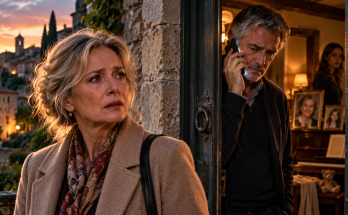
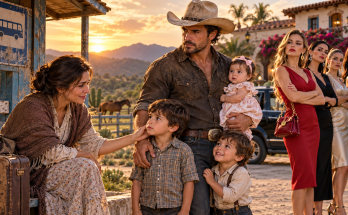
I woke because I heard a baby crying.
For a moment, I forgot where I was.
I reached out before opening my eyes.
The movement was instinctive.
I expected Ada.
Then I remembered.
My daughter was dead.
I was at Cedar Run Ranch.
And the baby crying was not mine.
I lay still for one painful moment.
I had thought the worst part of waking was remembering my losses.
I had been doing it every morning at Martha's house.
First Thomas.
Then Ada.
But this was different.
For a moment, my body had believed there was a living child waiting for me.
The realization hurt more sharply than I expected.
I sat up.
The cry came again.
Stronger this time.
I recognized the sound.
The boy.
I did not know how long I had slept.
It could not have been enough to restore my strength.
But I felt slightly less unsteady.
I reached for my shawl.
Then I remembered I was inside a warm house.
I left it where it was.
Thomas's Bible remained beside my belongings.
I looked at it briefly.
Then I went toward the babies.
Caleb was holding his son.
The green blanket had shifted around the child's shoulders.
His little face was red from crying.
The girl in brown rested nearby, and Caleb kept glancing toward her even while trying to comfort the boy.
He looked relieved when he saw me.
“I'm sorry to wake you.”
“You said you would.”
He nodded.
“He started crying again.”
I went closer.
The boy's mouth moved against the blanket.
I held out my arms.
“He's hungry.”
Caleb passed him to me.
The child turned toward my chest almost immediately.
I settled into the chair.
I had been afraid I would forget how to manage the small movements when I woke tired.
But my hands seemed to remember.
I supported him carefully.
I adjusted the blanket.
Then I helped him begin feeding.
His crying eased.
Caleb let out a long breath.
I looked up.
“Has his sister woken?”
“Not much.”
The answer worried me.
I glanced toward the brown blanket.
The little girl seemed quiet.
Too quiet for my comfort.
“Has she moved?”
“Yes.”
I watched Caleb's face.
He understood what I was asking.
“I've checked her,” he said.
I nodded.
I did not want to make him feel that I doubted his care.
But I could not stop worrying.
The little girl reminded me too strongly of Ada's weakness.
I knew that could make my judgment less steady.
I also knew the child's difficulty feeding was real.
Both truths mattered.
The boy continued nursing.
I looked down at his face.
His expression had softened.
He was no longer crying.
I was beginning to recognize the difference between his urgent movements and his quieter ones.
That frightened me a little.
I had been at the ranch only a short time.
Already I was paying attention to details I had expected to learn with Ada.
The way a child searched for milk.
The way a small hand moved.
The sound of a cry changing when food arrived.
I wondered whether learning those things from another woman's children was a kind of betrayal.
I knew it was not reasonable.
I had not chosen to lose my daughter.
I was not taking anything from Lydia.
Yet grief did not always concern itself with reason.
I looked down at the boy.
His eyes remained closed.
He was warm against me.
I felt a sudden wish to hold him longer than necessary.
The thought startled me.
I reminded myself that he belonged to Caleb.
That he had a mother whose name was Lydia.
That I was there to help.
Nothing more had been decided.
The boy slowed.
I watched him.
He had taken milk with more strength than his sister.
I was grateful.
When he finished, I kept him upright against me for a little while.
Caleb moved closer.
“Better?”
“He seems more settled.”
Caleb nodded.
I passed him his son.
Then I looked toward the little girl.
“I want to check her.”
He brought her to me.
The brown blanket was soft against my hands.
I drew it back slightly.
Her face was small and still.
I watched.
There was movement.
A breath.
A faint change in her expression.
I felt relief.
But I could not make myself trust it completely.
I held her close.
She stirred.
I waited.
Then I tried to help her feed.
Her response was slow.
I did not rush her.
I remembered how desperate Caleb had sounded at Amos's door.
He had feared the babies could not manage another night without enough nourishment.
We had made it through part of that night.
But we were not finished.
The little girl made another effort.
I watched her mouth.
I felt a swallow.
Then a pause.
I waited again.
It was difficult not to become impatient with fear.
I wanted her to show me strength.
I wanted her to cry loudly like her brother.
I wanted something that would make me stop imagining the worst.
But she was not her brother.
She was a different child.
And I had to respond to the child in my arms rather than the one I wished she could be.
“She is trying,” I said.
Caleb stood close.
“That's something.”
“Yes.”
He looked at her face.
I could see his exhaustion.
I could also see how hard he was working not to let his fear overwhelm him.
For a while, we remained quiet.
The little girl took milk slowly.
I did not know whether it was enough.
I had to resist the urge to declare success merely because I needed hope.
After she rested, I looked at Caleb.
“She still worries me.”
He nodded.
“Me too.”
“I think she needs to be watched carefully.”
“I've been watching.”
“I know.”
I regretted how my words sounded.
I did not want to tell him something he had been doing for weeks.
I wanted him to understand why I could not offer easy reassurance.
He looked at his daughter.
“I've never been so frightened.”
The words were plain.
There was no attempt to make them sound noble.
I understood him.
I thought of the room where Ada had been born.
The doctor.
The midwife.
The waiting.
The terrible silence after her last breath.
“I have,” I said quietly.
Caleb looked at me.
I had not intended to speak so directly.
But it was true.
I had felt that fear.
And I had lived through what came after it.
He said nothing.
I was grateful.
I did not need an apology.
I did not need him to compare our losses.
I only needed him to understand why I was so careful with his daughter.
After a while, I spoke again.
“Ada had trouble breathing from the beginning.”
Caleb remained still.
“The doctor said her lungs hadn't opened as they should.”
I looked down at the little girl.
“There wasn't anything he could do.”
My voice changed on the last sentence.
I could hear it.
I had spoken those words before.
But repeating them did not make them easier.
Caleb sat down.
He held his son close.
I could see that he was listening.
“She lived a little over two hours,” I said.
I stopped.
That was not precise enough.
I had never been able to leave the numbers vague.
“Two hours and nineteen minutes.”
The room became quiet.
I looked at my hands.
I had held Ada for nearly all the time she lived.
I had counted her fingers.
I had watched her mouth.
I had waited for her breathing to improve.
Then I had let the midwife take her away.
I could still remember the emptiness of my arms.
“I thought I would have more time,” I said.
Caleb lowered his eyes.
“I know that feeling.”
I looked at him.
He did not explain immediately.
Then he glanced toward the children.
“I thought Lydia would come home with them.”
I felt my throat tighten.
I had known the facts of his loss.
Six weeks.
Twins.
A wife who died in childbirth.
But hearing him say that he had expected Lydia to come home made it different.
I had imagined Thomas meeting Ada.
Caleb had imagined Lydia raising the twins.
We had both built futures around people who were no longer alive.
And neither of us had been prepared to live in what remained.
I looked at the boy in green.
He was resting.
Then I looked at the girl in brown.
She moved slightly against my chest.
I was glad she did.
I could not bear another silence.
“I'm sorry about Lydia,” I said.
Caleb nodded.
“I'm sorry about Ada.”
He did not add anything.
Neither did I.
For once, the words seemed sufficient.
Not because they fixed anything.
Because we both understood how little there was to say.
I held the little girl for a while longer.
She remained quiet.
I watched her breathing.
The fear was still there.
But something in me had settled.
I no longer felt I needed to conceal every mention of my daughter.
Caleb had listened.
He had not treated Ada as an inconvenience.
He had not hurried me past her death.
He had simply allowed her name to remain in the room.
That mattered more than I expected.
I thought about Martha.
My sister loved me.
I believed that.
But at her farmhouse, I had been afraid of making my grief visible.
I had hidden it beneath work.
I had folded it into clothing.
I had carried it outside with the basin.
Here, the sorrow was impossible to hide.
Caleb knew why I had milk.
He knew why holding his babies could hurt me.
And he did not ask me to behave as though it were ordinary.
I felt grateful.
I also felt vulnerable.
I had shared something deeply personal with a man I had only just met.
I wondered whether I would regret it.
Then the boy began stirring again.
Caleb adjusted his blanket.
The ordinary need of the children brought us back to the present.
I looked at the little girl.
She was still breathing.
Still warm.
Still here.
I wanted to protect that small fact.
After a while, I gave her back to Caleb.
He settled both babies carefully.
I looked at his tired face.
“You need rest too.”
He gave a faint smile.
“So you keep telling me.”
“Because it's true.”
He looked at the children.
“I don't know how to stop watching them.”
I nodded.
“I understand.”
I did.
More than he knew.
For days after Ada died, I had continued waking as though someone needed me.
My body had not understood the loss.
My hands had not understood it.
Even my dreams seemed unwilling to accept it.
Now another child's cry had woken me.
And for a moment, I had reached for my daughter.
I knew that would happen again.
I knew there would be more moments when grief arrived without warning.
I could not prevent them.
But I was beginning to see that caring for the twins did not require me to stop grieving.
I could remember Ada and still feed Caleb's children.
I could miss Thomas and still recognize another widower's pain.
I could be frightened and still offer help.
Those things did not cancel one another.
The little girl stirred in Caleb's arms.
I watched her.
She was still weak.
There was still reason to worry.
And there was still a morning to face.
But I had learned something during the night.
I did not have to make my daughter disappear from conversation in order to be useful.
Ada had lived.
Her name could be spoken.
And I could carry that truth with me while helping two other children remain alive.
Source: life5.aubtu.biz