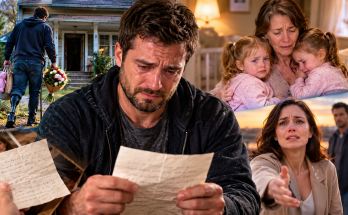
For 18 years, Vincent Moretti believed he was doing the right thing by secretly sending money to his ex-wife, Claire, to help her and their son survive. But there was one thing he never knew: the money he sent was never reaching the people he loved most.
Every month, he transferred the money, convinced that Claire had received it. Every year, he wondered why his son, Noah, never called, never visited, and never seemed to want anything to do with him. He blamed Claire. He blamed the divorce. Eventually, he convinced himself that his own son had chosen to erase him from his life.
But the truth was far more devastating.
Inside his own home, Vincent’s current wife, Sophia, had been hiding a secret that could destroy everything he thought he knew about his family. Letters had disappeared. Messages had been intercepted. Money had vanished. And while Vincent believed he was supporting his son from a distance, Noah was growing up believing his father had abandoned him.
Then one unexpected discovery changed everything.
A forgotten document, a hidden letter, and a financial record exposed a betrayal that had continued for nearly two decades. Suddenly, Vincent realized that the silence he had mistaken for rejection was carefully manufactured—and the person he trusted most might be the very reason he had lost his son.
But when Vincent finally tried to find Noah, he faced a terrifying question: Would his son believe the truth after 18 years of lies, or had the damage already become impossible to repair?
What Vincent uncovered next would expose a family secret, shatter a marriage, and force a father and son to confront the years they could never get back.
Because sometimes, the cruelest betrayal isn’t stealing someone’s money.
It’s stealing the love between a parent and child—and making them believe they were the ones who walked away.
PART 1 — THE BILLIONAIRE WHO SAW HIS OWN EYES IN A STRANGER
The first time Vincent Moretti saw Noah Bennett, the young man was standing beneath a university banner while hundreds of people applauded his achievements.
Vincent had attended countless ceremonies like this one.
He had shaken hands with politicians, congratulated the children of business partners, and delivered speeches about opportunity, discipline, and the importance of giving young people a chance to succeed.
But when Noah stepped onto the stage at Harvard, Vincent stopped listening to the woman beside him.
Something about the young man’s face had unsettled him.
It wasn’t merely the dark hair or the straight nose. It was the way Noah looked toward the audience before accepting his award, his eyebrows drawing together slightly as if he were searching for someone he knew.
Vincent had seen that expression before.
Every morning, for almost fifty years, he had seen it in the mirror.
“Who is that?” he whispered.
His wife, Sophia, glanced toward the stage.
“Noah Bennett. He’s receiving the university’s leadership award. They mentioned his work with disadvantaged students.”
Vincent barely heard her.
Noah smiled at the audience.
For one impossible second, Vincent was twenty-nine again, standing in a tiny Chicago apartment while a young woman laughed at him for burning their dinner.
Claire.
His first wife.
The woman whose disappearance had left a hole in his life that he had spent eighteen years pretending was no longer there.
Vincent gripped the armrest.
Sophia noticed.
“Are you feeling ill?”
“No.”
“Then what is it?”
He pointed toward the stage.
“That young man. How old is he?”
“Apparently eighteen.”
Vincent felt the blood drain from his face.
Eighteen.
The same number of years since Claire had left him.
The same number of years since he had received a letter telling him that she wanted nothing more to do with him.
The same number of years since he had searched for her, failed to find her, and eventually convinced himself that she had chosen a different life.
Onstage, Noah thanked his professors, his scholarship sponsors, and the mother who had raised him alone.
Then he said something that made Vincent’s heart seem to stop.
“My mother taught me that a person doesn’t need to inherit wealth to inherit courage. She worked two jobs when I was little, went without things she needed, and never let me believe that our circumstances defined our future.”
Noah looked down briefly.
“Everything I have accomplished began with her.”
The audience applauded.
Vincent didn’t move.
He remembered Claire’s hands, always warm when she held his. He remembered her habit of folding receipts into neat squares and placing them in a drawer. He remembered the way she used to talk about having children someday.
Then he remembered the letter.
The letter that had told him she was leaving Chicago, that she had ended her pregnancy, and that he should never contact her again.
He had believed every word.
Or perhaps, deep down, he had believed it because accepting it was easier than confronting the possibility that he had failed her.
“Vincent?”
Sophia’s voice sounded distant.
He stood.
Across the auditorium, Noah was stepping away from the microphone.
Vincent moved into the aisle.
“Claire!”
He didn’t intend to shout.
But the name escaped him before he could stop it.
Several people turned.
A woman standing beside the stage froze.
She wore a simple navy dress and carried herself with the quiet dignity of someone who had learned to survive without expecting help.
Her hair was shorter than he remembered.
There were fine lines around her eyes.
But Vincent knew her.
He would have known her in a crowded airport, in a darkened room, or among a thousand strangers.
Claire Bennett.
The woman he had once loved more than anything.
She looked directly at him.
For a moment, neither of them spoke.
Then Claire turned toward Noah and reached for his hand.
Vincent saw the gesture.
He saw the way the young man leaned slightly toward her.
He saw the resemblance between them.
And suddenly, the date, the face, and the eighteen years of unanswered questions came together.
“No,” Vincent whispered.
Claire’s eyes filled with tears.
Vincent took one step forward.
“Claire, is that—”
“Don’t.”
Her voice was quiet, but it stopped him.
Noah looked between them.
“Mom? Do you know him?”
Claire closed her eyes.
She had spent eighteen years protecting her son from a truth she believed would break his heart.
Now, beneath the bright lights of an auditorium, with strangers watching and the past standing only a few feet away, she understood that she could no longer protect him by hiding it.
She tightened her fingers around Noah’s hand.
“Yes,” she said.
Then she looked at Vincent.
“He’s your son.”
The applause died.
And the richest man in the room discovered that there were things money could not prepare him to hear.
PART 2 — THE SON HE NEVER KNEW HE HAD
For several seconds, Vincent could not speak.
He had built his business empire by remaining calm when other people panicked. He knew how to negotiate million-dollar contracts, manage hostile takeovers, and walk into rooms where everyone expected him to fail.
But he could not find a single word to say to the young man standing before him.
Noah stared at his mother.
“What did you just say?”
Claire’s lips trembled.
“I’m sorry.”
“Mom, what did you say?”
She swallowed.
“Vincent Moretti is your father.”
Noah stepped away from her.
It was a small movement, barely a foot of distance, but Claire felt it as though he had walked out of her life.
“You told me my father was dead.”
“I told you he was gone.”
“You let me believe he was dead.”
“I thought I was protecting you.”
Noah gave a short, disbelieving laugh.
“From what? Knowing who my father is?”
“From feeling unwanted.”
He looked toward Vincent, whose face had become almost unrecognizable with shock.
“Did you know about me?”
Vincent shook his head.
“No.”
“Never?”
“Never.”
“Then why are you looking at me like that?”
Vincent’s eyes filled.
“Because you look like me.”
Noah’s expression hardened.
“That doesn’t prove anything.”
“You’re right.”
The answer seemed to surprise him.
Vincent lowered his gaze.
“I don’t have the right to ask you to believe me. Not yet.”
Claire had imagined this moment in countless different ways.
In some versions, Vincent had been furious. In others, he had begged her to explain. Sometimes she imagined herself walking away without saying another word.
She had never imagined that the first thing she would feel was pity.
Not for Vincent.
For the boy she had raised alone, who was suddenly being asked to reconsider every childhood memory he possessed.
“Come with me,” she told Noah.
He hesitated before following her toward a side exit.
Vincent remained where he was until the doors began closing behind them.
Then he turned to his son, Ethan, who had been sitting beside Sophia.
“Did you know?”
Ethan looked stunned.
“Know what?”
“That Claire had a child.”
“No.”
Vincent stared at him.
“Are you certain?”
“Dad, I swear I didn’t know.”
Sophia rose from her seat.
“Vincent, this is not the place to discuss—”
He turned toward her.
“Did you know Claire was pregnant?”
Sophia went still.
The silence lasted only a second.
But Vincent noticed it.
He had spent years believing that silence meant agreement, that unanswered questions could safely be forgotten, and that people who loved him would tell him what he needed to know.
Now, for the first time in eighteen years, he wondered whether the people closest to him had been protecting him from the truth—or protecting themselves from its consequences.
“Answer me,” he said.
Sophia’s face tightened.
“I knew you thought she might be pregnant.”
“That’s not what I asked.”
“I don’t remember every conversation we had eighteen years ago.”
Vincent looked at her for a long moment.
Then he walked away.
Outside, Noah stood near a stone fountain.
Claire remained several steps from him, respecting the distance he had demanded.
Vincent approached slowly.
“May I speak with you?”
“No,” Noah replied.
Vincent stopped.
“All right.”
Noah turned toward him, almost irritated by the fact that the man had obeyed.
“That’s it?”
“What would you like me to say?”
“I don’t know. You’re the one who supposedly just discovered he has a son.”
Vincent looked down at his hands.
“I spent years believing I had lost the woman I loved. I didn’t know I had lost you too.”
Noah’s jaw tightened.
“You didn’t lose me. You never knew me.”
The words struck harder than any accusation Vincent had ever faced.
“You’re right.”
Claire watched him carefully.
She had expected Vincent to defend himself. He had always been proud, and pride had often been the wall between them.
But this man seemed unable to hide behind it.
“I have a question,” Vincent said.
Noah crossed his arms.
“Only one?”
“Did your mother ever tell you that I tried to find her?”
Noah looked at Claire.
“No.”
Vincent’s eyes moved toward her.
“I went to our apartment the day after you left. Your things were gone. The landlord told me you had moved.”
“I left you letters,” Claire replied.
“I never received them.”
“I sent them to your office.”
“I never saw them.”
Claire shook her head.
“That doesn’t make sense. I sent at least six.”
Vincent’s face changed.
“Six?”
“More than six, actually.”
For the first time, Noah looked genuinely uncertain.
Vincent reached into his wallet and removed a folded piece of paper.
“I received this one.”
Claire recognized the handwriting immediately.
Her own.
She took the letter.
The paper had yellowed around the edges, and the fold lines were worn from years of handling.
She began reading.
Vincent,
I am leaving Chicago because I cannot remain in a marriage where I am treated as an afterthought.
I will not ask you for money, explanations, or forgiveness.
The pregnancy is not your concern. I have ended it, and I am ending us.
Do not contact me again.
Claire stared at the page.
Then she looked at Vincent.
“I never wrote this.”
He went completely still.
“What?”
“I never wrote this letter.”
“I received it three days after you left.”
“I was pregnant when I left. I never told you I had ended the pregnancy.”
Vincent’s fingers tightened around the paper.
“Then who wrote it?”
Neither of them answered.
Noah looked from one adult to the other.
For the first time, he began to understand that he was not standing between a mother who had lied and a father who had abandoned him.
He was standing in the middle of something much larger.
Something that had begun before he was born.
And someone had spent eighteen years making certain that two people who once loved each other would never discover the truth.
PART 3 — THE LETTER THAT DESTROYED A MARRIAGE
That evening, Vincent returned to his Chicago home alone.
Sophia had offered to accompany him, but he told her he needed time to think.
The house stood on a quiet street overlooking the lake. Its windows glowed against the darkness, and the entrance hall smelled faintly of cedar and polished wood.
Everything was exactly where it belonged.
That was what made him feel so uneasy.
He had built a life that looked perfect from the outside. He had a successful company, a beautiful home, a wife who appeared beside him at public events, and a son who had been accepted into one of the country’s most prestigious universities.
Yet one conversation had made the foundation of that life feel dangerously unstable.
He went directly to his study.
On the lowest shelf stood several boxes of old business records. He had kept them because his first attorney had advised him never to destroy important correspondence.
He had not opened the boxes in years.
Now he pulled them onto the desk.
The first contained tax documents.
The second held old contracts.
The third was filled with correspondence from the year Claire left.
He began searching.
There were letters from investors, invitations to conferences, and handwritten notes from people who had wanted favors.
Then he found an envelope bearing Claire’s name.
Inside was a short letter dated two weeks after her departure.
Mr. Moretti,
Mrs. Moretti has instructed us to return any correspondence you send. She has made it clear that she does not wish to be contacted.
We recommend that you respect her wishes.
The letter was signed by a woman named Margaret Ellis.
Vincent frowned.
Margaret had been Claire’s former administrative assistant. She had worked briefly at the office of his first company before moving into a position at his private foundation.
He remembered her as quiet, efficient, and fiercely loyal to Claire.
He also remembered that she had resigned shortly after Claire disappeared.
At the time, he had assumed she simply wanted a different job.
Now he wondered whether she had known something he did not.
He searched the box again.
Beneath the letter was a bank statement showing a payment of five thousand dollars.
The transaction description read:
Support payment — Claire and child.
Vincent stared at it.
He had forgotten the details, but he remembered authorizing the transfer.
After learning that Claire might be pregnant, he had arranged monthly payments through his attorney. He had instructed his financial office to ensure that she would never have to struggle because of him.
He had assumed the money had been returned or refused.
He had never followed up.
That failure now seemed unforgivable.
He checked the next statement.
Another payment.
Then another.
For twelve months, money had left his account.
Some transfers were marked for rent. Others were designated for medical expenses. One was simply labeled Baby.
The amounts varied, but the intention was unmistakable.
He had been trying to support a child he believed he would never meet.
Yet he had never once confirmed that the money had reached its destination.
He picked up his phone and called his former attorney.
Daniel Reeves answered after the third ring.
“Vincent? It’s late.”
“I need you to look into something.”
“What is it?”
“Payments I made eighteen years ago for Claire Bennett and her child.”
Daniel fell silent.
“What kind of payments?”
“Monthly support. I need every record you have. Bank transfers, correspondence, returned checks, everything.”
“I’ll need to contact the old accounting department.”
“Do it tonight.”
“Vincent, those files may be archived.”
“Then find the archive.”
He ended the call.
Then he opened another drawer.
At the bottom lay a photograph of Claire taken on their wedding day. She was laughing at something outside the frame, one hand resting on his shoulder.
Vincent touched the photograph with his thumb.
He remembered promising her that she would never have to face the world alone.
He had broken that promise in ways he was only beginning to understand.
The next morning, Daniel called back.
“I found the records,” he said.
“And?”
“The payments were made.”
“Did Claire receive them?”
“That’s the problem.”
Vincent sat down.
“What problem?”
“The payments were initially sent to an account established for her support. After several months, the account was closed.”
“By Claire?”
“No. The closure request was submitted by an authorized representative.”
“Who?”
Daniel hesitated.
“The documents identify Sophia Reynolds.”
Vincent stood so abruptly that his chair struck the wall.
“My wife?”
“Yes.”
“Why would Sophia have access to an account intended for Claire?”
“I don’t know. But the records show that the funds were redirected to an account associated with the Moretti Foundation for Children.”
Vincent pressed his fingers against his forehead.
The foundation was one of the organizations Sophia had helped manage. It supported schools, hospitals, and family assistance programs.
He had always trusted her with its administration.
But these were not charitable donations.
They were payments intended for his pregnant wife and unborn child.
“How much?” he asked.
Daniel gave him the total.
Vincent felt sick.
The money was substantial, but its amount was not what mattered.
It represented eighteen years of decisions made without the knowledge of the people those decisions affected.
“Was the account legally connected to Claire?” he asked.
“Yes.”
“Then why was the money redirected?”
“I can’t tell you without examining the authorization documents.”
“Examine them.”
“I already started. There’s something else.”
Vincent waited.
“The letter you received after Claire left may have been prepared by someone else. I found a copy in the old file, but the signature doesn’t match the handwriting on the original correspondence.”
Vincent closed his eyes.
The past was no longer a painful misunderstanding.
It was a trail of evidence.
And somewhere along that trail was a person who had decided that Vincent Moretti should never know his own son.
PART 4 — THE MONEY THAT REACHED THE WRONG HANDS
Claire had always kept records.
Even when she was struggling to pay rent, she saved receipts. Even when Noah was sick, she kept medical bills in labeled folders. She believed that if she could organize the facts, she could make difficult circumstances feel manageable.
That habit was the reason she had never thrown away the boxes in her closet.
For eighteen years, she had told herself they were remnants of a marriage she had survived.
Now they were the only evidence she possessed that her memories were real.
Noah sat across from her at the kitchen table as she opened the final box.
The room was quiet except for the refrigerator humming in the corner.
“Are you sure you want to do this now?” she asked.
Noah looked at the papers.
“You’ve had eighteen years to decide when to do it. I think we should start.”
She nodded.
The first envelope contained old photographs.
The second held divorce documents.
The third contained letters.
Some were written by Claire. Others were official notices she had received after leaving Chicago.
Then she found a stack of envelopes addressed to her in Vincent’s handwriting.
Her hands began to tremble.
“I’ve never seen these before,” she whispered.
Noah leaned closer.
“Open one.”
The first contained a bank statement and a brief note from Vincent’s attorney.
The statement showed a deposit of five thousand dollars.
The accompanying description read:
Monthly support for Claire and the baby.
Claire stared at the page.
“I never received this.”
She opened another envelope.
Another payment.
Then another.
The records continued for months, followed by quarterly deposits and occasional payments for medical expenses.
Some had been made before Noah was born.
Others came after his birth.
There was even a payment made on the day he underwent emergency surgery at seven years old.
Claire remembered that day vividly.
Noah had suffered a severe infection. She had sat beside his hospital bed for two nights, frightened by every change in his breathing.
She had borrowed money from a colleague to cover the medical expenses.
Meanwhile, somewhere in Chicago, Vincent’s money had apparently been available to help.
But it had never reached her.
Noah looked at the statement.
“Did he really send all this?”
“It appears so.”
“Then where did it go?”
Claire turned to the final envelope.
Inside was a transfer confirmation.
The money had been deposited into an account connected to the Moretti Foundation for Children.
At the bottom of the page was a name.
Sophia Reynolds.
Noah leaned back.
“She took it.”
“We don’t know that yet.”
“Mom, her name is on the document.”
“Her name is on an authorization. That doesn’t tell us why the transfer happened or whether she knew what the money was intended for.”
He stared at her.
“Why are you defending her?”
“I’m not.”
“Then why are you making excuses?”
Claire looked down at the paperwork.
Because she understood something Noah had not yet learned: a name on a document could be evidence, but it was not the entire story.
She had spent years being judged by people who believed they understood her marriage because they knew how it ended.
She would not make the same mistake with Sophia.
Not before she knew the facts.
Noah’s phone rang.
The caller was Vincent.
He looked at his mother.
“Should I answer?”
“That’s your decision.”
He accepted the call and placed it on speaker.
“Hello.”
“Thank you for answering,” Vincent said.
Noah’s voice remained guarded.
“We found the payments.”
“I know. My attorney found the same records.”
“Why didn’t you check that the money reached us?”
Vincent did not answer immediately.
“Because I believed my office had handled it. I was wrong to assume that.”
“That’s a convenient mistake.”
“Yes,” Vincent replied. “It is.”
The answer seemed to surprise Noah.
Vincent continued.
“I can’t give you eighteen years back. I can’t tell you I did everything I should have done. But I can tell you that I never knowingly chose to leave you without support.”
Noah looked at the documents scattered across the table.
“Did you know my mother was pregnant?”
“I suspected it. Then I received a letter telling me the pregnancy had ended.”
“She says she never wrote it.”
“I believe her.”
“And the money?”
“I sent it.”
“But you never knew where it went.”
“That’s correct.”
Noah’s jaw tightened.
“So you sent money you never checked on, believed a letter you never verified, and never found the woman you supposedly loved.”
The silence on the line lasted several seconds.
Then Vincent said, “When you put it that way, I sound like a coward.”
“You sound like a man who had every opportunity to find out the truth and didn’t.”
Vincent accepted the accusation.
“You’re right.”
Claire covered her mouth.
She had spent years imagining Vincent defending himself, insisting that she had misunderstood him, blaming her for leaving.
Instead, he was beginning to acknowledge the ways he had failed.
It did not erase the past.
But it changed the shape of the conversation.
“I want to meet you both,” Vincent said. “Somewhere public. With your mother’s permission and on your terms.”
Noah looked at Claire.
She did not nod or shake her head.
She left the decision to him.
“One meeting,” Noah said finally.
“One meeting.”
“And you answer every question honestly.”
“I will.”
Noah ended the call.
Then he looked at his mother.
“Do you think he’s telling the truth?”
Claire gathered the bank statements into a neat pile.
“I think he believes what he’s telling us.”
“That’s not the same thing.”
“No,” she said. “It isn’t.”
She looked at the name on the final document.
Sophia Reynolds.
For the first time in eighteen years, Claire wondered whether the woman she had blamed for the destruction of her marriage had done something far worse than become involved with her husband.
Perhaps Sophia had helped erase an entire child from Vincent’s life.
Or perhaps there was an explanation neither of them had imagined.
Either way, they would soon have to face her.
PART 5 — THE WOMAN WHO KNEW TOO MUCH
Vincent chose a small private dining room at a restaurant near the Chicago River.
He arrived early.
For the first time in decades, he did not bring an assistant, a lawyer, or a security team.
He wanted Noah to meet a father, not a billionaire.
When Claire entered with her son, Vincent rose immediately.
“Thank you for coming.”
Noah nodded but did not offer his hand.
They sat at a round table.
For several minutes, nobody touched the menus.
Vincent studied Noah’s face, trying not to stare. He wanted to memorize everything: the shape of his eyes, the small scar near his eyebrow, the way he tapped his thumb against his finger when he was thinking.
He had missed eighteen years of details like these.
“How did you do in school?” he asked.
Noah gave him a flat look.
“You can find my academic record online.”
Vincent winced.
“Right.”
“Do you want to know what subjects I liked? What I wanted to be when I was ten? What happened when I broke my arm? You missed all of that.”
“I know.”
“No, you don’t. You know the dates on a document. You don’t know what it felt like to wait for someone who never came.”
Claire lowered her eyes.
Vincent leaned forward.
“Then tell me.”
Noah looked surprised.
“What?”
“Tell me what I missed. If you want to.”
For a long time, Noah said nothing.
Then he began talking.
He told Vincent about the apartment where he grew up, with its unreliable heating and the kitchen window that rattled during storms.
He told him about the scholarship that had allowed him to attend a better school.
He told him about the science fair project that had collapsed the night before judging, forcing Claire to stay awake with him until dawn.
He told him about the father-son basketball games at school, when he had pretended not to care that his mother was the only parent cheering from the sidelines.
Vincent listened.
He did not interrupt.
When Noah finished, Vincent’s eyes were wet.
“I wish I had been there.”
Noah shook his head.
“Wishing doesn’t change anything.”
“No. It doesn’t.”
Claire watched them in silence.
She had wanted Vincent to understand what he had lost.
Now that he was beginning to understand, she felt no satisfaction.
Only grief.
After the meal, Vincent placed a folder on the table.
“My attorney found the original transfer records. He also found a copy of the letter that supposedly came from you.”
Claire opened the folder.
The document contained the same false statement she had seen before, but this time it was accompanied by an internal office memo.
The memo was dated three days after Claire had left Chicago.
It instructed the accounting department to redirect all future payments to the foundation.
The signature belonged to Sophia.
Claire’s face went pale.
“She signed it.”
“Yes,” Vincent said. “But we still don’t know what she believed she was authorizing.”
Noah pushed the folder away.
“How can you keep making excuses for her?”
“I’m not making excuses. I’m trying to establish what happened.”
“She took money meant for me.”
“We need to know whether she knew it was yours.”
Noah stood.
“I need a break.”
He walked toward the restaurant’s windows.
Claire remained at the table with Vincent.
For the first time, they were alone together without being husband and wife.
“Do you still love her?” Claire asked.
Vincent looked down.
“Sophia?”
“Yes.”
He took a long breath.
“I don’t know what I feel right now. I know that I trusted her. I know that I may have been wrong to do so. And I know that I have spent eighteen years blaming you for a decision you never made.”
Claire’s eyes filled.
“You did make that decision, Vincent. You believed a letter because it allowed you to stop looking.”
He nodded slowly.
“You’re right.”
She had imagined those words for years.
Now that she heard them, they offered less comfort than she expected.
“Why didn’t you come after me?” she whispered.
“I tried for a few weeks. Then I received the letter. I was angry, and I was ashamed. I told myself that if you wanted me gone, I should respect your wishes.”
“And after that?”
“I let time become an excuse.”
Claire looked through the window at Noah.
“He needed you.”
“I know.”
“He doesn’t owe you forgiveness.”
“I know that too.”
Vincent paused.
“But I would like the chance to earn his trust, even if he never forgives me for the past.”
Claire studied him.
For the first time, she believed he understood that fatherhood was not an inheritance he could claim simply because a document established his name.
It was a relationship he would have to build.
And eighteen years was a very long time to begin.
PART 6 — THE FOUNDATION’S HIDDEN ACCOUNT
The investigation began quietly.
Vincent instructed his attorney to review the foundation’s archived financial records. He did not want public accusations or a scandal based on incomplete evidence.
If Sophia had deliberately diverted the money, he wanted proof.
If the funds had been used for legitimate charitable purposes, he wanted to understand why.
Within a week, Daniel discovered that the account had received more than just Vincent’s payments.
Over several years, other transfers had entered it under similar descriptions.
Some were marked for families who had lost their homes. Others were intended for children with serious medical needs.
A portion of the money had been used for legitimate foundation projects.
Another portion had been transferred to a separate account controlled by a private financial administrator.
The records were incomplete.
When Vincent confronted Sophia, she was sitting in the breakfast room, reading a newspaper.
She looked up when he entered.
“You’re home early.”
“We need to talk.”
Something in his voice made her put the newspaper down.
“About what?”
“The money I sent Claire.”
Sophia’s expression barely changed.
“What about it?”
“You authorized its transfer to the foundation.”
“I helped manage the foundation. I authorized hundreds of transfers.”
“Did you know the money was intended for my wife and unborn child?”
Sophia looked at him for several seconds.
Then she folded the newspaper.
“I knew you had arranged some financial support.”
“That isn’t what I asked.”
“I don’t remember the exact details.”
“Did you redirect it?”
“Yes.”
Vincent felt a coldness settle in his chest.
“Why?”
“Because Claire had left. She wasn’t responding to anyone. We believed she didn’t want the money.”
“Who told you that?”
Sophia hesitated.
“The letter.”
“Did you verify it?”
“No.”
“Did you contact Claire?”
“No.”
“Did you ask me?”
“You were devastated. You wanted to forget her.”
Vincent stared at her.
“I wanted to forget the pain. I never said I wanted to abandon my child.”
Sophia stood.
“I was trying to protect you.”
“From what?”
“From spending the rest of your life chasing a woman who had rejected you.”
“And Noah?”
Her eyes flickered.
“What about him?”
“You knew there might be a child.”
“I knew there might have been a pregnancy.”
“And you never wondered whether he was born?”
Sophia’s voice rose.
“What did you expect me to do? Search every hospital in Illinois? Track down a woman who had supposedly told you never to contact her again?”
“You could have done something.”
“So could you!”
The words rang through the room.
Vincent went silent.
Sophia’s eyes filled, but her tears did not soften his anger.
“You could have searched harder,” she continued. “You could have hired investigators. You could have checked the records yourself. You chose to accept what you were told because it was easier.”
Vincent stared at her.
She was right about one thing.
He had made his own choices.
But that did not absolve her.
“Why did you tell Ethan that Claire wanted nothing to do with us?”
Sophia’s face changed.
“Because that was what I believed.”
“You told him Claire had rejected the family.”
“She left you.”
“She was pregnant.”
“And I was raising your son!”
For the first time, Sophia’s composure shattered.
“I had a baby with you. I built a home with you. I stood beside you while your company expanded and your father died and your business partners tried to destroy you. I was there, Vincent.”
“I know.”
“No, you don’t. You keep talking about Claire as if the last eighteen years meant nothing.”
“I never said that.”
“You don’t have to. I can see it in your face.”
Vincent looked at her.
He realized that beneath Sophia’s anger was a fear she had carried for years.
She had believed that Claire’s return would make her own life disappear.
But the truth was more complicated.
Sophia had a son. She had built a family. She had supported Vincent through difficult years.
None of that erased what she had done.
And none of what she had done erased the life she had lived.
“I need the truth,” Vincent said.
Sophia looked away.
“You already have it.”
“No. I have your explanation. I still don’t have the whole truth.”
He left the room.
Behind him, Sophia remained standing beside the breakfast table, staring at the newspaper she had stopped reading.
For the first time, she understood that the secret she had kept for eighteen years was no longer something she could control.
PART 7 — THE SON WHO REFUSED TO BE BOUGHT
Vincent’s first instinct was to help Noah.
He wanted to pay for his education, provide a home, offer opportunities, and make sure the young man never had to worry about money again.
But every time he considered making an offer, he remembered Noah’s expression at the restaurant.
You missed all of that.
So Vincent did something he had never done before.
He asked.
“I’d like to help with your university expenses,” he told Noah during their second meeting.
Noah looked up from his coffee.
“Why?”
“Because I’m your father.”
“That doesn’t answer the question.”
Vincent considered his words carefully.
“Because I have the means to help, and I should have been helping you from the beginning.”
Noah shook his head.
“I already have a scholarship.”
“I know.”
“My mother worked two jobs to get me here.”
“I know.”
“She sacrificed things you don’t even know about.”
Vincent lowered his eyes.
“Then let me support her.”
“No.”
The answer was immediate.
“Why not?”
“Because I don’t want you turning eighteen years of absence into a financial transaction.”
Vincent sat quietly.
Noah continued.
“If you want to know me, then know me. Ask about my classes. Listen when I talk. Show up when you say you will. Don’t send a check and imagine that you’ve fixed something.”
Vincent felt a painful warmth spread through his chest.
He had spent his entire adult life solving problems with resources.
For the first time, he was being told that the resource he needed most was time.
“All right,” he said.
Noah seemed surprised.
“All right?”
“I won’t make financial decisions for you without your agreement. If you ever need help, you can ask. Until then, I’ll respect your choice.”
Noah studied him.
“You’re not going to argue?”
“I’ve done enough of that for one lifetime.”
A faint smile appeared at the corner of Noah’s mouth.
It disappeared almost immediately.
But Vincent saw it.
And he treasured it.
Over the following weeks, their relationship developed in small, awkward steps.
Vincent learned that Noah hated mushrooms, loved old science-fiction films, and preferred studying in noisy cafés rather than silent libraries.
Noah learned that Vincent was a terrible cook, that he still kept handwritten notes in a desk drawer, and that he became nervous when conversations turned personal.
They did not speak about the past every time they met.
Sometimes they discussed business.
Sometimes they talked about books.
Once, Noah invited Vincent to watch a student debate, and Vincent sat in the back row without telling anyone who he was.
Afterward, he waited outside until Noah finished speaking with his friends.
“How did I do?” Noah asked.
Vincent smiled.
“You were better than the other three.”
“You’re supposed to be objective.”
“I’m your father. I’m allowed one biased opinion.”
Noah laughed.
It was the first time Vincent had heard that sound directed at him.
For a moment, he forgot everything else.
Then Noah’s expression became serious.
“Can I ask you something?”
“Anything.”
“If you had known I existed, would you have left Sophia?”
Vincent did not answer quickly.
He knew that the wrong answer could become another lie Noah would carry for years.
“I don’t know what I would have done,” he said at last. “I would like to believe I would have made better choices. But I can’t promise you that I would have handled everything perfectly.”
Noah nodded slowly.
“At least that’s honest.”
“I wish I could give you a better answer.”
“I wish you could too.”
They stood together in the evening air.
For the first time, neither tried to fill the silence.
It was not forgiveness.
It was not a family reunion.
It was simply two people learning how to speak without pretending they had never hurt each other.
And for Vincent, it was more than he had dared to hope for.
PART 8 — THE LETTER THAT SOPHIA NEVER EXPECTED HIM TO FIND
The decisive evidence arrived in a plain envelope from a retired office manager.
Her name was Margaret Ellis.
She had worked for Vincent’s company during the year Claire disappeared, and she had recently learned that the old financial records were being reviewed.
Margaret requested a meeting.
Vincent agreed.
She arrived carrying a small leather folder.
“I should have come forward years ago,” she said.
Vincent watched her carefully.
“Then why didn’t you?”
“Because I was afraid.”
“Of what?”
“Of losing my job. Of being accused of interfering in your marriage. Of having no one believe me.”
She placed the folder on the desk.
Inside were copies of internal memos, correspondence logs, and a handwritten note.
Vincent recognized the note immediately.
It was the letter Claire had supposedly written to end their marriage.
Margaret explained that the original had arrived at the office through a courier. It had not come through the normal mail system, and the delivery record did not identify the sender.
At the time, Margaret had questioned the unusual procedure.
She had been told that Vincent had already approved the matter.
She had not challenged the instruction.
“I didn’t know whether the letter was genuine,” she said. “But I remember Mrs. Moretti coming to the office that afternoon.”
Vincent leaned forward.
“Sophia?”
“Yes. She asked whether any correspondence had arrived from Claire.”
“What did you tell her?”
“That a letter had arrived.”
“Did she read it?”
Margaret nodded.
“She took it into the conference room. When she came out, she told me to make sure no further letters from Claire reached you.”
Vincent felt his stomach tighten.
“Did she say why?”
“She said Mrs. Moretti had made her decision and that you needed to move on.”
Margaret opened the folder again.
“There’s something else.”
She showed him a photocopy of an outgoing letter dated three days after Claire left.
The handwriting was Vincent’s.
The words were simple.
Claire,
I know you are carrying our child.
I will come to you wherever you are.
Please do not believe that I have chosen anyone over you.
Vincent.
Vincent stared at the page.
He had never seen it before.
“I didn’t send this.”
Margaret nodded.
“I know.”
“How?”
“Because I prepared it.”
He looked up sharply.
“You wrote this?”
“I typed it from your dictation. You came into the office that morning and asked me to prepare a letter for Claire. You said you wanted her to know that you would support her and the baby.”
Vincent could barely breathe.
“What happened to it?”
“I gave it to Sophia. She said she would make sure it reached Claire.”
“Why would you give it to Sophia?”
“She told me she was helping you reconcile.”
Margaret looked down.
“I believed her.”
Vincent stood and walked to the window.
For eighteen years, he had believed Claire had rejected him.
For eighteen years, Claire had believed he had abandoned her.
And somewhere between them, letters had been intercepted, money had been redirected, and decisions had been made in their names.
He turned back.
“Did Sophia know about the child?”
Margaret’s expression was sorrowful.
“Yes. She knew you believed Claire might be pregnant.”
“Did she know the letter was false?”
“I can’t prove what she knew at the beginning. But I can tell you what she said later.”
Vincent waited.
“She told me that if Claire wanted to disappear, it was better for everyone if she stayed gone.”
The room seemed to grow smaller.
Margaret closed the folder.
“I should have done more.”
Vincent looked at the documents.
“So should I.”
For the first time, he understood the full shape of his failure.
Sophia might have manipulated the situation.
Other people might have helped.
But the most important decisions had still been his.
He had accepted the first explanation that made his pain easier to bear.
He had failed to follow the evidence.
He had stopped looking.
And a child had grown up believing he had no father.
Vincent picked up his phone.
He needed to tell Claire.
Not because he expected her to forgive him.
Because she deserved to know the truth.
PART 9 — THE CONFRONTATION THAT ENDED THE LIES
Claire arrived at Vincent’s office the following afternoon.
She had not been inside the building since the final year of their marriage.
The lobby had changed. The furniture was newer, the walls were covered with awards, and a large photograph of Vincent stood beside the reception desk.
He looked confident in the picture.
Untouchable.
Claire remembered the young man who had once sat on the floor of their first apartment because they could not afford a proper sofa.
She wondered when he had begun believing that being powerful meant never admitting he was wrong.
Vincent met her at the elevator.
“I have something to show you.”
They entered his office.
On the desk lay copies of the letters, the transfer records, and Margaret’s statement.
Claire read everything without speaking.
When she finished, she sat back.
“So she intercepted your letter.”
“It appears so.”
“And the money?”
“She authorized the transfer to the foundation. I don’t yet know whether she personally benefited from any of it.”
Claire stared at the papers.
“All those years, I thought you had decided we weren’t worth the trouble.”
Vincent lowered his eyes.
“I know.”
“No, Vincent. You don’t know.”
Her voice trembled.
“I worked nights while Noah slept in the next room. I took him to school and then went to work. I learned how to stretch a grocery budget, how to fix a broken heater, how to explain to a little boy why other children had fathers who came to school events.”
She wiped her cheek.
“And every time he asked me why his father wasn’t there, I had to decide whether to tell him that I didn’t know or to make up an answer that would hurt him less.”
Vincent’s eyes filled.
“I am sorry.”
“You keep saying that.”
“Because I am.”
“But what does that do for the years we lost?”
“Nothing.”
Claire looked at him.
He continued quietly.
“I cannot give them back. I cannot make you forget what happened. I can only stop lying to myself about my part in it.”
For a long time, Claire said nothing.
Then she asked the question she had carried since the day she left.
“Did you ever stop loving me?”
Vincent looked at her.
“No.”
The answer came without hesitation.
“But I let pride, anger, and fear decide what I believed. I loved you, and I still failed you.”
Claire’s eyes filled again.
She had once believed that love was enough to keep two people together.
Now she understood that love without courage could become another form of abandonment.
“Do you love Sophia?” she asked.
Vincent took a slow breath.
“I cared for her. I built a family with her. But I need to understand what happened before I can decide what our marriage means now.”
Claire nodded.
She did not want to be the reason another family collapsed.
She wanted the truth.
Nothing more.
“Then find out everything,” she said. “Not just what she did to us. Find out why she did it.”
Vincent looked at her.
“And if the truth destroys my marriage?”
Claire stood.
“That is a decision you will have to make for yourself.”
She walked toward the door.
Before leaving, she turned back.
“One more thing.”
“Yes?”
“Noah is not a prize you get to win because you finally discovered the truth.”
“I know.”
“He doesn’t owe you his affection. He doesn’t owe you his time. And he certainly doesn’t owe you forgiveness.”
Vincent nodded.
“I understand.”
Claire studied him for a moment.
“Then perhaps you are finally beginning to understand what it means to be his father.”
She left the office.
Vincent remained standing beside his desk, surrounded by the evidence of eighteen years of silence.
For the first time, he did not feel the urge to make the situation disappear.
He wanted to face it.
Whatever the cost.
PART 10 — THE WOMAN WHO FEARED LOSING EVERYTHING
Sophia did not deny the letters when Vincent confronted her with Margaret’s statement.
She sat in their living room, her hands folded in her lap, while he placed the documents on the coffee table.
“Did you give Claire’s letters to me?” he asked.
“No.”
“Did you intercept them?”
Sophia looked away.
“Some of them.”
Vincent felt as though the floor had shifted beneath him.
“How many?”
“I don’t remember.”
“Did you send the false letter?”
She did not answer.
“Did you redirect the money?”
“Yes.”
He stared at her.
“Why?”
Sophia’s eyes filled.
“Because I was afraid.”
“Of what?”
“Of losing you.”
Vincent shook his head.
“You had a family with me. We had a son. We had a life.”
“And I knew that if Claire came back, you would never look at me the same way again.”
“You decided that for me?”
“I thought I was protecting what we had.”
“You were protecting yourself.”
Sophia began to cry.
“I was twenty-eight years old. I was pregnant with Ethan. You were grieving your marriage, and every time you spoke about Claire, I knew you still loved her.”
“So you made sure I would never hear from her.”
“I thought she had left you.”
“She did leave me. But she never told me she had ended the pregnancy. She never told me to forget her. You made sure I believed those things.”
Sophia covered her face.
“I thought if she stayed away, you would eventually move on.”
“And the money?”
She lowered her hands.
“Some of it went to the foundation.”
“All of it?”
“I don’t know.”
Vincent stared at her.
“You don’t know?”
“The foundation was struggling at the time. We were trying to open a children’s center. I thought the money could be used for something good.”
“It wasn’t yours to redirect.”
“I know.”
“Did you ever think about Noah?”
Sophia looked at him.
“Yes.”
“When?”
Her face crumpled.
“Sometimes. I wondered whether he had been born. I wondered whether Claire had raised him alone. But every time I thought about it, I told myself that it was too late to change anything.”
Vincent closed his eyes.
There it was again.
The excuse that had destroyed so much of their lives.
It was too late.
They had both used it.
He had used it when he stopped searching for Claire.
Sophia had used it when she stopped questioning the letters.
And Noah had grown up without a father because two adults had allowed fear to become more important than the truth.
“I don’t know what happens to our marriage now,” Vincent said.
Sophia nodded through her tears.
“I understand.”
“No, you don’t. I have spent eighteen years believing that the woman I loved rejected me and our child. You let me believe that.”
“I was wrong.”
“Yes.”
He stood.
“I need time.”
Sophia looked up.
“Will you leave me?”
“I don’t know.”
The uncertainty frightened her more than anger would have.
Vincent walked toward the stairs.
Behind him, Sophia remained on the sofa, surrounded by the documents she had hoped would never be found.
She had once believed that keeping Claire away would protect her family.
Now she could see that the secret had poisoned it from within.
But knowing that did not mean she could undo it.
PART 11 — ETHAN MEETS HIS BROTHER
Ethan had grown up believing that his family was ordinary in all the ways that mattered.
His father worked too much. His mother worried too much. Their home was comfortable, their holidays were predictable, and family arguments usually ended with someone making coffee and pretending everything was fine.
Then, in a single afternoon, he learned that his father had another son.
A son almost his age.
A brother whose existence had been hidden from him for eighteen years.
Ethan found Noah’s public university profile online.
He read about his academic awards, his volunteer work, and the scholarship that had helped him attend Harvard.
He also found an article about a community science program Noah had helped establish for children from low-income families.
Ethan read it twice.
Then he called him.
Noah answered cautiously.
“Hello?”
“It’s Ethan. Vincent’s son.”
A pause.
“I know who you are.”
“Right. Sorry.”
Ethan rubbed his forehead.
“I’m not very good at this.”
“Neither am I.”
That made Ethan laugh nervously.
“Would you be willing to meet?”
Noah hesitated.
“Why?”
“Because I think we should talk. Not about money or the letters. Just about us.”
Noah looked toward Claire, who was reading at the other end of the room.
“Somewhere public,” he said.
“Of course.”
They met at a coffee shop near campus.
Ethan arrived ten minutes early and spent the entire time wondering whether Noah would recognize the similarities between them.
When Noah entered, the resemblance was obvious.
They had the same height, the same dark hair, and the same habit of looking toward the door whenever someone entered the room.
Ethan stood.
“Hi.”
“Hi.”
They shook hands awkwardly.
For a while, they discussed ordinary things.
Classes.
Professors.
The city.
Then Ethan looked down at his cup.
“I want you to know that I didn’t know about you.”
Noah studied him.
“Did your mother know?”
Ethan hesitated.
“I don’t know everything she knew. But I found an old photograph in her desk. It was taken before my parents got married.”
He pulled out his phone and showed Noah the picture.
Claire stood beside Vincent at a charity event. Sophia was visible in the background.
On the back of the photograph, someone had written a date.
Two months before Vincent and Sophia’s wedding.
Noah looked at the image.
“What does this prove?”
“Nothing by itself. But I found a note with it.”
Ethan showed him another photograph of the handwritten note.
It read:
She cannot come back. Everything depends on it.
Noah’s expression changed.
“Who wrote that?”
“I don’t know. The handwriting looks like my mother’s, but I can’t be sure.”
They sat in silence.
Ethan finally spoke.
“I’ve been angry with my mother since I found out. But I also know she raised me. She was there when I was sick, when I failed exams, when I thought my life was falling apart.”
Noah nodded.
“I understand.”
“That doesn’t mean I’m defending what she did.”
“I know.”
Ethan looked at him.
“I don’t expect you to like me just because we’re related.”
“Good.”
“But I’d like to get to know you.”
Noah studied him for a long moment.
Then he smiled slightly.
“We can start with coffee.”
Ethan laughed.
“That’s fair.”
They spent another hour talking.
By the time they left, the awkwardness had softened into cautious curiosity.
They were not suddenly brothers in the way people imagined brothers should be.
They were two young men trying to understand how their lives had been shaped by a secret neither had chosen.
And for the first time, they began to see that they did not have to inherit the conflict that had divided their parents.
PART 12 — THE ACCOUNT THAT HELD THE FINAL SECRET
Daniel’s investigation eventually uncovered the missing financial records.
The money had been transferred to the Moretti Foundation, but the foundation had not kept all of it.
A portion had been moved to an account associated with a private administrator named Robert Hale.
Hale had handled several foundation projects and had been responsible for processing payments to families in need.
He had retired years earlier.
When Daniel contacted him, Hale initially refused to discuss the matter.
Then Vincent sent him copies of the authorization documents.
Hale agreed to meet.
He arrived at Daniel’s office carrying a folder filled with old receipts.
“I never stole the money,” he said immediately.
Vincent sat across from him.
“Then explain what happened.”
Hale opened the folder.
At the time, he explained, the foundation had been preparing to open a residential program for children whose families were facing financial hardship.
The project had run into serious funding problems.
Sophia had authorized the transfer of several funds to keep it operating.
Some of those funds included Vincent’s payments for Claire and Noah.
Hale admitted that he had questioned the transfer.
He had been told that Claire had refused the money and that Vincent had agreed to redirect it toward the foundation.
“Did you verify that?” Vincent asked.
“No.”
“Why not?”
“Because Mrs. Moretti was one of the people overseeing the project. She told me the paperwork had been approved.”
Hale’s expression tightened.
“I should have checked.”
“Yes,” Vincent replied. “You should have.”
The money had not all been spent on the foundation.
A portion had been used to pay outstanding invoices for the children’s program. Another portion had been returned to the general account.
The records did not show that Sophia had personally taken the funds.
But they did establish that she had knowingly authorized money intended for a specific purpose to be used elsewhere.
And she had allowed Vincent to believe that Claire had refused his support.
“Why didn’t anyone tell me?” Vincent asked.
Hale looked at him.
“Because no one wanted to challenge Mrs. Moretti. And because you never asked.”
Vincent lowered his eyes.
There it was again.
The truth was not as simple as one villain stealing money from an innocent family.
There had been fear, negligence, loyalty, and self-interest.
People had made decisions without verifying the facts.
They had allowed assumptions to become official records.
And because no one had wanted to disturb the appearance of a stable family, the consequences had been left to a mother and child who had no idea they were being discussed.
Vincent asked Daniel to prepare a full accounting.
He also instructed the foundation to establish an independent review of its historic financial practices.
If money was still owed to Claire or Noah, it would be identified and handled through proper legal channels.
But when he called Noah to explain the findings, the young man surprised him.
“I don’t want you to spend the rest of your life trying to calculate what you owe me,” Noah said.
Vincent sat quietly.
“I understand.”
“Do you? Because I don’t want money to become the only way we know how to talk.”
“It won’t.”
“Then promise me something.”
“Anything.”
“Don’t hide behind your lawyers when a conversation becomes uncomfortable.”
Vincent smiled sadly.
“I’ll try.”
“No. Promise.”
He took a breath.
“I promise.”
For the first time, Noah sounded almost like a son speaking to his father.
Not because he had forgiven Vincent.
Because he was beginning to believe that the man might finally be willing to listen.
PART 13 — THE APOLOGY THAT COULD NOT ERASE EIGHTEEN YEARS
Several months later, Vincent asked Claire to meet him at the lakefront.
It was a cold afternoon, and the water stretched toward the horizon beneath a pale gray sky.
Claire arrived wearing a wool coat and carrying a small paper bag.
“I brought something,” she said.
Vincent looked inside.
It was a photograph.
The picture showed Noah at seven years old, standing beside a science fair project made from cardboard, wires, and a broken desk lamp.
He was smiling proudly.
Vincent stared at the image.
“I’ve never seen this.”
“I know.”
Claire stood beside him.
“He wanted to build a machine that would sort recycling. It barely worked. Half the pieces fell off before the judges arrived.”
Vincent laughed softly.
“What happened?”
“He won second place.”
“Second?”
“He insisted the judges were wrong.”
Vincent smiled.
“I would have liked him.”
“You would have liked him very much.”
The words hurt them both.
They walked slowly along the path.
After a while, Vincent stopped.
“I need to apologize for something.”
Claire looked at him.
“Only one thing?”
He gave a faint smile.
“I’ll start with one.”
He took a breath.
“I blamed you for leaving. I blamed you for not contacting me. I blamed you for the life I had to build without you.”
Claire listened.
“I never asked enough questions. I never checked whether the money reached you. I accepted a letter that gave me permission to stop looking. I told myself that respecting your wishes meant I didn’t have to face the possibility that you needed me.”
His voice faltered.
“And I let eighteen years pass.”
Claire looked toward the water.
“Yes.”
“I am sorry.”
She remained silent for a long time.
Then she said, “I am sorry too.”
Vincent turned toward her.
“For what?”
“For keeping Noah’s existence from him in the way I did. For telling him you were gone without giving him the truth. I thought I was protecting him. I didn’t realize that I was making his decisions for him.”
Vincent shook his head.
“You were raising him alone. You were trying to survive.”
“That explains it. It doesn’t make it harmless.”
He nodded.
They stood together, two people who had once believed their marriage would last forever.
Neither could return to the beginning.
Neither could erase what had happened.
But they could finally speak without pretending that only one of them had made mistakes.
“Do you ever think about what would have happened if I had found you?” Vincent asked.
“Sometimes.”
“What do you imagine?”
Claire considered the question.
“I imagine that we would have fought. I imagine that you might have chosen Sophia anyway. I imagine that we might have tried to raise Noah together and failed.”
Vincent looked down.
“And sometimes?”
“Sometimes I imagine that we would have found a way to forgive each other.”
He swallowed.
“Do you still love me?”
Claire closed her eyes briefly.
“I loved you for a long time after I left. Then I learned how to live without you. I don’t know what I feel now.”
Vincent nodded.
“That’s fair.”
She touched his arm.
“But I don’t hate you anymore.”
For Vincent, those words meant more than any promise of reconciliation could have.
He did not reach for her hand.
He did not ask her to come home.
He simply stood beside her, grateful that she had allowed him to hear the truth.
When they parted, Claire gave him the photograph.
“Keep it,” she said. “You have a lot of years to catch up on.”
Vincent watched her walk away.
For the first time, he understood that an apology was not a key that opened a locked door.
It was simply the beginning of taking responsibility for what had happened on the other side.
PART 14 — THE DAY THE FAMILY FINALLY SAT AT ONE TABLE
Noah agreed to attend dinner at Vincent’s home after the university semester ended.
He insisted that Claire come with him.
Vincent agreed without argument.
Ethan was already there when they arrived. He opened the door himself, looking nervous enough that Noah almost laughed.
“Welcome,” Ethan said.
“Thanks.”
Sophia stood in the living room.
For several seconds, nobody spoke.
She looked older than she had at the university ceremony. Her face carried the exhaustion of someone who had spent months confronting the consequences of her own decisions.
“Claire,” she said.
Claire nodded.
“Sophia.”
“I know I don’t deserve your forgiveness.”
Claire studied her.
“I’m not here to decide what you deserve.”
Sophia looked down.
“I am sorry.”
The words were quiet.
Noah watched his mother carefully.
Claire did not respond immediately.
Then she said, “I appreciate you saying that.”
It was not forgiveness.
But it was not rejection either.
They sat at the dining table.
The conversation began awkwardly, with questions about school, work, and the food.
Ethan made a joke about Vincent’s inability to cook, and for the first time in months, everyone laughed.
Then Noah asked Sophia a question.
“Why did you do it?”
She looked at him.
“Because I was afraid of losing the life I had.”
“You had a life. You had a husband and a son. Why wasn’t that enough?”
Sophia’s eyes filled.
“Because I thought your existence would destroy everything I had built.”
Noah looked down at his plate.
“You didn’t destroy my life by hiding me. My mother gave me a good life. But you took away my chance to know my father.”
Sophia nodded.
“I know.”
“No,” Noah said quietly. “I don’t think you do. You can’t know what it feels like to grow up believing you weren’t wanted by someone you never met.”
Sophia could not answer.
Ethan placed his hand on the table.
“I didn’t know about Noah. But I know our family wasn’t as perfect as I believed. I don’t want us to spend the rest of our lives punishing each other for what happened.”
Noah looked at him.
“I’m not trying to punish anyone.”
“I know. I’m just asking whether we can start from here.”
Noah considered the question.
“Maybe.”
It was not a dramatic reconciliation.
No one stood up to deliver a speech about forgiveness.
No one pretended that the past no longer mattered.
But as the evening continued, they began to talk about the future.
Ethan told Noah about an internship he had been offered.
Noah described a research project he wanted to develop.
Vincent asked questions and listened to the answers.
Sophia remained quieter than everyone else, but she did not leave.
For the first time, the family sat around one table without pretending that every secret had been resolved.
It was imperfect.
It was uncomfortable.
It was real.
And that was a beginning.
PART 15 — THE MONEY HE NEVER KNEW HE SENT
One year after the university ceremony, Vincent received a package at his office.
Inside was a small photo album.
Noah had put it together himself.
The first page contained a photograph of Claire holding him as a newborn.
The next showed Noah as a toddler, standing beside a Christmas tree.
There were photographs of school events, science competitions, birthday cakes, and summer trips.
Some were blurry.
Some were badly lit.
Some showed Noah making faces at the camera.
On the final page was a photograph taken only a few weeks earlier.
Vincent and Noah stood beside the lakefront, both looking slightly uncomfortable because neither knew where to put his hands.
Underneath it, Noah had written:
We can’t get the lost years back. But we can decide what to do with the ones we have.
Vincent sat with the album for a long time.
Then he opened his desk drawer and took out the original bank statements.
He had spent months thinking about the money he had sent.
He had calculated the total, reviewed the dates, and studied the records until he could recite the figures from memory.
At first, he had wanted to know how much Noah had been denied.
Then he had wanted to know who had taken it.
Now he understood that the most important loss could never be measured by a bank statement.
The money had been intended to support a child.
But no payment could replace a father attending a school concert, sitting beside a hospital bed, or waiting outside a classroom after a difficult day.
No transfer could give Claire back the nights she had spent worrying about rent.
No amount of wealth could return the years Vincent had spent believing a lie because he had been too afraid to search for the truth.
He had sent money.
He had made arrangements.
He had signed documents.
And he had told himself that those actions were enough.
They were not.
A few days later, Vincent invited Noah and Claire to a small family lunch.
There were no cameras and no speeches.
He gave Noah a modest framed photograph of the three of them taken at the lakefront.
Then he handed Claire a sealed envelope.
She looked at it cautiously.
“What is this?”
“A letter.”
“Another one?”
Vincent smiled sadly.
“Yes. But this time, I’m giving it to you myself.”
Claire opened it.
Inside was a handwritten note.
Claire,
For eighteen years, I believed that sending money meant I was doing what I could.
I was wrong.
I believed that respecting your wishes meant accepting a letter I never questioned.
I was wrong.
I believed that if I could not find you, I could eventually stop looking.
I was wrong.
I cannot repair the past with money, and I will not ask you to pretend that I can.
I can only tell you that I am sorry for the choices I made, the questions I failed to ask, and the years I allowed to pass.
Thank you for raising our son.
Thank you for allowing me to begin knowing him.
Vincent.
Claire folded the letter.
For a long time, she said nothing.
Then she placed it in her bag.
“Thank you,” she said.
Vincent nodded.
He did not ask whether she forgave him.
He had finally learned that some questions had to remain unanswered until the person being asked was ready.
After lunch, Noah walked with Vincent toward the front door.
“Are you okay?” Vincent asked.
Noah smiled slightly.
“I’m getting there.”
Vincent nodded.
“Me too.”
Noah hesitated.
Then, almost casually, he said, “I’ll call you next week.”
Vincent looked at him.
“All right.”
“And maybe we can go to that science museum you mentioned.”
“I’d like that.”
Noah opened the door.
Then he turned back.
“Dad?”
Vincent froze.
It was the first time Noah had called him that.
“Yes?”
“I’ll see you next week.”
Vincent could not speak for a moment.
Then he smiled.
“I’ll be there.”
Noah left.
Vincent stood in the doorway, watching him walk down the path.
For the first time in eighteen years, he did not feel the need to chase the past.
He had something else to do.
He had to show up for the future.
PART 16 — THE YEARS THAT MONEY COULD NEVER BUY
Three years later, Noah graduated from Harvard.
Vincent sat in the audience beside Claire, while Ethan occupied the seat on her other side.
Sophia had chosen to remain at home that day. Their marriage had ended quietly the previous year, after they both accepted that the trust between them could not be restored.
There had been no public scandal.
No dramatic courtroom confrontation.
Only difficult conversations, legal paperwork, and the gradual understanding that a marriage could survive many things but not every betrayal.
Vincent and Sophia remained civil for Ethan’s sake.
Ethan continued to love his mother.
Noah had slowly learned to separate the brother he was getting to know from the decisions made by the adults who had raised them.
And Claire had built a life that no longer revolved around the marriage she had lost.
She still lived in the same modest house.
She still kept her records in labeled folders.
She still called Noah to remind him to eat properly during exams, even though he was now old enough to remind her that he was perfectly capable of feeding himself.
Some things never changed.
Other things changed more than anyone expected.
When Noah crossed the stage to receive his diploma, Vincent stood and applauded.
He did not care who noticed.
He had once imagined that the most important moment in his life would be the day his company became successful.
Then he thought it would be the day his son was born, though he had not known that son existed.
Later, he believed it would be the day Noah agreed to meet him.
Now he understood that fatherhood was not one moment.
It was every ordinary moment that followed.
The calls answered.
The promises kept.
The birthdays attended.
The conversations that continued even when they became uncomfortable.
The willingness to hear difficult truths without trying to purchase a different ending.
After the ceremony, Noah found Vincent near the university gates.
“Hey, Dad.”
Vincent smiled.
“Congratulations.”
“Thanks.”
Claire approached and hugged her son.
Ethan joined them, carrying a bouquet that Noah immediately complained was too large.
They laughed.
For a moment, they looked like any other family celebrating a graduation.
But none of them had forgotten how they came to be standing together.
The missing letters.
The redirected money.
The eighteen years of silence.
The false belief that someone had chosen to abandon someone else.
Those things remained part of their history.
They simply no longer controlled every page.
As they walked toward the car, Noah fell into step beside Vincent.
“Can I ask you something?”
“Of course.”
“Do you ever think about what would have happened if the money had reached Mom?”
Vincent considered the question.
“Yes.”
“What do you think would have changed?”
“Maybe she would have had an easier time raising you. Maybe she would have known I was trying to help. Maybe she would have contacted me.”
“Would you have found us?”
Vincent looked at his son.
“I hope I would have.”
Noah nodded.
Then he asked the question Vincent had been afraid to hear.
“Do you regret sending the money?”
Vincent stopped walking.
“No.”
“Even though it never reached us?”
“Yes.”
Noah frowned.
Vincent continued.
“I regret that I didn’t make sure it reached you. I regret that I believed a letter instead of searching for the truth. I regret that I let other people make decisions that should have been mine.”
He paused.
“But I don’t regret trying to help you. The intention was real, even though I failed to follow through.”
Noah looked toward the parking lot.
“That’s probably the hardest part, isn’t it?”
“What is?”
“Knowing that someone can mean well and still hurt people.”
Vincent nodded slowly.
“Yes. It is.”
They began walking again.
That evening, Vincent returned to his office and placed the photograph Noah had given him in the top drawer of his desk.
Beside it, he kept the old bank statements.
He no longer looked at them every day.
But he never threw them away.
They reminded him that money could be sent, redirected, returned, or lost.
Love could be declared, doubted, betrayed, and rediscovered.
And a person’s intentions, no matter how sincere, could not replace the responsibility to act with courage.
For eighteen years, Vincent had believed that he had sent money to a woman who wanted nothing from him.
The truth was that he had sent money to a family he never took the time to find.
Claire had believed that she had been abandoned.
Noah had believed that his father was dead.
Sophia had believed that she could protect her life by controlling what other people knew.
All of them had been wrong in different ways.
And none of them could recover the years they had lost.
But they could choose what happened next.
Vincent closed the drawer and turned off the light.
For the first time, the money no longer represented the son he had failed to support.
It represented the lesson he would carry for the rest of his life:
You cannot make up for the years you were absent simply by paying for what you missed. You have to be present for the years that remain.
And sometimes, the greatest inheritance a parent can leave a child is not money, property, or a famous name.
It is the courage to tell the truth, the humility to accept responsibility, and the willingness to show up—even when forgiveness is not guaranteed.
THE END.