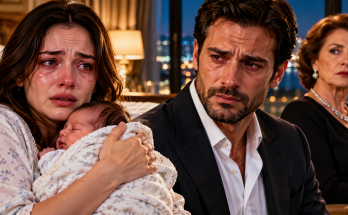
The final settlement papers arrived on a cold December morning, nearly two months after Grace was born. I was sitting beside the nursery window when Patricia called to tell me the agreements were ready for review. Outside, frost covered the lawn, and a thin layer of ice had formed along the edges of the driveway. Grace slept in her crib wearing a yellow cotton sleeper, her small hands resting beside her face. The house was quiet except for the low hum of the heating system and Evelyn moving dishes in the kitchen.
I had imagined the end of the dispute would feel dramatic. For weeks, I pictured Vanessa finally admitting what she had done, my parents asking forgiveness, and every legal document being signed in one decisive afternoon. Reality had been slower. The settlement emerged from financial statements, independent valuations, attorney conferences, and revisions to agreements that had once seemed simple because Daniel trusted the people involved.
Patricia explained the terms carefully. Arthur had entered a documented repayment arrangement concerning the funds redirected from his landscaping business. The schedule reflected the verified amount and the company's realistic capacity to pay. He would provide periodic financial reports and comply with restrictions designed to prevent further misuse of funds. The agreement did not erase his conduct, but it created an enforceable path toward accountability.
Northlake Commercial Holdings had agreed to refinance or dispose of certain property interests under supervised terms to satisfy its portion of the obligations. Vanessa would surrender some of the financial benefits she had obtained through the disputed arrangement. Her boutique would continue operating if it could support itself, but the discretionary assistance Daniel previously provided would not resume.
I asked whether the settlement affected employees at Arthur's company. Patricia said the revised repayment schedule had been designed to reduce unnecessary disruption, although Arthur still faced difficult business decisions. He had begun reducing expenses and selling equipment he could no longer afford. Some contracts were being renegotiated. The business might survive in a smaller form, but it would have to do so without treating Daniel's estate as an unlimited source of financing.
The legal dispute concerning Grace's parentage and the extraordinary restrictions Vanessa sought had already been withdrawn or rejected. The final agreement resolved the remaining specified financial claims between the participating parties and included provisions addressing confidential information and further unsupported allegations. Patricia was careful to explain that the documents could not prevent every future disagreement, but they substantially reduced the avenues Vanessa had used to prolong this one.
I listened while tracing the edge of Grace's blanket with my finger. The outcome was not a punishment designed to satisfy my anger. It was a practical resolution based on records, legal rights, and the responsibilities each person had accepted. Daniel would have recognized the approach. He preferred solutions that could survive scrutiny after the emotions of an argument had faded.
After reviewing the papers, I asked Patricia one final question. “Is Grace's future secure?” She answered that the estate arrangements protecting my daughter remained intact and that the company was operating under stable governance. No legal structure could eliminate every future risk, she reminded me, but the immediate threats created by the family dispute had been addressed.
I thanked her. Then I ended the call and sat quietly for several minutes. I had spent so long waiting for the next accusation that the absence of one felt unfamiliar. My phone remained still on the table. There were no urgent messages from Marcus, no new court filings, and no anonymous warnings demanding that I examine another document.
Evelyn entered carrying two cups of tea. She saw the folder beside me and asked whether everything was settled. I told her the main agreements were complete. She sat down opposite me and closed her eyes briefly. For a moment neither of us spoke. We had both lost Daniel, and the dispute had forced us to defend the future he tried to build. The end of the legal struggle could not restore him, but it allowed us to stop fighting long enough to grieve.
I thought about the night Grace was born. The memory remained painfully clear: the roast beef on my father's platter, the damp rug, Vanessa's cruel smile, and the cold air against my dress as I walked to the car. I remembered gripping the steering wheel through contractions, frightened that I might not reach the hospital safely. Those images had returned whenever I tried to sleep during the first weeks after delivery.
Now I also remembered Rosa guiding me through labor, Marcus arriving with sunflowers, and Evelyn standing over Grace's bassinet with tears in her eyes. My daughter's birth had not been entirely defined by abandonment. People had appeared when I needed them, offering practical care without demanding anything in return. The kindness had been quiet, but it endured.
A few days after the settlement, Linda asked whether she could visit. She had continued respecting the boundaries I established, sending occasional messages without demanding immediate answers. She had not mentioned the financial arrangements or asked me to intervene on Arthur's behalf. I had begun to believe that her earlier admission of wrongdoing might represent a genuine change, though I remained cautious.
I invited her to come for a short visit on Sunday afternoon. I told her Arthur could accompany her if he wished, but Vanessa was not invited. Linda accepted without argument. When I put down the phone, I felt nervous. Allowing my parents into the house did not mean restoring the relationship we once had. It meant giving them an opportunity to demonstrate whether they could treat Grace and me with respect.
Sunday arrived with pale sunshine and a cold wind. Evelyn helped me prepare the living room, though there was little to do beyond arranging chairs and putting away the scattered baby blankets. I had decided not to make the visit elaborate. There would be tea, a few cookies, and enough time for a conversation. Grace was still young, and I would end the visit if she needed rest or if my parents crossed the boundaries we had discussed.
The doorbell rang at two. Linda stood on the porch wearing the same camel-colored coat she had worn during her first visit, but her expression was different. Arthur stood beside her holding a small paper bag. Neither tried to step inside before I invited them. That simple hesitation mattered more than I expected.
My mother looked at me and said, “Thank you for letting us come.” I nodded and moved aside. Arthur entered slowly, glancing around the hallway as though the house had become unfamiliar. He had visited many times when Daniel was alive, often arriving for dinner and leaving with advice or assistance. Now he seemed uncertain where to put his hands.
Evelyn greeted them politely from the living room. She did not pretend the past had disappeared, but neither did she create a confrontation. Grace was sleeping in her bassinet near the sofa. Linda approached only after I told her she could look. She leaned over the baby and covered her mouth with one hand.
For a long moment, she said nothing. Then she looked at me. “She's beautiful,” she whispered. I watched her carefully. The last time my mother stood near Grace, she had been asking to hold a child she previously denied. Now she seemed to understand that admiration did not entitle her to immediate access.
Arthur remained a few steps away. He looked older than he had during our previous meetings. His shoulders were slightly stooped, and the confidence he usually carried into a room had faded. He asked whether Grace was healthy. I told him she was doing well, gaining weight, and beginning to stay awake for longer periods. He listened with an attention I had rarely received during pregnancy.
We sat down. Linda placed the knitted blanket she had shown me in a message on the table. She said she had made it during the weeks after our café conversation. The stitches were uneven, but the fabric was soft. I thanked her and set it beside the bassinet.
Arthur opened his paper bag and removed a small wooden picture frame. He explained that he had made it in his workshop from a piece of walnut left over from an old project. The frame was simple, with carefully rounded corners. He had not placed a photograph inside. “I thought you could choose one,” he said.
I took the frame and turned it in my hands. My father had always been skilled at making practical things. When I was young, he built shelves for my books and repaired broken furniture rather than replacing it. The gift reminded me of a side of him that had become difficult to see beneath years of financial pressure and pride.
“Thank you,” I said. He nodded, looking down at his hands. The conversation that followed was awkward. We spoke about Grace's feeding schedule, the weather, and the changes Arthur was making to his business. He did not ask for money. Linda did not attempt to explain away the night I went into labor. The absence of familiar pressure made the room feel strangely quiet.
After a while, Arthur looked at me directly. “Claire, I owe you an apology that isn't buried inside a letter.” I waited. He took a breath and continued. “I failed you when you needed me. I failed Daniel by hiding what I was doing with the money. I told myself I was protecting the business, but I was protecting my pride.”
His voice trembled slightly. “When you said you were in labor, I should have stood up and taken you to the hospital. There isn't an excuse for what I did.” I felt tears rise, but I kept my gaze steady. The words were what I had wanted him to say on the night Grace was born. Hearing them now was painful because they could not change what happened.
“I know you can't fix it,” I answered. Arthur nodded. “I know.” He did not ask me to forgive him. He did not remind me of the years he raised me or the sacrifices he believed he made. For once, he allowed the weight of his actions to remain his own.
Linda began crying quietly. She said she had allowed fear about money and loyalty to Vanessa to matter more than her responsibility as a mother. She acknowledged that she had deliberately dismissed my distress during labor and then tried to minimize what happened afterward. She said she was ashamed of the way she treated Grace before the baby was born.
I listened without interrupting. Their apologies did not erase the memories, but the honesty made a different future possible. I told them that trust would have to be rebuilt slowly. They could visit only when invited, respect my decisions as Grace's mother, and refrain from using family relationships to pressure me about money. If those conditions were ignored, the visits would stop.
Both agreed. Arthur said he understood that the financial arrangements were separate and would be handled through the agreements already signed. Linda promised she would not discuss Vanessa's grievances with me unless I chose to raise the subject. I appreciated the commitments but knew their value would depend on what happened over time.
Grace woke and began fussing. I lifted her from the bassinet and settled her against my shoulder. Linda watched with an expression I could not quite read. After a few minutes, she asked whether she might hold the baby. I looked at Evelyn, who gave me a small, encouraging nod without making the decision for me.
I considered the request. Linda had spent weeks acknowledging her conduct and respecting the boundaries I set. The visit had remained calm, and she had not demanded anything. I decided to allow a brief moment. I sat beside her and carefully placed Grace in her arms, remaining close enough to take her back immediately if necessary.
My mother looked down at the baby with tears in her eyes. Grace opened her mouth in a small yawn and shifted against the blanket. Linda supported her head gently, following the instructions I gave. She did not speak for a long time. Then she whispered, “Hello, Grace.”
I watched them, feeling an emotion too complicated to name. Part of me was relieved that my mother could finally meet her granddaughter without turning the moment into an argument. Another part remembered the cold words at dinner and the hours I spent laboring alone. Both feelings were real. I did not have to choose one to justify the other.
After a few minutes, Linda returned Grace to me without being asked. The gesture mattered. She had accepted that holding the baby was a privilege I granted, not a right she could claim whenever she wished. Arthur asked whether he could touch Grace's hand. I nodded. He extended one finger, and she curled her tiny hand around it.
My father looked startled by the strength of her grip. He smiled faintly, then withdrew his hand. I wondered whether he was thinking about holding me when I was born. I did not ask. Some memories belonged to him, and I no longer felt responsible for guiding him through every difficult emotion.
The visit ended after an hour. Linda thanked Evelyn for helping me during the birth and afterward. Evelyn accepted the thanks but did not pretend their roles had been equal. Arthur paused in the hallway before leaving. He told me he would continue complying with the repayment agreement and hoped his actions would eventually demonstrate that he had changed.
I watched them walk down the driveway. They did not look back repeatedly or ask when they could return. I closed the door and leaned against it for a moment. The visit had been difficult, but it had not left me feeling diminished. I had allowed a limited connection without surrendering control over my daughter's life.
Vanessa did not attend, and I did not invite her later. Her financial settlement obligations proceeded through counsel, and she gradually stopped contacting me directly. I learned through Patricia that Northlake's refinancing and asset arrangements were moving forward. The boutique continued operating on a smaller scale, without the discretionary support Daniel had once provided.
I did not celebrate her difficulties. Vanessa had made choices that carried consequences, but I did not need to watch every consequence unfold. Our relationship remained distant. If she ever wanted to rebuild it, she would have to begin with honesty and accountability rather than demands. I could not decide whether that day would come, and I stopped organizing my life around the possibility.
Arthur's business continued restructuring. Some equipment was sold, and several contracts were renegotiated. He made the required payments under the agreement and provided the financial reports his advisers demanded. Patricia monitored compliance, keeping those matters separate from my personal relationship with him. That separation brought relief. I no longer had to act as both daughter and lender.
At Aegis, Marcus and the management team continued strengthening the company's governance. The board approved additional controls over confidential financial records, and employees received training about unauthorized requests for information. Martin's employment had ended, and any remaining legal issues concerning the disclosure were handled by company counsel. The organization moved forward without allowing one employee's misconduct to define its future.
I visited the office for the first time since Grace's birth several weeks after the settlement. Evelyn came with me and waited in a quiet conference room while I met with Marcus and the leadership team. Walking through the entrance brought back memories of Daniel standing near the reception desk, discussing a technical problem with an engineer while holding a paper cup of coffee.
The employees greeted me warmly but without ceremony. Some asked about Grace. Others told me how much they missed Daniel. I appreciated that they remembered him as a colleague who sometimes made mistakes and laughed at his own terrible jokes, rather than merely as the founder whose name appeared on documents. Their stories gave me new ways to remember him.
Marcus showed me the office Daniel had occupied. Most of the furniture remained unchanged, though the room was now used for meetings. On a shelf stood a photograph of the original Aegis team outside the rented office above the dry cleaner. Daniel was standing at the edge of the group, smiling awkwardly because he disliked posing for pictures.
I picked up the frame and studied it. The company had grown far beyond anything he imagined during those early years. He had worked hard, taken risks, and built something that continued providing livelihoods after his death. The legal dispute had threatened that stability, but it had also reminded me why responsible management mattered.
Before leaving, I asked Marcus whether the photograph could be copied for Grace. He promised to arrange it. I wanted her to know her father as a young man who had believed he could build something worthwhile, not only as the successful businessman whose estate attracted conflict.
Winter settled around our house. Grace grew stronger, began recognizing familiar voices, and developed a habit of turning toward the window whenever sunlight crossed the room. Evelyn eventually returned to Portland, though she promised to visit often. The day she left, I cried more than I expected. She hugged me at the airport and reminded me that I could call whenever I needed help.
Our home felt quieter after her departure, but no longer empty. Grace filled it with small noises and daily routines. There were bottles to wash, blankets to fold, and appointments to keep. I began learning how to manage the practical work of motherhood while also participating in the decisions required by Daniel's estate and the company.
Some evenings, after Grace fell asleep, I sat in the nursery and spoke to Daniel as though he were beside me. I told him about her changing expressions, her first attempts to smile, and the way she curled her fingers around mine. I told him that I had finally understood what he meant about helping people without allowing them to avoid responsibility.
I kept his unfinished letter in a drawer beside the notebook from our fertility treatments. The documents were not valuable because of the money they described. They were valuable because they showed the care he had taken while imagining a future with our daughter. I wanted Grace to read them one day, when she was old enough to understand the mixture of hope and uncertainty that shaped her parents' decisions.
The legal proceedings became part of our family history, but they no longer controlled our daily lives. My parents visited occasionally under the boundaries we established. Some visits were comfortable; others were awkward. Trust returned in small increments, through ordinary behavior rather than dramatic promises. I did not know whether our relationship would ever become close again. For the first time, I could accept that uncertainty.
One afternoon, while sorting through photographs, I found a picture of Daniel standing in our garden shortly after we learned I was pregnant. He was holding a tiny pair of yellow baby shoes against his chest, grinning at the camera. I remembered taking the photograph after he insisted we should buy something for the baby even though we were still afraid to believe the pregnancy would continue.
I placed the photograph inside the walnut frame Arthur had made. The simple wood suited it. I set it on the nursery shelf beside the stuffed elephant Marcus brought to the hospital. Two objects from different people, both connected to Grace's first weeks, stood near the photograph of the father she would never meet.
That evening, Grace woke from her nap and began making small, impatient sounds. I lifted her and carried her toward the shelf. She looked at the bright shapes around the room, her eyes moving without understanding. I held her close and pointed toward Daniel's photograph.
“That's your daddy,” I whispered. “He loved you before you were born.” Grace moved her hand against my shoulder. I kissed her forehead and remained there for a moment, allowing the familiar sadness to settle without trying to escape it.
I knew she would eventually ask questions. She would want to know why her father was not there, why some relatives were distant, and why certain family photographs showed people she rarely saw. I would answer honestly, choosing words appropriate for her age. I would not make her responsible for adult grievances or teach her that love required accepting mistreatment.
As the room grew darker, I remembered my mother's first visit after the birth. She had stood on the porch holding a gift bag and asked to see the grandchild she had denied. I had answered with the same question she once used against me. The words had marked the moment I stopped begging my family to recognize what they already knew.
I no longer needed to repeat that question. Grace's place in our lives was secure, regardless of who acknowledged it. She was Daniel's daughter, Evelyn's granddaughter, and my child. The people who wanted to know her would have to approach her with respect and kindness. Those who could not would remain outside the boundaries I had established.
I carried Grace to the window and watched the last light fade behind the trees. Somewhere beyond our quiet street, my parents were rebuilding their lives within the limits of their own resources. Vanessa was facing the financial consequences of her decisions. Aegis continued the work Daniel began. None of those outcomes restored the family I once believed I had, but they allowed each person to move forward without depending on deception.
Grace rested her cheek against my shoulder. Her breathing slowed, and her small hand relaxed against my collar. I stood there until she fell asleep, feeling the weight of the child Daniel and I had wanted for so long.
For years, I had believed that being a good daughter meant keeping everyone happy, even when the effort exhausted me. Becoming a mother taught me something different. My responsibility was not to preserve every relationship at any cost. It was to build a life where my daughter could feel safe, loved, and free to become herself.
I turned away from the window and carried Grace toward her crib. Before laying her down, I kissed her forehead once more. She stirred briefly, then settled beneath the blanket Linda had knitted.
The house was quiet. Daniel was gone, and I would miss him for the rest of my life. But our daughter was here, warm and breathing beneath my hand, and the future he had hoped for was beginning in the ordinary rooms we once shared.
I switched off the lamp and left the nursery door open a few inches. For the first time in a long while, I was not waiting for my family to choose me.
I had already chosen Grace.
Fin
Découvrez davantage d’histoires originales sur Feel Every Story.