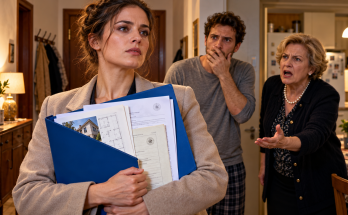
The first formal notice was sent while Logan was still enjoying his honeymoon celebrations on the Amalfi Coast. Dana called to tell me that the bank had begun applying protective restrictions to accounts connected with the disputed transactions, and that Logan's legal representative was being informed of the concerns. She was careful to explain that the review did not establish guilt. It preserved the opportunity to investigate money movements that required explanation. I thanked her, then sat at the kitchen table for several minutes without moving. The practical consequences of my decision were beginning to unfold.
I had expected to feel triumphant. Instead, I felt exhausted. The previous days had been filled with records, calls, signatures, and questions whose answers could change my family's future. Logan had spent those same days arranging photographs beneath Mediterranean sunshine. I knew appearances could be misleading, but the contrast was difficult to ignore. While he celebrated the freedom to begin again, I was discovering the obligations he might have left behind.
Dana and I met once more to review the property documents. She confirmed that the available records supported my right to remain in the home and that Logan could not simply convert his preference into an order requiring me to leave. We discussed the safest way to handle his return, including avoiding an argument over physical access or possessions. The objective was not to punish him with a dramatic spectacle. It was to prevent him from intimidating me into surrendering rights while the legal proceedings were underway.
I asked whether I should stay elsewhere until he came back. Dana said that was a personal decision, but she wanted me to understand the consequences before making it. For years, I had responded to Logan's anger by creating distance. Sometimes I left the room. Sometimes I postponed a conversation. Sometimes I apologized simply to end the tension. The habit had seemed harmless when the disagreements concerned schedules or purchases. Now he was using that same expectation to demand that I abandon the house.
I told Dana that I wanted to remain. Saying the words made my pulse race, though nothing in the room had changed. She nodded and began discussing the practical preparations. We would keep copies of the relevant ownership records available, establish clear lines of communication, and make sure I was not alone if Logan arrived prepared for confrontation. She also advised me to avoid destroying, concealing, or improperly withholding his personal belongings. The property dispute and the financial concerns would be addressed through proper procedures, not through impulsive retaliation.
On the way home, I stopped at a hardware store and bought a new notebook, a small document organizer, and batteries for the flashlight Dad had kept in the kitchen drawer. The purchases were ordinary enough to make me smile. I was preparing for the possible end of a marriage by buying stationery and batteries. But those small tasks helped restore a sense of competence. Logan had spent years treating important decisions as his responsibility and routine labor as mine. I was beginning to understand that the routine labor had taught me more about keeping a household together than he had ever acknowledged.
That afternoon, I walked around the property. The grass needed cutting along the eastern fence, and several branches had fallen during the recent rain. I followed the path toward the rear of the land, where Dad used to keep a wooden bench beneath a large oak tree. The bench had weathered badly, but its legs remained firm. I sat there and listened to birds moving through the branches. The air smelled of wet leaves and earth. For the first time in weeks, I could think about my father without immediately feeling the sharpness of his absence.
Dad had loved this place because it offered room to breathe. He believed people needed somewhere they could close the door and recover from whatever the world had demanded of them. When Logan and I first married, Dad welcomed him onto the property without hesitation. He had never treated the house as something I owed him gratitude for maintaining. He wanted it to be our family's home. That generosity made the present conflict especially painful. Logan had received the benefit of my father's work for years and had somehow come to believe it entitled him to ownership.
I remembered an argument about the property from several summers earlier. Logan wanted to remove part of the old garden and build an elaborate outdoor entertaining area. He had drawn plans showing a stone terrace, decorative lighting, and a covered bar. I liked some of the ideas but asked whether we could preserve the rose bushes Dad had planted. Logan grew impatient and said I was too attached to things simply because they were old. I had eventually given up arguing. The terrace was never built, but the conversation stayed with me.
That memory returned now because of his message from the airplane. He had used the same reasoning to dismiss our marriage. Old things bored him. New things proved his success. I wondered whether he recognized how casually he placed people, objects, and memories in the same category. Perhaps he did, and the cruelty was intentional. Perhaps he had become so accustomed to pursuing admiration that anything requiring care seemed like an obstacle. I could not know what he believed privately. I only knew what his actions had done.
When I returned to the house, I opened Lily's bedroom window to let in fresh air. Her books were stacked unevenly beside the bed, and a collection of small glass animals lined the shelf above her desk. She had been collecting them since she was nine. Every figurine had a story. The blue bird came from a school trip. The tiny horse had belonged to my mother. The green turtle was a gift from Marcus after a fierce sibling argument. I dusted the shelf carefully, resisting the urge to straighten everything into the order Logan preferred.
In Marcus's room, I found a photograph tucked beneath his desk lamp. It showed the four of us at a lake several years earlier. Logan stood behind the children, smiling broadly, while I held a picnic blanket against the wind. I remembered that day. Marcus had fallen into the water while trying to retrieve a ball, and Lily had laughed so hard that she nearly dropped her sandwich. Logan had carried our wet son back to the car and wrapped him in a towel. It was a happy memory. I decided not to remove the photograph.
I had no desire to teach the children that their father had always been cruel. Such a story would be easier to tell, perhaps, but it would not be true. Logan had loved them in ways that sometimes made me proud. He had also allowed ambition, selfishness, and his need for admiration to damage the family he claimed to cherish. Both things could exist together. Marcus and Lily would eventually have to decide what their relationship with him meant. I wanted them to reach those decisions without being forced to defend me.
The next day, a message arrived from Logan's attorney acknowledging receipt of the notice concerning the disputed accounts. Dana forwarded it with a short explanation. Logan's representative requested further documentation and reserved his client's position on the allegations. The language was controlled and formal. I wondered whether Logan had already seen the message or whether his lawyer was waiting until he returned from Italy. Either possibility seemed plausible. I placed a copy in the organizer and continued preparing the records Dana had requested.
The financial review was progressing, although the full picture remained incomplete. Dana explained that some accounts had been temporarily restricted while the bank evaluated the authorizations. The disputed signatures and the use of the children's names had created concerns that could not be dismissed as ordinary marital disagreement. We had also prepared the necessary divorce filings and supporting materials. I understood that the process would require patience. There would be questions, responses, and perhaps arguments lasting far longer than the wedding photographs circulating online.
I spent one evening sorting family photographs into boxes. I did not intend to remove them from the house. I simply wanted to identify which belonged to the children and which were especially important to me. I found pictures of Marcus learning to walk, Lily opening her first birthday presents, and Dad holding both grandchildren on his lap. There were photographs of Logan and me laughing together at restaurants, standing beside birthday cakes, and posing on the porch. I looked at each without trying to decide whether it should make me sad or angry. They were records of what had happened, not promises about what would happen next.
Near midnight, Lily called. She was sitting in what appeared to be a hotel bedroom, and the sound of distant music came through the phone. She said the adults were still celebrating downstairs. I asked whether she wanted to talk about anything. She hesitated before asking if I was planning to move away. I felt my stomach tighten. I told her I intended to remain in our home. She looked relieved, then confused, as though my answer contradicted something she had recently been told.
I asked why she thought I might leave. Lily picked at the edge of a pillowcase and said her father had mentioned that changes would be necessary once everyone returned. He had talked about moving into the house with Sienna while I found somewhere more suitable. I asked whether he had presented that as a decision already made. Lily nodded. Her eyes filled, and she apologized for bringing it up. I assured her that she had done nothing wrong. Then I explained that adult decisions about property and separation had to be handled properly, and that neither parent should ask her to enforce them.
She wanted to know whether the house might be sold. I told her there was no plan to sell it. She seemed to relax, but I could tell the conversation had unsettled her. I changed the subject and asked about the little shops she had mentioned earlier. She told me about a ceramic bowl she wanted to buy for her room. For a few minutes, she sounded like herself again. Before hanging up, she whispered that she missed me. I said I missed her too, and we stayed connected a moment longer without speaking.
After the call, I sat at the kitchen table and tried to control my anger. Logan had not merely threatened to remove me. He had apparently described his plan to the children as though it were inevitable. He knew they would worry about losing their home, yet he had placed that uncertainty on them while celebrating his marriage. I wanted to call him immediately and demand an explanation. Instead, I wrote down exactly what Lily had said and sent Dana a brief message describing the conversation. I would not make my daughter a witness in a fight between adults, but I also would not ignore the pressure being placed on her.
Marcus contacted me the following morning. He sounded unusually serious and asked whether I had spoken with Lily. I said yes. He wanted to know if Dad had mentioned selling the property. I told him that his father had no authority to make such an announcement on my behalf. Marcus was silent for several seconds. Then he said he was glad. I asked whether there was something he needed to tell me. He looked toward the door before answering that he would rather talk when he got home. I respected his decision, though his discomfort worried me.
I thought about calling him back, but decided against pressing. Marcus had been observing his father's behavior for years. He was old enough to recognize contradictions, yet young enough to feel responsible for preventing arguments. I remembered his question about the house before the trip and wondered how long he had been hearing plans that Logan never discussed with me. Whatever Marcus wanted to say, I would give him the opportunity to speak privately when he returned.
Dana visited the property two days before the family was scheduled to come home. We walked through the entrance and discussed how to handle an unexpected confrontation. She reviewed the relevant documents and confirmed that the legal notices were prepared. I showed her where the children's belongings were kept and explained that I wanted their return to feel as normal as possible. She agreed that protecting them from a public argument should remain a priority, even if Logan behaved differently.
During our conversation, Dana asked whether I had considered what I wanted beyond preventing Logan from taking the house. I found the question unexpectedly difficult. For weeks, my thoughts had revolved around what he was doing to me. I had barely considered what I might do when I was no longer organizing my life around his decisions. I told her that I wanted stability for the children, an accurate accounting of our finances, and the freedom to make choices without being threatened or belittled. Dana wrote those priorities down. She said they were a useful beginning.
After she left, I stood in the kitchen holding Lily's yellow-flowered mug. The chip near the handle caught against my thumb. I remembered Dad drinking coffee from it during one of his final visits, praising Lily's artwork with the serious attention he gave anything his grandchildren made. He would not have wanted this house to become a monument to conflict. He would have wanted it used, loved, repaired, and filled with people who felt safe inside it. I put the mug back on the shelf and decided that whatever happened next, I would not allow Logan's contempt to define the place.
The following afternoon, I packed a small suitcase with clothes and essentials. I placed it inside my bedroom closet, not because I intended to obey Logan's order, but because the coming days might require unexpected travel for meetings or legal matters. I checked that the children's rooms were ready, stocked the refrigerator, and made sure their favorite snacks were available. Those preparations calmed me. Whatever arguments waited at the front door, Marcus and Lily would return to clean sheets, familiar rooms, and a mother who was ready to welcome them.
I also made copies of the property records and stored them where they could be reached without searching through drawers. Dana retained the originals and other essential documents as appropriate. I photographed the relevant pages and preserved the messages Logan had sent. Every practical action reminded me that I did not need to defeat him in an argument. I needed to protect my legal position and refuse to be frightened into surrender.
Three days before the scheduled return, Logan finally called. His name appeared on my screen while I was standing in the living room. I let it ring twice before answering. Behind his voice, I could hear movement and conversation. He spoke briskly, asking whether I had received the updated travel schedule. I told him I had. He said their flight would land the following morning and that he expected the house to be ready when he arrived. I asked what he meant by ready, although I knew the answer.
He sounded irritated that I required clarification. He reminded me that he had told me to remove my belongings and said he did not want an embarrassing confrontation in front of Sienna or his parents. I looked toward the windows, where the late-afternoon sunlight lay across the floor. Then I told him I would not be leaving. For a moment, there was no sound from his end of the call. When he spoke again, his voice had lost its polished confidence.
Logan demanded to know whether I understood the consequences of refusing him. I said that I had been discussing those consequences with my attorney. He accused me of making an already difficult situation unnecessarily complicated. I told him the decisions he had made were his responsibility, and that I would not pretend they gave him rights he did not possess. He interrupted several times, but I did not raise my voice. There was nothing left to gain by matching his anger.
Finally, he said he would deal with me when he returned. I told him that any discussion about the property could take place with the appropriate legal representatives involved. He hung up without saying goodbye. I remained beside the window, holding the silent phone. My hands were shaking, but not because I regretted what I had said. I had spent years anticipating his reactions and adjusting my choices to prevent them. That afternoon, I had made a decision without first asking whether Logan would approve.
I called Dana and explained the conversation. She confirmed that we should proceed with the preparations we had discussed and that I should not engage in further arguments over the phone. We reviewed the timing of his return and the documents that might be needed. By the time we finished, the house had grown quiet. The children would be home soon. Logan would arrive expecting the same obedience he had always taken for granted. This time, I would be standing on ground my father had protected for me, with evidence Logan did not know I possessed. I could not predict exactly how he would react, but I knew one thing with certainty: when he came up the driveway, he would not find the abandoned house he expected.