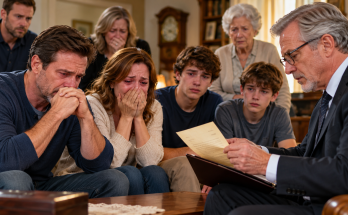
My mother destroyed our relationship with eleven words.
She said them on Mother’s Day, in a beautiful restaurant filled with families celebrating the women who had raised them.
There were flowers on the table. Soft music played in the background. My brother was laughing about his upcoming vacation, and my husband was reaching for my hand beneath the white tablecloth.
Then my mother looked directly into my eyes.
“I wish I’d never had a daughter.”
Nobody moved.
My brother lowered his head toward his plate. His wife suddenly became fascinated with her coffee. Even the waiter standing a few feet away seemed to sense that something terrible had happened.
For thirty-seven years, I had tried to become the daughter my mother wanted.
I had given her money, time, loyalty, and sacrifices she never knew about.
For the past four years, I had quietly paid the mortgage on the house she lived in. I covered her insurance, electricity, unexpected repairs, and countless expenses she claimed she couldn’t afford.
My brother, meanwhile, contributed almost nothing.
Yet somehow, he was the child she adored.
I stared at my mother for several seconds, waiting for her to take back what she had said.
She didn’t.
Instead, she lifted her coffee cup.
And that was when something inside me finally changed.
I stood, pushed my chair beneath the table, and picked up my handbag.
“Then, Mom,” I said quietly, “from today forward, you can live as though you never had one.”
My brother looked up.
“Don’t be dramatic, Clara.”
I turned toward him.
“You haven’t seen dramatic yet.”
Then I walked out.
What none of them knew was that the next morning, I would make one financial decision that would expose a family secret they had kept from me for years.
And when that secret finally came out, my mother would discover that losing my money was nothing compared with losing the daughter who had always been there.
Chapter 1: The Daughter Who Was Never Enough
My name is Clara Bennett.
At thirty-seven, I had a stable career as an operations director for a regional logistics company. I was married to a wonderful man named Daniel, and together we had built a peaceful life in a small house outside Philadelphia.
We weren’t wealthy.
We were careful.
We budgeted, saved, drove ordinary cars, and planned carefully before making expensive purchases.
But according to my mother, Evelyn, Daniel and I were practically millionaires.
And because we didn’t have children, she believed our money belonged to anyone in the family who needed it.
Especially her.
My younger brother, Ryan, had always lived by different rules.
When Ryan failed a college course, Mom blamed the professor.
When I received an academic scholarship, she reminded me not to become arrogant.
When Ryan lost his first job, she told everyone his employer didn’t recognize his potential.
When I received my first promotion, she asked why I couldn’t spend more time visiting her.
Growing up, I thought that if I worked hard enough, helped enough, and made few enough mistakes, she might eventually look at me with the same pride she reserved for Ryan.
But there was always another requirement.
Another favor.
Another sacrifice.
And I always gave in.
The situation became worse after my father died.
Dad had been the gentle center of our family. He rarely raised his voice, never forgot my birthday, and always reminded me that being kind didn’t mean allowing people to take advantage of me.
When he died unexpectedly from a heart attack, my mother became overwhelmed by grief and the responsibility of maintaining their house.
At first, I helped because I loved her.
“Just three months, sweetheart,” she told me. “Until I get everything organized.”
Three months became six.
Six became twelve.
Eventually, four years passed.
Every month, money left my account to keep her household running.
There was the mortgage.
The homeowner’s insurance.
The property taxes.
The electricity bill when winter heating costs rose.
A leaking roof.
A broken furnace.
A replacement refrigerator.
Whenever I asked Ryan to contribute, he had an excuse.
His children needed new school supplies.
His truck needed repairs.
His wife wanted to renovate their kitchen.
His business was having a difficult quarter.
And Mom always defended him.
“He has a family to support, Clara.”
“So do I.”
“You know what I mean. You and Daniel don’t have children.”
As though marriage without children wasn’t a family.
As though our future didn’t matter.
As though everything we earned existed only to make their lives easier.
Daniel warned me gently.
“You can’t keep doing this forever.”
“She needs help,” I would reply.
“And when will she stop needing help?”
I never had an answer.
Because deep down, I was still the little girl hoping her mother would finally say she was proud of her.
Chapter 2: The Mother’s Day I Planned So Carefully
That Mother’s Day, I wanted everything to be perfect.
I reserved a table at an elegant restaurant overlooking a garden filled with spring flowers.
Mom loved pink roses, so I ordered an arrangement large enough to become the centerpiece.
I bought her a soft cashmere cardigan she’d admired during a shopping trip and tucked a handwritten card into the gift bag.
The card read:
Thank you for everything you’ve done for our family. I hope today reminds you how loved you are.
Looking back, the words were almost painful.
I had thanked her for everything while silently ignoring how little gratitude she showed me.
That morning, Mom called before breakfast.
“Clara, what time is the reservation?”
“Eleven thirty.”
“Did you make sure the restaurant knows I don’t like sitting near the kitchen?”
“Yes, Mom.”
“And the roses?”
“Pink, just like you asked.”
“Good. Ryan says the children might be restless. Don’t complain if they make noise.”
I closed my eyes.
“I wouldn’t complain about the children.”
“Well, you can be sensitive sometimes.”
After the call, Daniel found me standing motionless in the kitchen.
He put his arms around my shoulders.
“Ready?”
I forced a smile.
“Absolutely.”
He studied my face.
“You know you don’t have to spend today proving anything.”
I laughed softly.
“I’m not proving anything.”
But even as I said it, I knew he was right.
At the restaurant, Mom was already sitting beside Ryan, his wife Melissa, and their two children.
She was dressed in a beautiful cream-colored outfit I’d bought her for Christmas.
When I approached, she looked at her watch.
“Finally.”
“We’re early, Mom.”
“You know I don’t like waiting.”
I apologized automatically.
Ryan stood and hugged me with one arm.
“Hey, sis. Nice place. You’re covering brunch, right?”
I nodded.
“Of course.”
“Great. I saw they have lobster.”
During the meal, Mom praised Ryan for being a wonderful father.
She complimented Melissa’s new handbag.
She admired the children’s matching outfits.
When Ryan presented her with a framed photograph of the grandchildren, she nearly cried.
“My beautiful boy,” she said, touching his cheek. “You always know how to make your mother happy.”
My gift sat beside her chair.
Unopened.
I told myself not to care.
Then Mom asked about the family gathering scheduled for the following weekend.
“I heard you’re not coming.”
“I have a work conference, Mom.”
“You can cancel.”
“I’m presenting to our regional directors. I’ve been preparing for months.”
She sighed.
“You always have something more important.”
“It’s not that you’re unimportant.”
“Then act like it.”
Ryan leaned back in his chair.
“Seriously, Clara. You’re the boss, aren’t you? Just tell someone else to handle it.”
“That’s not how my job works.”
He chuckled.
“You make everything so complicated.”
My mother placed her fork down.
“Your brother finds time for family, despite having two children. You have no children and somehow you’re always too busy.”
I felt Daniel’s hand tighten around mine.
“Mom, I’ve been here every weekend this month.”
“Don’t start counting favors.”
I swallowed.
“I wasn’t.”
“You know, Clara, sometimes I wonder how you became so selfish.”
The word hit me harder than I expected.
Selfish.
After everything I’d done.
Everything I’d paid.
Everything I’d canceled.
I looked across the table.
“What exactly would make you happy, Mom?”
Her expression hardened.
“Maybe if you’d been more like your brother.”
Silence spread around the table.
Then she said the sentence I would never forget.
“I wish I’d never had a daughter.”
I thought I had misheard her.
“What?”
She folded her napkin.
“You heard me.”
“Mom,” I whispered, “do you really mean that?”
She looked away.
“If I could start over, I would have been perfectly happy with just my son.”
Ryan didn’t defend me.
He didn’t tell her she’d gone too far.
He simply continued cutting his food.
And suddenly, I understood something that had taken thirty-seven years to learn.
My mother didn’t value me for who I was.
She valued me for what I provided.
I stood.
“Clara, sit down,” Ryan said.
I looked at my mother one final time.
“All right. You wish you never had a daughter? From today forward, live like you don’t have one.”
I turned to leave.
“Clara!” she snapped. “You’re embarrassing me!”
I stopped.
“No, Mom. You embarrassed yourself.”
Daniel stood beside me.
As we passed the front desk, I paid the entire restaurant bill.
It was the last family expense I would cover without question.
Chapter 3: The Night I Finally Opened My Eyes
I didn’t cry until we reached the highway.
Then the tears came so suddenly that Daniel pulled into a parking lot.
For several minutes, I couldn’t speak.
I kept seeing my mother’s face.
Not angry.
Not embarrassed.
Simply certain that she had the right to say whatever she wanted because I would always forgive her.
Daniel waited until I could breathe normally.
“You don’t have to fix this,” he said.
I shook my head.
“I keep thinking about Dad.”
“What about him?”
“He would never have let her speak to me that way.”
Daniel took my hand.
“No, he wouldn’t.”
I stared through the windshield.
“I have spent my whole life trying to make her love me.”
He didn’t interrupt.
“And today she told me she wished I didn’t exist.”
Daniel squeezed my fingers.
“You deserved better than that.”
When we arrived home, my phone had seventeen notifications.
My mother had sent three messages.
The first said:
You ruined a beautiful Mother’s Day.
The second:
I hope you’re satisfied with humiliating me in public.
And the third:
When you’re ready to apologize, I’ll listen.
Ryan’s message arrived twenty minutes later.
Mom’s upset. You need to call her. She’s getting older, Clara. You can’t keep acting like a teenager.
I stared at the screen.
Then something occurred to me.
Tomorrow was Monday.
The mortgage payment was scheduled.
I opened my banking application.
There it was.
Another automatic transfer.
Another month of paying for a house I didn’t own.
Another month of supporting a woman who had just told me she wished I hadn’t been born.
I canceled the scheduled transfer.
Then I canceled my recurring contributions for the other household expenses, including the money I deposited into her checking account each month.
I removed my payment details from the accounts I was authorized to manage and prepared written notice so Mom could arrange replacements before the next deadlines.
I wasn’t interested in making her suddenly lose electricity or insurance coverage.
I simply wasn’t going to keep financing her life.
I wrote a short email.
Mom,
Today you made it clear how you feel about me. I am respecting your wish for distance.
Beginning immediately, I will no longer pay your mortgage or recurring household expenses. I’ve attached a list of the accounts and their upcoming due dates so you can make your own arrangements.
I hope you find a way forward that works for you.
Clara.
I read the email three times.
Then I clicked send.
For the first time in years, I felt something unfamiliar.
Not happiness.
Not revenge.
Freedom.
Chapter 4: The Phone Call That Changed Everything
At seven the following morning, Ryan called.
I ignored it.
He called again.
Then a third time.
Finally, I answered.
“What did you do?” he demanded.
“Good morning to you too.”
“Mom says you canceled the mortgage payment!”
“Yes.”
“Are you insane?”
“No.”
“You can’t just stop paying it!”
“Why not?”
“Because she depends on that money!”
I walked toward the kitchen window.
“Then perhaps someone else should help.”
“You know I can’t afford that.”
“Ryan, you just spent nine thousand dollars taking your family to Florida.”
“That vacation was planned months ago!”
“And Mom’s mortgage has been due every month for four years.”
He went silent for a moment.
Then his voice became colder.
“She’s our mother.”
“Yes, Ryan. Our mother. Not mine alone.”
“You make more money than I do.”
“So?”
“You don’t have kids.”
I actually laughed.
There it was again.
The family argument that had justified everything.
“No children,” I repeated. “Therefore no needs, no future, and apparently no right to decide what happens to my money.”
“Don’t twist my words.”
“Then explain them.”
He couldn’t.
Finally, he changed tactics.
“Mom could lose the house.”
“Then help her make a financial plan.”
“She can’t afford the payments without you.”
“Then perhaps the house is too expensive.”
I heard him inhale sharply.
“You can’t sell Dad’s house.”
“I’m not selling anything. It’s Mom’s decision.”
There was an uncomfortable pause.
Then Ryan said something strange.
“You have no idea how much you’re interfering with.”
I frowned.
“What does that mean?”
“Nothing.”
“Ryan.”
He sighed.
“Look, just keep paying for a few more months.”
“Why?”
“Because some things have already been arranged.”
“What things?”
He refused to answer.
But his hesitation told me everything I needed to know.
There was something they weren’t telling me.
Chapter 5: The Secret About My Father’s House
Three days later, Ryan arrived at my office.
He was angry enough that the receptionist called me before allowing him upstairs.
We sat in a small conference room overlooking the parking lot.
He placed his phone on the table.
“Mom went to the bank. They won’t refinance her mortgage on her current income.”
“I’m sorry to hear that.”
“Then fix it.”
“That’s not my responsibility anymore.”
He leaned forward.
“Clara, I don’t think you understand. That house has been in our family for thirty years.”
“I know exactly how long it’s been there.”
“Dad would hate what you’re doing.”
I felt anger rise in my chest.
“Don’t use Dad against me.”
“He wanted the house kept in the family.”
“And it can be, if someone who wants to keep it can afford the expenses.”
Ryan rubbed his forehead.
Then he said, almost under his breath, “It’s supposed to be mine.”
I went still.
“What?”
He looked toward the door.
“Forget it.”
“No. Say that again.”
He lowered his voice.
“Mom changed her will two years ago.”
I stared at him.
“And?”
“She wants the house to go to me.”
My stomach tightened.
“The entire house?”
He nodded.
“Because I have children. She wants it to stay in the family.”
For several seconds, I couldn’t find words.
I had paid thousands of dollars toward a house that my mother intended to leave entirely to my brother.
And they had known.
They had known while accepting every transfer.
Every sacrifice.
Every canceled vacation.
I looked directly at Ryan.
“How long have you known?”
He shifted in his chair.
“Clara—”
“How long?”
“Since she updated the documents.”
“Two years?”
He didn’t answer.
I reached for my laptop.
“Let me show you something.”
I opened the spreadsheet Daniel and I had prepared the previous evening.
It listed every payment I’d made for our mother over the previous four years.
Mortgage contributions.
Insurance.
Taxes.
Repairs.
Emergency payments.
Medical expenses.
Household allowances.
The total exceeded $120,000.
Ryan stared at the number.
“That can’t be right.”
“Check it.”
He scrolled through the entries.
“You counted everything?”
“Everything I could document.”
He looked offended.
“Family isn’t supposed to keep score.”
“No, Ryan. Family isn’t supposed to secretly make one child finance another child’s inheritance.”
His face reddened.
“That’s unfair.”
“Is it?”
“Mom made that decision because you don’t need the house.”
I closed the laptop slowly.
“You’re right about one thing. I don’t need her house.”
Ryan relaxed slightly.
Then I continued.
“But I also don’t need to pay for it.”
He stood.
“Are you seriously going to destroy this family over money?”
I looked up at him.
“No. I’m finally refusing to let this family destroy me.”
Chapter 6: The Family Meeting
By Friday, the entire family knew.
My aunt Rose called.
My cousin Jennifer texted.
Even a distant uncle I hadn’t spoken to in seven years suddenly became concerned about my mother’s finances.
Everyone had an opinion.
Almost nobody offered money.
My aunt was the exception.
Rose had been my father’s younger sister. She was practical, direct, and one of the few relatives who had always treated Ryan and me equally.
When I explained what had happened, she didn’t immediately respond.
Then she asked a simple question.
“How much have you been paying?”
I told her.
There was a long silence.
Finally, she said, “Clara, I had no idea.”
Neither had anyone else.
Mom had allowed the family to believe that she was managing her finances independently.
Whenever she talked about me, it was usually to complain that I didn’t visit enough.
But she never mentioned the mortgage.
Never mentioned the roof.
Never mentioned the insurance.
And certainly never mentioned the six-figure amount I’d spent keeping her comfortable.
Rose asked me to come to her house for a family discussion.
I agreed on one condition.
There would be no shouting.
When Daniel and I arrived on Sunday afternoon, Mom was sitting beside Ryan on the living room sofa.
She wouldn’t look at me.
Rose brought out coffee.
Then she asked Mom a question.
“Evelyn, is it true Clara has been covering most of your household expenses?”
My mother looked offended.
“She’s my daughter.”
“That wasn’t my question.”
“She helps when she can.”
I placed the spreadsheet on the coffee table.
“More than one hundred and twenty thousand dollars.”
Mom’s expression changed.
Ryan crossed his arms.
Rose put on her glasses and looked at the pages.
“This is four years?”
“Yes.”
She turned toward my mother.
“Evelyn, why didn’t you tell us?”
Mom’s voice became sharp.
“Because I didn’t think I had to report my personal finances to the entire family.”
Rose nodded slowly.
“Then perhaps you shouldn’t expect the entire family to pressure Clara into paying them.”
Mom’s face flushed.
“She’s doing well financially!”
“So is Ryan,” Rose replied.
“He has children!”
“And Clara has a life.”
Mom turned toward me.
“Is this what you wanted? To make me look like a terrible mother?”
I swallowed.
“No, Mom. I wanted you to stop treating me like a bank account.”
“I gave you everything when you were growing up!”
I looked at her.
“You were my mother. Feeding me and giving me a home weren’t debts I agreed to repay forever.”
The room fell silent.
Mom began crying.
Ryan immediately moved to comfort her.
“See what you’re doing to her?” he snapped.
But Rose held up her hand.
“Ryan, how much did you contribute last year?”
He blinked.
“What?”
“To your mother’s expenses. How much?”
“I helped with things.”
“What things?”
“Yard work. Driving her places. Fixing stuff.”
“Did you help pay the mortgage?”
“No.”
“Insurance?”
“No.”
“Property taxes?”
He looked away.
Rose leaned back.
“Then perhaps it’s time you understand what your sister has been carrying.”
For the first time in my life, someone else had spoken up for me in front of my mother.
And I nearly cried.
Chapter 7: The Apology That Wasn’t an Apology
A week later, Mom arrived at my house.
I saw her standing on the porch through the front window.
She carried a small container of homemade cookies.
When I opened the door, she smiled nervously.
“I made your favorites.”
“Thank you.”
She glanced behind me.
“Aren’t you going to invite me inside?”
“We can talk on the porch.”
Her smile disappeared.
“I’m your mother, Clara.”
“I know.”
We sat in two chairs beside the flowerpots.
For several minutes, she talked about the weather, the neighbors, and her garden.
Then she folded her hands.
“I suppose I owe you an apology.”
I waited.
“I shouldn’t have said what I said at brunch.”
My throat tightened.
It was the closest she’d come to acknowledging what had happened.
Then she continued.
“But you have to understand how stressful things have been for me.”
I remained silent.
“Your father is gone. I live alone. I get frightened sometimes.”
“I understand that, Mom.”
“And I didn’t mean to hurt you.”
“You told me you wished I didn’t exist.”
She looked down.
“I was angry.”
“Yes.”
“You know I say things when I’m upset.”
“Yes.”
She looked up hopefully.
“So can we put this behind us?”
I studied her face.
“Do you understand why it hurt?”
She hesitated.
“Because I said something unkind.”
“Because I spent my entire life trying to make you proud. And when I finally asked you to respect my time, you told me I wasn’t worth having.”
Her eyes filled with tears.
I continued.
“I don’t need you to pretend you never make mistakes. I need you to understand that your words have consequences.”
She wiped her cheeks.
“I do understand.”
For a brief moment, I wanted to believe her.
Then she asked the question she’d come to ask.
“So, about the mortgage. Could you restart the payments until I get things settled?”
I stared at her.
There it was.
The real purpose of the visit.
“Mom, no.”
Her expression hardened.
“Clara, please. Just temporarily.”
“Four years ago, you said it was temporary.”
“This is different.”
“How?”
She couldn’t answer.
“You’re punishing me,” she finally whispered.
I shook my head.
“No. I’m making a decision about my own money.”
“Your father would be ashamed.”
Those words might once have destroyed me.
But I remembered Dad sitting at our kitchen table when I was sixteen, teaching me how to balance a checkbook.
Never promise money you can’t afford to lose, sweetheart. And don’t confuse love with obligation.
I stood.
“Dad taught me to help people. He also taught me to be responsible for my own future.”
Mom wiped her eyes again.
“Then I suppose you don’t care what happens to me.”
I took a breath.
“I care very much. But caring doesn’t mean I have to pay for everything.”
She left without touching the cookies.
I watched her drive away.
Then I went inside and cried.
Not because I regretted my decision.
Because I finally accepted that doing the right thing could still hurt terribly.
Chapter 8: When My Brother Finally Had to Help
Over the next month, Mom tried everything she could think of to keep the house.
She asked the bank about refinancing.
She investigated a smaller payment arrangement.
She reviewed her pension and retirement income.
And finally, she asked Ryan to help financially.
His answer was immediate.
“Mom, you know things are tight.”
She asked him to postpone his family’s summer vacation and contribute toward the mortgage.
He refused.
She suggested that he take over the payments if he wanted to inherit the house someday.
He said it was unreasonable.
She asked whether she could temporarily stay with him if she needed to sell.
Melissa said their guest bedroom was being converted into a home office.
For the first time, Mom experienced what happened when Ryan was asked to give rather than receive.
And she didn’t like it.
A few days later, Aunt Rose called me.
“Your mother is finally considering selling.”
I closed my eyes.
“How is she?”
“Upset. But she’s beginning to understand the numbers.”
The house wasn’t worthless.
Quite the opposite.
It had appreciated substantially over the decades.
Even after paying off the remaining mortgage and covering selling costs, Mom would have enough to purchase a smaller home and maintain a comfortable financial cushion.
She wasn’t facing homelessness.
She was facing a difficult change.
And for the first time, she couldn’t make me absorb the cost of avoiding it.
Ryan was furious.
He called me late one evening.
“You’re forcing Mom to sell Dad’s house.”
“No, Ryan. The cost of maintaining it is forcing her to make a decision.”
“It was supposed to stay in the family!”
“Then you could buy it.”
He laughed bitterly.
“With what money?”
“The money you say you’re always saving.”
He went quiet.
I continued.
“You want the inheritance, Ryan. But you don’t want the responsibility that comes with protecting it.”
“That’s not fair.”
“Neither was expecting me to pay for a property you planned to receive.”
He accused me of being bitter.
Jealous.
Selfish.
Then he hung up.
I didn’t call back.
Chapter 9: The House With the Blue Front Door
Mom listed the house in early summer.
When I heard, I felt a strange sadness.
That house held so many memories.
Dad teaching me to ride my bicycle in the driveway.
Christmas mornings beside the fireplace.
The little blue bedroom where I’d stayed up reading books long after bedtime.
The backyard where Dad had planted an apple tree when I was born.
It was difficult to imagine strangers living there.
But memories didn’t make the mortgage disappear.
The property sold after several weeks.
Mom bought a smaller townhouse not far from Rose.
It had two bedrooms, a sunny kitchen, and a little patio where she could grow roses.
Most importantly, she purchased it without taking on another mortgage.
For the first time since Dad died, she had a realistic monthly budget.
Ryan complained that she’d sold the family legacy.
Mom surprised him by asking whether he had been prepared to pay the ongoing costs.
He stopped complaining after that.
I didn’t participate in the move.
I needed distance.
But I sent Aunt Rose a message asking her to make sure Mom had everything she needed.
Rose replied with a photograph of a small wooden birdhouse sitting on a moving box.
Your father made this with you when you were little. Your mother asked me to keep it for you.
I stared at the picture.
Dad and I had built that crooked birdhouse together when I was eight.
He’d let me paint it yellow, even though the paint dripped down the sides.
For years, it had hung from the apple tree.
I thought it had been thrown away.
The next day, Rose brought it to my house.
I held it in both hands and began to cry.
Daniel wrapped his arms around me.
“I miss him,” I whispered.
“I know.”
I touched the little roof where Dad had carved my initials.
And for the first time in months, the sadness I felt wasn’t only about Mom.
It was about the family I’d believed we could be.
Chapter 10: The Letter I Never Expected
September arrived quietly.
Work became busy.
Daniel and I finally replaced our aging car.
We started contributing more regularly to our savings.
We even booked a weekend trip to the mountains.
Small things.
Ordinary things.
But for years, those ordinary things had felt selfish.
Now they felt like life.
One afternoon, I found an envelope in the mailbox.
My name was written in familiar handwriting.
Mom’s.
I almost left it unopened.
But after dinner, I sat beside the living room window and unfolded the letter.
It began:
Dear Clara,
I’ve started this letter several times. Every time I try to explain myself, I realize I’m still making excuses.
I stopped reading for a moment.
That wasn’t how my mother usually spoke.
I continued.
When your father died, I was terrified of being alone. I wanted to keep the house because it was the last place where I could still imagine him walking through the door.
You offered to help, and I accepted.
Then I kept accepting.
You made everything so easy that I stopped asking what it cost you.
My eyes blurred.
I also need to tell you something difficult.
I gave Ryan more attention because he always seemed to need rescuing. You were strong, responsible, and successful. I convinced myself that you didn’t need the same love, encouragement, or support.
But I was wrong.
Being capable doesn’t mean you don’t need tenderness.
I covered my mouth.
There were several more paragraphs.
Mom admitted she had changed her will because she believed Ryan needed the house more than I did.
She admitted she’d hidden that decision because she knew it would hurt me.
And finally, she addressed Mother’s Day.
I told you I wished I’d never had a daughter because I wanted to punish you for refusing to rearrange your life around mine.
I knew those words would hurt you.
I said them anyway.
There is no excuse for that.
A tear landed on the page.
You were never a disappointment, Clara. I failed to recognize the gift of having you as my daughter.
I don’t expect you to forgive me immediately. I don’t expect you to send money or return to the way things were.
I only hope that one day you’ll allow me to know you again, not as the person who solves my problems, but as the daughter I should have appreciated all along.
Love, Mom.
I read the letter twice.
Then I placed it on the table and cried harder than I had on Mother’s Day.
Because this time, my mother had finally said what I’d waited my entire life to hear.
She had been wrong.
And she knew it.
Chapter 11: A Different Kind of Reunion
I waited two weeks before calling her.
When she answered, she sounded surprised.
“Clara?”
“Hi, Mom.”
For a moment, neither of us spoke.
Then she whispered, “I’m glad you called.”
“I read your letter.”
“I wasn’t sure you would.”
“I did.”
She took a shaky breath.
“I meant every word.”
“I know.”
Another silence.
Then I asked whether I could visit her new house.
She began to cry.
“Of course, sweetheart.”
The following Sunday, Daniel drove me to her townhouse.
Mom opened the door before we reached the porch.
She looked smaller than I remembered.
Not weaker.
Just less certain that the world would always arrange itself around her.
She hugged me carefully, as though afraid I might pull away.
I hugged her back.
Her new home was beautiful in a modest, comfortable way.
The furniture fit properly.
Sunlight streamed through the kitchen windows.
A vase of pink roses stood on the dining table.
She had cooked chicken, roasted potatoes, and green beans.
My favorite childhood meal.
As we ate, she talked about learning to manage her finances.
She’d created a monthly budget.
She’d started using the library instead of buying every new book.
She’d joined a local gardening club.
And she’d begun speaking regularly with a counselor.
Then she set down her fork.
“I changed my will.”
I looked up.
“Mom, you didn’t have to tell me that.”
“I know. But I want you to understand.”
She explained that she’d divided her remaining estate equally between Ryan and me.
“It’s not about the money,” she said. “It’s about recognizing that I have two children, and both deserve to be treated with respect.”
I shook my head slowly.
“I never wanted your inheritance.”
“I understand that now.”
She reached across the table.
“I thought because you were strong, you could carry everything. I never considered that you might be exhausted.”
My eyes filled with tears.
“I was, Mom.”
“I know.”
“Sometimes I just wanted you to ask how I was doing.”
She began crying.
“I should have.”
We sat together for a long time.
Nothing was magically repaired.
Years of hurt didn’t disappear over one meal.
But something important had changed.
For once, we were speaking honestly.
Chapter 12: The Test of a Real Apology
Forgiveness wasn’t a straight road.
There were still difficult moments.
Sometimes Mom slipped into old habits.
Once, she called to complain that Ryan had refused to drive her to a doctor’s appointment.
I listened, then suggested a local transportation service.
She sighed.
“Of course, you’re too busy.”
My stomach tightened.
The old guilt returned instantly.
“Mom, please don’t do that.”
She went silent.
Then, to my surprise, she said, “You’re right. I’m sorry. That wasn’t fair.”
I nearly dropped the phone.
She had apologized without arguing.
Without blaming me.
Without turning herself into the victim.
It was a small moment.
But it mattered more than grand promises.
Another time, Ryan asked me for money to repair his truck.
I refused.
He complained to Mom.
In the past, she would have called me immediately to pressure me into helping.
This time, she didn’t.
A week later, I asked whether Ryan had mentioned it.
She nodded.
“And?”
She smiled faintly.
“I told him he’s a grown man and needs to make his own arrangements.”
I laughed.
Mom laughed too.
It was the first time we’d laughed together in months.
And somewhere in that laughter, I felt a little of the old pain loosen its grip.
Chapter 13: One Year Later
The following Mother’s Day arrived with sunshine and a gentle breeze.
I woke beside Daniel and looked at my phone.
There was a message from Mom.
Good morning, sweetheart. Happy Sunday. I’m looking forward to seeing you today. And please don’t bring flowers. My garden is full of them.
I smiled.
A year earlier, she’d demanded pink roses.
This year, she was simply happy I was coming.
We met at a small restaurant near her townhouse.
Nothing extravagant.
No elaborate decorations.
No expensive gifts.
Just lunch.
When Daniel and I arrived, Mom stood to greet us.
She hugged him first.
Then she took my face gently between her hands.
“You look happy,” she said.
“I am.”
“Good.”
We sat down and talked about ordinary things.
Her garden.
Daniel’s work.
My upcoming trip.
A recipe she’d found.
For the first time I could remember, she asked questions without immediately turning the conversation back to herself.
Then something happened that would have been unthinkable a year earlier.
When the bill arrived, Mom reached for it.
“I’ve got this.”
I blinked.
“Mom, you don’t have to.”
“I know.”
She smiled.
“I want to.”
Daniel looked down at his plate, hiding a grin.
Mom paid for lunch.
Then she turned toward me.
“Clara, there’s something I want to say.”
My heart tightened.
She reached for my hand.
“One year ago, I told you something no mother should ever say to her child.”
I felt tears rising.
“I remember.”
“So do I.”
She swallowed.
“I spent so many years focusing on what you could do for me that I forgot to appreciate who you were.”
I couldn’t speak.
“You are intelligent, kind, hardworking, and generous. And I am proud to be your mother.”
A tear slipped down my cheek.
Mom continued.
“If I could change anything about my life, it wouldn’t be having you.”
She squeezed my hand.
“It would be all the years I made you doubt that I was grateful you were mine.”
I stood and hugged her.
Not because everything was forgotten.
Not because her apology erased the past.
But because this time, it was real.
And I was ready to accept it.
Chapter 14: The Conversation With My Brother
Two weeks later, Ryan called.
It was the first time he’d contacted me in months without asking for money.
“I heard you and Mom are talking again,” he said.
“We are.”
“Good.”
An awkward silence followed.
Then he cleared his throat.
“Look, Clara, I’ve been thinking about everything that happened.”
I waited.
“I didn’t handle Mother’s Day very well.”
“No, you didn’t.”
He sighed.
“I should have said something when Mom insulted you.”
“Yes.”
“And I didn’t realize how much you were paying for her.”
“You could have asked.”
“I know.”
His voice softened.
“I guess it was easier not to know.”
That admission surprised me.
For years, Ryan had defended his position so fiercely that I had stopped expecting honesty from him.
He continued.
“I was angry about the house because I thought it was going to be mine someday.”
“I know.”
“But I didn’t think about what it was costing you to keep it.”
I closed my eyes.
“That was the problem, Ryan. Nobody thought about what anything cost me.”
“I get that now.”
We didn’t become close overnight.
We didn’t suddenly start having weekly dinners.
But for the first time, he spoke to me as an equal.
Not a source of money.
Not a convenient solution.
A sister.
Before hanging up, he asked whether Daniel and I wanted to join his family for a barbecue the following month.
“We’re busy that weekend,” I told him.
A year earlier, he would have argued.
This time, he simply said, “No problem. Maybe another time.”
And I smiled.
Because that simple response told me the family was beginning to change.
Chapter 15: What I Finally Learned About Love
People sometimes ask whether I regret canceling my mother’s payments.
My answer is no.
I regret how much time I spent believing that love had to be earned through sacrifice.
I regret postponing my dreams because someone else’s convenience always seemed more important.
I regret the nights I lay awake worrying about money while my brother planned vacations and my mother complained that I didn’t visit enough.
But I don’t regret saying no.
Because that one word changed my life.
The money I stopped sending didn’t make me rich.
But it allowed Daniel and me to build security.
We increased our savings.
We traveled.
We began planning for a future that belonged to us.
More importantly, I stopped measuring my worth by how useful I could be to other people.
I learned that being a good daughter didn’t require accepting cruelty.
That loving my mother didn’t mean accepting responsibility for every financial decision she made.
That family relationships should be built on care, not fear.
And that forgiveness could exist alongside boundaries.
My mother and I still have lunch together.
Sometimes I pay.
Sometimes she pays.
Sometimes we cook at home.
When she needs help, I consider what I can reasonably do.
And when I can’t, I tell her.
The difference is that she now accepts my answer.
One afternoon, as I was preparing to leave her townhouse, she walked me to the front door.
“Clara?”
I turned.
“Yes, Mom?”
She looked at me with tears in her eyes.
“Thank you for giving me another chance.”
I smiled.
“Thank you for changing.”
Then she hugged me.
As I drove home, I thought about the woman I had been a year earlier.
The woman who apologized when she’d done nothing wrong.
The woman who believed she had to buy her place at the family table.
The woman who was terrified that if she stopped giving, nobody would love her anymore.
I wished I could reach back through time and tell her something.
You don’t have to earn the right to be loved.
You already have that right.
And anyone who makes you believe otherwise is asking for something that love should never demand.
Final Ending
On Mother’s Day, my mother told me she wished she’d never had a daughter.
For a long time, I believed those words were the most painful thing anyone could ever say to me.
But looking back, I realize they were also the words that finally opened my eyes.
Because I didn’t lose my family when I walked out of that restaurant.
I stopped losing myself.
My mother had to learn to live without my money before she understood the difference between financial support and love.
My brother had to take responsibility for his own life.
And I had to learn that being needed wasn’t the same as being valued.
Today, my relationship with my mother isn’t perfect.
But it’s honest.
And that’s something we never had before.
I didn’t stop loving my mother when I stopped paying her bills. I simply stopped paying the price of being loved.
And if there’s one thing I hope anyone reading my story remembers, it’s this:
You can love your family deeply and still refuse to let them hurt you. Saying no doesn’t make you selfish. Sometimes, it’s the first time you’ve truly stood up for yourself.
The End.